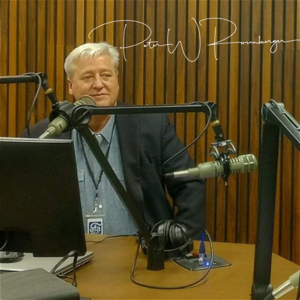
From Nashville, Music Road. World famous Headquarters of 1510 WLAC. Yeah. This is Hope for the Caregiver. This is the nation's number one show for the family caregiver.
I am Peter Rosenberger bringing you three decades of experience to help you stay strong and healthy. as you take care of someone Who is not? And we are so glad that you are joining us right now, 800-688-1. 9522-800-688-9522. Phone lines are always open, and we'd love to hear from you.
This is a we've got a lot to cover today. Great show. And before I get too far down the road here, I want to introduce the man who is Has endeared himself to millions. He is the Baron of the Board, the Sultan of the Sound, the Earl of Engineering. The man who really is Spartacus, he is the Count of Mighty Disco John Butler, everyone.
No, I am Spartacus. Did you see all that this week? Do you know what I'm talking about? No. All right, wait.
I mean, I know the joke. I know. No, it's not a joke. It's just that, well, it was a joke. We were confirming a Supreme Court justice.
And Senator Corey Booker. said he had his I am Spartacus moment.
Okay. Because he was going to release this document that was. Not supposed to be released. And he said, but I'm going to do it anyway. This is as close as I'll have to an I am Spartacus moment.
But what he failed to disclose is he had already been told many, many hours earlier that it was okay to release it. Oh, well.
So, the man who really is Spartacus. John, you are Spartacus. Oh, thanks. How are you feeling? How are you feeling?
I'm feeling grand. How about yourself? You know, for a man of my age and limited abilities. I went to martial arts yesterday for the first time in a couple of weeks because I've been out. Oh, I paid for it.
I paid for it. I paid dearly for it. Oh, no. But that's okay. I'm still kind of cracking my neck back and forth.
But I got to give a personal moment here. Oh, go on. We had a grandson born this week. Last week. And Gracie and I were able to go rush down to Birmingham, and we got to hold him when he was, I mean, he wasn't even eight hours old.
Oh, wow. And I mean, it was just, you know, and so we have two grandsons, and it was just, it was just marvelous.
Well, congratulations. And I got to give a little bit of a shout out to my wife. You know, when she had her car wreck so long ago, 35 years ago, Nobody thought she'd live, much less get married, have children and then see her grandchildren. I mean, nobody thought this. You know, she's had eighty surgeries, both legs amputated, all these things going on.
And and Parker, as he was walking us out, he said, you know, it is kind of nice to go to the hospital, but it's not, you know A tough event.
Well, and I, well, ask his wife if it was tough. Actually, so she would tell you she was in labor for one hour. What? No. That's just not fair.
She's doing great. She is doing great. But it was not a sad event. It was not a painful thing. I mean, as far as that goes, but it was, it was, they're doing great.
Mother and baby are just doing marvelously. That's lovely to hear. And he's just a delight.
So anyway, we're two-time grandparents now, which is kind of surreal, you know, because Gracie doesn't look that old, but I guess I do.
Well, you know. I got the ear for it. All right. Listen, let's get right to it because I got a lot to cover today. We want to start off with our caregiver tip of the day.
Our caregiver tip of the day, and this is going to sound really weird. I mean, that ship is sailed. I mean, you know, really, why do I even bother? Uh. Watch for bunions of the heart.
All right, unpack it. Let me explain. Let me explain, Lucy. Let me explain. I.
I I have a bunion on my left foot. There's a HIPAA violation in here. I know that. I named him Paul. I'm so quiet.
That's great.
So, but anyway, I have this very painful spot on the left side of my foot. And I went to a friend of mine who's a podiatrist. And he looked at my foot, and he said, You have a bunion. And I said, Yes, but that's on the other side of the foot. This is a pain over here.
What's causing this? He said, You have a bunion. I said, No. And he said, I bet you have knee problems too, don't you? And I said, well, yeah.
And he said, The bunion is throwing off your gait. The source of your pain is not the source of your problem. And I had to stop for a moment. And take some notes. I saw the implications of the statement because a lot of times as caregivers, We tend to think that what where we feel the the acute pain Is the problem.
I was so fixated on this one area of my foot, and he explained to me that all you're doing is your walking gait is being shifted. And you're putting pressure on another area, and that's what's causing the pain. But if you fix this over here, it will balance out everything. The issue, what you think is the issue, is not really the issue. They have a term for this.
Psychiatrists use it a lot, too. It's called the presenting complaint.
Well said. Thank you. I didn't make it up. You know, if you feel like you did, if you're in the wrong industry, yeah. But it was.
It was the the presenting complaint was not my problem. This, that's a good word, by the way, John. I'm going to write that down. Right on. Spartacus says the presenting complaint was not my problem.
This presenting complaint was not my problem. And I would suggest to you, as caregivers, the presenting complaint that we have is not our problem. I would suggest to you that it is. At the very least, you should be glancing in that direction. You got to look at it.
There was something there was really pain there. But I wasn't going to solve that by accommodating that painful place. I was going to solve the problem by accommodating the deformity, the defection I mean the defection, defective component of my foot. And I've learned that I have Defective places in my heart. and what happens is it throws everything off balance because of the pressure of care giving.
And it will throw me into all kinds of of situations where my behavior then will reflect. These The effective places, these character defects, if you will.
Now, caregiving doesn't cause these things, but it will amplify them. It's kind of like miracle growth for them. And you will, if you've got an issue, the pressure of caregiving, because there's such relentless challenges, will put so much on that, it will force things to the top a lot faster. I want to make a silly Image that's caregiving, miracle grow for emotional instability. Hold on, let's just all take a moment.
We're just going to lift John up right now. Bless him. God bless him. Bless his heart. He tries, y'all.
He does. I thought he was clever. And you usually do. I know. I wouldn't open my mouth if I didn't.
But I think that's what happens with us. Are you going through that today? Is that something that's troubling you? Are you looking at something? If I could just get this fixed, then I'd be okay.
And all of a sudden, you realize, wait a minute, I may have something deeper over here that's causing me some issues. that are being squeezed over here. And that's basically what it is. When you have a deformity in your foot, it's forcing the rest of the foot over to the side of the shoe and it causes it to pinch.
So what is forcing In your situation, you to react in a certain way that causes a lot of acute pain. You can blame it on the behavior of someone else. I talked to a lot of caregivers who were dealing with somebody with dementia. They said, I've tried to tell her, I've tried to tell her over and over and over and over and over. Wh wait a minute, why do you keep telling over and over and over and over?
Because You're dealing with dementia at that point. You're dealing with an impairment, a disease. You can't. My wife's a double amputee. Let me put it in that context.
How about if I just tell her over and over and over again to get up and walk on real legs? You know, I mean, she can't. She has to have prostheses to do this. It's very easy to see that when it's in the physical. But when you're dealing with the emotional and the mental impairments, Much different, much different.
The cognitive part plays a role in that, and then it becomes much different. And so we we expect things. It's like going to the hardware store and demanding to buy a loaf of bread. You can't do it.
Well, who's got the problem? The hardware store that doesn't carry bread that you want? Or the unrealistic expectations of something. That we keep going in there and asking for and getting angry when we don't get it. when we don't get what we think we gotta have.
And it took that to see. Yeah. I I know it was a it was a weird caregiver tip of the day. But bunions of the heart. Just to leave.
It was a teachable moment for me. And I thought it might be helpful to someone else.
Well, your bunion made you rely on parts of your foot that were not. Used to that sort of strain. And if you have something that is weighing on your heart, you will rely on other parts of your heart that are similarly not used to that sort of strain. And so the whole point we're trying to do as caregivers is become balanced in this.
So, anyway, if that resonates with you, feel free to give us a call, 800-688-9522. You will hear the velvet tones of John on the other end of that phone. I make money with these pipes. Yeah. And take a moment.
All right. I'm sorry. And we're live, by the way. 800-688-9522. Our caregiver tip of the day is brought to you by Standing With Hope.
Standing With Hope is the presenting sponsor of this show. I wish you would take just a moment to go look at what we're doing out there: standingwithhope.com. And we have two program areas. One of them is Our prosthetic limb outreach. We just got back from a trip to Ghana.
We're getting ready to ship some more supplies over there to them because they need some things. We've got to particularly get some pediatric supplies, like for feet and pylons and knees and so forth for the pediatric limbs we have to do. And how do we do that?
Well, we collect used limbs. From around the country they go to a a local prison here where inmates volunteer to disassemble used prosthetic limbs. Maybe a child has outgrown them and they they've taken it back to the prosthetice or it's just sitting in a corner somewhere. We can use those things. Or somebody you know has passed away and they don't know what to do with the limb, we'll take them because somebody else will walk again.
So if you send those to us, We know what to do with them, and you can see more about that at standingwithhope.com. And we have the two program here, prosthetic limb ministry, which is for the wounded. And then a caregiver outreach and those who care for them. For the wounded and those who care for them, that's what we do at standingwithhope.com, and you can be a part of that today. Right now.
And we would welcome that. Get involved, support the show, support sponsor a limb. I just talked to the clinic over in Ghana. Right now, people are getting treated right now. We've got a young man from Nigeria that's heading over there.
We've been working to make sure he has all of his stuff ready for him because he's got to travel a good bit to come over there. But they can make it while he's there in Ghana. For a couple of days, and he'll be able to walk back. No, he won't have to walk all the way back to Nigeria. Thank you.
He'll take the bus. Hey, this is Hope for the Caregiver. This is Peter Rosenberger. 800-688-9522. We'll be right back.
Yeah. Here's some great news. If you missed the deadline to sign up for health insurance or if you signed up for a plan you're not happy with, you still have a choice. MetaShare is a healthcare sharing program. Hundreds of thousands of Christians are part of this.
It can save you a lot. Typical savings for a family is about $500 a month. You can join MetaShare anytime. It's easy to call and look into it. There's no pressure at all.
And man, what a difference it can make. 85525 share. That's 85525 share. Have you ever struggled to trust God when lousy things happen to you? I'm Gracie Rosenberger, and in 1983 I experienced a horrific car accident, leading to 80 surgeries and both legs amputated.
I questioned why God allowed something so brutal to happen to me, but over time my questions changed, and I discovered courage to trust God. That understanding, along with an appreciation for quality prosthetic limbs, led me to establish Standing With Hope. For more than a dozen years, we've been working with the government of Ghana and West Africa, equipping and training local workers to build and maintain quality prosthetic limbs for their own people. On a regular basis, we purchase and ship equipment and supplies, and with the help of inmates in a Tennessee prison, we also recycle parts from donated limbs. All of this is to point others to Christ, the source of my hope and strength.
Please visit standingwithhope.com to learn more and participate in lifting others up. That's standingwithhope.com. I'm Gracie, and I am Standing With Hope. For my baby. And she's all Hey, welcome back to the show for Caregivers About Caregivers, hosted by a caregiver.
I am Peter Rosenberger. This is Hope for the Caregiver of the Nation's number one show. For the family caregiver, we're glad that you're with us. The phone lines are open. You're welcome to call in.
800. Six eight eight 9522 800 688 9522 and we are we are we What this show does is we help provide a well-lit path to safety. For family caregivers who are struggling, who are struggling with all types of issues. What I've found In my experience, my thirty-two years of this, where I've had ample time to fail more times than most people will ever in fact, I've forgotten more failures than most people will ever have. But I have found that the issues for caregivers are not the day-to-day stuff like healthcare, Insurance companies and all that stuff.
The issues for the family caregiver, and correct me if I'm wrong, and you certainly are welcome to do so, but the issues for the family caregiver. Are these issues that are matters of the heart or where we find ourselves losing control of our own Um Losing control of ourselves. We become angry, we become resentful, we become fearful, we become despairing, all of those things. Yes, there's a lot of love in there. Yes, there's all these things we do for love, but w uh what you won't do you do for love.
Who is that, John? Who wrote that? That was was it Was that Grover Washington? No, I don't know who that was. But anyway.
Yeah. Out of my depth, man. Above my pay grade. But what happens is that we become. Uh so Yep in Snared in this, that we can't we can't function in a healthy manner.
And it takes a while to detangle this. And so, what I'm on a mission to do is to help myself get detangled. Healthy caregivers make better caregivers. We're not helping our loved one if we become so resentful, so. upset, so despairing, so depressed, that we can't function very well.
And we're going to burn ourselves out and then hurt our loved one even more. This is what This is why I do the show. This is what I've seen in my fellow caregivers. And so, if this is where you are, 800. 688.
Write this down. 800-688-9522. And you can call in today. Hey, we got to do our quickly today's senior moment. I don't need your rocking chair.
Today's Senior Moment brought to you by Morning Point Senior Living and Memory Care Center. That's Morning Point with an E, P-O-I-N-T-E dot com. Check them out. They have just dozens of places across the southeast here where they have wonderful facilities to help with all types of different needs as you're growing older, as you have loved ones who need these things. They've got it going on: morningpoint.com.
And I'm going to do something kind of special today. Because I was looking at some pictures and so forth. And those things are irreplaceable. Don't let them be.
Okay. Memories to DVD Memories to DVD.
Now, you've heard of all different kinds of companies that do all this stuff.
Well, guess what? Your trusted producer of this show, Mr. John Butler himself, during the week works at Memories to DVD.
Now, John, how can they Get a hold of you. You can go to memories to DVDonline.com or you can call 615-479-8510. And you just sprung this on me like nobody's business. I did that just for you and Robin Becky, but can they do it if they're out of state? Absolutely.
I take shipping orders all the time. We're on the south side of downtown Nashville, Monday through Friday, 9 to 5, or you can come out to the flea market every month if we have a booth out there. But that's just for ad space. But yeah, we take shipping orders from, I've just shipped some stuff to Switzerland.
So any kind of format? Pretty much any kind of commercial, I'm sorry, any kind of consumer format. And we do take care of some commercial formats like U-matics and an alphabet soup of things. Old slides? Old slides.
I do 35mm slides. I do negatives of 35mm or 110 film or pretty much anything you want. The Rodney Dangerfield jokes is my family, they took a lot of pictures. Of me as a child. They only kept the negatives.
Oh, it's tough. But you know, but don't. Yeah, everybody has a drawer. Yeah, everybody's got a drawer. Everybody's got a drawer.
Mom's got a box of this stuff in the closet. And it's things that you would grab if the house caught fire: old photo albums, 8mm and 16mm film, just the most treasured things in your life. People come in, and I. People weep in my office at least once a week, and it's for the good reason, not for the bill, all right? Who do you want to trust with these valuable pictures?
Of your family, and you may be transitioning. You may have a family member that's moving into a memory care center like Morning Point or so forth, and you don't want to lose these things. Who are you going to trust? You're going to trust John Butler. You're going to trust Memories to DVD online.
Memories to DVDOnline.com or the phone number again, John? I'm sorry. 615-479-1999. 8510. To the number.
It's memories T-O-D-V-D online. And you don't have to. Package it neatly and cleanly, do you? I mean, you could just dump it on a device.
Well, you really should. You should, but don't feel like you've got to alphabetize them or prioritize them by that kind of stuff. You absolutely can do that. And whatever organizational system you have on the front end, we will maintain throughout the workflow and return it to you in that same format. All right.
That's my today's senior moment because we're having these things in our lives where we've got all these pictures, we got all this stuff. We don't know what to do with it.
Now you do. You're without excuse. Memories to dbdonline.com. And I'll put that out on Facebook Live if you're watching on Facebook Live. And we'll have it on the podcast later on.
Hey, this is Hope for the Caregiver. This is Peter Rosenberger. We'll be right back. Here's some great news. If you missed the deadline to sign up for health insurance, or if you signed up for a plan you're not happy with, you still have a choice.
MediShare is a healthcare sharing program. Hundreds of thousands of Christians are part of this. It can save you a lot. Typical savings for a family is about $500 a month. You can join Metashare anytime.
It's easy to call and look into it. There's no pressure at all. And man, what a difference it can make. 855-25-SHARE. That's 855-25-SHARE.
Have you ever struggled to trust God when lousy things happen to you? I'm Gracie Rosenberger, and in 1983 I experienced a horrific car accident, leading to eighty surgeries and both legs amputated. I questioned why God allowed something so brutal to happen to me, but over time my questions changed, and I discovered courage to trust God. That understanding, along with an appreciation for quality prosthetic limbs, led me to establish Standing With Hope. For more than a dozen years, we've been working with the government of Ghana in West Africa, equipping and training local workers to build and maintain quality prosthetic limbs for their own people.
On a regular basis, we purchase and ship equipment and supplies, and with the help of inmates in a Tennessee prison, we also recycle parts from donated limbs. All of this is to point others to Christ, the source of my hope and strength. Please visit standingwithhope.com to learn more and participate in lifting others up. That's standingwithhope.com. I'm Gracie, and I am Standing With Hope.
Wow! I feel good. I do the found work. I feel good. If she calls me dumping, I feel good.
Hey, welcome back to the show for Caregivers About Caregivers, hosted by a caregiver. This is Peter Rosenberger. I am so glad that you're with us, and I do feel good. Like that, another win. I've been watching a documentary on James Brown, John.
And uh if you got your teeth and your hair. Yeah. Yeah, all right. If you got your teeth and your hair, you're all right. Listen, the number to call 800-688-9522.
800-688-9522 if you want to be on the show. And you can also follow along on Facebook Live. We are at Hope for the Caregiver on Facebook Live, and you get to hear how the sausage is made. I was listening, no, don't, no, but no, Tessa was just saying that on there. I'm looking at the columns going, I mean, the comments going, and she's like, I love hearing behind-the-scenes stuff.
And I'm thinking, well, God love you for your lack of judgment and your lack of taste, because behind-the-scenes stuff with us is kind of goofy. And also, the Caregiver podcast. is uh the caregiver podcast dot com. We put the shows out there. We also put little snippets of things out there that you can hear from from our your caregiver minute.
I don't know if you know this or not, but our our your caregiver minute Our On Almost 300 stations daily. Yeah, something like that. Did you know that? They've increased.
So we get those a lot, and we put those out there on the podcast as well: caregiverpodcast.com, and a couple other things. There's an article that I wrote that you also could go see. At Hope for the Caregiver and at standingwithhope.com, either one of those websites. But hopeforth the caregiver.com, you can see this article I wrote called Outrage: Our New National Pastime. And Evidently, it it was kind of a hit because USA Today picked it up.
Ah, there you go. Did I tell you that? Yeah, no, I knew that USA Today had had picked up some of your stuff. I didn't know about that one specifically.
Well, they picked it up. They picked this one up, and it's out there, and you can read it. And it's kind of it I was kind of proud of it. It was funny.
Well, you're talking about it on the air, so I mean. See what you think at hope for the caregiver.com. And so that's a little bit of business that we have. The book is out, Hope for the Caregiver, the book. It's in its fifth printing now.
And you can get the audio book. All of this is available at Amazon. You can download the audiobook today. And then the songs for the caregiver, it's all out there. And Gracie's been working on a new CD that's coming.
And you'll love that. And she's got some new singles that she's been releasing periodically through it through this thing. And there's one that's coming up that I'm very excited about. And it should be available on iTunes this week. And um it's going to be it's called You Must Remember Spring.
And The reason why I'm excited about this, this is a song that was written by Michelle Legrand. Who wrote the theme from Brian's song? You remember that? I do remember that. And then Alan Marilyn Bergman wrote the lyrics.
Now, they are an Oscar-winning trio of written songs together. And this one didn't get it. Tony Bennett and Barbara Streisand have recorded this, but it wasn't a huge song. It's a very difficult song to do. But the reason why it was important, because Gracie Sang this in the studio accompanied by my piano professor from Belmont.
There you go. It gets better. He accompanied her when she auditioned at Belmont for a music scholarship before her wreck. And this is the first recording the two of them have ever done together. And he picked the song out, and it is a beautiful song.
And Gracie, afterwards, she just had tears come down her eyes, and so did Chris Latham and I. We were there in the booth, and she said, I was singing this to my 17-year-old self. You must believe in spring. And it's a beautiful, beautiful song. Wait till y'all hear it.
You're going to love it. And John is playing. And he was my fianced professor, played at our wedding, played at our son's wedding. I just love him. And wait till y'all hear this.
It's fabulous. It should be available this week. All right, we're going to go to the phone calls here because we've got Trinity on the phone. Trinity is on the phone with us. You know, you were one of our original listeners and callers so many years ago when this show started.
You uh I'm still waiting for my check, Peter.
Well, keep waiting. Keep waiting. All right, what do you got on your heart and mind here? First off, how are you feeling? I'm feeling like I might not ever listen to your show again because your caregiver tip of the day is making me confront things I don't want to confront.
Bunions of the heart. And uh well, uh it was a it was an odd tip, but it it I've learned as a caregiver, I cannot push a wheelchair with clenched fist.
So how is that resentment going? But no, it was a teachable moment for me. It doesn't have to be one for you. Yes, it is. It doesn't have to be one for me.
Okay. Well, you know, I struggle with a traumatic brain injury and continual headaches, and now the doctors. Our um aiming at all kinds of other things about the headaches.
So, and I'm not hearing you, but I'm watching you on Facebook and you're doing all these hand motions. Ah. I'm just listening. I'm just listening like a good host. I mean, I yes, I talk with my hands, and John makes fun of me for that, but I am listening.
Go ahead, Trinity. Yeah, but I wasn't getting the word.
Well, no, I think that you are. Uh well, no, continue, continue. No, no, but you're you're making me confront that my frustration Um that the headaches could be being caused by all these other bizarre things they're talking about, like I'm getting headaches 'cause Peter has a bunion.
So thank you for that.
Well, who knows who knows why? The question is, how are you living with the headaches? Not very well. Not very well. Now our mutual friend Tessa put something on Facebook this week.
that she's using something for her tooth pain.
So I'm trying that today to see if that'll help the headache. It's only been twenty-six months. Of headaches.
Well, it it's like, you know, when you go to the doctor, he says, Doctor, it hurts when I do this.
Well, don't do that anymore. Yes, yes, yes.
So, but anyway, but no, no. I mean, I'm really calling to say thank you because that made me realign my thinking.
So, thank you. You're welcome. I'm not a caregiver, but I'm an encourager to a caregiver. I just spent quality time with that son today. And you are indeed an encourager to that caregiver, and he is never far from my thoughts and my heart for what he has to deal with.
And for those of you who don't know this, and I'm not going to tell you, just understand that it's a significant issue that her son is dealing with, and we want to. You know, as a caregiver, I I look for teachable moments wherever I can find them, and sometimes they're in the podiatrist office, you know.
Sometimes those things happen. But I think that if we are willing to learn from them and for me, that was just a teachable moment for me, that I have to confront my stuff. At the end of the day, I can't a reporter once asked me, and see if this resonates with you. But a reporter once asked me, he said, what is the toughest thing you've ever dealt with as a caregiver?
Now, given the resume that I rattled off earlier in the show, eighty surgeries, multiple amputations, well over ten million dollars, a hundred plus doctors have treated my wife. She lives with relentless pain. She's coded, she's gone into seizures, all those kinds of things. And so the most difficult thing that I've dealt with as a caregiver And my response, without even batting an eye, was Hands down. Knowing what is mine?
and what is not mine. And when I can walk that line. With a little bit more Um calmness, knowing what is not mine to have to carry. And release that, to realize I can't do anything about that. That's when I start growing as a caregiver.
Because when I'm trying to overreach and grab onto things that just don't belong to me, that I cannot fix, I cannot change, I can't do anything about. That's when I feel like it causes so much stress in my life and in the lives of people around me. And my wife is probably saying amen as I say that now. But it does, because it's how we re-react to situations oftentimes that are the big stressors. And when I was caregiver for my mother, my my largest problem was my attitude and my heart.
I I I I I feel like that's That's where the big battle for us as caregivers are. Yes, there are things I just looked on Facebook Live and Gracie posted all kinds of stuff. She was obviously resonating with that particular statement. But it's not a one and done issue that caused. I mean, the one and done issues, what I mean by that are I don't have to.
Be retrained on how to give an injection. I don't have to be retrained on how to fight with an insurance company. Here's a little tip on dealing with an insurance company: when they bring a a knife to a fight, you bring a calculator. And you don't have to argue with them about the humanity of covering a bill. You deal with math.
Math works. That's how I've won all the appeals that I've won with Gracie over this $10, $11 million saga that we've had. And so that's a one and done. Once I got it, I don't have to repeat it. But these things of the heart, the resentment, the despair, the anger, the rage, the fear, all those things, man, those things just keep coming at you daily, sometimes hourly, sometimes minute by minute.
Does that track with you? Absolutely. Oh, with my mother. I'd lived with a mother with mental illness my whole life, and then when the dementia kicked in, and everybody else knew That her only problem was her child. She had a problem child.
I'm an only child, so you know, guess what? She had a problem child. Who was that child? Yeah, that was me. But it was.
I was so angry at not having a functional mother my whole life, and now having to be her caregiver. And it was my rage was my problem. Not her disease. Not her mental illness. Not that dementia.
It was. my rage and attitude. Yeah, I mean, how do you get mad At a disease? How do you get mad at diabetes? How do you get mad at a disease?
And mental illness. Is a disease. It doesn't do any good to get mad at it. And so I talk to a lot of kids. Caregivers who are taking care of a parent.
right now who have unresolved issues. With that parent, I mean, really painful unresolved issues, and now they're having to do very uncomfortable tasks for them. What If you could just give them. A 30,000-foot view, or say something, speak something into their life on how you may peace with some of that stuff. I'm trying to remember that I'm on a radio show, Peter.
A family friendly radio show. You can talk to John later. Yeah, my language is not doesn't tend to be family friendly. I finally took a deep breath and stepped away. She was in a facility where she was kept warm, safe, was fed.
And the people adored her. And they would then I had that new conflict. that the staff at the facility were angry that I wasn't showing up every day with lunch. like a good southern daughter should do. And I just had to let them have their view And I had to survive.
I had four young children at that point.
So I just had to face that my attitude was destroying me. Wasn't doing a thing to the disease, wasn't doing a thing to my mother. It was nine at me.
So I just had to face that. And I didn't have your show to rely on. It would have been such a help. back in it was in the early nineties.
So I just appreciate what you're doing for others that You didn't have the opportunity to do it for me.
Well, and I didn't have it for me. I mean, you know, I think that's one of the things that those of us who have. Uh You know, kind of gone in those hinterlands by ourselves and isolation and so forth. We see that and we want to be able to offer some kind of path to others of things that we've learned. This is what we've learned the hard way.
My mother, um, Told me one time down in the coast of South Carolina. I love this phrase. I love this picture she painted. You see these trees. Along the coast, along the beach, there that are closest to the beach, and they are all smooth on the side of the the water.
Where the sand and the wind and the water and so forth hit them and have smoothed them all out. And they're kind of misshapen. and the ones behind them get to stand up straight and have nice bark and everything else, they're not worn down. And and then And she said that's kind of the way it is for those of you who blaze a trail. You get a little bit misshapen, you get kind of polished up a little bit by the wind and so forth, you get abrased, all that kind of stuff.
And then she looked and she stopped for a moment and she smiled at me and she said But you get the best view. And I thought, you know, okay, I'll take that. And so that's we'll take the wisdom of mom. I'll take my mother's wisdom. And who, by the way, my parents just celebrated their sixtieth anniversary yesterday.
Sixty. I I d God love them. They still like each other. They're madly in love with each other. Crazy, crazy in love with each other.
So but it's it's I think that um I I think What you said, though, is learning to step back away from it, detach from it, because those things will take you down in a bad place. And I'm so grateful that you're not in a bad place, that you do laugh. And you cut up and you make me laugh.
So, hey, listen, we got to go to the break here. Trinity, thank you for the call. 800-688-9522. This is Hope for the Caregiver. 800-688-9522.
This is Peter Rosenberger, and we're so glad that you're with us. I want you to get to a place of safety where you can detach from whatever it is that you're carrying. I want you to be able to breathe deeper. and walk a little calmer. And be a little bit more joyful in the midst of this.
That's our goal on this show. And stick with it, stick with it. We got a little bit more to go. Don't go away. We'll be right back.
Here's some great news. If you missed the deadline to sign up for health insurance, or if you signed up for a plan you're not happy with, you still have a choice. MetaShare is a healthcare sharing program. Hundreds of thousands of Christians are part of this. It can save you a lot.
Typical savings for a family is about $500 a month. You can join Metashare anytime. It's easy to call and look into it. There's no pressure at all. And man, what a difference it can make.
855-25-SHARE. That's 855-25-SHARE. Have you ever struggled to trust God when lousy things happen to you? I'm Gracie Rosenberger, and in 1983 I experienced a horrific car accident, leading to eighty surgeries and both legs amputated. I questioned why God allowed something so brutal to happen to me, but over time my questions changed, and I discovered courage to trust God.
That understanding, along with an appreciation for quality prosthetic limbs, led me to establish Standing With Hope. For more than a dozen years, we've been working with the government of Ghana in West Africa, equipping and training local workers to build and maintain quality prosthetic limbs for their own people. On a regular basis, we purchase and ship equipment and supplies, and with the help of inmates in a Tennessee prison, we also recycle parts from donated limbs. All of this is to point others to Christ, the source of my hope and strength. Please visit standingwithope.com to learn more and participate in lifting others up.
That's standingwithhope.com. I'm Gracie, and I am Standing With Hope. Oh yes, as caregivers we're living on the edge. But sometimes for some of us, like me, living on the edge of sanity sometimes. And sometimes we've just crossed that line.
Hey, welcome back to the show for Caregivers About Caregivers, hosted by a caregiver. This is Peter Rosenberger. I'm so glad you're with us. If you want to see more about what we're doing, standingwithope.com. And I got to put out one before we get back to the phone lines: one quick request.
If you know somebody that has a used prosthetic limb that they don't need anymore, maybe the child has outgrown it, the teenager has outgrown it, and they're just sitting in a closet, or the loved one has passed away, the family doesn't know what to do with it, please send it to us. Standingwithhope.com. Yeah, you think buying shoes for growing kids is hard. Standingwithhope.com. And if you go online, it'll tell you where to send it to prosthetics.
It'll say, donate a used prosthetic limb. It'll go to a local prison run by Core Civic. And inmates volunteer to disassemble that limb down. They just take it all apart, and we can recycle almost all of it. Not the socket, but we can recycle the foot, the knees, the pylons, the screws, the adapters, all that.
And we need that stuff right now. Would you do that for me? Would you just put the word out? Talk to your local funeral home and somebody there that let them know about what we do. Would you please do that for me?
And while you're there, look at sponsoring this show. Look at getting involved in what we're doing at Standing With Hope. It's for the wounded and those who care for them. There's nothing like what we're doing across the country. We are the nation's largest show for the family caregiver, and we want to continue doing this.
I need your help to do it. You can go out to standingwithhope.com today, right now, to do it. All right, Lydia. Uh Lydia, down in South Carolina, are you with us? I'm with you.
How you doing here, Lydia? I'm the third person. I'm not Trinity, but I'm the third person in this Trinity. All right, now, Lydia, let me handle the comedy. Please don't.
Don't let him. Don't let him. Your mom's salon.
Well, I know, and I can tell. How are you feeling today? Uh tired. Because I'm a caregiver. Yes, you are.
Mhm. From um My friend across the street. couple that were married sixty years Mama died. And about a year ago, and daddy's displaced, who's had a stroke, who can't really communicate. Very, very, very deep.
Long long Struggle, you know, but he can communicate some because he's had some. But um well we're gonna we're gonna end up we're gonna run out of time here, so I want to get right to the guts of what it is that's going on with you today.
Well Um I guess I'm tired, but I don't know Um And so But the thing is, this gentleman that I'm doing this for, he's an only child. There's just nobody else to help. What is out there? For somebody like that. You know, in South Carolina, I just don't know.
Well, there are several things out there that you can't access. It depends on the level of resources they have. And what I would recommend doing, and who is the treating physician for the do you know the treating physician for this person? Start with the treating physician and start asking those questions because they'll know what's going on in your community. And you may have to get a social worker involved, which I would recommend anyway.
I always recommend getting a social worker involved because they have their fingers on the pulse of what's going on in that community and they'll know all the types of resources.
So this person may have some independent financial resources. They may not have anything. But the physician has got to be involved at some level and then they can refer you to a good social worker. A lot of physicians are having social workers in their practice now. And that's always helpful.
So That's where I would start: go to his physician, and then after you do that, Take a nap. We did that. That's the one good thing about going across the street. Pop takes a nap, and I do too. That's solid advice, though.
Always a nap is a good thing. And pace yourself, Lydia, because, you know, you if you go down, this guy's got nobody. You just said there's nobody. And if you go down, who's in line behind you? Yeah, nobody.
But he th the the thing is he's got one year before he retires. But he's not looking forward to telling retirement, you know? Do you understand that? I I'm not going to try to understand anything about him. What I'm going to focus on is you.
And I want to make sure that you're around and that you have the wherewithal to be able to function. And that's important to me. And because he doesn't even have a prayer if you're not around.
So, hey, listen, Chris Latham and the band are firing up. And, Lydia, it means a lot that you take the time to listen and you take the time to call. It means a lot. And that's our show for today. Thank you for just giving me one hour of your time.
That's all I'm asking, just one hour. And I can, I promise you, we can help. For you to live a calmer, healthier, and even more joyful life. This is your time as a caregiver. Your time.
Go to standingwithhope.com for more information to see more about what we do. And there are a lot of resources out there. Sign up for the podcast, sign up for the e-letter. We have it all out there. Take advantage of it.
We'll see you next week. This is Peter Rosenberger. Thank you so much.