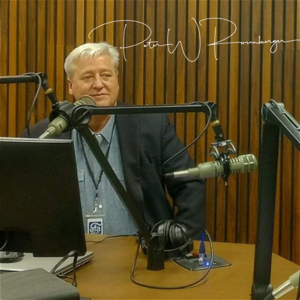
This is the Truth Network. Welcome to Hope for the Caregiver. This is Peter Rosenberger. This is the program for you as a family caregiver. Happy 4th of July.
Hope you have a fabulous day. 250 years. I remember the 200 and back in the 70s and it was a It's an exciting time and I'm going to watch the fireworks from up here. Uh, I don't know that we're going to get down. Normally, I try to go to the rodeo, and there's a big parade in our little town and so forth.
I'd love to do it, but there's going to be just a lot of crowds, and it's a little bit challenging right now for Gracie.
So, I thought, you know what? We'll just watch it from up here. We can see fireworks from all over the valley. We're we live at about 6,000 feet up, so we have a A pretty good view of what's going on down below, and we'll be able to see it, so I think it'll be a lot of fun. And I plan on grilling out and there's a Yeah.
You know, pretty decent chance that I may saddle up a horse. I can't say for sure. But I might. We'll see how the day goes. And I am.
If I don't do it today, I'll do it certainly tomorrow.
So, how about that? A friend recently asked me why so many Americans are embarrassed. About their country. Have you noticed all the stats on this and the surveys that are coming out? People are having All types of things that I never dreamed we'd really have in my lifetime.
And the question came amid the annual debates. for normal July 4th, but here we are at 250. about patriotism flags and whether or not America needs to be celebrated. On the 4th of July? Should we even celebrate it?
I mean, this is going on here as we talked, you know, and thought about this. I went back to this conversation with Robert Woodson that I saw in an interview with him. He just passed away. He was like 95 years old, I think. The Woodson, it's worth your time to go and look him up.
Tremendous guy, African-American guy, just a tremendous thinker and a, I just. E every time he spoke, It was worth the time to listen to him. You know, there are some people that are just like that, that you could just, wow, man, please, please don't stop. Keep, continue. I want to hear more.
But he was um referring to this contradiction at our founding. which was A nation that declared all men equal, that were created equal, and yet it tolerated slavery. And others also pointed to limited rights for women and other failures at our nation's birth. And he. had a different way of looking at this.
He said that America was basically like a child born with a birth defect. He said America in essence was born with the birth defect. And he said, but one of the things about a child born with the birth effect is you don't destroy the child. You don't abandon the child. You love the child.
You care for the child. You shepherd that child. And you know, the the parent learns stewardship.
Well, caregiving taught me that lesson long before I heard him describe that. for a nation. And this audience understands that. We've got a lot of special needs families in this audience. But in a society that wants to destroy anything that's unpleasant It generates these kinds of arguments that are going on that we're seeing in our country right now.
There's some type of YouTube influencer, a couple who documented their journey. And I don't know what they do. I just saw this on the news feed with it. And she got pregnant and they were just all excited and talked about it and big hoop-to-doo and all that kind of stuff.
Well, then it turns out that the child is going to be born with Down syndrome, and so they aborted the child. Rather than have that. and they went out and talked about that in public. You know, and they're grieving over it and so forth.
Well, wait a minute, wait a minute. If Yeah. We got to get our story straight, because for so long they said it's not a baby. It's just tissue. And now they're saying, yes, it is a baby.
And they're grieving over it.
Well, you don't, you know, you don't grieve over taking out a. piece of inert tissue or tumor. But now they're doing it.
So they don't have their story straight on this. And I don't think the the pro-abortion crowd does, for that matter. Um but we don't want to call it what it is. Which is murder. But because this child was going to be born with Down syndrome, they wanted to.
destroy the child, and they did. And That, in a nutshell, is a lot of what's happening with our country right now. If we see a child that is born with an arm that is missing or a leg that is missing, what is the response to, you know, you want that parent to say, well, let's just get rid of the child and get another child. Or do we Create some type of loving, nurturing, and equip those families to care for them as and the church comes alongside and helps these families. That's one of the things I have a real push for on this program and in other things that I write: is that how the church can come alongside families with special needs.
And equip them to help them be better at their businesses and better at taking care of their home and everything that's going on. There's a lot of shepherding that has to go on with this. And Woodson was saying that basically with the nation. We don't just throw the nation into the toilet. And yet that's what people want to do.
And and of course when it comes to a birth defect. Stewardship is not the only possible response to that. There are a lot of people who learn from it. and grow into it. But then there are others who exploit it.
And you, you know, talk to every family with a special needs child, and they're eventually going to encounter people that are more interested in the diagnosis than the person.
Well, the same thing happened with the nation. America's birth defect has been used both as a reason. to pursue greater fidelity to our ideals, But it's also been used as a tool for those seeking power, influence, or advantage. and and Woods had understood the difference. And one path leads to stewardship and growth, and the other leads to personal grievance.
What do you think is going on with this? And, you know, and I I love this country. Not because it's flawless. but because it remains the greatest beacon in human history built upon this this radical notion that individuals possess dignity, responsibility, freedom, and opportunity. that we can achieve through merit rather than birthright.
And I hope that my grandchildren inherit a nation that values this. We stop as a caregiver. You ever get to the point where you're thinking, okay, if we get through this, if we can just get this, if we can just get through this surgery, then we can get on with their life. If we can get this guy to stop doing this, you know, if you've got a family member who's drinking, if I could just get him to stop drinking, then we can be happier. If I could just, if I could just.
And we learn as caregivers, you do this long enough, you learn that there is no if I could just, there is what it is. And we can learn to be content, settled, good stewards. Productive? No matter what's happening around us with our loved one, because we don't have any control over that. And family members with um An alcoholic or an addict really struggle in this area until they come to that point and realize, you know what?
I can't be responsible for what they're going to put in their body, but I can be responsible for what I'm going to do.
Well, the same thing with our country. We look at, okay, if we can just get this guy out of office. If we could just do this, if we could just get more people on the Supreme Court, if we could just do this, if we could just do this. as opposed to being productive in living now and being good stewards where we are right now. You see how the same principles that we live with As caregivers could really do a lot for this country.
If we stop waiting for the perfect election, the perfect apology, the perfect reckoning, the perfect outcome. Before we decide to engage with where we are, with what we've been giving, it would. It would unleash this.
Well, I'll tell you, in my own life, when I came to that point. Where I realized this is my life. I'm not going to try to look over the hill here and see, okay, surely this is going to get better around the corner. I'm just going to start being productive where I am. And I'm going to be grateful for every moment that I have.
And what happened is it unleashed so much productivity in my life. To the fact that I've written and published and all these kinds of things that I've been doing for so long. In the midst of this, I wrote my last book. While Gracie's in the hospital, I'm just sitting there beside her. I'm not going to just sit there and hover and look worried.
I'm going to be productive. I got a picture that somebody took and I'm sitting there right there in post op. And I'm just working while she's. You know. coming out of surgery.
I'm just sitting there typing and working. because I'm going to be productive in it. Parents of special needs children understand this. Caregivers understand this. Love does not require perfection, it requires stewardship.
And that seems like a good way to care for a family, doesn't it? And I think it's a good way to care for a nation. Stewardship. We talk about that a lot on this program. And there are a lot of people in this country that would benefit from hearing what we as caregivers have to deal with every day.
Stewardship is the word. And we'll talk more about that when we come back. This is Peter Rosenberger. This is Hope for the Caregiver. We'll be right back.
Nobody taught me how to be a caregiver. I've spent 40 years. Learning the hard way. And that's why I created caregiver.substack.com. No scrolling and hoping to find a nugget.
Just articles, audio, video, and practical insights I've learned over four decades as a family caregiver. When I post something new, it goes straight to your phone. or your inbox. And by the way, every bit of it is in Fluent Caregiver. Caregiver.
Substack. com That is the Marine Hymn. A little bit slower than normal because I like things a little bit slower, but isn't that a beautiful arrangement of that? I just love patriotic music of all kinds, I really do. And I Love this country and I love being able to celebrate this country.
I like to. Study the history of this country. How did we get here? Why do we have the kind of government that we have? Why?
For example, did the founders reject pure democracy. A lot of people ask that. You see that a lot of the news. By the way, welcome back to Hope for the Caregiver. This is Peter Rosenberger.
This is the program for caregivers. Why am I. Talking about this.
Well, first off, it's July 4th. Number one, number two. Stewardship is very important to us as caregivers. And we are charged with something precious that requires loving care. constant vigilance And advocacy.
Well, that sounds an awful lot like what is required of us as citizens, doesn't it? that we can't just live here and take it for granted. We have to be good stewards of what we have. But go back to this little thing about democracy. Democracy, because you hear this a lot in the news, and you get these these calls that we got to get rid of the the Electoral College.
For example. But why? Why do we need to get rid of that? Why do we need to pack the Supreme Court? Why do we need to make Washington, D.C., a state?
Why do we need to have more democracy? Why does it matter if somebody wins the popular vote but they don't win the Electoral College? What does all that mean?
Well, The founders had a couple of things in mind when they put together this document that collectively. was better than them. They were all flawed human beings, but the greatest political thing they did was they created a document that was better than them. That could Transcend everything that they were struggling with as individuals there, as a fledgling nation, and there were mechanisms to fix certain things. But why did they reject pure democracy?
Why not just have the majority rules?
Well, they understood One thing was the human heart. And they understood, they came out of the the the Reformation. That was such a profound event that happened. In particularly in the United Kingdom, which is where our Our, that's what the revolution was about from us was against the United Kingdom. And If you notice that their political philosophy didn't begin with economics, even though that was a spark that certainly with the Stamp Act and all the stamp tax and all that kind of stuff that drove all this was a lot of us economics.
But if you'll notice when it starts with the Declaration of Independence and the Constitution, Yeah. It starts with individual rights. It doesn't even begin with government. It begins with anthropology. What is man?
And that question has divided civilizations for centuries. The Protestant Reformation recovered something that Scripture had taught all along, that man bears the image of God and therefore possesses extraordinary dignity, but that same man is also fallen. And Jeremiah tells us that the heart is deceitful above all things. Paul tells us that no one is righteous, not one. He was quoting Isaiah when he said that.
And that doctrine was not merely preached from the pulpit. It found its way into the constitution and into state constitutions. That concept of the men who framed the American Republic had read Locke and Montesquieu and Blackstone. But beneath all of them ran this unmistakable current shaped by centuries of Protestant thought. They believed that liberty required virtue, and they believed that power required Restraint.
Not because Kings were sinful, which they Everyone was. But because everyone was sinful. That's why they divided power. Think about this. They had checks and balances, three branches.
Well, why? Why? If everybody's basically good, why do we need checks and balances? Because everybody's not basically good. I mean, the whole concept of checks and balances is a theological one.
It's saying, hey, there's something going on here in the human heart that requires us to look over somebody else's work to make sure that we're not doing things untoward. They understood that power could truly magnify what was in the human heart, and so they did this. And then they had federalism. They had representative government. They weren't trying to slow government because they hated government.
They were slowing government because they distrusted. concentrated human power, including their own.
Now, contrast that with the French Revolution. How much have you studied with this? You go back and look at some of these things. Dickens wrote about it in A Tale of Two Cities and so forth. But the American Revolution declared that our rights come from God.
The French Revolution declared that rights come from the people. The American Revolution sought ordered liberty. The French Revolution sought unlimited equality. The American Revolution restrained power. the French Revolution unleashed it.
And within a few years, the guillotine became the symbol of a revolution that promised liberty. I mean, think about this at the French Revolution. The blood flowed. because someone always decides who the enemies of the people are. History has repeated that lesson over and over and over.
The Bolsheviks promised equality. Instead they built the Gulag. Churchill was was deeply concerned. Uh very worried about the Bolsheviks. The the think about how many tens of millions were buried.
Because of what Communism did. And Churchill watched Europe drift towards those ideologies that promised heaven on earth if only enough authority was handed to the right people. Have you heard that in our evening news today or your social media feed or whatever however you get your news? Churchill understood something that the founders understood. The greatest threat to freedom isn't merely bad government, it's a belief that human beings can be trusted with unlimited power.
but no one can not me, not you, none of us. And that's why I think I'm a big Churchill fan. And he said, democracy is the worst form of government, except for all the others that have been tried. And I love the other day they had this representative on the news. This was MSLSD and MS Now, whatever they call themselves now.
And, and, They were asking this Democrat. Either representative or senator. I can't remember which one, which she was, but they said, Well, tell me, give me an example. This was not Republican versus Democrat. This was Democrat versus.
Liberal media talking to a Democrat liberal elected representative.
So give me an example where socialism has worked. Any any country where it's worked. And she wouldn't answer. She got out of the interview. Because it doesn't.
We're hearing this a lot. It's going on in our country.
Well, what is the draw? Why is that so attractive? to people. Why do they want socialism?
Well, there's a promise of free stuff and everybody's going to be equal.
Well, that's true. They will be equal. But it'll be equally bad. You know, I mean, where has it ever worked? But if enough right people get the right power, then it'll work.
That's the thought. Bernie Sanders talks about that a lot. And some of you may say, well, Peter, this is so for Kickers. Why are you talking about politics?
Well, it's July 4th, number one. Number two, sometimes we need to have a little bit of a refresher course on history. And how did we get here? What are we talking about here? Because we can't stick our heads in the sand.
Even as caregivers, as busy as we are, we can't stick our heads in the sand and not be a part of this. We have valuable things that we've learned the hard way here as caregivers that would benefit this country. But sometimes we have to have a little bit of a refresher course to talk about what's going on. And As a constitutional republic. Not a democracy.
where the majority rules, but as a constitutional republic. America's political system recognizes and it assumes that fallen people need freedom But fallen people need limits. And these aren't contradictory ideas. These are biblical ideas. Look.
I gotta have limits. I've learned this over 40 years as a caregiver. Gracie has a savior. I'm not that savior. It doesn't diminish my responsibility.
It clarified it. I have real authority in caring for Gracie, but I have limited authority. I can't heal her. I can't control tomorrow. I can't carry what belongs only to Christ.
Caregivers who forget that become exhausted trying to play God. Nations that forget that become exhausted trying to build heaven. The founders understood that government makes a terrible Messiah. Only Christ wears that crown. And so, this is what's happening here.
We've got a lot of. of people who are trying to accomplish Politically, But only God can. They're trying to establish something. But why is socialism so attractive to people? And I think it comes from two different worldviews.
One of them is if you think that man is basically good, And that we are oppressed by external systems, then you have a moral obligation to eradicate that system so that the goodness in us can flourish. And then there's another thought that says man is not basically good, man is fallen, and man requires limits to man's power because men with power, women with power, will do things In a corrupt manner, it will exacerbate, it will eliminate, it will magnify the corruption that is there. Those are the two competing thoughts here.
Now, which do you think is more biblical? That man is basically good? And we just have an unjust system. We've got to break the system. This is what happened with the Bolsheviks.
This is what happened with the French Revolution. And I gotta ask you. How'd that turn out? Where do you see that ideology which says man is basically good, and so we have to throw off any kind of restraints to us so that our goodness will emerge and we can have a more of a utopia? Where do you see this in the world?
Okay.
Now that that that's yeah, there you go.
Now the Doesn't mean that America is a flawless country by any stretch of the imagination, but where do you see? Individual rights and freedoms flourishing anywhere else in the world besides America like this. And who is pushing against that? Who is wanting to have more of a let's just have a pure democracy? Who wants that?
People that want that system that says, man, it's basically good. Give us what we want when we want it, and we'll be fine. And, you know, as James Madison wrote, and I live in Madison County, by the way, there's a huge. love by the Madison River. And he wrote, if men were angels, we wouldn't need government.
But we're not, are we? That's the whole thing. The American experiment doesn't rest on optimism about mankind, it rests on realism, and beneath that realism stands an even greater hope, not confidence than in Washington by any stretch of the imagination. confidence in Bethlehem. Not faith in Congress, faith in Christ.
Governments rise and fall. Kingdoms come and go, but the government shall be upon his shoulder. That is where Christians ultimately place their hope. And because of that, we're free to be grateful citizens without making our country our savior or any political form or any elected officer. Trump.
Biden, Clinton, Obama, Bush, it doesn't matter. They're not our savior. We have one. And that is hope for this caregiver. We'll be right back.
If you're feeling overwhelmed, exhausted, or carrying more than you can put into words, I've created something just for moments like that. Go to hopeforthecaregiver.com. Right at the top of the page, click the blinking Caregiver 911 light. That page will take you to a short guided audio I made to give caregivers a quiet place to pause, breathe, and set the load down. You don't have to fix anything.
You're allowed to rest here. Hopefortharegiver.com. and click on Kiver 911. Welcome back to Hope for the Caregiver. This is Peter Rosenberg, and glad to be with you in that great God bless America.
Irving Berlin. And um it's it's a wonderful Song that I think it was Kate Smith that first sang that, but it's just become a. Part of our nation's fabric. And we do want God to bless this country. We want God to pour out his blessings on us.
because we certainly don't want him to pour out his wrath. But are we deserving of that? No, we never will be. We can only beseech him for his mercy. And it's important to understand how we got here.
That's why I'm spending some time with this today. You know, let me put it in context for you. I've often been asked why caregivers need to stay with their loved one in the hospital. Do you do that? When your loved one's at the hospital, are you around there a lot?
Or do you just deposit them there for a surgery and then go away for a couple of days and come back when you're ready to take them home? What do you do? Is that how you work? If you have somebody coming into your home to take care of your loved one, your husband or your wife or your kids. What do you do?
Just say, well, here you go. Here's the, you know, there's the fridge, there's the laundry room, there's the bathroom. Best of luck till you'll see it in about 10 hours. Is that what you do? No, that's not what you do.
Surely the doctors and nurses know what they're doing.
Well, yeah, most of them do. And they're licensed by the state to be able to do that. They've got education, they do. And some of the finest people I've ever known wear scrubs. But over My forty years.
through this massive number of surgeries in all these hospitals and all these physicians and all I mean, just countless nurses. And I've met extraordinary professionals, but I've also learned something no human being is infallible. Not the attending physician, not the resident, not the nurse, not the pharmacist, not me. I've caught medication errors. I've caught charting mistakes.
I've stopped procedures because someone had the wrong information. I've reminded physicians and nurses alike of allergies. I've corrected assumptions. I have done all these things. I bet you've done a lot of these things too.
And I haven't done it because I'm smarter. I did it because I was paying attention. And here's the interesting part the quality of care often changes when everyone in the room knows that somebody knowledgeable is watching.
Now, I don't have a degree in medicine. But I can watch. And I'm up to speed on some things. And doctors don't resent this, the good ones welcome it. The good physicians aren't threatened with accountability.
Nor are the nurses. They're strengthened by it. The same principle doesn't just apply in hospitals, though. It applies in government. It actually applies in churches.
The founders understood something that caregivers learn very, very, very quickly. Trust is important. But verification is necessary. Ronald Reagan said that trust but verify. Caregivers have been living that out for generations.
Long before America was a country, we had to do this because think about how many caregivers there have been throughout human history. And if you turn somebody over to somebody who's vulnerable, guess what?
Somebody's going to get hurt if you don't watch it, if you don't lay out strict boundaries and guidelines. The American founders built an entire government around that concept. People sometimes complain that our constitutional system is too slow.
Well, it was designed to be. We like gridlock. Think about that for a moment. Think about all the obstacles that are built into it. The House passes a bill, but the Senate's got to agree to it.
If it does, the President may still veto it. And Congress can override the veto. But only with the supermajority. And if that law survives the process, the courts may. still determine whether or not it violates the Constitution.
Even then, the states retained powers the federal government was never given. You know, we are sovereign states. That was the way it was designed. Power is checked horizontally among the three branches. The executive?
judicial and legislative. but is checked vertically between Washington And the States. And it's checked ultimately by The people. Why all the obstacles?
Well, the founders understood that unchecked authority eventually becomes dangerous. And that conviction didn't come in a vacuum. It was shaped by centuries of experience and some remarkable thinkers. John Locke, he was an English physician, and he was a philosopher writing in the late 1600s after England had endured a civil war, political upheaval, and the struggles between parliament and the monarchy. And Locke argued this: that people possess natural rights because they're human, not because the government grants them.
That sounds pretty good, doesn't it? Government exists to protect those rights. When it ceases to do so, it loses moral legitimacy.
Well, guess whose language in the Declaration of Independence echoes Locke unmistakably. And that's Thomas Jefferson. I can't remember where this was. I think it was Lyndon Johnson that said this, but there was a collection of all these scientists and great thinkers all assembled. They're just brilliant, brilliant thinkers.
And they were all assembled there at the Capitol for a big Hoop to do. It may have been Lyndon Johnson, but it may have been Kennedy said this: that this is the greatest. A collective brain powers or intellect to gather in this place since Jefferson dined alone. His intellect was towering. But then came Montesquieu.
He was a French judge and a political philosopher who studied why governments collapse.
Now he looked across history and he concluded that concentrated power inevitably corrupts. We we know this. His solution was simple in principle, but it was revolutionary. He divide the political power so that no one institution could dominate the others. And his book, The Spirit of the Laws, became one of the most influential books that the founders ever read.
Now then there was England's foremost legal scholar, a guy named William Blackstone, and his Commentaries on the Laws of England became the standard legal text book throughout the American colonies. And Blackstone taught that law is something that rulers themselves must obey. Government is not above the law. Have we heard that before? The idea profoundly shaped the legal thinking.
of the generation that wrote the Constitution. None of these men wrote the Constitution, Montesquieu, Locke, or Blackwood, but they furnished much of the. Mm. Scaffolding for this. The genius belonged to the men gathered in Philadelphia, and they borrowed wisely.
They improve thoughtfully. And you know what? It's like Woodson said, though, at the beginning, there was a birth defect. They had a birth defect. Slavery, women's rights, all these things.
But they recognize that Something none of them could solve, which was human nature. And there was great disagreement, Washington among them, who the institution of slavery needed to go. They recognized that there were some things they weren't going to be able to fight that day, or they didn't want to fight that day, but they wrote something that could.
Solve that problem that could rectify these things. And again, what I said in the last block, James Madison, when he wrote in Federalist 51. If men were angels, no government would be necessary. He didn't say Republicans are angels. He didn't say Democrats are angels.
He said. He didn't say kings are an angel. He just simply said men, all of us. That single sentence really explained the entire architecture of the Constitution, of which he was responsible for a lot of that. It isn't built on the confidence of politicians.
It's a cautionary tale on human nature. And the Protestant Reformation had already emphasized what Scripture teaches. Man. Again, bears God's image. We have dignity.
But man has fallen. And that biblical realism made its way into Philadelphia. When all of these founding members met, they understood that concept. But the French Revolution, you go back to that, they just. wanted to have Virtue enforced by power.
Well, how does that work? America dispersed authority, France centralized it. The American Revolution produced a constitutional republic. The French Revolution eventually produced the guillotine. And so again, Peter, why are you doing this?
This is a caregiver show.
Well, you know what? It's July 4th, and we're Americans and we're citizens and we have a responsibility to be good stewards, but we've got to know what's going on here. And as a caregiver, I've learned that accountability doesn't diminish trust, it protects it. The doctors I respect the most don't object when I ask questions. What about your doctors?
that you do for your loved one. Do they respect? The c the the questions that you ask? They answer when I ask it. And they know that another set of informed eyes also prevents mistakes.
That's not hostility. That's wisdom. And I've had more than one doctor look over at me and say, what do you think, Peter? What do you think? I'm a music major.
But I know Gracie. And I think that's the same way our Constitution was, that's the same wisdom that formed that. Every branch watches another, every level restrains another. Nobody receives unlimited authority because nobody deserves unlimited authority. That isn't cynicism, that's biblical realism.
And that's why our constitutional republic continues to endure. The Declaration was signed on 1776. That's 250 years ago. But the Constitution wasn't ratified, I don't think, until 1789. But here we are all these centuries later.
And This is what makes this country unique. This is what we have to protect. And the principles that we learn As a caregiver, things that you maybe do every day that you didn't even think about really apply. to the stewardship of this country. We are advocates as caregivers.
We attend, we are vigilant, we watch. We inspect And we verify. We hold people accountable. We are stewards. These are all things that we learn on the job as caregivers.
Would that our elected officials felt the same way. Do you and I know how to stretch a dollar as caregivers? I can make one so that it's almost see-through. You know? Would that they did the same.
Look at the fraud that we have that's going on. Look at this going on. I mean, it's just it's heartbreaking. Look at the corruption. You know, it's tainting everything.
And yet, we tried to build a system that would prevent against it, but we can't because it's everywhere, because it's the human nature. We don't need a better constitution, we need a savior. We need a redeemer. Our hearts need to be changed. And until then, government can restrain the consequences of evil on some levels.
But it can't change our hearts. It's not going to. That belongs to God. Only God can regenerate the human heart. Only God Can provide the mercy and grace and redemption that is required with this horrific condition we have known as our sin nature.
So that's a brief walk down. History to show how did we get here? Why did they write it this way? Why don't we just have it so that everybody gets a vote and it does that? Because there may be.
You don't Well, you see what happened when they opened up the borders and we get all these people coming in and the votes. How accurate can that be? And that way, California doesn't have more power. Then you know, New Hampshire. That way, you have two senators come from each state, and that's the way it's built.
to be able to provide those checks and balances because people are flawed human beings. But you know what? These flawed human beings And I am one of them. Have a savior, and that is hope for this caregiver. We'll be right back.
My wife, Gracie, is a double amputee, both legs. Over the years we've learned something important. It's one thing to stand. It's something entirely different when you're Standing With Hope. Through Standing With Hope we provide prosthetic limbs for Gracie's fellow amputees.
And we strengthen and equip my fellow family caregivers. Both are rooted in the hope of Christ. for the wounded and those who care for them. If you'd like to stay in with us, Visit standingwithhope.com slash giving that's standing with hope dot com. slash giving.
Game Yeah. Through the night that Our flag was still there. Oh, swing does that star spangled manner and wave on the land of the free and the wall of the free welcome back to Hope for the Caregiver. This is Peter Rosenberger on this very special July 4th episode, and that is my wife, Gracie, singing the national anthem. She did that for multiple events.
The biggest one, and that recording was for the Republican National Convention, Madison Square Garden. And she was uh the first woman with a disability to perform a any political party's convention. The first person to do it, we're going to hear from a little later on in this segment, and I'll. Bring you back to that in a moment. But that was, of course, written by Francis Scott Key.
He was a uh a lawyer from Maryland. He was a devoted Christian, active lay leader in Episcopal Church. He was um he had argued cases. Before the Supreme Court. He wasn't born until like 1779.
The national anthem didn't start the day we signed the Declaration. It didn't come about too much later. In fact, there was the, we had one more battle with Britain that was in 1812. And that's where this particular text was born. And it wasn't a.
Uh, written as a song that came about much later. It was a poem that he wrote in 1931, Herbert Hoover. signed into legislation making it of the official national anthem.
So it took a long time before it became our national anthem. But I want to read a couple of verses to you of this. Verse four particularly Oh, thus be it ever, when free men shall stand, Between their loved home and the war's desolation, Blessed with victory and peace, may the heaven rescued land Praise the power that hath made and preserved us a nation. then conquer we must. when our cause it is just, And this be our motto in God is our trust and the star spangled banner in triumph shall wave Over the land of the free and the home of of the brave and the great.
Isn't that a great text? Just a little bit of background. He was not a soldier.
Okay, so he he was in combat during the War of 1812, but he had gone to negotiate the release of an American physician being held by the British. And a successful negotiation. But he had overheard some of their battle plans, and he wasn't allowed to leave. Instead, he spent the night aboard a British ship. Um and he was watching the bombardment of Fort McHenry.
I mean, imagine that. He was that, by the way, Fort McHenry is right there at the Baltimore Harbor. And so he's watching it. He's standing on the deck of an enemy vessel. They wouldn't let him leave.
He was not. Being tortured or anything like that. He was there as a negotiator, as an attorney, and the Rockets were, you know. Lighting the sky up, and bombs were raining down for 25 straight hours. And he could see this enormous American flag there.
illuminated by the explosions as he watched through the night. And and and and then of course when the the Rocket's red glare, if you will, dissipated. It was dark. He had no idea whether the fort was still standing, but at dawn he looked at the harbor. And there it was.
and the flag flew. and he wrote a poem called Defence of Fort McHenry. And it was later set to music and became our national anthem. And we, you know, most of us just know the first verse, but that fourth verse tells us something very important about this man. Praise the power that hath made and preserved us a nation.
Man, you get almost choked up thinking about it. Notice where's gratitude landed, not on government. not on military strategy or even the courage of soldiers. It was his instinct to thank God. Who preserved a nation.
You go back to the way it was in ancient Israel. And Moses held up his hands, and the battle waged, and it went because the Lord brought the victory. They knew that, the Lord brought the victory. And this be our motto, in God is our trust. And uh you know it's a It's worth remembering these things.
We have a country that doesn't. We have a country that is so divided. But there is so much more texture to our nation than all these things that you hear displayed so that people could get clicks on social media. You may be. One political persuasion different from me, or vice versa, it doesn't matter.
The point of it is we're American citizens and we have a great nation.
Now I got one more song. Because I want to end, you know, I've been doing a series on hymns that every caregiver ought to know.
Well, maybe this is one too, just for July 4th. This is just a special July 4th episode, but there's one more song, and it wasn't written on a battlefield. It wasn't written in a government office or during a political convention, but it was written by a woman who climbed a mountain in 1893. She was a college professor named Catherine Lee Bates, and she traveled west to teach for the summer. And while she was in Colorado, she climbed to the summit of Pike's Peak, more than fourteen thousand feet.
Now can you imagine what she saw? I can, because you know what? I see it every day. To the east stretched the Great Plains. And it just you we saw that we lived in Colorado for five months this last time, so we saw that.
But then behind it rose the Rocky Mountains.
Well, I live in the Rocky Mountains now. And I look out at this, and I have we are up high enough that when Gracie wakes up in the morning, she has a 50-mile view on a clear day. It's astonishing. And she wrote a beautiful. For spacious skies, for amber waves of green, for purple mountain majesties above the fruited plain.
And that's what they look like. In fact, if you go out to my Facebook page, I post a lot of things. And if you get the caregiver calendar at the end of the year, when I provide that, you'll see tons of pictures like that that are just breathtaking. But it doesn't just stay with the scenery, the song does it. It immediately turns into a prayer: America, America, God shed his grace on thee.
She didn't ask God to make us richer. She didn't ask Him to make us more powerful. She didn't ask God to crush our enemies. She asked for grace. Because that's what sinful people need.
God mend thine every flaw. We had a birth defect as a country. We had a flawed beginning. God meant thine every flaw.
Now that's patriotism. We don't destroy. We say, God, mend it. We come to God humbly and say, Lord, you know, we messed up on a lot of things. Father Father, mend this How many of us as caregivers do that?
We come all the time. Say, God, have mercy. Bend my flaws. Give me strength. father to to make amends.
And that's why I wanted to end with this particular song today. And I told you, there's only two.
Well, the first two people with disabilities that sang at a political convention, the first one was. First woman was Gracie, but the first person was during Ronald Reagan's presidency, and it was a guy. named Ray Charles. First person with a disability to do this. And he got up and saying, America the beautiful, I believe.
There. And then here's the recording of it. I wanted just to leave this with you because it's Ray Charles, because it's July 4th, because it's my show, and I love this stuff.
So if this has not been a show for you today, I'm sorry. I have plenty more at my podcast. You can go out and see it at caregiver.substack.com. There's so many things out there. But for today, I just want to do something because I love this country.
God, mend thine every flaw. Have mercy on us. Shed your grace on us, Father. Happy 4th of July. It's a great day to celebrate.
and I am grateful for this country. This is Peter Rosenberger. This is Hope for the Caregiver. HopeforthTheCaregiver.com. We'll see you next time.
Happy 4th of July. Oh beautiful. Whoa. Ah, heroes prove. In liberating strife who more than self.
Yeah, country love. And a mercy more than life, America, America make God thy gold refine, tear all success, de nobleness, and forever again divine. And you know, when I was in school, we used to sing it something like this: listen here. Hope you turn. Yeah.
Wow, spacious guys. Far amber waves of rain. I pray for my Two Majesty is Uh Whoa! The fruited plain. But now, wait a minute.
I'm talking about America sweet America You know. God done shit. His race on thee. He made me crown that good. Yes, he did.
Here From See to shine. Shine, see. You know, I wish I had somebody to help me say this. Come on. America I love you America you see my God Peter shake his face on thee You ought to love it for it because he told me he would every brotherhood from sea to shine and see the love Gracie when you envisioned doing a prosthetic limb outreach did you ever think The inmates would help you do that.
Not in a million years. What does he say? I would have ever thought about that. When you go to the facility run by Core Civic and you see the faces of these inmates that are working on prosthetic limbs that you have helped collect from all over the country that you put out the plea for. And they're disassembling.
You see all these legs, like what you have, your own prosthetic legs. And arms, too. And arms. When you see all this, what does that do to you? Makes me cry.
because I see the smiles on their faces and I know. I know what it is to be locked someplace where you can't get out without somebody else allowing you to get out. Of course, being in the hospital so much and so long. When I go in there, and I always get the same thing every time that these men are so glad that they get to be doing, as one man said, something good finally with my hands. Did you know before you became an amputee that?
Parts of prosthetic limbs could be recycled? No, I had no idea. I thought we were still in the. 1800s and 1700s. I mean, you know, I thought of peg leg, I thought of wooden legs.
I never thought of. Titanium and carbon legs and flex feet and C legs and all that. I never thought about that. I had no idea.
Now that you've had an experience with it, what do you think of the faith-based programs that Core Civic offers? I think they're just absolutely... Awesome. And I think every prison out there. Have faith-based programs like this because Return rate.
of the men that are involved in this particular faith-based program. and other ones like it, but I know about this one. Is just an amazingly low rate compared to those who don't have them. And I think that that says so much. That test so much.
about Just, that doesn't have anything to do with me. It just has something to do with God using somebody broken. to help other broken people be whole. If people want to donate a used prosthetic limbs, whether from a loved one who passed away, Yeah. You know, somebody who outgrew them, you've donated some of your own.
What's the best place for them to do? How do they do that? What do they find? Please go to stanningwithhope.com/slash recycle, and that's all it takes. It'll give you all the information on the what's that website again?
StanningwithHope.com/slash. Slash recycle. Thanks, Crazy. Take my hand. Lean on me.
We will stay.