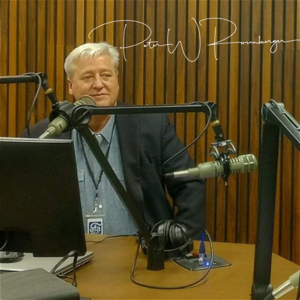
This is the Truth Network. Um Welcome to Hope for the Caregiver. This is Peter Rosenberger here on American Family Radio. Glad to be with you. This is the program for you as a family caregiver.
More than 65 million Americans right now serve as the caregiver. If you're one of them, you're in the right place. If you're not one of them, you're still in the right place because if you love somebody, you will most likely be a caregiver. If you live long enough, you're going to need one and this program is designed specifically for those who are Pushing the wheelchair. Who are up late at night organizing meds, cleaning up, doing things, going back and forth to the pharmacy to doctor's offices, meals, lots and lots and lots of laundry, and all kinds of things that we as caregivers do in our regular day.
I truly had no idea how much laundry and meal planning and so forth was just part of life, you know, as a character for I do so much laundry. And that's okay. We get it done, and that's just the way it is. But this program is designed to help you stay strong and healthy as you take care of someone who is not. And I'm bringing you four decades of experience.
I went through my first surgery with Gracie last month, 40 years ago, last month. It was my first. It was not her first. It was her 21st or 22nd. It's hard to count back in those days.
She didn't even have electronic records, everything was done on paper records. And then eventually it was transferred over to Microfeece, which then was put on electronic records. That's how long we've been doing this. It's hard for people today to really think through that because everything is so digital. But this was long before that.
And I remember how clueless I was. I mean, I was dumber than a box of hammers. didn't know anything about anything. I just knew that I loved her and I wanted to be there for her and take care of her. And I'll never forget this because when this comes around, it's such a teachable moment.
And if you'll indulge me for a moment in this opening monologue, I'll never forget this. I was sitting there. When the doctor came out, And he said she did very well. They were fusing her ankle, trying to save that right leg. And they were fusing her ankle.
It was pretty painful surgery, and the recovery was pretty painful. They came out and He said she did well. She's in recovery. She's going to be out of it for a couple of hours. Why don't you go take a break?
So I did. I went I went and saw a movie. I didn't know. I didn't know you were spo I know that now, but I didn't know then that you were supposed to sit there and hover and look like you were worried and fretted and sit around and talk about stuff. And I had Her family was there, her mom and dad.
and that I had a family member and his mother-in-law came. to this event I don't know why. never cared for and still don't.
Well, Turns out. while I was gone, I was the topic of all the news. Peter just can't handle it. Peter just can't handle it. It's just going to be awful.
It's just, you know, it's a good thing you found out now. and a friend of ours was there And she pulled me aside before I came back. She said, You need to know what's been going on here.
Well, I was stunned. I was truly stunned. I had no idea. I thought that's what you were supposed to do. The doctor said, take a break.
I took a break. And.
So I had to uh You know, deal with that reality. And it really shaped how I dealt with things as a caregiver for probably. The ensuing dozen or so years. It took a long time for that to bleed out of me, that I was supposed to hover and look like I was doing something. And by the way.
That lady? that was saying all this stuff, never lifted a finger.
Okay? Never lifted a finger. And so you know my views on critics. I give them as much attention as they provide it in help. You know, that's just the way it is.
And so she never lifted a finger. And I look back on that with, I don't have a root of bitterness, as the book of Hebrews says, but.
Sometimes it's close to it. But flash forward. Decades later, and I mean decades later. I'm in Denver. Gracie's having this massive nine hour surgery.
There was nobody there. I'm by myself with her.
Okay. Decades later, I'm still doing it. Nobody was there, just me. And the neurosurgeon, great guy, and this is a big, big surgery. And he comes out.
He's no, just before we go in, I remember getting there that morning, kissing Gracie. We're talking with him.
Well, I was kissing Gracie, and then I was talking to the surgeon. Just wanted to make sure I had that in order there. And and then he looked at me before taking her into surgery. He said, Now let me tell you something. This is going to be a long day.
Do not wait in the waiting room. Do not hang around this place. Go see a movie. Go rest, just relax. And his PA said to me, Hey, you did your part.
You got her here. We got her from here. You chill out. You go away. Go away.
How vastly different. My instincts were right forty years ago. But the people around me didn't have enough understanding. to be able to affirm that. They didn't know how to prepare me for the long haul.
No one did. And so that's why I do this program. That's why I'm talking to you right now. Because I would imagine there is somebody listening to this right now who's had that same or very similar experience where people were just ragging on you because you just took a break. Or you have ragged on yourself and punished yourself.
for even wanting to take a break. And that's why I do this program. And I keep that in my mind all the time. People will say, you know, why do you do this? And, you know, what's your show all about?
And all that kind of stuff. I tell you exactly what it's about. There's a twenty two year old guy out there somewhere who's in love with a woman with a broken body. Just like I was. and doesn't know what to do.
Doesn't know how to function. and needs somebody to come along and say to him, Son, here's what's coming down the pike. Here's what this is going to look like. Here's what it's going to cost you. Here's what it's going to feel like to wake up in a ditch and you're bloody and beat up and everything else.
And here's how you get back up and go. Here's what is stable. Here's what is solid ground. Here's what this looks like. That's why I do this.
And for everybody else that is volunteering to put themselves in this situation, I was talking to a group the other day that wanted to have me come and speak. And one of the people on the call said, Well, we have a program for caregivers where for people who are doing self-care and parents who are taking care of their children because they're caregivers. And she started going down that path, and I stopped her. I said, Let me stop you right there. That's not what I do.
I said, I understand the exasperation and the challenges that parents. Face over taking care of children. I get that. I've raised two myself. I understand that.
But for parents raising children, there is the expectancy that a child is going to be able to grow up and take care of themselves. The people I talk to don't have that. They have a child that is not going to be able to do that and function independently. And I said, as far as self-care, calling myself a caregiver, is because I take care of myself. That's not what I do.
And I understand what you guys are doing, but that's not what I do. What I do is deal with people who put themselves between a chronically impaired loved one. An even worse disaster knowing that that it's going to get worse. And it's going to get tough. and tougher.
As Barney Feife said, it's been it's going to get tough. It is going to get tougher. That's my audience. That's you that listened to this program. You wouldn't be listening to this if this hadn't touched you in some way.
And I'm taking all of these experiences that I've had with crazy people criticizing me for just going to see a movie. Never showing up, not helping out, but feeling free to criticize all of those kinds of things, everything I've learned, and distilling it down in a way that makes sense to you, my fellow caregiver. To say, here's where solid ground is. Stand here for a moment, catch your breath. Take a deep breath.
And we can be healthier as we do this. We could be calmer. By the way, I went the other day when I had this procedure done, and I'll give a report on that in a minute, but I had this procedure done about this cancer that I'm dealing with. And one of the first things they do is take your blood pressure.
Well, that morning they told me to not take any blood pressure medicine. That's the only medicine I take. And so they took my blood pressure and my blood pressure was 120 over 85.
Now That's good. That's good. But now I want you to think about that. That's 120 over 85 for a 40-year caregiver who's dealing with cancer. We can live a calmer, healthier, and dare I say it, a more joyful life.
Okay? We are not bound to be miserable. We could be healthier. and healthy caregivers. Do indeed make better caregivers.
And that's why I do this program. HopefortheCaregiver.com. HopefortheCaregiver.com. There's so much more out there, and we've got more to go. This is Peter Rosenberger, and we will be right back.
Nobody taught me how to be a caregiver. I've spent 40 years learning the hard way, and that's why I created caregiver.substack.com. No scrolling and hoping to find a nugget. Just articles, audio, video, and practical insights I've learned over four decades as a family caregiver. When I post something new, it goes straight to your phone.
or your inbox. And by the way, Every bit of it is in fluent caregiver. Caregiver. Substack. com Uh Uh Yeah.
Welcome back to Hope for the Caregiver. This is Peter Rosenberger. Glad to be with you. Hey look, you got your phone with you? Got a tablet with you?
Type this in. Caregiver. Dot substec. Caregiver.substack.com. It's very easy.
And I have at this page video, audio, print. All kinds of things. I've just kind of put all of this as my online library. It's very easy to get to. You just put your email in, you subscribe to it.
It's a free subscription. If you want to pay, there is a paid subscription opportunity for it. But there's tons of stuff out there for you as a caregiver right now. I didn't have anything like this. Like I talked about the last block.
Nobody told me any of these things 40 years ago when all these people were saying things to me and putting all this pressure on me. They didn't have, there was nothing like this. And so I'm determined to give you everything that I have to offer in this vein, that it's not I'm not here to talk about tips on caregiving per se.
Okay, I can't tell you how to take care of your loved one any more than you can tell me how to take care of mine. But what I can talk about are the things that plague us in Tear our hearts apart. On Wednesdays, I host a live show on another network, and I had a caller call in who had a question about what to. Tell his sister. Who was dealing with some caregiving issues?
And I'd love for you to go out and hear what I told this guy. And it's right there at the substack page, caregiver.substack.com. And you'll see it. It's Knowing What Is Mine to Carry. And it's just the audio that you can listen to, knowing what is mine to carry.
How many of us struggle with that as caregivers? That we know what is ours and what is not ours? That's the biggest issue I've dealt with.
Now you think about all that I've dealt with as a caregiver for four decades. The biggest issue, hands down, is knowing what is mine and what is not mine. When I overreach usually and try to take on things that that don't belong to me. And I freely admit that that's something I struggle with even as of today. And the only way that I know how to walk through that safely and confidently and peacefully.
is by the things that we talk about on this program, particularly with Scripture. understanding what is mine and what is God's. You know, I'm responsible for my thoughts, words, and deeds. But I'm not responsible. For Gracie's.
I'm not responsible for Gracie's. Physical healing. I'm not responsible for those kinds of things. That's way beyond. I didn't do this to Gracie, and I can't undo it.
But I can care for her. And I can do this with a glad heart. I cannot have a root of bitterness like I talked about that last block, which I don't have one, but I got you got to admit, that lady was just really annoying. And I, and there's always been people like that that'll come alongside you, and particularly church folk who will couch it all in a bunch of God talk. and put all this kind of pressure on you and and want to prophesy over you and everything else.
I, you know, you've been there, I've been there, but. The point is that we can't walk in bitterness about this. When I first started doing this program. And and I went on the air for the first time. Fourteen years ago this summer.
And they said it wouldn't work. They said, we don't see this being a viable show. And here I am now getting ready to have a thousand episodes on the podcast. And we've been doing this for 14 years. But one of the core.
Things I talked about when I first started. was that we as caregivers Our goal. is to one day stand at a grave. That's a tough thing to say, isn't it? That's good radio right there.
I mean, who's going to want to listen to that show? But that's our goal. I'm just being. Real with you? I mean, how many of us want to see our loved one have to deal with what they deal with without us.
helping them. I don't want to do that. They asked me, you know, when I do these procedures, they said, well, do you, what's your DNR and all that kind of stuff? I said, Doc, let me tell you something. Here's the deal.
Your job is to keep me alive, no matter what it takes. Until at least one day after Gracie's with Jesus.
Now, I can't guarantee that I'm going to go after her. But I want to live that way. That's it. I want you to keep me alive at least one day after her. That is the number one goal.
After that, I'm going skydiving without a helmet. I mean, at that point, all bets are off. It's okay. I've done my job. But my job is to make sure I stay strong and healthy so I can take care of someone who is not.
And as I told you the last block, my blood pressure. I'm I was really proud of that. I'm proud of the weight loss that I've had. And that I'm keeping myself in shape. I get out on the horse and so forth.
Yes, I'm dealing with cancer right now. It's treatable, we caught it early. That's the good news. That's what I talk about on this program because we can see to our own bodies. That's mine to take care of.
None of this that I've done for Gracie would be any good if I allowed myself out of negligence to become. Yeah. a miss physically, financially. Emotionally, spiritually, I'm no good to her if I'm fat, broke, and miserable.
Okay. I'm no good to her that way.
So I I have a responsibility, a stewardship responsibility. And so I want to take care of what is mine. to do. What is my responsibility? And not overextend into what someone else's is.
And that's what I talked about on this episode. And I hope you'll take a Listen to it because boundaries are important. Boundaries are throughout all of Scripture. God set boundaries in the Garden of Eden before the fall. There were boundaries.
Don't Eat from that tree. And then once they did, he set another boundary. They could go back into the garden. And you go through all of Scripture and you see boundary after boundary after boundary after boundary. You couldn't just walk out.
touch the ark of the covenant? You couldn't just walk into the Holy of Holies. You can do these things. There are boundaries. That's the Ten Commandments, the law, the boundaries.
And we had a boundary, the ultimate boundary was between us and God because of our sin. And Jesus through his sacrifice and the redemptive work that was done. Split the veil. But you know, boundaries are a part of our life. And so you can go out and listen to what I told this caller.
And to pass on to a sister that was struggling with this issue, if somebody was putting an inordinate amount of pressure on her. And you listen for yourself and see what you think of what I said. But the boundaries that we have The pushback we're going to get. Are from the people who want to take advantage of us not having boundaries. Think about this with the border, for example.
If we put a border up, who gives us the pushback? The people that don't want a border. I mean, it's real simple. If you lock your door at night. Where are the boundaries?
Okay, the door's locked. Who's going to be upset about that?
Well, the people that want to come in without having to deal with the locked door. Do you see how that works? I mean, this is not complicated. And it may be hard to enforce. This is what I told the caller, but the issue is not complicated, it's very simple.
No. Just no. You see, that's the kind of thing that we as caregivers struggle with. Because the situation becomes so convoluted, and it gets mucky. We don't know kind of where to turn.
It gets gray. How gray? Charcoal gray. And so we have to somehow step back away from this and get perspective on what is actually going on here. What is the clear directive?
And when God gives us directions, they're not complex, they may be difficult. But they're not complex. Don't murder. Yeah. It's not complex.
Don't steal. It's not complex. Don't take something that ain't yours. These are not complex things.
Now Because of our sin nature, yes, we're going to get all this stuff messed up, and we do. I understand that. That's why Reading Scripture Not just reading it, really studying it. putting it into your DNA. is going to help sharpen your thinking.
I have a my theology tutor who listens to this program every week to see if I'm learning anything, and then he'll call me up and fuss at me if I get something wrong.
So I have to be very, very careful. But he's a great guy. I went to him and said, look, I need to learn more. And this is several years ago. And he said, here's what's going to happen.
you're going to get a precision to your thinking. Because you're studying the things of God now. You're studying about God, the things of God. You are immersing yourself into this, and it's going to clarify your thinking. Go back to Jesus when he was 12 years old in the temple.
Why do you think they were astounded by him? I've heard Multiple people say for the same reason. because his mind was not muddied by sin. I often think about that when we get to heaven. Of all the things that'll happen is that we'll think clear.
We're not going to be encumbered by this, as Paul calls it, this body of death. We'll think clearly. Our thinking will be clear. Can you imagine what that's going to be like? Because I can tell you, as a caregiver, I don't feel out my thinking is very clear sometimes.
And it's always... you know, besieged with, you know, all kinds of craziness. Of resentment, frustration, fear, guilt, obligation, all those kinds of things. That's not going to be. part of our life anymore.
And we are Invited to trust God that even here on this earth our thinking can become clear. How do I know that?
Well. Listen to what scripture says. Let this mind be in you, which is also in Christ Jesus. Do not be conformed to this world, but be transformed by the renewing of your mind. Let the words of my mouth and the meditations of my heart be good and acceptable unto you.
The meditations of my heart. That's us retraining our brains. And we could do that, even as caregivers. In fact, I say to you, we must. That's the only way we're going to survive.
We have to retrain our minds. We do not have to constantly react. Like that lady that was criticizing me when I was just twenty two years old, I didn't know and understand. And I didn't have to react to her. I didn't have to buy into that.
I didn't have to carry that. I chose to, but Part of it is 'cause I didn't really know better. But think if I'd had a better understanding of Scripture at that point. of how I would have handled that differently. If I would have known that it was okay to go take a break.
Jesus took a nap in a boat. You know, it's okay. Elijah took a nap, the angel woke him up, gave him something to eat. You know, had a picnic. It's okay.
By the way, that's another thing I put out there. I talked about this last week. You can see that posted out there as well about having a picnic in the Valley of the Shadow of Death. A lot of people seem to resonate to that. And found that meaningful.
So I hope you'll take advantage of that as well. And you can read that and listen to that post about, you know, because sometimes the valley of the shadow of death is a long valley. It has been for us.
So what do you do? Do you just stay in a constant state of reaction all the time? Do you constantly just put everything on hold? Or do you just learn to live and recognize that, okay, I'm in the valley of the shadow of death. This is uncomfortable.
This is painful. I don't like it. It's scary. But it doesn't appear to be ending any time soon, so I need to be strong and healthy while I do it. And there's no need for me to put everything on hold when I can just be...
Right now, doing what is at my hand to do to be the best. Caregiver I could be, the best husband I could be, the best steward of what I know. And not fretting over these things because my mind would tell me to fret. But scripture tells me no. Fret not, and that has nothing to do with playing the guitar.
This is Peter Rosenberger, caregiver.substack.com. Hey, we'll be right back. If you're feeling overwhelmed, exhausted, or Hearing more than you could put into words, I've created something just for moments like that. Go to hopeforthecaregiver.com. Right at the top of the page, click the blinking Caregiver 911 light.
That page will take you to a short guided audio I made to give caregivers a quiet place to pause, breathe, and set the load down. You don't have to fix anything. You're allowed to rest here. Hopefortheregiver.com. Click on Caregiver 911.
Yeah. Welcome back to Hope for the Caregiver. This is Peter Rosenberger. Glad to be with you. HopefortheCaregiver.com.
Hey, do you ever fill out a bunch of government forms? Of course you do. Insurance forms, tax forms, all those kinds of things. You ever filled one out and you see a note on it that says, some type of statement. I certify that the information provided is true and correct.
False statements may result in civil penalties. Federal charges may apply, that kind of thing. You ever see that on the forms that you fill out? I've been signing and filling out forms like that, you know, since Ronald Reagan was President. And I Learned a long time ago as I dealt with all the medical bills and The insurance, the EOB, all that kind of stuff.
that you don't respect what you don't inspect. Have you ever gone back and looked at your EOBs that come in for your loved one or yourself? And say, okay, are they charging me properly here? Are they... Do it okay.
And uh This is long before smartphones and electronic records and artificial intelligence. I I used to sit at the kitchen table with a pencil, a calculator, and a telephone. and I'd combed through all these things. Uh I've argued with uh surgeons. hospital administrators, insurance executives, case managers, billing departments, and just about everybody in between.
And I've won all but two of those arguments, because if I didn't, guess who paid the price? Ray she did. and the consequences of their mistakes would land in our home. And so I had a stake in doing this. When your loved one's health and financial survival hang in the balance, you learn to confront, you learn to challenge, and you stay in the room long after everyone else wishes you would leave.
That's what advocates do, and that's what skin in the game looks like. Do you have skin in the game? Of course you do. You wouldn't be listening to this program if you didn't. And so if you'll pardon me for just a moment, I'm going to get on my soapbox.
Imagine if our elected officials. approach their responsibilities with even a fraction of that urgency. You know, we're getting ready to celebrate our 250th birthday. as a country. And we're preparing.
You know, all the stuff that's going to be involved with it. Monuments are being restored, fireworks, all this stuff. I like fireworks. Um Yep. But you know the colonists didn't risk everything over fireworks.
The Stamp Act was what really sent it over the edge, and it was never merely about stamps, it was about accountability and whether. The British government basically imposed this Stamp Act to put stuff on printed materials, newspapers, legal documents, licenses, all that kind of stuff, even playing cards. To pay for debts for the French and Indian War. And the colonists were upset about this because they didn't have any representation about it. They didn't have a say-so in the matter.
That's what led to the phrase no taxation without representation.
Okay, so we that's that's where this whole thing started. It wasn't about fireworks, it was about hey, you guys are putting this undue financial burden on us. and it was whether or not the government could impose those. While not having to deal with the consequences of those things, and that's what led to the revolution. And 250 years later, that question, it seems, remains painfully.
relevant. You know We caregivers, you and me. We're part of a group of 65 million Americans who provide an estimated, and I want you to think about this number I'm about to tell you. $1.2 trillion in unpaid care each year.
Now we keep loved ones out of institutions. You and I both do. We know this. Reduce burdens on the taxpayers and shoulder responsibilities. I mean, think about how much would it cost to replace me in my home.
You've heard a little bit about our journey. How much would it cost to replace me? I could hire somebody to do some of the tasks I do, but to replace me. What about you? How much would it cost to replace you?
And so we have kitchen tables covered with bills. We have loved ones who depend on us showing up again tomorrow. And then we turn on the news. And we see this fraud that's been going on. And it just Frost B?
And if this offends you, if you think I'm too political on this, Just turn off the radio because this needs to be said. You and I, as caregivers, are dealing with this. Painfully on the things that we are responsible for and trying to be stewards of. We'll stretch a dollar till it's translucent. And then we see what's going on.
We see programs that are consuming billions with little to show for it. but waste. you know, they preside over failure and then retire comfortably. While Americans are holding the bill, look at this thing in Minnesota, for example, with the governor up there. You think he didn't know what was going on?
You think the Attorney General there didn't know what was going on? You don't think California didn't know some of these things going on? There's a movie, now you may not have seen this, Batman, The Dark Knight. And the Joker's sitting there with Batman, and he tells him, he said, it's all part of the plan. You know, and you, you, after a while, you keep watching this stuff, and you're thinking, I'm not a conspiracy theorist that this is really happening.
You know, it's like you don't have to be paranoid to see it. This is really what's happening. And finding the fraud. It's important. But it's not enough.
And if I discover an error in a medical bill and nobody corrected it, what would happen?
Well, the problem stays there. I found what have you found errors in medical bills? If I identified the source of a problem and nobody addressed it. All I've done is just document my frustration. And at some point If we don't have some consequences, it's just all theater.
When I found errors, and I have found them, and I found serious errors with Gracie, I found medical errors, I found charting errors, I found financial errors over the years, I found it all. You can't do this for forty years and almost a hundred surgeries. You can't do this and not find something that goes wrong. And you address it and you move on. You don't have to sit there and make a big.
You know, hook-de-doo about it, but you do have to deal with it. It depends on what was done, of course. But we're watching this report after report, audit after audit. I mean, my goodness, investigation after investigation. They're finding the fraud.
Okay, good.
Now what? You found it.
Okay. We'll arrest these guys. Man, if you and I did a fraction of these things, look at the things we have to sign all the time. If you misrepresent filing your taxes by $1,000, they're going to charge you penalties, they're going to come after you, and we're having to do all these things, and yet we're looking the other way while this is going on. And somebody said, Well, Peter, your show is for caregivers.
You don't need to get political.
Well, This is not political. This is stewardship. This is what the heart of being a caregiver is good stewardship. And these people are doing these things to our country. To our cities, to our communities, and taking it out of people who desperately need it.
How many of you all would benefit? from a just a tiny fraction of what's being just thrown away to the Somalians. up in Minnesota. At the Quality Learing Center. I mean, bless their hearts.
I put that out there. For those of you who don't know, they didn't spell learning properly. They called it the Quality Learing Center. They're billing, you know, during COVID they were billing for meals for kids and there were no kids and there were no meals. How many of you all are struggling every single day?
And if we don't say something, What what's gonna happen? We've got to find the fraud, but we got to arrest him. And we also have to Um look at the ones who enabled it, who ignored it. who benefited from it, who failed to stop it, and benefit can also be in the way of votes. And if these people occupied positions of authority, what consequences are they facing?
Are they losing their job? loss of contract, they're being you know impeached. Public accountability. Criminal prosecution? Or do they just move on while the public absorbs it?
Well, there's nothing we can do about it. I mean, is that what's going on? We're not fixing a system if we don't deal with these issues. We're just rotating villains. You and I live under the penalty of perjury for virtually every form that we have to fill out.
Every one of those forms reminds me. of that fact that I am I am Accountable and Subject to prosecution if I get this wrong. If I knowingly misrepresent information, consequences are going to follow. But why should the people entrusted with billions of taxpayer dollars? operate under a lower standard than the citizens who are paying the bills.
And if the fraud occurred. Prosecute the people, man, name names. If someone knowingly violated the public trust, haul them out, identify them, hold them accountable. Not for revenge, for stewardship. I think about all the people who are Lacking.
From the generosity of this great nation, Because we have corrupt elected officials who look the other way or enable this or Just some of them just downright Plan it and scheme it. to defraud this country. They're saying in Minnesota now you're looking at probably $9 billion, maybe more. I saw one investigator saying: the only mistake we make is every time we think we know how much it's going to be, it's always worse. What's been going on in Los Angeles along with hospice stuff?
How many of you all dealt with hospice? You could benefit from really good hospice care. And yet, you've got people out there that are just absolutely stealing us blind. You know, I I'm If I sound impatient with it.
Well, that's only because I aim. And uh how many of you all have spent time paying for somebody else's mistake? Just show of hands. How many of you have actually had to spend time and money, hardship, paying for somebody else's mistake? Look at all those hands out there.
That's a lot of hands. Caregivers know what I mean. And we're tired. We're tired in a way that it's hard to explain to people how tired we are as caregivers, isn't it? That you know, I remember when I when they told me I was going to start with this radiation coming up soon, they said, Now you're going to feel a lot of extra fatigue.
And I looked at them and I said, I've been fatigued since 1986. I didn't know there were levels of fatigue I have yet to plumb. And so I've got to be prepared for that. I can't stay outraged about this all the time because that takes energy that I don't have. I can't afford that.
But we can pay attention and we can say something. You could say something to your elected officials. You could vote. For people who are going to hold the system accountable, and you can be involved as best as we can. I know we can't do a lot, we're caregivers.
You know, and I can't go fight City Hall. I can't get a pitchfork and run down there. But we can say something. And we can vote and we can be responsible. What does scripture say about this?
Proverbs 29:2: When the righteous increase, the people rejoice, but when the wicked rule, the people groan. There's a lot of groaning in this country right now, isn't there? I hear it in hospital waiting rooms. I hear it in the caregiver support groups. I hear it from people.
stared at medical bills long after midnight. We don't need another report telling us what we already know. These people are cheaters and liars and fraudsters. We need consequences. And for a very long time, those consequences have landed on the backs of people who are already burdened down.
It's time for those consequences to land on the people that are doing it. And that's my soapbox moment for today. And I thank you for indulging me on that. If you want to go and read that particular column, it's out there on my substack as well: caregiver.substack.com. And you can see that and get the audio of it as well.
I feel passionate about these things. I mean, you know, I know I'm a caregiver, I carry a lot of things, but I love this country and I want to see this country prosperous. This is a generous country. And in order to do that, we've got to be good stewards. This is Hope for the Caregiver.
We'll be right back. My wife, Gracie, is a double amputee, both legs. Over the years we've learned something important. It's one thing to stand. It's something entirely different when you're Standing With Hope.
Through Standing With Hope we provide prosthetic limbs for Gracie's fellow amputees. And we strengthen and equip my fellow family caregivers. Both are rooted in the hope of Christ. for the wounded and those who care for them. If you'd like to stand with us, Visit standingwithhope.com slash giving.
That's standing with hope dot com. slash giving. Welcome back to Hope for the Caregiver here on American Family Radio. I am Peter Rosenberger. Great to be with you today.
Thank you so much for listening, for being a part of this program. HopefortheCaregiver.com. HopeforthTeCaregiver.com. We've been doing a series for For some time now, on hymns that every caregiver ought to know, and I've covered a lot of ground on this.
Sometimes they're just little choruses. I call them hymns. Maybe when you think of a hymn, maybe you think of something that's been in the hymnal for 300 years. I look at all kinds of things. I look at.
Here's what I look for. I look for songs that are load bearing.
Okay. load bearing songs that can bear the weight of what we carry as caregivers. That's what I look for.
So I wanted to revisit one that I did several months ago. But I want to update a little bit more on the story. Last month, another family requested I play at a funeral. I've played funerals. My first funeral that I remember playing was almost fifty years ago.
And I've lost count of how many I've played since then, and I've lost count of how many times I've played this particular hymn that they asked for. When I ask a family, I say, okay, what would you like to hear at this service? Almost every one of 'em. It is well with my soul. Almost every one of them.
Amazing grace in it as well, which doesn't really speak a lot to the Hymn repertoire that is being taught in our churches. I'm trying to fix that problem. But I understand why. And of the two, it as well has been played, at least by me. at more funerals than anything else I've ever done.
And I was playing this. And and I want to Tell you something as a pianist. When you go to a funeral You're sitting there, you go through the receiving line, you'll talk to people, and then you're sitting there in the sanctuary or wherever this is at the chapel, wherever this is. And usually you're looking where? Straight a hit.
And you see the flowers, the casket, or some type of memorial. You see the pastor, and you see the backs of people's heads. You don't see a lot of faces. when you're in the congregation. at a funeral.
But when you're the pianist? You see the faces. And I've had this Unique vintage Point. of I don't know how many times In some individuals and families' worst day, and they've given me this honor. To sit in this place.
And it was for this particular service that I did last month. And I'm sitting there up there at the front, and I'm looking out at everybody. I could see them all. And the pastor is usually reading his notes or the family members that speak or so forth are having their notes and eulogy and scripted remarks and they're looking down and so forth. And a lot of times people are very nervous.
uh when they get up and speak. But I I play a pro a prelude usually. And then I'll do an opening hymn. I'll do sometimes special music. In this particular case, it as well was special music.
And I accompanied some singers on that, two singers, two sisters. And I've Looked at faces. Over the years. I I've seen things that maybe you probably didn't see at a funeral. That most people maybe not have noticed.
I've seen businessmen, ranchers, physicians, pastors, politicians. Mechanics, celebrities, school teachers, grieving children. I've seen family members that didn't get along, and I knew they didn't get along. And they shared a pew for an hour. I've seen old wombs set aside temporarily.
I've watched. Kids swing their legs on a pew because they don't really know what to do and their feet can't reach the floor. I've watched. Tears. fall from people who've spent a lifetime convincing the world they didn't cry.
It's hard to lie during a funeral service. the face and the eyes give it away. And as the pianist, I could see those faces. And it's just an interesting observation that I've had of people over the years of when I play and when I ask the family to help select the music, this is what they do with this song, and I'm happy to play it every time. Never get tired of playing it.
It's been a hundred and fifty years since Philip Bliss put the music To this hymn, to Horatio Spafford's text that has touched all of the whole world. I'm taking online piano lessons right now, and I was in a class just earlier this week. And a guy was in the Zoom class with us. We're doing this video online, and he's in Ireland. And he asked the teacher, Can I work on it as well for my piece that I'm working on?
You know, this is worldwide. But 150 years ago, Philip Bliss, who wrote so many other hymns, including Wonderful Words of Life. And then I talked about him a couple of weeks ago. I will see of my Redeemer. That was his last published hymn.
And he had it in his notes, and the train. When the train had a collision, and he got out and he found out his wife had, and so he went back to get her, and they both perished. But this guy wrote the music to it as well with my soul. Here's what my thoughts are. I'm convinced.
After hearing it for a lifetime, playing it for a lifetime.
Something happens in the fifth measure. Let me go to the caregiver keyboard here. Right here. When sorrows like sea billows roll. And you you know this.
And when I get there, that's the first minor chord in the song. First matter coin of some. And it lands with this word, sorrow. And When I play this, I leave room for this. I'm not in a hurry to play.
That that no. And get away from that chord. I want to just give it some space. And I've had music ministers try to conduct me faster. you know when I'm doing this and I just ignore them.
Because grief does not benefit from haste. Grief doesn't benefit from haste. I'm not trying to just You know, have a piano solo and showcase the music. I've played this too many times. I do not require attention on this for me, but the text does.
The song does require attention. And I've watched what happens in the room. when people hear it. The head's lower. Their shoulders sagged, their eyes filled with tears.
And in that moment, the hymn permits grieving people. to tell the truth. The sea billows are rolling. And sometimes I'll invite the congregation to sing it. And I'll watch people exhale.
Some will just mouth the words.
Some sing through tears, some stand motionless and stare straight ahead. I've watched grieving fathers, mothers, spouses raise their hands heavenward. as tears ran down their faces, but their faces were beaming. Will that happen? And occasionally I'll just stop altogether.
On the last chorus, and let the congregation carry the hymn themselves. And there is something profound. about hearing a room full of grieving people give collective grief. The collective voice. There's something about this hymn.
And it was it was written Not Just about something. and about a tough time, but it was written from within Saul. And it doesn't hurry people through it. It doesn't offer clichés or pretend that pain isn't pain. It it acknowledges the sorrow, but it never gives it the last word.
But do you feel what this song does? It truly is a load-bearing song. And I come back to one line that has really. kind of laid down on my heart more than others. Whatever my lot.
Thou Has what? Taught me to say. taught me The sorrows like sea billows are given. We know that. You're a caregiver.
I'm a caregiver. We know this. We see sorrows all the time, sometimes daily. They're gonna ride for us. All eventually.
The question is not whether the suffering Comps. The question is, what have we been taught to do when it arrives? What do we reach for? when things around us are unsteady. I have played this hymn for people who sang it with confidence, and I've played it for people who could barely get the words out.
I've watched some singing as a testimony. and plant a flag while they're doing it. And I've Whilst others singing it as a prayer, I didn't Some seem to embody it.
Some aspire to it, they hope that it is well with their soul, but the requests keep coming. And I would imagine I'll have many more ahead of me of where I'll play this hymn. But after nearly fifty years sitting at the piano bench, I have never lost my sense of wonder at what happens. When a room full of grieving people Stand together and sing. It is well with my soul.
To Observe to participate in, and it is truly an honor every time. I play this for a family. And I look at that as a peculiar honor that I get as a pianist. And I'm just deeply grateful for that. And so, this is a hymn that maybe needed to be brought up twice in our series of hymns that every caregiver ought to know, because every caregiver ought to know this one twice.
It is a great hymn. And I appreciate you letting me share that with you. We are. We are out of time. If you want to hear the full version of me playing this, it's on my CD songs for the caregiver.
If you want to read my thoughts about this, you can go out to my substack, caregiver.substack.com. Go out there today. Look at what I've put out there for you. Caregiver.substack.com. And you can see all the things that are out there.
I am very grateful for the time. That you gave me today. I look forward to each time, and I will see you next week. This is Peter Rosenberger. This is Hope for the Caregiver.
Gracie, when you envisioned doing a prosthetic limb outreach, did you ever think? The inmates would help you do that. Not in a million years. What does it mean? I would have ever thought about that.
When you go to the facility run by Core Civic and you see the faces of these inmates that are working on prosthetic limbs that you have helped collect from all over the country that you put out the plea for. And they're disassembling. You see all these legs, like what you have, your own prosthetic legs. And arms, too. And arms.
When you see all this, what does that do to you? Makes me cry. Cause I see the smiles on their faces and I know. I know what it is to be locked someplace where you can't get out without somebody else allowing you to get out. Of course, being in the hospital so much and so long.
When I go in there, and I always get the same thing every time. These men are so glad that they get to be doing, as one man said, something good finally with my hands. Did you know before you became an amputee that? Parts of prosthetic limbs could be recycled? No, I had no idea.
I thought we were still in the. 1800s and 1700s. I mean, you know, I thought of peg leg, I thought of wooden legs. I never thought of. Titanium and carbon legs and flex feet and C legs and all that.
I never thought about that. I had no idea. Now that you've had an experience with it, what do you think of the faith-based programs that Core Civic offers? I think they're just absolutely... Awesome, and I think every prison out there should have faith-based programs like this because.
return rate. of the men that are involved in this particular faith-based program. and other ones like it, but I know about this one. Are just an amazingly low rate compared to those who don't have them. And I think that that says so much.
That test so much. about Just, that doesn't have anything to do with me. It just has something to do with God using somebody broken. to help other broken people be whole. If people want to donate a used prosthetic limb, whether from a loved one who passed away, You know, somebody who outgrew them, you've donated some of your own.
What's the best place for them to do? How do they do that? Where do they find it? Please go to standingwithhope.com/slash recycle, and that's all it takes. It'll give you all the information on the what's that website again?
StanningwithHope.com/slash. Slash recycle. Thanks, Crazy. Take my hand. Lean on me.
We will stay.