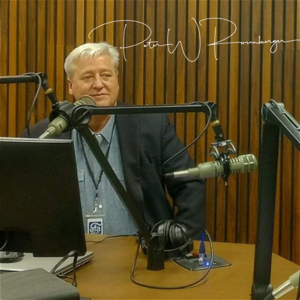
This is the Truth Network. Welcome to Hope for the Caregiver here on American Family Radio. This is Peter Rosenberg, and this is the program for you. as a family caregiver, a show for family caregivers. Who the funk it?
Well, I funk it. I thunk it over 15 years ago. But This month marks my anniversary date of being on American Family Radio. We started this eight years ago. Here on American Family Radio, I'll never forget Jim Stanley, program manager at American Family Radio, and he and I sat down and we talked about this program and he He said, and I kid you not.
He said, This will either be one of my better decisions I've ever made or it will go down in flames. Do not lie.
Well, with that kind of rousing endorsement, what more assurance and confirmation and affirmation do you need? And yet here we are, eight years later, and Jim, we have not gone down in flames, so you can rest assured tonight. That we live to fight another day. It's a program that is designed to reach this vast population that is often overlooked. I'll never forget.
I went and don't y'all repeat what I'm about to tell you, and I mean this. But I'll never forget, a friend of mine wanted me to go on a big... Um program That is designed for Boy, how do I say this without giving it away? They have a big, big n Audience That's family related, and it's not American Family Radio, okay? American Family Radio actually has to be on the network.
But this was another, it was a show. And it and Big show. Oh, I'm digging deep in here. But anyway, a friend actually called and said, hey. You ought to go on this program.
And this person has a great deal of influence. And she called this group to say, You ought to have Peter on here to talk about caregivers. And they wrote me and said, Well, we're not really interested in doing a niche market. And I thought, Wow. you know a niche market 65 million Americans.
That's not a niche market. And I realized at this point that, you know, like so many other times, caregivers are often overlooked. We just don't think about it. until you're doing it. And people say, well, guys, that's kind of a depressing subject.
And nobody wants to hear that. I said, no, no, that's not true. Number one, it's not depressing because we're talking about what is hope for the caregiver. And how can talking about concrete things that will actually lift someone's eyes and their spirits and their hearts, point them to the gospel, point them where they can stand? How can that be, number one, depressing?
And number two, how can that be a niche market? All I'm doing is speaking to this vast group of people who are truly overwhelmed and want somebody to be able to say to them, here, stand here for just a moment and catch your breath. And that's what this program does. And that's what the American Family Association took a chance on with me, Jim Stanley. They have not thrown him out, it has not crashed and burned.
And I think here we are, eight years this month. We went live on American Family Radio, and it was just a wonderful time. I've had the same time slot. For This whole time, and we used to do the show live, but we were having a difficult time staffing it with producers. And I would like to go back to a live show where we could do it, call in and so forth, but we can't because we just didn't have the staff.
And particularly during COVID, it got pretty gnarly. But we do the best we can with what we have. And I try to respond to people who ask me questions and send me text and emails and so forth. And if you want to do that, it's all out at my website. Go to hopeforthecaregiver.com and you'll see where it says contact.
And I really do read them. I really do try to respond. I met a guy that wrote me this week from Don and Jackson. Vernon, I want to thank you for that. Again, I want to appreciate that.
And you'll keep Vernon in your prayers. His journey as a caregiver ended last week. He's drawn a great deal of comfort from this program. And and that's and he's why I do the program. That's one more reason.
And I really appreciate hearing. from you on. And I know that the situation is tough and I know your journey is hard and And I am committed to To offering what I have learned, what still sustains me as a caregiver now for more than 40 years. How do I navigate this? And at the crux of all of this is that unswerving belief That he who began a good work in us is faithful to complete it to the day of Christ Jesus.
That is the only bedrock that I have, is his faithfulness. Not mine. I heard a thing a while back, a long time ago, and it always stuck with me, and I don't remember who actually said it. But it's a great quote. It's difficult to cry out to a Saviour that you don't think you need.
Have you noticed that with folks? When things are going their way and so forth, you know, they're marginally interested.
Sometimes in the things of God, some some people are not everybody, but a lot of people are. But wouldn't it would it hit you? That's when you start praying a little differently.
Well, with caregivers, it never stops hitting us. And our prayers change and our life change and the way we approach scripture. We have to learn to stand on something. You're either going to, as Jim Stanley said, you're either going to it's going to be the greatest decision you ever made or you're going to crash and burn. But there's no middle ground.
And that that's a great summary of our Christian walk. trusting Christ with our salvation. and taking him at his word, Or we're going to crash and burn. I think that's about as descriptive as we can get. And so, what does that look like, though, as a caregiver?
And when we're dealing with the things that we deal with, and it's relentless and it's non-stop, it doesn't end. until we get to a cemetery.
Somebody's got to go to the cemetery. Either the caregiver or the person are taking care of it. That's the only way this thing's going to end. And that forces different kinds of questions for us about. Christian, what do we believe?
How do we how do we Reconcile this. How do we look at What we're dealing with. and understand the promises of God in that context. changes things, doesn't it? You ask different questions.
When you know that you're going to wake up tomorrow and do exactly what you did today, but it may even be harder tomorrow. And you may be doing it with less resources. And that's not going to change. And that does sound kind of bleak. To the casual.
Observer and participant. But when you start digging into the things of God, With the intent of seeing him in this of meeting him in this, of understanding him deeper in this. That's a game changer. And that's what flips everything on its on its head. And that's what this program is about, is to say to you, my fellow caregiver.
from one caregiver to another, Here's some things I've learned. Over forty years of this, of relentless caregiving. Here's what I have seen. Here is my testimony, if you will. It's not my opinion.
Sword of touched. would have seen. would have heard, would have experienced. My opinion is worthless. I've maintained that for The fifteen years I've been pursuing helping my fellow caregivers.
My opinion is worthless. Nobody cares about my opinion. I don't even care about my opinion. It's Bupkis that's a Yiddish word with a last name like Rosenberger. I can use Yiddish words.
I've actually read The Joys of Yiddish, it's a real book.
So my opinion is, Bubkiss, why would it be helpful to you? What does my opinion matter? Nothing. It doesn't matter anything. But by experience.
Now that's a different story. And it does matter. and, more importantly, my experience with the things of God. That's what matters. The applied application, the, the, the, the, Real life experience.
As I've told you when I do my hymns at the end of this program, I always do a hymn that every caregiver ought to know. It's the Field testing. thereof of what that hymn is talking about. I've field-tested this. I'm not just saying, oh, this is a nice melody.
Oh, this makes me feel good. No, no, I have field-tested this stuff. And I still do. And so, when I'm looking at situations with Gracie, for example, and she's the same way. And if we're going through something rather painful, I'll look at Eric and I'll start a scripture and she'll finish it.
I say, Thou wilt keep them in perfect And then she'll say, Peace, whose mind is stayed on thee. The steadfast love of the Lord never ceasest. And that's how we do it. and we apply it in the midst of our circumstances.
So Eight years ago, Jim Stanley An American family took a chance on me. And if you don't like this program, then you need to write Jim Stanley. Ha ha ha ha ha ha ha. But I am very grateful to them. Thank you for eight years.
Thank you for seeing that this isn't a niche market that. People are truly hurting and equipping me and helping me to go out there and minister to them to the best I can with what I have. I'm very grateful. This is Peter Rosenberger. This is Hope for the Caregiver.
We'll be right back. Nobody taught me how to be a caregiver. I've spent forty years learning the hard way, and that's why I created caregiver.substack.com. No scrolling and hoping to find a nugget. Just articles, audio, video, and practical insights I've learned over four decades as a family caregiver.
When I post something new, it goes straight to your phone. or your inbox. And by the way, Every bit of it is in fluent caregiver. Caregiver. com Uh Two t Yeah.
Welcome back to Hope for the Caregiver. This is Peter Rosenberger. HopefortheCaregiver.com. HopeforthTecaregiver.com. By the way, I have a lot of things.
Out. online for you you can get to it from Website hopefullycaregiver.com. You'll see all the kind of resources and everything else that I have. Caregiver 911, it's all there. And if you want to go straight to my sub stack, which I would encourage you to do.
Caregiver.substack.com. What is Substack?
Well, it's an online newsletter. Kind of. But it has video, audio, print, and so forth. You could do the app right on your phone. And it'll send you a push every time I put something out there.
And I don't put long things out there. I mean, like, I've got an interview, a video interview that I just did with Johnny Erickson Tata. And that interview in its entirety will be on my sub stack.
Now, you'll see clips of it on social media.
So I have like Hope for the Caregiver group, I have Hope for the Caregiver page. The group, you have to answer some questions to join. And I'll post things in there, but I have the page and I have the group and I'll put things on my social media and all that kind of stuff. But everything is going to be housed. When it comes to Interviews and articles and so forth at it by Substack Caregiver.substack.com.
If you're not familiar with it, it's very easy to use. And like I said, I have an entire library of things.
Some of it is you have to subscribe for, but I put stuff out there for free every week. And I hope you'll take advantage of it. I didn't have anything like this. I had to forage for everything I have.
So, what I've tried to do is. Distill it down to something that's going to be usable to my fellow caregivers today, not tomorrow, not this afternoon, right now. You know, that kind of thing.
So I'm all about in the moment of what's going on with that family caregiver. But you can see all of that. You can get to it either through hopeforthecaregiver.com or just straight to caregiver.substack.com. Speaking of which, I have an article out there that I think you're going to like. I wrote about this last week.
We live in a tiny town.
Okay. Our little town is I mean you blink and you missed it. And we have a cabinet shop that's fairly new that's across the street, and then we have a post office. And that's it. We used to have a restaurant.
and a bar and and it burned down. And it was a great restaurant. I mean, great food. I've been eating here. I remember the first time I ate there back in the 80s.
And it's changed owners a couple of times. It was a great place to go, but it burned down.
So it was really kind of sad. And then there was a little store That had it was a gas station and it had little sundries in it, and they closed down.
So it's just a post office and a cabinet shop, and that's it.
So that's where we gather. You know, when you go to see somebody, you see them at the post office. My father was that way. He met the whole town at the post office, and I guess I'm carrying on the tradition. But it's a very small town, and the closest town.
From there is, I mean, that's That's almost that's 10 miles down the road for us to get to the post office. You know, we don't we don't live on a paved road. And then you have to go another seven miles to get to the town where we live. In this county, we don't even have a traffic light in the entire county. I mean, this is we're pretty remote out here in Montana.
So we go to the post office. The closest thing to the post office where you can meet people is actually the dump. Because we have to haul our own trash. And I go to the dump every time I go to town because I hit, there's, it's just basically a strip.
So I can hit the post office, and then seven miles down the road, I can hit the dump, and then I can go to the family dollar, and I can go to the grocery store, and then swing by the local clinic where I can pick up a script or whatever I need for Gracie. And then I make all my runs and come on back to the house.
So that's kind of the way it works around here. But I was going to Bozeman because I had to go pick up some specialty scripts for Gracie. And I stopped by the post office and there's a bunch of friends. We're all laughing. And catching up, you know, I thought about just calling the Postmaster General to see if we can put a lunch counter there since our restaurant burned down and we spent enough time.
I wonder, can you do that in a post office? And and so anyway, I said, finally, I I gotta get going, I gotta get to Bozeman, and Bozeman is you know an hour's drive away, and and I have to pick up some specialty scripts over there over at Costco. And without missing a beat, The postmaster looked up and said, Would you mind picking up some emodium for me? Yeah. Yeah.
And I I looked at her and the crowd there and I said, Taco Bell has made it all the way to our little town in Montana. I said Taco Bell's sixty miles away. You know, and and they all laughed. And I and then I said, Okay, look here. You know I'm a writer.
And this is definitely going in my column. Because I write a column for the local paper.
Well, I'm also putting it on my show because that's funny. I mean, when's the last time you went to the post office? You had a group of people talking, and then the postmaster said, Hey, can you pick up some immodium for me? I mean, when's the last time you had this? And so, but I didn't realize this.
I should have known this. You think as a caregiver for 40 years, but you got to stand in line now at the pharmacy to get. Emodium. Did you know that? I mean, I thought you could just get it off the shelf.
I don't do a lot of emodium buying, clearly. And sure enough, you got to stand in line and you got to ask the pharmacist to go back there and get it for you. I don't know why that is. And particularly in the midst of a Taco Belt outbreak.
So I shouldn't have known that.
So.
So I I uh stand in line and I'm getting the scripts and then I I get this and and I'm I'm getting a modium. I was commissioned to do so by the postmaster there in our little town.
So, this is an official jaunt for me. And about a couple of days later, we're having what passes for a block party. Here off of our again, we're 10 miles from a paved road, and there's only one major artery that comes up. And it's the county road, and then eventually turns behind our place. It goes into the forest and becomes the Forest Service Road.
So if you come up. That road there's not other l places to go except into the forest. And those roads kind of wind around and eventually take you another place. And you could actually stay in the forest all the way up to you get to the Continental Divide up there near Butte. You could probably stay in the forest.
Pretty much all that you have to cross an interstate or two every now and then. And you could probably stay in Forest all the way to Canada. For the most part, except with a couple of interstate crossings.
So there's not a lot of places to go. Yeah. And so this um This dirt road is Um home to well, when we lived in Nashville, for example, It's 10 miles down the the mountain. And and if in ten miles radius of our home in Nashville. It's hard to count how many people live there.
I mean, we're talking thousands and thousands of people. in a 10-mile radius. Downtown Nashville. Was less than six miles from us.
Now, you think about that, you know, just how densely populated.
Well, 10 miles here in any radius, I mean, if I go. got a south, then I'll I'll have Maybe. Um dozens of people. If I go west, I'll have maybe... a dozen or so.
If I go. you know, north, back up into the forest. there's there's a somebody lives up at a homestead, so there's two or three up there. And then if I go east within 10 miles, Maybe. A couple dozen, maybe.
I mean, that's how sparsely populated it is. And so anyway, so friends of ours were having a block party. That's our version of it. And they got a creek there by their house, and the picnic tables were set up, and the cows were, you know, providing their commentary from the pasture. And the wind was coming through the trees just gently.
And it's a beautiful place over there where they have, it's down the mountain a little bit. It's a couple of miles away. We're still on our street, basically, if you will, but it's a couple of miles away. And it's they have plenty of food. And he's from North Carolina originally, and he knows how to make barbecue, pulled pork barbecue, which is out here.
Most of everything is beef, but it was quite good. He did a good job. He asked me, he said, you know, from one Carolina guy to another, how did I do? I said, oh, yeah. It was good stuff.
And I asked him if it was kosher pork. And and but anyway, we're having a good time. And Then all of a sudden the sky darkened. I mean, it just, I mean, the storm came up and they said we'd probably get an afternoon storm. And, you know, back east where I grew up, if you had a.
A summer storm in a summer shower in the afternoon while you're trying to have a picnic. Everybody probably runs for their cars, you know, you find shelter, but that's not the way it is out here. July rain is, man, everybody just lights up. I mean, they're just greeting it with smiles. To ranchers, the raindrops become dollar signs.
Because I remember one of the ranchers, he was there, and we had a pretty good gully washer. And he said, he told me later, he said, that's $100,000 rain. But we just don't think about rain back east the way we do out here in Montana. You know, it just, we didn't have a lot of droughts growing up where I was. But out here, you're always 10 days away from a drought.
We don't have the humidity. And so things get dried up pretty easily.
So, growing hay and feeding livestock and everything is really important.
So, we're just enjoying it. We kind of moved the food and the picnic tables into the friend's garage, and we all just kept busy. We didn't even miss a beat, and the rain was going down on the steel roof, and we just had a great time. And and it's just Kind of struck me that about what we have out here and that communities Um, it isn't just a place, it's the people who gather here. I mean, this vat, we drove miles to get here, and we're still on our same street.
Uh, well, it's not even a street, it's a dirt road, but um. But it's about gathering together and neighbors still help neighbors. And maybe that's what we're missing a little bit in our country today. But we share meals, we celebrate rain, and sometimes you get deputized to be a mail courier. And I was thinking about this, I was picking up that emodium: neither snow nor rain nor heat nor taco bell shall stay this temporary courier from the swift completion of his rounds, especially if a modium is on the list.
And so I didn't know if I was supposed to put that in local mail delivery because we have a slot for that at the post office. I wanted to make sure I got back in time because when somebody asks you to pick up a modium 60 miles away, You know, there's a level of urgency to this that comes into play. And I wanted to make sure I fulfilled my responsibilities for that. But I really honestly didn't know that you had to stand in line at a pharmacy to get it from behind the counter. Do you have to do that where you are?
Uh, I didn't know that, but uh, I don't eat at Taco Bell a lot either, so there is that.
So, anyway, if you want to see the story, it's out of my substack, caregiver.substack.com. And I thought I'd share this with you all, uh, make you laugh a little bit. We have a good time, and I love being in a small town. I really do. And it's been a real joy because Gracie and I had such a frenetic life in Nashville, just medicine, doctors, hospitals, pharmacy, all this stuff, all the time.
And we didn't get any of the. Space to breathe. for decades and decades. And there was never quiet. I mean, I went out the other night and just looked at the stars.
And they're so, it's so clear that you feel like you'd almost reach up and grab them. You can't help but seeing how great thou art, or fairest Lord Jesus, when you're looking at this. But anyway, that's, I thought you'd enjoy the story. Caregiver.substack.com if you want to see it. This is Peter Rosenberger.
This is Hope for the Caregiver. We'll be right back. My wife, Gracie, is a double amputee, both legs. Over the years we've learned something important. It's one thing to stand.
It's something entirely different when you're Standing With Hope. Through Standing With Hope we provide prosthetic limbs for Gracie's fellow amputees. And we strengthen and equip my fellow family caregivers. Both are rooted in the hope of Christ. for the wounded and those who care for them.
If you'd like to stay in with us, Visit standingwithhope.com slash giving that standingwithhope.com Slash giving. Welcome back to Hope for the Caregiver. This is Peter Rosberger. Glad to be with you. HopefortheCaregiver.com.
HopeforthTeCaregiver.com. Hey, a lot of people have been writing and asking, How are you doing? I'm doing fine. The radiation treatment is over. and I will be doing blood work and assessment and so forth.
Over the next several months and from here on out. But the docs were very, very encouraging and pleased.
So I'm good. I even started riding a horse again. And you're thinking, Peter, that's crazy. Not the first time that's been used to talk about me. It's crazy.
I get that a lot. But I I love getting out and riding horses and it's and it's The doctor cleared me for it and said it's okay. But I did make one tiny mistake. I took Bella. And Bella hasn't been written, you know, I haven't written.
For some time now, and she's the most spirited of the lot. And these horses belong to Gracie's brother-in-law, but I get the benefit of being able to ride them. I'm really the only person that does ride them. And my son rides with me sometimes, and then when they come out, sometimes they'll ride. But I try to keep them in shape, and I enjoy riding them immensely.
And it's, but Bella's got a little Tennessee walker, so she's got a great gate. But at the same time, she gets a little bit full of herself. And And I I was writing her and I said Bella, I said, Hey, no pun intended. And I said, hey, Bella. Look, I've just been going through.
you know, treatment for prostate cancer, do you suppose you could take it a little bit easy? And you know what she said. Nay.
Okay. I'm sorry. That's a that's terrible. That's bad. We need to just stop right now.
And that's a that may be my single worst joke that I've ever told. But, you know, anyway, I had a good time and I was able to go out and take a look at the cows. And we've got a new calf out there. We have a rancher friend of ours that we partner with, and he'll put his cattle on the property in the summertime to summer graze and keep the grass down and so forth. And we've got a new calf that I saw, a little bitty thing, too.
And the mama's a longhorn. And she's a pretty big beast of an animal. And this little calf, man, she's a little tiny baby. But they're cute as buttons. And it was fun just to get out there and look at them.
And then I'm writing Hank. I'm going to write Hank and Marley. and Sierra next. And uh Hank is As far as the s the smoothest ride. Was just walking along.
Hank, and Sierra's a little bit fat, so she doesn't move real fast. She just kind of plods along. But Hank is a good horse, but you can almost hear the tubas playing, you know. But they're all good horses. I mean, this is rugged country out here, so you're not riding in a pin.
or on a flat surface, you're you're in some rough country. And you're going through stuff, and I'll go out and check the fence lines to make sure that we've got a tree that fell down. Over one of the fences, we got to get a chainsaw out there and. Work on that, and just always kind of stuff that needs to be done around here. But it's in the cool of the evening I like to go out on horseback 'cause see, I'll serve dinner to Gracie and me and and we'll um um still have we eat at, you know, roughly six o'clock and then we'll still have roughly um Two or three hours of daylight left.
Well, actually, three hours of daylight left. And there's nothing quite like coming back. Right as is it starting to get kind of dusk, you know, and and evening. And it's very still and quiet and gives you a chance to think. And you know, I've missed that.
My I I don't play golf. I don't do, um I don't do that kind of thing. I mean, that takes a lot of time. Whereas I can be on a horse. and be back here At the house.
within you know fifteen twenty minutes tops I mean, I can if if Gracie calls I always have my Bluetooth on, so sh if she calls me. I can come scurrying back to the house. I need to probably have a hitching post out in front of the house so I could come right up to her. And I told her, though, I said, Look, if I come in, I'm going to be a little bit dusty and dirty.
So just, you know, make sure it's a real emergency. And but she's, I'll call her and sometimes I'll video with her when I'm out there looking at the cows and so forth. And she enjoys that. And so we're going to get her back out there and do some more stuff. And so she can, and she is getting better.
She is improving. And and for that I am um grateful and we're getting her um There's more tweaking going on with her legs. When you get new legs, and she has a new, she not only has new legs, but she has new body style because her. Everything about her has been altered, and it's been this way for dozens of years. And so it takes a lot of time and a lot of tweaking.
Her prosthetist videoed with me the other day. And I'm on the floor, and I have a special tool that I'll do it. It'll say, okay, adjust this a little bit, adjust this, just to give her some relief, because otherwise, we got to. Driver, you know, 60 miles one way to him. And so it's a lot easier sometimes to make the small ones.
And I've done that for years. uh to help with um making you know Her, like, give just it's hard to explain with prosthetics, but it when you have somebody that loses their limb with diabetes, for example.
Well, there was no structural damage to the limb. It was all vascular and that kind of stuff. But with trauma Gracie was just her body was just broken in so many different places. They stopped counting at 200 breaks when she got to the ER. The resident surgeon who ended up we watched his entire career from resident to retirement.
And he said, he told Gracie's prosthetist many years later, he said, We stopped counting at 200 breaks. Just just everything was shattered. Not all of them were compound fractures, but she had a lot of compound fractures. And so it, it, you know, her whole body is just whoppy-jawed. And And so it takes a long time.
To adjust to this, and you can't do it too fast. And that's something I've written about, and I've talked about on this program about the lady that I knew years and years and years ago who was also in a car wreck, and she lost about two inches of bone on her right leg. And she had this horrific walking gait where she limped because her leg was now shorter. And she did this for 25 years. And then.
She showed up at work one day. And she was walking straight, and an orthotist had put in a lift to her. her shoe. and she was able to walk straight and it truly changed everything about her. It was a stunning transformation.
And three weeks later, she came back. She's limping again. And I said, what happened? She said it was just too painful.
Well, this was this was decades and decades ago. And I carried that thought with me for a long time. I used to think, why didn't she just push through the pain? And so Gracie's prosthetist from Tennessee, who's also an amputee, has worked with Gracie since 91. He he told me, he said, look, that's not her fault, that's the orthodox fault.
He said, when you have A person who has had that level. Gap. And been dealing with that for that long. It'd be one thing if it dealt with for, you know, for a month. But when you do it that long, her whole body adapted to that.
and you don't change that quickly. You have to do tiny, tiny adjustments. And you have to do them over a long period of time. It's almost micro-adjustments. And I thought, you know, how much is that like our Christian life?
I mean think about that. You know particularly, you know, when we Uh um going through a l a transformation. from being saved and to to walking in in Christianity. As an adult, you think about what led us to that point. You know, sometimes you have to ask, what were we saved from?
You know, I remember, do you remember Sinbad, the comedian? And He said, um he said, guys. When you're dating a girl, And she tells you. She saved. It might be helpful for you to ask what was she saved from?
I always thought that was kind of funny. I mean, I'm not trying to be a theologian on this. It just, it was, he was using it as a thing. He said, she was in there at the Bible study one night and she's looking at the Ten Commandments and it says where thou shalt not kill. And she's right, never again, never again.
Thank you, Lord, you know, kind of thing. And he said, it might be helpful for you to know that piece of information. But when you've had a radical change in your life like this, you don't just bounce back from this. There's a process, and that process is basically what scripture refers to as sanctification. And that's the way it was with this woman.
I mean, that what she was living with. Was a physical example of what happens with us spiritually, that we are so damaged and so broken. And you can't make that kind of swing, but we don't have a Savior who is ignorant about those things or that makes error in judgment. We have a Savior who understands that. and does what is necessary slowly over time.
even though it seems like it's moving like glacier slow. But he's making all the adjustments. in order for us to walk properly and straight. And that we won't have that kind of pain that this woman had that drove her back into an old thing. We have a Savior who understands this in ways that we can't even process.
And that's great news for us as caregivers because I think if you look at your life, for example, and this thing just seems to go on and on and on and on. I understand. Forty years. I get it. But what if what if the purpose of this is to correct something that was so broken in us.
but do it almost painfully slow.
so that we don't revert back. Like this woman did, give up hope. And just go back. What if that was the overarching thing going on with us? Would that change the way you look at this?
Certainly changed the way I looked at it. And I thought, well, maybe maybe this is not. You know, haphazard. And of course, it's not because scripture tells us it's not. Scripture says in Ecclesiastes, our pastor here has been going through the book of Ecclesiastes: there's a time for this, there's a time for that, there's a time for this.
You get a whole bunch of these, and you realize that God is not playing defense here. And he never does. Did you notice that God doesn't play defense. He Always has purpose in everything that he does. He's not haphazard.
So if this is taking a long time to do, like it's taking with Gracie's legs, we have to go at it very, very slowly.
Well, there's purpose for that. And it's ultimately working towards her benefit so that she can walk on these new prosthetic legs with her new body shape because of all the surgery she's had, 17 just in the last six years. to straighten her back up and she's been bent over for so long.
Well, that's going to take some time. And it's going to take wisdom from her practitioners. How much more so? in our spiritual walk, how much more so in everyday life for us. that it takes time.
Okay. Sometimes for me, and I think about the years of freneticness and traffic and driving back and forth to doctors and pharmacy and all the things that I did in Nashville. And I come out here and I get out on a horse. And I can just breathe a little bit.
Sometimes I just need to ride. A horse a little bit more. Maybe not Bella as much because she's a little bit spirited. And I was like, really, Bella, come on, give a man a break here. And so Hank and Sierra, they understand that.
They move at half the speed of smell. And that helps. But sometimes it just takes time. But we have a Savior who doesn't waste time and he knows exactly what he's doing and we can trust him and that is hope for this caregiver. We'll be right back.
Welcome back to Hope for the Caregiver. This is Peter Rosenberger. Glad to be with you today. HopefortheCaregiver.com. HopefortheCaregiver.
And if you have some thoughts, comments, whatever, feel free to go out there and you can send me through the contact form. I do read them. And I try to respond to them.
Sometimes I call people because it's easier when I'm doing the laundry or the dishes or whatever. I'll call them and I'll have the same thing. People say, well, I didn't expect you to call. I said, well, it's a lot easier than trying to text or write an email. And if you don't mind listening to the dishes clatter in the background or, you know, me with my head in the dryer or something.
But, you know, feel free. And uh or sometimes I'll call them when I'm running to town uh and doing my errands. Uh you'll hear me going to the post office, to the dump, or whatever it is I'm doing out here in Montana.
So feel free. And and I would um I appreciate all the things that that I get from listeners. You know, you never know quite who's listening to this program. And so. It means a lot that you all have found what I do here on this program to be helpful to you in your journey as a caregiver.
If you want to be a part of what we're doing, by the way, There's two ways. And um, standing with hope is the is the ministry that Gracie and I founded uh 24 years ago, and It's we launched the prosthetic limb outreach first to Gracie's fellow amputees. and we're getting ready to send a shipment. Of prosthetic supplies. We've been collecting them when they go to a prison down in Arizona.
And when people donate, use limbs and so forth, they go there and inmates help us disassemble this. We started partnering with Core Civic 15 years ago this year, and we're about ready to hit our thousandth leg. That we have recycled the parts from.
Now, we don't recycle the socket, just the hardware, the knee, the adapters, the connectors, the pylons, the foot, all that kind of stuff can be recycled if it's in really good shape. And usually it all is. But the socket is made for that patient. But we'll make a brand new socket and we'll purchase materials over in West Africa. And we work with the clinic there in Ghana.
and we will purchase that so that they can make legs for their own people. We've been doing this now for over 20 years. And uh we launched our first um prosthetic limb outreach uh in two thousand and five. And and then we launched the caregiver outreach in 2011. of reaching out to my fellow caregivers.
I've been on the air now, as I said in the first block here with American Family. since 2018, but I went on the air in 2012. And the first time I did a radio show for it, and then I started writing and so forth for fellow caregivers.
So we've got some longevity in this thing. And if you want to be a part of that, you can go out to standingwithhope.com. Standingwithope.com. And there is a link at my website and so forth if you want to, whatever way you want to get there, but standingwithhope.com/slash giving. And we could use your help if you want to help us ship these supplies over, if you want to help support the caregiver outreach, if you're finding what I'm doing here has value to you and you say, you know what, I need to give back a little bit to this and help Peter do it for more people and push this message out there.
You know what? I'd be grateful. I really would. And it's a tax-deductible gift, non-profit 501c3, standing with hope. And it's standingwithhope.com/slash giving.
And you can go out there today.
Okay, let's go. To our hymn of the week. I think I've actually done this one before, but it's worth going back and doing again, simply based on what I was talking about in the last block here about time and God's timing and Ecclesiastes. And our pastor here has been going through the book of Ecclesiastes. And Diane Ball wrote a little praise course back in the 70s, I think 1978, drawing from Ecclesiastes 3:11.
He has made everything beautiful in its time. And and I look at some of those old Maranatha songs, the Maranatha music. And they were very simple, a lot of them, but they were all very memorable. I mean, she wrote that. You know, that's almost 50 years ago.
It's hard to believe that, isn't it? And it's one of those things we can. recall it to mind almost instantly. Lord, please teach me, show me every day that, and as you're teaching me your way, that you do just what you say. In Your time.
Ecclesiastes 3.11 says He has made everything appropriate. in its time. He has also said eternity in their heart. Yet, so that man will not find out the work which God has done from the beginning even to the end. That's the new American standard.
But in the ESV, He has made everything beautiful in his time. The new King James. He has made everything beautiful in its time. Also he is but eternity in their hearts. What does that mean to us as a caregiver?
Eternity in our hearts And that that's a little that sounds a little ethereal, doesn't it? But what is the point of all this?
Well, the word eternity. Hebrew behind that i is olam. I think I'm saying that right. and it carries the idea of eternity, the the ages or awareness of something beyond the temporal world. In other words, God has placed within us a longing for what is eternal.
while not granting us the ability to fully comprehend his plan.
So there's that tension of we know this is, there's something more going on here, but we can't see it. And so, what do we do?
Well, we trust it. And these scriptures remind us that we can trust him because it's revealing the character of God. Everything is always revealing. God, and it points to this the way I don't scripture. And so as you're a caregiver, And you're dealing with things that are very, very difficult to deal with.
In his time, in his time, he makes all things beautiful. In his time, let's go over here to the caregiver keyboard.
Okay. Alright, you know this song. It's been around for a long time. In his time Um And here. Yeah.
You Makes all things beautiful. The phone and his tour. Lord, please show me every day. As you're teaching me. Your way.
Dead. Do just be A beautiful. In your time. I mean, it's just incredibly simple. But, you know, we've heard it for, I love a lot of those old Maranatha hymns.
Technically, they're just praise songs, I understand, but not just praise songs. They're great praise songs, and you can sing this anywhere. Yes, to. Yeah. Yeah.
Oh See? Beautiful. You hear that Gerswind walked down in his time. Lord, please show me. every day.
As you're teaching me Yeah. Away that you do just What you say And Your time Please show me every day. As you're teaching me Your way that you do just. What you say And In your turn. And that is our Caregiver hymn of the week, a caregiver, a hymn that every caregiver ought to know.
It's not technically a hymn, it's a praise course. But again, when you're in the middle of the craziness of your life as a caregiver, really, honestly, do you have? The wherewithal to always bring to mind four stanzas and you know all that kind of stuff. No, we don't. But we can hum to ourselves, can't we?
That's a song right there you can sing. in the hospital. Know it, done it. You can sing it in the laundry room. You can sing it in the bathroom when you're cleaning up something.
Been there, done that. You can hum these songs as you go around the house. And what you're doing is you're, even if you can't even get the words out, maybe you don't remember the words, but it's hard not to remember in his time, in his time, in his time. But that becomes a confession. And we think of the word confession means we're going to confess our sins.
And yes, we do need to confess our sins, but a confession also means so much more than that. In a church you'll have a confession of faith. It's like a creed. A confession is agreeing with God about what is true. And so if we're confessing our sins.
Well, guess what? We're agreeing with God on what is true because we're sinners. Uh but we're agreeing with them about What is true about who he is, about who we are, our sin, and our need for his mercy. And so, when you sing this song around the house or in the hospital room or on your way to the pharmacy, in his time, in his time, and there may be tears coming down your eyes when you do it. I mean, and that's okay, that's all right.
but you're still agreeing with God about what is true, because you're using His words. In His time He makes all things beautiful. And we have that longing for eternity. while dealing with the here and now that we quite We can't quite get. I mean, we're at odds with that.
And so we are disciplining our spirits to say, in his time. He makes all things beautiful in his time. And if that's all you can get out, As you go through the day, that's enough because you're using God's words to anchor yourself into reality. You're agreeing with him on what is true. If he's lord at all and he is Lord of all.
And this is how we anchor ourselves and settle ourselves down. Thou wilt keep him in perfect peace whose mind is what? stayed on The And so every time you agree with God about what is true, It is settling you down and equipping you to better deal with the craziness of this world. the craziness of our life as a caregiver.
So that's why I picked this one out for this week. It's been on top of my mind and it fits perfectly for our life as a caregiver. Again, thanks a lot to American Family for eight years of taking me on. You know, I've often thanked Jim for his deplorable lack of judgment. And so I am grateful that he took a chance on me.
And thank you all for. Eight years here on this network of being able to bring you things that I've learned and things that sustain me as a caregiver. Hopeforthecaregiver.com. I hope you'll go out to the website, take advantage of what I have out there. You can go to my sub stack from there.
You can get involved and support us through Standing With Hope. There's so many things out there. It's Caregiver 911, all at hopeforthecaregiver.com. This is Peter Rosenberger. We'll see you next week.