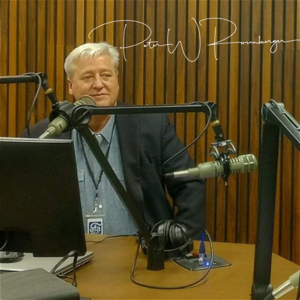
This is the Truth Network. Welcome to Hope for the Caregiver. This is Peter Rosenberg. Glad to be with you today. Hope for the Caregiver dot com.
Hope for the Caregiver. Dot.com, and I am thrilled to be able to spend some time with fellow caregivers to talk about ways that we can stay strong and healthy as we take care of someone who is not. And sometimes it's easier for some than others. For some, you say, "Well, Peter, you know my situation's not all that bad. You know I can deal with it.
That's great. God bless you." And then there is some that are just like, "I don't know how I am going to get through the next ten minutes." Well, hang on, just listen to the program, and we'll we'll figure that out together. How about that? And we'll we'll work through some of these issues. We'll talk about them, and explore what what can we do.
How can we as caregivers stabilize ourselves emotionally, physically, fiscally, spiritually, while dealing with something that doesn't ever stabilize? That it is erratic. On a good day, up and down, crisis after crisis, or drama after drama, or disappointment after disappointment, sadness after sadness, pain after pain, things that just by nature are chronic and don't go away. How do we how do we function in that? How can we stay calmer, healthier, and dare I say it, even more joyful while serving as a caregiver for someone who's going through brutal circumstances that don't seem to end anytime soon?
But they require us to have our A game, and that's what this program is all about. You ever read John fourteen twenty seven, where Jesus is saying? Peace I leave with you. My peace I give to you, not as the world gives do I give to you. Let not your hearts be troubled, neither let them be afraid.
What do you think about that? What what what are your thoughts when you hear that verse? We use the word peace a lot in our vocabulary. We want peace in our homes, peace in our country, peace in our own minds. For a caregiver, peace might look like an uninterrupted night of sleep.
But what what is peace? Does it mean that the phone doesn't ring with bad news from the hospital? Does it mean that the medication's working? Does it mean that the appointment goes well? Or for one afternoon, nobody needs anything urgently?
Is that peace? Is that financial security? Is that peace? Dave Ramsey has this thing: financial peace that we don't have to worry about money. And all those kinds of things is is that available to us when we do have problems going on?
For example, there's a lot of people that have very nice homes. Everything's paid for. They're healthy and they're wealthy, and they may feel a sense of peace because they don't have a lot of drama going on in their lives of the things that you and I think about maybe with drama. Does that mean that we can't have peace until those things are settled, till the checkbook is balanced, till everybody's getting a good physical report, or we don't have any aches and pains, or you know all that kind of stuff? I mean, you see where I'm going with this—that we use the word peace and we throw that.
Around a lot, the dictionary describes the word peace in terms of freedom from conflict, worry, and disturbance.
Well, I guess that makes sense. When the disturbance stops, we feel relief; we can breathe again. But what happens when the disturbance doesn't stop? What happens when the diagnosis remains or the the bills keep coming? The person you love still needs care, and tomorrow's responsibilities are waiting for you when you wake up.
You know they're going to be there, but it never ends. You know, I mean, you you think about terms of of a woman going into labor, and you know the joy after the baby is born. You know, and and it makes it kind of eclipses the pain. You know, because they're so excited to have the baby there. But what if there's all labor and no baby?
That's that's a lot of the life of a family caregiver. Can we have peace? Jesus told his disciples. You know, he was preparing them for his departure. They they were all troubled about that, and he said, "You know, look, settle down, simmer down." That's the southern version of what he said.
Peace I leave with you. My peace I give to you. Not as the world gives do I give to you.
Well, now, is he saying the way the world gives things, or is he saying the kind of peace the world gives? He didn't say you're not going to have another troubling day. He didn't say that bad things aren't going to happen to you. He knew bad things were going to happen to him, and he told him that. He didn't tell them that every ordinary comfort in this world was worthless either.
A quiet evening is a gift. How many of you all have had in the last week a quiet evening? And you think, well, that was pretty good evening, you know, or or a quiet morning with a cup of coffee. It's a gift. It's a wonderful and and and an answered prayer for healing.
It's a gift. You're thinking, I mean, you're going to the doctor. You're thinking you're going to get a bad report, and you know what? You get a good report, and that's that's a gift. And feels like a hundred pounds off of your shoulders.
And when you get help from a friend, that's a gift. And and we receive those gifts with great gratitude. But Jesus says His peace is given differently, and the world can can offer us a measure of peace when the circumstances cooperate. But you and I know this as caregivers that circumstances don't always cooperate, do they? And Jesus was speaking to men whose circumstances were about to get worse.
Yet he spoke of peace as something that he could give them, and he promised that the Father was going to send the Holy Spirit. They wasn't going to abandon him with his departure. You know, he's he's not going to leave him. But he told them not to let their hearts be troubled. He was addressing fear in people who would still have reasons to feel afraid.
You know, I think sometimes we hear that, and we can imagine that there are believers who never feel anxious, never cry in the car, and they never, you know, lie awake talking to the ceiling fan. I don't know if I'm the only one that does that. But in In my forty years as a caregiver, that that doesn't describe me. I, Gracie would tell you, I stay anxious, I stay keyed up. I these things weigh heavy on me at times, and I don't think that's what Jesus is talking about.
And He didn't rebuke His disciples for recognizing danger. I mean, he what He did was give them a reason to trust Him when the danger came. I I don't see anywhere in Scripture that we don't. Pray about the actual trouble where we've just got to white knuckle this thing through and put on a brave face and whistle past the graveyard. I think Scripture is very clear that going to God and saying, "Look, this hurts.
I'm afraid of this. I don't know what we're going to have tomorrow. When we go to this doctor tomorrow, I don't I don't know what this is going to look like. And I'm I'm a bit afraid of this thing. What do you do in moments like that?
How do you pray? What does that look like to you? You know, if we have to wait for every trouble to subside or every problem to disappear before we feel at peace, is is that is that in in correlation with what Jesus offered, or is He saying that we can be in peace as we go through these things, that we can be settled? You know, I can't help but think of the Apostle Paul when he was beaten. I mean, they say if you took off his tunic, he had 195 scars for where he was beaten five times minus one, forty minus one, five times.
So it it was because they they wouldn't beat him more than forty times because that's when I mean when when you get to forty, that would kill him.
So they always backed it off forty minus one.
So he had 195 lashes. You know, he cried out when this happened. I mean, at least groaned. I mean, he didn't just kind of stoically look up to heaven and just kind of, oh yeah, give me another beer, fellas. You know, you know, it hurt, and yet, what?
After he'd been beaten one of those times, he in silence were singing hymns around midnight.
Sounds like that's the kind of peace that Jesus is talking about, that we can be settled, no matter what's going on around us. It doesn't mean it doesn't hurt. Doesn't mean there's not tears. It doesn't mean there's not trepidation on our part, anxiety, and that's why we speak to ourselves with these words that Jesus gives. We have to remind ourselves of these things.
Jeremiah does this in Lamentations three. He said, "You know, I recall all these. I mean, I am looking at the the the pain and the the anguish and the wormwood and the gall. He calls it. He said, 'This, this I recall to mind, and therefore I have hope, great as I faithfulness.' He's reminding himself.
He's preaching to himself. And so, my question to you in this opening block here of the program today: Do you preach to yourself? Do you do that? Do you follow in that long line of men and women called by God who have preached to themselves in the moment of their agony and their anguish, and and maybe you have to do it every day. Do you do this?
Maybe it's worth exploring. What do you think? You know, I was at the piano the other morning when Gracie got up and and I played for her. This is the day that the Lord hath made. I will rejoice, and she started singing with me, bright and early in the morning.
And maybe that's a great way to start off to remind ourselves that we are at peace with God because of what He did through Christ. That's the peace He gives us, and that is hope for this character. This is Peter Rosenberg. We'll be right back. Welcome back to Hope for the Caregiver.
This is Peter Rosenberg, and I am very glad to be with you. Hope for the Caregiver. dot com. Hope for the Caregiver. dot com.
We're talking about basically preaching to yourself. Do you ever do that? I know we talk to ourselves as caregivers, or at least I do. I don't know if y'all do. Do you?
Do you talk to yourself? And replay certain things that you say. Oh, I should have done that better, or whatever that kind of thing. Or, but well, do we talk to ourselves about the things of God? Do we preach to ourselves?
Do we remind ourselves of these things? If not, why not? If so, what is the effect? I mean, do you get yourself agitated, or do you settle yourself down? You know, I mean, that's.
You know, simple question. I mean, what what happens when you do this? Let let me let me go to scripture and give you some examples of the psalmist does just that.
Some of it's David, some of it's whoever wrote some other psalms.
Some of them we don't know, but David tells himself to wait. Psalm sixty two five. That's not something we like to hear as caregivers to wait, is it? But that's what David says. For God alone, O my soul, wait in silence.
For my hope is from Him. Wait in silence. Do ever do do we ever do that? Do you do that? Do you wait in silence, or is it pressing on us so much that we are just groaning and fill up our Time with all kinds of noise and distraction, but to just wait in silence.
I mean, that sounds very difficult to me. It may be very easy for you, but it's not for me, and I struggle with that one. David tells himself to remember Psalm one o three: Bless the Lord, O my soul, and forget not all his benefits. Bless the Lord, O my soul, and forget not all his benefits. David is commanding himself.
To number one, bless the Lord, and number two, don't forget what He's done. Don't forget all that He has given, all of the the riches that God has poured out, all the benefits. And He's telling himself this. He's reminding himself of this. I talked about in the last block about Jeremiah reminding himself, saying, "You know, I recall this to mind, and therefore I have hope." And then the psalmist says here in one sixteen seven, "Return, O my soul, to your rest, for the Lord has dealt bountifully with you." Now he's talking again to himself, and he's he's preaching to himself, and you see this throughout Scripture, in numerous occasions, where there's this reminder to settle ourselves down.
To speak to our own soul. Why do you suppose that is? How important is that? Do you ever do that? You know, and I've been making this practice a lot with Gracie and me, particularly as we dealt with a lot of the, the high stressors we were having with all these surgeries and the pain and everything else.
And so I will say a scripture to her, and then she'll finish it. For example, I'll say in Second Timothy, for God has not given us a spirit of what, a spirit. He's not given us a spirit of what. Finish the sentence. Fear.
But what does Paul say? But of power and love and a sound mind.
Now, how important is that to you? How important is that to us as caregivers? We face things that are very. Fear-worthy, they're frightening things. Do we preached ourselves in the middle of these things?
You ever said those things to yourself as you're walking down a hospital corridor, or as you're up in the middle of the night, or as something is going horribly wrong? And and do do we do this? Please understand, I am not the example to look to for this. I'm just. By forty years of doing this, have learned forty years of how not to do it.
I have created so many mistakes, made so many poor decisions, and I've tried it my way for so long that out of just sheer exhaustion, I'll go back.
Okay, Lord, you know, I'll do it your way, but not because I'm wise, but just because I'm depleted. I'm done. I'm. I'm. I'm.
I'm whipped. But then I go back and look at these scriptures, and they make an awful lot of sense in those moments. In fact, I have found that there is such a clarity in those scriptures, but it usually doesn't come until I have stopped filling my mind with everything else and stop trying to figure out this and and run around like you know an idiot, and I. I have, I mean, y'all, y'all know me by now. You know, good and well, I'm going to learn this the hard way, and I'm going to learn this after causing a lot of problems, and I have to learn how to go back and make amends.
But I, I am trying to do this, and I am preaching to myself here. Psalm 42:5. Let's go back and look at this one. Why are you cast down, O my soul, and why are you in turmoil within me? Hope in God, and and He's not denying the turmoil, but He's speaking to His troubled soul and saying, "Hey, hey, hey, hey!
Big picture here. I mean, that's that's the way I'm looking at it. Big picture. Why are you, why are you this way? Don't you know who you are?
Don't you know who you believe? More importantly, you you are, you belong to Him." You believed him, you know. Go back and look in Genesis fifteen. Abraham believed God, and it was accounted to him as righteousness. He took him at his word.
He believed him. My favorite prayer in the Bible is the guy that, when Jesus was, I think he was son, was throwing himself into the fire, and it was an epileptic or something and going on with him, and he said, "You know, Lord, I believe. Help my unbelief." You know what I thought? That is that is such an honest prayer, Lord. I believe, help my unbelief.
You ever prayed that? You ever you ever said that to yourself in the midst of whatever else is going on, Lord? I I I believe help my unbelief, and I mentioned Jeremiah and Lamentations when he said, "But this I call to mind, and therefore I have hope." But then he goes on in verse twenty four. He says, "The Lord is my portion," says my soul. Therefore, I will hope in Him, and and and he's having this internal dialogue.
We as caregivers have lots of internal dialogue. I'm gonna I'm gonna take a. Big leap here, and say that you're part of that group that has an internal dialogue, that is second guessing, self berating, frustrated, seething at times, filled with resentment, frustration, fear, anxiety, despair, all of those things, and we talk back and forth to ourselves, and and we. Self flagellate, you know, and that's a good. You don't hear a good flagellation reference, but that's whipping, you know.
And and for those of you in McDonough, but it's it's, you know, every now and then I want to work in a good high dollar word, but we we do this to ourselves on a regular basis. I have yet to meet a caregiver who hasn't.
Now, if you are that person, please call me and let me know, because I'd like to meet that person who does it. But every caregiver I've met has done this, and yet the model we have in Scripture is to preach to our souls, to preach to ourselves, to encourage ourselves in the Lord, as David did at Ziklag, when his own men rose up to kill him; they had stones in their hands. And David, it said, encouraged himself in the Lord. He preached to himself. Do you do that?
Do you look for those those passages in Scripture that lift your head up, that re-anchor you in in something that's solid, and not putting these expectations on yourself to be anything other than what you are? You're just preaching the Scriptures to yourself. And I was reading a book the other day, and it was talking about because this happens, we should do this. And the and the writer said we should do this, but it really wasn't a very good explanation. I always want to know why.
Why should I do that? Why should I do this? And in in his case, he was saying we should trust God with this and this and this. And wait a minute, why? Why do we trust God?
What? Why do we do this?
Now that may sound irreverent to you at first blush, and I understand that, but I don't mean it that way. I want to know more than just should. Here is why we trust him because he has revealed himself to us in such a way that it warrants our trust.
Now we could start with all of nature. We can start with the heavens declare the glory. We can start with all these things, but then all of these things ultimately point to the cross. I don't know why Gracie has to suffer, and I'm not just going to squint my eyes really hard and and and and screw up my face and get. I'm going to say I'm going to trust him with this.
I'm going to trust him with this.
Well, why am I trusting? I'm going to trust him because of what happened at the cross. Period. Full stop. End of discussion.
The more I understand the redemptive work that occurred at the cross, the more I'm willing to trust Him with things that I don't understand. When I first started this journey, I wanted to know everything. Tell me why? Why are you doing this, God? Why are you doing?
Why? Why? Why? Why? Why?
I want to know now. And I was incredibly demanding, and I was incredibly irreverent, and and I was I was a real jerk about it. And over time, I stopped asking why, and I started asking who Who is he that warrants our trust? Who is he? Who am I?
Who is he? And I started examining these things. That's why you you you go to the book of Job and God did this to Job. He said, "You know, where were you when I was doing all this?" And Job realized, "Oh, oh, oh, oh, oh! I've really messed this up." Isaiah, when he saw the Lord high and lifted up, and he's like, "Man, I shouldn't even be here.
I shouldn't be here. This is Lord. I need to get out of this place." When when Peter realized something special about Jesus, and he said, "What depart from me? I am a sinful man. We shouldn't even be here." But sometimes our pain and our struggles and our heartbreak and our disappointments and the chronicness of our life—we're in such pain.
We just want to get relief from pain, and we need assistance in lifting our heads. Our souls are cast down within us, and we need assistance to lift up our heads. And that assistance comes from the very Word of God.
Now, either we can preach it to ourselves, or we can cultivate people around us who will remind us of these things, but in a way that is tangible in the midst of our distress. Not just saying, "Well, just trust Jesus." I've had people say that all the time to me over the years. Just like, "Well, just trust." No, no, no, no. I need people to say even more. I need people sit with me in it and help me understand what does the gospel mean in this.
How can I wrap my head around this? Forget not all his benefits. What are the benefits of the Lord? And we go back to what we said in the first blog: the peace of God. I am at peace with God because of Christ.
And therefore, as I go through these tribulations, and go through these trials, and go through these difficult things, I am reminded of this: that I am at peace with God, and that is hope for this caregiver. We'll be right back. Welcome back to Hope for the Caregiver. This is Peter Rosenberg. Hope for the Caregiver dot com.
Hope for the Caregiver dot com. About seven years ago, maybe a little bit more, I started a caregiver support group here in our little community. First three weeks, nobody showed up. Just me at the table. I went down there every Thursday at ten o'clock, and I had some coverage for Gracie, or she she was able to.
I could leave her alone at the time, a little easier. But now on Thursdays I have a lady that comes so that I can go to the caregiver support group and do this. But for the first three weeks, nobody showed up, and then little by little, one person, two people, three people, they. Trickled in, and we just had a marvelous time. We've been doing this for for some time now, and we just go around the table, and we ask one another.
We just check in. How are you doing? What's going on? And we have very frank conversations. Not Sammy Dean, but just frank.
Sorry. If you love Sinatra, but we do, we have honest conversation, and sometimes we we we cut up and laugh and and and have a good time, and other times there are a lot of tears. We got a we you know have to keep an ample supply of Kleenex. There, we talk about everything from insurance to long term care of what's going on and the way facilities have sometimes been very disappointing for some of the folks that come to this group. It's just everything.
We've got family members. That are of of the attendees that are alcoholics, and it just weighs heavy, heavy, heavy on them. And just we cover a wide variety of things, and then we always end with prayer, and we go about our days, and we go back to doing it, and then we'll we see each other the following week, and then we'll. You know, stay in touch as a group. We have a group chat that we'll we'll do.
And I'm looking at actually taking this nationwide. And I don't know if you think I should. I mean, what what do you think? You think that would be something that be worth doing? And uh, and and modeling after the things that I've written about and talked about and so forth, and and helping pastors do this in their churches.
It is it is ministry. Just pure ministry. That's it. There's, it's not anything else. There's no, there's no money involved.
There's nothing for them to. The only thing you do is, and we we do it at our little church here. And the, um, the pastor is very gracious and and has a big pot of coffee for us when we get there. And and people just leave us alone. We this is our time as caregivers.
And everybody around the table speaks fluent caregivers. We're gonna have to get a bigger table. But we have incredibly meaningful conversations, and one of them came to mind. I talked about this. I think I shared this story, but it's been a while back.
But we we were talking last week in our group, and this came up, and and I thought, you know what? I am gonna I am gonna address this again because it was such a a wonderful moment with this fella, and there there was a guy that he was caring for his wife with Alzheimer's. And the the question was, what does solid ground look like while you're caring for someone? And again, we've been talking about peace this whole program. But where do you stand?
Where where is a a solid place for you to stand? And we had some great conversations about this. And this one fellow said his wife kept asking the same question. Over and over and over and over, he had just taken a trip to to Salt Lake, and you know it's pretty decent drive. And the entire trip, she's asking questions and the same questions.
And by the time they were getting back, he he was just exhausted. Same questions. And to her, it may have been the first time she asked it. That's what it felt like to her because. She she can't remember.
She can't hold the thought any longer. But to him, it was like you know the one hundredth time kind of thing. I mean, how many of you all are like that? I mean, that that have somebody in your life like that where it's just the constant repetition. And he was just you know he was pretty weary of it.
And and as as he thought about it. And and she asked him one more time. He said, "In my heart, I sighed for a moment, and then I said to myself, 'He's got this. Go ahead, answer her question.'" And he meant that you know God had this. He he couldn't make his wife remember the last answer, or he couldn't even shorten a drive.
He was tired, and she was going to ask again. But he trusted that God was with them in that car, and he could answer the question in front of him. His sigh matters; it really does. He did not have to feel patient before he could act with patience, and whatever words he used. He gave his wife more than information.
He wasn't just answering a question; he was giving her assurance that he was still there with her. She did not have to remember his last answer to receive this one. You follow me on this one? You remember a couple of weeks ago when I was talking about the questions that we all ask, and we were delving into theology because we ask, you know, why would a good and loving God allow such a thing? Virtually everybody's going to ask that question when they're faced with some kind of disappointment or trauma of a certain level.
I mean, you know, if you if you stub your toe, you're probably not going to ask that question, but if your foot gets amputated, you might. And the other question, one of the other questions that people ask, and this is throughout all of Scripture, how long, O Lord, how long? And you think about how many times that question appears in all of Scripture. I did a search on just ten of them. Psalm three: How long must my soul remain troubled?
Psalm thirteen, one through two: How long will you seem to forget me? How long must I wrestle with sorrow? Psalm thirty-five, seventeen: How long will you look on while my enemies attack? Psalm seventy-four, ten: How long will the enemy mock God's name? Psalm seventy-nine, five: How long will your anger endure?
Psalm eighty-nine, forty-six: How long will you hide yourself? Psalm ninety, thirteen: How long before you return and show pity to your servants? Psalm ninety-four, three: How long will the wicked celebrate? Habakkuk one, two: How long? Long shall I cry for help while violence continues?
And Revelation six ten, how long before you judge, and bring justice? That's just ten, and and we could go more. How many times is that question asked throughout Scripture? And how many times is it implied that people ask? For example, when Moses was before the burning bush, the Lord says he's heard the cry of his people.
Evidently, they've been crying for a long time. When Hannah was praying at the temple, you know, do you think she she was asking this? Beseech the Lord to give her a child. You know, I go through scripture after scripture after scripture. How long?
How many times has God heard the prayer? How long? And I love what this man said. In his heart, he says, "You know, he's got this. Go ahead and answer her question." God's got this.
Go ahead and answer a question. Our heavenly Father is not unfamiliar with repeated questions. He is not. How many questions have you asked of Him in the dark recesses of the night? How many times have I done it?
How long, O Lord? How much longer? Not that we want our loved one to pass away. That's not it. But it just there's there seems to be no relief, particularly when you're living with someone with chronic pain like Gracie's, and we Gracie and I were just talking about this the other night, that she has a why that helps her get up and face this in the morning.
Knowing that tomorrow she's going to be in just as much pain as she was today, and she has a very firm why she does this and how she directs her thoughts. I talked to Johnny Erickson Tada; she has the same thing. But don't you think both of them have asked this question in those very very lonely moments? I know I have, and I'm pretty sure Ken Tada has as well. And I'm willing to bet that so have you.
And we're just like, Lord, really, really, Lord. How many times have you said, "Really"? I remember when I got my cancer diagnosis early this year, and I was looking at my computer because they posted it to my chart, and I saw the results of the MRI before I actually met with the doctor, and I was like, "Really, Lord." Really, and by the way, I'm going to find out next in the next two weeks. I think next two or three weeks, I got my appointment to go back and see, make sure everything is good. They they radiated me pretty hard, and and they put me in the Chernobyl room.
So they said, "You're you're young. You're you. We caught this early. You you could handle this," and I. Thought well, okay, if you're you're the professional, so as I go in there, into a device that looked like something that Doctor No wanted to do to Double O Seven, but anyway, we'll find out.
I digress. But how many times have I gone to God for the same assurance that that man's wife sat in the car with him and asked for? I just read to you so many psalms that are full of questions, asking again and again and again why, how long, Lord. We bring them because we hurt or fear what lies ahead, even if it's the next ten minutes. We want to know that He's with us, and I've asked those questions more times than I can count.
But here's something I've found: the more I offer that kind of reassurance to someone I love, even if I do it with a sigh. The more at peace I become with the questions, I still bring to God, I cannot make every uncertainty go away for Gracie, or for me. I can't do a whole lot, but I can answer again. I can trust that He hears me again, and I can care for the person. Right beside me.
So when we went around the room, asking what does solid ground look like, the consensus became what David so beautifully said in Psalm twenty-three: "Yea, though I walk through the valley of the shadow of death, I will fear no evil. Why? For Thou art with me." That is our assurance. We will not get a how long answered easily. Maybe not on this side of heaven, but we have assurance that He's with us right now, right here, in this moment, and in the next, and in the next, and in the next.
Okay, hang on to that. Go back, look in your scriptures, and apply those same things now to your life. Repeat them to yourself. Repeat them to yourself over and over, because that's what brings hope to each of us as caregivers. I was thinking about this guy's story, and so I decided to write an article about it.
And if you want to read it, I put it out on my Substack. You can go out there today, caregiver. dot substack. dot com, and see that and all the other articles that I put out there. I hope you'll take the time to read it and share it with somebody else.
Okay, caregiver. dot substack. dot com. This is Peter Rosenberg. We'll be right back.
Welcome back to Hope for the Caregiver. This is Peter Rosenberg. Glad to be with you. Hope for the Caregiver dot com. Hope for the Caregiver dot com.
Thank you, by the way, all of you that listen to this program, and particularly those of you who caught the vision of sending over supplies. Through our work at Standing with Hope, and they are there, and then I have the pickup team coming to pick up all the Bibles and books this week for those of you who are sponsoring that as well. That our church got new hymnals and new Bibles, and I said, "Well, don't throw those away, or don't you know? I'll take they because they didn't really know what to do with them. They're much older.
They, I think, they're forty something years old, but There's nothing wrong with them at all, and they're just older. And they wanted to update with some more songs and have a different translation of Bible. I think most of these are New International, but not all of them. And anyway, so we're going to send them over to Ghana. And each patient that receives a prosthetic limb through our work at Standing with Hope will get a Bible.
And then the clinic director, his name is Moses. We've been working with him since he was a young man, and now he's the director of the whole clinic. And wonderful fellow, and he has assured me that he's going to make sure the hymnals get to a local church so they can have these hymnals.
So, thank you, thank you for helping us do that. And if you want to find out more of what we do, just go out to standingwithhope dot com slash giving. We have two programs at Standing with Hope. One of them is. The prosthetic limb outreach, in which we've been doing for more than twenty years, and the other is the caregiver outreach.
It's for the wounded and those who care for them. It's quite simple. And don't forget, we collect used prosthetic limbs.
So if you know of a family that had a loved one pass away that they don't know what to do with the limb, send it to us. Maybe your local funeral home. We get a lot of funeral homes around the country who will send these to us. A kid who's outgrown that leg.
Well, don't throw it away.
Now the socket we can't reuse. That's made custom made for that patient, and we do that over on site in Ghana, and we buy the equipment and the materials to make that socket. That's where the limb fits into, and it's it is absolutely tailor made for that person. But things like a knee. You know, it's a knee unit, the the hardware, like a like a pylon or or tube clamps, and the foot, all those kinds of things, down to the screw level, the pylons that are used to simulate the the tibia or the fibia, and and we can reuse those things.
And we do, and we need them. And they go to a prison down in Arizona. A an organization that we worked with in Nashville called Core Civic manages that prison, and they have a lot of faith based programs. Ours is one of them, and so. Inmates help us disassemble these devices, and then when we have a big enough shipment, then we'll have it picked up and just like we did last month, and shipped over to Ghana.
And they have then an inventory room, so if somebody's knee gets weak or breaks or whatever, we can put a new knee on it, but we don't have to make a new socket because that'll last seven to eight years. Gracie usually gets about every seven years for hers, roughly, and that's usually about about the duration of it.
Sometimes you go a little bit longer. It depends on how active you are, and so. But the but the if if the foot breaks, we put a new foot on it. But we want to have plenty of inventory. We've done we've recycled now about a thousand legs.
Which is really amazing, isn't it?
So you can go out to StandingWithHope dot com and you see more about it. Click on the Donate a Used Limb up at the top and share it around.
So thank you for that. Thank you for helping to sponsor the Bibles and the hymnals and all the prosthetic supplies. I am very, very, very grateful. StandingWithHope dot com slash giving.
Okay, this program today we've been talking about preaching to ourselves. You know, recognizing that, yeah, this is difficult, and we're we're going to have to say things to ourselves. We've got to remind ourselves that Scripture says this, and forget not His benefits. You hear this so much in Scripture, where it's remember this, remember this, recall this to mind, and so forth. And so, I was going through some of those Psalms, and I had a melody that I was writing.
This was in January of twenty twenty three. And I had a melody I was writing, and I kind of worked out a few things, but I hadn't quite gotten it. It just wasn't finished. And then I saw the Covenant shooting there in Nashville. That's where we went to church for many, many, many years.
I played every Sunday there, and I saw this, and I was just, you know, dumbfounded. It was March twenty seventh, twenty twenty three. And I watched this, and I didn't know how to. I didn't know what to say. I I watched SWAT teams go by where I used to go to Sunday school, you know, and and it was just really heartbreaking to to to see this.
And I went back to the Psalms again, and I wrote this song, and I finished it. I finished the whole thing that that night, and um, I I and I had um Gracie sing it. I. She's singing actually in the kitchen. I brought a mic in there and had her sing it.
And I thought I'd just play this for you all today. It's not the hymn that every caregiver needs to know kind of thing that I've been doing on the series that I've been doing, and I won't be using the caregiver keyboard today. But I felt like this would be appropriate. This song, if if we don't know what to say, what does that look like to preach to ourselves? What does it look like to?
Speak to our our spirit in the way that you you see this laid out so beautifully in in the Psalms.
Well, what does that look like for you and me? I mean, we're not writing Psalms, but the Lord has given us those Psalms and He's given us that text, and we can see these things. And so I I put it to music, and I thought, okay, maybe this this is a good place to start. And it may be difficult for you to do that. For yourself right now, and I certainly understand that.
Been there, done that. We just can't get it out. And I thought, okay, if that's where you are today, then with your permission, how about if I let Gracie sing to you, and let somebody who understands sorrow and loss on such a profound level like she does, and let her sing to you.
Some things that we carry are just too difficult. For us to be able to express, and and we need people in our lives who can come into those places with us and and walk with us until we can. That we borrowed their words, we borrowed their music until we can.
So this song is called Covenant Lament, and that's that's what I named it. And this is Gracie singing this, and I think that.
Well, let let her speak to your heart with this, as she shares hers. O Lord, my strength, my hope. On you I cast my care. In my distress, I know. You hear my prayer on you alone.
I wait. I rest upon your word. I am redeemed and free because of you. I find my faith inclined here unto me. Let my cry be heard by thee alone and comfort.
Me, oh Lord, my strength, my hope. On You I cast my care. In my distress, I know You hear my prayer. On You alone I wait. I rest upon Your word.
I am redeemed and free because of You. To You I turn. Only You will I trust. I. Lift my heart to Thee, O You my God, as supreme.
All on my strength, my hope, on You I cast my care. In my distress, I know You hear my prayer. On You alone I wait. I rest upon Your word. I am redeemed.
And free because of you. I am redeemed and free because of you. Because of you. That was Gracie singing "Covenant Lament," and maybe that's a good place to start if you needed a little extra help today on that. To have someone sing to you what we've been talking about on this program today about reminding ourselves to rest, knowing that He redeemed us.
He told us that we're going to go through stuff in this world, but He also told us He's not going to abandon us. And that He knows our name, knows your name, knows my name. Thanks for the time today. Thanks for spending time with me today. And you can always see more through the podcast or my Substack caregiver dot substack dot com.
It's all at it at hope for the caregiver dot com. This is Peter Rosenberg. We'll see you next time.