This is the Truth Network. Nobody taught me how to be a caregiver. I've spent forty years learning the hard way, and that's why I created caregiver.substack.com. No scrolling and hoping to find a nugget. Just articles, audio, video, and practical insights I've learned over four decades as a family caregiver.
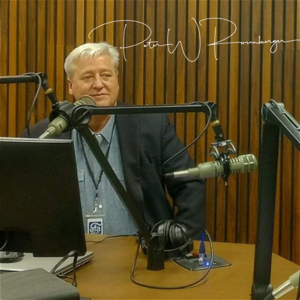
When I post something new, it goes straight to your phone. or your inbox. And by the way, every bit of it is in Fluent Caregiver. Caregiver.substack.com Welcome to Hope for the Caregiver here on American Family Radio. This is Peter Rosenberg, and this is the program for you as a family caregiver.
I'm bringing four decades of experience to help you stay strong and healthy as you take care of someone who is not. And you may be joining this program for the first time. And you would say, what? A show for caregivers? Who'd have funk such a thing?
Well, I thunk it. And I remember starting this program. It was actually 15 years ago this year when a friend told me, he said, you need to start doing a show for caregivers. And I said, sure, I got nothing else to do. And he said, no, no, you've got a wealth of experience that a lot of people have no con Concept about, and they're thrust into this, and they would want to hear from somebody who's navigated this.
And I started thinking about that. I said, well, okay, what would I? say to fellow caregivers, And then I started thinking, well, what would I say to myself? And so basically this program is one big long sermon to myself. And I let everybody else listen because I'm preaching to me.
You know, I've noticed this about pastors a lot of times. Don't you tell anybody what I'm about to tell you?
Okay, now I mean it, y'all don't say nothing. It's just you and me here, okay? But do you ever get the feeling there are some pastors and some people in Christian ministry and so forth, when they're speaking, they're trying to convince you? of something and sometimes even trying to convince themselves. And you can kind of feel it.
Once you start seeing it and hearing it, you kind of like, oh, yeah, yeah, that's what, yeah, he's saying all the right things, but does he really, does he really own this? And I look for those pastors who are reminding themselves. Of this, because we all have gospel amnesia, and I have caregiver amnesia, and I gotta remind myself of stuff. And that's what this program is. I am reminding myself of these things all the time.
And I want to remind you: if you've heard them before, maybe they get buried under a lot of the clutter of our lives as caregivers, but I want to remind you of these things. I'm not trying to convince you of anything. I'm not trying to convince myself of anything. I'm reminding myself. And that, it always goes back to that moment in Ziklag.
In the book of 1 Samuel, when David is being chased around the kingdom by Saul and his own men get they were out fighting about it, they come back to their encampment, and the Amalekites have taken everybody and everything. and his own men were going to stone him. And it was just it was a pretty horrific moment. And he said David encouraged himself in the Lord. And you can almost just see his men around him looking at him doing this.
And they're dropping the stones, and then they all knelt down and they all wept and cried out to God. And then they got up and went and fought the battle and got everything back. And it was an amazing victory. But it started with him encouraging himself in the Lord. He reminded himself.
Jeremiah, in Lamentations 3, he is just overwhelmed with grief and anguish. They called him the Weeping Prophet. And he said, I remember the wormwood and the gall. I mean, those are pretty strong words. And he's he's just bitter and he He said But this I recall to mind, and therefore I have hope.
Great is thy faithfulness. And he reminded himself. This, I recall to mind. That's what this program is. Is me recalling to mind the things that have been revealed, understood, taught, all these things through scripture to say, oh, that's, oh, yeah, oh, yeah.
And so I want to offer that in the context of Fluent Caregiver. speaking in a way that every one of my fellow caregivers can understand as we all look at someone we love who is dealing with a chronic impairment of some kind. Whether it's Alzheimer's, whether it's addiction, whether it's autism, it doesn't matter. Whatever the impairment, we're watching it. or caring for somebody in it.
We're elbows deep into it.
Some of us have been doing it for a life.
Some of us just started last week. Either way, We all are going to find ourselves in situations where we have to remind ourselves. Of where the trail is. The same thing with our walk with Christ. We are all suffering from gospel amnesia.
We got to hear them over and over and over again, sing them over and over again. Wonderful words of life. Philip Bliss wrote that. Wonderful hymns. We gotta sing them over and over again.
I love to tell the story. 'Twill be my theme in glory. You know, those, that's all of a sudden that stuff starts making a whole lot more sense because we're reminding ourselves. We're renewing our mind. We're training our mind.
Think about how many times in scripture you see The phrase Fear not, don't be afraid. Or in Southern lingo, is y'all summer down. But how many times do you see that? We have to be reminded as a species. Constantly.
To not be afraid. God knows this. We are battling against this. And so, this program is designed to go into those places where we need to be reminded of these things. And if you've never heard.
the gospel and if you've never heard Any of these things that I'm talking about, but you're a caregiver. You're still in the right place. because I'm not only going to remind my fellow caregivers and myself, But I'm also going to teach as best as I can of what I've learned through this journey. of not just being a caregiver. but of following Christ.
And that's the point of this program. Better point. to the Saviour. And recognize that our joy Our joy can be full in this thing.
Now I love laughter. Y'all know I love laughter. Y'all know I love comedians. And I probably don't do enough laughter on this show. I love stand-up comedy.
If I could do it all over again, I probably would go into stand-up comedy. I mean, I think that would be just marvelous to do. But You know, I and I laughed, We miss out on that a lot. Because our hearts are burdened down with a lot of you know, but Robert Frost said: if we couldn't laugh, we'd all go insane.
Some of us are Admittedly, already traveling down that particular path, but if we couldn't laugh, we We'd lose it. Norman Cousins wrote, I made the joyous discovery that ten minutes of genuine belly laughter had an anesthetic effect. Think about that, laughter. You require no prescription for laughter. It doesn't require any copay.
It just requires a willingness. to to to laugh. Are is that okay? Is it okay to laugh, given what we deal with?
Well, sure. I mean, I've made Gracie. Laugh so hard that I thought maybe I need to get her some oxygen here, but she needs to do that. I mean, her life is dire. She has difficult things.
And I I will say things sometimes that are so outrageous that she can't even help herself. I mean, in the hospital, I mean, when things were really pretty rough, I remember one time this is during COVID, and she had this really big back surgery. I mean, it was a nine-hour surgery. And the surgeon came in, and this is a teaching hospital.
So you have an attending surgeon who's got an entourage with him of students and PAs and everything else. And so you got all these residents and they're all crowding into the room. And Gracie is an unusual patient. I mean, she's had a massive history.
So, you know, they don't get a lot of patients like her.
So they're all there to look at her and see. And we're all wearing masks because it's during COVID. And she's laying there in the bed and just, you know, she's had this massive surgery. And he's given his report. He's a big neurosurgeon there.
And he's given his report. And he said, Are there any questions? And I said, well, I have one doc. And they all looked at me and all the residents get their tablets out. They're all excited.
You know, what kind of question is he going to ask this very, very prominent surgeon? And I said, is Tourette syndrome a byproduct of this surgery? And Gracie starts. She looked over at me. She's got her mask on.
She's like, I do not have Tourette's syndrome. And the residents all kind of looked around. Is this okay to laugh? The surgeon just bowed his head and just started laughing. And, you know, it was a moment.
We all needed to have that moment. It was a very serious situation. But it's okay to laugh. Do you Do you find that? Or do you feel permission to laugh when you need to?
And why do we laugh? Why do we laugh? There's a season of laughter, Ecclesiastes. But why?
Well, something funny happens. And Charlie Chaplin said: it's okay to laugh at pain, but it's not okay for my laughter to cause pain. You know, and I agree with that. I'm not there to cause pain in anybody with my laughter, and I've seen comedians that are like that. that they want to use their their sense of humor as a weapon.
I want to use it as a way just to give people a chance to breathe. And to catch their breath and just to, and like I've done with Gracie, nothing thrills me more than to get her laughing so hard that she's just over there just gasping. It's so good for her cardiovascular system, and her face crinkles up when she's laughing. And it is the most hilarious thing and cutest thing to watch. And so we're going to talk a little bit more about that when we come back.
I got a story that's going to tell you that's going to make you laugh. I promise. This is Peter Rosenberger. This is Hope for the Caregiver. We'll be right back.
Gracie, when you envisioned doing a prosthetic limb outreach, did you ever think? that inmates would help you do that. Not in a million years. What does it mean? When you go to the facility run by Core Civic and you see the faces of these inmates that are working on.
Prosthetic limbs that you have helped collect from all over the country that you put out the plea for. And they're disassembling. You see all these legs, like what you have, your own prosthetic legs. And arms, too. And arms.
When you see all this, what does that do to you? Makes me cry. because I see the smiles on their faces and I know I know what it is to be locked someplace where you can't get out without somebody else allowing you to get out. Of course, being in the hospital so much and so long. When I go in there, and I always get the same thing every time that these men are so glad that they get to be doing, as one man said, something good finally with my hands.
Did you know before you became an amputee that... Parts of prosthetic limbs could be recycled? No, I had no idea. I thought we were still in the. 1800s and 1700s.
I mean, you know, I thought of peg leg, I thought of wooden legs. I never thought of. Titanium and carbon legs and flex feet and C legs and all that. I never thought about that. I had no idea.
Now that you've had an experience with it, what do you think of the faith-based programs that Core Civic offers? I think they're just absolutely Awesome. And I think every Prison out there should have faith-based programs like this because. return rate. Of the men that are involved in this particular faith-based program.
and the other ones like it, but I know about this one. Are just an amazingly low rate compared to those who don't have them. And I think that that says so much. But that's so much. about Just, that doesn't have anything to do with me.
It just has something to do with God using somebody broken. to help other broken people be whole. If people want to donate a used prosthetic limbs, whether from a loved one who passed away. Yeah. You know, somebody who outgrew them, you've donated some of your own.
What's the best place for them to do? How do they do that? Where do they find it? Please go to standingwithhope.com/slash recycle, and that's all it takes. It'll give you all the information on there.
What's that website again? StanningwithHope.com/slash.com Flash recycle. Thanks, Crazy. Take My hair. Lean on me.
We will see. Yeah.