This is the Truth Network. If you're feeling overwhelmed, exhausted, or carrying more than you could put into words, I've created something just for moments like that. Go to hopeforthecaregiver.com. Right at the top of the page, click the blinking Caregiver 911 light. That page will take you to a short, guided audio I made to give caregivers a quiet place to pause, breathe, and set the load down.
You don't have to fix anything. You're allowed to rest here. Hold on. Hopeforthiver.com. Click on Caregiver 911.
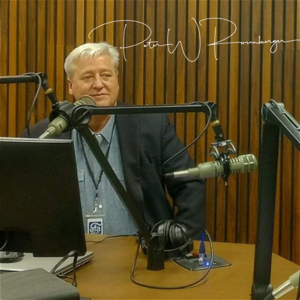
Welcome back to Hope for the Caregiver. This is Peter Rosenberger. Glad to be with you. We're talking about our health today and things that I have learned through this journey, and it's been quite a journey, and I've learned pretty much everything the hard way. But, you know, of course, I don't think I've ever...
Smack my forehead and say, Glad I learned that the easy way. I don't remember many of those moments. But I tell you what, by the way, go out to my website, hopeforthecaregiver.com. It'll take you. You'll see a picture of me there.
And at the bottom there, it says subscribe to our newsletter. And I'd love for you to do that. I'll tell you why. Because we send out lots of different things. Not all the time.
I rarely, I mean, look, again, I don't have this big staff, okay? We're a mom and pop, mostly just pop right now. But. I communicate through this way and push things out. And I I Whether it's a new project coming out or dealing with things we're dealing with the prosthetic limb outreach, music stuff.
Whatever. And in this particular case, I've got a book that I've finished, and I've finished most of this. A will The The biggest part of this I wrote actually while Gracie was in the hospital last year for five months. and I sit there in the room with her, a lot of it in the ICU. And I wrote this.
And this book is not per se about caregiving. In fact, I had two theologians that read through this book, and both of them came back, they don't even know each other. Completely separate. And they both came back with the same. Response This is one of the most comprehensive books on applied theology that we've ever seen.
Now, what does that mean to us as caregivers? This is not an academic book, as y'all know me. I mean, I don't even know that many words. And the ones I use usually are not many syllables. And so I have to write like I think and like I speak, y'all.
And I can't, I'm not going to sit there and write some kind of.
Well, you've read my stuff and and you've heard me here, but So I want to write so that people can understand it. And I put things down. To the bottom shelf as best as I can, not because I want to condescend to people and I don't think people can get it. I want to do it because I know that the people I'm trying to reach, their arms are tired. What they're carrying is heavy.
They don't make people work for it. If I'm going to take the time to read a book, to sit down and read a book, Do not make me work through this thing, okay? Give it to me straight up. And that's what I do in this book. And this is the first full-length book I've done in some time.
I did Hope for the Caregiver back in 2015. And then I did a minute for caregivers, which were just one minute. Little Vignettes. And I'm real proud of that book because it was so simple for my fellow caregivers. And I went even one step further in a caregiver's companion.
which was scriptures, hymns, and insights from forty years of this. And it was a quote that I'd said on this program or in other things that I've done, and then I would put a scripture or a hymn that punctuated that quote, and it gave you a spot to write in it. Your thoughts on it, but it's real simple.
Okay, and now I've stepped back from that and said, okay, now let me speak to the broader audience, not just caregivers, but to the broader audience. And it was commissioned to me. to write to talk about ministering in in suffering. To what does that look like? What what Wha what what is that?
flesh out to be like. That that's something that's very hard for people to understand. What do you do? You know, if you walked into the hospital room with Gracie and me. What would you do?
What would you say? How does that work? You know, what scripture comes to mind, or does any scripture come to mind? And how do you reconcile with what you're seeing and the things of God in there? That's what I set out to do in this book.
And I've had several pastors read it. One pastor came back and he said, You nailed this. And I had these two theologians that came back, and they both of them, both of them have pretty serious pedigrees to their name. They said, We've never seen applied theology. And the Puritans, when they would preach.
In the olden days when they were here in this country, back in the. early parts of this country. They would spend a third of their sermons, the Puritan pastors, showing the application of what they just preached on. But they would do expository preaching where they would go through the scriptures and so forth. They weren't trying to do topical like you see in a lot of today's churches.
But they would do expository preaching, but they would show the application thereof. What does this mean to me today, right now, as a caregiver? As somebody who is watching suffering, what does this mean to Gracie? What does this mean to this? How do you.
Make connect these dots. And that's what this book is about. And my agent has it right now. We've with the publisher, we're waiting to see what they're going to do with it. And You know what?
I'd love to tell you about it and give you first hand. Awareness of when it's going to come out and so forth.
So go out to the website, you'll see a newsletter sign-up form. It's at the very, very bottom of the page if you want to go all the way down there. And I think I should have a button somewhere on there. But it's real easy. Sign up and I'll let you know when it's coming out.
Subscribe on Substack, caregiver.substack.com because I'll be putting out things there as well. But I have tried to. take all of these things that I've learned and struggled with over a lifetime. And Distill it down to make it usable for my fellow caregivers.
Now, why am I doing this? You know, there are easier ways to make a living. Believe me, there are. But I feel like I have a responsibility on this. And I could back that up biblically.
Yeah, I go back to What Jesus said to Peter. The night he was betrayed he said Simon. Satan has asked for permission to sift you. But I have prayed for you. And when you come through this, Strengthen your brethren.
Now That message says volumes to me. Number one, Satan had to ask for permission for Peter. He didn't have to ask for permission to Judas. There's no record of any permission being asked for Judas. Jesus said to Judas, go do what you got to do.
Do it quickly. And he was, and then scripture says he was a devil from the beginning.
So there was no record of Satan asking for permission for Judas. And I think we could rightly deduce from Scripture that Satan didn't have to. But he did for Peter. And then he said, I have prayed for you. What does that mean?
That means that Jesus intercedes. And the book of Hebrews goes on to talk about he's doing it every day. He's interceding. He's our great high priest. Interceding before the father.
on our behalf of those who belong to him. that were given to him by the Father. This is what the text says. Go back and look at the 17th chapter of John. And then he said, And when you come through this, not if you come through it.
When you come through this. which implies not implies, it states he's going to come through it. It's not going to destroy him. Strengthen your brethren.
Now you have a responsibility.
Now how is that any different for you and me? Peter. Satan has asked for permission to sift you. It's not just being a caregiver. There's a lot of sifting that's gone on in my life.
That's a longer story. A lot of sifting. Satan had asked for a lot of permission. And it was granted. But Jesus prays for me.
And I've come through these things.
Now there's more stuff still coming down my path. I understand it. That's part of just life. But I have the precedent now, I understand. I understand.
I have a great high priest who's praying for me. And now I have a responsibility now that I've come through these things, that I've learned these things, to strengthen my brethren. That's what I'm doing on this program. But you know what? You have that responsibility as well.
You have a Savior who's praying for you. Satan has to ask for permission to sift you. If you belong to Christ, you... are not Touchable. By Satan.
unless there's permission given. Do you understand that? Satan has to ask for permission.
Now, that alone we could spend more than a whole program on, on the security that we have as believers. Of knowing that we don't have to sit there and just live in abject terror about this. Yes, things are going to happen that are going to be painful, hurtful, even frightening to us. We don't live in abject terror. Luther said this very clearly when he said, And though this world with devils filled Should threaten to undo us, We will not fear, for God has willed His truth to triumph through us.
The Prince of darkness grim, We tremble not for him. Satan has to ask for for permission. But our great high priest Praise for me. And he prays for you. And when you come through this.
strengthen your brethren. That is a mandate for us as believers. And Paul echoes this in Corinthians when he says, Comfort one another with the same comfort you yourself have received from the God of all comfort. What comforts me? This is the question I ask all the time.
Okay. What comforts me? What comforts me? What truly comforts me? What comforts me as a caregiver, as somebody who is now dealing with cancer?
What comforts me? And I tell you this. I am comforted by the fact that I have a great high priest who is praying for me. What more comfort do I need? that I belong body and soul.
To my Lord Jesus Christ. Knowing that nothing that is going to happen to me is not. Outside of His Providence And that comforts me. Doesn't mean it's going to be easy. Doesn't mean it's going to come without tears.
Doesn't mean it's going to come without pain. And I was thinking about this one, and they gave me an IV last week. Oh, and they wanted to do it in my hand. I hate that. I hate it.
I hate it. I hate it. And I can't complain about this around Gracie. Because she'll look at me and say, Look here, baby. You know, but when they stick needles in my hands, I'm a pianist, I'm a writer, and she got it wrong.
And I told her, I said, you might want to not go with my hands first.
Well, she did it because she thought she could do it. And guess what? She was wrong.
So I tell her what I tell every nurse that doesn't get the first stick. I say, I start charging after the second stick.
So, you get one more shot, and they got it. And I hate it. I hate it. I hate being stuck in my hands. or anywhere else for that matter.
But I also know this. Everything in Scripture has convinced me That not only was God with me even when I'm getting a stick in my hand. But he was already waiting there for me. The steps of a righteous man are ordered by the Lord.
Now, I don't claim any righteousness in myself. And anybody that tells you do, give them a little bit of space, okay? the only righteousness I can claim. is his. Because he said I could.
That's what that wonderful hymn says, Jesus Thy Blood and Righteousness. That's mine. dressed in his righteousness to stand. And that's what comforts me, and that is hope for this caregiver. We'll be right back.
Welcome back to Hope for the Caregiver. This is Peter Rosenberger, and this is the program for you as a family caregiver. And I'm so very glad you're here. HopefortheCaregiver.com, HopeForthecaregiver.com, many, many, many years ago, almost 40 years. It was right at the beginning of when Gracie and I started our journey together.
This was about surgery number... I don't know, three or four for me. Not three or four for her, but three or four for me. It was a particularly ugly surgery that they had to go and fuse her ankle. We're trying to save her leg.
It was a very painful surgery. Two or three nights into this thing, and I'd been sleeping around the clock. I was a young man, I didn't really know what I was doing. I was. hopelessly lost.
in this journey. And in the middle of the night she woke up. And asked if I could go down to the nurse's galley and get her something to drink. And so I went down there. And that's back in the old days when they allowed you to have kind of.
Well, I don't know if they allowed, I just did. I had kind of free roam with the place, but it w it was a long time ago.
So I went and got her something to drink and came back and I opened the door and I noticed immediately that something was wrong. And she w the bed was shaking as she was shaking in it and I rushed over to the side and her eyes were rolled back in her head and she was seizing I immediately called for the nurse to come in, and several of them rushed in. And we all ran to the other side, and I was holding her down. They were holding her down, and she was throwing up everywhere. Screaming, yelling, thrashing, and we were trying to keep her from pulling her tubes out and hurting the new surgery site and everything else.
And it was truly a horrific experience. First time I'd ever seen a grandma seizure, certainly on this level. And she just overshot the medication. She eventually blacked out, which is what happens a lot of times after a seizure. And the nurses stood there for just a moment.
And I sat down weekly on the Chair there. I just kind of almost collapsed onto it and just sat down. It's three in the morning. And I've been. around the clock with her had no sleep and The nurses, um Started tidying up the place.
We all were covered with vomit. I mean, I had it on, she had it on them. The nurses did. I mean, it was everywhere, but they started cleaning her up. And one of them even combed her hair, put a fresh gown on her and so forth, changed the sheets, the whole thing.
And then they straightened up their uniforms, cleaned their uniforms off. One of them came over to me and they said, You know, are you okay? And I mumbled out, Yeah, fine, I guess. But I was not fine. Believe me, I was not fine.
But I've never forgotten that moment. They the the surgeon came in and, you know, about 15 minutes later or so, hair sticking straight up, kind of thing, and adjusted remeds. But the point of it is within less than 30 minutes. you would have never known it had happened. And the nurses weren't all that particularly concerned that Gracie had thrown up on their uniform.
They were dressed for the job. They were dressed for the job. And I've never forgotten that. I mean, there's more to that night that you can read about in Gracie's book or my book. And hopefully, the caregiver, I think, is when I actually told that whole story.
But they were dressed for the job. Dressed for the job. And it didn't matter. That it got on them. They weren't wearing evening gowns.
They were wearing the proper attire for their work. And I thought, okay. What about us as caregivers? As believers, as caregivers, what are we wearing? What are we wearing?
And that brings us to the hymn. this week that every Mm-hmm. It was written in seventeen thirty nine by a guy named Nicholas Ludwig von Zinzendorf. And he was an influential leader in the Moravian community in Germany. And he was very committed to emphasizing the believers.
complete dependence. On Christ's atoning work rather than personal merit, which a lot of people still hold on to today. And that belief that theology saturates this hymn. It was originally written in in German and later translated into English by John Wesley in seventeen forty. And this hymn.
Particularly is what I wanted to to address today. Just the first stanza.
Okay, let me go to the caregiver keyboard. One of the things we talk about in our Christian walk is: Jesus died for our sins, Jesus died for our sins, Jesus died for our sins. We hear that all the time. But there was something else that was going on. Our sins were imputed to him, yes.
That is absolutely correct. He paid the penalty for that. But something else happened too. he lived a righteous life. And his righteousness is imputed to us.
There was that great exchange, and we don't talk about this. And this hymn is called Jesus, thy blood, and righteousness. If you forget anything else, I want you to remember just the first line: Jesus, thy blood and righteousness.
Now, listen to the lyric here: Jesus, thy blood. And righteousness. My beauty door. My glory. See, that's what I'm talking about.
Those nurses were dressed for the job. What is our dress? It's the righteousness of Christ. Paul said, We put on Christ because nothing is going to stain the righteousness of Christ. That's what we're covered in.
Midst flaming worlds In these arrayed with joy, shall I I'm not sure. Uh my And I love that because it's saying, This is what I'm arrayed with. If we go into the presence of God in anything other than the righteousness of Christ, what do you think is going to happen? How much sin do you think God is going to allow in His presence? What do you think?
And we don't really consider that very much, do we? And this is what the whole point of this was: you know, the pushing back against that merit-based. doctrine that somehow, well, I've done enough good deeds, I've done this, I've done this, and no, no, we we none of this matters. None of this matters. The only thing that matters is what are we wearing?
What are we covered in? Are we dressed for the job? And that is the whole point. And I can't get that out of my mind with those nurses. You know, they were dressed for the job.
They weren't worried about the attire they were wearing of things getting on it because they knew what they were there to do. And we don't have to worry about it either. It's not going to get on us when we walk into whatever situation we're going to walk into. We're wearing the righteousness of Christ, not our own. I don't serve Gracie as her caregiver under my own righteousness.
I don't do that. I can't. I have tried. I failed miserably. You're welcome to do it yourself and see if that's going to work for you.
I don't recommend it, but I'm not here to tell you how to live your life. I'm just simply saying this is how I've seen it play out in mine. Again, I told you at the beginning of this program and throughout it, I have field-tested all these things. Painfully at times.
Now, you can either learn from people who have scars, Or you can go get 'em yourself. And and you tell me which one would be easier. But I I've done this. And just keep that in mind with those nurses. They were dressed for the job.
Are you dressed for the job? Are you trying to do this under your own righteousness, under your own covering, under your own strength, under your own goodness, that somehow this is your scored-up brownie points? Or are you saying Jesus Uh Thy blood. And right. challenge If you remember nothing about this hymn, Just that one line: Jesus, thy blood and righteousness, has set you apart from so much of the doctrine that's out there in our Christian world today.
They talk about, you know, Our sins are paid for. Jesus paid it all. But we stop short of saying He imputed his righteousness to us. It's not that it's enough that our debt is paid we have to be righteous to stand before God. We can't do that without Here's righteousness.
Do you understand that? Now where do I get that from in Scripture? Because remember A couple shows ago, I talked about sourcing it, testing the spirits.
Well, here's what it says in Isaiah 61:10, I will greatly rejoice in the Lord, for he hath clothed me with the garments of salvation, he hath covered me with the robe of righteousness. How about that? In Philippians 3.9, Paul says, Be found in him, not having mine own righteousness, but that which is through faith. the faith of Christ. It's Christ.
clothed with Christ in Galatians three twenty seven. For as many of you as have been baptized into Christ have put on Christ. Romans 13:14. Put ye on the Lord Jesus Christ. It's just permeating scripture that we can't go into God's presence without that.
We have to be clothed properly. And that's what this hymn is all about.
So if you remember nothing else, this hymn that every caregiver ought to know, every believer ought to know: Jesus, thy blood. And righteousness. My beauty. Oh my glory. Yeah.
Midst claiming worlds In these arrangements. With joy. Shell uh I lift up. Up my And that is what comforts me as a caregiver. That's what strengthens me.
That's what lifts up my head. We lift up our heads Scriptures filled with that kind of imagery. Lift up your heads, O you gates. I say to you, lift up your heads, O you caregivers. whatever you're going through, whatever you are carrying.
Please no. That you are clothed in the righteousness of Christ. Because of his work. Do not trust in anything else. What does the old hymn say?
I dare not trust the sweetest frame, But holy lean on Jesus' name. My hope is built on nothing less Than Jesus' blood Righteousness.
Now, do you see the theme? You see the arc here. And that is the message of this wonderful hymn, Jesus Thy Blood and Righteousness. My beauty are my glorious dress. A hymn that every caregiver ought to know, and that is hope for this caregiver.
This is Peter Rosenberger. This is Hope for the Caregiver. Would you go out to hopeforthearegiver.com? I've got so much that I've put out there for you. Please take advantage of it.
Go out to my sub stack. There's so many articles there to read: video, audio, and everything else. Take advantage of it. We'll see you next time. Gracie, when you envisioned doing a prosthetic limb outreach, did you ever think?
The inmates would help you do that. Not in a million years. What does it do? I would have ever thought about that. When you go to the facility run by Core Civic and you see the faces of these inmates that are working on prosthetic limbs that you have helped collect from all over the country that you put out the plea for.
And they're disassembling. You see all these legs, like what you have, your own prosthetic legs. And arms, too. And arms. When you see all this, what does that do to you?
Makes me cry. Because I see the smiles on their faces and I know. I know what it is to be locked someplace where you can't get out without somebody else allowing you to get out. Of course, being in the hospital so much and so long. When I go in there, and I always get the same thing every time that these men are so glad that they get to be doing, as one man said, something good finally with my hands.
Did you know before you became an amputee that? Parts of prosthetic limbs could be recycled? No, I had no idea. I thought we were still in the. 1800s and 1700s.
I mean, you know, I thought of peg leg, I thought of wooden legs. I never thought of. Titanium and carbon legs and flex feet and C legs and all that. I never thought about that. I had no idea.
Now that you've had an experience with it, what do you think of the faith-based programs that Core Civic offers? I think they're just absolutely... Awesome, and I think every prison out there. have faith-based programs like this because Return rate. of the men that are involved in this particular faith-based program.
and other ones like it, but I know about this one. Is just an amazingly low rate compared to those who don't have them. And I think that that says so much. But that's so much. about Just that doesn't have anything to do with me.
It just has something to do with God using somebody broken. to help other broken people be whole. If people want to donate a used prosthetic limbs, whether from a loved one who passed away, Yeah. You know, somebody who outgrew them, you've donated some of your own. What's the best place for them to do?
How do they do that? Where do they find it? Please go to dannywithope.com/slash recycle, and that's all it takes. It'll give you all the information on there. What's that website again?
DannywithHope.com slash. Slash recycle. That's crazy. Take my hand. Lean on.
Yeah. We will stay