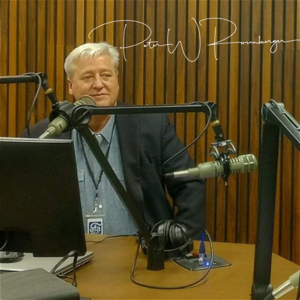
This is the Truth Network. Welcome to Hope for the Caregiver. This is Peter Rosenberger. Glad to be with you here on American Family Radio. Hope for the Caregiver.
Hopeforthecaregiver.com Tom, I've been thinking about something. for some time now. And I want to run this by you here. I recently did an interview. On another lady's program.
It's called Hope in the Morning. And it was about an hour interview on video, and you could see this. In a couple of different places, and probably the easiest way is to go out to my substack, caregiver.substack. and you'll see this. It's the state of the caregiver.
I I didn't set out to necessarily do this, but she allowed me to kind of run with it and I did. and I encapsulated in a one-hour interview. All the things that I wanted to talk about as far as the core principles. of what caregivers struggle with. and the way we navigate through it.
And I would very much encourage you to go out there and take a look at this. Go out to caregiver.substack.com, and you can see this interview: the state of the caregiver. And I In this interview, I had That appeared, and I wanted to unpack that here on this program.
Now, many of you have heard me swerve into this whole thing with the prosperity gospel. And we've heard it preached for a long time. Say, well, Peter, they're not still doing that. Oh, yes, they are. And I I said at this interview, I'm a firm believer in the prosperity gospel.
I believe that we have prospered. and that God has given us riches beyond. anything we can imagine. We just may not see it in this lifetime. I mean, that's my stance on it.
But that's not. what people mean with the prosperity gospel. What they mean is that we're going to have our best life now. I almost did this for when I was helping Gracie write her book many, many, many years ago. I came really close to naming this for Gracie.
You got to be kidding, this cannot be my best life now. And and I thought, well. Joel Osteen might get upset about that, so I didn't want to cause no problems, if you know what I mean. But I stand by the statement. that kind of stuff and you can see the kind of crowds it draws.
You could see the enormous amount. Of things that it draws. But you talk about suffering and you talk about long-term suffering, you talk about suffering that is chronic, that is not going away, that is relentless. That's the kind of stuff that doesn't want to draw a crowd. And I Talk on this on this interview that I did, but I want to go even deeper with you guys because this is something I think that's at the heart of what we as caregivers face.
And I want to spend. As much time as necessary. to really delve into this. because this has caused no small amount of heartache and frustration for both Gracie Uh and myself. But I'm going to start with the Scripture, 1 John 4, 1.
Beloved, do not believe every Spirit, but test the Spirits to see whether they are from God.
Now, that's not the only place that's in scripture, but that's where I'm going to start because I heard my pastor here in Montana preach on this on Sunday. And it was Powerful. And he did a great job with it. There's a question that every caregiver asks.
Sooner or later, usually sooner.
somewhere between the diagnosis the exhaustion and and the moments when you finally sit down and you ask it. And that question is three letters. Why? Why this? Why now?
Why her? Why him? Why us? And the moment that question Leaves your lips, something else happens. You're no longer alone in the question because there is no shortage of people.
that are ready to answer that for you. Friends, family, strangers, internet voices, church folk, they're all out there. And Mm. Everybody's got a take on it. I've got a phrase that I've developed over the years.
It's called the consolation of speculation. You know, every now and then I like to use big words just to let y'all know I can read. All right, just to let you know. But people will rush in and try to soothe your pain with explanations that they cannot possibly know.
Well God needed another angel. I particularly despise that one.
Well, this must mean somethin' better's comin'. God obviously has a reason. You know, God doesn't give you more than you can handle. You've heard all of these.
Now, how many of those are rooted in sound biblical doctrine?
Now listen very carefully.
Some of those are attempts to reach for the truth. They're done in sincerity. They're trying to somehow figure it out. but they're often delivered without it. And when you're suffering, words that don't have weight don't help.
They don't anchor anything, they don't sustain you, they don't equip you, they just float. And when you're drowning, floating words don't save you. You need something that holds, that anchors you, that you can stand on, that you can catch your breath on, and say, okay, I am not drowning here. But here's where it gets more serious. There are some people out there that don't just speculate.
They interpret. or they fabricate. They assign meaning to your suffering. they speak as if they know exactly what God is doing in your life. This is happening because and sometimes they'll do it with with speaking in tongues.
And I use that word Carefully. And you can do with that information what you will.
Sometimes there's all types of bodily genuflections, that kind of stuff. And there's a lot of drama and and It's some type of just flare and whatever. And they're dealing with spiritual claims at that point. And that's where Scripture steps in. And John says this very clearly: do not believe every spirit, but test the spirits.
Now, you think about that, he's writing to believers. He's writing to church folk. He's saying, not everything you hear, even in spiritual language, is true.
Now when John says spirits, he's not talking about spooky things or mystical impressions. He's talking about the source behind what you're being told. Every explanation, every teaching, every confident answer about God and your suffering comes from somewhere. And John saying test the source. Is this from God or not?
Because not everything that sounds spiritual is from the Holy Spirit. Not everything that uses God's name speaks for God, and that's where you get into violating the third commandment, taking the Lord's name in vain. And we're going to stop right there for just a moment and talk about that issue, because when people come up and tell you the Lord told me something I always tell them, get out your pencil and paper and let me write this down. And we're going to add it to the Bible because you're giving new revelation to the decreed word of God. Is that what you're telling me?
And when I push back like that, it's not always met with the enthusiasm that you would think. You know, they don't particularly appreciate that, but I really don't care. Because here's the deal: when someone says the Lord told me, we need to slow down before we just nod along, that is not a small statement. It is a claim of divine authority. It is saying, in effect, this is not my opinion, this is God speaking.
and Scripture does not allow us to treat that lightly.
So when someone comes along and they say, the Lord told me. Or, if you want to put it in King James, to really show what they're saying, they're saying, thus saith the Lord, which is what the prophets said. And by the way, if the prophets got it wrong, they were executed as a false prophet, just throwing that out there. But if they're saying this, the Lord told me, especially about your suffering or your loved ones suffering, your situation, your decisions, we're no longer in the realm of encouragement here. were in the realm of Revelation.
And that must be tested every single time, because history has already shown us what happens. When people claim special access to God's voice, this is not new. This is the same impulse that drove what we now call Gnosticism. It's not always in the same full form, but it's in the same direction. It shifts authority away from what God has publicly revealed.
and places it in what someone privately claims. It moves the center from Christ's finished work, to my personal insight. And once you do that, something subtle but very, very, very, very, very serious happens. The message of truth is no longer what has God said, it becomes what am I saying that God said? What am I feeling?
What is the private experience I've had with God that I'm going to deliver to you from on high? And that's serious business. And this is what has Wounded so many. People dealing with trauma and those caring for them.
So, we're going to weigh into this when we come back. We're equipping caregivers to withstand this because this is how we get healthier as caregivers, and healthy caregivers do indeed make better caregivers. This is Hope for the Caregiver. We'll be right back. Welcome back to Hope for the Caregiver here on American Family Radio.
This is Peter Rosenberger and this is the program for you. As a family caregiver, we've been talking about what scripture says in the first epistle of John: Do not believe every spirit, but test. the spirits.
Now, let me set the table here for just a minute. I'm not a pastor. I'm not a preacher. I'm not ordained. I'm not.
A theologian? I mean, uh we're all called to be theologians. I'm an amateur theologian. I'm just a caregiver. I'm just a caregiver who has dealt with this issue relentlessly for a very long time.
And I cannot tell you how many people have come up to me and Gracie. and offered their opinion on stuff, but couched it in the Lord told me. When you've done this as long as we have, you see this now. I have the experience, the landscape of this to look at and say, okay. How did we get here?
What's going on here? And then, how is what? Where do we land doctrinally? And people say, well, you know, I don't want to talk about doctrine. I don't want to talk about theology.
I don't want to talk about doctrine. Just give me Jesus.
Well, who's Jesus? The moment you start asking that question, who is Jesus?
Now we're talking about doctrine. And without sound doctrine, you will get pulled into all kinds of things. that are going to um have you floundering? and can cause great damage. Great distress.
And we were talking about people coming up to you and saying, you know. The Lord told me. Let's take this out of the theoretical. Let's just write into your world. This happens in hospital rooms.
It happens in church hallways. It happens when someone leans in, lowers their voice, and says this.
Okay. The Lord told me. Now what do you do with that? Because if you push back, you feel like you're being disrespectful. If you question it, you feel like you're lacking faith.
And if you accept it, you may be carrying something that God never gave you.
So, let me give you a simple test. When someone says to you, The Lord Told me. You ask. Maybe not out loud if you don't feel comfortable with that, but you just ask. Where has the Lord already said this?
Chapter inverse. Not their tone. Not their intensity. not how convinced they are, not their Elevated office in whatever church you happen to be in, where has God actually said this? Because God is not playing hide and seek with his people.
He has spoken clearly, he has spoken publicly and sufficiently. And if someone tells you something, and it cannot be anchored in the revealed, decreed Word of God that we have available to us. in umpteen thousand translations. And so many different ways that you could research this. And if it's not there where it's easily access you could look it up on your phone.
Then it is not binding your conscience. Let that settle in for a moment. And let me ask you a couple of qualifying questions. Where does the authority actually rest? Is it in what God has said?
or in what some one claims God is saying. And this is the heart of the Protestant Reformation. Men like Martin Luther stood up and said: We don't have the authority to invent things, to add things, to bind people's consciences. With things that God has not clearly revealed.
So, what was one of the phrases that came out of? The Reformation.
Sola Scriptura. Scripture alone. Not scripture plus tradition, not scripture plus church authority, not scripture plus private revelation. Scripture alone. What does the word of God say?
How did Jesus respond to Satan? It is written. It is written. He didn't say, hey, somebody told me. He said it is written.
Because only Scripture carries the authority of God's revealed word. In the beginning was the Word and the word was with God and the word was God.
Now bring that forward to what we're talking about. When someone says to you, the Lord told me, they are stepping into that same question. They are, whether they realize it or not, claiming authority and they're asking you to submit not to just their opinion, but to what they say is God's voice. And here's the problem: is that authority? anchored in Scripture or not?
And if it is anchored in Scripture, where? And if it's not anchored in Scripture, where is it anchored? In their experience, in their feelings, in their impression? This is not a stable place for caregivers to stand. You don't need, as the hymn writer said, shifting sand when your life already feels unstable.
You require something that is fixed. tested and does not move when everything else does. And that's why this matters so much, because the Reformation was not just about church politics. It was about protecting people from being bound by claims that did not come from God. And caregiver listened to me very, very carefully.
No one has the right to bind your conscience with something that God has not said. Not a pastor? Not an elder, not the ministry team, no one, not a well-meaning believer, nobody. That's not rebellion that's you standing on the same ground that reformers stood on, saying, If it is not in God's Word, you don't get to lay it on my back. And you've already got enough on your back.
Now do you understand why I get so animated and so agitated with this topic? Test the spirits. Test it.
Now, this also works conversely on the other side here. I've seen this thing. Let me give you a word: audiophora. Audiophora, and it means this. areas where God has not clearly commanded or forbidden but that people start legislating from the church.
The movie Footloose is absolutely built on this. They said nobody in the town could dance because there was a pastor that said it was wrong to dance. And it was amazing to watch Hollywood address this issue, but it was anyway. Go watch it if you want to watch the old one with Kevin Bacon. But All it means is this: areas where God has not clearly commanded or forbidden.
And here's why it matters: because God alone has the authority to bind the conscience. What do I mean by that? Your conscience is the place where you stand before God. It's where you answer to Him. It's where you say, Am I obeying what God has said or not?
Now when God commands something, That binds your conscience. You don't get to negotiate it. You don't get to redefine it. You don't get to soften it. God.
Spoke. But when God has not spoken on something clearly, that falls into audiophora. I know it's a big word, and you're not used to hearing big words from me, but I'm doing the best I can with what I got. But here's the line that can't be crossed. Hang on to this.
No human being has the authority to bind your conscience where God has not bound it. And that's not a small issue, it's a massive issue. Because the moment somebody starts doing this, they are taking authority away from God and transferring it to themselves. That's a very serious thing. I'll give you an example in our world as caregivers.
Many, many years ago, there was a procedure we were going to try with Gracie, and we were very conflicted on it. And we did all the research. We did all the due diligence. We weren't quite sure. Gracie was a little bit nervous.
I was a little bit nervous. And we did all the due diligence, and we decided.
Okay, here's this is where we're going to be leaning towards here. And I went and sat down with my pastor, great friend of mine. I just talked to him the other day, and he said, Look, this is not a moral issue. This is not a sin issue. If you choose to work with this doctrine, this you've done your due diligence to the best of your abilities.
You're not entering into rebellion or sin against God on this. He didn't try to legislate, thus saith the Lord. The Lord has told me, You don't need to be doing this. Because, see, we had that happen decades ago. When Gracie was going to give up her right leg, and she was wrestling with that issue.
And these two ladies came to us, and I didn't even know them that well, and they said, The Lord told us that you're in rebellion if you. go ahead with this surgery. If Gracie amputates her leg, it was scheduled for March. and if she amputates her leg, she's in rebellion because God's going to heal her in June.
Now that that actually happened to us. And so, contrast that with what this pastor said: Look, this is a medical procedure. Your doctor is recommending you've got good counsel on this. There's not a sin issue on this. This is not a rebellion.
This is not a moral issue. This is you making a decision with the best information you have and trusting God in it. Do you see the difference? Do you see what happens when people try to wield their authority, their opinion, their speculation versus where a pastor says, no, God has not legislated that you cannot seek counsel from this doctor and make this decision? God has not legislated that.
Do you see the difference? And see, this is where we as caregivers We have this tension because our suffering is great, and in suffering is where people want to speculate on why God's doing. Look at the book of Job. But when they start taking God's authority and they're saying, I'm in God's place here. They're taking this on themselves.
And that's exactly the fight that erupted during the Protestant Reformation. It was about conscience. It was about whether people are going to be forced to carry spiritual requirements that did not come from scripture. And Luther made a stand there. He said before the authorities, he said, look here, I am bound.
By the scriptures, my conscience is a captive to the word of God. I cannot and will not recant.
Now, think about that. He didn't say, My conscience is captive to what people say God told them. He didn't say my conscience is captive to the Pope. He didn't say my conscience is captive to tradition or pressure or opinion or even. banishment.
He said it is captive. to the word of god. And that's the line. That's the anchor. And that's where we live as caregivers.
Whether we understand it or not, because there's a theological conversation going on in our life every single day as we watch suffering unfold. As we become so weary, as we become so tired, and where do you stand? Luther got to the point where he said, Here I stand. I can do no other. I can't stand anywhere else.
But on the word of God. and this is important to us as caregivers. to anchor ourselves, but it's not going to happen. If we do not know, The Scriptures. if we do not know these things, Then we're going to be at the mercy of all this.
So when somebody says to you, The Lord told me, You have to ask. And you may have to ask for two. for your loved one and for yourself. Is my conscience being bound by God's word? or their opinion.
I don't care how charismatic they are. I don't care how many degrees they have. Ask yourself: Is God's word driving this? And I also put it out there for myself. Don't you listen to me.
As the authority, you listen to scripture. I'm just telling you what John said: test every spirit, including me. Do not. Say, well, Peter said that. No, no, no, no.
What I say is irrelevant unless it is simply reflecting what God's word says. My opinion is worthless. The flower fades, the grass withers, but the Word of God endures. And that is. Hope for the caregiver.
This is Peter Rosenberger. We'll be right back. Welcome back to Hope for the Caregiver. This is Peter Rosenberger, and this is the program for you. As a family caregiver, I hope you enjoyed that interview I did with Dick Tunney, just an amazing musician.
I mean, I literally have grown up. hearing He and his wife Mel with their stuff they've done with truth, with first call, songwriting, producing, everything else. And just to be able to meet him and talk with him, it was just, it was a joy. You could hear the entire interview out at the podcast, wherever you stream podcast, okay? And if you can't find it there, just go to hopeforthearegiver.com.
It's all there and you can see it as well. And just enjoy the joy. I like putting these long form conversations out there to unpack a thought and to explore some ideas.
So it's all out there for you to take a look at or if you want to share it with someone. You know, a lot of caregivers are dealing with isolation. That's why I started doing this radio program because I understand how crippling isolation can be. And I wanted to be able to offer everything that I've learned as best as I can. To my fellow caregivers, I feel like I have a spiritual responsibility to this, a biblical mandate.
It says, Comfort one another with the same comfort you yourself have received from the God of all comfort. That's why I do what I do.
Now, speaking of that, let's go over to the caregiver keyboard for this week's hymn that, excuse me, every caregiver ought to know. And this one Is one of my all-time favorite. I mean, it's just a weather, all my favorites. But we're talking about in the first part of the show, the first two blocks. People coming up and saying, Well, the Lord told me.
The Lord told me. And people want to speculate on why this is happening to you, and yada, yada, yada. And that's why I think we go to the hymns to anchor ourselves. with one more wonderful resource that the Lord has given us. Uh in our hymns.
Not every hymn, by the way, was written was 100% solid theology.
Okay, there's some turkeys out there, but this is not one of them. And it's kind of interesting because it goes back to the 1700s, but the author. Isn't even known, which I think works even better for today's subject matter because so many of these people will say, The Lord told me to tell you, and they got that kind of mentality. And we don't even know who wrote this. It's all based in scripture.
It's attributed to a guy named John Rippon or Rippon that published it. uh in London, but the the Song was just listed as K, K, as in kite, you know, K. I mean, just the letter K. And I think this hymn just speaks to something extraordinary. And it's how firm a foundation.
Now, you know this hymn. It's a staple. At least if it's not a staple in your church. Then we need to talk to your pastor. Because it should be a staple in everybody's church.
This is an amazing hymn. I'm going to do it in the key of F. But look at the lyrics how fur Yeah. Be saints of the Lord. is laid for your faith.
In his act. Excellent word. That's what we've been talking about the whole time. The foundation is in his word, not in what somebody comes up and gives you in their feelings.
Okay? That's messed up, man. They're speaking for God at that point. God speaks just fine for himself and And he doesn't need it to be filtered through someone else's ego, quite frankly. But anyway, I digress.
So, and then he goes, What more? Can he say? than to you he hath said. Again, this hymn says it all. What more can he say than to you?
He's already said it, it's in his word. To you who for refuge to Jesus have fled. How fear not, I am with thee. Oh, be not dismayed. For I am thy God, I will still give thee aid.
I'll strengthen thee, help thee, and cause thee to stand upheld by my righteous omnipotent hand. I mean, as caregivers, can you think of a text that strengthens our spine more than this? I mean, this is amazing. Um Now, those aren't sanctioned cords, okay? you All right, I'm gonna take a moment for all you pianists out there.
If you don't know music theory, just hang on, okay? This is just for the piano.
So when you go da da da, da da da da da da da da da, and then do something like this. But uh Uh And then instead of going to that D minor chord, go to an A flat seven with a throw in a 13th on that. Uh Boom. And then you land on that G-miter seven. Doesn't that feel great?
Da da da.
So you go, uh this is in context. And then the flames shall not hurt thee. I only desire Design, sorry. Thy draws to consume. And thy goal.
Two I only design thy draws to consume and thy gold to refine. That soul that on Jesus hath leaned for repose. I will not, I will not desert to his foes, that soul though all hell, should endeavor. To shake.
Well Uh Yeah. No never Mm.
Now, when I play this, I do this sometimes. You know, congregational style, and I'll really punch it.
Sometimes I'll drop out and let the congregation just sing an a cappella. That's always great because it's great to hear people sing and they can hear themselves sing. We sing, we've gotten away from this. I saw a thing on, I don't know where it was, but it was somewhere. They were talking about how people are getting tired of the worship ban model in their churches.
Where basically the congregation listens to a Christian rock band do this stuff, and we have a few songs. We know some of them, we say seven elevens, you know, seven words, eleven times, that kind of thing. But it's a little bit kind of weak, it's tepid. There's a move going away from that now in church, which I'm very glad to hear because this song, this hymn right here, is one that every congregation should just rise to their feet and sing with everything they have in them. How firm a foundation, ye saints of the Lord, is laid for your faith in His excellent word.
That's it. That's the whole point. Uh And then and then sometimes If you're in a place, maybe in a hospital or something like that, where you need a little quieter, take it slow. Yeah And then you get, if you go to that up ba ba da da da da da da. That's that's nice to throw in.
You could throw in that I mean the key of Fs would be a B flat minor chord.
So you go Ha da ba ba ba ba ba da And that makes that's the major seven. Oh damn. Uh And then you do that little suspension.
Sorry for the music theory, but there are a lot of church musicians that listen to this. And I just want to give you a few tips. Nobody gave them to me. I had to kind of figure it out. Otherwise, you're just playing it kind of stale.
And that's why people got away from the hymns, I think, because it didn't sound contemporary. They were being played. Still back from the 1930s and 40s, or whatever. And you can bring in some nice chords with this.
Alright, you don't have to play it. I mean, you don't have to do it that way. You can give it some warmth and some color to it. That's what these cords are. And the point of it is not to say, hey, look how good the pianist is.
The point of it is to say, look how great the text is. Because it makes you think about what you're singing more. Then, by the time you get to that Yeah. Bonji. Jesus.
That's I will never, I'll never, I'll never, never, never desert to his foes. That soul. That all that though all health should endeavor to shake, I'll never, no, never, no, never, never, never forsake. And that's the promise we have in Scripture. And that's What helps us as caregivers.
That's what bolsters us. That's what strengthens us. Not somebody coming up and saying, well, the Lord told me that you're going to get your breakthrough. I've already got my breakthrough. It's right here.
I just read it in the text here. The breakthrough is that the great I am, Jehovah God. El Shaddai, El Adonai, the bright and morning star. Said he's not going to forsake me. What more breakthrough do I need?
Now yes, we live with hard things, and this is why we need to be reminded of this. Because we've already got the prosperity gospel. It's right here. It's the fact that God Himself redeemed us. And if you say to him, that's not enough, are you sure you want to go there?
We all deal with painful things. I get it. That's the whole point of this show. But here's what I've learned in this, and this is why I do this program because here's the secret. I'm preaching to myself here.
I'm dealing with cancer right now. And so I'm preaching to myself, saying that soul, though all hell should endeavour to shake, I'll never, no, never, no, never forsake. And I'm thinking, okay. Let's deal with it. Let's get this done.
Let's go through it. I that's the whole point of this: we strengthen ourselves as caregivers.
so that we can endure. and keep our eyes fixed on the prize, okay?
Now, if what you're hearing today helps you think more clearly and stand a little steadier in this thing. the mission accomplished. That's exactly why we're doing it. This program and the work of Standing With Hope, which is the ministry that Gracie and I founded many, many years ago. exists because people like you are supporting it and because people like you benefit from hearing it.
If you'd like to be a part of that, go to standingwithhope.com/slash giving. There's a donate button right there. Be a part of what we're doing.
So you know what? I want to share this with other people too. We'd be grateful to have you stand with us. How firm a foundation is the hymn? I encourage you to get a hymnal and look it up.
If you don't have a hymnal, buy one. Ask your pastor if they got, they probably got a closet full of them collected dust. That's a sad thing. And read that hymn to yourself today.
Okay, this is Peter Rosenberg. This is Hope for the Caregiver. HopeforthTecaCaregiver.com. We'll see you next time. Gracie, when you envisioned doing a prosthetic limb outreach, did you ever think?
The inmates would help you do that. Not in a million years. What does it mean? I would have ever thought about that. When you go to the facility run by Core Civic and you see the faces of these inmates that are working on prosthetic limbs that you have helped collect from all over the country that you put out the plea for.
And they're disassembling, you see all these legs, like what you have, your own prosthetic legs. And arms, too. And arms. When you see all this, what does that do to you? Makes me cry.
because I see the smiles on their faces and I know. I know what it is to be locked someplace where you can't get out without somebody else allowing you to get out. Of course, being in the hospital so much and so long. When I go in there, and I always get the same thing every time that these men are so glad that they get to be doing, as one man said, something good finally with my hands. Did you know before you became an amputee that?
Parts of prosthetic limbs could be recycled? No, I had no idea. I thought we were still in the. 1800s and 1700s. I mean, you know, I thought of peg leg, I thought of wooden legs.
I never thought of. Titanium and carbon legs and flex feet and C legs and all that. I never thought about that. I had no idea.
Now that you've had an experience with it, what do you think of the faith-based programs that Core Civic offers? I think they're just absolutely... Awesome. And I think every prison out there. have faith-based programs like this because The return rate.
of the men that are involved in this particular faith-based program. and the other ones like it, but I know about this one. Are just an amazingly low rate compared to those who don't have them. And I think that that says so much. But that's so much.
about Just, well, that doesn't have anything to do with me. It just has something to do with God using somebody broken. to help other broken people be whole. If people want to donate a used prosthetic limbs, whether from a loved one who passed away, You know, somebody who outgrew them, you've donated some of your own. What's the best place for them to do?
How do they do that? What do they find? Please go to stanningwithhope.com/slash recycle, and that's all it takes. It'll give you all the information on the what's that website again? Dannywithope.com slash.
Slash recycle. Thanks, Crazy. Take my hand. Lean on me. We will stay.