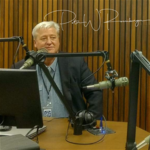
This is the Truth Network. Welcome to Hope in the Morning. turning tragedies and tears into testimonies of hope. Caregiving is one of the most demanding and often unseen callings. Today we're joined by Peter Rosenberger, longtime caregiver to his wife and host of the program Hope for the Caregiver.
Through decades of walking alongside his wife through illness, surgeries, and disability, Peter has developed a deeply honest and Christ centered perspective on suffering, endurance, and hope for those caring for someone they love. Peter, thank you for joining us today on Hope in the Morning. Thank you very much, Emily. For those that are unfamiliar with your story, can you just kind of tell us a little bit about your wife, Gracie, how you guys met, and how your journey to caregiving began?
Well, she had a car wreck before I met her, and it was a devastating wreck, and her legs were pretty much shattered. She recovered well enough to come back to college, and we met in Nashville at Belmont University, and she was a vocal performance major. I was music composition. I had transferred in while she was recovering. And friends of ours, mutual friends, set us up together.
And when I met her, I was just. completely captivated by her. I mean, she's an exceptional human being. And then she was pretty easy on the eyes, too.
So, don't take my word for it. Go out and Google her. I was Googling her that day. We didn't have Google. And she was, and then I heard her sing, and I knew that I was going to take care of this woman for the rest of her life.
And I didn't understand what that would mean. I didn't understand what it would take of me. I didn't understand how well I would do, how miserably I would fail. I just knew that this was this remarkable woman. And she had had about 20-something operations before I met her.
And then those operations continued as they try to save her legs.
Now, there will never be another patient like her. If she'd had the same wreck today, I've been told by many, many medical folks that. They would have amputated her legs the day of the wreck because prosthetics are so much better now. But they tried to save them back there in 1983 and subsequently. And then she eventually gave up her right one in 91, her left one in 95.
And then most of the surgeries she's had since have been to mitigate the efforts to save her legs.
So they condemned her to a life of orthopedic trauma through this journey. That's just the way it is. And that I can count, she's had 98 surgeries now in her life. and most of them orthopedic. 17 of them have been just in the last five or six years.
And we had a stretch last year where she did 11. because of some complications that went wrong.
So it's been a a Chronic journey of chronic crisis. It's not a plateau journey where she's just dealing with this and we move on kind of thing. This is our life is filled with daily challenges and lots and lots of pain, lots and lots of doctor visits and yada, yada, yada. And that's been our overarching journey and what everything has been framed in as I've learned how to navigate this medical nightmare that we've been in that has resulted in well over 100 physicians treating her in 13 different hospitals. And as far as I can count, the medical bills now have exceeded 20 million.
Wow. Wow. I think that's something that doesn't get talked about a lot either. It's just the financial burden that's on people that have chronic illness of any kind or a condition where you are faced. Consistently with things like multiple surgeries.
And that that financial burden is not limited to just medical bills. You've got you think about the, of course, the co-pays and deductibles and travel and then the lost time and then the lost career opportunities, the lost Employment opportunities and things such as that.
So there are a lot of different costs involved. in in dealing with a disability particularly of this magnitude. And it is It's been Quite a journey. That's why I look the way I look. I'm only 25 years old.
Well, and that's, that's, it's a sacrifice for you and Gracie, right? Opportunities that both of you guys, you know, paths that you could have taken are different because of medical complexities and the financial strain that you guys have. You mentioned earlier the fact that when you first met her, that you were determined that this was the woman that you were going to care for. You basically fell in love with her from the moment that you saw her and heard her sing, which is such a beautiful love story. But as you transitioned into being married and she began to have these very serious surgeries, such as amputations, were you guys married when she had her first amputation?
Yes, it was after our first son was born. We got married in 86. Her right leg was amputated in 91, her left leg in 95.
Okay. And basically, after one of our sons was born, she gave up one leg, and their second son gave up her remaining leg. It didn't cause. The loss of her legs, it just accelerated what was already there.
Okay. And there was nothing. And again, those in today's standards, those legs would have been gone the day of the wreck. And she would have been up on prosthetics and living a different, much different life. But we didn't have quality prosthetics like we do now.
She's got amazing prosthetic limbs. Prosthetic limbs are not her issue right now at all.
Okay. And so it's just a different kind of world now. But here we are. Are all of the different complications and medical challenges that Gracie currently faces, do they all stem still back from the accident? Virtually everything.
And if it wasn't directly related, it had Tangential relation to it because it's compromised her ability to fight off infections or whatever. You know, just pretty much everything. The only thing that is not is her eyes. She had some surgeries on her eyes when she was a child. She was born with a defect in her both of her eyes, and then they corrected one particularly.
But it's, but those were childhood things, but she's had to. Take that into adulthood. And so she's had a remarkable journey. from day one. How how did you guys navigate parenthood with medical complexities?
Oh, we've been raised by a pack of therapists. And, you know, we've had some, I look at some of the people that we've gone to counseling for.
Some of them left the industry.
Some of them, their marriages failed.
Some of them turned to drugs and alcohol. I mean, you know, we're hard on therapists. And it's been a very difficult journey. No question. Our children would testify to that.
It was just, it was not a, there was not a stabilizing moment to say, okay, this is just the way it is for mom. We go live our life now. There were Constant returns to the hospital. And we didn't even know she could have children. And the doctor said, if you're going to do this, have them while you're young, which is good advice.
But at the same time, we were also trying to come to grips with You know, the realities of her life. And so every piece of real estate we've gathered, emotional, marital, Everything, it's been a battle for everything. There's no coasting in our life. Even the tremendous highs that we've had, which we've had amazing successes in a lot of different areas, they all are. You know, well, for example, you know, we were, Gracie's saying at the Republican National Convention 2004, she at Madison Square Garden, she opened up the second night of that first woman with a disability to ever do so.
Well that night We're back in the hotel. We're staying in a real nice place at the Waldorf Astoria. She's got to take her legs off. She's back in a wheelchair. She's still dealing with all these things and the pain and so forth.
And so, even in the successes, There have been these very, very challenging moments, and they still are, and they're going on right now. Yeah. I mean, you talked before about the fact that it is it's It's not Talked about a whole lot as far as not only the stress on the caregiver, but what the person who is chronically ill goes through on a day-to-day basis. It's not something that just plateaus, as you said. It's something that you're dealing with constantly, and not only constantly, but from what it sounds like, it changes.
You never know exactly what you're going to be dealing with from day to day. How have you guys learned to not only lean into each other and allow that to bring you closer rather than farther apart? but also what have you learned about the character of God as you've been caring for Gracie?
Okay. Well, you're right. In our case, now some people's cases, it's pretty plateaued. You know, you know what to expect every day. There are a lot of caregivers taken care of, for example, you know.
a child with uh Down syndrome.
Well, you kind of know where that's going a lot of times. And it doesn't, every day is not a day where you're just dealing with rocky circumstances. I've got a brother with a specialties daughter, however, there are that way. And so it just depends on what's going on with that particular loved one. In our case, it's never been plateaued, it's always been a roller coaster ride.
And that doesn't show any signs of letting up. And so you have to find solid ground in that. What does solid ground look like? These are questions that we have to ask each other as individuals and as a couple. What does solid ground look like?
Where are we with this? And I think this is a. Presented a question to me over the years to your second question about with God. is I've asked myself, Christian, what do you believe? You know, we say these things.
Well, if I believe what I say I believe, and if God is who I say he is, and what scripture testifies to. Then what is required of me in this moment? What is my response to this? Otherwise, I'm just... you know, bloviating about stuff.
And you find out what's real and what's not real. I mean, you could a lot of people can do things for a couple of weeks, a couple months, even a couple of years, but you do this thing for four decades, you're going to find out where solid ground is. And so, I find myself asking, you know, Christian, what do you believe? And that's when your faith becomes anchored. That's when you start distilling it down to the core bedrock.
People used to come up to me a lot and say, well, you know, just trust Jesus with this. And they would give me a lot of Christian platitudes, Christian ease, that kind of stuff, which I don't care for very much. And I was like, well, what does that mean? Trust Jesus. What does that mean?
How do you trust Jesus with this? And people say, God understands.
Okay, how? Explain that to me. I've looked through all of scripture, and I've never seen any man taking care of his wife for four decades through almost 100 surgeries. What do you mean by that? But then I had to step back from the whole of Scripture.
And I saw something different. The church is identified as the bride of Christ. He's identified as the bridegroom.
So, what that means, Emily. is that my Savior is the ultimate caregiver of a wounded brut. Yeah. And I have a Savior that truly does understand exactly what I go through, and then ways that I can't even process. And I became to understand to your point of the question of the nature of God, this is what I came to understand about.
I speak fluent caregiver. I've learned how to speak fluent caregiver. But it's his native tongue. It's who he is. And that way Stabilizes me.
It is incredibly comforting and deeply settling to me to know that he is acquainted with what I'm dealing with. And he is not distant from this. He is ever-present in it. He did not observe my suffering, he came into it. And To me, that was the game changer.
Absolutely. I love the way that you just said that. I would have never thought about that analogy, but I think when you go through suffering, And you're searching the scriptures, you're searching for some way that how does God really understand my suffering? How can He really relate? And I would have never thought about the fact that we are His bride and we are wounded and in constant need of his care.
I would have never thought about that. And um you know, I think I think that for the listeners that Maybe have not dealt with a lot of sorrow and certainly are not caregivers themselves, it's important that we do stay away from those Christian platitudes. And in fact, our book, Hope in the Morning, that's one of the reasons it was written is because so many believers slap this band-aid on there of just saying, Well, here's your daily verse, but they don't know how to apply it. They don't know how to really bring forth the treasures of it to actually give the hope to the person. And so, therefore, it comes across trite.
It comes across like, okay, you're just looking to kind of pass me off. And say that you had done your good deed, basically, for saying that you sent me a text message or you sent me a verse, but. How do we step in to somebody's suffering? And we're going to talk about that when we come back from the break. We're going to talk about what does it look like to step into the role of the caregiver?
What does it look like to step in and give them hope, give them comfort, and bring about joy?
So, join us again in a moment on Hope in the Morning. Have you ever walked through the deep suffering of a friend and been at a loss for what to say? How can you comfort someone when they've just lost a loved one or been diagnosed with cancer? Join us on Hope in the Morning to hear testimonies of people who've gone through life's hardest trials. And share what you can do to serve others in similar circumstances.
To learn more, visit us at hopeinthemorning.org. Yeah. Hope in the Morning is a listener-sponsored program that encourages the weary, equips those who walk beside them, and evangelizes the lost. If you want to partner with this ministry, visit hopeinthemorning.org. And may you be filled with hope as you continue this episode of Hope in the Morning.
Welcome back to Hope in the Morning. I am joined today with Peter Rosenberger, and he is the founder of Hope for the Caregiver and also Standing with Hope, which we're going to talk about in a moment. But Peter, you have been the caregiver for your beautiful wife, Gracie, for 40 years. And that was something actually that I think something really unique about you is that you chose to enter into that. Like you knew that Gracie.
Had some medical challenges because she'd been in that car accident before you got married. And yet, you loved Gracie and you said, I'm gonna be here, and I'm gonna care for you, and I'm gonna be faithful to you as God is faithful to us to sustain us. What has that looked like with your children that you have? Do you think that that has instilled? more of a compassionate nature in them?
Or what have you seen that develop in their character?
Well, I think it has. I think that they are aware now of things that other people are going through. They're also aware of. They're limitations of themselves. They're aware of Um asking harder questions than most would ask.
And having to wrestle with it.
So, yeah, I know way too many families who deal with some type of disability in the family, and it's hard on children. Always. I get that. But it's not necessarily detrimental to them, particularly in a Christ. Focused family where you're willing to have the honest conversations.
And you were talking about in the last block, the Christianese that a lot of people speak and the platitudes and the triteness. And I have no. Patience for that kind of thing. You know, I'm a firm believer in the prosperity gospel in the sense that God has given me riches beyond my wildest imaginations, but I may not see them in this life. And so when I see these other people that are on television and other ministers and so forth that get out there, and you're going to get your breakthrough, you're going to get this, you're going to get that, you know, just, you know, that kind of stuff.
I give them a wide berth because they're, they're. Lack of understanding and their shallowness. is is almost insulting. To the audience that I target with who I deal with, because the people I'm dealing with are trying very, very difficult, going through difficult things and trying to understand God's provision in this relentless suffering. And so you can't come up with that shallow, glitzy, that kind of stuff.
You have to have substantive conversations. You have to properly go into scripture. You have to understand: okay, who is God? What are his immutable characteristics? Who is?
What does this mean? What has he saved me from? And what he saved Gracie and I from is far worse than 100 surgeries and both legs amputated and 40 years of chronic pain and everything else. And once we start understanding the reality of our sin, Better. We will never understand it completely.
God in His mercy doesn't show us the reality of our sin in total because it would annihilate us. But once we start understanding that sin is indeed a bigger problem than we think it is. That the cross is more magnificent than we could ever understand. That's where change happens in one's life. We really don't understand as a culture, as a church culture in this country, the nature of sin.
And we don't talk about it. Because it's uncomfortable. God just loves you just as you are. We hear that a lot for pulpits, but does He? Yeah.
Is that true? Is that what scripture teaches? That we don't have any responsibility to repent and turn, that we don't grieve over our lifestyle choices and the things that we've done. We've all done these things, and yet we have people that are preaching grace without first preaching the need for grace. How can you have good news if you haven't heard?
the bad news. And I think this is what this four decades journey of suffering has Led me into that place of okay, how do I ask better questions about myself in this? What am I seeing about me? And I, there's nothing like taking care of someone with severe disabilities for a couple of decades to expose the gunk that said you're so And you will see it. It will not cause it.
It just amplifies it. It brings it all to the surface. And this has been my journey. And for Gracie as well, she'll tell you the same thing. You start seeing yourself.
Because the pressure of this and chronic pain and suffering forces things up to the surface that we can normally in a normal life you can anesthetize and keep down below. But God would not have that. He's interested in sanctifying his people, and he uses ghastly tools to do it at times. But I noticed that with surgeons, with Gracie, I would trust. these guys who I didn't really know that well.
Some of these surgeons to go into a room with my wife and use these tools that looked horrific to do terrible things to her, from the surface, to look like. But in their hands, it helped to reconstruct her body. If we're willing to do that with people we barely know. Why can't we do that with a God that we can know, who gives us his word to tell us who he is, to say, you know what? I'm going to use this in your life, Peter.
I'm going to use this in your life, Gracie. I'm going to use this in your life, Emily. And it's going to hurt. And I'm not going to give you anesthesia. Here, bite down on this.
And what we bite down on is his very word. And Reminding each other of that because I would assume, you know, I've not been through chronic illness, but I've been through other sufferings, and I would assume that. When you're in that relentlessness of the waves coming and all of these trials. You need other people to come and say, Let's chew on the word together. Let's look at what God's Word says and what His promises are.
Would it would you say that in seeing the refining power of The tribulations that God has put in your life and in Gracie's life, has it given you a thankfulness for your suffering? It's given me a thankfulness for what we've learned through it. I kind of go with. Alexander Soltzhenitsen on this one. After being in a Russian gulag for 27 years, he said, Bless you, prison.
For thereupon that rotting prison straw, I learned that the goal of existence is not prosperity. As we're told, but the maturity of the human soul. And so I'm able to look back and bless this. Not curse it. And I think that's a lesson I've had to learn: I got to be very careful what I curse.
I got to be very careful what I bless.
Sometimes we say, okay, I got a new card. God bless me. But there's sometimes one to say God allowed us. And I was praying with Gracie before her 91st surgery last year. And it was a pre-op, and she was laying there.
And we didn't expect that many. She had some complications. It was supposed to have just two, and it ended up being 11. And she would end up going in 98. And I'm praying and I'm struggling to find the words.
And I said, Lord 91 is too many. And Gracie, and I finished the prayer. I don't even remember what I said. And Gracie didn't even open her eyes. She's laying there on the gurney, getting ready to go into surgery.
Her 91st surgery. And she said, 91 is not too many. It's however many he says is necessary. And I think there's a point where you stop wrestling with God over these things and recognize that He was already waiting for her before she got there. for these surgeries.
And do we believe this or not? Do we believe scripture when it says he who began a good work in us is faithful to complete it to the day of Christ Jesus? Do we believe this or not? And if we believe it, then how would people know? What would that look like in our life?
And these are the questions that have to be asked of ourselves in these moments. Her leg dehist. It opened up completely one morning. The plastic surgeon took the surgery, the sutures out. She left.
Gracie's still laying flat in the bed. I got there a couple of minutes later and she asked me to help her sit up. And I helped her sit up. This is just last year. And the whole wound, almost a foot long, four inches wide.
just opened up. Right there. And she about had a panic attack. And I laid her back down quickly and I rushed out to get the nurses. They come in, the left side is on her left leg, is facing the door.
So they're all rushed in there. I went to the other side and I'm holding her hand, and teams of people were just coming in. And Gracie's just doing everything she can to keep it together. I was reminded that day why I majored in music, not in medical school, because it was pretty grisly. And I'm holding your hand.
And I looked, I told her, I said, look at me, baby. Just look at my eyes. Don't look down. I'd already looked at them. It wasn't worth seeing.
I didn't want to see that. But they were all just jumped in there, the nurses doing it. And then the only thing that came to my mind was: Lord, in my life, Lord, be glorified, be glorified. And she started singing it with me through clenched teeth. She's almost hyperventilating.
And then she took over from that and she said, in my leg, Lord, be glorified today. And I thought, and those nurses, they'd seen people scream, cuss, fuss, throw up, pass out, everything else, but they'd never seen that. Yeah. They'd never seen that. And there had to be a dozen people in there, medical professionals.
And they're watching. Gracie sing this. They're watching me lead her in singing this.
So If I believe what I'm saying, God, I'm believing, how will people know? And that's how they know. And when they saw her sing, In my leg, Lord, be glorified. Why they're sewing it. I'll be trying to pack it together.
And it is a foot-long gash, four inches wide. You can see everything, the bone, everything. Let me tell you something. That is an effective sermon at that point. But this is the nature of our journey as Christians.
Christian, what do you believe? And if you believe this, how will people know? Mm-hmm. Yeah. And it doesn't, you don't have to tell them.
She wasn't trying to evangelize anybody. She wasn't proselytizing. She wasn't, this was not rehearsed. She didn't have her little nice little script. She's laying in bed trying to keep from losing her breakfast.
Yeah. And she is worshiping the Lord, that's how they know. Not because of all this rigmarole that we see in performance-driven in our society, but because we're going to walk this out, even though it is painful.
Sometimes we have tears flowing down from our eyes.
Sometimes we're trying to keep from throwing up, and we're still going to do it. And that's the difference.
Well, and encouraging each other to worship. That's an outpouring of what's already in your heart, right? Because you're not sitting there thinking, what do I do?
Well, Maybe I should worship. It just is an outpouring. It's what the Lord immediately put. in on your tongue and to lead your wife to worship in I I I mean just even The imagery that I get in my head, I can't imagine what you both were feeling and seeing. And to have your go-to response be a heart of worship, that's something that's cultivated beforehand.
How do you overs and lots of spiritual surgeries? Yeah, I mean, I was going to ask: how would you say to the person that's listening that is. Dealing with just chronic suffering, how can they cultivate a heart of worship through little practices day by day?
Well, you're going to have to get in where I was talking about this on the show yesterday on the Truth Network, on Truth Talk Live. Uh do we memorize scripture? Mm-hmm. I mean, that's a good question. Do we do that anymore?
Do people memorize it? Do we study it? How are you going to know unless you get into scripture and start studying? And start reading, learning, meditating on thy word have I hid in my heart that I may not sin against thee.
Well, what does that mean in a moment like that when your wife's leg dehisses and just opens all the way up? Where do we go to with his word? Can we rejoice in the Lord always? And then again, I say, rejoice. Remember that little chorus?
You know.
Sometimes we set it to music and that's That's wonderful because it sometimes that's all we can think about. That's why I've been doing a series on my radio program, Hope for the Caregiver. which is you know hymns that every caregiver ought to know. Because sometimes that's all we can think about. But if we are filling our minds with these things, if we're thinking on the thoughts of the Lord.
On a regular basis, not because we're super spiritual and we want to sit around and just congratulate each other on that, because it's life itself, it is life itself. to do this thing. Would you get in a place like that? There ain't nothing else you could hold on to. And anybody that tells you different will lie about other things too.
There's nothing. That's the advantage Gracie and I have that other people don't. 40 years of this. You learn what's solid ground and what's not. And the only thing that is solid ground is the very word of God.
And if you don't know it, and if you don't learn it, if you don't think on it, if you don't study it, if you don't push yourself, if you don't have other people in your life that are feeding that into you. You'll collapse. Mm. You know.
That's the voice of experience right there. You know, with what you're saying, I mean, I've never been able to have a full conversation with you and. Wow. I mean, just the... the passion that comes forth from you and It reminds me, we actually did an episode here on Hope in the Morning about the importance of preparing for trials, and it was centered all around scripture memorization.
And my grandmother, who is, she'll be 95 next month. She has memorized entire books of the Bible, and that's what I have grown up with her doing. But she faced her husband being diagnosed with a brain tumor at age 25 while she was also diagnosed with MS while being pregnant with my mom, having two other little kids. And she talks on that episode about the fact that when she went in and they were doing the brain tumor surgery. That's not the time when you open your Bible and you're thinking, I'm going to study Luke 2 or I'm going to study what the Psalms say.
It's what the Lord has already put there. Because many times, when we're overwhelmed, right, Scripture says, Lead me to the rock that's higher than I. Because it's so easy to be overwhelmed by our circumstances, whether they are circumstances that may pass in a month or a year, or circumstances that are ongoing for 40 years. Challenge our faith tremendously. They show you what your faith is made of because it's refining, it gets all of that.
That Drudgery out of us, right? It's purifying. But We have to have things hidden in our heart. We have to know God's word if we're going to be able to combat the lies of the enemy, which. Come like flaming arrows at us, right?
God's not really good. God didn't really say that. God, don't you know how God's gonna say that? Yes, exactly. I mean, it started all the way, all the way in the garden, and it persists.
Satan has one play. Always question the word of God. Yeah. Did God really say this? Yeah.
That is, you know, and he has one play. That's his play. And that's what the world adopts. And they challenge us with this.
Well, what is the scripture?
Well, is that really the that's not the red letter words? Yeah. And we hear that all the time. And yet.
So, as long as you can question the word of God, you're going to go off into all these tangents. God has given grace. You're not something that says, you know what? We're going to test this. And he says this: test me in this.
You can lean on his word. Abraham, the whole thing can be summed up at Genesis 15. Abraham believed God. and it was accounted to him as righteousness. He took him at his word.
You know that old hymn: Tis so sweet to trust in Jesus, just to take him at his word. Do we take him at his word? or not. And it really comes down to that.
So it, you know, that clarity of thought is what happens when you get to these moments.
So, sorry, I didn't mean to interrupt you on that, but I'm tracking with you. Yeah, no, you definitely did not interrupt. I think that you have, I mean, you have pearls of wisdom from what you've been through that I don't have to offer to this episode. And I think those, especially that are caregivers, You know, even going to your website or listening, you have your own show. You have your own show here, not only on the Truth Network, but you actually, you're on a lot of different signals, right?
Correct. Um they can get they can get weekly Encouragement from you that's very tailored to what they're going through. What are the best ways for people to be able to connect with you to get that encouragement if they are a caregiver? It's all at my website, hopeforthecaregiver.com. Hopeforthecaregiver.com.
Hopeforth is the family caregiver outreach of our ministry. Standing with Hope is the parent ministry. And we have two program areas: it's for the wounded and those who care for them. And when Gracie gave up her legs, she had a vision of being able to put prosthetic limbs on her fellow amputees. And that's what we've been doing for over 20 years in West Africa.
And then about 16 years ago, Gracie had to come off of the public eye, her her health just plummeted. And we, my board of directors looked at me and said, Peter, we think you need to do a radio show and write a book and start talking to family caregivers. You got a lot to offer to them. And I looked at him, I said, Sure, I got nothing else to do. And so, but I thought about that and I realized, you know, I do have a stewardship responsibility.
Here are things that I've learned. Here are things that I've learned the hard way. Everything I've learned the hard way. I've failed at every level you could fail at. Every level financial.
Moral, everything. I've done it all. And here's what I've learned through this process. And I don't I don't pretend to be some kind of sage about this. I've just got a lot of scars.
And I found it's wise to listen to people with the scars because I can learn how to not get those same kinds of scars and learn what they learn through those scars. And so that's where my journey is on this: how do I communicate to people what sustains me in it? What have I learned about? You asked the first question you asked me was: what have I learned about the character of God? Mm-hmm.
Is that worthy of knowing to people who are going through suffering? And I would suggest to you that there is nothing else more worthy of learning. And how do you approach people who suffer? What do you say to people? A lot of people don't know what to say.
I do. And I give them the vocabulary and I help them do it. But sometimes the best thing you could say is nothing. Job 2:13, and they sat there silent with him for seven days because they saw his suffering was great. These men were aghast at what happened to Job.
And they sit there quietly with him, just the presence. And then when they started talking, we have 38-plus chapters of bad theology on play, I guess, you know, because these guys started running their mouths. And I've had people that come and they don't have to say anything, they just sit with me. You don't have to offer something. You don't have to say.
Here's what I think God is doing. Nobody's going to tell me anything that's going to make me smack my forehead and say, oh, that's why I did it.
Well, that makes me feel better. Yeah. I'm not going to know this until I get in his presence. And that's okay. And then we'll just give him the glory.
The question is: can I trust him and not know why he's doing it? That's the better question. And if I can't trust him, why? And what does that look like? And that's when we start to understand.
More of the nature of what he did with redemption. Because of our sin. How big a problem sin is. And that's when we start to understand how magnificent the cross is. And if we once we start to have those kinds of conversations, it's a game changer.
It doesn't mean it's going to make it go get better or go away that there won't be tears. Gracie and I will shed tears for the rest of our lives over these things. But they don't have to be tears of rage or despair. Blessed are those who mourn. Your show is about mourning.
Blessed are those who mourn, for they shall be what? Comforted. You're not mourning if your fists are clenched. You're raging or you're despairing. Morning is accepting that this is happening.
This is really happening. And that God has not abandoned me. But it hurts. It truly hurts. And there will be tears.
And anybody that tells you different will lie about other things too. I will say that statement over and over and over because I'm tired of people who are in trauma and grief and sorrow being lied to. Yeah. And I'm kind of a sheepdog for my fellow caregivers. And I'm tired of this.
I've heard it all. God God well, God has a plan.
Well, yeah, thank you, Captain Obvious. You know, or they'll say even things like, God will never give you more than you can handle. Which is not biblical at all. Yeah, like they think that's in scripture. God always gives us more than we can handle.
He asked a blind man to see, a deaf man to hear, a man with a withered hand to stick it out, a man that was lame to get up and walk. He asked a dead man to walk out of the grave. He never gives us more than he can handle. Mm-hmm. Yeah.
And so that's the kind of thing that is important to have in conversations like this, Emily, because. We have too many people who have been traumatized. not only by their own harsh circumstances, But by The the So-called people of faith that want to come along and pronounce judgment on them.
Well, if you just, you know, Gracie was in traction after her wreck. 17 years old, she's in traction, and somebody said to her, In traction, Well, what did you do that God would do this to you? We can't, we need to put our hands over our mouth when we're around suffering. And I've got a theory on this, Emily. I've got a theory that the more.
Removed we are from suffering, whether ours or someone else's, the weaker. our doctrines becomes. We are called to be elbows deep. into the heartache of this world. And the further we are from that, the weaker we become.
Because it's in that heartache. whether it's ours or someone else's. that we ask the better questions. That we ask the defining questions and the distilled questions of. Again, Christian, what do you believe?
And This whole thing of wanting to escape pain, and we got to have whatever is necessary for us not to feel this anguish. Oh, Lord, take this away from me. Lord, get me out of this. Get me out of this.
Well, how long can you pray that prayer? Yeah. I you know 40 years is a long time. And so that's the thing I want to introduce: a different vocabulary. Lord, what can I become in this?
Lord, show yourself to me in this. Lord, be glorified in this. Those are hard prayers. Yeah. But I'm convinced that there's no other place to go.
You know, Peter, one of the things too with this ministry and testimonies like yours that is so important. To me, and one of the reasons why we started this is because, on the flip side of what you're saying, we also asked people when you write, when you write in the book, Hope in the Morning, or when you speak and you give your testimony, don't over-spiritualize it, don't write in Christianes. People need to see the authenticity of your grief, the depth of what you have suffered, in order to see the authenticity of your hope. Because if you feel like you have to somehow minimize the suffering that God has brought you through in order to make yourself more spiritually acceptable to other people. They're not going to see the profound depth of the hope that you have, where God has really reached in the depths of those valleys and met you there with his compassion, with his kindness and his mercy.
They're not going to see that. And there are many people, as I'm sure you've seen with Hope for the Caregiver, many people that are sadly, especially in the church, sadly lacking empathy and compassion. And they don't understand what it looks like to slow down. And as you had mentioned, just sit with you. In those ashes, sit with you in the silence and be willing to just put their life aside for a time.
and be with you in your suffering. That is what we hope to accomplish here is that people will be able to Step into somebody else's circumstance and get a glimpse of not only the glory of God as He works within that circumstance, but also how can you be the hands and feet of God to people that are here in very trying circumstances here on earth? How can you show them the goodness of God? How can you show them God's compassion and his mercy? And if we are not trained in these things, We're going to do a poor job of it.
Because there's no way that we can fully understand one another's suffering, but we can see the examples in scripture. Just like you said, we can see what to be and what not to be. And even, you know, you mentioned Job's friends, how they were silent for a time, and that was a balm to Job's heart. And then they opened their mouth, and it was all, what did you do? And God must be angry with you, curse God and die, all of these things.
And yet, I couldn't help but Realize that Job had very much the same response to his suffering that you and Gracie did. You know, in Job, it talks about how he found out that all of his earthly possessions had been annihilated, including his children. And He tore his garments and he fell down. And you would think he fell down and beat the ground and said, Why, God, why would you do this? I'm a righteous man, I've served you all my days.
But instead, He was a righteous man. He tore his garments. He fell to the ground. And he worshipped, is what it says. It goes completely against Our nature as human beings in our sinfulness and in our fallenness.
To worship. That's something that gives testimony to the spirit within us. When you're standing there next to Gracie and her leg is split open, that's testimony of the spirit living within you and Gracie, that your response is to worship the Lord, to turn to the only place of refuge, only place of comfort that you have in situations like that. Um What what would you say to the fact that caregivers are often overlooked within the church. Why do you think that is?
And how can the church step in intentionally to care for the caregivers as they care for their loved one?
Well, first off, notice them and recognize that every time you're praying for somebody, there's somebody that's taking care of whoever you're praying for. Mm-hmm. You know, and if you've got somebody in your church who's been diagnosed with whatever, Alzheimer's, whatever, then there's somebody around them that's dealing with it. And the question is, the other thing is, can people get to your church? Is your church handicap accessible?
You know?
Something to be think about. A lot of uh and a lot of pulpits. are not. By the way, like they never expect to be ministered to by a pastor that has a mobility impairment. I've watched Gracie struggle up many stairs to stand and sing in front of people.
because they didn't prepare any way of them of her being able to get up there. Because they don't recognize that maybe you might be ministered to by somebody who is disabled. That's one thing. The second thing is, Um What are you preaching? What are you what are you telling people?
Are you showing the, like you said earlier, the application of the Word of God in this? What does this look like? And I went to a sermon one time, a service, I visited a church. And the guy spent the whole time on the whole service, like almost 45 minutes on the literal six-day creation, which I'm not going to take issue with here. I'm not here to get into an apologetics war with it.
I'm okay. But it I at the time my father was dying. And I had a nurse taking care of Gracie, and I was able to slip out of church for the first time in a while. And But I was going there. And I got to hear about the six-day creation.
Okay. Yea, yea, me Now I got to go home to a very disabled wife and my father was dying. And the guy I was with said, What did you think? And I said, Well, I can't be the only person in that congregation that was bleeding out today. Where was Christ?
I didn't hear the gospel in this. I got to hear this. And there's a church I was in in Nashville for many, many years. It was where that shooting was in Nashville at the Covenant School. They have a placard at the pulpit.
And he said, sir, we would see Jesus. Right there. So when the pastor steps up, sir, we would see Jesus.
So, what are we preaching? What are we preaching to people, first off? And then do we see them? Do we recognize it? If there's somebody that has been in the church that's dealing with alcoholism, there's somebody in their life that is dealing with the carnage of that addiction.
If there's a child more with special needs, that family is going to struggle and they're going to struggle for a long time. If there's a single mom with a special needs kid, Guess what? I bet you her gutters are clogged up. Do you want her getting on the roof? Check her tires.
Make sure they're properly rotated and balanced. Do you want her driving around on ball tires? May pop tires, they may pop at any moment. I mean, these are things that you can do for people. You don't have to bring a tuna noodle to casserole every day.
There are things you can do that say, I see you and I see the magnitude of what you're carrying. I hurt with you, and we're going to be with you. We don't always know what that looks like. But we want to create some type of sustainability here. See, the importance of my journey, for example, is how do I stay strong and healthy while taking care of someone who is not?
So, what does that look like?
Well, I've got to stay healthy emotionally, physically, financially, job training, pay my taxes. What if there is somebody that can help me teach me how to do business skills or whatever, life skills? The divorce rate in families with a disability is nearly 90% if there's a disability in the family. That's according to Johnny Erickson Tata's organization. And they released that as 89 and some change.
And the church can't speak to that? Recognize that this is an at-risk individual, this husband who is leading this family, and there's a special needs kid in it. That Satan would love nothing more than to pick this guy off and destroy this family? Yeah. And we and we can't speak to this.
Yes, we can. And so, my job at my show and everything I do with my books is to give that vocabulary to my fellow caregivers of what help looks like. And then also to give that vocabulary to non-caregivers to say, This is what help looks like, and then to provide the impetus to offer that help. And you don't have to fix the problem. But what you can do is recognize that there are certain needs.
That we could speak to. And the most important need is we have to know. Can we trust God in this and why? And once you start having those conversations of what this looks like, specifically do this. You'll see a change.
You've got to share the gospel. You've got to share it in a way that makes sense to somebody who's watching his wife go in for 100 surgeries. And if you can't do it, then find somebody that can. And that's the nature of this. And I'll tell you a great story of somebody who did something.
That models this. I don't know how we're on time, just tell me. But in the early 1800s, there was this woman. Whose infant died shortly after childbirth. I mean, could have been a couple months old or something.
And this famous composer in their town came over to the house, knocked on the door. She let him in. He went to the piano. Yeah. And he just played for her.
He didn't play his big hits that everybody knew. He just improvised and played extemporaneously for her. At the keyboard. And for some time. While she sat there and just grieved it out.
And then he got up. never said a word, took her by the hand, squeezed her hand, nodded at her, and walked out. That was Beethoven. Mm, wow. And I re I a friend of ours They lost their child when she was about two years old.
It was a real sad thing. And he was a composer and a musician. And he sat there and listened to Beethoven on his headphones for, you know, sometimes all day long, just sit there in his chair just to be able to listen to it. We don't have to go in there and offer solutions and explain why God did things. We don't know why and we need to not puff ourselves up and think that we s could somehow understand this.
He just does things. He's God all by himself. The question is, are we going to trust him? And what does that look like? And sometimes the Jewish people have a very good handle on mourning and grieving with their sitting Shiva.
And when the person, the bereaved, is there, they sit in a room, they've got. Cloth over the mirrors and things like that. And they sit in there by themselves, and you go in and you just sit with them. You do not initiate the conversation. The only thing you can do is take their hand in yours and put your hand on top of it, and it communicates: I'm here.
I'm right here. But they don't initiate the conversation, they just sit with them. And they do this for seven days and sometimes longer, depending on the circumstances. Do we know how to do that? Do we know how to look at mourning for what it really is?
Sometimes the mourning is finality because of death.
Sometimes it's mourning the long life that you thought you were going to have.
Sometimes it's mourning, the marriage you thought you were going to have, but mourning in its core. is accepting that this is really happening. And it is such a lonely place. And the best thing we can do for people is to enter that morning just like he did with ours. But we have to face it first.
We have to recognize that this is mournworthy. And as long as we're trying to medicate it, We're not accepting that this is what happens. And the comfort. will not come. Until we accept those things and say, okay, Lord, I really don't like this.
This is uncomfortable. But you know what? I trust you, and I see in your word where you stepped into our broken, fallen, sinful world. You came into our stuff. Dr.
Diane Langberg has a great book that is worth reading. It's called Suffering in the Heart of God. She's dealt with trauma for fifty-something years as a psychologist. And she said, one of the most horrific words that we have in our culture is the word they.
Well, if they didn't do this, then this wouldn't happen. If they didn't do such and such, if they were like this, if they could just do this. And we somehow assume that other people's choices are less. Than ours. that somehow we have a superiority in our choices.
She said, There is no they. There is only Uh The only one who can say they is him, and he became like us so that we could be with him. And if we understand that. And go into people's suffering with tiptoes and with our hand over our mouth and walk in quietly, just like Beethoven did. If Beethoven can go in and do this.
Then, who are we to withhold the very mercy that has been extended to us? Mm-hmm. Who are we to withhold this? Who are we to go in there and somehow bloviate and opine about suffering? I don't know, Emily, why you've had to go through what you've gone through.
And I would never speculate on why. I mean, I know why Gracie suffered. She had a car wreck. Her body was broken. But why God has chosen not to heal it?
I don't know. Why God has chosen to extend this? I don't know. And I'm not a I'm not in a the frame of mind to listen to anybody who says that they do. The only one who's going to tell me why.
Is him And he'll tell me why. When it's time for him to tell me why. In the meantime, I trust him, and I trust him. Because I understand the nature of my own sin greater than I used to. And I understand more of the cross, far greater than I used to.
And that alone sustains me in this. That is my message.
Well, scripture tells us that it's better to go into the house of the morning, right? Better to go into the house of mourning than into the house of dancing. You see that even in your testimony, Peter, because it has brought you near. To God. In so many ways, it brings us to the end of ourselves.
We realize there's nothing that we can do. I think when you've been through great suffering, You realize ultimately that everything's out of our control. There's nothing ultimately that we control in this life. It's all in his hands. And we can either, as you were mentioning before, we can either grasp it with a tight fist and shake our fist at God when things don't go the way that we had planned in our finite mind.
Or we can have open hands of surrender and worship, and we can say honestly, I mean, God wants us to be honest. He doesn't want us to sugarcoat what we're going through. We can come before Him honestly and say, God, This hurts so bad. This is not where I want to be. I don't know why you have me here.
But I will choose to worship you in this. And we've talked many times on this show, too, just going back to your point about sitting with people. First off, is that we all have talents in one way or the other, like Beethoven. That was a talent that he had that he was able to turn to service. And that's what we should be looking to do: how can we use what God has equipped us with to serve the body, to serve one another, but also never making it about us, which is so un-American, right?
Like never making it, never making it about us. And that's a good thing for every form of suffering. It's like, don't, don't go in and be like, well, my wife was also in a car accident, so I totally understand. You don't. It's different.
It's different suffering for different people. I had a guy do that to me one time and he came up to me after church and he said, I heard about what you and your wife are going through. I know exactly. Exactly what you're going through. I said, really?
I didn't think anybody in this state, much less this church, knew. He said, yeah, oh, I know. Oh. My wife broke her ankle last month. More.
And I looked at him and I said, the only thing a true Southerner could say, which is, bless your heart. And I backed away because I didn't know if that kind of cluelessness was contagious. And I just thought, you know, he's trying very hard. to establish a relevancy of why he's relevant at this. And we don't have to do this.
That's to your point of what you're saying. We don't have to make this relevant. I don't have to make my story. I don't know what you're going through. Emily, I don't know what your pain is.
I appreciate the magnitude of it. I respect the severity of it. But for me to say I know what you're going through. First off, number one, who cares if I know what you're going through? It doesn't make yours any better.
Right. What I can say to you is though, I respect what you carry, and I see you in it. I see you in it. And that's the difference.
That's the language of ministering and suffering that is different. It's not going to happen because we go, well, I know what you're going through.
Well, so what? You know, big deal, big whoop. But aren't you special? Yeah. Sorry, the gift of sarcasm is not one of the more recognized gifts of the Holy Spirit.
Elijah had it at Mount Carbel, so I'm comforted by that, but it's not one that is valued much. But I don't have a lot of patience for that because I don't know what people are going through. I just see the anguish on their faces. I see the heartache. And I want to Come alongside them.
And point them to the same hole. I'm just one beggar showing another beggar where the bread is. Yeah. It's not, don't look to me. But the name of the Lord is a strong tower.
The righteous run into it and they're safe. And this is what we're looking for. Where is safety in this? When you can't even cry anymore because your ribs hurt from sobbing so hard, where is safety in this? And sometimes I think for us as believers, the best thing we can do for one another is just to hold somebody's hair while they throw up.
And, you know, to give them a cool cloth to wipe their mouth with after they just pick their guts out because it is so traumatizing. We don't have to fix it. The paramedics that stopped on the side of the road when Gracie was bleeding out, they didn't. They didn't ask her if she was baptized. They didn't ask her if she understood the doctrine of justification.
They didn't ask her, What were you doing out here? What's the matter with you? She fell asleep at the wheels. She hit a cement abutment, flipped into a ravine and the car caught on fire. They put the fire out and they stabilized her and they kept saying over and over and over, We're here.
We're here. What's your name, buddy? We're here. We're going to get you to safety. Hang on.
Some of them had to step aside and throw up because her wounds were so graphic. Truckers, 10 truckers, stopped to put their fire out. And they were, a lot of them got sick in the middle of it. Her legs were pushed up over her shoulders like this. It was pretty grisly.
And they said, We're here. Hang on, little girl. Hang on.
We're going to get you to safety. We're here. Would that the church understood that. Would that the church understood. They did not try to fix Gracie.
They didn't judge Gracie. They didn't castigate Gracie. They didn't give her, well, God has a reason. They didn't give her any of that stuff. They just said, We're here.
We're going to get you to safety. Would that the church understood that message. Wow, I mean, P Peter, do you The way that you communicate this hope and this message is. Very powerful. I mean, I had no idea, even going into this conversation with you, just how much you were going to minister to my own heart.
And Just what what a profound Call of action. That is, honestly, for all of us.
So that's my husband thinking that I'm out of here. Go ahead. Go ahead, caller. You're on the ear. Yeah, right.
All right, we'll have to trim that part. That's all right. Leave it in there. It makes it fun. Camera's gone.
Oh, the camera left. Hold on. That's all right. That's all right. We'll just, Nick, sing a song for us.
It's all good. We'll look. This is what happens when you do stuff like this. It's all right. And Again, though, Emily, it's very important to remember this.
I am just one beggar showing another beggar where the bread is. That's it. Do not look to me. Look to Christ. Do not do not look to me.
Look to Christ, he who began a good work in us. Is faithful to complete it to the day of Christ Jesus. If he saved you, He can keep you, he can sustain you, and he can present you to him.
Now, unto him who is able to keep you from falling, it didn't say unto me, it said unto him. in the book of Jude. And so, those are things that are important to remember: the application thereof of our scriptures that are right in front of us. We just got to pour ourselves into them and read them. Yeah.
Yeah. Well, Peter, as we conclude this episode, would you just close us in prayer for those people that are caregivers, for those that are in need of care, and for the church that we would step into one another's suffering and show them where the bread of life is.
Okay. Father God, I thank you for this opportunity just to kick around these ideas. I thank you for Emily and her heart. And Father, though, that you have taken her through some very difficult things. And yet you have sustained her in this.
And we we rejoice. In the work you're doing, we don't understand all these things, Father. We don't understand why there has to be so much suffering on this. And we trust you with it because we know that you did not stay away from our suffering, but you entered it and you took it on yourself. Father, there are people that have listened to this today that are lonely, that are isolated, and they're having dark thoughts in their isolation.
They don't know how to function. They feel isolated in a crowded room. They feel isolated on a crowded pew. They don't understand how to sing Victory in Jesus when everybody else is hooping and hollering and having a great time and they're just groaning. They don't understand it.
Father, Let them know today That there are two people. In this conversation. With Emily and me. who are taking that message to them, Father. That you've given to us.
You've shown these things in our hearts. Let them draw comfort that, wait a minute, wait a minute. We're not the only ones here. We're not the only ones. And more importantly, Father, that there's the third person.
And that is you. Who is the author of all this, the God of all comfort? and that Emily and I are just simply offering the comfort we ourselves have received. From the God of all comfort. And that is our mission, that is our passion, that is our privilege, that is our mandate.
And then that is our goal, Father, is to be able to comfort one another with the same comfort that we ourselves have received. And, Father, we thank you for that comfort. I thank you for the comfort that Emily has received in her journey. I thank you for the comfort that Gracie and I receive in our journey. And Father, may listeners that are hearing this today indeed partake in that same comfort.
Father, may they realize that that comfort is not limited. It is from the inexhaustible will of your great mercy and love that is extended to even them in their loneliness and their isolation and their heartache and their sadness, whether they're listening to this in an ICU, whether they're listening to this standing at a cemetery, whether they're listening to this having to go visit somebody in rehab. Or whether they're in the middle of the night, in the dark watches of the night, Father. Whatever it is, may they be strengthened and comfort today, knowing that you are very present. in our sorrows.
We stand by your word. We take you at your word and we believe you in this father, and we are most grateful. We ask all this because of the redemptive work of Christ. Yeah. Hope in the Morning is a non-profit ministry that seeks to encourage the hurting.
Equip those who walk beside them, and evangelize the lost with the hope of Jesus Christ. To partner with our ministry or to make a donation in your loved one's honor, please visit hopeinthemorning.org. Your donation helps keep these stories of hope on the air and helps tangibly meet the needs of the hurting.