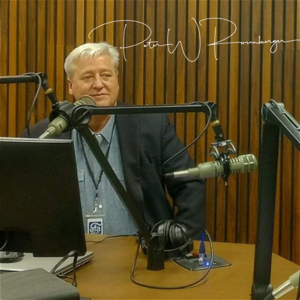
This is the Truth Network. Um Welcome to Hope for the Caregiver. This is Peter Rosenberger. This is the program for you as a family caregiver here on American Family Radio. Glad to be with you today to talk about all things related to caregivers on how we as family caregivers can live a calmer, healthier, and dare I say it.
a more joyful life. as we stay strong and healthy while taking care of someone who is not. And learning the principle that guides everything I do on this program, which is healthy caregivers make better caregivers. How is that working for you? What is your Emotional, physical, financial, spiritual state right now as you take care of somebody.
What things are troubling you? What things are accelerating your growth? What things do you feel like are hindering this? These are all things we unpack on this program, and I share with you things I've learned over a lifetime to offer a lifeline to my fellow caregivers. Hope, for the caregiver.com.
Hopeforth the caregiver.com. I've been asking a lot of well, I do this a lot. I ask a lot of questions. I saw a tractor out pulling a whole bunch of tires. behind The tractor.
They were all kind of tied up like a row of three or four, and then behind that a row of five or six, and that kind of thing. And just, and several rows of this, pulling a bunch of old tires.
So I got a rancher friend of mine who I pester without mercy. And ask all kinds of questions. Everything from hey, I've got several rancher friends that I've gotten to know out here for many years. And I, in fact, some of them I've known for 40 years, and I really am quite fond of all of them. And they're a wealth of information that they did not want to necessarily disseminate to this music major who keeps pestering them.
He came all the way out here from Nashville to pester them, but they are very gracious to put up with me. But I ask them questions about ranch life and things that go on out here that are helpful to know. They didn't teach me any of these things in music school. You know, I have my piano professor still with us, and he's in his late 80s. And every now and then I'll call him up and say, Hey, You left out some things.
Like, for example, he never told me in music theory class how to get a moose out of your barn that was eating your hay. He never told me how to do that. And nor did my father, by the way. That's something you kind of have to learn on the job. And so I watched this tractor pull.
Well, I found out it's called Harrowing. H-A-R-R-O-W-I-N-G, heroing.
Well, I've heard the term, I guess I never really gave much thought to it. I certainly didn't see it in action. And Said, yeah, this is what you do. You bust up the old cow pies, and it helps, it's not just for aesthetics, it helps really fertilize the ground and so forth. And I thought, wow, there's a lot of that kind of material there in Washington.
We ought to send some tractors to Washington, D.C., to Harrow over there. That would be helpful. But we're getting ready for all kinds of things. There's a lot of work to be done this time of year. Normally, we have a lot of snow.
And we didn't have very much snow this year at all. I've seen pictures of just two years ago where we had two feet. I've had three feet of snow on our deck. The first week of May, but this year we didn't. But guess what happens this time of year?
Every year. life bursts forth. And the cattle are giving birth. It's like it happens in an afternoon kind of thing. You go to the post office, you come back, and there's all these little baby calves sitting there by their mamas in the fields.
And another friend of ours raises goats and sheep, and there's kids everywhere and lambs. And it's just, it's like, phew. Like overnight, it happens. And you start seeing green, and it's very dramatic when spring does arrive here. Even sometimes in the winter, I've seen it, it's kind of weird when you see the uh a heavy snowfall on green grass.
It's it that's kind of weird. Not as weird as seeing lightning during snowstorms, but it's still pretty weird. But anyway, life just bursts forth.
Well, we're all A bit concerned because we didn't get the snow this year.
Now, why is that important?
Well, we need to have a snowpack up in the high country and to keep the ground moist. And that runoff from the snow melt is what irrigates a lot for the farmers and all their cattle and so forth. But we also have a very, very ugly fire season that may appear. We had one last year and it was a bit gnarly. I mentioned this to my rancher friends, and as usual, they are filled with sage wisdom, sage advice, and they say, Look, you know what?
We don't have any control over it. We're going to have to do the work that's at our hand to do right now. We don't know what's going to happen this summer with fire. We don't know what's going to happen with drought this summer. In Montana, they say you're always 10 days away from a drought because the air is so dry out here.
That's one of the reasons we moved here because it's so dry and it helps Gracie's arthritis. And But you you gotta have water. And water's a big problem. And we're. Using up a lot of our water because we got all these people moving out here because they watched Yellowstone and then they want to move out here.
We've been here for a long time and we already had a well, we didn't dig a new well, but they're building subdivisions. A lot of Californians and so forth are moving into this area and they build subdivisions and they're taking up a lot of the water. And so it's a concern. Water is a big deal. and I never really gave much thought to it back East.
But out here it's a big deal. And they said, well, you know. We don't have any control about what's going to happen in August. They they deal with what's right in front of them. And And that's the way life works out here.
And that's really the way life is. We we can't live in the wreckage of our future. This wasn't an ideal winter for us. The ski resorts are hurting. The the the forest you know doesn't have the snowpack.
Yeah, it's not an ideal situation. But life still bursts forth. And you got all these little calves running around and all these little goats and sheep and everything else. And I'll stop and just take pictures of them. Gracie loves to see the pictures of them.
I'm going to get her out to go play with them at one point. And and it's you know, life is bursting forth. even when the conditions aren't exactly optimal. Life burst forth. And I can't help but think about that.
This week as we go into Easter weekend. And what that must have been like. for all that witnessed the crucifixion. That thought that the cross had the final word. And it was over, and it was dead.
I mean, the demoralization, the fear, the anxiety. What are we going to do now? We We live in that place a lot of times as caregivers. What are we going to do? What are we going to do?
What are we going to do? And then. Life burst forth. They were panicked, freaked out, the disciples were, you know, they were. You know how I know that?
Because we get that way. About things of far less consequence. You know, they watch the crucifixion. We get upset when we get a big bill from the hospital.
Well, I don't know about you, but I do. And And that's Okay. What I've been thinking about all this week is because I literally drove to town and came back, and there were just Babies everywhere, little baby calves everywhere. And It's really amazing to watch. These cows just drop their babies right out there and they start eating.
The cows sit there, just go about their business, and the little calves are trying to stand up. But life is just teeming out here. And you just see it like this. And so I go back to The crucifixion. The cross looked final.
Death usually does. But then without waiting for Things to get better without waiting for the world to become more favorable, without waiting for anyone to feel ready. Life burst forth. We live with a lot of fear in our lives. Particularly us as caregivers.
We do. I understand that. But God is not limited to this. And it's not finished until he says it's finished. And the same God who brought life out of the grave.
The same spirit is still at work in the middle of our unfinished stories. Yours? And mine.
So We're not here today to solve everything that could possibly go wrong down the road. You and I both know that we're going to have many, many mishaps before this thing is over. But maybe today is something we can learn from these ranchers who say, you know what? I don't know what's going to happen in August with fire season, but we got work to do right now. Check the fence.
Watch over those mamas and those babies out there in the field. Make sure they got plenty of hay and water. Do the work that is in our hand to do today, and trust in God with what hasn't arrived yet. Because even here, even now with all the unanswered questions. life still burst forth.
sometimes Quietly, Unexpectedly. Just like on that Easter morning. life. Burst. Fourth, and it made all the difference.
And that is Hope for the Caregiver. And this is Peter Rosenberger, and we will be right back. Welcome back to Hope for the Caregiver. This is Peter Rosenberger. Glad to be with you.
HopefortheCaregiver.com. HopefortheCaregiver.com. Hey, I want to run something by you. You know, I write every week. For several different organizations, and then I do a monthly column as well.
And I've got a lot of things out there. It's out at a lot of it you can see at Substack. And I know some of you may not be used to Substack, but it's a great place to put video, print, audio, all that kind of stuff. And I put it out there. I put things on my website.
I put things through our email blast. If you go to standingwithhope.com, you can sign up for our emails. And we put information out there as well. And then the podcast, it's all there if you'll just take advantage of it. And I hope you will because I put a lot of things that I can't talk about on the show.
If you want to go to Substack, Here, write this down.
Okay, you ready? Caregiver. Dot substack Dot Yeah. Caregiver.substack.com. You can download the app to your, it's a free app.
Download the app to your phone, and then you'll get push notices. And sometimes I do some things behind a paywall, most of it it's not. And you can go out and access it all 24/7, podcast, video, print, everything. And things that I don't necessarily talk about here on the program or I expand it. And I've got an article that's going to hit.
Tomorrow. On on Easter Sunday. And I thought I'd give you guys a preview of it. And if you want to see it, again, just get the. Go out to Substack and sign up.
Put your email in and sign up. And I'll send you a notification when I put it out there as well on Substack. But tomorrow I'll hit it Blaze Media. I write for them every week. But I was watching.
The reports out of the old Dominion University. Terrorist attack. You remember that a couple of weeks ago? Following this guy storming the campus, sadly, there was a lieutenant colonel, I believe, who was killed. And the details came in the way they kind of always do.
A lot of confusion. A lot of fear, a lot of sirens. And you know, the families that were there waiting. for answers that just came agonizingly slow. And, you know, there's no clever.
observations for a moment like this. You just look at it with just grief. I mean, just. Uh and sober anger. I mean real anger.
at what's been done, and then a respect for those who ran towards danger, moved toward it, even at great risk to themselves, those students were able to subdue this guy. And he was armed, and they were not. I mean, I think they had a knife or something, but most of the time, I think it was just. Subduing him just by going after him. I mean, it's amazing that they were able to do that.
And in the hours that followed that, the law enforcement there was an FBI representative I can't remember what her name was, and I think she was an assistant director or something like that. And she stood before the microphones and said something familiar about the terrorist. And here's what she said: Past behavior predicts future performance. This guy had been a terrorist before, been in jail. They let him out, and he went back to being a terrorist again.
Yeah. Past behavior predicts future performance. And she didn't deliver this with an edge to her. She didn't have this indignation. She didn't.
You know, come across with just sarcasm or anything else, it almost is like she was sighing. There was a sadness that comes from seeing this same pattern one too many times, which so many in law enforcement do. And you can just kind of see that on her. And And Everybody understood what she meant. Nobody was saying, What do you mean?
What do you mean? They knew what she meant. And as we stood in grief, I watched the news reports on this thing. The phrase just kept being repeated. The whole.
uh story was picked up everywhere in the media The pundits, everybody picked it up. Everybody kept saying the same thing. Political officials, they all kept saying the same phrase. Pass. behavior predicts future performance.
And it just lingered out there. And you know how some phrases just kind of land hard and they stay with you? I I couldn't shake it. It followed me for now weeks. And I just couldn't shake the thought.
And as Easter approached, The Phrase just kind of dug into me a little bit more. And we see that pattern in terrorists, of course, and career criminals. You know, that's that's not a hard thing to spot. But the harder question is Is that diagnosis limited to just them? Or does that diagnosis reach further into the human condition?
There's an old saying, If you spot it, you got it. And if you could see The past. Behavior predicts future performance. You wonder Is this systemic to us as a human species? The Apostle Paul thought so.
He described the struggle that he had with with Pretty brut brutal honesty. doing what he does not want to do and returning to what he knows he should leave behind. And Paul goes on to basically Communicate this in several different ways in his epistles. The issue is not merely what we do, but it's who we are by nature. This is who we are as a sin nature.
This is what it has done to us. The paste Behavior predicts FUTURE PERFORMANCE And that uncomfortable truth points to something we recognize much closer to home. Not in acts of terror. Not everybody's going to be a terrorist or a criminal. Or career criminal, anything like that, but in patterns we can't seem to break.
Like the anger that resurfaces, the grudges that we carry, the actions that we excuse, but we return to. It's different in degree, certainly, and it's not in the same in consequence. That's not what I'm talking about, okay? I'm not making it equivalence. It's not apples to apples in that regard, but they're not unrelated.
Apples and oranges. are not the same, but they're still fruit. Scripture doesn't blur those distinctions. And say, okay, this is the same, but it does press deeper than just behavior. And that is where.
For me, the discomfort settled in because if this is not just out there, Then we're not merely observers of this pattern, are we? It's one thing to recognize the pattern in others, but it's another thing to consider whether it touches us as well. And that raises a question most of us would rather not sit with for long. Are we simply watching something broken in the world? Or are we looking at something that runs through us as well?
Because if it's the latter Then the problem is not occasional. It's continual. not in just headlines, but in our hearts. And that's a harder place for us to To exist, isn't it? If the future depends on us.
Then the trajectory is not uncertain. We already know where this is going. Past behavior indicates future performance. Our culture Insist that we're basically good people, are we? Are we basically good people?
We have a lot of pulpits that say that.
Well, if we are, then why do we need a Savior? And if we're not, then what are the implications? This summer we celebrate 250 years of America. And the men who framed this country wrestled with that very thought. They did not build a system on the assumption that people would consistently do what is right or that they are basically good.
They knew better. All of these people came out of the Reformation. I don't think there were any. in the original there. of framing our country that were staunchly Catholic.
They were all reformers, and part of Reformation doctrine is Total depravity Not utter depravity, that's different. Total, it means it's systemic in us. We can't get rid of it. It permeates all of us. That we're not basically good.
Scripture doesn't say that we are, scripture says the heart is exceedingly wicked.
So they built a government that was filled with oversight that restrains what is wrong. because they knew that whatever resides in the human heart will eventually show up in government and look at our government today. With all the checks and balances that we have, look at the monstrosity that we have built. This raises a hard question more than any that press conference like that FBI agent could answer. What breaks the pattern?
Because history suggests that we don't. We adjust. We may regulate, we can respond, and all of that has its place, but none of it reaches far enough to change what drives the pattern in the first place. And this is precisely where Easter speaks. not as a sentiment, kind of a nice spring holiday.
Not as a tradition. But as a claim. Not that people try harder or gradually become better versions of themselves. You've heard this, you've seen this from pulpits, you've seen this from a lot of pulpits on Christian TV. We the best your best life now.
Left to ourselves, we can't change. We must be changed. The gospel does not offer a refined version of our past. It replaces it. Not my record.
Not a cleaned up life, but a different standing altogether. what Scripture calls sin is not managed at the cross. It is judged. And what we can't produce? is given.
which is righteousness, It's not earned, but it's credited. And that's why the resurrection matters. because death has always been the final confirmation of that pattern. Past behavior. Does what?
It predicts future Performance. What are the wages of sin? Death, death is always the final destination of our sin that we can not change. Death is where everyone. Every life.
Left to itself, the arrives. But if death itself is overturned, Then the pattern it confirms is no longer absolute. Past Behaviours. no longer predicts future performance. Because of what?
Something has interrupted it. The Apostle Paul again captured it in a single phrase, and such were some of you. Yeah. Now think about that word, were. That doesn't describe improvement.
It describes transformation. If we're left to ourselves, the pattern holds. It will predict future Performance, and that always leads to death. It always has. But Easter declares that we're not left to ourselves.
It's no longer the final authority. Because the one who stepped into history took our past on himself, walked out of the grave, and now defines the future for all of us who belong to him. Not a second chance, not a fresh start, a new standing. Not my record. But his.
And that changes everything. And that, my friends, is hope for this caregiver. This is Peter Rosenberger. This is Hope for the Caregiver. HopeforthTeCaregiver.com.
We'll be right back. Uh Welcome back to Hope for the Caregiver. This is Peter Rosenberger. Glad to be with you. HopefortheCaregiver.com.
HopefortheCaregiver.com. If you go out to the site, there's several things you can see right there. One of them is you can access my sub stack from there. And it'll take you there, and you can sign up for that. And you can get a push on articles like I just.
Referenced in the last block. It's all there at hopeforthecaregiver.com. And while you're there, you'll see Caregiver 911. You'll see resources for my books. You'll see sign up for our e-letter, which I hope you'll do.
And you can find out more stuff that we put out. I've put out a lot of different pictures of Gracie as in her journey that she's standing a lot straighter. And you'll see information about Standing With Hope, which is the presenting ministry sponsor of everything we do. Gracie and I started this well over 20 years ago. And we've been working diligently in this to build two different types of outreaches.
One of them is a prosthetic limb outreach for her fellow amputees, and the other is a caregiver outreach. For my fellow caregivers, and that's what this program is, among other things that we do. And while we're on the subject of the prosthetic limb outreach, if you know somebody who has passed away and has a used prosthetic limb in the family that they don't know what to do with, we will take it. We are particularly looking for Um liners right now, they're called pinlocks. And if you know if somebody's got one, or you know a prosthetist who may have some, we'll take them.
If those liners are not too damaged, we can use. Previously owned and used liners, if they're not too damaged. But I was able to get a bunch of regular liners that don't have these pins on them. And if you're not an amputee, you won't know what I'm talking about. Or if you're not related to an amputee, but that's okay.
You can tell somebody about it. But a lot of the patients we have over there are used to the pin ones, and so I'm scrambling to get some more to them. But we take used prosthetic limps. And all the parts and Equipment that goes with it, like liners and sleeves and prosthetic socks and all that kind of stuff, we'll take it. If we can't use it, nobody can.
So, you can go out to the website again. You go either to Hope for the Caregiver, and you'll see the link to Standing with Hope there. Or you can just go straight to standingwithhope.com and you'll see where it says donate a used prosthetic limb. They go to a prison. In Arizona, run by a great organization out of Nashville called Core Civic.
I've known these guys for many, many years, and we've been working with them for 15 years. On our prosthetic limb recycling program. We've recycled about a thousand prosthetic limbs. And we can take them apart. Inmates will do this, and they will disassemble them so that we can use the pylons, the knees, the screws, the adapters, the connectors, the tube clamps, all that kind of stuff.
Feet. And we don't reuse the socket because that's custom-made. for the patient.
So we have the equipment to make a socket over there. the feet, the knees and the pylons, we'd put it on there and they're they're off to the races. And it's an amazing ministry to see this where inmates are helping us do that. We're the only ones in the world doing this with inmates with prosthetic limbs. And the inmates are able to participate in this faith-based program, and it gives them something positive to do with their hands in prison.
We've had that comment from many inmates who said, We never did anything positive with our hands. We didn't think of. people with disabilities at all. Until this program came along.
So I'm very grateful to be able to do it. And if you'll help us get the word out, if you don't know anything about prosthetics or amputees, that's okay. But you may know somebody who does. You can give the word out. And if you know what?
If you don't know anything about prosthetics and you have no access to somebody with prosthetics, guess what? You can help us ship stuff.
So go out there today. You can donate and designate for shipping because I've got supplies that need to go. We're always sending stuff over there, and you could be a part of that today. We are constantly shipping and purchasing supplies. It costs us about three hundred and fifty dollars to put a leg on someone.
And you could sponsor a leg. You can sponsor 10 legs. whatever you want to do. But we need those Prosthetic materials. right away and you can help with that.
It's a gift that keeps on walking. You know, and one of the things we started this, when you put a leg on somebody. They're gonna walk. But you teach and equip somebody to make legs. and hundreds walk.
And you do all of that. While pointing them to Christ, And now you're equipping them to stand with hope. And that's why we named the ministry that way. People used to ask Gracie when we started this, why didn't you name it Stand with Grace? And she said, Well, it wasn't about me.
It was about pointing them to Christ. It was about me extending the same comfort that I myself receive, which are quality prosthetic legs and focusing on Christ. And that's what we do.
So you can help us do that: standingwithhope.com to Today. Right now, Easter weekend. What better weekend to do it?
So, we'd welcome the help on that. I got some calls this week. Within 48 hours, I had three different scenarios. And maybe this resonates with some of you all. There's three different scenarios.
Where Spouses We're taking care. Their spouses.
Some were husbands that take care of wives, and one was a wife taking care of her husband. And the person that they were taking care of. Did something that was very, very hurtful, said things that were mean and hurtful and pretty rough. And all three spouses were just broken. And they recognize that their loved one is impaired.
But they also hear the hurtful things coming out of. The same voice, the same that they've loved for a lifetime. The same face that they've cherished for a lifetime. And yet the disease Whatever's going on with them, whether it's dementia, whether it's addiction, whether it's mental illness, it doesn't matter, it's taking over and saying, Okay. hurtful, horrific things.
And all three were in tears. They didn't know how to deal with it. How how do you deal with it? What do you think? I'm not in the business of giving advice.
Y'all know this. If you've been listening to this program for any length of time, I try to stay out of the advice column unless it's just a couple of tips, like I did last week with doctors and so forth. And periodically, I'll just give you a couple of tips I've learned. But I'm not going to tell you how to take care of your loved one any more than you could tell me how to take care of Gracie. But let's talk about that for a moment.
Let's lay this out. These people, these three individuals, were really hurt.
So what do we do with that? When somebody is doing something like that, that is very, very hurtful. and very, very painful. And yet they're requiring our full-time care. That's caregivers.
Now, that doesn't mean we don't do the same thing. But I'm talking specifically now these three spouses. They were going through this. And I looked at this one husband. And he was really struggling.
And I said, what do you do with this? And he kind of sighed. And he just he he just kind of shrugged a little bit. And and and I go back to what Scripture says. And let's all go there because this is the weekend to go there.
I mean, if we're thinking about Easter, we're thinking about Christ and what was done and said to him. They killed him. They beat him. They mocked him. And he prayed for them on the cross.
So we have a Savior who is not unfamiliar with the Savior. with being treated poorly. Does that mean something to you? Does that give you any sense? Bolstering He does me.
It doesn't necessarily make me feel better about the things that we deal with as caregivers. But what it says to me is Is that we have a Savior who is acquainted in ways that we cannot even possibly understand. And I told this particular fellow, this one fellow, taking care of his wife, and I said, look. You are. Modeling Your Saviour.
It's really important that you understand this.
Now you may not think you're doing a great job. I understand. None of us do. We're all We talked about that in the last block. We're all short of this.
But think about Christ. As the bridegroom. But think about who his bride is.
Well that's us. And we're kind of messed up, aren't we? How many of you all have ever in your heart or out loud said accusatory things towards God. demanded the no answers, got angry, frustrated, despairing, sullen, whatever, fill in the adjective. How many of you ever have responded poorly to God?
I I will step to the front of the line on that one. And yet, what does he do? He meets us in our anguish. We have done far worse to him. than anyone has ever done to us.
I heard the phrase, you've heard the phrase of Jonathan Edwards' sermon, Sinners in the Hands of an Angry God. And I think it was R. C. Sproll, maybe somebody else, that said that at the cross it was God in the hands of angry sinners. Make no mistake.
Left to our own devices, like I talked about in the last block, we would crucify him all over again. And so we have a Savior that understands this. And I think if you're struggling with that right now. And you've got someone who is treating you poorly on this. Do not look to them for affirmation.
Do not look for them to apologize in a way that's going to make amends to you. Run to Christ on this one. And what does that look like? He says, you go back and you memorize the scripture. We've talked about this.
You put his scripture in your heart. And you cling to that. You say, Lord. Take me to Gethsemane with you. Take me up to the cross with you.
Let me go. Let me watch you through this process, Father. Let me better understand that you meet us in our suffering, that you are there with us in this. You are not. distant from us.
You are a man acquainted with sorrows and acquainted with grief. Surely he has borne this. Scripture says Emmanuel means God with us, even in our rejection. Even in when the disease takes our loved one into a bad place and we're over there struggling to find solid ground. Let me tell you where solid ground is.
This is the only place I found it in forty years of this, and it is right at the foot of the cross. You keep your eyes on Jesus. If you're struggling on how to stand in this, don't worry about that. Look at him. Peter struggled.
To stay in on water. But as long as he looked at Jesus, it didn't matter what he was standing on, did it? And that is The biggest step that we can take in learning to deal with this, and there's not a lot I can cover in just a small segment like this.
So, how about if we talk about this on a regular basis? of what to do when you're being treated poorly. And I've got a hymn that we're going to talk about in the next block for our hymn that every caregiver ought to know that I think is going to help you with this a little bit more. It does hurt. And you will never probably get the satisfaction you're looking for from a loved one.
How can disease give you affirmation? It can't. But your Savior can. And your Savior does. And your Savior has.
That's what Easter is all about. He has borne this. And he came out of a grave. and changed everything.
So you are not bound to that. Nor is your loved one for that matter. Look to the cross. Look to Christ. And we'll unpack that more.
and more programs okay that's hope for the caregiver by the way and we'll be right back Welcome back to Hope for the Caregiver. This is Peter Rosenberger. Glad to be with you. HopefortheCaregiver.com. Hopeforthecaregiver dot com We've been doing a series called Hymns That Every Caregiver Ought to Know, and I'm going to.
Do something a little bit different today. It's a hymn, I think. Pretty much everybody's going to know already. And this hymn is not one of the Two or 300-year-old hymns that I usually bring out. It's a little more recent.
It was in the 70s that this thing was written. And this couple that wrote it were expecting their third child. It should have been a. a pretty joyful season around, but the world felt like it was Coming apart. And this woman who was getting ready to have this baby, she said she found herself lying awake at night asking a question that.
A lot of us understand, by the way, what kind of world are we bringing this child into? And this is back in the 70s, but you got to think about what was going on in Vietnam. There was a lot of unrest in the streets, assassinations, Martin Luther King, Robert F. Kennedy Jr. And then her husband was dealing with his own health struggles, and he was pretty whipped.
And they're thinking, you know, what kind of world are we bringing this kid into? And then something happened on New Year's Eve. they held their new born son. And the fear didn't go away, but it was answered. And it was answered not with some kind of plan or guarantees or even better circumstances.
Remember, we talked about this already. Things don't always change. But life bursts Through. Life bursts through. We talked about it in the first block.
And it was about this brand new life they were holding that just changed their perspective on everything. And this person showed up in their life, this little baby. And that inspired the lyrics of this song. And it didn't come from a greeting card. It came from a couple looking at a fragile child.
In an unstable world, by the way, our world is a lot more unstable now. and realizing that their hope was not tied to what they could fix, predict or control, just like I talked about in the first block. It was tied to the resurrection. And that's where this hymn meets us. As caregivers, we're going to go to places where feeling better is just not on the table.
It's not about feeling better. It's about being better. We don't always get resolution. We don't always get relief. And we certainly don't get control.
What we get. Is a long road of showing up anyway, and this hymn doesn't pretend. Otherwise. And one of the verses starts with the baby. How sweet to hold a newborn baby.
But then The line goes deeper, but greater still the calm assurance that This child will face the uncertainties of life, and we can too. Because he lives. The answer is not, it's going to all work out. The answer is Because he lives. And the final verse goes even further in it.
It goes all the way to the grave. And then one day I'll cross that river. I'll fight life's final war with pain. And then, as death gives way to victory, I'll see the lights of glory and I'll know he lives. I arranged this hymn.
For Gracie many, many years ago. And I asked Johnny if she would sing it with Gracie. Johnny Erickson Tata. And so we cut this. Together from Nashville to LA.
You know, it was just, it was a, it was a bit of work to do it. And I was very careful on which lyric I was going to assign to which of these women.
Now, you think about the two women that I'm producing here. And they have well over now a hundred years of of disability between the two of And I gave Greasy that loan. And then one day I'll cross that river. I'll fight life's final war with pain. And it was all she could do to get through it.
But then they both just Blister it. They come in with such strength because we know, we know, we know. Not just I know, but we know. Whoa. The future.
And so it was a glorious moment to hear their voices. And I wanted just to bring this to you today on our series of hymns that every caregiver ought to know. This hymn, by the way, is on Gracie C D Resilient. And I think you could stream this on all your streaming services. Spotify, whatever.
I think you could do that. Gracie's been fussed at me to get her CD so that you could download the whole thing. And I told her, I said, baby, I've got my top staff working on it right now. Oh wait, I am my top staff, so I'm doing the best I can with it. Uh but You know what?
Sure. This is not necessarily going to get easier for us as caregivers. But that's what this song says to us because he lives, I can face Tomorrow. Because he lives. All fear is gone because I know, I know, I know, I know, I know.
And let me ask you something. Do you know? Do you know? This whole program today, I've been wanting to assure you, to strengthen you, to give you these things to hang on to. I'm going to end the program today with this song.
This is Johnny Erickson Tata and Gracie and me on the piano. And this is the song that anchors us all as believers. Every caregiver ought to know it. Every believer ought to know it. Because he lives, we can face tomorrow.
And you start off with Johnny's voice, Gracie comes in, and then you just watch and see how these two women deliver this powerful message. This is Peter Rosenberger. This is Hope for the Caregiver. He is risen. God sent you.
They called him Jesus. He came to love He came to heal and forgive. He lived and he died to buy my pardon and an empty grave is there to prove my Savior lives because he lives I can face tomorrow because he lives all fear Is gone because I know He wants the future and the life my life is worth forever Just because just because He is and then one day I'll cross that river I'll fight life's fine Final war With peace oh, but then as death gives way to fiction, I'll see the lights of glory and I'll know he reigns because he can face to morrow because he lives of fear. Is gone because I know He holds my few chair and I fish forward living just because He lives because He lives we can face tomorrow Because He lives. All fear is gone because we know we know we know He holds a new future And life is worth the living just because He lives Our lives are worth the living just because He lives Yes, Jesus Gracie, when you envisioned doing a prosthetic limb outreach, did you ever think?
the inmates would help you do that. Not in a million years. What does it do? When you go to. The facility run by Core Civic, and you see the faces of these inmates that are working on.
Prosthetic limbs that you have helped collect from all over the country that you put out the plea for. and they're disassembling. You see all these legs, like what you have, your own prosthetic legs. And arms, too. And arms.
When you see all this, what does that do to you? Makes me cry. Cause I see the smiles on their faces and I know. I know what it is to be locked someplace where you can't get out without somebody else allowing you to get out. Course, being in the hospital so much and so long.
When I go in there, and I always get the same thing every time that these men are so glad that they get to be doing, as one man said, something good finally with my hands. Did you know before you became an amputee that Parts of prosthetic limbs could be recycled? No, I had no idea. I had. I thought we were still in the 1800s and 1700s.
I mean, you know, I thought of peg leg, I thought of wooden legs. I never thought of. Titanium and carbon legs and flex feet and C legs and all that. I never thought about that. I had no idea.
Now that you've had an experience with it, what do you think of the faith-based programs that Core Civic offers? I think they're just absolutely Awesome. And I think every prison out there. have faith-based programs like this because Return rate. Of the men that are involved in this particular faith-based program.
and the other ones like it, but I know about this one. are it uh it's just an amazingly low rate. Compared to those who don't have them. And I think that that says so much. But that's so much.
about Just, that doesn't have anything to do with me. It just has something to do with God using somebody broken. to help other broken people be whole. If people want to donate a used prosthetic limb, whether from a loved one who passed away. Yeah.
You know, somebody who outgrew them, you've donated some of your own. What's the best place for them to do? How do they do that? Where do they find that? Please go to stannywithope.com/slash recycle, and that's all it takes.
It'll give you all the information on there. What's that website again? Dannywithope.com/slash.com Slash recycle. Thanks, Chris. Take Baha.
Lean on me. We will stay.