This is the Truth Network. If you're feeling overwhelmed, exhausted, or carrying more than you could put into words, I've created something just for moments like that. Go to hopeforthecaregiver.com. Right at the top of the page, click the blinking Caregiver 911 light. That page will take you to a short, guided audio I made to give caregivers a quiet place to pause, breathe, and set the load down.
You don't have to fix anything. You're allowed to rest here. Hold on. Hopeforthiver.com. Click on Caregiver 911.
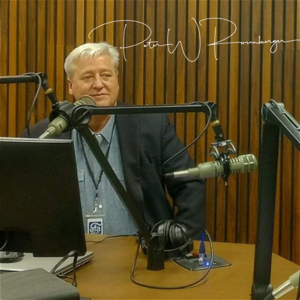
Um It the father strong to say who songs pray who is the mighty Locian Beast and with his key or give us many kinds to thee for those in heaven's sea. Welcome back to Hope for the Caregiver. This is Peter Rosenberger. That is the Navy hymn: Eternal Father, strong to save. I led off with that one.
My father long time Navy chaplain. Excuse me, that hymn meant so much to my father. And, you know, as a boy in the 70s, I remember dad, he was a Naval Reserve Chaplain. and he was in Atlanta, and one of his duties was the casualty notification. informing families that their loved one had been killed in military service, usually the marines.
And in the winter, he wore his Navy dress blues, okay, Navy service dress blues. And what's really, they're almost black. They're very dark, dark, dark, dark navy. And he accompanied other officers and a staff car and that kind of thing into some of Atlanta's poorest neighborhoods. Uh, and the housing projects.
Well, you know, we didn't have cell phones back then at GPS, and sometimes it wasn't easy to locate these things. And the clock was running, there, the these notifications had to be done at a certain time. And to the family. These strangers in uniform, as they looked in some of these places, were often met. You know, kind of cautiously in these neighborhoods that were already carrying, you know, some.
A lot of burdens in those neighborhoods. And some families hid at first because they thought it was the police. You know, 'cause the the n the uniforms were so dark and they thought but but but you know, of course dad had the white hat with the gold, but but still they thought it was police 'cause they they looked very official and you know dad carried a different burden though. and he carried the worst message that a family could have. And, you know, I look back at his life in addition to.
Preaching from a pulpit, he he ministered on doorsteps. And he did this for he served for many years. He eventually retired with the rank of captain in the United States Navy. But long before that, I watched him carry one of the hardest duties a chaplain could bear. And that's why Memorial Day is always so meaningful to me, because I think of my father having to show up on those doorsteps.
That was his job. and to spend time with those families. You know, not all memorials are granite.
Some of them are folded into flags and are handed to Trembling families. Others hang quietly in frame photographs or rest beneath. white crosses that that are overlooking distant oceans. And some memorials are so small that readers almost miss them. in Scripture.
And one of those memorials appears in the genealogy of Jesus Christ. Under the superintendence of the Holy Spirit, Matthew records the lineage of Jesus very carefully: Abraham, Isaac, Jacob, David, Solomon. But when he gets to Solomon, Matthew writes something very unusual. He said, David was the father of Solomon by the wife. of Uriah Bathsheba's name is not mentioned.
But her husband was. URIAH the Hittite And you remember David committed adultery with Bathsheba and arranged for Uriah to die in battle. And Scripture doesn't sanitize David's sin. The thing that David had done, Scripture said, displeased the Lord. It's that one sentence right there that is just Yeah.
It it it just causes your heart to just ache to see it. David repented, and and he did. Psalm fifty one shows that. God forgave him. But the consequences remain.
Dad used to say, Off that God forgives instantly. Man takes a while. But nature never does. But God also preserved the name that David tried to bury. Every Memorial Day I think about that.
Uriah has now been remembered for nearly three thousand. Thousand years, and not because kings honored him properly, his own king had him killed. But God refused to Let him disappear. And Uriah was not even an Israelite. He was a Hittite.
But he served honourably. even when his king acted dishonourably toward him. Memorial Day reminds us that service still matters. As America approaches 250 years as a nation, countless men and women have worn the uniform unto death.
Some died heroically in combat. Others died through confusion or incompetence, training accidents, friendly fire.
Some even died through the failures of leaders. far from the battlefield. I look at that Afghanistan withdrawal. Those thirteen that died. We have thirteen that have died here in this conflict with.
Iran. War has always mixed courage with tragedy. Honour. with human failure. But generation after generations, Americans still step forward, willing to bear.
Cost that most of us pray we never have to personally face. Many of those Never come home alive. My son's now about the age that my father was when he knocked on those doors back in inner-city Atlanta. Wearing a Navy uniform. carrying news that no family ever wants to hear.
And looking at my sons, I can't imagine them having to carry that burden repeatedly, but that's what dad did. Yet those moments marked him for the rest of his ministry. His faith was forged in living rooms Where stunned families learned that somebody that they loved wasn't coming home. And he carried both the duty of a nation. but he also carried the ministry of the church into rooms that were shattered.
By grief. Dad's grave marker. Bears both his rank. in his calling. And when it ta came time to bury my father.
My mother asked me to help with that and I made the decision. That we would bury him in his Navy service dress blues. That uniform That At first shocked families, but then Represented to families comfort and strength from a nation and from a pastor. And his gravestone bears his calling. and his rank.
And it serves as a reminder. that he stood with families During their darkest hours.
So this Memorial Day. A nation pauses to remember the Americans who never took off the uniform. But in that pause, if you serve beside a military chaplain, remember them as well. Many spent their ministries. carrying unbearable news to frightened families, fighting back tears.
while praying for those who could not. Burying the dead and offering words. no one who hears them ever forgets. Those words that came from my father and so many other chaplains. When they would say on behalf, of a grateful nation.
History forgets names. Monuments weather Politicians fail. We see it all the time. But God doesn't forget. In the genealogy of Christ, God preserved the name of a faithful soldier who died in service, he never took off the uniform.
And no service and no sacrifice poured out in duty. escapes the sight of God. Not all memorials are granite.
Some are written. Where time cannot erase them. Memorial Day is not. Simply the unofficial start of summer. It's not a day where we have a big car race.
It's a day where a nation pauses to remember. And I cannot. spend Memorial Day without thinking Of those things of Uriah the Hittite, Yeah. And my father. And I think about how many doors he knocked on.
They're in Vietnam. And what that did to him. and how it anchored him to take the message of the gospel into those places. Those are hard places.
Some of you may have been in those places.
Some of you may be there.
Now And I would point you back. to the Gospel of Matthew. in the lineage of Christ, where God did not forget. A fallen soldier. And What an amazing Just one little sentence in there.
to s to say about the faithfulness of God. the remembrance of God. But nothing escapes him. And that he honors these things. When we come back from the break, I'm going to play a clip from an interview I did with a friend of mine who's also a military chaplain.
He was in the army. Lieutenant Colonel Michael Frazier, dear, dear friend, And I want you to hear him. describe these moments that he had to go. and knock on these doors. what it was like.
What was said, what was done. And I wanted you to hear this. It's a clip I did a couple of years ago with Michael. And I think you'll find it very meaningful. This is Peter Rosenberger.
This is Hope for the Caregiver on a very special Memorial Day weekend program. Welcome back to Hope for the Caregiver. This is Peter Rosenberger. That is, of course, the Marine Hymn. And I thought that that arrangement of it was just spectacular and wanted to play it for this very special Memorial Day.
Show that we're having here to talk about the history of our country. There are so many Veterans and Family members of veterans and family members of servicemen and women who were lost in battle, and those who succumbed to wounds sustained in battle, that they were cared for by people in this audience. A couple of years ago, I sat down with a friend. Friend of mine, and I wanted to get his thoughts. And I wanted to play that interview for you today about Memorial Day, about chaplains, about the history of this country.
And so, this is excerpts from this. When I'm talking with my longtime friend chaplain, Lieutenant Colonel Michael Frazier. And we're talking about the weight of the United States military when they make a presentation when they when they have to go and notify the family. uh that a loved one has fallen in battle. My dad did this for many years.
when he was a young chaplain in the Navy, and um in in the Atlanta area. And he shares some of that with me over the years. And it was just very difficult things, but it shaped who he was as a pastor. And in this particular conversation we're having with Michael. Michael, I wanted to ask you that.
I didn't get a chance to ask before we went to the break. How did this shape you as a pastor? As you went to these families, and again, like you said, you had the full weight of the United States Army and the people of the United States. You know, metaphorically on your shoulders as you went and you made this notification. And how how did this shape you as a pastor?
Well, my first experience was that of deep appreciation for our country. Because the notification was a determination by our government. that no fallen soldiers family would receive the news generically through the media or from any other source, But directly from the unit as closely as possible. That this individual soldier or military personnel. uh was assigned.
because they recognize the dignity of the individual. And to me, that gave me great Sense Of of honor that it was to speak to these family members. Yeah, I I can hardly do it without bringing tears my own eyes. because their loved one. That anyone could be asked to give, that is, our Lord himself said.
Greater love. There's no one in this than that they lay down their life for their friends. And I think of that way as Americans. As you said earlier, there are many things that divide us. But one thing that unites us is our common heritage as Americans.
We have fought wars from the American Revolution down to Afghanistan. And I did a count to the total war dead. of all of our recorded American losses. in all of our wars. They come to one million two hundred sixty four thousand two hundred eighty nine.
Individual Lives. of Americans. who have given themselves For the defence, of freedom. And the joys of liberty And the fruits of happiness. and living in a country That is that peace that we seek to be at peace with the world.
So the government recognizes that great sacrifice. of what these people died to preserve. And my first engagement in a notification of the next of can came quite as a surprise to me I did not know the individual soldier who had died. But you know for certain when the military staff car arrives at the family's home They No. If a chaplain walks out, There's bad news.
Mm. But the notification is to be made within forty eight hours By statute. The Department of Defense sets those standards. And That way, they try to ensure that the notification that the family member has died in combat would not be heard by anybody else except by These notification uh officers. The notification itself for the NCO or in the case of an officer who has deceased, they might send an officer with the chaplain.
There is the script. And It's to be read. to the family member, which describes the circumstances of the death of their loved one. Because the military seeks to allow them to know What were the circumstances? by which their loved one died.
They want them to know. They want them to understand the details because the government recognizes it is the part Of their Greece. to know how they died. And then the chaplain. Uh follows the staff officer who is responsible to read that notification.
And generally, I would start With I'm sorry for your loss, of course. And express my own personal uh sorrow with them. Deborah. I as a military member too. feel their loss.
because We serve one another. as it were brothers.
So I try to make a personal connection with them And then to ask them about their spiritual life and So many of them have a spiritual background and were able to connect that way. Others have very little. What I try to reflect causes them to reflect upon the life that was given by God. and that he was not unaware when at the time that they fell. and then offer a prayer and any assistance that I might be able to provide or the installation might be able to provide because the casualty assistance office at every military installation are responsible for Those personnel and their family members who have died from that installation having been assigned to that installation when they were deceased.
So it's a very arresting and sobering moment, but for me is a moment of great privilege because I have the opportunity to pray with and for them to ask God's mercy and blessings of comfort. to know that these servers member their service members did not die in vain, but they died for a cause that they gave themselves over and to, even into the last measure. Yeah. No. When you get back into the staff car, after such an event.
and head back to the base. What was What are those rides like for you? What were those rides like for you? Usually It's at first in silence. And usually It is the notification officer who had to read the script.
to the family member something Mm-hmm. Like Boy, that was tough. Or that was really hard. Uh Or I've never done anything like that. Uh before because for most of them it's their first time.
For the chaplain it's Sadly, Um something that's a part of Our datings that we regularly and an ordinary face But for them at the time of Chaplain helped me get through this because I just experienced some trauma myself.
So is often a time of of ministering to the vacation. Um Next of kin. I mean, to the notifi the one who notified the next of kin, to minister to them. Your pastoral duties don't stop when you leave the house. Yes, it's it's very much a pastoral experience.
Well, I know that there is a great history. of the chaplaincy in the In the military, and in the next block, if you don't mind, I'd like for you to just unpack that a little bit. We've been talking with my longtime friend, Lieutenant Colonel Michael Frazier, Chaplain, United States Army, and retired. And we're going to Finish this interview up in the next segment here of these duties that these sacred patriotic duties, sacred and solemn duties. that the chaplaincy was tasked with.
You can hear the entire interview with our podcast. You just do a search for it at hopeforthecaregiver.com through the podcast. It'll take you to the podcast. You can do a search and hear the entire interview I did with him several years ago or any of the other episodes. It's all out at hopeforthecaregiver.com.
This is Peter Rosenberger. This is Hope for the Caregiver. And we will be right back after we hear more of this patriotic music from our branches of service. Here on Hope for the Caregiver. We'll be right back.
Welcome back to Hope for the Caregiver. This is Peter Rosenberger on this very special Memorial Day program. That is the Army hymn, God of Our Fathers. I've been playing a series of clips from my interview with my longtime friend, Lieutenant Colonel Michael Frazier, U.S. Army retired chaplain.
He's been sharing with us some of his journey, his experiences in service of our country, particularly when it came to the casualty notifications. Let's get back to that interview, and then I want to close it with a very special treat for you as well. We are talking about the sacred and patriotic duty of notifying the next of kin, which chaplains in the military have to do, and it is a Like you said, a sacred and patriotic duty. I also wanted you to spend a little bit of time in the brief amount of time we have left. Of the history of the chaplaincy, because there's something about the chaplaincy of the army that people may not know.
And I thought you might want to share that with us. The Revolutionary War the Continental Congress recognized The Standing up of a chaplain corps for the Army prior to the establishment of a United States. Army. And it was the recognition that soldiers are going to need. to have their first amendment rights or the freedom of religion protected and recognized.
Last they stood up the U.S. Army Chaplain Corps. They predate any other combat Organization of the United States.
So I think that's a tremendous and huge. recognition of what we stand for as Americans. And when you said that the hymn oh um Oh master, let me falk with thee. Indeed, the the words of the of the hymn that is played at taps, which probably anyone who's attended the military funeral recognizes that sombre tune of the bugle call taps.
Well, taps didn't originally have Lyrics was a bugle call. and it was actually for lights out. when in the Union Army it was a time for them to go to sleep because they you generally didn't fight at at night.
So it was requested that The pukiler play a special tune For the fallen before nightfall. And thus The bugle call of taps as we know it today. became A reality. But it does have words which were not originally given. The words were given by Daniel Butterfield.
And in the lines of the first And the last stanza. Daniel Butterfield, I think, captured for us our nation's dependence upon God. where it begins in the first stanza, day is done, gone is the sun. From the lakes, from the hills, from the skies, and then it finally ends with. All is well.
safely rest. God is nigh. Likewise in the last verse of stanza five, You give thanks and praise for our days 'neath the sun, and 'neath the stars, beneath the sky. As we go, this we know. God Is not.
That's the words To tap. The official word. And there are other Versus that you can go look up when you look up the Yeah. word taps on a search engine. But these memorial services for the fallen soldiers and service members of our country The military knows how to fight very well, but they don't know how to comfort one another very well in death, and so they look to their unit chaplains.
And just to give you an idea of what a memorial service is like, If it's on an installation usually a patriotic Band piece would be played, usually of a sacred nature, usually in the chapel. a tribute given by the unit commander or other officers or other enlisted soldiers. But then the most starking thing about it, which just arrested me, when I heard it for the first time. The unit Sergeant Major calls the role of these Soldiers' units and maybe start with the fifth or the sixth soldier before the soldier that had died and would say the name of the soldiers very loudly and he would announce the soldier Specialist or sergeant or lieutenant, whatever the name was, and give their last name. But the five and six soldiers that listed before, they would say.
Here's Sergeant Major. And so it would go on for five or six people, and they would say, here, Sergeant Major. But then when the name of that soldier who had died Name is called. He would call the rank and the last name. Wait for a response.
And there was silence. He would call again, this time giving the rank and the first. And last name of the soldier. Wait for the reply. No one gave it.
And there was silence. Then the final time, the soldier's rank, the first, the middle and the last name. and then a pause for a reply. And yet there is none. And after about ten seconds In the vestibule of the chapel, The trumpeter.
Play taps. It is the most heart-wrenching and yet heart warming. event that any chaplain can experience and have the privilege to conduct. For these gave their lives. For us.
For you and me. And they willingly did so. Such is the privilege of Memorial Day. For so many of us who have served as chaplains to remember the fallen. And those of whom we have observed and officiated their own burials.
I remember just not long ago I had the privilege and the honor to to the memorial service of one of my wife's uncles. He had served in Vietnam And he got a bronze star. for his duty in Vietnam. It's not often that a military chaplain will receive a bronze star because it's usually given in combat, of which he was. He had been in an aid station.
where the the Soldiers would come back to receive the immediate care after having been wounded on the battlefield. And the Vietnamese were shelling their compound. He broke out Of the Bunker. and want to help the medics is The soldiers were falling in the rounds and the bullets were flying and helped the medics to bring the wounded back to the aid station. At his funeral service, after he had retired and The Lord brought him to glory at age.
eighty five I think it was I had the privilege of conducting that military funeral. And one of those things was to recognize Hmm. And what he did in service in Vietnam and how he had influenced my life as a military chaplain. Because he was the one that influenced me. To leave the comforts of a civilian ministry and become a military chaplain.
and there at his graveside to priv be privileged to hear See Twenty-one guns salute. and the playing of paps and the folding of the flag and the presentation to Well whom I call my aunt. My wife's aunt. as I saluted them.
Okay. There is no other. kind of replication. in the in civilian World. Uh at a funeral.
Senna Military Memorial. There is none like it. And I'm thankful to God for having experienced it. Hmm. We are most grateful to you for sharing this today.
I know that. Every listener is dabbing at their eyes right now. And thank you. Thank you very much. Chaplain Lieutenant Colonel Michael Frazier, my longtime friend, this is a Memorial Day show that we wanted to do today and to bring to our collective attention.
the history of our country, the rich tapestry That so many are unaware of, or so many are trying to wipe out. But today we wanted to pause for this. I wanted to end with a special performance of the national anthem by my wife, Gracie. This is Peter Rosenberger. This is Hope for the Caregiver.
Thank you for joining us for our special Memorial Day program. Um Oh, Saint. Can you see by the dawn's early light what so proudly we aimed at the twilight's last gleaming Whose broad stripes and bright stars through the perilous fight or the ramparts we watched were so gallantly streaming And the rockets red glare The bombs bursting in air gave through the night that our flag Rusting there oh, save us that star spangled man of the free and the wall of the free Gracie. When you envision doing a prosthetic limb outreach, did you ever think? The inmates would help you do that.
Not in a million years. What does it mean? I would have ever thought about that. When you go to the facility run by Core Civic and you see the faces of these inmates that are working on prosthetic limbs that you have helped collect from all over the country that you put out the plea for. And they're disassembling.
You see all these legs, like what you have, your own prosthetic legs. And arms, too. And arms. When you see all this, what does that do to you? Makes me cry.
Because I see the smiles on their faces and I know. I know what it is to be locked someplace where you can't get out without somebody else allowing you to get out. Of course, being in the hospital so much and so long. When I go in there, and I always get the same thing every time that these men are so glad that they get to be doing, as one man said, something good finally with my hands. Did you know before you became an amputee that?
Parts of prosthetic limbs could be recycled? No, I had no idea. I thought we were still in the. 1800s and 1700s. I mean, you know, I thought of peg leg, I thought of wooden legs.
I never thought of. Titanium and carbon legs and flex feet and C legs and all that. I never thought about that. I had no idea.
Now that you've had an experience with it, what do you think of the faith-based programs that Core Civic offers? I think they're just absolutely Awesome. And I think every prison out there. have faith-based programs like this because Return rate. of the men that are involved in this particular faith-based program.
and other ones like it, but I know about this one. Is just an amazingly low rate compared to those who don't have them. And I think that that says so much. about Just, that doesn't have anything to do with me. It just has something to do with God using somebody broken.
to help other broken people be whole. If people want to donate a used prosthetic limb, whether from a loved one who passed away, You know, somebody who outgrew them, you've donated some of your own. What's the best place for them to do? How do they do that? What do they find?
Please go to standingwithhope.com/slash recycle, and that's all it takes. It'll give you all the information on the what's that website again? StanningwithHope.com slash. Slash recycle. Thanks, Crazy.
Take my hand. Lean on. Yeah. We will stay.