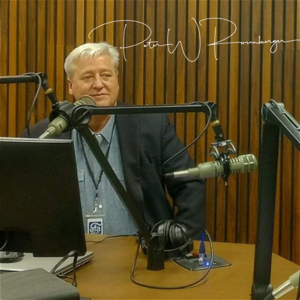
This is the Truth Network. Welcome to Hope for the Caregiver. This is Peter Rosenberger. Glad to be with you. HopefortheCaregiver.com, HopefortheCaregiver.com, Chris Maxwell.
Is a campus pastor and director of spiritual life at Emmanuel University. He's former lead pastor for almost 20 years in Orlando, written 12 books, including Paws, Underwater, and Equilibrium, and his newest. Contentment releases April 2026. He co-hosts the Next Step Leadership Podcast and serves as pastor of Goldmine Church in Royston, Georgia, which a lot of you probably don't know where that is, but I know where that is and been there, been there and done that. You didn't know that about me, did you, Chris?
Oh, that's great to hear. Yeah.
Well, I was born and raised upstate South Carolina.
Okay.
So, I know Royston, I know Elberton, I know Tacola, I know all those places. You know those places of my life, yeah. And you know, one of the things I miss about that, living in Montana is great. I love where we live, but I'm a child of the South. I spent my You know, vast majority of my life there, but we don't have a waffle house here in the entire state.
And so it's been tough spiritually for me. No, I'm just you're adapting and adjusting. I could do all things. Even so, Lord Jesus, come quickly. First off, how are you?
Yeah, I'm doing well, Peter. Thank you so much. I've enjoyed our past conversations and just really appreciate you and Yeah, people like you make such a positive difference in this world and in my life, and I'm grateful for that. But yeah, I'm doing well. Thank you.
Good to hear because there was a time when you weren't. Doing so well. Yeah.
And before I get into this new book, on contentment. You know, particularly at contentment, what you're searching for is already yours. And I think I'd like to start with the need for contentment because you've been there.
So, can you help set the table of how we got to this point where you're writing a book on contentment? Yeah, it was an interesting conversation. Several years ago, I started going to see a new Christian counselor. I just felt like. You know, so many of the people that I talked to about my life and my struggles were either part of my church or we were connecting in other ways.
And I just wanted to go see someone that I did not know, that they did not know me or my story. And I started seeing a professional Christian counselor up in the Georgia Mountains, up in the Clayton area. And it is so nice. And so I was going to make so nice. And I wanted to make it not just a counseling appointment where I'm in for the 50-minute slot.
But I was going to make a day of it, you know, going to the waterfalls and walking the mountains and it being a getaway experience because I encourage other people to do that. Peter, I don't do that enough myself. And so I started seeing this professional Christian counselor. And at first, our first few appointments, he would fuss at me because I've got so many different jobs. you know, working at Emmanuel University, uh, writing and editing books and speaking for a pharmaceutical company and now pastoring a church.
He's like, You're doing too much. And then so it was an interesting time.
Well, in uh December of uh twenty twenty four, I had an appointment with him. Then I was just going to spend the afternoon walking in the cold Georgia weather. the end of the appointment. He looked at me. in a way that a a counselor normally would not look at a client.
and he just said, Chris, I believe I have a word for you. And Peter, with my brain damage, I wanted to make sure I remember what he says.
So I grabbed my phone. I'm going to write down the word that he was getting ready to say to me. He said. The word I have for you is contentment. And Peter, as soon as he said that word, I knew I knew that was a word I needed to hear.
And I just kind of looked out the window at the Georgia Mountains, and my counselor said. Are you okay me saying that? I didn't even answer with a word. I just nodded to him. It was like, Yeah, I'm okay.
I said it with my facial expression. And then that By the way, you said brain damage. A lot of people don't necessarily know. How we got there because when I say brain damage people You know, stand up and say, Yes, we know Peter, we've known you for a long time. But when you say brain damage, it takes on a much different connotation because this has been your journey.
Yes, yeah. Yeah, for those who do not know, I had encephalitis uh y many years ago when I was pastoring in Orlando, Florida. It was, yeah, March of uh nineteen ninety six.
So y now the decades go have gone by. And there's so many parts of me that I Live disappointed and live looking back at the other Chris compared to this Chris. the Chris who is not brain damaged. The Chris who was not living with epilepsy, the Chris who was not on all those medications. And when he said that word contentment, it it hit me in so many different ways.
And then, Peter, I spent months studying, researching, reading every book I could find on contentment. What is it? What is it not? And then I'm journaling and keeping notes. And am I willing to be content with a damaged brain?
Am I willing to be content? Living a life with epilepsy and not looking down on myself about it, but having just a totally different lens to look through. And yeah, that's that's. where the word contentment came from. And then I did the research, what is it biblically, what does that mean, and how does that apply?
And yeah, so my research and then my journaling and my writing turned into this book. contentment. What you're searching for is already yours.
Well, I look at this topic and then I look at the landscape of our culture, for example, and I don't see a lot of contentment. No. And then I look at people who aren't living with encephalitis, who aren't living with epilepsy, who aren't living with disability. But they have Fairly. What I would consider by our standards to be very, very dream-like life, but not.
And I've also learned that I think I learned this from Gracie when you and I talked last time, we were in the hospital and she was getting ready to go in for her 91st surgery. Yeah.
And it would eventually go to 98. And I was praying with her before going in there in the pre-op. And I said, Lord, 91 is too many. Yeah.
She didn't even, and we're there in pre-op. I mean, we're getting, she's getting ready to go, and she didn't even open her eyes after I've stumbled through the rest of the prayer. And she just kind of whispered quietly: 91 is not too many. It's however many he says is necessary. And I thought.
Okay.
All right, I'm not content, but she's learning something that I'm not. And I thought, okay. Can we be content here? Yeah.
And you did the deep dive into this topic. And it I'm knowing what you're going to say because I've read the same words that you have in scripture. Scripture says, absolutely, we can be content in this. Yeah.
And so talk about that when you started unpacking this. Did it have the same effect as this counselor who said the word to you and then it just kept just more and more and more that you realized, did you ever see Steamboat, Willie? Hmm no I did not just see when he did Steamboat Willie and he it was his first moving picture and he drew the still shot. of Mickey Mouse, which who became Mickey Mouse's Willie, and you go see it on the thing, and it's the first. Film or one of the first films there, and certainly about Disney.
And then he did another shot of him kind of moving, then kind of moving, and then he put them all together and ran them really fast, and it looked like a moving picture.
Sometimes, what I hear, what you heard from that counselor, that's one frame. But then all of a sudden, scripture and hymns and everything else start filling in tons more frames. And all of a sudden, it's just like a blur in front of me. And I see a picture. And I realize that's what that means.
Did you have that kind of moment? Yeah, I mean, I had many moments as I'm doing the research, and then especially as I was writing the book, because as I was writing this, I was like, what is our perspective culturally on contentment? And then I had to give it a glance of writing about what contentment is not. You know, it does not mean we're just going to sit back and snore our way through life and, you know, the kind of that cliché phrase, whatever will be, will be. No, it's not that.
It is choosing godliness with contentment is great gain. And there's beauty in this. And you read these passages of scripture and David worshiping the Lord while his culture is at war, while people are attacking him. Paul writing from prison and inviting us, instructing us, encouraging us to rejoice.
Well, how do we do all that? No, it's not like some kind of fake. Pretending everything is okay when it is not. And contentment also is just not, it's not just sitting back.
Well, I'm just going to settle and do nothing. It's taking the ambitions that we have, the gifts that we have, and also the limps and the weaknesses and the struggles and the disabilities, taking all of that and choosing to know that the Lord is with us wherever we are, whatever our struggles might be, and choosing to be content. Not living controlled by a culture that is pushing the what next, what now, what's the newest, what's the best, and you have to do this, and once we've done that, we're not even rejoicing in the that, we're looking for the what now, what next. And that is not a peaceful place, that is not being led beside still waters, and God is inviting us. Calm down.
Don't be in such a hurry. Stop keeping score. and rest in me. And oh, when the Lord was saying that to me, Peter, it did something. It reminded me that, yeah, it's not all about me anyway, and I do not need to base my worth and value on my ability to produce or to sell or to score.
Just rest in him. When you look at the landscape of our churches. This is not a message that is being preached. Yeah.
Yeah.
I see a lot of churches that do one of two things. They preach an emotional high that you got to get from going to church to kind of. Give you that endorphin release of all the craziness that's going on in your weekdays. And then on Sunday, you just get to have this kind of endorphin release of all this emotional high, you know, and it's accompanied by phrases like you're going to get your breakthrough. I remember I was at one church, and the pastor said, Go around, tell everybody he's going to show up.
He's going to show up.
So everybody went around, telling everybody he's going to show up. And every time they took my hand to tell me he's going to show up, I said, He already did. Yeah.
He already did. And I got a lot of puzzled looks on my face because we're so busy trying to get out of where we are. And I am guilty. I am exhibit number A of what not to do in a lifetime saying, God, get me out of this. But then.
Some things changed. Same kind of thing with you, where I realized, okay, God, what would you have me become through this? And that is a much different prayer. And I would love to take credit for it. But see, that is what you call evidence of the sanctification of the Holy Spirit, not me.
That's me dying to self.
So, please don't misunderstand that I'm somehow holding up myself as the example. It's taking me a lifetime. You don't have to go that as long as I did. You don't have to make as many mistakes as I did. But it's one of those things where I see that journey and realize: okay, can we turn into this?
You turned into this, Chris. You turned into this.
So many churches are not willing to do so. What's going on at your church as you have been Thinking on this, studying on this, where are you taking the people that are in your world, in your sphere there with this? That's a good question. I'm looking at all of the different age groups of the people that I've talked to, whether in my pastoral care and counseling, and like right here in my office. I'm thinking of all the different ages.
I'll be talking to someone who is near retirement or in retirement after years of ministry. What are they processing? Peter thinking, well, I didn't do enough. I should have done more. And then the next client will come in, and it will be a college student.
And they're already overwhelmed. I mean, they're not living in the now. They are overwhelmed with what I'm going to do in the next four years. How is this going to work? And if I want to make a difference in the world, I've got to do what these people are doing, what those people are doing.
And I just need them to calm down a little bit. And it's every age. That's why, when I was writing this book, somebody may ask me, it's like, what kind of age group are you writing for? It's like, everybody, everywhere, because we are so. Overwhelmed by this ranking and scoring.
But honestly, people that we're trying to reach, many of them are tired of the show. They can put it online and they can watch a church show better than anything we can ever do in our little church by the cow pasture. But We have those who are overwhelmed by the show and they love just hanging out with ordinary people who are trying to grasp contentment amid this chaos of life. And writing the book, interviewing college students, interviewing people of so many different ages, and then in my spiritual formation class, giving some assignments about how would you describe and explain contentment? How is it missing from your life?
How can you choose to live more this life of contentment? And it, boy, just learning from the students and learning from people of all ages. I could bring it back honestly to one word: trust. Truly, putting our trust in God. You were talking about, you know, music and our worship.
We sing songs about trusting Him. We preach sermons and hear sermons and write stories about putting our trust in Him. But wouldn't. True trust. put us in a place.
Of It's all okay. It's all okay when the bad news comes. No, the news is not okay, but my response can be okay. Because my healer is with me, my hope is with me, and I can put my trust in him and find contentment amid the chaos. Not waiting for everything around me externally to calm down, but me to be internally so in touch and in tune with the Lord and the Spirit of the Lord.
That, yeah, there are still calm waters amid the chaos of our culture. our country, our world. No, I'm not controlled by that other stuff. I'm putting my trust in him. You know, I do look out at the landscape of our country and I see the.
Protest. We just had a whole thing of no kings rally, and I looked at some of the people dressing up for this, and they were dressed up in furry costumes and just a lot of. Craziness and people who are putting themselves into situations that really would not. are not safe and not helpful, but for whatever reason, this is giving some value to their life. And is this what's driving this?
Is that because we're discontent, because we are not settled in our own spirits that we are forcing ourselves into situations that Give some type of affirmation, some kind of twisted affirmation. Um, I was watching all the thing that happened several months ago about the stuff in Minnesota. And I don't know about you, Chris, but I've never driven past any type of law enforcement activity where something's going on by the side of the road or whatever. And I said, you know what, these people need they need me to step into this right now. You know, I've never had that experience where I felt like, here, here's something I could add something to right here.
You know, that just doesn't enter my mind. And yet, people are running to this kind of thing and inserting themselves into things that are incredibly dangerous. And I look at that, what you're talking about is this general unsettledness. And so we have to artificially fill it with something because to not do it is almost unthinkable to some people because the noise is so loud in their own souls. And I got a nephew that called me up and asked me, he said, can I come out there?
I said, well, of course you can. He said, I need to touch dirt. I need to put my. him at dirt and we live 10 miles from a paved road there's a lot of dirt out here and and i watched him out here helping my father-in-law with some fences and just doing physical labor and he's very successful at what he does and he said that the the work culture he's in is so amped up and so toxic that he can't think clearly sometimes he said it just he just wants to go outside and get away from and just flee from it and and so i watched i put him on a horse and and i watched him out here i've never seen a kid smile so big as when i put him on a horse you know it's one of those things where i'm seeing more and more This is what's going on in people's souls. Yeah.
You've got to see it from the pulpit. And I don't know how you can get through a sermon sometimes because when you look out at the congregation, you can see it on their faces. Oh, yeah. You see it, see it on their faces. You hear it in their tone of voice as I talk to these college students.
And then again, people of so many different ages and backgrounds and many different belief systems. What do they have in common? They're like walking into the room with this huge luggage. Of questions and dissatisfaction, and just this need, they fiddling this deep inner need to, I have to make a difference in the world, therefore, it is all up to me, and I must prove my worth and value. And well, that is just too heavy of a suitcase.
It is just the luggage is too heavy. It's interesting how we decided to start and end the book. The introduction. is called The Search That Never Had to Begin. And then the conclusion is you already you already have what you're looking for.
So we are like desperate in this search for more and better and newer and and and nicer. It it's the next thing, the n the next big number, the success stat sheet. But The search for all of that really didn't need to begin because we already have what we need. And then ending with you already have what you're looking for, it's just kind of a takeaway. Just remember, you do not have to keep searching for that that you already have.
If you and I were, you know, just sitting together and having a conversation in person, and I was holding a water bottle, and I kept looking at you and saying, Man, I'm so thirsty. I'm just so thirsty. Eventually, you'd say, Chris, you're holding the water in your hand. And I believe we already have what we're looking for. But we're spending and investing our energy and just continuing this search, this ambitious push.
And it's okay to stand up for a cause and to have a strong belief. Yeah.
But Maybe because we can't solve it all ourselves, we must be doing something noticeable or something that we think. we can do to make a difference. and we're miserable as we're doing it. Uh I believe deep, honest Conversations, even offering various opinions, can be healthy and healing instead of. Dividing and just bringing conflict.
We can have healthy dialogue with people if internally we find that place of. You know what? I'm content. I don't have to prove anything. I am okay not being okay.
You know, settling with our life of not really the okay we would like to be. but as we hear the bad news from the doctor, Uh maybe God is our source of peace in the middle of that storm. It's like the eye of a hurricane. I mean, the hurricanes of life are all around us, but can't there be peace right in the eye of it? And I believe contentment comes there.
You know, I've seen this a lot in my fellow caregivers. When we first engage and start talking to individuals, particularly I lead a caregiver support group. and with callers and so forth. It's always that if I can just deal with this or contain this situation, if they wouldn't act out this way, then we could be okay.
Sometimes we'll say, well, we just got to hold on until we can get mama to Jesus or if they would stop drinking or if he would stop doing this or she would stop doing this. But none of those behaviors are going to establish a beachhead of contentment in one's soul. Right. Because that's external. There's always something else that's going to trouble you.
And I've seen this over and over and over. And I've seen it in my own life. You know, if we just get through this surgery, if we can get through this, there was a point I truly realized this, Chris. We're not going to get on with our life. after we get through this.
Yeah.
This is our life. This is. And it's okay. And I can live a calmer, healthier, and dare I say it, a more joyful life while serving as a caregiver. Yes.
And that is available to me, like you said, it's already there. The question is, am I going to accept this or not? I want to throw a phrase out to you that I've kind of held close to me. Acceptance doesn't mean agreement. Correct.
Have you wrestled with that statement? I've wrestled with that for a long time because if I accept it, that means I'm kind of endorsing it. No, that doesn't look that's not what that means. And I've had to come to a place of that. Have you gone that same path?
Yeah, acceptance does not mean agreement with all of the opinions of that person we're accepting. This is what acceptance means, and I love thinking about it this way: that person that I may disagree with in a particular area, that person is made in the image of God. That person is loved by God. That person is offered life and hope and a future by the same God that I believe in and that I write about and that I love. And if I have that perspective, shouldn't that change how I treat that other person?
Shouldn't my conversations with her, with him. be guided by the Spirit of the Lord rather than our disagreement. You know, those times that people just are so angry and hateful toward each other. But but then in the middle of that, there may be that one person. In the middle of all of this disagreement and these, you know, just harsh tone of voice.
Somebody just comes in and said, you know, w we may not agree with your opinion on that, but here is something that I believe in, and you may disagree with me, but I believe that you have a great future if you're willing to find peace amid the chaos. Instead of investing all of your energy in the chaos, in the unhealthy and unpleasant, finding peace there. Yeah, and just our tone of voice, our facial expression. Can't we just be nice people? You know, putting our hope and our trust in God.
One of my lines is: Life. does not go as planned. You know, the way I've wanted it to go hasn't gone that way. the way that I hoped it would go.
Now it's not going that way. But Peter, it's It's honestly not all about me, and it's not about my will being done and my kingdom being built. When I pray the prayer, it's not, oh, my will be done, my kingdom come. on my own earth. Uh no, it's a reminder.
As I'm lifting my requests to my Creator and to my Heavenly Father. I'm voicing that reminder: oh God, let your kingdom come. Let your will be done. Right in the middle of all this chaos, I'm enduring all the frustration, the medical costs, the answers I hope to get, but are still so slow in coming to me. Conflict with insurance on one side, government on another side, big business and big government.
It's like, no, what about us? But in the middle of that, In the middle of that, his peace, his calmness, it's helped me survive. The chaos of life with brain damage and the frustration. It just, it was like yesterday was one of those days. It was like several people came over to me and said, Hey, what is that person's name?
And they know me. I just give them the look. You know, I'm like, I'm not going to remember that person's name. And they just kind of smile. That's still embarrassing to me this many years later.
And it's not just age, it was a drastic, immediate change when I almost died of encephalitis.
Well, it didn't get better. It's not getting better. I know more tricks. I keep names on my phone. I know the rhythm and the rhyme and how to put images to it.
But there's still frustration. My argument here is amid the frustration, not living in denial of it, aware of it, but amid the frustration. I can find contentment because God reminds us there's so much more going on here. than what we feel or what we hear or what we think. You know, Zephaniah said, The Lord, my mother says this to me all the time.
This is a verse that just comes to her over and over and over: the Lord thy God in the midst of thee. This might And not on the outside of thee, not over thee. He does say that in other places, but it's the midst of thee, where he is there, which is the whole point of what Emmanuel means. He's God with us, that we are not alone in this. And the question that I keep coming back to, and this is what I've been wrestling with for some time, is Christian, what do you believe?
Yeah.
Do I really believe what I'm saying here? And if so, then what is required of me in this moment? And these are internal questions I have on a regular basis. And so I will look at myself in the mirror. I will say these things to me when I'm faced with very, very painful things.
And I'm wrestling with something that right now. And I asked myself, okay, Christian, what do you believe? And if we believe this, and we say these things, but do we really take him at his word? You know, Genesis 15, Abraham believed God and it was accounted to him as righteousness because he took him at his word. Do we take God at his word?
And it comes back to the word you said earlier in this. It always comes down to trust. Do we trust him or not? And if we do, then what is expected of us in this moment? If we don't, Then what are we what are we doing here?
Yeah.
It's a very binary decision. There's not a lot of gray here. And I think we want to obfuscate these things and say, well, you don't understand my circumstance.
Well, you know what? I don't have to understand your circumstances. It's still a decision point. Do you or do you not? Do you believe this or not?
And if we do, then we can't just stop there. then what is expected of us in this moment? If this is true, then how should we then live? As Francis Schaefer said, how are we going to live? And you're saying.
that we can live. content. Yeah, and I'm not Gratitude, by the way, that you found. Oh, it just it it's been so much thankfulness in my heart. when I put together some strategies.
that helped me live out the whole mindset of contentment. Uh instead of Just worried so much about the next thing Find appreciation for the now thing. What is in this moment? You know, I can do this now. Find value in that.
And you and I know many of the readers in today's population, and many of us, we're people with short attention spans and our minds wander so much. We put throughout this book more sidebars than I've ever used in any of my books. You know, this is my 13th book, and I'm like, I've never quite done it this way, but let's go for it.
So we have sidebars all throughout the book of thoughts and perspectives, and also a variety of methods. of practicing ways of contentment. We go through from Palm Sunday through to Resurrection Day, and like each day, think about these thoughts. We go through like the whole year, and you focus on one theme for this month, another theme for this month. And it just helps our minds not.
Stay in the fast lane. I'm inviting readers to just choose to get in the slow lane. Just move over a little bit mentally. And just get in the slow lane and not be obsessed with how long is it gonna take me to get there? How many more miles to go?
Find value. Are we there yet? Are we there yet? Are we there yet? We got a safe mindset.
Agad uh I went through my first full winter as a Montana resident. We've been coming out here since the 80s, but we moved out here from Nashville after 35 years in Nashville. Before Yellowstone hit, everybody kept asking me, did you see, have you seen Yellowstone? I live it out here.
Okay.
We're 90 miles from Yellowstone National Park. Again, I've spent time out here in the wintertime, but this guy gave me a good piece of advice. He said, drive at the speed you're comfortable slamming in the ditch at. And I thought, that's a really good piece of advice. Because I had a flat the other day coming back from Bozeman to our house.
I had to go pick up some stuff for Gracie at a specialty pharmacy there. And I noticed the air pressure thing on my tire was going down. There's no cell service, so I can't call anybody. And and I've got to be on the air in an hour and a half live. And so I've got to change this tire.
And I'm out here by the Madison River where they, you know, they filmed this new show, the Madison, or whatever. I haven't watched it. I'm not all that interested because it keeps bringing New Yorkers out here. But that's a separate note there, Chris. Don't tell anybody I just said that.
But so I'm out there by the river, and I'm changing a flat tire, and it's annoying. And I'm up underneath the car and I'm getting it done, but I'm sitting by the river. In this Unbelievable canyon. in Montana. where people save up all year long.
to come and vacation. Mm. And this is where I live. And I could be content with a flat tire, even though I got to be on the air in an hour and a half. And I learned that and I thought, okay, I'm not going to fight this because I've learned being out in this environment in the wintertime, I was just grateful, speaking of gratitude, I was just grateful it wasn't 20 below.
Because that was last that was last week.
Well A year ago there was three feet of snow on the ground this time last week. You know, kind of thing. And so I was grateful you could be grateful for that kind of thing. And I'm learning these things over and over and over to just settle down. I don't have to go around like Pie in the sky and talking the God talk.
Oh, I'm just blessed. I'm just blessed. I'm just blessed. I'm just like, you know what? God's here with me in this, even in a flat tire, as I'm on the way home picking up scripts for Gracie, whatever it is.
And this is something I have seen over and over, and that's why I love the title of your book. And I like it's already there. The question is: are we going to stop allowing all the whistles and bells of life to distract us and just be still? How has this changed your view of Jesus' encounter at the well with the woman? As you started on this project.
Yeah, I think um having a better perspective of maybe his tone of voice and facial expression. Uh, you know, you can study deeply in scripture and learn from all of the experts. And this is what Jesus really said, this is how he said it, this was the culture. You know, he's not even supposed to be there or talking this way or communicating with her. But, and I love to study, I love to read, I love to research.
But I just kind of wanted to see myself there. What was Jesus saying to me if I was the one he came to talk to? How would I respond to that? Am I still searching for one more thing or something to prove or something to give value? Or is he really all I need?
Oh, we might sing it in a song that He's all I need, but is he? Do I really believe that? It's much easier to write a story about it and send it out. than it is to find value in He's enough today. He is all I need to day.
And I I thought about it recently reading one of your posts, Peter. You know, just looking at what you were writing about everything you're going through and health and your your personal health and your role as a caregiver and then all of those times that just driving down the road and hey, Tire's not working. It's like, how do we deal with this? But your humor, your words, your words of encouragement to other people, and you have just found God's love right in the middle of the unpleasant The unsettled, the how am I going to get out of this? Am I going to make it to where I need to go in time?
you found value in that time and that moment. And I just really respect you for that. I'm learning from people like you. You're teaching me, you're teaching so many people of how to respond. in difficult situations and find the beauty of the Lord even there.
Well, that's very gracious of you. I would love to take credit for any of that. I cannot because I know me and I've seen my work, Chris. And, but I've been working on a new book myself, and it won't be out until next year. But it's one of the things I talk about: suffering, when you are contained in a room.
Was suffering, and you're not getting out of this. You get to know everybody in the room very well. And in my case, there's three people in the room: there's Gracie. There's me. And there's God.
And we ain't leaving this room. This is where we live in suffering. It's not going to change. It's not going to change until one of us is with Jesus. And Gracie's suffering is certainly not going to change until Jesus says, this is done now.
And so you get to know everybody in the room. And it's a small room. and it's filled with a lot of questions. And I get to sit there with those questions for a very, very, very long time, 40 plus years now. And this is what brings me to what you're talking about here: is that we don't want to sit with this because it's unsettling.
We want to rail against it. We don't like it. It's like I said, Lord, 91 surgeries is too many. And Gracie says, no, it's not. It's however many he says, it's okay.
Now, what kind of What kind of journey leads you to that point where you could say, no. Ninety one is not too many. And it's simply taking him at his word. We sing the hymn, 'tis so sweet to trust in Jesus, just to take him at his word, but we don't take him at his word. My peace I leave with you.
Not as the world gives. And you're taking him at his word, Chris. That's exactly what this book is about. You're just simply saying, I'm just taking him at his word. He said it, I'm standing on it, I'm going to stake my life on it.
And here's what this looks like in my book. Here's what this looks like in my life. And if you had one. thing that you hope this book disrupts. in people's thinking.
What would that be? I hope it disrupts our addiction Everything far from us instead of the beauty and the wonder right beside us. Debbie and I were recently taking a walk, and what's my mind on? How much time do we have? How many steps do I need?
And we're walking through the neighborhood, and there was this group. Just hopping as fast as they could go. I'm like. Usually, you'll just see one come around, or one or two somewhere nearby the neighborhood. But these were all just running together.
And they took off running in front of one of our neighbors' homes and then back behind that house. And I'm like, Debbie, I have never seen this many rabbits together. And If I had not been walking. or writing about contentment. I would have just been obsessed with how much time do I have before the next planned thing.
and I would have missed the rabbits. I want us to be people who are willing. 2. go in a slow enough pace. that each step is okay.
It's not going to be okay just when we reach our goal of how many steps. It's okay. Just stopping the steps for a moment and staring at these rabbits that are just having fun. They are having, they're just enjoying the moment. And so I write stories like that about when Debbie and I took walks on the mountains and we went to a waterfall we'd never seen before.
And maybe years ago, I would have been in too big of a hurry to try to go to a new place. and it may mess up my schedule, my time slot. No? I need to be content.
so much that I then notice what I Often hurry past. And I think that's true on the business side, on the relationship side, on the ministry side, and also on our personal sides as we battle. self-acceptance and realizing that God has called me to this time and place, and he can work through a damaged brain if he wants to get his work done. And to just embrace that reality and not live with dread and defeat. but live with victory and hope and trust.
finding contentment amid the chaos.
Well, I love the hymns. And we've talked about this before. I love the hymns. And there's two hymns that come to my mind. One of them is one of my favorite, which is Praise Ye the Lord the Almighty.
Praise to the Lord the Almighty. I sing it the old way, Praise Ye the Lord. There's a line in there, it's the only hymn that I've ever found that uses this word. Ponder anew what the Almighty can do. And I've got it on my office wall.
I've got it on a Gracie had it done for me, and I've got it framed. And then I've got a post-it note on my office door that I've had now for over 10 years. Ponder anew what the Almighty. Can do. or will do actually.
The guy that wrote this. His name was Jochin, I think, J-O-A-C-H-I-N. Neander. That was his name. German guy that lived near Dusseldorf, and he went out to this little valley and he would write these things.
And these hymns. And he became famous for writing. Everybody knew that was his place. And they called it his valley. And in their native tongue, they called it his valley.
And that's where he wrote these hymns. And he wrote this great hymn of the church. He died before he was. thirty years old, I think, he of tuberculosis. And just an amazing young man.
Well, a couple hundred years after he died, they found. Fossils there. Yeah.
What the scientists were saying was early man, so they named it after the valley that was named after this guy, which is Neanderthal. Every time you see Neanderthal, you think of scientists digging in the dirt, looking down in the past. But you think of this young man who it was named after, looking to the heavens, saying, Ponder anew with the Almighty. Can do. Yeah.
And that has stuck with me. And the other one is: as you were going around looking at the bunnies and all the rabbits, and I go back to a great hymn of the faith: This is my father's world. Yes. And I was watching a A documentary on the national parks of this country, and they started off with Yellowstone. And they were showing this landscape that has basically not changed.
And I have parts of that out here where we live. I look at certain things here. I was out on a horse yesterday looking at things that haven't changed since God made it. Which is unusual in this day and age to be able to even see something like that. Right.
And And they were using this theme of this hymn, which, by the way, sounds like the Hobbits theme in the Lord of the Rings, but it's not. This is my father's world.
Some of people will get that and they'll think it's weird, but that's okay. The scripture says that God has a precedent of using the jawbone of an ass, and I am counting on it. I am truly counting on that. But this is my father's world. Oh, let me never forget.
And this is what I wanted to give to you today, Chris, that though the wrong seems all so strong, God is the ruler yet. This is my father's world.
The battle is not done. Jesus who died shall be satisfied and earth and heaven be one. As we hang on to that, you know, though the wrong seems all so strong, God is the ruler yet, and He is superintending all of this. Your encephalitis did not catch him by surprise. Your epilepsy did not cause him to.
Smack his forehead and say, Oh, what about Chris? Gracie slamming into that concrete abutment back in 1983. did not catch him by surprise. I did not catch him by surprise. And he is superintending these things.
And the question always becomes. Do we take him at his word? or not. Do we are we willing to ponder anew But the Almighty Can do. And that is that that's why I'm looking forward.
Are you going to do this book in an audiobook? Because I listen to a lot of audiobooks and things like that when I'm driving around Montana or on a horse. Reading on a horse is not recommended, by the way. I can imagine. You might want to that thought sometime in case you're out on a horse.
Don't try to read and ride at the same time. But are you going to do an audio book? Yeah, we'll, you know, it's coming out April 7 on the e-book and the paperback, and then the audiobook will be coming out after that, and it will be my voice on it again. Yeah, you've just you telling your stories makes me want to come out there and visit with you in that place and ride there. It is It is it's been a place where I've learned to go at the speed of the land.
And I've had to learn to slow down. I was so frenetic in Nashville. And and being a caregiver is frenetic on a good day. And then when you're in Nashville and when you're in a big city and it's just go, go, go, go, go. And I got to touch dirt.
And we made the decision. And people thought we were crazy. But then again, we're pretty used to that. But they thought we were crazy for doing this, but we did it. And It was, it's been, part of it is because Gracie does so much better with all of her arthritis in a dry, cooler environment.
The humidity of the South, as you know, is just brutal. And so, when you got traumatic arthritis like she does, it's all through her body, it's pretty painful. And so, we decided to move out here to her family's place. And we lived in a little tiny cabin. I mean, it was so small.
I made a grilled cheese sandwich from the bathroom. I mean, it's a small place. And we were content to learn. We had to learn to be content in that.
Now, I've added on, I've built a big better facility for her that's totally handicap accessible. But I've had to learn to be content with these things. And we hit five months in the hospital last year.
So I'm looking forward to your book. Tell us where people can go and get more information on this. Yeah, the uh the book is av available on Amazon. Uh they can go to my website and uh not just the the book, but a lot of my thoughts and through the process. And it's chrismaxwell.me.
ChrisMaxwell dot me. Um yeah, and all of my books are available there and on Amazon.
Well, this is wonderful, and I appreciate you taking the time to just share your heart, your story, and your journey. We're going to continue on this. When this comes out, I want you to get settled into all that. And then, after you've done all the big media blitz, come back to this show. After you've done the big shows, come back to mine.
I'm so thankful for you, Peter. Thanks for all that you're doing and the positive difference you're making. Listen, it's a pleasure to just be able to be a part of this and to pass on. What do we have that we haven't received and comfort one another with the same comfort that we ourselves have received from the God of all comfort? ChrisMaxwell.me.
ChrisMaxwell.me is the website. Please go out and take a look at this and get this book today. Contentment is something we already have. It's right in our hands. It is promised from the start to the end of scripture.
God is the ruler yet. Though the wrong seems all so strong, God is the ruler yet. Chris Maxwell.me. Thank you so much for taking the time to listen to my interview with Chris Maxwell. There's so much more at hopeforthecaregiver.com.
If you know somebody who's struggling as a caregiver, please don't let them do this in isolation. Friends don't let friends caregive alone if you don't know what to say to a caregiver, that's okay. I do. Send them this program. Send them one of my books.
They're all written in fluent caregiver. Please don't let someone struggle by themselves in one of the toughest jobs that somebody can have, which is to care for somebody who has a chronic impairment. Hopeforthecaregiver.com. And by the way, visit my substack, caregiver.substack.com because there's a ton. ton of stuff out there as well.
Caregiver.substack.com. This is Peter Rosenberger. We'll see you next time. Gracie, when you envisioned doing a prosthetic limb outreach, did you ever think? that inmates would help you do that.
Not in a million years. What does it mean? I would have ever thought about that. When you go to the facility run by Core Civic and you see the faces of these inmates that are working on prosthetic limbs that you have helped collect from all over the country that you put out the plea for. And they're disassembling.
You see all these legs, like what you have, your own prosthetic legs. And arms, too. And arms. When you see all this, what does that do to you? Makes me cry.
Because I see the smiles on their faces and I know... I know what it is to be locked someplace where you can't get out without somebody else allowing you to get out. Of course, being in the hospital so much and so long. When I go in there, and I always get the same thing every time. These men are so glad that they get to be doing, as one man said, something good finally with my hands.
Did you know before you became an amputee that? Parts of prosthetic limbs could be recycled? No, I had no idea. I thought we were still in the 1800s and 1700s. I mean, you know, I thought of peg leg, I thought of wooden legs.
I never thought of. Titanium and carbon legs and flex feet and C legs and all that. I never thought about that. I had no idea.
Now that you've had an experience with it, what do you think of the faith-based programs that Core Civic offers? I think they're just absolutely... Awesome. And I think every Prison out there should have faith-based programs like this because. The return rate.
of the men that are involved in this particular faith-based program. and the other ones like it, but I know about this one. Are just an amazingly low rate compared to those who don't have them. And I think that that says so much. But that's so much.
about Just that doesn't have anything to do with me. It just has something to do with God using somebody broken. to help other broken people be whole. If people want to donate a used prosthetic limb, whether from a loved one who passed away, Yeah. You know, somebody who outgrew them, you've donated some of your own.
What's the best place for them to do? How do they do that? Where do they find it? Please go to stanningwithhope.com/slash recycle, and that's all it takes. It'll give you all the information on there.
What's that website again? DannywithHope.com/slash.com Slash recycle. Thanks, Crazy. Take my hand. Lean on me.
We will stay.