Money touches nearly every part of life. But for many, it still feels stressful or overwhelming. Faith Phi exists to change that. The FaithPhi app is the leading Christian budgeting app, integrating biblical wisdom with practical financial tools to help you build habits rooted in scripture and guided reflection. With just a few minutes a day, we'll review your spending, anchor your heart in God's Word and take simple steps forward.
Weekly and monthly reviews help you stay on track, gain clarity and celebrate how God is shaping your financial story over time. The new Faith Phi Pro adds powerful automation, smart categorization, personalized insights and budgets tailored to your real life spending, so you can spend less time managing money and more time living with clarity, contentment and purpose. Over seventy thousand believers already use Faith Phi to steward God's resources wisely. Start your free thirty day trial and get twenty five percent off at faithphy.com slash app. Be strong and courageous, the Lord told Joshua, for the Lord your God is with you wherever you go.
I am Rob West. Biblical courage is not bravado or self-confidence. It's faithfulness rooted in God's presence and promises. And when it comes to money, we often need that courage to give, to resist pressure, and to obey God even when it costs us. Today, Dr.
Craig Bartholomew joins us to talk about the virtue of fortitude. And then we'll take your phone calls on any financial question at 800-525-7000. This is Faith and Finance, biblical wisdom for your financial journey. While we're concluding our series on the cardinal virtues and how Christian character shapes the way we handle money, we've talked about prudence, temperance, and justice. Today, we turn to fortitude or courage.
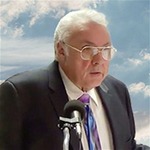
Our guest today is Dr. Craig Bartholomew, director of the Kirby Lang Center for Public Theology in Cambridge, England, and a leading theologian who has authored numerous books and commentaries, including one of my favorites on the book of Ecclesiastes. Dr. Bartholomew, what a treat to have you here. Thanks for joining us.
Oh, it's my pleasure. Doctor Bartholomew, when many people hear the word courage, they may think of dramatic acts of bravery, but in the Christian tradition fortitude is often broader and deeper than that. How do you define fortitude? Yeah, so this is an excellent question. I mean, I do think courage or fortitude does include dramatic acts.
So that's one thing, just to say that often in our lives there are crisis points. where real courage is required. Yes. And so you quoted from, you know, God speaking to Joshua. And of course, uh conquering the land was a critical moment and that required real courage and fortitude.
So it does include those dramatic moments. But fortitude is about resilience. It's about resolve, enduring resolve. It's about grit and endurance. And I think one way to get at this is that the Christian life is not a sprint.
It's much more like a marathon. And I think one of the quotes that I love that helps us to get at this. is Eugene Petersen quotes the philosopher Nietzsche most remarkably, that the long obedience in the same direction always produces great things. And I think fortitude is a lovely word which gets at that sustained following of Jesus over a lifetime. Yes.
Wow, I love that. It's this idea of faithfulness to our Lord. As you know, Dr. Bartholomew, our focus here on this program is around money and how we can be wise stewards of everything that belongs to God yet entrusted to our care. Money often exposes our fears, the fear of not having enough, the fear of the future, the fear of losing status, the fear of disappointing others.
How does fortitude help us face those fears honestly without being ruled by them? Yeah, so this is an excellent question, and it's very interesting to be conscious of what we fear. And I think money and fear will be very closely related only if we have made the very modern Western mistake of locating our security, our identity, our sense of self worth, In wealth. Yes. So, I mean, if your identity is tied up with how wealthy you are, if your security and your sense of well-being is entirely dependent on wealth.
then anything that endangers that or looks like threatening that will result in tremendous anxiety and fear. And so the way to escape this is to make sure that one's sense of security, one's sense of identity, one's sense of personhood is located in God and not in money or wealth. But if you locate it, you know, which many, many people do today, I mean, this is the pervasive sort of disease of the West that my whole being is tied up with how much wealth I have. That is so rich. We're talking today about fortitude.
Fortitude is not about being fearless, but faithful, anchored in God's story and strengthened by his promises. More with Dr. Craig Bartholomew, director of the Kirby Lang Center for Public Theology in Cambridge, England. Right after this break, we'll talk generosity, we'll talk integrity, and where this shows up in your financial life. We'll be right back.
FaithPhi is grateful for support from One Ascent. One Ascent believes that your values inspire why you invest and how they can inspire how you invest. One Ascent's goal is to provide solutions designed for every need and invest in businesses that bless the people and places God has made. They want to help investors do well by doing good. To explore a new way of investing that aligns with your values, more information is available at onascent.com slash FaithFi.
Rising health insurance rates are pricing millions out of the market, and Christian Healthcare Ministries is here to help. CHM is affordable assurance, allowing believers to share the burden of medical bills together. You get simple, low-cost pricing regardless of health history or location. Plus, you can enroll at any time with no contracts. Break free from the huge costs and hidden fees of traditional health insurance.
Learn more at faithby.com/slash CHM.
Well, we've been in a wonderful series here on the cardinal virtues and how Christian character shapes the way we handle money. Today, our final of the virtues, we're talking fortitude or courage. With us today is Dr. Craig Bartholomew. Dr.
Bartholomew is the director of the Kirby Lang Center for Public Theology in Cambridge, England. He's a leading theologian. He's written numerous books and commentaries, and we're so delighted to have him with us today. We've been talking about fortitude, Dr. Bartholomew, and you know what?
We don't have to go any further than Jesus to see perfect courage embodied, not merely in facing physical danger, but in that faithful obedience to the Father that you described in the previous segment. Isn't that right? Yes, absolutely. And I mean, it struck me that this is characteristic of Jesus' whole life. but especially his three years of public ministry.
And I think most of our listeners will recall that at the start of his public ministry, he goes out into the wilderness and there he is tempted three times by Satan.
Now, of course, all those temptations are very interesting, but at the heart of them is the temptation not to go the route of the cross. and part of that is to be offered all the wealth that the world can offer. but not to go the route of the cross. And what Jesus does in resisting those temptations is to discern the call that is upon his life and then to pursue that call with resilience and fortitude.
So fortitude is at the heart of Jesus' life. And it should be at the heart of the life of his followers. Yes. And yet, what we see in scripture, Dr. Bartholomew, is that money can be one of those chief idols that competes with devotion to our Lord.
You know, we see in the parable of the sower, the deceitfulness of riches, among other things, is what choked out the word.
So money is a good gift from a good God, but it can rival our hearts if it doesn't sit in its proper place. Isn't that right? Yes, 100%. And the temptation, one of the temptations from Satan is: look, I can offer you all the kingdoms of the earth.
So I can offer you power. I can offer you wealth that you've never dreamed of, but don't go the route of the cross.
So money is a a creational good, uh but has to be in the right place. And when it gets uh out of the right place and becomes an idol, then one is in deep trouble. Yes. On the other hand, when we hold it loosely and give it generously, it can in some ways loosen the grip that money can have over us. And it does require fortitude.
You know, sometimes giving requires courage because it confronts our desire for security or control that you spoke of. How does fortitude shape a generous life? Uh well, I think uh fortitude shapes a generous life. in that generosity is not concerned so much about myself As about others. and especially others who are less fortunate than myself.
So Uh you know, the the danger with the cultures in which we live. It's not only is it all about wealth, but it's all about me. And when we follow Christ, that sort of self-centeredness becomes decentered. And then we are able to put God first. And then once we put God first, then God calls us to care for our neighbor.
And so it becomes a very poignant question in the modern world, who is our neighbor? And often our neighbor may be the person living just down the road, but it may also be people in other countries. Who are deeply, deeply impoverished. And so generosity is the. A removal of making everything about me.
And making it about God. And once we do that, then God directs us to care for our neighbor, and that's where generosity arises. And as Jesus said, it is better to give than to receive. There's something that happens inside of us as we have the ability to participate in God's redemptive purposes in the world through our giving. What a privilege it is.
And I find that joy often follows. Dr. Bartholomew, let's talk about honesty and integrity. This is another place where this shows up. You know, it can take courage to tell the truth or refuse compromise or do the right thing when it might cost us financially.
So, how does fortitude strengthen us in those moments?
Well, fortitude is the commitment to following Christ with resilience and endurance. And so I think there are some questions that need to be addressed if we're to really see what fortitude involves.
So we have to ask ourselves, what kind of culture do we live in? Uh how does the economy function in this culture? And we have to do some very hard thinking about that so that we can work out where the idols lie and where legitimate economic activity lies. And of course, the economies of our cultures are littered with idols in the West.
So if you think, for example, of America today, many people would argue, for example, that corruption extends to the highest levels of the country. And when money and wealth are connected with power, it's very easy just to go along with it or to try and baptize it in the name of Christ. And this is where I think discernment is required. And then once one is able to discern what is good and what is bad, then it requires enormous courage to follow the right way and to say no to corruption and dishonesty and injustice. That is well said.
We've got about 90 seconds left. I would love for you to finish our time together by talking about how we can cultivate fortitude without becoming self-reliant. What keeps Christian courage, Dr. Bartholomew, rooted in prayer and humility and community and trust in God's promises? Yeah, so this is a very good question, and I think I will just try and be as brief as I can.
Uh one thing is that fortitude needs to characterize us as individuals, but always in community. Yes. So, you know, one can be very resilient about the wrong things.
So we need community to help us to have fortitude and be resilient about the right things. And then I would say that means we need wisdom. I mean, finance is a very complex thing and we need insight into where the idols lie and and what's good investing, what's bad investing and so on and so forth. And so community wisdom, discernment, I think are really critical in this regard, so that when we commit ourselves to resilience and endurance, we really are following Jesus. And not following something else.
Yes. Well, what a treat today to have you here. This was such a rich conversation and an incredible way to close out our series on the cardinal virtues. Dr. Bartholomew, thanks for your time, sir.
That's a pleasure. Our guest today has been Dr. Craig Bartholomew, director of the Kirby Lang Center for Public Theology in Cambridge, England, author of numerous books, including one of my favorites on Ecclesiastes. If you'd like to check out the entire series, just go to faithfy.com slash show. We'll be back with your questions after this break.
So call right now, 800-525-7000. That's 800-525-7000. Or if you'd prefer to email your question, send it to us at askrob at faithfy.com. Stick around. Have you ever started a budget only to watch it fall apart a few weeks later?
You're not alone. The FaithFi app is the leading Christian budgeting app. Combining smart budgeting tools, automated budgeting, and personalized insights with daily rhythms of scripture, short devotionals, and guided reflection. Manage God's money God's way. Start your free 30-day trial today to lock in 25% savings for a limited time at faithfy.com slash app.
Faith in Finance is grateful for support from Sound Mind Investing. For more than 30 years, SMI has been helping Christians reach their financial goals by offering do-it-yourself investing guidance for investors at every stage, just getting started or getting close to retirement. Financial wisdom for living well. More information, including the short video webinar, Profit and Peace of Mind, no matter what's happening in the market, is available at soundmindinvesting.org. I'm so thrilled you're with us today on Faith and Finance, taking your calls and questions today.
We've got lines open. We're ready for you. Call right now with anything on your mind financially: 800-525-7000. Again, that's 800-525-7000. Let's go to Chicago, Bertha.
How can I help you? Thank you for taking my call. I would like to know what is the procedure for setting up a trust for my children? And do I need a lawyer? Yeah, yeah.
Yeah, setting up a trust Bertha begins with identifying what the trust. Is intended to accomplish, and then working absolutely with a qualified estate planning attorney to draft the appropriate documents.
So, you know, typically when somebody puts a revocable trust in place, just meaning you can change it if you want to while you're alive, you would want to clarify your goals. And most people are using it to avoid probate. Or they want to control when and how their heirs receive an inheritance. Or provide for a child with special needs, or in the case of an irrevocable trust, protect assets from creditors. Uh what what is your primary objective in thinking about a trust?
Well, to avoid probate, and I just would like for them to be able to get it, you know, without having any problems with probate or anything like that. Yeah, got it. Yeah, so that can be, you know, I certainly accomplished with a trust and keeping the assets out of the probate court. The revocable living trust is usually the primary way folks will do that.
So it's the most comprehensive option. It does require, though, that. Any assets That you want to flow through the trust, be titled in the trust.
So that they pass to beneficiaries without probate, and the successor trustee that you name in the trust documents can manage and distribute them privately according to the trust's terms. The other way to do that alongside a trust would be through a beneficiary designation.
So, this is typically for retirement accounts or life insurance policies or annuities, where you're able to add a beneficiary to the account. And then it generally will avoid probate and go straight to the named beneficiary. And then there's also something called a transfer on death or a payable on death. And that can be added, depending on your state, to real estate, bank accounts, brokerage accounts, things like that. But the Revocable Living Trust is that legal instrument.
That allows you to have anything titled in the name of the trust or where the trust is the beneficiary of it at your death. To pass to your heirs outside of probate. It's going to require an attorney to draft it for you. It's probably going to cost you $3,000 roughly. And can be a very effective tool.
The other added benefit of the trust is twofold. One is that if you are living, but you're incapacitated, your successor trustee can step in and manage the assets of the trust. Even though you're still alive, that's not the case with a will. The second thing is a will passes everything immediately following probate. A trust is able to pass over time if you choose.
So you could say, you know, pass certain assets upon the graduation of college, or, you know, pass something at 20 and then 30 and then 40. I mean, you have that kind of control with a trust that you don't have with a will. Thank you. Thank you very much. You are welcome.
If you need to contact an estate planning attorney who is a Christ follower, you could reach out to a Certified Kingdom Advisor at findaca.com and just ask for a referral. They would all have one that they work with. Thanks for your call today. Let's see. We're going to head to Texas and welcome Kess.
Go ahead. Yeah, my question is: Is it ideal for husband and wife to? share the same check-in account and And how do we manage such to avoid conflict? Yes, it's a great question because, you know, this is something that comes up a lot. We've actually, you know, dealt with this a good bit on the program over the years.
You know, here's the reality is that two become one flesh in marriage. And that includes everything. That includes, you know, your finances as well. And so I think, you know, having one account as opposed to separate is really going to foster the kind of unity that you're looking for. Because so often when we keep everything separate, it really begins to foster or develop the mind and yours mentality.
But when we put everything together and we have jointly set goals, starting with our values, and then we create a spending plan that reflects those deeply held values and priorities as Christ followers and where God is leading you as a couple and as a family. And then the money, the spending plan is actually how you work. That out because money is a tool to accomplish God's purposes. And you do that jointly. That really then promotes the trust by making sure there's no hidden purchases.
And, you know, we're looking at this as something that really is for the two of us as one flesh. You know, you remain individuals, but marriage really is a partnership that requires that trust and openness and communication. And God's design is, of course, unity.
So, how do you go there if one spouse is just resistant or hesitant?
Well, I think the first thing is to make sure that both of you are on the same page: that the jointly held assets with joint accounts, not separate, and a spending plan that you all work on together is not about controlling anyone or limiting anyone. It really is about finding God's heart for you as a couple and seeing money as a tool and then pursuing what God has for you together. And working on it together.
Now, there's probably gonna be one bookkeeper, the person that's more administratively and detail-oriented first. And then, secondly, I would say there's still room in that spending plan for each of your unique personalities and interests and passions to be reflected. It's not like you're trying to just control everything, but at the same time, I do recommend that you bring everything together because the moment you start saying, Well, that's your money, and this is mine, and you pay those expenses, and I'll pay these, it just doesn't foster that unity that I think God desires. Does that make sense, though? Yes, it does.
Thank you so much. You're welcome. Let me do this. I'd like to send you a book, Kess, that I think perhaps maybe you ask your wife, say, listen, honey, I'd like to just explore God's heart for how we can have more unity with regard to every facet of our marriage, but certainly including this area of money management. And there's a book that Howard Dayton wrote, my good friend and mentor and former host of this program.
It's called Money in Marriage God's Way. And if you and your wife would commit to reading that together, maybe you go through it every week, you do a different chapter or something, and then talk about it. I think that may paint a picture for the unity in marriage that I'm describing and give you a roadmap for the mechanics of what that looks like. And I think if you start with your values and priorities, and then allow the money management to be a reflection of that, and you use Money and Marriage God's Way as kind of the course that you'll chart to get there, I think it'll be a blessing to you.
So, you stay on the line, Kess. We'll get your information, we'll get that book right out to you. We appreciate your call today, sir. God bless you. Thanks to my team today.
That's Lisa, Amy, Tahira, Jim, and Rihanna, and everybody here at Faith Five. We'll see you next time. Bye-bye. Faith in Finance is provided by Faith By and listeners like you.