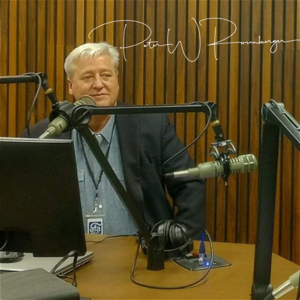
This is the Truth Network. You ever noticed how quickly people can redesign your caregiving situation when they don't have to live in it? You notice that? It all sounds so simple from a distance until you factor in reality, and reality doesn't fit on a suggestion. Welcome to Hope for the Caregiver.
I am Peter Rosenberger. Glad to be with you. This is the program for you as a family caregiver, for those of you who are putting yourself between a vulnerable loved one and even worse disasters. And sometimes you're doing it while getting criticism from people who sit on the sidelines or sometimes aren't even in the ballpark. And if that's you.
you are in the right place. I was talking to a friend of mine who's a caregiver. and taking care of her parents. And her sister wanted to weigh in on how this was going, but her sister was refusing to do any help. And she didn't want to offer anything other than you're doing it wrong.
How many of you all just This is not a scientific poll at all, okay? Just by show of hands, how many of you? Have experienced this. Where somebody is telling you that you're doing it wrong, but they're not helping. I told you, it's not a scientific poll, but from the data I can see with all those hands being raised, this is universal.
And this is what happens to us. We go about our business dealing with an impossible situation, and there are always people who want to give their advice and give their thoughts on what we're doing wrong. Usually, sometimes they'll go the extra mile and tell us the obvious, like, well, this is unsustainable.
Well, thank you, Captain Obvious. You know, never would have figured that out. I've had people do that to me too before. They'll come up and say, Well, you got to remember to take care of yourself. And I'm like, you know, I've been doing this 40 years.
You don't think that thought has entered my brain? You know, I mean, at some point, it just becomes ridiculous. And you don't want to be a curmudgeon about it.
Well, let's be honest, sometimes you do. But you do get weary of it. You do get weary of people. Telling you things, offering their thoughts when they weren't solicited. And yet they don't lift a finger.
They're not putting their shoulder to the wheel. And that's troubling, isn't it? It's very difficult. It's hard to know how to navigate that without being sharp. or caustic.
And we don't want to do that. We don't want any drama. We just man, we just want to be able to get through the day without creating more messes, more work and more things that we have to apologize for. Sadly, those dates are sometimes few and far between. But the last thing we need is somebody doing what I call a drive-by.
Criticism. Russell Limbaugh coined that phrase many, many years ago about the media. You know, they would just drive by something, lower the window, think they have a good handle on it, pronounce their judgment, and drive on. They never really got out and did some investigative work, they didn't bother to look. And real investigative journalism are people.
A friend of mine was telling me about this the other day, what a journalist is. There's somebody who takes notes, looks at things and takes notes, makes note of it. Not just drive by and oh, that's what's going on.
Well, there's no journalism involved in that. There's just a quick observation and then they go. They're not bothered to ask any questions or follow up or engage or learn anything more about it. And that's the way it is for many of us as caregivers. We're dealing with this.
The best we can, and sometimes we make horrendous mistakes. In my case, that's often, but we still do try. We get up and show up every day to try to do this thing. Our attendance record is perfect, even though our performance record we may cringe over, we still show up. Every day.
And these people that happen to encounter us. And sometimes it's in the oddest places, you know, in the grocery store, where they saw us and it brings to their mind a piece of wisdom or pearl they can drop to us to make sure we're doing our job properly. But otherwise, we would have never seen them had we not, by happenstance, encountered them at the grocery store or gas station or whatever else, or even at church. You know, that they want to somehow pronounce this. And this friend of mine was really struggling.
This was a family member. And was criticizing everything, but offering nothing, no help whatsoever. And It just it was troubling and I have a stock phrase for that that I use, and I've found it to be helpful over the years. And I thought maybe it would be helpful to you all that some of you may find this meaningful and it would make your life a little bit easier, and that is. Give me solutions.
Give me solutions. And when you turn and look at somebody who is offering this to you, and they're saying these things to you, and you say, Look, give me solutions. I hear what you're saying.
Now, what is your solution? Not what is your popcorn whiteboard because a lot of people do that.
Well, have you tried this? Have you tried this? Have you tried this? Have you tried this? Surely, and I don't mean to call you surely, but surely you've gotten that from people.
Have you tried this? Have you tried this? And that's not helpful at all, you know, because we have tried these things. And, and, it in that environment it's on the fly popcorny doesn't work It's when people take the time and they come to you and they say, Look, I've been really thinking about this and I want to run something by you and see what your thoughts are. You know, not just roll down the window and throw out, hey, have you tried this?
And then drive off, you know, kind of thing. It's that that is not helpful at all. That does not work for anyone. It's just a way for The Observer Feel like they contributed, they button up, they made some kind of connection, and then they drive off. But they're leaving the caregiver, in our case, you know, sitting there with their hands.
up in the air saying, What what what what do you want out of me? And as we try to solve the unsolvable, manage the unmanageable. And so when you turn to them and instead say, and you don't want to get into a big altercation, you just want to put it back on them. I don't know about you, but I get tired of playing defense. I just get tired of it.
And I look through all the scripture. I don't see God playing defense anywhere. And so sometimes I just put it all back on them.
Well, what's your solution? I remember the story my dad told me years and years ago. This lady was her car stalled out at a busy intersection, and the guy behind her just was wearing out his horn, honking at her. And she was just frustratingly trying to start this car. And finally, she got out of her car, which was kind of brave.
It wouldn't happen in today's world. She walked back to the guy honking the horn. And she said, I got an idea. Why don't you go up and try to start my car, and I'll sit back here and honk the horn for a while. And I always thought that was a great illustration for so many of us in our world as caregivers.
I got an idea. How about you do this for a while, and I'll sit over here and brainstorm on what you could do better. And that tends to Stop. Here's what'll happen. Here's what'll happen.
One of two things. Number one is you will possibly get Some good ideas. If you say, give me a solution. And you may learn something out of this. There's always that chance that they may have some nugget of information that's going to be helpful that you haven't considered.
And there's always that chance.
So that's the win. But for the most part, what you're going to find is it buys you some peace and respite and it's a teachable moment for them and you can escape without having to deal with their drama anymore. You don't have to carry that onus of somehow you have failed and only they have this wonderful epiphany of how you should be living your life. And how you should be functioning as a caregiver and you can avoid that. By putting it all back on them, by saying, give me a solution.
How about you come up and try to start my car for a while and I'll sit back here and honk the horn. And then all of a sudden, now, again, it may get their nose bent out of shape and they may walk away in a huff, but hey, they still walked away. You know, and they're not causing any more damage. They're not going to stick around and stay. If they're going to walk away, they're not going to stick around and stay.
And if they stick around to stay, they're either going to help or they're going to be a hindrance.
So either way, it's kind of a win-win situation. But it's not meant to be confrontational. It's not meant to be combative. It's not meant to be a jerk about it. It's just simply saying, don't you have enough on you as a caregiver without having to explain to people who are not invested, who are not participating in this, they don't have skin in the game, and you do.
And do you really have the bandwidth to spend on this? I don't think so. I don't. The goal is not for us to fix others. Even though when we're taken care of, that's not the goal.
The goal is for us to live peacefully, a little calmer, a little healthier as we navigate this journey. And that is what Hope for the Caregiver is all about. This is Peter Rosenberger. This is Hope for the Caregiver, HopeForthecaregiver.com. We'll be right back.
Welcome back to Hope for the Caregiver. This is Peter Rosenberger. Glad to be with you. HopefortheCaregiver.com. Hope for the caregiver.
dot com. Do you mind if I take a bit of a segue for just a few moments. I want to talk about something that happened last week and It's Just been on my mind. I wrote about this on my substack at caregiver.substack.com. I hope you'll go out and take a look at it.
Caregiver.substack. If you want to say, I put a lot of things out there that I think you'll find very helpful. And video, audio, print, some of it requires a paywall.
Some of it is free. You just have to put your email in. And there's a lot of things that I unpack that I don't necessarily do here on this program. And I unpack these things. And again, I put that out there for your benefit if you want to take advantage of it.
But this article is out there. There's no paywall for this. And go out and take a look at caregiver.substack.com. But when the word spread that Chuck Norris had done, Something happened almost immediately, and it was the Chuck Norris jokes.
Now, you've heard these, many of you have for a long time. They've been around for decades about how tough Chuck Norris is. Like, for example, Chuck Norris doesn't do push-ups, he pushes the earth down, or time waits for no man unless that man is Chuck Norris. Chuck Norris, this is my favorite. Chuck Norris kills two stones with one bird.
So they've been around a long time. And they came back within minutes, but they were never meant as mockery. It's folklore and. We honor something. With these jokes that we were being told not to value anymore.
And I'll get to that in just a moment. But but in a way, they've become how many of us grieve, how we honor this legacy that Chuck Norris left. You may not have given much thought to Chuck Norris. But the battle of the culture war About this, never really disappeared. It went sideways into humor, and that's where a lot of these jokes came from.
At our core, we weren't confused. about Masculinity. We wanted Chuck Norris, not because they were perfect, because they were clear. You know, we've always had figures like that. You trace it back to Paul Bunyan, where the stories grew about Paul Bunyan and Babe the Blue Ox.
And Men became myths, tall tales. You know, and we got a lot of action stars. Like I said, we got plenty of those, and they step into roles. I think about Robert Duvall in Lonesome Dove, the role of Augustus McRae, one of the greatest roles ever in American cinema. in film.
It's just an amazing role. But That was a role he stepped into. John Wayne and Chuck Norris. didn't step into roles. They didn't step into characters.
Characters bottled around them. They didn't become larger than life. They made life look smaller around them. And that matters because the jokes that are told about Chuck Norris, and you can, again, search this out. There are thousands of them, and they are truly hilarious.
You know, Chuck Norris doesn't sleep. He waits. You know, Chuck Norris can rub two ice cubes together and make fire. Chuck Norris told a woman to calm down, and she did.
Now that's That's really funny. I don't care who you are. That's funny right there. But these jokes didn't come up in a vacuum. They showed up right as our culture started arguing what a man is.
You know, our culture was blurring the distinctions that used to be instinctively understood. and the more the lines blurred, the more the jokes sharper them. Look at nobody builds myths around men who have to explain themselves.
Okay, they build them around men who stand, men who do not apologize. for strength. They don't they don't soften conviction. And they don't seem confused about what they're standing on. They know who they are.
You know, when John Wayne did the Cowboys, for example, that movie, and with all the little kids that he. Basically, help train to become young cowboys. And, um, Bruce Dern played the bad guy who would end up killing John Wayne in the movie. I mean, the character, his character. And he told him, he said, John Wayne told Bruce Dern, he said, you know, they're going to hate you.
For this. Because he knew that he was John Wayne. He was bigger than this. And Bruce Durden said, You're right, but they'll remember me. And both things happened.
People hated him, and people remembered him because he killed off John Wayne in this movie. And Consistent about this. They knew. They knew who they were. John Wayne cared it.
Chuck Norris cared it. Not because they were the greatest actors, because they weren't. Neither were. but they were consistent, and John Wayne played John Wayne. Chuck Norris played Chuck Norris.
No disclaimers, no irony. no distance from the roll. They just they meant it and people knew it. and men saw a standard. Boy saw something to grow torn.
And women saw something steady enough to trust. And that kind of recognition isn't branding, it's coherence. And we don't see it very often now, do we? Strength gets treated with suspicion, patriotism gets recast as naïve, and sincerity gets replaced with irony. And Hollywood reflects that.
The character's hidge, have you noticed that? They explain themselves. They kind of have to soften themselves before they're challenged. But the audiences still recognize a difference, and that's why the jokes about Chuck Norris worked. They they depended on something that was shared that the audience knew something solid.
And something that didn't need to be redefined every five minutes. They're not morally ambiguous. They know who they are. The joke's exaggerated. They didn't invent it.
They just revealed it. And in Chuck Norris's case, the strength pointed beyond itself. You know, but for all the mythology built around him, he never claimed to be the source of it. He was in on the joke. But he spoke something Even more powerful, he spoke about his faith.
And he spoke about it. prolifically. Not as branding. Not as a gimmick, not as anything like that, but it's just this conviction. and as submission to something greater than himself.
And that's the part we can't afford to miss. Because real strength always answers. to authority. And that's what made him even more iconic. And and you know, we you look at where we are as a culture.
You remember when um Senator Marsha Blackburn asked Katanji Brown, who was you know going to be the Supreme Court justice appointee for Biden? And s Marsha Blackburn asked Katanji Brown says, can you define what a woman is? And what was Katanji Brown's famous answer?
Well, I'm not a biologist. I mean, that will go down is one of the most single. Uh Dumbest Answers For anybody, but particularly for a Supreme Court justice, that will follow her. She is forever labeled with that. Because of her commitment to DEI and wokeness, she is forever labeled with Flubbing the most basic of questions.
Can you define what a woman is? And here she was. purporting to be a woman. It's mind-boggling, but can you imagine? If Senator Blackbird had asked instead, can you define what a man is?
And any Supreme Court justice had said, I'll tell you what a man is, Chuck Norris. Everybody would have laughed. Everybody would have got the joke. Everybody would have thought that was a great answer. And the nomination probably would have sailed through in the air.
There'd be a couple of confused people who were pretty disturbed. But if you're struggling to know what the difference is between a man and a woman, there's a lot going on with you. And I'll never forget the first time I had this encounter. I didn't know this was a thing. And I was over at Vanderbilt University in Nashville.
Some friends of ours were in town, and they had a friend of theirs who'd been hurt in a wreck. He was an older man, and his family had gathered there. And they had one of the grandchildren, he was a son, and he was like 6'3, 200 and. I don't know. He had to be every bit of 280.
I mean, he was a big boy. and and stood at least a head or so above me. And I'm not small. And And I was asking about his life, and he said he was a grad student over at Memphis State there, over there, the west part of Tennessee. I said, what are you studying?
He said, gender studies. And I had never heard of such a thing. And I said, well, that can't be too difficult. There's only two. And he said, well.
I identify as a male. And I looked at this guy was like 21 years old. I looked at him. And my friend over there was kind of hedgy because he knew kind of where this was going to go and he knew me. And I looked at this guy, this beast of a boy.
And I said, Was that an issue? What part of that was tripping you up, young man? And And you could tell he was quite taken aback. I don't think anybody had ever challenged him on it. And we have this is what we've done to so many.
And that's why you look at somebody like Chuck Norris and John Wayne, and you see. Why people gravitate to this? They're tired of the, we don't want to have this conversation anymore. Do you want to have this conversation? Do you want a Supreme Court justice who refused to identify the difference between a male and a female?
Do you really want that? I don't think so. I think we have a significant mental health problem in this country. And I think we have even a greater problem with sin that we're trying to somehow blur the lines from everything. And that's why this sarcastic humor, this great humor about Chuck Norris just punches through all that kind of stuff because we don't want to have that conversation.
But at the core of his life he was he was a man of deep faith. And he was a uh uh he was somebody who Placed his trust in Christ. and proclaimed it and made no apologies for it. He's Chuck Norris. He doesn't have to defend it to you.
This is who he is. This is what he did. This is this is. what his life stood for. He was unapologetically.
A believer? He unapologetically loved this country. He stood on his own two feet, he knew who he was, and he enjoyed the journey. He enjoyed the journey. John Wayne, same thing.
I look at John Wayne's life and what he represented to this country. I don't know where John Wayne was as a believer, but I knew that he was unapologetically patriotic. And, you know, even back then, Hollywood was filled with a lot of people who were not. And Chuck Norris certainly ran into that, but he was Chuck Norris, and he was going to be who he was going to be. And I respect that, and I look back with nothing but fondness of just the impact he's made on this world.
I don't know the. Scripture verse that may have been his favorite scripture verse, but I'd like to think. That one of his favorite verses may have been in 1 Corinthians 15:55. We'll find out one day and I'll ask him. But that verse says, O death, where is thy sting?
O grave, where is thy victory? I. I'd like to think that was one of his verses that resonated with him. He now knows that verse in ways that you and I could only imagine. I look back with his life with great fondness of his movies and the joy of it.
Walker, Texas Ranger. I mean, you know, you don't watch it for its dramatic. That's sincerity. You just watch it because it's fun. But I will tell you this: death didn't sting Chuck Norris.
Death didn't take Chuck Norse. Chuck Door said. I'll walk from here. This is Peter Rosenberg. This is Hope for the Caregiver, and we will be right back.
Welcome back to Hope for the Caregiver. This is Peter Rosenberger. Glad to be with you. HopefortheCaregiver.com, HopefortheCaregiver.com.
Some years ago, I created A Just a little device to remember for caregivers when dealing with doctors. You ever deal with a lot of doctors? When I started this, I'd only been doing this for 25, 30 years.
Now I'm in 40 years, and Gracie's had to my knowledge. ninety eight surgeries in her lifetime. The vast majority of those have been under my watch.
Now that doesn't count all the procedures. That doesn't count all of the tests, the clinic visits, the just the smaller Things that they've done that really we didn't count as major surgeries.
So we're talking enormous amounts of doctors. I when I first started this, I stopped counting it like. You know. I don't know how many doctors there were, but there's well over a hundred now.
well over a hundred, that have acutely treated her. And so you learn some things about surgeons and physicians and so forth that I've dealt with orthosurgeons, neurosurgeons, vascular surgeons. Uh What other types of surgeons have I dealt with? Of course, I've dealt with all types of radiology folks. I've dealt with all kinds of infectious disease specialists.
Um. Psychiatric, chronic pain, of course, primary care. You know, there's so many different kinds that I've dealt with over the years. And I've come up with a way to help fellow caregivers navigate that better, you know, because it can be a bit intimidating. When I first started doing this journey with Gracie.
I thought doctors were, you know, next to God, and some of them reinforced that. I didn't really understand the difference between specialists and surgeons and so forth. I didn't know any of those things. I mean, I was just dumb as a box of hammers when it came to this. I didn't know the medical world at all.
And I've come. From that place of very, very modest, humble beginnings. to understanding this journey in ways that Few people do who haven't been to med school. I've had to confront surgeons. I've had to confront all types of different medical personnel.
And I've had to instruct them. I've had to remind them. I've had to do quite a few things. Just this last round of surgeries we had last year in Denver, Gracie, you know, when she went down there for two hip flexor-release surgeries, it was supposed to be just two surgeries. And I told her ortho-surgeon, a very, very well-respected surgeon down there at this teaching hospital, big, big, big teaching hospital.
I said, look. You need to know if something can go wrong, it's going to go wrong with Gracie, and you need to be prepared for this. And he kind of took me seriously and kind of didn't. You know, you can tell when somebody's really, oh, yeah, okay, we got this, Peter. And then he came up to me halfway through this thing as we approached surgery number, you know, six or seven.
And then we're on our way up to 11. And he said, You called it. And I, you know, you were the only one that said this was going to go in this direction, and we should have been a little bit more on top of this, but you know. That was very gracious of him, but it didn't help me much. But, you know, I'm right more than I'm wrong when it comes to this sort of thing.
And not because I'm so smart and wise, just because I have the longevity with Gracie.
Well, guess what? You have the longevity with your loved one. And you're going to be dealing with doctors for the most part. I think everybody that's listening to this program that's a caregiver is going to be dealing with doctors. Maybe a lot of them.
Maybe you already have, but here's three P's That I've learned P's, as in Peter, three P's that I've learned in dealing with doctors. And this may be helpful to you as a caregiver in your journey. And if it is helpful to you, how about sharing it with somebody else? I bet it's helpful to them too.
So feel free to pass this along. It's in my book, Hope for the Caregiver. And um and You know, and I've covered this before on this program, but sometimes you just need a review. Three P's: number one, be polite. Just be polite.
You don't have to be subservient. But be polite. Don't go in there. armed for battle, ready to mix it up. Be polite and learn how to respond and not react.
Be gracious, but at the same time Firm. Don't ever forget. That you have caregiver authority. You may not know the disease, but you know your loved one. And If you go in there and just kind of be a wallflower, you're not going to be able to advocate very well.
If you go in there and just, Being contentious and so forth, they're going to want to transition you out as well. You're not going to get anywhere.
So be polite, and that is the first thing to do. Just be polite. The second thing is, be prepared. And pre being prepared takes on different forms.
Okay. Go in there dressed for the event. This is a business event.
So, don't go in there dressed, you know, and just shabby outfits or things that are just not appropriate for the office. It's an office visit, show respect for it. Every time I've gone into a doctor's office and deal with this, I make a point to not just look like I just came out from working in the barn. You know, I mean, I really have. I don't wear shorts to it.
I didn't flip-flops. You know, don't wear. You know, Daisy Dukes and tube tops, and I've never worn those, by the way. As you'll be comforted to know. But I mean, just, you know, don't wear things that you wouldn't want to wear at a professional office meeting because that's what this is.
I remember having to confront surgeons many times, and usually I'd put on a coat and tie. and have to go have a a serious conversation with them. And those, it just sends a signal. You're treating the meeting with respect, and that sends a huge signal.
So be prepared on that level. The other level to be prepared on is write the things down you want to talk about. What do you want to get out of this meeting?
Now, I don't think I recommend 10 things, but. Certainly three things. Tops five, but really three. three main action steps or questions or concerns that you have. And have that conversation with your loved one if you can.
And if you can't, be prepared yourself to talk about it. Where are we going with this? What are we going to do? What are we going to accomplish? And what is the outcome?
And a lot of times you've heard this.
Well, we're going to wait and see.
Well, how long are we going to wait and see? I never leave anything open-ended. Never.
Okay, we're going to wait. two weeks okay in two weeks you're going to get a phone call All right, that's how it works. You have to take charge of this. It doesn't mean that they won't. But you just assume that you will.
Because you are You're driving this. You're the caregiver. And caregivers have that authority. And if you leave it open-ended, Guess what? it'll stay open-ended, and you'll be frustrated.
So ask for action steps, clear action steps. What's the next? thing that we do. What's the next action step? And I've said that many, many times to doctors.
I said this in pre-op with. two orthos and a plastic. And they were getting ready to go and work on Gracie. And this was last year, as a matter of fact. And I called a timeout.
And I brought everybody together and I said and we were there in pre op. And we got one more irrigation surgery on her thigh that we're going to work on. And this has been very frustrating. This was surgery number. 97 or 8, I think.
We were kind of reacting to Gracie. I felt like that was what was going on.
So I pulled them aside. I looked at these very, very, very trained people and I said, look, here's my experience. That with Gracie you don't chase her. Despite the fact that she's got two prosthetic legs, she will outrun you. You cannot catch her.
You have to get way out in front, turn and face her, and stop this thing. That means we have to go way overboard on how we're going to approach it with everything with her. You cannot just wait and see. You cannot just do this and this. And to their credit, they listened to me.
And Know and it may feel intimidating to you the first couple times you do that kind of thing. But what are the stakes if you don't? All right, so be prepared. Go in there with several things that you want to see concrete that we're going to deal with these issues. And the last one is the pharmaceuticals.
And I really recommend staying out of that conversation as much as possible. I know you have to do the logistics part of it, but particularly when you're dealing with behavior-altering drugs. A part of the diagnostic process is the doctor needs to see how your loved one is functioning on these medications. And you and I may be a little bit more articulate at times. We may have a little bit more edge to us.
And we can move the meeting right along because doctors are busy, they're on a clock. And if this meeting drags on for a little bit longer, everybody starts getting impatient. And sometimes our loved one has a hard time doing that. They have a hard time doing this. They have a hard time staying on topic, or they may ramble on about this, or they may stutter or stammer, but the doc needs to see that.
Okay, you and I may have to sit in the corner and just bite our tongues and learn to like the taste of blood.
Okay, it may have to happen. but let them see it. And you stay out of it and try not to offer. We become very familiar with all these things. And if we try to offer our opinion on this, It becomes very, very problematic because our opinion is not based in science, it's based on our opinion.
So, when I've had neurosurgeons and others turn to me and say, Peter, what do you think? And you know how I responded? Every time now. Every time I do this, I say, in my experience, this is what I saw, this is what I witnessed, this is what. We, you know, we went through.
But I try to avoid my opinion at all cost because my opinion is not scientific. It is You know, just my opinion. But my experience, on the other hand, is worth something to them, and so is yours.
So, when we get into the pharmaceuticals, we can say, in my experience, I've seen her respond to it this way. But I don't want to say, I think she's going to do this. No, no, no, no, no, no. I don't. I'm very careful with my language.
And so the pharmaceutical Conversation can be a real quagmire if we're not careful. And we've really got to. Back away and understand what is our place in this. We do get very familiar with these things and we think we know it, but we really don't have the training.
So let's let them do it.
So, those are the three Ps. in dealing with doctors. Be polite. Don't you don't have to be subservient.
Okay? You're a professional too. Be polite, Be prepared, dress for the meeting? Have a list of things that you want to accomplish. Do not leave things open-ended.
Okay. Always ask for the next action step. What can we expect? Or what's the next time we're going to reevaluate? When are we going to have this conversation again?
Waiting is an action step, and it's okay to wait. We can wait three to six months. You say, okay, we're going to wait three to six months. I said, is three or six? You know, I said, okay, we're going to wait six months.
Okay. Six months to the day, 180 days. I'm calling you.
Okay? That's the deal. And then with pharmaceuticals, give the room some space. Give the conversation some space. Just hold back and let them evaluate.
What's going on with your loved one with the drugs?
Okay, the three P's of dealing with doctors. I thought it might be helpful for you today. This is Peter Rosenberger. This is Hope for the Caregiver. HopeforththeCaregiver.com will be right.
Welcome back to Hope for the Caregiver. This is Peter Rosenberger. Glad to be with you. HopefortheCaregiver.com. HopeforthTecaregiver.com.
Hey, I got something, two things I want to run by you. One of them is I do a lot of things after the show, a lot of writing, video, post-show commentary, things such as that that I'm going to be doing even more of, but it's all at my substack.
Okay, there's some things I just can't do on the air. We have a limited amount of time, and you can go out to my sub stack for this: caregiver.substack.com. Caregiver.substack.com. And I've got going into the archives with old video and commentary. And I'd love for you to go out there.
If you liked the three P's I talked about in the last block, I've got a video that I found. There, it's on substack as well, so you can go out there to caregiver.substack. Dot com. And the other thing is standing with hope. Do you like what you're hearing on this program?
Is it strengthening you? Is it encouraging you? Is it building you up? If it's doing that for you, it'll do that for others. And we could use your help to make that happen.
Staying with Hope is the ministry that Gracie and I found in. 20 plus years ago, we have two outreaches: a prosthetic limb outreach for her fellow amputees and a caregiver outreach for my fellow caregivers. And you can help us do this more. Through this broadcast, through other things we're doing, we're launching more support groups, all kinds of things that are available. But we could use the help.
If you're getting something out of this, would you put your shoulder to the wheel with us at standingwithhope.com slash giving. Standingwithhope.com/slash giving today. Whatever's on your heart, 10 bucks, 1,000 bucks, whatever's on your heart. Standingwithhope.com/slash giving. All right, let's get to our hymn of the week.
I'm going to give you a twofer this week, okay? A twofer. Because I have a medley of two hymns. This is a recording from my CD.
Songs for the caregiver. And I did this live during communion one service. And I've played this before for you guys, but I want to give you the backstory. There are moments, you know, in our journey as caregivers where we don't need a new idea, we don't need a new strategy, we need something that we can hold on to. And I want you to remember that word hold.
When everything else is slipping. And so let's go to the first hymn. I'm giving you a two for today. The first one is written by, and remember that word, hold now. Written by a guy named George Bennard, and he was in the middle of a pretty rough ministry.
He wasn't doing this from comfort, he wasn't sitting in a quiet room feeling inspired. He was pretty worn out. Anyone here know what that feels like? Yes, we do. And he was trying to make sense of suffering and calling all at the same time.
And what he came back with was it.
Something that was real polished. It was a decision. And it was I will cling. To the old rugged cross. Cling.
That's a caregiver word, isn't it? Clinging. That's a word you use at two in the morning when you're just too tired to explain everything and you're just too weary to fix anything, and all you've got left is something to. Cling to. He didn't say I will admire the old rugged cross, I will understand the old rugged cross.
He said, I will cling to the old rugged cross, because the cross is not just where Jesus suffered, it is where we go when we don't know what to do with our suffering. And that's the second hymn, which is written by Fanny Crosby, Jesus Keep Me Near the Cross. She didn't pray, Lord, take this away. She didn't say, make this easier. She didn't say, make sense of this to me.
She says, just keep me near it. Just keep me near the cross. And this was recorded live during the communion service at Covenant Presbyterian Church in Nashville. many, many, many years ago. And I arranged this and played it with a friend of mine, Daniel Fisher, on violin.
And I put this on my CD Songs for the Caregiver.
Now on substack I will put A story along with this later on today, and you can access this. To hear even more of me unpacking this and involves Gracie, and it's a. Powerful story. I just don't have the space for it right now, but you could go out to caregiver.substack.com and you'll automatically get pushes for that when I put these things out there. Caregiver.substack.com.
But here's this arrangement that we did, and this is the hymn. You all know it. You all know the old rugged cross. You could just hear the, let me go over to the caregiver keyboard. You could just hear the first couple of notes.
I mean, those notes alone just say everything. I mean, you got it. And it takes you back to the first time you heard it, takes you back to your mother humming this around the house, singing it at a church at a particular service that you were at. Maybe that's when you came to the Lord. It is a wonderful hymn.
So I'll cling to the old rugged cross. And when Daniel played this on the violin, just listen to the exquisite. And again, this is live. You can hear the communion trays clanking and people coughing, but it was such a powerful performance. And I had to put it on there.
And then when we just went into Near the Cross, well, and I just love this. And you take a listen. These are two hymns that every caregiver ought to know. Yeah. Does that get your heart ready for Easter?
Two hymns that every caregiver ought to know, the old rugged cross and Jesus Keep Me Near the Cross. Go out to caregiver.substack.com and you'll see the rest of a story that I put with that and standingwithhope.com today to see how you could be a part of what we're doing. Gracie, when you envisioned doing a prosthetic limb outreach, did you ever think? that inmates would help you do that. Not In a million years.
What does it mean? Peter's side would have ever thought about that. When you go to the facility run by Core Civic and you see the faces of these inmates that are working on. Prosthetic limbs that you have helped collect from all over the country that you put out the plea for. And they're disassembling.
You see all these legs, like what you have, your own prosthetic legs. And arms, too. And arms. When you see all this, what does that do to you? Makes me cry.
Because I see the smiles on their faces and I know. I know what it is to be locked someplace where you can't get out without somebody else allowing you to get out. Course, being in the hospital so much and so long. When I go in there, then I always get the same thing every time. These men are so glad that they get to be doing, as one man said, something good finally with my hands.
Did you know before you became an amputee that Parts of prosthetic limbs could be recycled? No, I had no idea. I thought we were still in the. 1800s and 1700s. I mean, you know, I thought of peg leg, I thought of wooden legs.
I never thought of. Titanium and carbon legs and flex feet and C legs and all that. I never thought about that. I had no idea.
Now that you've had an experience with it, what do you think of the faith-based programs that Core Civic offers? I think they're just absolutely... Awesome. And I think every Prison out there should have faith-based programs like this because. Return rate.
Of the men that are involved in this particular faith-based program. and the other ones like it, but I know about this one. Are just an amazingly low rate compared to those who don't have them. And I think that that says so much. But that's so much.
about Because that doesn't have anything to do with me. It just has something to do with God using somebody broken. to help other broken people be whole. If people want to donate a used prosthetic limbs, whether from a loved one who passed away, You know, somebody who outgrew them, you've donated some of your own. What's the best place for them to do?
How do they do that? Where do they find it? Please go to standingwithhope.com/slash recycle, and that's all it takes. It'll give you all the information on the what's that website again? StanningwithHope.com slash.
Slash recycle. Thanks, Gracie. Take my hand. Lean on me. We will stay.