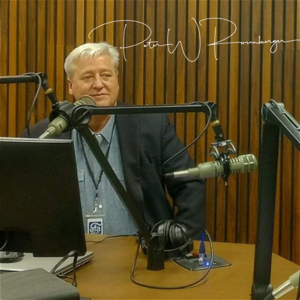
I'm Peter Rosenberger and after 40 years as a caregiver for my wife Gracie through a medical nightmare that has soared to 98 operations, both legs amputated, treatment by more than 100 doctors in 13 different hospitals and you can't imagine the medical bills.
Well I've learned some things. I learned every one of them the hard way. And in my new book, A Caregiver's Companion, it's a journal from that journey. It's filled with hard-won wisdom, practical help, and yes, an ample dose of humor. Because let's face it, if we don't laugh, we're going to blow a gasket.
And I've learned that I am no good to my wife if I'm fat, broke, and miserable. How does that help her? Healthy caregivers make better caregivers, and that's what this book is about: pointing my fellow caregivers to safety, to learn to live calmer, healthier, and dare I say it, even more joyful as a caregiver. It's one truth I've learned, punctuated by either a verse from scripture or a stanza from a hymn, and a space for you to share your own thoughts. While this is my journal from a 40-year journey, you can journal along with me in this book.
It's called A Caregiver's Companion, available August 20th from Fidelis Publishing, wherever books are sold. Learn more at peterrosenberger.com. Welcome to Hope for the Caregiver here on American Family Radio. This is Peter Rosenberger. This is the program for you as a family caregiver, HopefortheCaregiver.com.
I'm so glad to be with you today. Hope you are doing well. Mike Tyson once said, you know Mike Tyson. Mike Tyson once said, Everyone has a plan. Everybody has a plan until they get punched in the nose.
Everybody has a plan till they get punched in the nose. You ever felt like you've been punched in the nose by life? I have felt this way. This year has been that kind of year for me, and I've had many of these events. But the response I'm having now is different.
Sometimes life just hands you these haymakers. And you're a bit stunned, you're a bit dazed. Dazed. And and I Thought I knew what I believed. I thought I knew how to respond.
And then I find myself in the ICU looking through the glass and seeing Gracie in such a low estate. And I'm dealing with the aftermath of that here now at home after being in the hospital for five months. And in those moments, I'm. A bit disoriented. Reality's landing its blow.
The light of Christ hasn't gone out far from it, but it feels blinding. It's almost unbearable. And I'm trying to process what's right in front of me. And that's when the question Barges in Christian. What do you believe?
And that question rarely shows up if you noticed. when life is calm. It it it comes under the the fluorescent lights at two in the morning. Uh it comes in a hospital. It comes in the middle of another crisis du jour and sometimes it's crisis de hour.
You know, it just never stops. It's relentless. And that's when those questions come. And sitting around in a nice Sunday school room talking about this sort of thing. About what we believe and so forth, or even when I was in Bible college, that seems so distant.
Because when you're in the throes of it, which is what caregiving is, it puts you right in the throes of it. Have you ever been out? Deep sea fishing or Out in a boat in choppy water. you know, in the ocean or so. And you, you, I've seen that.
I've never been seasick. I've been around people that are. My wife notably, and uh but I've never had this problem. But I can see why it would be, because when you're out in choppy water, And my my brother-in-law, Gracie's sister's husband, would take us out in his boat in the in the gulf there and you sometimes get in pretty choppy water and you're bouncing around pretty hard. And it doesn't stop.
I mean, it just keeps going. There's no relief. You can't get to shore quickly. You can't make it stop. You have to learn to get sea legs.
You have to learn to be able to. roll with it. And it takes some doing. I don't know why I've never had this problem, but I haven't. but I've had it in other areas.
where it just keeps coming at you and you don't get any respite from it. And we haven't lost the light We haven't lost the ability to see, but we're blinded by the light. Not the song that Bruce Springsteen wrote, Blinded by the light, not that one. But I understand the the metaphor he's drawing. And I've seen this, you know, people stumble in darkness, but you know what?
We also flounder in the light. And we don't know how to respond to what's happening to us because we're disoriented. Do you ever feel that way as a caregiver? If you don't feel that way as a caregiver, hang on because you haven't done it long enough. When you've done it long enough, you will feel that way.
It just, it's inevitable. And I think about Paul. The Apostle Paul, he's on the road to Damascus. and Christ's brilliance knocked him over. I mean knocked him flat.
He was blind for three days. And he had to be led by the hand until another believer, Ananias, came to him, and Paul didn't begin his ministry on his feet. he'd get on the ground helpless until some one else helped him see. And that comforts me because Stepping into God's light is not always very smooth. Hank Williams wrote I Saw the Light.
You know, he wrote that w back in the forties. His mother Remarked that she saw the lights of her hometown of Montgomery, Alabama, or near there, and she said, Something I saw the lights, and he made a song out of it, made of hit song, made an iconic song out of it. And yes, I understand that. I saw the light. But the We usually use that as, okay, now I see clearly.
But do we? Do you see clearly? I I I gotta tell you, I don't. I I'm I'm like Paul on this one. I see through a glass darkly.
I see a little bit better. Remember that guy that got healed? He was blind? And Jesus healed him. I don't know if he was blind from birth.
I don't think he was because, and I'll tell you why I don't think so. Not this guy. There was another guy that was, but this guy I don't think he was because Jesus healed him. And he said, What do you see? And he said, I see men walking around like trees.
Well, how did he know what a tree was? You track him with me?
So I don't know that he'd been blind since birth. Evidently, he knew what a tree was, but I. These are things that make me say, hmm, I don't know. But anyway, it took two tries. And he was standing in front of the light of the world himself.
He didn't see clearly. And I don't think we see clearly either. And sometimes when life, like Mike Tyson says, punches us in the nose, We're reeling a little bit. We don't n we we we can't make sense of what we're seeing. when you look at your loved one who is suffering.
declining, struggling. when I look at mine, It's hard to make sense of this. And that's that moment when you ask yourself, Christian, what do you believe? What do you know? Where do you stand?
What does that look like? Are we struggling in the dark, or are we floundering in the light? And it often takes, like Ananias going to Paul, it often takes people to help steady us. Till we get a little bit more oriented, if you will. Uh did did you ever read the the last battle in the Chronicles of Narnia?
Did you ever read that with C.S. Lewis? Worth your time if you have it. There's a scene at the end where they're all being thrown into this stable. which represented just the portal to hell because it was it was a bad scene and it was just it was just bad.
And this young boy, one of the heroes of it, Eustace, from our world, he's in the world of Narnia. And everybody, they're being driven to this portal, this stable door, that they go in there, they know it's instant death. And they can't help themselves. They're being driven to this. There's nothing they can do.
And finally, they get hurled into this. And it stuns him for a moment because what they considered sure death. And Louis did this so beautifully. was the gateway into life eternal. and they found themselves in Aslan's country.
Aslan rep was the Christ figure in this, the great lion. And Eustace was blinking a little bit. He was disoriented because all of a sudden now he's in paradise. or he thought he was going into death. Do you see the picture here that Lewis makes so marvellously?
And that It's disorienting though. And friends met him there. And they they kind of steadied him a little bit 'cause he was disoriented for a moment. I feel that way all the time. It's disorienting to look at suffering.
Repeatedly, relentlessly like we do as caregivers so many times. and stand on the promises of God. It's a bit it's a bit jarring, wouldn't you say? And yet this is where so many of us are. And as we get our C legs, if you will, or sea eyes.
If we get our sea legs. And we Stand. Stand firm. And adjust to this, this new way of looking at things, at living. in these things.
It becomes then our privilege to help study someone else. That's the whole point. I now look at Gracie's suffering with sadness, yes. tremendous sadness. and not a little bit of weariness.
I know she does. But I also look at it with the conviction That he who began a good work in her Is faithful to complete it. See, that's me adjusting this. There's still men walking around like trees. I mean, I still don't see it clearly.
I have no idea what God is doing in all this. And I have as you've heard me say many times, offered my consulting services to him repeatedly. He hasn't taken me up on it yet. But Hope springs eternal. That I'll somehow convince him that I have a better plan.
No, I don't. I kid. I don't have one. He does. and he steadies me.
and he brings people in my life who steady me. And now it is my privilege To offer the same comfort that I myself have received from the God of all comfort, to say to you, Christian, what do you believe?
Now stand firm until your eyes adjust a little bit more. you're not going to see the whole picture. You're not going to see more than one step ahead of you sometimes. Thy word is a lamp unto my feet. Not a searchlight.
but it guides us every step of the way, and that is hope. for this caregiver. This is Peter Rosenberger. This is Hope for the Caregiver. We'll be right back with a very special interview that you're going to love.
I was stunned, and I'm going to play excerpts from it. It's on my podcast. I really am confident that you're going to love this interview, and we'll talk more about this when we get back. This is Peter Rosenberger. This is Hope for the Caregiver.
Don't go away. Welcome back to Hope for the Caregiver. This is Peter Rosenberger, Peter Rosenberger. Come. I am pleased to introduce you all to uh A wonderful author and and fellow caregiver.
Her name is Jessica Ronnie, but she goes by Jess because she says that's what her mother calls her.
So we're going to call her JIS 2, even though it says on her. Book, Jessica, but we don't stand on formality here. We're caregivers. We're crazy caregivers, I tell you. And I'm glad to have her with me.
This is a book that's been sitting. Waiting for me for some time, but while we were dealing with all the stuff with the hospital this year, I couldn't get to this. And I am thrilled that she's been patient with me. Her book is called Caregiving with Grit and Grace. And the first thing I noticed about it.
was that she's from the north because if she's from the south the grit would have been plural. And it would have been caregiving with grits and grace, which is my life because my wife is Grace, and we both like grits. But evidently, that is not what this title means. It is something else. And I'm thrilled to have you here, Jess.
Thank you for your patience. Thank you for your graciousness. I look forward to hearing what you have to say. How are you feeling? You know, I I'm feeling Pretty good.
It's a crazy week. I had four kids start four new schools, so kind of all over the map, but I'm grateful to be here with you. Do you drink a lot of coffee? I do drink a lot of coffee, yes. I'm mainlining it now.
Yeah, I have a podcast called Coffee with Caregivers.
So, yes. I am doing that a lot myself. When you start drinking coffee at like three or four in the afternoon, you know that you're in some serious caregiving water here. Yes, exactly. Your story Was incredibly gripping to me.
And you know, you didn't start out like most of us do. We don't start out to do this, this is not the life path. Path that we would choose. And yet, here you are. And I wanted to start first off with your husband.
Your children, and then what has happened since then. But let's go back to the very beginning. Like the very beginning, like when I was not in the beginning was the word, not that far. Right, how far back are we going? Because.
Go back to your journey, your first steps into being a caregiver. And I know part of it is you were kind of prepared for it because you're the oldest of 11 children. 12, yes. And that's what I was referencing. As I've kind of processed these past couple of years, I've realized.
I've been in a caregiving role my whole life, really. When I was two years old, my mom had twins. And there are all these pictures of two-year-old Jessica, you know, holding her twin baby brothers and feeding them bottles. And then she had, you know, 11 kids after me.
So. It's just did she ever figure out what caused that? I think so. I'm pretty sure. And then, yeah, just grew up in this large family, helped care for the siblings.
That was just kind of the expectation, and ended up getting married. around 23 or 24 years old. And um wave it, wave it, wave it, wave it, back up. Do you not know how old you were when you were married? No, I don't.
I would have to think about it. Has it come to that, Jess? Has it come to that? It has come to that. And I could figure it out.
But yeah, 23, 24. Um We were excited to have our first child. We had our first son. Caleb in 2002. And we wanted to add to our family very quickly.
So I got pregnant again. And we thought everything was going well with the pregnancy. I ended up going to my 20-week ultrasound appointment alone. because my husband had to work that day. And it was there that I was told that my unborn baby had experienced a stroke in utero and there was very little hope.
It was suggested that we terminate and try again. In the doctor's words, you're young and healthy, you won't have any problems getting pregnant. It's just nature's way. These babies aren't supposed to make it. My husband Jason and I decided to continue with the pregnancy.
Our faith would not allow for us to. Can you back up just a here? Yeah. What was that ride home like? I do.
It was prior to cell phones. And I write about that in depth in my memoir, Sunlight Burning at Midnight, stepping out of that room. And I not being able to find my vehicle in the parking garage, like my brain just could not. fathom where I'd parked and I finally found it. pulled over into a gas station and used the payphone to call Jason.
And he said, I'll meet you at home. He was at work, so he rushed home. And I was just in a daze that 30-minute drive, walked into the apartment that we were living in to find him on his knees praying for my safety and for our unborn baby. Um But yeah, I vividly remember just feeling it was such an out-of-body experience after having heard that. Like, is this truly my life?
What just happened? And then taking the next couple of weeks to really allow that information to sink in. But it was never a question as to whether or not we were going to terminate, we were going to put this baby in the Lord's hands. and allow his will to occur in the baby's life and in our life. What was the reaction for friends and family and so forth.
Devastation. I mean, I can't even.
Well, I can't. Oh, absolutely. Absolutely supportive. But it was the most Lonely situation. It was the loneliest situation.
Because I was the only one pregnant. I was the one who continued to feel every movement, every kick, every glimmer of life. And yet, I was carrying what I had been told was a dead baby. this baby would either die prior to birth or die a few hours after birth. in the specialist words there was very little hope for this child.
So every day I'm praying, I'm believing for a miracle, I'm feeling this baby kick with life, and even my husband Jason can't really understand the loneliness of the journey, which is what led me to rely so heavily on the Lord because there was nobody else who could understand what I was going through or even enter into that space with me. As you struggled through this. You were you were obviously a Christian. Your husband was a Christian. And that were you in a were you in a good church situation?
We were. We were attending a megachurch that believed in healing. And I kind of entered into this speak it and believe it. I am going to claim healing for my baby, period, and not just. you know, partial healing.
In Jesus' name, this baby will be completely mentally, physically, emotionally healed. Period. That's not what I got. And that was another intense. lifelong lesson that the Lord is not a magician.
Um and that his ways are not our ways. No, the blab it and grab it crowd, that stuff. doesn't hold up. in this world. Nope.
Yeah. I am firm. and knowing that your child is healed is just not on our timetable. knowing that Gracie is healed, just not Maybe in this life, but his promises ring true, but They, you know, this demanding that God act on it, it's, it's a hard thing when you're looking at it every day and you're facing it and you get pulled into that because we're, we're, you know, I, I've, I've got, um, Well, we once got a basket of fruit from Benny Henn. You know you're having a bad day with the with Benny Hen.
You know you know it's a bad day when you're getting fruit from Benny Hen. Excellent. You don't tell that to anybody. We'll just keep that twixt us.
Somebody was asking about this the other day. You know, does God heal? I absolutely believe that he does. James tells us that we should pray for the sick and we should lay hands on the elders, should lay hands, we should we should all these things. And it makes absolutely zero sense.
For scripture to ad To command us to do this. And God's not going to do anything. That there is no chance of healing. I mean, that doesn't make any sense. But then again, I also look at the fact that he allows I don't know if you read her book, When God Weeps.
Have you read that book? I haven't. No. Whoa, do yourself a favor. It's a wonderful book.
When God Weeps. She and Steve Estes wrote this, and this is Johnny Erickson Tata. And she wrote this line in there that came out of this book. It's been kind of a defining. Quote of hers for a lifetime here, and it's uh God allows what He hates to achieve what He loves.
That is it. You've seen that first hand. Yeah. And that's a hard thing for people to wrap their mind around because they want to fix things, they want to do things. And so here you are, this young mother.
You've already got One child. And Here you go. And you go all the way and then what happens? Yeah, supreme fixer here, too. I mean, oldest of 12, black and white personality through.
You aren't bossy, are you, Juice? I'm going to fix it, and I'm going to control the situation, too. If I polled your brothers and sisters. Yeah. Would they say that you were bossy?
I don't think at this point in my life. No. I think the Lord has done a deep worship me. And I know nothing.
Okay, I'll do it. Um I have some bossy brothers and sisters, but I don't know that I would be at the top of this list at this point. Were you at the time when you were younger? 100%. Yes.
I grew up in a large family too, and uh, but I'm the third, and and so I have younger and older brothers and sisters, but it um I would imagine that being in a family that large, being the oldest, that you were wired that way, and all of a sudden that stuff gets sanded down pretty hard. No, it does. Yeah, those neural pathways are embedded pretty deeply.
So So what happened in the hospital when you had the baby? Yeah, we had the baby. And They cut me open from one side of my belly to the other because his head was the size of a two-year-old's head at birth. It was so full of cerebral spinal fluid. That he would have, I mean, we both would have died 100 years ago in childbirth, but they managed to get him out and he.
Screamed with life, and I just wept in relief. I couldn't believe my miracle baby was alive. And then I just kind of held my breath and waited for him to die. Um and they whisked him off to the NICU and then they brought him back and They said, you know, mama, you can try to nurse your baby. And I did.
He just kept living. And he Went through brain surgery 48 hours later, and he continued to thrive and grow. And he spent two weeks in the NICU. And as they discharged us, we sat in this room with this big board meeting table with all the specialists who had cared for him. And they said, you know, sometimes we get it wrong.
And we really don't know. We really don't know what's going to happen with his life. He could have, you know, profound disabilities or. He could live a pretty normal typical life. We'll just have to wait and see.
You've been listening to my interview with author and podcast host Jess Ronnie, and we're going to have more of this in the next block. You can hear the entire interview on my podcast page, all of which can be accessed at PeterRosenberger.com, or my Substack page. You have to sign up for the Substack, the podcast you can listen to.
However, you listen to podcasts. This is Peter Rosenberger. This is Hope for the Caregiver. Don't go away. We'll be right back.
Um Welcome back to Hope for the Caregiver. This is Peter Rosenberger, HopefortheCaregiver.com. We're continuing our interview with author Jess Ronnie. And I told you, just a fabulous conversation we were able to have. The entire interview is at my podcast, which you can find on my website, peterrosenberger.com, or my substack page, caregiver.substack.com.
Hardly ever since you can hear the whole thing. But here's another clip. Every aspect of life, I didn't get much sleep because I was terrified that if he were to flip himself over in the middle of the night, he didn't have the strength to lift his head back up.
So, you know, we would put him to sleep on his back, but if he happened to flip, he would have suffocated himself because his head was so big. And I don't know. We somehow got through those first couple of years. And 2007, found ourselves pregnant again. It was planned.
We had our daughter, Mabel, and that's when our story shifted again. My husband started having all of these different health scares. He lost his vision, he was disoriented, he was losing weight like crazy. And he kept going to specialists, and they would say, You've been diagnosed with type 1 diabetes, which was so random and so strange. You just have to get your sugar under control.
And this was a man who owned a gym, was a personal trainer, and a tennis professional, like the epitome of health and fitness. and he just could not manage the sugar levels. And one night I said to him, We had the three kids. Caleb was about five, Lucas, three, and Mabel was about six or seven months old. And I said, I have to quick run across town.
I'll be right back. Are you feeling okay? Because he would have good and bad days. He said, Yeah, I'm good. And I pulled into my dad's driveway, and the phone rang, and it was Jason.
He said, Jess, call 911, and the phone went dead.
So I called 911, rushed back home. My driveway was full of cop cars and ambulances, rushed inside the house. My husband was laid out in a stretcher. And asked the paramedics what had happened. And they said, Your husband had a seizure, but right before he passed out, he had enough sense to put a movie in for Caleb, put Lucas in his exorcer, and put baby Mabel in her bouncy seat, and then he seized until he passed out.
And so that became one of the longest nights of my life. We ended up in the local ER. I don't even remember who watched my kids. And it was there that the young doctor, I was sitting on the floor with my sister and he said, you know what, we're gonna run an MRI to rule out the possibility of a brain tumor. And it all just clicked in that moment.
And I thought, yeah, that makes sense. He has a brain tumor. And sure enough, he had a baseball-sized brain tumor. He was prepped for surgery the next day. They removed the brain tumor and the biopsy showed it was just a grade two.
So not cancerous at that point. And we were given the option to just watch and wait with quarterly MRI scans. And so we went home. We were told, you know, sometimes these tumors don't come back for 20 years or so. Just go home and live your life.
And we were like, okay, we've been tested. We're good. Let's just move on with our life. And that's what we tried to do. And there was no malignancy.
No, no malignancy. And so they said, you know, typically these tumors do come back at some point, but it might not be a problem. And it might not come back for 20 or 30 years.
So just go home and try to move on. And that's what we tried to do. And ended up pregnant in that period of life and moving on. And After we found out we were pregnant with our fourth child, Jason started having symptoms again. He began losing weight, becoming disoriented, and he went for his quarterly.
MRI appointment. I remember it distinctly because I had my twenty week ultrasound appointment with this new baby.
So I was feeling a lot of anxiety around that. And then Lucas also had brain surgery scheduled that June. June of 2009. And then Jason had his quarterly MRI appointment that same June.
So that June of 2009 was just full of anxiety and worry for me. And I went to my 20-week ultrasound appointment. Everything looked great.
So that was, you know, check number one. Lucas had his brain surgery for his tethered spinal cord and Chiari malformation. That was solved. He was recuperating beautifully at home. Check number two.
How functional was Lucas at this tub? I mean, was walking? No, Lucas has never walked without assistance. Very delayed in every aspect. He's been incontinent his whole life, nonverbal.
Can he feed himself? No. Needs assistance bathing, moving, feeding, everything. Full assistance.
Okay. And then Jason drove himself to his orderly MRI scan and I was busy at home with the kids and being pregnant and the phone rang and I picked up the phone and he said, Jess, the tumor's back. I have to check myself into ER immediately. And so it became the frantic scramble of who is going to watch the kids. Especially Lucas, you know, people were happy to help with my typical kids, but Lucas kind of had the fear factor.
People weren't real willing to jump in and help with him like they were with the typical kids. But somehow somebody offered to help and I went down to the hospital to spend time with Jason. And the next day, he had another successful brain surgery. And I was sitting beside his mother after a very long night. And the brain or the surgeon came in, and he said, I'm really sorry to have to inform you both of this news, but the biopsy came back at stage four glioblastoma.
And I had done enough research at that point to knew that that was pretty much a death sentence. The typical life expectancy of someone with a glioblastoma was about 14 months.
So This was his normal quarterly thing.
So this w this all happened within three months? He had been clean for a year and a half.
So, within that year and a half period, we ended up getting pregnant again. And then, every three months, he had to go back for another MRI just to make sure that the tumor hadn't come back. And it was during this particular MRI that they discovered that the tumor was growing again, that it had returned.
So as much as they say, they get the majority of the tumor, there's always those cancer cells that have the possibility to re-emerge and grow again. And that's what had occurred.
So they suggested immediate chemo and radiation, and he started that protocol. That became the most difficult year of my life, basically going through chemo and radiation. We ended up having our fourth child, our third son, Joshua Isaac, on September 15, 2009. And Jason fought cancer for the next year and eventually passed away August 24, 2010. At that point, I was a thirty three-year-old widow with four children under seven.
So it I mean, I lived in a constant state of hypervigilance for that whole year. My I don't feel like my heart ever hardly stopped racing. One of the things I've learned over my years of this is that it's unsustainable to have that level of hypervigilance. Did you crash and burn? Did you learn how to cope differently?
Did people come alongside? What happened to kind of steady this ship that was just all over the place? Um I know it's not an instantaneous thing. It's always a process, but what are some key things that you look back at and say, oh, okay, that was a defining moment for me? This was a stabilizing moment for me.
I didn't have many of those in that year, so much so that even when I was pregnant, I had a panic attack and fell down the stairs. And I went to the doctor and it was really strange advice. And he said, this is not typical advice, but I need you to go home, take a bath, have a small glass of wine, and calm down. And I was like, what? He said, you are on the brink just managing everything.
And what did you think of that? What was your first thought when he's saying that to you? The doctor's looking you in the eye and telling you this: you're on the brink. What was going on in your head at that point? I knew I was, but I didn't really know how to.
Walk away from the brink. I mean, my life was so overwhelming, and I did have a tribe of people who brought meals and did my yard. But you know, at one point, too, in my life, Everybody was incontinent except for my oldest son, Caleb. That's a lot of incontinence. That kind of sums up what that period of life looked like for me.
That was like the perfect metaphor for how I felt like my life was going. There are a lot of people who are listening to this program right now who understand exactly what you just said, and they are just saluting you. Because they get it. When he tells you to go home, you're on the brink. And what you just said there a minute ago, I don't know how to come back from the brink.
That is a place where so many caregivers are. I've been there. If you haven't been there, then you haven't been a caregiver long enough. Because there is a brink and we get there and we don't know how to come back from it. What did that look like for you to somehow be either back away yourself or be backed away from the brink?
And I know it didn't happen overnight. Yeah, and I've been able to look back over the years too, and I realize that when we're in that hypervigilance, you know, we either fight, we flee, or What's the other one? Freak out. Freeze. Freeze.
Oh, well, you free.
Okay, well, I freak out. No, I fight. And I've learned that. And in that fight, I get angry. And I've learned that it's that anger becomes an adrenaline source.
And it's a pretty decent adrenaline source when you're going through something really difficult. I mean, it does get your butt out of bed in the morning and it keeps you going. And it kept me caring for four kids. But I kind of lived with this low-grade anger for a really long time until about two weeks before Jason died. And the Lord and I had this moment.
I was in the shower, and I was just sobbing, saying, I am so exhausted, Lord. I don't even know how to continue to do this. And I fell to my knees and literally had a Garden of Gethsemane moment with God the Father. This is too much for me. I don't want to drink this cup that you are making me drink.
And came to this place of surrender where I finally said, but not my will, but yours be done. And in that surrender, I was able to be very present for Jason in his final two weeks of life, laying beside him, talking to him, sharing with him, praying with him, listening to praise and music, worship with him. And I was able to escort him into eternity. And I think that it was because I surrendered, I was able to have those moments. But after he died, I was so exhausted.
I have never felt an exhaustion like that before. Did nothing. I would get up, put Caleb and Lucas on the school bus to go to school, and I'd go lay on the couch. And when Mabel and baby Joshua took their afternoon naps, I would nap every day with them. And I even think back, like, Caleb was seven.
He was getting himself up by himself at seven years old to walk and get on the school bus because his mother was so depleted. And he just owned that. He did it. And I have such guilt over that even. What do you do with that guilt?
Oh, I mean, I've talked to him about it. I've said, I'm sorry. I was just so tired. What is his response? He's like, you did the best you could, mom.
He has so much grace. You did the best you could. A friend of mine a long time ago told. me something that I've never forgotten that even in the Worst of things. He was a counselor, and he said, God will put raincoat and galoshes on kids.
And allow them to go through those things without it tearing them apart. And I always took great comfort in that. And I look back with our own children, and I get that depleted, tired, frustrated anger, smoldering rage at all times. And anger with God, I get that. Bless your kids' hearts because that's an amazing gift that you can have those conversations with them.
We don't know the end of the story, of course, of. What God has in mind for them as they continue on this path of how it shaped them and what He's prepared for them. But I understand that kind of guilt. I hope you've been enjoying this interview that I have with Jess Ronnie. We're going to have more of this next week.
And you can hear the entire interview at my Substack page or my podcast, wherever podcasts are played. We're going to be right back with our hymn of the week. This is Peter Rosenberger. Don't go away. We'll be right back with you.
Welcome back to Hope for the Caregiver. This is Peter Rosenberger. This is the program for you as a family caregiver. HopefortheCaregiver.com. I hope you enjoyed that excerpt from my interview with Jess Ronnie and you can hear the whole thing at my podcast.
Go out to the website, hopeforthecaregiver.com. You'll see how to subscribe to the podcast. It's at my Substack page. And it's the podcast you can get. It's Hope for the Caregiver, wherever you listen to podcasts, you know, Apple, whatever.
Amazon, all of the places.
Alright, let's get to our hymn of the week.
Now. We'll go to the caregiver keyboard. The hymn we're going to do is written in 9-8.
Now do you know what that means? 9-8 means there's nine beats to the measure. And the eighth tells us that those beats are counted as eighth notes.
Okay, so uh 4-4 is what a lot of a lot of songs are written in 4-4. Three. Four, one, two, three, four, one.
Okay, and then you have some things that are written in 3-4. The most famous probably would be Okay, three, four. Ba da da da okay and then nine eight though it kind of feels instead of marching through it Or even having that one. Two, three, one, you know, that kind of thing. You get a swaying feel to it.
Like one, two, three, two, two, three, three, two, three. And this woman named Phoebe Cates, had written this tune. And her friend came over to visit her, and she said, Hey, I got this tune. You know, I'd love for you to do a lyric. And in 15 minutes, they had this done.
And it was Blessed Assurance Fanny Crosby wrote the lyrics. But think about how it goes. The um Let's take it down a little bit because it's a little bit high. But it's not like a rocking chair. It's just a wave to it.
It just feels blessed, you know. Yes, it is. Shoo. Laurence, Jesus is my.
Now, remember, I play these things a little slower. Uh and I'll throw in a couple of cords and I I I'm not in a hurry. Because again, who am I doing this for? I'm doing this for caregivers.
Okay, and I know that we love to sing it congregational style, but we get out there and just belt it all out. I get that, and I've done that, and I've played it for congregations. But I'm thinking about you and me doing our caregiving task: emptying the dishwasher, doing the trash, changing all kinds of stuff, the beds and clothing. cleaning the bathrooms, getting to the hospital. To the pharmacy, all those kinds of things.
So you're not belting it out congregational style like that. You're probably just humming it to yourself, and it's a rocking chair song, so bless it. Uh sure. And I did a major 9 chord right there. That means I'm just adding a C major chord, the one chord, and I'm adding some upper chords.
Structured notes there to it. A major seven? And a nine. And it gives it a lot of color and warmth, sure. When you're in a rocking chair singing about assurance.
Don't you want to be singing about You know. I mean something that feels comfortable and warm to you. Jesus is my Oh, what a foretaste of glory devon. And I put a four over five right there, and it gives it a little bit more of a Oh, just a big blanket around you. They're of salvation.
Purchase of Born of his spirit washed in his blood. You can just hum it in a rocking chair. This is my story.
Now watch this. This is My soul. Do you feel the difference there? The way I did it? Praising my saint.
This is my story, this is my song praising my Savior. And then I can throw in this flat seven right here. And just adding some of those colours Color cords that we call them, upper structures. gives just a little bit more warmth to it. This is a song that you and I can sing throughout the day.
This is my story.
This is my song. praising my Savior all the day long. Not some of the day long. All of the remember a blind woman wrote these lyrics.
Okay? praising my Saviour all the day long, This is my story. This is my song, praising my Savior all. day long. Verse 2 Perfect submission.
Perfect delight. Visions of rapture.
Now burst on by sight. She was blind when she wrote it. Angels descending. Bring from above It goes on. Of mercy.
Whisper Of love. It takes on a different meaning now, doesn't it?
Now, when they did this song, Dwight Moody heard it and put it into his Crusades and it went worldwide. I mean like You know, to 100 miles an hour, just went worldwide. People just went wild about this song. And it's going to be with us. We'll probably sing this in heaven.
You know. William. I don't know. I think we would. We probably would.
But this is my story. Because we'll be praising our Savior all the day long. This is And I just did that little suspension right there. Praising my Savior. How much?
All the day. For this is my story. This is when Song praising my Savior all the day long perfect submission, all is at rest. Are we at rest? I in my Savior.
Am happy and blessed Watching and waiting Looking above Filled with His goodness Lost in His love Isn't that great I mean and then the chorus This is my story. Oh remotely, I'm gonna be song. Praising my Savior all the day long. I gotta get Gracie Will so she can start singing because she do this so much better than me. This is my story.
This is my song Praising my Savior all the day That's a great hymn for us as caregivers to hang on to And you can hone that. Again, think of it that 9-8, just 1-2-3, 2-2-3, 3-2-3. It's just a nice swaying tune that fits perfectly with the lyric. And you could just sing that in a rocking chair. You can hum that Well, you're taking care of somebody.
Maybe put it in a lower key, you know, because that is a hard key. That's a high key. This is my story.
This is my song. So you get a little lower key there. And again, we're going to get Gracie well. Y'all just keep praying. We're going to get her through this, but she's got to start singing.
But I told her about this. I said, Look, I'm working on this to do for my hymn a week. And Blessed Assurance. And I said, Gracie, you got to get well. You got to start singing and support me in the manner to which I'd like to become accustomed.
Yeah. And I went out of the room. And you know what I've heard? She was in there now. She's really struggling.
She's in a lot of pain. She's got a very hard life. but I could hear her in their singing. This is my story.
This is my song. Praising my Savior all the day long. And so, my question to you is: fellow caregiver, just caregiver to caregiver. Would you be willing to take a chance that you could sing this song? throughout your daily life as a caregiver, just hum it.
Maybe just hum it to yourself while while you're driving. Maybe you've had a I don't know. Whatever's going on. This is my story.
Blessed assurance Jesus is mine Oh, what a foretaste of glory divine heir of salvation, purchase of God, born of a spirit, washed, in his blood. This is what strengthens us as caregivers. This is what builds us up. This is what allows us to endure. This is my story.
This is my song. praising my Saviour all the day long. And I love that last line, perfect submission, all is at rest. I and my Savior am happy and blessed. And I want us to have that all.
is at rest. and we're happy and blessed in Him. Doesn't mean that we're not looking at hard things. But we're going to lift our eyes a little bit higher where it says, watching and waiting, looking above. filled with his goodness.
Lost in his love.
Now, do you see why this hymn is on the list of hymns that every caregiver ought to know? And it's just such a great hymn. Don't y'all hold my singing against me, okay? I'm doing the best I can with what I got.
So I bet I married a singer. I wasn't planning on being a singer. This is Peter Rosenberg. We're out of time. We got to go.
So would you go to the website, hopeforth the caregiver.com? You can see where you can get my new book. And you can help support what we do through Standing With Hope. And you can participate in all this. If you like what you're hearing, help us do more.
Okay, healthy caregivers make better caregivers. We'll see you.
Next time. Gracie, when you envision doing a prosthetic limb outreach, did you ever think? The inmates would help you do that. Not in a million years. What does it mean?
I would have ever thought about that. When you go to the facility run by Core Civic and you see the faces of these inmates that are working on prosthetic limbs that you have helped collect from all over the country that you put out the plea for and they're disassembling, you see all these legs like what you have, your own prosthetic limbs. And arms, too. And arms. When you see all this, what does that do to you?
Makes me cry. 'Cause I see the smiles on their faces and I know. I know what it is to be locked someplace where you can't get out without somebody else allowing you to get out. Course, being in the hospital so much and so long. When I go in there, and I always get the same thing every time, that these men are so glad that they get to be doing, as one man said, something good finally with my hands.
Did you know before you became an amputee that? Parts of prosthetic limbs could be recycled? No, I had no idea. I had, I had. I thought we were still in the 1800s and 1700s.
I mean, you know, I thought of peg leg, I thought of wooden legs. I never thought of. Titanium and carbon legs and flex feet and C legs and all that. I never thought about that. I had no idea.
Now that you've had an experience with it, what do you think of the faith-based programs that Core Civic offers? I think they're just absolutely Awesome. And I think every prison out there. should have faith-based programs like this because The Return rate. Of the men that are involved in this particular faith-based program.
and the other ones like it, but I know about this one. are it uh it's just an amazingly low rate. compared to those who don't have them. And I think that that says so much. But that says so much.
About Just, that doesn't have anything to do with me. It just has something to do with God using somebody broken. to help other broken people be Hold. If people want to donate a used prosthetic limbs, whether from a loved one who passed away. Yeah.
You know, somebody who outgrew them, you've donated some of your own. What's the best place for them to do? How do they do that? What do they find? Please go to standingwithhope.com/slash recycle, and that's all it takes.
It'll give you all the information on the What's that website again? DaningwithHope.com. slash recycle. Thanks, Chris. Take my hand.
Lean on me. We will.