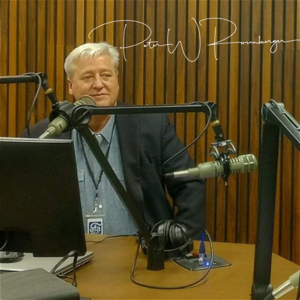
I'm Peter Rosenberger and after 40 years as a caregiver for my wife Gracie through a medical nightmare that has soared to 98 operations, both legs amputated, treatment by more than 100 doctors in 13 different hospitals and you can't imagine the medical bills.
Well I've learned some things. I learned every one of them the hard way. And in my new book, A Caregiver's Companion, it's a journal from that journey. It's filled with hard-won wisdom, practical help, and yes, an ample dose of humor. Because let's face it, if we don't laugh, we're going to blow a gasket.
and I've learned that I am no good to my wife if I'm fat, broke, and miserable. How does that help her? Healthy caregivers make better caregivers. And that's what this book is about, pointing my fellow caregivers to safety, to learn to live calmer, healthier, and dare I say it, even more joyful as a caregiver. It's one truth I've learned, punctuated by either a verse from scripture or a stanza from a hymn, and a space for you to share your own thoughts.
While this is my journal from a 40-year journey, you can journal along with me in this book. It's called A Caregiver's Companion, available August 20th from Fidelis Publishing, wherever books are sold. Learn more at peterrosenberger.com. Welcome to Truth Talk Live. All right, let's talk the truth in it.
I can't hide it. I can hold you. A daily program powered by the Truth Network. This is kind of a great thing and I'll tell you what. Where pop culture, current events, and theology all come together.
And now, here's today's Truth Talk Live host. Welcome to Truth Talk Live. This is Peter Rosenberger. Glad to be with you today. Hope you're doing well.
866. thirty four truth eight six six three four eight 78, 84, if you want to be on the program. Mike Tyson once said. Basically, I'm paraphrasing Mike Tyson. Everybody's got a plan until you get hit in the nose.
Does that resonate with you? Connect because I think he's on to something, and we all think we know what to do until something hits us in the nose. And I've been thinking about this a lot because when we're faced with difficult things, and we are. I mean, there's another shooting to day. We think we know what to do.
I had some friends of ours that just buried their 30-year-old son. And When you're faced with these things. What do you do? What do you say? What do you believe?
And this has been a year for me where I've had to go through this a lot. And I've been talking with a lot of other folks, and particularly caregivers. And it it's incongruous in our mind. We we look at suffering and the horrific things of this world. And What do we say?
What do we believe? What do we stand on? Where's so where's solid ground? And we have a lot of phrases. in our Christian vernacular.
And we use them all. We'll just trust Jesus. And God obviously has a plan and things like that. But does that really, does that anchor you? Does that.
Bring you strength and equip you and fortify you when you're looking at horrific things. I had a caller to this program not too terribly long ago. Who was struggling with the lasting lifetime impact. of shame, of having been abused as a child. What do we say to this?
What do you say to this? I've had people come up to us over the years and say things, you know, like, well, God obviously has a reason for Gracie being here, and therefore, you know, yada, yada, yada. And I thought, wow, is that the best you got? Is this is this what we do as followers of Christ if if A Can we can we do better? You know, people have come up and said, if you had enough faith.
You'd be healed. You ever had somebody say that to you? If you had enough faith, you'd be healed. You got the blab it and grab it crowd. And um Yeah, it is it.
Does that resonate with you? Does that equip you? Does that strengthen you? I was sitting there looking at my wife through the glass there at the ICU earlier this year when she spent five months there. And I'm looking at all these tubes, and she was brought down so low, and this is a woman who stood with presidents.
And I and I'm I'm looking at this and I'm thinking Christian, what do you believe? Everybody's got a plan to till you get hit in the nose. We say these things. We have a vernacular in the Christian world. We have a way of.
offering stock phrases, if you will. And I remember people over the years just give it to the Lord. Just give it to the Lord. Just give it to the Lord. What does that mean?
What does that look like? When you're going down the hallway with your wife on a gurney to surgery number 98. What does that look like when you're talking to pe a a couple who was bearing their thirty year old son. What does that look like? to these families in Minnesota to day.
Do you see how frustrating it is when you're going through brutal things to have people do what Russell Limbaugh used to call the media, the drive-by media? He said they would just basically lower the window, go past something, lower the window, look at it, okay, that's what we know what it is, and then they would make some kind of pronouncement and drive off. That was basically the. the whole thing of it. Do we have drive-by pastoral care?
drive by ministry Where we just lower the window, oh, just you know, our thoughts and prayers. Lord bless them. Do we do that? Has somebody done that to you? How did you feel about it?
If they did, What did that do for you? What did that equip you to do? If if you Saw me standing there in that ICU corridor earlier this year when I'm looking at my wife, and you know, 98 surgeries. This is over 40 something years. What would you say to me?
What would you do? Do we need to say anything at all?
Sometimes Just being with somebody. I love in Job 2:13. That's one of my favorite verses in all of scripture. And he said, His friends sat there with him silent. for seven days, because they saw his suffering was great, they were aghast at what happened to him.
And they didn't know what to say. And then when they started talking, it all went off the rails. And they they they started 30 plus chapters of bad theology. And the Lord let it be in Scripture. Just these guys Bloviating about what the They think and why they think this happened to Job.
None of them ever got it right. And at the end, by the way, God gave a very stern warning. You know, basically for Job to intercede for these guys and to pray for him, they need to repent because God was not happy with all of their musing and their speculation. And there are a lot of people that have offered what I call in the years that we've been doing this the consolation of speculation. Oh, you know, but look at the ministry you guys have.
Look at this. That's no consolation to us. And Billy Graham had a pretty good run. He had both legs.
Okay? We're not here to you know basically We used to say it polish a cow pie in South Carolina. We're not here to spin. this for God. Philip Yancey used to say, in one of his books, I think it was Disappointment with God, that we have this.
This Urge so much in our Christian culture to wash God's hands of something.
Well, this can't be God. That doesn't sound like God. That's not a merciful and loving God. He wouldn't allow a woman to go through 98 surgeries and both of her legs amputated and be in pain all the time for 40-something years. He wouldn't do that.
That's not a good and loving God. There has to be something wrong with her. And I would suggest to you that we're not the only ones. that have been in that situation. And I would imagine there are quite a few people listening to this program right now.
who have had people just make these pronouncements on you. Is that reflective? of good theology. Is that reflective of the work of Christ that we see so clearly in Scripture. And I would also suggest that the first thing we must do.
The first thing we must do. is to see people. To see them, see them in their distress. I think, you know, we look back at Bill Clinton. Remember when he.
He said, You know, I feel your pain, you know, and. It became a national joke. Do you think it would have been As much of a barb towards him and become more of a punchline if he had said something like. I see your pain. I see the distress that you're in.
I hear what you're going through. As opposed to inserting him into the situation, I feel your pain. Like somehow, this is, you know, I'm sharing your pain. No, you're not. No, you're not.
And that's why it became a joke. We're not here to... You know, say I share your, I mean, you, you can't feel what Gracie feels. You can't feel, I can't feel what Gracie feels. but I can see the magnitude of what she carries.
And the same thing with You know, so many caregivers out there, so many people out there who are struggling. I can't feel this kind of pain. That's it. There's a book out there called Toxic Empathy. I need to read that book.
I've heard a lot about it. They've talked about this where we try to empathize so much and we try to, like, it's our pain. It's not our pain, but we can respect. the pain that somebody's in. Have you had somebody respect your pain?
Have you had somebody respect your trauma? What did they say to you? What did they offer to you? That drove that home for you. And why is that important?
And these are things I'd like to unpack a little bit today, if you don't mind, in the program. That's the kind of the topic I want. I want to see how you are handling this. What do you say to people who are in trauma? And what have people said to you in your trauma?
That has lifted you up.
Now, you may, if you want, you can share things that they've said that hasn't done so much for you, that has been, hey, don't do it this way, kind of thing. Share what's on your heart with that, and you can call in 866-34-TRUTH, 866-348-7884. This is Peter Rosenberger and this is Truth Talk Live, and we will be right back. To the top like Welcome back to Truth Talk Live. This is Peter Rosenberger.
Very glad to be with you today. If you want to be a part of the program 866. 348. 84 or that's 86634 truth. And love to hear your thoughts on this.
I want to give you a quick note here. I've got a new book out. She called a Caregiver's Companion Scriptures, Hymns, and Forty Years of Insights. for life's toughest roll, Fidelis Publishing published this and it just came out last week. And I'd love for you to check this out and maybe recommend this to your pastor or counselor you know.
And certainly, if you know a caregiver, put it in their hands. If you don't know what to say to a caregiver, we're talking about what to say to people. If you don't know what to say to them, that's okay. I do. I wrote it down.
It's A lifetime of things I've learned, all of it the hard way, and I wrote it in fluent caregiver. And it's a quote. that I've learned of uh some type of nugget that I've just that's solid ground. You remember in Indiana Jones, the last crusade, when they're looking for the Holy Grail? And they had those three tests they had to do.
And one of them was stepping on the stones that spelled out the name of God, but he got it wrong. He was doing in Latin or Greek, you know, that kind of thing. And if you stepped on the wrong stone, it would just crash and you go to this you know bottomless pit kind of thing Wh where are the safe stones? Where are the safe stones that you stand? If you don't know these things as a caregiver, You're gonna crash.
Well, I've crashed enough that I know where the safe stones are. And I wrote that, put it in a little, it's one quote. And then I either put a hymn with it, a hymn stanza that I love. Or I put a passage from Scripture in it that I think you'll find incredibly meaningful. And again, it's very concise.
You don't have to read it front to back. You can pick it up anywhere you want. Read it. Today is the 27th, for example.
So on the The even number pages, that's the quote, and on the odd number pages, right across from it is the scripture or the The hymn that I put with it.
So today, on page 26, breathe. Just breathe. Four seconds in. Eight seconds out. Try that right now, by the way, if you're pretty stressed.
Four seconds in. Now control breathing eight seconds out. Just really slow, let it out. And you see how it calms you down. It's able to just Settle you down.
And I learned that in martial arts. I'm a second degree black belt in Hopkito. You've heard of Shogun?
Well, I'm sure nerf. And But I learned at breathing, how important breathing is to us. Just breathe. And then guess what hymn I put on there with it? I put a line from one of the greatest.
In fact, I'm going to let Gracie sing it for you right now. She did this on her record, and she did it at a cappella because my mother was having congestive heart failure. many years ago, and she was in the hospital, and this was one of her favorite hymns. And she asked Gracie to sing it, and Gracie sang it a cappella there in the hospital. And it was echoing down.
This was an ICU down in Greenville, South Carolina. nurses I saw them stick their heads out of other people's windows just to listen. and she's saying this hymn And this is all part of do we know what to say to people? And if we don't, maybe just to him. Mom was having a hard time breathing and this is the hymn she asked for and this is what Gracie sang to her.
Breathe on me. Great. Of God fill me. With lies. Uh That I Maybe love what love.
That's love. And Do what thou would do. That's off of Gracie's record, Resilient. And she just sang the a cappella, the whole hymn, just several stanzas of it. And you can listen to that if you want to get that CD.
But I wanted you to hear that hymn, and that's the stanza I used in my new book when I have Breathe, just breathe. Four seconds in, eight seconds out, and then that hymn, Breathe on Me, Breath of God. We don't have to struggle to come up with something wise and profound or anything like that when people are in distress. We can just speak to them gently, see the magnitude of what they're carrying. If you go back and look at Scripture, what does God say?
Did God ever say, I feel your pain? That's what we talked about in the last block. And and you know, I'm not meaning to impugn Bill Clinton on that. But it did become kind of a national punchline. I feel your pain.
But God didn't say that. If you look through Scripture, God says, I see. the plight of my people. I hear their cries. Jesus saw the multitude.
Do you know the name for God that was given in Genesis when Hagar was out in the wilderness? And she called him El Roy. The God who sees He sees. And the first thing, before we could ever speak to people, before we could ever address anything going on in their lives. We have to see them.
We have to engage with them. Not try to empathize in the sense of, okay, I feel your pain, I know what you're feeling. I've told you this. I had a guy come up to me one time and. He said, bless his heart.
It was right after church, and I couldn't believe it. He said, I heard about your wife's story, and I know exactly what you're going through. And I thought Wow, I didn't think anybody in this state did, much less. you know, at this church. He said, remember, 98 surgeries, both legs empty.
At the time, she'd only had about 70 surgeries. And He said, I know exactly what you're going through. My wife broke her ankle last month. I gotta tell you, I was speechless. I didn't know how to respond to that.
And I said, what every good Southerner would say in that situation, bless your heart. And then I just backed away because I wasn't sure how to, how to, I wouldn't, I didn't trust myself at that point. And I thought, well, I better exit out of this. Let me find an exit ramp real quick off of this conversation. But You know, he projected what was right in his face into.
Our situation. And I understand that that's human nature. We've all done it. I've all done it. But that's not what Christ does.
Christ sees you in your distress. He sees, he saw the multitude, he saw Zacchaeus, he saw Philip at the fig tree, he sees. He saw the ones that were crucifying, and he said, Father, forgive them, for they know not what they're doing. He saw. What is in Isaiah?
His ear is not deaf that he cannot hear. And so, when we recognize what's going on with people. Even though we can't necessarily understand, we can't relate, we don't have the words, I don't have the words. to what to say to these people in Minnesota to day. the anguish that's in their hearts.
I don't have th those those kind of words. But there are others who have written those words down, Whether it's in a hymn like you just heard with Gracie singing or the very word of God. And sometimes Even the Holy Spirit groans on our behalf. with words that we can't even process. And sometimes we can Imitate that.
and just grown with people. Just sit with them. And just be. I would imagine There are quite a few of you listening today. who have been Who've had your trauma multiplied because other people just drove by and passed some kind of Worthless tripe at you, and just said, you know, some kind of platitude that was not worthy of the time.
and didn't recognize the anguish you were feeling. And I would say to you with the full authority of Scripture, that that is not How our Saviour ministers? He sees. He hears. He sees all the way down.
And that is how he calls us to minister. To one another. Let me hear what you have to say about that. 866-34-TRUTH 866-348-7884. By the way, the book is available wherever books are sold.
It's called A Caregiver's Companion: Scriptures, Hymns, and 40 Years of Insights for Life's Toughest Roll. Wherever books are sold, and you can see more at my website, PeterRosenberger.com, this is Truth Talk Live. We will be right back. Truth Talk Live. Welcome back to Truth Talk Live.
This is Peter Rosenberger. Glad to be with you, 866. 34 Truth, that's 866-348-7884. I'm talking about do we see people? Do we See them.
Before we speak, before we try to give them advice or counsel, do we see them? Because I think that's going to dictate. what we say to them. If we really don't see it, but it makes us feel uncomfortable, but we don't see their agony. then we're going to come up with things that make us feel better, and then exit the scene.
I remember one time I was in Africa, we have a prosthetic limb outreach. And we work over in God and we do prosthetic limbs for Gracie's fellow amputees. And You know, I'm Going around greeting all these folks in the clinic that are coming in. There's so many different patients that are coming in from all walks of life, and most of them weren't walking for that matter. And it was.
It was heartbreaking and rejoicing at the same time because they were going to walk. And I'm going around the room greeting folks and introducing myself, and they all laugh. Because I have white hair, they all thought I was Bill Clinton anyway. They're like, Mr. Clinton, Mr.
Clinton, you come here. And So I'm halfway being a politician anyway, just greeting everybody. And you know how you can sometimes know somebody's in the corner of your eye? And you know they're there and you kind of stick your hand out ready to to grab their hand. Bec you're finishing up talking with someone else and you're getting ready to transition to that.
Have you ever you ever been in that situation?
Well, I could see there was somebody there, so I had my hand reached out and I turned to this woman. She was the she was the last one there and she was over in the corner. And T stood still. And I saw the scars on her hands, fingers were missing. and I saw the scars on her on her arm, and she was missing a leg.
It but the scars told me everything I needed to know in that second. which was she had had leprosy.
Now, we call it Hanson's disease now, and leprosy in Biblical times may have been a catch-all for a lot of things. But it's still, you know, leprosy, you know, and that stigma with it. And she's standing there, and you could see. Her heart was in her eyes. Do you are you welcoming me into your clinic?
Am I welcome here? Because she was very much shunned in her world. If you had an amputation over there, when we first started, we'd been doing this for 20 years. And if you had an amputation, then then there was a general consensus among many out not necessarily the the workers that we worked with at the clinic and so forth, but but out in the the rural areas. that you were cursed.
So, this woman's already been treated as if she is. Substandard.
Something something's wrong with her. And here I am, this crazy looking American. And I'm reaching my hand out to her. And There's that scarred leprous hand. And you know what I did?
The first thing I thought about was how my Savior took me in. to his clinic. How he took me into his family. how he took me to his table And I took her hand in one hand and I put my other hand over it and I looked at her and I said, You are most Welcome. I saw her.
And she was seen she knew she was seen. And she wanted to you know, she she she felt imagine all the things that she felt. Are we going to see people like that? And and I will tell you, if we don't see people like that, It's more than likely. Because we don't realize that our Saviour sees us.
In our desperate, worse than lepros estate. and reached into our lives. And the more we understand what God did, the magnificence of the Incarnation. that He came to us when we could not go to Him, The more We understand this. The more we're going to see Others around us and want to offer that which we've been given.
What does Paul say? Comfort one another with the same comfort. that you yourself have been comforted by the God of all comfort. But what is comfort? What is comfort to you?
What comforts you in your distress? And I would suggest to you That the first thing that happens is when people see you and they notice you and they notice how difficult your life is, how much pain that you're in, how deeply you're hurt. And when we respond well to human beings in that regard, imagine, just imagine. the perfect love of the Father for that. Let's go to Jacksonville, Florida.
Sebiola Is that how did I say it right? Yes, yes, you did. How about that? First try, I got it right. First try.
I don't I don't please hold your applause. Saviola, how are you doing? I'm good. How are you? I I you know, I'm just peachy.
Uh tell me what's on your mind. Oh, I I do have a lot, um, but um Just to kind of answer your question as far as a state of no return, I think God is So faithful. God is. You know, there's no point of no return when it comes to God. People can always come back and always.
you know, be renewed and restored.
So I think it's the same for us as Christians, it's also the same for the country. There's There's always something God can do to restore and redeem his people.
Now what prompted that Particular comment from you. I mean, where is this coming from? It's coming from personally my current um season in my life right now with my family, my marriage. And I've been praying for restoration. It doesn't matter.
Um what happened, I think Jesus Still His forgiveness. And his the way that he, you know. keep me together as far as Um So I don't go crazy, but I think you know, b because of your Question: I kind of like look at my personal life, look at my family, and if he can do it for me, he's you know, he can do it for everyone, even this country.
So, I think. What do you think he's doing for you right now? What does that look like? And is there a particular scripture that you're. hanging on to in this time where you're You know, you're trying to catch your breath a little bit.
You're dealing with some things, obviously, in relationships and so forth. Is there a particular scripture that he has laid on your heart?
Well, everything regarding forgiveness and everything regarding Um You know, there's nothing in this world that you can do that God cannot redeem you from. And every every scripture in the Bible that's talk that's talking about forgiveness. It's kinda like my verse. for now because it's in the season. I'm really trying not to cry because it's really tough for me right now.
But I think by the way, it's okay if you cry, Sabiola. It's okay if you want to. It it's just you and me. It's just you and me here. It's just you and me here, but you could cry.
And it it's all right. Yeah. Is there a particular hymn that you Is there a particular hymn or song that you've been singing during this time? Yes, I think it's a very good question. I have been singing.
He's been, what a friend he's been. I think it's from Maverick City or Elevation. He's been such a friend to me. And um I really don't have any friends, only him. I really can't talk to anyone.
With everything that I'm going through, it's just been him. I've been crying to him, I've been praying him, I've been praising him. Everything, it's just been him.
So I think this form has been really that That's what I have on repeat, on replay right now. Good. Um There are many, many songs out there. You know, that's the nice thing about this: there are other people that have wrestled with this issue, and they wrote about it, they sang about it, they put down words. But also these scriptures, and are you struggling to be forgiven, or are you struggling to forgive someone?
to be forgiven and to accept the forgiveness. 'Cause I've I've been forgiven. It's just been difficult to accept it. Would you like to hear what God says about that. Yes.
Psalm one oh three Verse 10. He does not deal with us according to our sins. nor repay us according to our iniquities. As far as the East is from the West, so far does He remove our transgressions from us. That's a pretty good one, isn't it?
Yeah. Isaiah 1.18. This is one of my all time favorites. Though your sins are like scarlet. They shall be white as snow.
Though they are red like crimson, they shall become Like Woah. And this is the one I want you to hang on to, Sabiola. If we confess our sins, this is 1 John 1 through 9, if we confess our sins. He is faithful. And just.
Not just faithful. He's just. to forgive us our sins and to cleanse us from all. unrighteousness. Have you confessed these sins?
I have And have you confessed this was a trusted member of somebody else. I mean, it's okay to just confess it with God, but Scripture also says confess your sins one to another. But if you've confessed these sins and you've turned from this, that doesn't mean there won't be consequences. Because there are consequences. God forgives instantly.
Man takes a while. Nature never does. Doesn't mean there won't be consequences. But he will give grace to endure that. But I'm going to go back to 1 John 1.1.9.
If we confess our sins, He is faithful and just to forgive us our sins and to cleanse us from all unrighteousness.
So I'm going to ask you, Sabiola, do you believe that? I do. All right. And you may have to say that. You may not feel that way.
You may not feel cleansed of all. You may not feel these ways. But this is what the Word of God says. This is what it says. And this is what God Himself is saying to you in your distress of forgiveness.
This is what he says, not what Peter says, not what the truth network says. This is what God says. You confess your sins. He is faithful. and just to forgive us.
So Christian, what do you believe? And if you believe this. Stand on it. That you have repented from this, you are turning from this. This is not a part of your life.
There may be consequences. There usually are with sin, But He gives grace to endure that. Can you hang on to that? Today? Absolutely.
Does that does that? Give you a place to kind of land. Remember, I talked about in the first block there about a stone that you could stand on that's solid ground? That's solid ground. The break is playing, and I got to go because we're up against a hard break.
But I want you to stand on that solid ground. 1 John 1:9. Go look it up and put your hand on it. Hang on to it, Sabiola. Because that is Truth Talk Live.
This is Peter Rosenberger. We'll be right back. Thank you, Saviola. Welcome back to Truth Talk Live. This is Peter Rosenberger.
Glad to be with you today. If you want to be a part of the program 866-34 Truth, that's 866. 3487884. I want to go back to my conversation I just had in the last block. You know, that's I I I really appreciate that she took the courage to call.
And if you could hear We started off a little bit here on the surface, and then we went down deeper and deeper and deeper, and that's where the Word of God comes in. It has nothing to do with me. And don't think for one moment that it does. It has everything to do with the authority of Scripture, which pierces all the way down. Because at our core At our core, These basic things that we all feel.
We're struggling with we want we're afraid we feel guilty We want to hide. You don't do it. The first question that God asked Adam, where are you? Did you know that? First question that got it asked Recorded in Scripture.
Adam, where are you? He knew where Adam was. But you understand what God was doing there with Scripture, what He's saying there. You're not in my presence anymore. This is what sin does.
On an interesting note, we're talking about seeing people and seeing what's going on. and recognizing What is going on, hearing and seeing, not trying to make a diagnosis. That's what the problem was in Job. They wanted to make a diagnosis. This is why God's doing this.
I I don't know what God does what He does. But before the fall. the first thing that God saw that was not good This is before the fall. The first thing that God saw that was not good. was that man was alone.
John Milton said that in Paradise Lost It is not good that man is alone. That's the first thing he said. about that that was not good, about all of creation. We were not meant to be alone. We were not meant to be isolated, and so many people are.
We saw during COVID what isolation does. And it is so destructive.
So destructive And there are all kinds of different isolations. You can be isolated. I've been saying this for years, you can be isolated. In a crowded room? You can be isolated.
on a crowded pew.
Something to think about, isn't it? Nick in Spartanburg, South Carolina. Nick. Good afternoon. How are you feeling?
Thank you for letting me call. You you're quite welcome. How you doing? I'm good, man. Um I tell you there's nothing like walking with Jesus.
That's a big broad brush. Tell me why you want to say that.
So I was, I just happened. You know, I've called before, and you know, you were talking to me, and you said, you know, that you were from Spar.
South Carolina. It was nice to hear somebody from your home state. Yeah, I just wanted to say, hey, um I heard you you were talking about what you're going through with your wife and the ICU and all the surgeries and stuff and, you know, I was just sitting there praying because, you know, I felt like the Lord was stuck in my heart and The thing that came to my mind was the rich man And Lazarus That had the sores.
Okay. Pretty much I can't read that out of the Bible right now because I'm driving down the road and going to get my girlfriend from work, but um I would recommend you not reading that while you're driving down the road, yes. Praise God.
So, you know, there was a rich man. This is a story that Jesus told. Right. The rich man, he had these suppers and stuff. There was a man named Lazarus and he was sore, you know, he was very poor and he laid at the rich man's gates.
And he just, what he desired was the food that fell off of the rich man's table that he could eat it. You know, and he asked the people that went by to into the king's house, he asked them for alms. And instead of getting that, the dogs actually came and licked his sores. And you know, time went on, and it came to pass where they both died. The rich man and poor man.
Lazarus, they both died. And the Bible says that the rich man was in hell And he looked up and seen Lazarus in Abraham's bosom, which was, you know, heaven or paradise, whatever anybody wants to consider it. But he said He said to Abraham, he said, Father Abraham, send Lazarus. to dip his finger in water So that he can cool my tongue 'cause I'm tormented in these flames. And you know, Abraham's response was, you know.
Son, you received good in your lifetime and Lazarus received evil.
Now you are tormented and Lazarus is in peace, you know, in paradise. you know, for a man that was rich here on earth To look up and see a man who was at his gates filled with sores, and he was just. He was, you know, in a very the way we tend to view homeless people and they're just dirty and And all that, you know, for him to say, I want that man to come and dip his finger in water to cool my tongue, you know, that says a lot about. Hail And you know, I'm sure that there were people in those days that would walk by Lazarus going to eat at the king's table. And, you know, he was probably asking them for money.
And I don't want to add to or take away from anything that the Bible says, but just from a from a perspective of today, what happens, the people that were walking by Lazarus were probably judging him, and they were probably saying, man, you need to get a job. You need to go see the doctor and You know, like you were saying about Job and his friends, um, You know, they were trying to prescribe something, trying to figure out why he was going through all this. And you know, maybe the reason that he was going through all that was for some other purpose. You know that we weren't meant to diagnose. What we were meant to do was to help the man.
You know? Clearly it was for some other purpose. Clearly it was for some other purpose. And we run into very dangerous waters when we try to figure out what God's got on his mind. Apart from what he's already revealed in Scripture.
Because he's already told us in scripture. And so when he says, My ways are not your ways, he means it. And you're absolutely right. And I would imagine that, you know, people don't they they don't see it. And th there's a there's a great author, if you get a chance to read her, she's a wonderful, wonderful author named Diane Langberg.
And she's got a book out called Suffering in the Heart of God. And she in this book she mentions that one of the um Worst words. that we use in our English language is the word they.
Well, if they weren't doing this, then they could do such and such. If they didn't make those choices, then they, you know, Lord, I'm thank you that I'm not like they are. And that we're somehow impugning other people, saying that our choices, our lifestyle, our behavior is somehow better than theirs. And what Diane Langberg goes on to say is there is no they. We are all they.
The only one who can say they is him, and he became like us so that we could be with him. And there is a there it is right there in a nutshell.
So good words today, Nick. Thank you so much for taking the time. A good old Spartanburg boy like yourself. I appreciate that. I was down the road from you.
Well, I was down the road from you in Anderson. That's where that's where I'm from. And so I miss Anderson. I miss fall sometimes in South Carolina. I do not miss the summers.
In South Carolina, I used to haul hay down there. is pretty. It it is pretty. I I but I I enjoy Montana. I like where I am right now, and it's kind of quiet and peaceful.
Listen, thank you. You be safe while you're driving, all right? Yes, sir. God bless you. Thank you.
You too, bud. We'll see you. Mike, in Dayton, Ohio. Take us home, Mike. Yes, I really appreciate you giving me advice for my neighbor.
And uh, elderly couple. Wait, wait, wait, wait, wait, wait, wait, hold on, hold on. I wasn't giving you advice for your neighbor. I was just telling you what's on my mind here.
Now, if you use it for your neighbor, that's on you, Mike. Although I you know, they're they're elderly and they're and they're um And they're uh daughters come and take care of her. And he asks a lot of tough questions to me about. why is this? Why is that?
And a lot of times I just say, I don't know. And I say, I don't know the answer to that. But I'm here and I'm trying to help you. And That's that was your advice. If there was only a great book for caregivers that you could buy for her and give to her as a gift.
Oh, wait a minute. There is, Mike. There is. Oh, there is. I wrote it.
I wrote it. Yes, I should. I am sorry I don't have it.
Well, it's available wherever books are sold. It's called A Caregiver's Companion: Scriptures, Hymns, and 40 Years of Insights for Life's Toughest Role. And I would also, when she asked why. There's a point you get to when you say, What is God going to tell you that'll make you smack your forehead and say, Okay, now I feel better? Yeah.
Why is not the question? What answer could possibly God possibly give me that's going to make me say, okay, I feel better.
Now Gracie has to go through 40-something years of this and both her legs gone and 98 surgeries. There is no why. That's not the right question. The question is who? Who is this Jesus?
Who is this Jesus? What's going on here with him? The more we focus on him, turn your eyes upon Jesus, look full in his wonderful face, and the things of Earth. will grow strangely dim. in the light of his glorious grace.
When we start looking at all the things in our field of vision, we're not looking high enough. Lift up your head, Scripture says. to the coming king. And so I would recommend that when you talk to her about it. gently lead her away from the why and point her to the who.
Thank you. Yeah, you're quite welcome. Yeah, yeah. I would send you a side book at the airport. You don't you don't you you're not in the answer business.
You're not in the answer business. We are in the ministry business, not the answer business. Amen, sir. Thank you for telling me. Absolutely.
Thank you. Mike, it's always a pleasure. Thank you for calling. And thank you all for listening today and for trusting me with an hour of your time here. I appreciate it very much.
See somebody. See somebody in their heartache. Minister to them. Gracie, when you envisioned doing a prosthetic limb outreach, did you ever think that inmates would help you do that. Not in a million years.
What does it mean? I would have ever thought about that. When you go to the facility run by Core Civic and you see the faces of these inmates that are working on prosthetic limbs that you have helped collect from all over the country that you put out the plea for. And they're disassembling. You see all these legs, like what you have, your own prosthetic legs.
And arms, too. And arms. When you see all this, what does that do to you? Makes me cry. 'Cause I see the smiles on their faces and I know I know what it is to be locked someplace where you can't get out without somebody else allowing you to get out.
of course being in the hospital so much and so long. When I go in there, and I always get the same thing every time that these men. Are so glad that they get to be doing, as one band said, something good finally with my hands. Did you know before you became an amputee that? Parts of prosthetic limbs could be recycled?
No, I had no idea. I had. I thought we were still in the 1800s and 1700s. I mean, you know, I thought of peg leg, I thought of wooden legs. I never thought of.
Titanium and carbon legs and flex feet and fee legs and all that. I never thought about that. I had no idea.
Now that you've had an experience with it, what do you think of the faith-based programs that Core Civic offers? I think they're just absolutely Awesome. And I think every prison out there. should have faith-based programs like this because Yeah. Return rate.
Of the men that are involved in this particular faith-based program. and other ones like it but I know about this one. are it uh it's just an amazingly low rate. compared to those who don't have them. And I think that that says so much.
Raise my hands. About Just, that doesn't have anything to do with me. It just has something to do with God using somebody broken. to help other broken people be Hole? If people want to donate a used prosthetic limb, whether from a loved one who passed away, You know, somebody who outgrew them, you've donated some of your own.
What's the best place for them to do? How do they do that? Where do they find it? Please go to standingwithhope.com/slash recycle and that's all it takes. It'll give you all the information on the What's that website again?
DanningwithHope.com. Slash recycle. Thanks, Chris. Take my hand. Lean on me, we will.