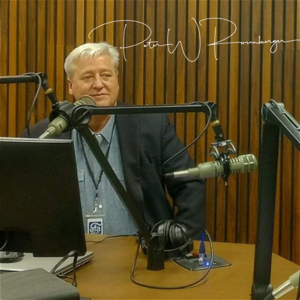
This is the Truth Network. Um Welcome to Hope for the Caregiver. This is Peter Rosenberger. Glad to be with you. Hopeforthecaregiver.com.
Hopeforthecaregiver.com. I'm joined today by a guest. Listen, I have known this guy's name. Since Well, I don't want to tell you since I was a kid, Dick, but I have to be pretty careful. It is.
But he is an award-winning songwriter, Ranger, musician, and his work. help shape contemporary Christian music for decades. And he and his wife Melody Mel. They've written more than 150 songs recorded by people like Sandy Paddy, Larnell Harris, including Grammy Award-winning. How excellent is thy name?
How excellent is thy name, oh Lord. I mean, I first heard that song. When did I hear that song, Dick? When did that come out? That was about 1983, 84, Larnell Harris.
Oh, my goodness. Mel is an amazing vocalist and the founding member of the Claim Group First Call. They worked on, I don't know how many recordings, how many tours. They've both spent a lifetime in the spotlight of Nashville's music industry and in also the faithfulness, the quiet faithfulness of. Local church ministry, and they bring a depth of experience that spans the stage, the studio, and the sanctuary.
But now, Dick. Has stepped into a role that intersects with this program. And he was not first call on this program. No. But here he is.
And he and his wife, Mel, have had a challenging situation. Start to the year, and we trust that this season of his life that involves some aggressive caregiving will not be a long one. And they seem to be navigating through this, but it certainly has been a journey.
So, Dick, welcome to the program. And thank you so much for being here today.
Well, it's my pleasure, Peter. It's good to be with you. You started talking about all that stuff, and I thought, gosh, who's he talking about? There's some old guy somewhere that's, you know. It was a lifetime ago, wasn't it?
Yeah, it's me. That's me. It's been quite a journey, you guys. And I've seen your name on so many credits of things. Just literally cut my teeth musically listening to you guys.
And so here we are. Life has a way of bringing people together into some unusual places, does it? It does. It really does. Tell us a little bit about you and Mel and what's going on with you guys.
Lead up to the point where you stepped into for this program, but you know, what's been going on the last couple of years and all of a sudden how it all turned?
Well, when the pandemic hit, we had been kind of minding our own business. You know, I've been playing for Steve Green and traveling with him for about 20 years now as pianist and sometimes musical director. Mel had been still doing, we'd still write and arrange and do all of that stuff. And she had taken a couple of job positions that were really pretty fun. She'd been on staff at, I think, Five or six different churches in the Nashville area leading the worship, sometimes teaching women's Bible studies and all that.
We took a at the be in the middle of the pandemic, kind of early 21, yeah. 2021, I think something like that. I had a couple of job offers from churches. To head their instrumental programs up, churches that had sizable orchestral and choir programs. And one of a dear friend of ours, Mike Harlan, was the worship pastor at a church in Jackson, Mississippi, and invited me to come down.
And we wound up going, you know what? Our kids are gone. Our kids are grown. They're raising kids of their own. And whatever else we do, whether it's writing, arranging, all that stuff, we can do it from anywhere.
So let's start seeing that our kids are gone. I mean, just because of the music part of our life, I just went, our kids are gone. Our kids are grown. It's time for us to leave this home.
Okay, see, right now you owe Chris Tomblin about a buck and a half. But I'm sorry. It just sounded.
Well, you live in the world of, you know, music. The gift of re-lyric. That's right. Weird Al was a big friend. I'm a big fan of Weird Al.
Okay. But so we moved to Jackson, Mississippi. We were there almost three years. Then came back to Nashville. I loved what I did down there with the orchestra.
I had a wonderful. Experience with just mentoring some young musicians and got to write a lot for that orchestra and arrange. And we came back to Nashville and we were here about Nashville about 18 months. And I had over the last 15 or so years, I had been doing a lot of work with a group in Bowling Green, Kentucky, a symphony, a regional symphony that is a fine regional symphony called Orchestra Kentucky. I'd written for them, I'd arranged for them, I've played with them on occasion.
Once in a while, I would conduct, you know, guests conduct a pops thing. And the guy who was kind of the head of that, who's my friend, longtime friend, just said, Hey, you know, if you wanted to be closer up here, we could keep you busy. And the traffic in Nashville has just started to. You know, as soon as I say those three words, the traffic in Nashville, there's almost everybody who's ever been there, that's why we left. Just roll their eyes because it's it's it's on its way to being Atlanta in Washington, D.C.
But uh, so we we've had known Bowling Green pretty well. Um, it's a community of you know 75,000, 80,000, but it's there's a there's a lot good happening in Bowling Green.
So we thought, well, let's try this. We put our house on the market day 11. We got a full price offer, found a beautiful place up in Bowling Green. And in 2025, we moved here about nine months ago. 2025, I conducted four concerts of the pop series that they do.
I, I had, they've also started a musical theater company, and I started about 18 months ago musical directoring those productions. They brought in a really nice lady from New York who has years of Broadway experience to shape this company and grow it into a regional musical theater company. And she has done great at that.
So We've done Greece, we've done Wizard of Oz, we just finished auditioning for Disney's Hunchback of Notre Dame, which will be this June. And I'm the guy in the pit waving my arms. And when the music stops, I turn around and take a bow.
So we've landed in Bowling Green, and the other thing was that this theater company, the arts company here, had commissioned us to create a new musical Christmas work based on the Charles Dickens Christmas Carol.
Now, there's oodles of those out there. You know, different ilks and different slants on the characters and all that. Our desire was to create a family-friendly musical and watch the transformation of Ebenezer Scrooge over his life, and we paint that picture musically.
So we did that.
So there was a busy 2025, and the Christmas thing, it's called the best gift, is ran actually before Thanksgiving. They did it before Thanksgiving last year, they'll do it in December this year. But they did it before Thanksgiving last year, and we got to Thanksgiving and looked back at what we had done during the year and kind of went, Ah, you know, we wrote a musical, we conducted stuff, we orchestrated and wrote. I mean, there's a pop show, one of the four pop shows that I conducted. I actually orchestrated the whole thing.
The Hits of Boston, if you remember, that grew from the 90s. And great rock and roll songs. I do indeed. Yeah, yes, exactly.
So, so that gets us to December of 2025, and we were. About to take a nice big exhale, and then we were those people whose life changed with a phone call.
So I so that's that kind of catches up to why we're here. Tell us about that phone call. Mel had been having a little abdominal pain, and it wasn't even pain. It was just a little discomfort. And our doctor here is our friend.
We've known her for years and years. And she just very wisely said, you know what, let's just get a scan, get a baseline. We'll look at it. And Mel kind of said, you know, I really thought that we would go in and she just said, you know, lay off the Mexican food for a while. You'll be fine.
But what happened was she had the scan about 8 o'clock in the morning. And about 1 o'clock in the afternoon, our doctor texted Mel and said, hey, I got a cancellation this afternoon. Why don't you come in? We'll look at your scan results.
So we're on our way down there, not thinking a thing about it. And Sherry, our doctor, walked into the room with her laptop and sat down and kind of exhaled real big. And she goes, I don't like what I see. She said this presents as ovarian cancer. Mm.
And you know, I mean, it's it's almost disbelief at that at that moment. You go, Okay, no, no, no, you've you've got somebody else's test. That that's not on the radar. But she popped open her laptop and we looked at the scan and she goes, I've kind of showed this to a couple of colleagues. And after you kind of step back and and exhale, you go, Oh, Okay, so what now?
And she said, Well, I've called some of my medical friends here in this field locally and said, This is a friend. And if I wanted to try and get into somebody who's that I would get really good care, where would I send them? And they said there's a gynecological oncologist in Nashville, they're practiced down there. And she said, We have started the ball rolling to get you a referral to them.
Well, we watched God's hand in all of this. In six days, we were sitting across the table from this doctor. His schedule is very booked, but they had a I don't know if they had a cancellation or what, but it happened very, very quickly. And he walked in, introduced himself, and after about three sentences, he just looked at us and said, Well, we know why we're here. And he said, I agree with your doctor's assessment of what the scan looks like.
That's what this presents as. He said, Here's what I'd like to propose as a treatment plan. And he began to lay out the next six months of our lives, which we are in the throes of right now. It's three chemotherapies in three-week intervals. It's a seven-hour drip, which is a long day and it's pretty brutal.
But Mel's a trooper. I mean, gosh, is she a trooper? She just sits there and there's things that are uncomfortable, but she just grits her teeth and smiles and prays and just says, Yep, okay, we got this. Let's go. We're going to run to the battle.
So those first three chemos were followed up by major surgery, which happened March the 4th. of this year. It was six and a half hours. They wound up having to take several things out, a part of her colon, also in addition to everything that was involved with the cancer. And the doctor When he came out after the surgery, and one of our daughters was there with me, who's an RN, and we were sitting in a private room, and the doc looked at us and he said, Well, That went amazing.
He said, to the naked eye and to what I can see and feel, there's no cancer left in her body.
Now we're going to continue our treatment plan, but we think we're headed the right direction.
So the rest of the treatment plan is three more chemo sessions. We've done one of those. We have two more. And by God's grace, coming on May the 13th, we will ring the bell as being our final chemo treatment. Um It knocks you down.
You just feel helpless. It's unrelenting. You know, when we got the diagnosis, we would lay down and Mel would fall asleep before I would. And I would look at her and I'd go, Sh she has cancer. And I would get up before her in the morning and I'd roll over and I'd look at her and I'd go, she still has cancer.
It's there every day. And it's, you know, there's some things. That have, I mean, we've obviously altered our lifestyle tremendously. You know, I always had kind of thought that the caregiver was somebody who sat on the edge of the bed and held someone's hand and, you know, and smiled and patted them on the head.
Well, yeah, but I mean, you know, but all of a sudden it's like there's, there's just things that, and Mel's, she's a strong woman. I mean, she's active. She's, she goes all the time and has got her fingers on all kinds of different things. And it's a Bible study here and it's a ladies group here and mentoring some young moms here and and writing this for this. And all, I mean, she's really active and busy.
And this just hit the brakes on everything. You know, I remember when in the hospital. The morning after the surgery, the doctor walked in and said, Well, it went great. Here's your goal for the day: I want you to sit up. I want someone to help you over into this recliner and I want you to sit there for five minutes.
And then I went to get back in the bed. And he walked down the room and Mel just looked at me and she says, I can't. I can't. I can't. I could try, but I just can't.
So she didn't. I got to stop you there.
Okay. How many times. Do you think when it comes to something serious? That you've ever heard your wife say, I can't. Oh my gosh, I can count them on one hand.
I mean, that's an extraordinary phrase for her to say because I, you know, I'm not, we haven't met. I've, like I said, I've followed your career and so many things, but nothing about her says, I can't. That's right. And now she's saying it. And I mean, and you're right, because everything else in her.
In her vocabulary, I can, let's do it. Yeah, march forward. And you know, the Lord gave us so many little encouragements from people, whether it's a card or a text or something, and they're all fraught with scripture verses. And we've taken, we take every one of those to heart. People who said they're praying for us, you know, and that bolsters you to be able to go, you know what?
Maybe I can.
Okay, we're going to take baby steps here. Let's take one, let's take one little step at a time. Back to the hospital. I mean, that first day after the surgery, she did not. She couldn't.
The next day we actually sat her up. And because of her abdominal muscles, it had to be, you know, kind of Moved around and all of that. She had no strength in her core.
So everything that happened, we had to help her here. I mean, I'd never seen my wife physically. unable to do anything. Um but we were we were helping her do everything. That moment when you're watching that 'Cause that is a surreal moment for a for a husband to watch.
What was going through your brain at that point, or your heart? How did you process what you were seeing? Um Uh By the way, you don't need to. I never want to play gotcha here. Yeah, yeah, yeah.
But you share what you're comfortable sharing. But one of the things that so many caregivers deal with, particularly caregiving husbands. Is they're not used to seeing this. You know, that's fair. I mean, that's very fair.
I think one of the gifts that God gave us through this whole thing is that we never doubted him. We never got to the point of saying, What if? You know, what if this cancer is out of control and we can't get it all? And what if? I mean, for whatever reason.
And I really think it was God's hand and him just saying, you know what, I really do have this. And we chose to believe it. But at the point in time when you see her that week, I mean, there was. I will never forget. When the nurse brought us back, she was in recovery and she was just coming out from the anesthesia.
I've never seen her that weak. She could barely open her eyes. And I got right down in her face and I said, Hey How are you looking at you? And she goes, I'm here. I'm alive.
I made it. I made it. And I don't know whether that was something deep-seated that she never, we never talked about, you know, what if. And then, and she probably repeated that phrase six or seven times, unknowing to her. I mean, she was in she was in such a stupor from the anesthesia.
But I said, Yes, babe, you did. You're here. You made it, you're strong. And he got it all, he took it all. Yeah.
I love it. You need to write that song. Oh, yeah. He took it all. Yeah.
You know, I'm going to, our pastor calls it the holy water of the eyes, but I can't tell that story without getting, you know, a little misty here. He took it all. He took it all. So But you know what? What do I think about?
I go, okay, you know, I've had four orthopedic surgeries and I kind of know what the rehab process looks like. This was way beyond orthopedic surgery. You know, this is not getting my ACL fixed. This is six hours under the anesthesia. can't sit up and can't take nourishment and You know, and that goes on for two or three days.
I was really grateful because the surgeon, our doc, came in every morning about seven o'clock. That we were in the hospital. We were there five days. And he came in five, you know, and about the third day. He looked up and he goes, Well, he said, You could probably go home today if you want to.
And we looked at each other and went, In your dreams, pal. That wasn't going to happen. I mean, there was still a long way to go. But what happened in those next 48 hours? Where all of a sudden she can, you know, with some help, she can stand up, she can walk across the room, she can walk down the hall maybe for a little bit.
One of our sweetest memories in the hospital is Ann Whitney, our daughter was there. In the lobby of this hospital, there's a piano sitting over in one corner. And I told the nurse, I said, I'd like to wheel her down there and play something for her.
So we wheeled her down there. She said, we sat her.
Sorry. In the wheelchair right next to the piano, and I sat there and we just played hymns for about 20 minutes. No, but I've done the same with Gracie at that same piano. Really? That same piano.
Oh, man. Except I just did it a few years prior. Yeah. Hopefully, they've tuned it since then, but I've done the same thing, and I'm very grateful that they had it there, that same piano, because I know exactly where it is. Yeah, yeah.
So, you know, God gives you little things like that that just you can take yourself out of your situation and focus on Him. There's she my Mel has a blog that she's blogged this whole journey, and it's it's really insightful. It's not a bunch of medical jargon, and although there's some of that in there, but it's it's really more what is God doing in our hearts. Her by herself, and then us together as a couple through this, where he just has stopped her cold. And here we and I'm and I'm sitting here, you know, for what, almost five weeks out of the surgery.
And she's back to work. She cooked lunch today. She's I mean, she needs a little rest in the afternoon. But the swiftness with which her strength has returned. is remarkable.
We saw the dock on Tuesday this past weekend and uh He just said, he said, man, you're doing great. He goes, are you getting some fresh air? And so she goes, well, yeah, my Apple Watch tells me I'm walking about 5,000 steps a day. He goes, go for it. You go.
So just. A, is she resilient? Yes, she is. Is she a strong-willed woman? Yes, she is.
Does she? Forever and will eternally lean on God Himself to strengthen her and heal her. Yes, she is. He has chosen to use medical science to fix what was in there. And the other thing that we found out early through the process is that she has a genetic mutation where there is a gene that.
Increases the chances of both breast cancer, ovarian cancer, pancreatic cancer. We had some genetic testing done on her. Blood at the suggestion of one of our daughters and just said, You know, let's just see what's in there. And sure enough, the panel came back that she tested positive.
Well, her grandmother died of breast cancer in her 40s before Mel was born. Her dad and all three of his brothers passed away from cancer. She's the oldest in her family. And so at least now we have the knowledge to be able to share with our family and anybody in our lineage. You know, okay, you guys just make sure you're getting yourself tested and you'll know what's coming.
You can prepare for it. But it's for the nurse who gave us that news to just get in, right, sit down right in front of Mel's face and hold her hands and say, honey, you couldn't do anything about this. This was in you when you were born. and the scripture of Psalm 139 came to us, we are fearfully and wonderfully made. He knows every cell of our being, and what he does, he does well.
There's a funny piece in Mel's blog about it. We'd gone to eat after we found that out, and she was sitting there. Chewing on a taco salad. And in her mind, she said, she's praying. She says, Lord, you could have taken this away.
I know. Long pause. Longer pause. And it was just at that point the Lord is saying, you know, Psalm 139, you know, I have created you in your mother's womb. You are fearfully and wonderfully made.
I know this full well. And at that point, you begin to learn and understand that, you know. He holds all things in the palm of his hand. He does all things well. There's not a cell out of place.
That he doesn't ordain and bring to be.
So it's. Oh gosh, it's going through the journey has We learned so much, and I think I told you this when we talked on the phone a couple weeks ago. I've learned more about the biblical concept of hope in these last four months than I probably ever knew. It's a nice word. It rhymes in a lot of songs.
I mean, you know. But that's never thought of it that way. But yes, I I that would be in your wheelhouse. Yeah. But You know, and a waiting room at an oncology practice is not a happy place to be.
And you can look around that room, and there may be eight or ten or twelve or whoever, however many people sitting in this waiting room at one time. They may be going in for an exam, they may be going in for chemo, they may be going in for radiation, they may be there post-surgically. But you can look around the room and you can tell the people who have hope and the people who don't. You can tell the people who are in Christ and the people who are not. Just by the look in their eye, the countenance on their face.
And nobody wants cancer to win. Nobody does. Do you know what I have discovered? over these decades. Is that Once you go through this, you can start to see it outside of the chemo room.
Mm-hmm. you can look at people and you could see it on their faces of who Yes. Resting in Christ. And it's straining me. And there's no, they're not even hooked up to chemo at that point.
There's something about going through. Painful things like this, and you spend enough time in it, and you will start to see it on other people. I want to pivot a little bit into some of your things here. You're a conductor, you're an orchestrator, you're an arranger, you are used to an awful lot of moving pieces going at one time. How has that skill set Transferred.
to what you're doing now. I bet somebody's ever asked you that question. No, yeah, I mean, that's a great question. That's a great question. You know, if if I'm on the podium and I'm in front of the orchestra, um I here's here's how it hasn't translated.
I'll start there. If I'm on the podium in front of the orchestra and I throw a big downbeat, I know that there's going to be 40 or 50 or 60 or 70 people who are going to do what that baton just told them to do. And I have complete control of that group of people at that moment. I don't have control of this. Not 1%.
For a conductor. Yeah. What is that feeling like? Helpless. It is helpless.
You learn to rely on things that are bigger than yourself. And for us, that's obviously the Lord to just say, okay, God, I can't do anything about this. And we pray. I mean, Mel and I have a quiet time every morning, and we go through, we're going through the Psalms right now. And the number of times that David in the Psalms just looks at the horizon and goes, I can't do this.
There's guys out there. There's a bazillion people over there who are trying to kill me. I'm hiding in a cave, and I'm afraid to go anywhere. I can't do this. And if you understand the biblical language of lament, there is then at some point in those Psalms.
But And the butt is followed by worship. It's followed by turning your gaze toward something bigger than yourself. towards something that you know you're safe. Psalm 13 is really the best one. It starts with four how-longs.
Love that psalm. And it closes with: I love the translation that says, I will sing to the Lord, for he has dealt bountifully with me. And that was written by David when he's on the run. You know, so you have two choices there. You can throw up your hands and get mad and stomp off and wonder why, or you can just choose.
I choose the creator of the universe. I want to lightning around you a little bit.
Okay. Um. Psalm 119, 71. It was good for me to be afflicted so that I might Learn your statutes. Ah.
Sometimes they're painful lessons. That's a hard place to get to. It's taken me a long time to understand the immensity of that statement, and I don't know that I'm even there yet. But I understand more of where that's going because it's in these places. Is when we cry out, like you said, you were so used to the concept of control in ways that most people will never have until you've stood on a podium with a baton in front of that kind of crowd.
It's very difficult to understand the kind of precision and control and discipline. And when all of that is stripped from you, And you are saying, okay, now where am I going with this? What am I going to do with this? Yeah, I mean, and that, I mean, that verse of the Psalm, I mean, the first, when you first said that verse, my first thought went to Job: Though he slay me, yet will I trust him. You've written an enormous amount of music.
You've worked on an enormous amount of music that people. Leaned on, they clung to during moments of, you'll never know. The amount of people who clung to music that you touched. over the years. I mean who who can count that but God?
Yeah, I it's now You're going through that. You're clinging in that same way. Not that you haven't clung before, but there's a difference when you're in a chemo room, isn't there? It is. It is.
What does that look like for you? You know, at side You know, when I sit there and I look at my wife, who's sitting there, has lost her hair, she's got a beanie on, she's got a. Afghan over her. She's got Chemicals, you know, radioactive chemicals that are being infused into a port that's embedded in just below her shoulder. And I'm watching this thing drip.
It's you just uh Your first option almost is despair until you just go, okay, snap out of this. You know, God uses medical science. He has gifted people to develop these treatments, to develop these therapies, to develop surgeries. I mean, what kind of training our surgeon had to go through to be able to apply his craft and his skill to. give my wife life.
You know, you do that. There is a dark side to it. You know, they call it the dark night of the soul. But. I don't know for I thought Peter, for some reason, we've just not dwelt there.
I I think we we can Yeah. Rightly say that it's not just for some reason, it's for the reason. Oh, yeah. And Mel kind of had this little developed this little mantra in the early stages of her diagnosis. She said, You know what?
We're going to do, we're going to run to this battle. We're going to fight for every cell. We're going to fight for life here. And she has. But she's done it.
with the strength that God has given her to do it in and that strength comes from his word. You know, gosh, we read a verse in Psalm 55, I think one day last week. And I'm not going to be able to quote it, but it's something to the effect of. The essence of it, we were really, really scared. And then the Lord showed us there's nothing to dread.
I think it's in Psalm 55. And it's a, you know, when David was in battles and he was afraid of stuff that he didn't know, and you and he was afraid of the unknown. Then, as he got toward the battle, he just woke up one day and kind of went, you know what? There's nothing to dread here because we have. We have the Lord on our side.
He is in our corner. He is guiding every step. He is working. And should he choose to not heal this cancer? I hope that our.
Countenance would be the same. I hope that our outlook would be the same. I think it would. But right now we're on a really good path toward healing and health and restoration. We've got about six weeks to go before we get another scan and hopefully a really good diagnosis there.
I was sitting in Sunday school. many, many, many years ago. And our pastor said, I can remember where I was sitting. What the light looked like in the room. You know, you have those flashbulb moments sometimes.
And he was praying. We were in our Sunday school class, and it was a particularly difficult time. And he said, Lord. May we suffer well. Mm.
Yeah, I've never heard anybody pray that before. Yeah. But that's become a part of my life now to understand that okay Lord, may we suffer well, not in the sense that we are because we're gluttons for this, but to know that He's already waiting for us in there. This did not catch God by surprise when Mel was diagnosed. Exactly.
It's like that nurse or the doctor said to her, Honey, this was in you from day one. It was. It was. There's a verse in 1 Peter. I think it's chapter five.
It says, And the God of all grace who has called you to his eternal glory in Christ, key phrase here. after you've suffered a little while. Comma. will himself Restore you and make you strong, firm, and steadfast. One translation says, will perfect you.
This is for a season.
Well, God and I have had a running conversation.
Well, actually, I've done most of the arguing. How'd that go? What is a little while, God? And as I often say, I've given my consulting services to the Lord many times. What do you mean a little while, Lord?
Can we have a little bit. Last year when we were going through a pretty rough patch, and I said, Lord. you have seen fit to uh place this journey of of Pretty significant medical challenges on us. We've done this for a good season, Lord. How about we try testing me in obscene wealth for a while?
We could just change it up, but just a little bit, you know. But that's not a that would not be a little change, I don't think. But he, he, you know, he's so far, he has not, you know, he ain't taken me up on it one time. Yeah, and uh, but that's I also want to ask you this. What hymns Songs, whatever, have become important to you in this, in those dark nights of the soul, as you mentioned there with Watchman Knee.
You know, the times when you were back and forth. You're spending long spending nights in the hospital is no picnic. Yeah. Yeah. You know, those kinds of moments when you're just looking at her and you see this.
incredibly strong woman brought down so low. Is there a hymn that comes to you as a song that you just kind of cling to? You could just barely get it out, but it's there. Great as I faithfulness for sure. morning by morning, new mercies I see.
All I have needed Your hand has provided.
Now, think about that. All I have needed, and I'm not the one who's determining what I need. But all I have needed Thy hand has provided, he is faithful. I mean, that one sings to us. Um, you know, you're talking about hymns, Psalm 103.
How about this laundry list? Bless the Lord, oh, my soul, and forget not all his benefits, who forgives your sins, heals your diseases, redeems your life from the pit. That's a laundry list. and satisfies your life with good things. Yeah, that covers a lot.
You know, and here's something, here's part of my lightning round, which I got off track on that.
Sorry about that. But I heard this quote the other day. I want to run it by you. Good theology always leads to a doxology. Hmm.
You ever heard that? I'm not. I like that. I heard that a while back, and I thought you could see it with Paul and Peter when they're writing these things, and particularly Paul, he just erupts into these long, run-on sentences that turn into this massive praise. Yeah.
Because the more you anchor yourself in the strong word of God, rightly. Understood, not just cherry-picking things, but really digging deep into the theology of scripture. What do we believe here? And it always leads to a doxology, praising of God. And that's what you said there in Greatest Unfaithfulness.
Lamentations where that came from. Jeremiah was like, I remember the wormwood and the gall. But this I recall to mind, and therefore I have hope. Great is thy faithfulness. Hope.
You have hope. Yeah. Yeah. And it's more than just rhyming with a word for a song, isn't it? Yeah.
By the way, I'm feeling that. Yeah, it is. Grand larceny just happened right here. Healing that phrase. You know, it's been, I think.
No, seven or eight years ago, I read a great book called Dark Clouds, Deep Mercy, that was a deep dive into the biblical language of lament. And with only one exception in the Psalms. as dark as life was for whoever was writing those laments. At the end, it always turned to worship. It always turned to worship.
Isn't that something? Isn't that something? What's next for you? Where are you going with this as far as your music and so forth? What's changing with you?
What is staying the same? What are you, where is this going with you? You know, I think we kind of hit pause, you know, for four or five months. Um, we finished, we finished the musical just before Thanksgiving, and we were ready for a little breather. Let's go get on a boat and look at water for a while.
And then, oh, what? Oops, by the way.
Okay, so you start this. I mean, I've continued to work. you know, through all of this process. In the early days of her diagnosis, especially, and you know, chemo goes in cycles with these three-week intervals. I mean, we'll have chemo on a Wednesday.
She'll feel really good on Thursday and Friday. And about Saturday, it's major fatigue. Sunday, major fatigue. Monday, start to come out of it. Tuesday, start a little bit better.
Today's Tuesday. She's feeling pretty good today from chemo last week. All that has to do with your white count and the way your body responds to the chemotherapy. And then she'll have about two weeks to get a little bit stronger. and then you get hit with the sledgehammer again.
Fortunately, She's not dealt with much nausea at all. And I know that is a major side effect that a lot of people deal with with chemotherapy. We have fortunately not dealt with that. We've dealt with some other things, but the fatigue is what really has just kind of stopped her in her tracks. And in those days, I've got a studio in my house and I work.
And even when she's down for the count, it's, you know, I can work for an hour, check on her, work for 30 minutes, check on her, get her whatever she needs, make sure we get meals prepared, you know, have lunch and dinner. And we take things lighter in the evenings. Just earlier today, we were as she was waking, kind of waking up from a rest time. I said, you know, May 13th is her last chemo. And then it'll take It'll take a couple of weeks for her to get where her strength is kind of coming back and she's kind of get on her feet without having to face another one.
I'll be in the middle of a musical and when we finish that musical on like the 28th or 9th of June, And I said, you know what, on June 28th or 29th, with I'm done with that. Here's what we're going to do. We're going to go see our kids. We're going to go out to dinner. We're going to go to a movie.
We're going to do something that we have not been able to do for six months. And you need to take her to Waffle House. I mean, yeah. We don't even have a Waffle House out in Montana. Lord Jesus, come quickly.
I would love to go to Waffle House right now.
So take her to Waffle House and get her the grand. I mean, the all-star, not the Grand Slam, that's Dennis. We don't want to go to Dennis.
Okay, well, now, you know, there's the all-star.
Well, I will just tell you this: you know, she's not a fan of eggs, and there's a lot of eggs at Waffle House. Yes, there are, but she can move around it, but she can get scattered, smothered, covered, chunked, and diced hash. Yeah, yeah.
Well, she found a scripture about that, though. And you're not, I have no doubt. And you're not ready for this, but Job 6:6, and 7 says, Or is there flavor in the white of an egg? I refuse to touch it. Such food makes me ill.
Well, bless her heart. Do you know how hard it is to live with somebody that knows that much scripture?
Well, at least about eggs. But yeah, go out there. Don't get Mexican food because that's how this whole thing kind of. Yeah, that's right.
Well, she's a Texan. I mean, I think that's a lost cause.
Well, indeed, it is. I heard another quote, and I'm going to run this by you too. And you're coming out of a season, but I did, I like this, what I heard from this.
Sometimes. A sigh is also a prayer. Mm. A sigh is also a prayer. Have you sighed a lot through this?
Yeah. You know, a lot of deep breaths.
Okay, we're going to go do this now.
Okay, okay, yeah. And or, you know, whatever the activity is, whether it's medical or whether we're just Trying to get her Ready for bed or whatever. But, but yeah, I can see that. I can see that. There are two verses that drive me.
For everything I do with this program, with books, everything that I do. Two verses. One of them is: comfort one another with the same comfort you yourself have received from the God of all comfort. The first thing I had to ask was Well, what comforts me? Because God hasn't seen fit to take this away from me and Gracie.
So, what comforts me? What am I comforted by? And that's when I go back to the Heidelberg Catechism when it says, What is your only comfort in life and death? That I belong body and soul to my Lord Jesus Christ. And how does that comfort me?
I had to camp there for a long time, and I still do. I mean, I have gospel amnesia. I remember one time a guy said this. He said, I was talking about sermons. He was a pastor, and I said, Well, you know, every sermon needs to reflect the gospel.
He said, Well, I'm pretty comfortable knowing the gospel. And I said, Well, I'm not. Yeah, I gotta hear it every day. That's right. Preach the gospel to yourself every single day, all day long.
And I have gospel amnesia. And so I had to spend some time there. But what does comfort me? With all this. And the other one is, and this one I offered to you, and maybe it resonates with you.
Maybe, I don't know, but it does with me. Maybe because it was to Peter, it was to Simon. But he said, Simon. Satan has asked for permission to sift you. But I have prayed for you.
And when you come through this. Strengthen your brethren. And I take that one very seriously for me, maybe because it's my name, Peter, but I'm comforted by several things in there, and I offer this to you, Dick. That Nothing happens to us outside of his hand. Satan didn't have to ask for permission with Judas.
That's right. Jesus didn't say that. He just told Judas, go do what you're going to do. But he said it to Peter. He said, he asked for permission to sift you.
So that means he doesn't get. carte blanche to us. Satan does it. That's right. But Jesus said, but I have prayed for you.
Mm. And To know that we have a high priest, a savior who's praying for us. While you and Mel were in there, when she came out of surgery, she said, I'm alive, I'm here. Your savior's praying for you. That's right.
During that moment, praying for you when you look over her and your heart, you don't even have the words. And when you do this, he has them. And the Spirit is groaning things that we can't even understand. That's right. This is what's going on all around you at all times.
And when you come through this, Strengthen your brethren. And I think that's the driving force with me because I am only sharing, here's what I've learned in this. And if you, at this moment, I mean, you guys are still got things ahead of you and so forth. If you had to plant your flag, and this is the last question I'll get you, and I mean, you've been very good to give me your time here. You had to plant your flag on what you are holding on to learning that's tangible, concrete, that maybe in ways that you've never even thought of before.
What is that? Yeah. Um I may give you three things here. One. that God is in control and I am not.
Yeah. that we hold things as rich as life, loosely in our hands. And if he wants to do something with us, he has full permission. He has full jurisdiction. He can take us where he wants to take us.
He promised never to leave us or forsake us. When this first happened and we first were diagnosed, I found about four or five. uh guy friends of mine who had wives who had faced similar diagnoses. And I took him to lunch or bought him a cup of coffee or something and said, okay, you tell me. what I don't need to miss.
I'm going through this. Tell me what I don't need to. And they were great. But one of the guys said, and this was my friend who his wife was diagnosed with aggressive breast cancer at 36. They had three small children.
And he said the thing that gave him the best perspective, and I loved when he said this. He said, his wife looked up at him and said, well, It just seems that God sees fit to think that we can handle this. And we can't handle it on our own, but he thinks we're ready. for something like this. And that stopped me in my tracks because I thought, how at 36 years old with three little kids at home and not knowing if he was going to be a single dad inside six months.
But that's where their trust went. man that spoke loudly to me to go, okay. I trust the Lord with my wife's health. He Knows every cell of her being. He spoke and light came.
He can handle this. And we put our trust in him. I think we've learned. I think we've learned to appreciate things that are around us and people that are around us. I mean, the body of Christ from our local church here, which we've not been members of for very long.
I mean, it's meals, it's, and there's one lady who bakes.
Sourdough bread about every three days, and we get a loaf about once a week. It's like, holy cow, this is, you know. One lady in her Bible study heard that. ovarian cancer patients post-surgery do well to Maybe sleep in a recliner for a few nights before getting and sleeping in bed.
So she bought us a recliner. You know, there's this box on our back porch. I said, and she called and said, Yeah, it's a recliner. My son and I will be over tonight and put it together for you. I mean, it's watching the body of Christ work.
And I told our pastor a couple weeks ago, there's going to come a time when we're going to be. The givers and not the takers. We've been takers for six months now because we worship from home, except on rare occasion when we get there. We can shoot notes of encouragement. But we are receiving way more than we're giving.
Yeah. I don't know, we just learned to maybe walk a step slower. Mm-hmm. Kind of look around with a little bit more intensity to see who those people are that might need.
Something from an experience that we've had. I don't know. I think we'll be a year from now, we'll still be processing what was everything that God wanted to teach us in this season of life. And I think it'll be remarkable. Indeed, it will.
And I look forward to hearing that. And I want you to know how much I appreciate you just coming on, just sharing your heart, just having a. The insights and the conversation you've had of what you and Mel been through. I want you to know also, just from me. A listener standpoint, I have enjoyed a lifetime of what you two have done.
It is, and I look forward to what's next. Because this kind of stuff Usually has a way of coming out in God reaches into some very painful things and pulls out something extraordinary. And I look forward to seeing what happens musically with you two and other things and books and all kinds of things. And I will tell this to Mel. You can tell a list from me.
Look, I know about the eggs. I'm really hung up on this, but life may hand you egg whites, but Waffle House teaches us something. And tell this to Mel. She just scramble what you got, add a little salt. Waffle House has been redeeming eggs for a long time.
And I just don't want her. Call it sanctified, put a little cheese on it, and let's go forth and serve the Lord.
So you just tell that to Mel, okay?
So those of us who can't get to Waffle House quickly now because of where we live, don't abuse that privilege. I will share that as verbatim as I can remember it. And I can only imagine what her response might be. Bless her heart. Thank you.
Thank you so much for the time on this. Dick, I am very grateful, and you guys are continuing in our prayers as well. And I look forward to seeing what God has done. And I look forward to seeing you with a baton in your hand. I hope I get to do that at some point when I'm back that way.
It would be just a real treat and a real pleasure. Blessings on both of you. And thank you for taking the time to call today. Peter, it's my pleasure. And God bless you and your journey too.
I've read your story, and I can't imagine, but And then you're handling great. You're in it now. It's all good. We're all just beggars showing other beggars where the bread is. That's right.
And we know where the bread is. We know where the bread is. And that's why we have to remind ourselves with it. But I thank you, and I look forward to the next report.
Okay. I hope you've enjoyed my interview with Christian Music icon Dick Tunney and gained as much enjoyment from this as I have for more than four decades. I've been living this life as a family caregiver, not visiting it. Not studying it. living it.
And everything we do here on this program and through my books and everything else is to Help people stay steady in the middle of things that don't always get better. In fact, most of the time it doesn't.
Now if that matters to you and if this program has helped you think a little clearer, A little easier and Maybe feel a little less alone. Consider supporting this ministry. You can go to hopeforthearegiver.com. At the top of the page, there's a donate button that goes to Standing With Hope, which is the ministry behind all of this. We have a prosthetic limb outreach for Gracie's fellow amputees, caregiver outreach for my fellow caregivers.
That's simple for the wounded and those who care. for them. If you don't know what to say, don't care, Gary. Don't worry about it. I do.
Send them this program, send them this podcast, send them a book. Put it in their hands, okay? HopefortheCaregiver.com. What we offer is to help caregivers stay strong and healthy as they take care of someone who is not in healthy caregivers. Make better caregivers.
This is Peter Rosberg. We'll see you next time. Gracie, when you envisioned doing a prosthetic limb outreach, did you ever think? that inmates would help you do that. Not in a million years.
What does it mean? I would have ever thought about that. When you go to the facility run by Core Civic and you see the faces of these inmates that are working on prosthetic limbs that you have helped collect from all over the country that you put out the plea for. And they're disassembling. You see all these legs, like what you have, your own prosthetic legs.
And arms, too. And arms. When you see all this, what does that do to you? Makes me cry. Because I see the smiles on their faces and I know...
I know what it is to be locked someplace where you can't get out without somebody else allowing you to get out. Of course, being in the hospital so much and so long. When I go in there, then I always get the same thing every time. These men are so glad that they get to be doing, as one man said, something good finally with my hands. Did you know before you became an amputee that?
Parts of prosthetic limbs could be recycled? No, I had no idea. I thought we were still in the 1800s and 1700s. I mean, you know, I thought of peg leg, I thought of wooden legs. I never thought of.
Titanium and carbon legs and flex feet and C legs and all that. I never thought about that. I had no idea.
Now that you've had an experience with it, what do you think of the faith-based programs that Core Civic offers? I think they're just absolutely... Awesome. And I think every Prison out there should have faith-based programs like this because. The Return rate.
Of the men that are involved in this particular faith-based program. and the other ones like it, but I know about this one. Is just an amazingly low rate compared to those who don't have them. And I think that that says so much. But that's so much.
about Just that doesn't have anything to do with me. It just has something to do with God using somebody broken. to help other broken people be whole. If people want to donate a used prosthetic limb, whether from a loved one who passed away, Yeah. You know, somebody who outgrew them, you've donated some of your own.
What's the best place for them to do? How do they do that? Where do they find it? Please go to stanningwithhope.com/slash recycle, and that's all it takes. It'll give you all the information on there.
What's that website again? StanningwithHope.com/slash.com Slash recycle. Excuse me. Take my hand. Lean on me.
We will stay.