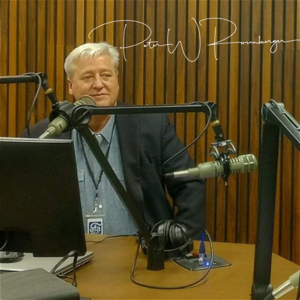
Um I'm Peter Rosenberger and after 40 years as a caregiver for my wife Gracie through a medical nightmare that has soared to 98 operations, both legs amputated, treatment by more than 100 doctors in 13 different hospitals and you can't imagine the medical bills.
Well I've learned some things and I've learned every one of them the hard way. And in my new book, A Caregiver's Companion, it's a journal from that journey. It's filled with hard-won wisdom, practical help, and yes, an ample dose of humor. Because let's face it, if we don't laugh, we're going to blow a gasket. And I've learned that I am no good to my wife if I'm fat, broke, and miserable.
How does that help her? Healthy caregivers make better caregivers, and that's what this book is about: pointing my fellow caregivers to safety, to learn to live calmer, healthier, and dare I say it, even more joyful as a caregiver. It's one truth I've learned, punctuated by either a verse from scripture or a stanza from a hymn, and a space for you to share your own thoughts. While this is my journal from a 40-year journey, you can journal along with me in this book. It's called A Caregiver's Companion, available August 20th from Fidelis Publishing, wherever books are sold.
Learn more at peterrosenberger.com. Welcome to Hope for the Caregiver. This is Peter Rosenberger, and I am so very glad to be with you today. Peter Rosenberger.com. PeterRosenberger.com.
We're continuing on in a series that I like to call Difficult Things That Caregivers Wrestle With and They Don't Want to Talk About It Too Much. That's a long title, but. It's a descriptive title of what we as caregivers go through. And today I brought in a ringer. and that is my longtime friend Nancy Comish and Nancy and her husband Craig and Gracie and I go way back.
Nancy actually goes really way back with Gracie. They were roommates in college before Gracie's car rick. And she's been on the program over the years, a time or two, and then she's also serves on our board of directors at Standing With Hope. And she and Craig are just Great folks, but Nancy has a journey. That I felt like would really connect today with what we want to talk about, and that's our health.
A lot of us as caregivers are just not healthy. There's nothing more heartbreaking to see somebody in a wheelchair who is very, very sickly. being pushed by somebody who is morbidly obese. or themselves very, very cyclic. And I thought, you know, that is just a recipe for disaster.
And it's not to body shame anybody or to say, you know, look at you, you're this, this, and this. That's not the point of this. A lot of times, we as caregivers, the biggest weight we carry is around our heart. We got to learn how to deal with that, and then we can deal with the weight around our waist. But Nancy has her own journey of stepping into a much healthier lifestyle.
So I thought, yeah, let's see what she has to say about it today. Because, again, these are issues that we as caregivers face. We deal with it, but we're not real comfortable in talking about it and we feel guilty and all that. That's got to stop today, okay? We're going to just have a conversation, just caregiver to caregiver.
Nancy's also been a caregiver.
So, Nancy, welcome to the program. I'm glad to have you with us. Thank you for letting me make you do this. Thank you. Coming up.
No pressure. No pressure at all. You certainly have had your journey as a caregiver and in your family, and you can delve into that however much you want to. I've known you a long time, and I didn't realize that this was plaguing your mind. But then all of a sudden, one day it's just the switch flipped, and you just started on this amazing health kick for you.
And so I thought I'd like to unpack that a little bit and see what happened. What was the catalyst? Where was that? Where was your headspace in this? And why did you do it?
Because if you don't have a why, you know, you're going to try this and try that, and you'll just give up after a couple of days or a couple of weeks. But there's a why, and you obviously had a why.
So. Unpack that a little bit. Tell us a little bit. How did you get to this point? The beginning was when my father-in-law began to get sick.
and start to show some uh aging effects uh And When we saw that begin, it was back in the early 2000s. And then as you know, I had a second child. We have bookend children. One, we had it, my age was 30, and the other one was almost 40. And suddenly I went from caregiving my children and helping with my aunts and uncles to suddenly being thrown into my father-in-law having what we call mini strokes.
And um you know, they'd always been very active. And my mother-in-law was always a very proactive person. She was my guru at the time, if ever I had one. And she did everything she could do to manage him. And then just needed extra help.
And so I began about 2005. and I started going down for visits to help her. Did you start breathing heavy while you were trying to do all these tasks? You'd realize something's wrong? Yes.
So I suddenly got very healthy right after my second child was born because I realized having a child at 40 was very much a shock to my system. Um and I realized if I don't get into a place where I am healthy, my child, I won't be able to get in the floor, play with them, throw football. Both my kids are boys. And I was very active with my first child. And he was moving on into sports for him.
Levels that I he didn't need mommy standing beside and holding his hand, and so. When I started realizing um I'm really slower. My reaction times are slower. My weight was. Rising.
And so suddenly I said, Okay, I'm going to get healthy. And so I lost a bunch of weight and I went on a particular diet that's high on high in. protein and lost a whole bunch of weight. Then my father-in-law had a stroke. And my Two hours, three days a week at the gym were not an option because I was.
rushing down to my mother-in-law's side to help her.
So suddenly I thought Oh, I'll do that later.
Well, later became next week, then it became next month, then it became next. Not at all.
So I recognize that when my weight came back on with a fury even more. And as you Grow older. You know, things don't work. quite like they used to. Uh especially for women.
That's what they tell me. You and I are the same age. I'm actually a little bit older than you, but we're close enough to the same age that, yes, the things just not all it says in the brochure, is it? No, they don't put that in the advertising. It's barely in that tiny, tiny little print at the bottom of the uh At the bottom of the page, the wisdom and the gray hair part I got.
Actually, I left gray and went straight to Arctic blonde. But you, um, but no, you're right. It'd be things you start slowing down. And I can't imagine being 40 with a toddler. And I, I, I do remember laughing at you and Craig about that.
Oh, and loudly. Multiple times. And loudly. Yes.
Yes.
Most of our friends were looking at grandchildren. We were looking at diapers and bottles. And I quote, I believe I quote you saying, What were you thinking? The obvious answer was, we need another child. And suddenly, thrown into that, Um But Not long after that.
You know, of course I was with uh carrying for my parents in smaller role. mostly caring for my aunts and uncles, and then suddenly thrown into my father-in-law needs um And this may be a little graphic, but if you're a caregiver, you get it. My father in law was struggling. passing about movement. My mother-in-law, that I think was her pinnacle of no.
Because she really did not know what to do.
So when that became a regular Uh sorry that using that pun, a regular experience, I was called into play. And so I would have to. How did you draw that straw? Yeah.
Well, I had always wanted to be a vet, right? I had never. Gracie's being at Gracie's bedside after her wreck cured me of any chance that I would ever go into medical.
Well, it did that for me too, but here I am. Yep, here you are. You were, you were, I think, not a not necessarily as much a volunteer as I was, but this volunteer only had a period of time. You were inscripted for life.
So, well, I volunteered. and how fortunate we all are. Because, my goodness, what a ministry you have if no one else, Peter, your ministry has affected my life tremendously.
Well, you're very gracious on it. It's been, you know, you guys have been there with us through this, through thick and thin, and. When you get into acute caregiving, like you did with your father-in-law, you it does change you, doesn't it? It does. Yeah, it does.
It is very much a Moment. that your entire mental faculties have to be in play. You have to Put down your fight or flight. You have to be there in the fight because they have no way out. Except for you.
And so that was the deciding moment for me. And I thought to myself, if my dog, which frankly, that's how I learned how to do this process that I needed to help my father-in-law with, and he was a beagle and he would eat anything. like rocks.
So I had to take care of the dog. And when that happened, I learned, you know, I talked to a vet. He said what to do. I did what he said. Voila.
Did your father-in-law ever know that you basically learned this on a Beagle? I didn't share that with him at the time. That was not in my... prerequisites for caring for What did you call your fucking ball? I called him.
Alan?
Okay, so you just say basically, Alan, don't worry, I've done this before. Yes.
That's all you said. Yes.
And when you look up into the eyes of a helpless human being who is losing their capability of. expressing themselves. It is very interesting because you see the same expression. in the eyes. a valuable person.
Yeah.
And his eyes were not much different from Duke's or Beagle. Um it was a It was a desperate plea. coming from His eyes. And if you're a caregiver. you come to that moment where you realize There is no other choice.
You you just roll up your sleeves and do it. Roll up your sleeves and do it. It's heartache. It's demoralizing. It's humiliating.
Mm-hmm. For all of you. But it is the most In ministry. It's heartbreaking. It's heartbreaking to the body.
It's heartbreaking and sacred all at the same time, isn't it? Exactly.
Well, now that was the start. Of you with your father-in-law, but then that is that morphed into quite a few more people in your family.
So you were raising a toddler at this point. You were all suddenly, you were. Conscripted into helping your father-in-law. And then one by one, other family members started appearing on the scene. And it seems like Nancy just kept getting pushed further and further back.
Is that a fair statement? Yes, I kept saying yes to everyone else. And I kept saying just a minute to myself. And the back burner became It became the counter and then it became the refrigerator. Let's just keep you preserved for a little while longer, and then I'll take care of you.
And unfortunately, this began. with my father-in-law, I actually had to deal with my Aunt my uncle Um my uncle Was the first kind of foray into suddenly being thrown into responsibility because my parents had never done this to this degree. 'Cause they'd always been there with family. And managing it from a distance is different than managing it in the same household.
Sometimes more difficult and sometimes easier, but nonetheless, it is all-encompassing. You wake up in the middle of the night thinking, oh shoot, I forgot to tell the doctor this. I forgot to remind the caregiver that pill doesn't go then. It goes later. We've changed it to a half-pill.
We've deleted it altogether. We've added something. And you got to go to the all of those things come into your mind in the middle of the night. I was a homeschooler, so I would rush down. At the drop of a hat.
and care for him. Also, while there, My husband's aunt lived there. my mother-in-law's sister, and she was now incommunicado, could not but she slept all day and would wake up at night, so she'd come in and disturb the one time that I had to rest. in the middle of the night.
So my rest was completely broken. Then out of pocket. Off routine. Eating, sleeping. exercising, all of those things just went out the window.
Then my mother in law and my father. After my father in law passed. Had a stroke? within a week of each other. And there was one month that I didn't I didn't even Cross the border of my state, my home state that I was living in, with my family.
I didn't see my family for a month. Because there was Dependent. Everything was on fire.
Okay. And as all of this progression of their decline. Hit. I My own health started declining as well because it was no longer a focus. Because I chose not to focus on it.
And you still had a toddler. Yeah, I still had a four-year-old. When all of this really got bad, and then my father-in-law passed in 2012. Ah! And we Then moved jobs.
We moved to um Arkansas from Texas and Uh closer to my parents, closer to my in-laws. And Then it became My mother-in-law was caring for her sister. Uh in her home. And Then my as I said, my father. had a stroke.
Yeah.
I jumped in the car. Within an hour, I jumped in the car and drove all the way to. My hometown, Nashville, Tennessee. to his hospital. rim.
And he said You have to do this. You have to do everything now. No pressure. Yeah.
And What my father, as a clinician, he was an OBGYN. had not done was back wh before right before I got pregnant with her uh second child. Um I suddenly was thrown into caring for my mother's emotional well-being because she had. A basically a a mental breakdown. I know you're trying to be very delicate there.
I am trying very hard. There were some challenges. Yeah, there were some challenges. And suddenly, I was the only one that could do anything, and I had to be the bad guy. There was a paralysis of decision-making.
Yes.
If I remember correctly. Yes.
My father struggled. He was very afraid that if he made the decision that their marriage would not survive. Both my sisters in the medical field were incapable of making the hard decision. My husband looked at me sitting in my father's office. Anne said It's your time.
It's your time. And I knew it was. Um But it was the hardest decision in the moment I've ever made in my life. It hit me almost as hard as it hit me when I lost. Uh a pregnancy.
I knew that my life was not going to be. Again the same.
So, when I made that decision, for context, you were making this. in a place of deficit. You were not at your best. No. And so you were forced into a decision place that just, and so the stress on you was eating you alive.
In every way. And I think from what you told me during this time that your hair was even falling out. Uh yes. My hair was falling out, my nails were basically non-existent. They were literally peeling off which of course that you know, if your nails are struggling.
That's one of the last points. of uh nutritional Um Need a deficit. And so I realized. And you were not rail thin. It's not, I mean, you were eating.
Oh, gosh, no. You were eating on the fly all the time. Right. Right. There was no balance.
Balance did not exist. It did not exist. The only thing I was balancing was the plates on top of the. Yeah, spinning plates. You've seen that in those videos.
So, what happened? What was there a catastrophe? Was there just Wake up one night and just look at the ceiling and say, This has got to stop, or what happened? I would love to say this all happened before my before all of my parents died. uh all of our parents passed, but it did not.
It was about six months after my father had passed, and I was thrown into the now being the bad guy for the family, making all the hard decisions about all of the things that my parents kept. They were, you know, the greatest generation, so they kept Pretty much everything. And I had to go through and make some hard decisions about things that were. Seemingly. Yeah.
extremely important to my other family members, my sisters. And uh One sister has some educational issues, and it was harder for her to understand why we were doing these things. Why were we making these decisions? Why were we getting rid of things? And we had to prepare the house because.
we had to sell it. I mean, we couldn't keep it as a mausoleum. uh you know, as a museum to their lives. We have to move on, which is one of the hardest things as a caregiver once everyone's died. What do I do now?
Now, now comes the real work. And by the way, I remember conversations about that because I was writing one of my books during that time. Yes, you were. And you kept saying there were moments when you were just kind of, I don't want to be, I don't want to impugn you or anything, but you were kind of having a meltdown. Oh, no, there was no kind of.
You're being very, very nice and very considerate in your description. And Gracie and I were worried about you. We knew the pressure was on you. I didn't quite know how to help. But you did.
Well, but you did. I did the best.
Well, here's here's what the listeners need to know. Great one. Um he doesn't just talk about this. He lives it. Peter lives this.
He's not just behind a microphone. He gets his boots on and he steps into the fray. not just with Gracie. He stepped in with me. He came to my parents' house, knocked on the door, and we stood on the front porch.
And You said some of the hardest words. I've ever heard you say. To me. And you said You can't live this way. And that Hmm.
was Shocking. Because I'd heard it from other people. But I was hearing it from not just My friend. but I was hearing it from the expert. who knew exactly what he was talking about.
And I burst into tears. And I remember you saying I'm sorry I had to be so blunt. But You know, God places certain people in your lives and sometimes their message is raw. and unyielding. But that was one of the better moments.
of my life because suddenly it was Wait. Hang on. He hasn't seen me physically you had not seen my face in months. Yeah, it'd been a while. And you would come over to see Gracie after a surgery or something.
But we were both getting pretty worried about you. And you were you were teetering. And um And I know that that was a very difficult one. And Craig's business, I mean, the work stuff was just everything was hitting you guys all at one time. All at one time.
And you were teetering a bit. And. And I'm and I'm I'm sorry that your parents kind of left all this hanging on you. But they did.
Well Here's the thing, we all make choices. Right, we all make choices. The choices that I will make for my children will be significantly different. We had two models. In our family.
One, what not to do, and one, this is the way. This is the way. You know?
Well, I don't remember being. Any type of catalyst for you on that. I just remember sharing with you the same truth that I live. I look in the mirror and say to myself, But what happened? I mean, 'cause uh uh something obviously did happen.
'Cause you've changed. pretty quickly and I don't know Did you tackle the weight? Did you tackle the anxiety? What did you tackle? Where did you go?
How did you make this work? It was the most important decision, literally, I've ever made for myself in my entire life. I was exhausted, my hair was falling out, I hurt everywhere. And of course, what do we do? We go to our doctor.
Doctor, I'm miserable. This is happening, this is happening, this is happening. And as these years went on. as doctors will do, they try to quote help. by providing I'm going to interrupt you and tell you I heard a great quote.
Said if you go to your doctor. And your doctor prescribes before grilling you about your lifestyle. Then your doctor is a dealer, not a healer. You are precisely right. You have hit it squarely on the head.
My friend. I speak From the Depth of knowledge of someone who has lived in the home of a medical professional that adored. caring. for his patients. That was his ministry.
And I assumed that all other doctors, all other health care providers, We're the same. Not exactly a good assumption, would you say? No. No. I've had some I've had some real losers that got graceful dark paths.
Yeah, there were some of them that I'm not sure who was going to get them first, you or me. But you grew up saying to you know, you listened to a doctor. You had the same thing. When I first got married to Gracie, I thought doctors, you know, were next to God, and some of them reinforced that belief. Yes.
And therefore it took me a while to realize I could push back. Mm-hmm. And you pushed back. I push back really hard. like I've never in my life.
Because everybody around me Peter is of the medical profession. Most of our friends are in the medical profession. Craig ran a hospital. He ran systems. Yeah.
And so and as he was incredibly busy during this period of his life, I just put my pulled my bootstraps on and, you know, and went going, you know, in the face of the fire. And so I added prescription after prescription after prescription. Doctors did not confer with each other. I took My list of medicines, folks, if you don't do that. you're endangering your health.
and well being.
Okay. Um and I speak From experience, unfortunately, three times. This last time? You know, they say three times is a charm. Technical.
It was very definitely The awakening that I needed because. We had finished a very hard, hard week. Um And You may or may not know that as you add medications, other medications are added to counteract. Medications. And so I was on a group of medications, 15 different ones.
And I was not sleeping well. My stomach was a mess. My nerves were shot. My hair was falling out. All the things that we mentioned.
And We were going by the drugstore to pick up yet another set of prescriptions. My husband Craig said, Hey, you rest, sit in the cool, because it was. August. And I'll go grab them.
Well, what Everyone needs to understand is this man ran hospitals, so he sat in on all of the meetings. And unfortunately for me, this man has a mind like an elephant, he does not forget anything, and what he reads, he remembers.
Well He used to be over the pharmacy of his hospitals and He came out with this bag in his hand. And he shook it at me and he said, We're going to talk about this when I when we get home. And I thought, well, okay.
So we got back into the house. He took my hand and dragged me down to the very end of my parents' House to the bedroom to the biggest open space that was, which was the bed, and he ripped open the bag. Pulled open all of the pages that used to come with medications. They now come online. and grabbed a Sharpie.
and circled the contraindications. on each page. of each Medicine. Yeah.
And he said Read those. and I started reading. He said no, no, no, no read them out loud.
So I read them out loud, and every single one of em said the same thing. If combined with these two, the other is the same. other prescriptions, these other Medications. Three of the four were in my bag. Patients are likely to have Stroke?
heart attack. possible death.
Now As someone who trusted physicians, trusted pharmacists. and had three close calls. This was the final straw. And I looked up at my husband and I said, Well, then. This is scary.
And he said, How long have you been taking these Mets? And I said, I'm not going to answer that. And he said, Yes, you are. Tell on. And I said I've been taking him every night for four years.
Four years. I've been taking things to quote help me. That could have ended me.
Now, patient beware. Everybody should beware. Everybody should be in full understanding. of how adding any chemical to their body. can be dangerous.
without knowledge. There was a friend of mine who a surgeon and when he was in med school, he said he had a doctor said, If you you show me a medication without a side effect and I'll show you a medication with no effect. Yes, precisely. Everything you you're it's all risk mitigation. Perhaps it's not a problem.
On edge because of Gracie, because of all the medications she's had to put in her body. And even though Gracie has proven that she is. Tougher than anybody I know. It's still, you know, and it's, we have to be very careful.
Now, she's got, Gracie has a great primary care doctor, and we work on that's one of the reasons we moved to Montana. A lot of people don't know this, but we moved out here because She was the humidity and the heat of Nashville was so hard on her joints. And she can't take. Even aspirin. She can't take any type of anti-inflammatories because of her blood issues.
She developed, she had so many transfusions, she developed a clotting disorder.
So she has to be on warfarin, which is, you know. poison just in in smaller doses so we came out here to Hopefully, mitigate some of that without any medication, which is this dry, cool air. I mean, that's how that's to the level of decision-making we had to get. But you're sitting there with Craig, and he's got this stuff scattered on the bed saying, okay. We're going to have a conversation about that.
Let me ask you a question. Is this again uncomfortable? And you don't have to answer this. You can hang up anything you want to do. We've known each other a long time.
Were you embarrassed? I was mortified. I literally, the words coming out of my mouth. hearing my voice. speak these words that were in black and white.
And he happened to use a red marker. I'm also a teacher, so that that brings even more Shocking. Revelation. When you look at something that is there in in front of you that literally tells you that the last four years, any time, Every single night. that you took them.
Could have been the last of you.
Now my doctor was not standing there handing me The Madison. Again. What I said. Patient beware. Everyone has to be in control of what goes into their body.
And this is where I failed myself.
Now, I went into a complete. Meltdown Accusing myself of all the things. Oh, how stupid, how. Careless how you know, I know better than this. On that subject, you've worked with a lot of different folks over the years now, now that you've been doing this and helping folks.
Have you found that that kind of shame and accusation is pretty common? It is one of the very first things I address. It's one of the very first things I address with Any caregiver. That's the first thing I say: scolding yourself. Condemning yourself.
The best medicine for yourself is first. Yeah, I don't I don't think we fully appreciate just how brutal shame is To us as human beings, what it does to our souls, and that's what the beauty of the gospel is: is that we can hear the reality of what Christ says as opposed to what we're saying to ourselves. You know, Satan's Satan's only got one job: he is the accuser of the brethren, he's a slanderer. That is his job. That is the only thing that he does.
That's what the name means: he is the accuser of the brother. He is constantly. Doing this kind of thing, but that's that's not what Christ says, and it's not that it's not that our decisions don't matter and they don't have consequences, but that's not what He says, and you hear this. Great invitation from Christ. Come unto me, all ye who are heavy laden and weary, and I will give you rest.
And I got to tell you, I understand heavy, laden, and weary. Gracie and I really understand that. And we can look at you during that time, and you were heavy, laden, and weary. You know, Peter, when you stood on my front steps of my childhood home, every day was brutal. because I was making decisions of throwing away my childhood.
That's basically what my family was saying. Oh, you should keep that.
Well, I can't keep everything. Where? Where am I going to keep this? Yeah.
I and I'm I'm also not the library of Congress. I can't you know, I can't keep every single Memory. Uh and some memories you don't want to keep. Right?
Some childhood memories are are not the fondest. and some of those things were easy to throw away. But some of them Some of the things that we dealt with while dealing with my parents' decline and their eventual death, and my father-in-law, and my mother-in-law. It was basically a look at Okay, what now? What now?
They're gone. Do their degrees that are on, you know, that pretty wood. you know. Diploma On the wall? Do they really matter anymore?
Should I keep that? special pan that my mother used to pop popcorn. That's old and tattered. The handles half broken. Do I keep that?
bread box that my mother-in-law loved. You know, it the things were less of a concern. As time went on, Then The realization That with each thing. Came a burden of emotion. And a burden of memory?
and another decision. And at that point. What do you do with me on all those I swallowed it. Just like a good southern steel magnolia does, my friend. I swallowed it.
And the night that my husband looked at me and said, Uh Do you know what this is doing to your body? I said to him, I do. I sat there in that bed and I came out of the bedroom. The guys were watching television at the other end of the house, and I walked in very defiantly and very. positively and said Thus it ends.
And they both looked at me and They said, What do you mean? I said I will never Put Another Medication in My Mouth. again until I know That This is essential. to my health.
Now, am I against meds? Absolutely not. Absolutely not. I can't imagine what I would do without. Right.
Antibiotic. If if I have an infection. you know, there is an antibiotic. That can prevent Very serious consequences, or whatever. You talk about what Gracie has to have.
I had to take heparin to keep. Um from losing My last baby because I had lost so many babies through the years. and I gave myself shots of heparin. Every morning and every night. Those Essentials.
are exactly called essentials for a reason. But I looked at both my husband and my son, and I said, I will not take any more medicine. And of course, my husband sat up in his chair and said, Wait, wait, wait, wait, wait, wait. You can't make a decision like that. And I said, too late.
Well, there was a qualifier, unless that you were, I understood the context. The context was you were going to go cult turkey off of this stuff on some things, but you were also going to do a deep dive and understand why you were taking it and what was what was the risk ratio, what was the benefit. You're not just blindly taking it. And I think this is where we've gotten to in our society. I mean, and I'm listening to this.
This is a conversation now in the media every day about the stuff we're ingesting as human beings into our bodies. And you, I do remember, though, that the next conversation I had with you, I don't remember weeks, months after that, but I remember the next one. You had really flipped, and you were you've never exactly been mild-mannered. I was going to say, flipped is a really good word. No, you've just kind of, you know, if you, yes, you had made it a lot of similar traits in that respect.
I had made it right. You're going to go 100 miles an hour on anything you tackle. Yes.
But, but you did, and you started getting healthier. and you started making much different decisions in your life. Um and I've noticed um I haven't seen you in Well, we do our video conferences with um Standing With Hope, but as far as I can tell, you're not bald, so you hadn't lost all your hair. No. And your hair started growing back.
Yes, it did. And things changed. That was. See, you're I don't want to say how old you are. But I'm 61, baby.
Okay, that's all right. You're 60. This, you were in your 40s when all this stuff was going down. Here you are at sixty one in a much different place. Peter, if I were to tell you.
Yes.
If I were to tell you the difference. Uh-huh. to put it in a a An age frame. Yeah.
At f at forty two years old, I felt sixty five. at almost 61 years old next next month. at almost sixty one, I feel forty. Yeah.
Blood pressure? Very, very low. Not not danger low, but low. M yeah, cholesterol? Um cholesterol is an a a fluctuating Thing, and I will tell you that normative cholesterol used to be in the 400s, just 20 years ago.
So I have my own opinion about certain things, but I eat very healthy. Uh foods, I eat organic meats as often as possible. I do not add salt to my foods that I cook. I there are so many changes that I've made to what I don't do in comparative to what I do. Was it?
This is where I'm talking directly to listeners now. Was it a Cost-prohibitive decision you made? Or was it? It was the reverse. You didn't start throwing money at something, like some kind of program or something.
No, I bought no program. You just bought into that this has got to change.
Something's got to change with me. Yes, and here's here's a cautionary tale. Um You know, we all have health plans. We're required by law to have a health plan for good reason. None of us ever know what tomorrow brings.
But I began seeking out different health care providers. Yeah.
Um I chose to Interview And I mean literally interview. My doctors, because I fired every last doctor I had except for one. I started interviewing. I l and I learned this through my life. Um With different health crises, I had.
I had three different health crises, and one of them was when I lost my last. Baby. and then was pregnant with my youngest. And I Again, Craig to the rescue. walked out of the pharmacy with the bag in his hand.
looked at it. looked at it again. turned around, walked back into the pharmacy, came back out fifteen minutes later. And I thought, what in the world? He put it he handed it to me and I said, What happened?
He said, I picked up the wrong Prescription. Acid mold. I only had one. And he said, I know. What he didn't tell me until a while later was that The the wrong prescription had been called in.
It had been called in for a hundred and eighty five pound man. Not a hundred and eighty pound Pregnant. Woman. It was twice the dose. of what I was supposed to be taking.
And these shots were what was keeping me pregnant because I had a. Clotting problem. And that's why I lost all of the babies before.
So if I had taken that and he had not looked. If I had picked up the prescription and just trusted implicitly. Yet again. I nor My youngest child, would be here. It was that Life altering.
So By the way, that's something people might want to consider: that medical providers do make mistakes. I've noticed that. And I was doing an interview not too long ago with this. outfit and they asked me about perfectionism, people who are perfectionist As caregivers, and how are they dealing with that? And I said, I reject the term.
There is no such thing as a perfectionist. There's somebody who has a neurotic disorder that somehow thinks their self-worth is tied up in doing a task, but show me somebody that does something perfect. What? Is perfect. The only perfect I know was crucified.
And so everything else is working for excellence, and we're being meticulous, and we want to be diligent. But this perfectionism thing is a little bit of a misnomer. But I look at I have caught more mistakes On things. We were in the hospital in Aurora during this last stretch, and this one lady came in. I didn't know who she was.
I was sitting over there in the chair. Gracie's kind of halfway dozing, and she lifts up the, she was messing around with the covers of the bed. I didn't know who she was. She didn't introduce herself. She didn't tell me who she was.
She was wearing a uniform, but I didn't know who she was. And I said, Can I help you? And she said, I'm here with quality control. I want to make sure she's wearing the little yellow booties. I said, ma'am, she don't have any feet.
Yeah.
Okay. And the lady looked at me like The look on her face looks like a picture of this, because I thought. Why wouldn't did you Really, you know, and you know, so people that they are there, they get tunnel vision. Yes, precisely. I just I can't even imagine someone coming in and not seeing it.
If there was nothing below. She started fumbling with their blankets. And I was like, first off, I don't know who you are. You come in here and start. Fumbling in my blankets and stuff.
I'm like, really? You know, but I know that they get, like I said, they get locked into a task mentality. They get locked into this kind of thought process as well. Are they the only medical providers that does that? No.
Pharmacists do it. I've seen surgeons do it. I've seen one time there was an argument right outside of Gracie's room after her first amputation. And I won't mention the hospital name in Nashville, but it was after a first amputation, and the goal was they were going to. Um deadened her leg.
All the way from basically the hip down, or just below the hip down, just to deaden it.
So it erases what they call the pain print. Because the reason for her amputation was because she was in so much pain and it was broken. The leg was just demolished. And so they did an epidural. With her.
And they kept giving her more medication, and the anesthesiologist kept it, and nothing was happening. Gracie was in raw pain from this surgery. And he kept wanting to put more into the epidural space. Deaden this leg. And her surgeon stepped in and started arguing with her.
And they almost came to blows right outside of her room.
Well, it turns out that Gracie had had a dorsal column stimulator in that epidural space that was trying to mitigate her pain before the amputation. They took it out when they amputated her leg, and there was a lot of scar tissue that was blocking that medication from getting in there. And he kept wanting to give her more, which was going to compromise her entire system. And we brought another guy in there who realized that we need to go a little bit higher and he did what they call a spinal intrathecal. And immediately she had pain relief.
The leg went numb and she was able to go to sleep. But this guy was just tunnel vision thinking this to the point where this surgeon and he almost came to blows. And I realized that that was another one of those glaring examples that these people are going to get it wrong. And I cannot lean on anybody to do this 100%. I mean, there's a point where you have to trust, but Ronald Reagan said it best, trust, but.
Verify. And in this last go-around, I was in the pre-op with her. With An attending plastic surgeon, an attending ortho-surgeon, and an ortho-resident, and a nurse. And I said, We're going to take a moment to stop. And we're going to go around the room and we're going to say, what are we doing here?
All of a sudden, they all deferred to me, and I said, and I asked each of them: what are we doing? Why are we doing it? We were able to make some steps and it got it done. In the Army, there's an old saying that the leader is sometimes the guy that remembers where the Jeep is parked. And it doesn't have to be a general.
It can be a buck private. And in your case, you had to remember, well, Craig helped you. But you had to remember where the Jeep was parked. And you started going down a path of discovery, of investigatory of everything that would you, everything was on the table that you were ingesting into your body. Everything.
And you didn't necessarily have to quit everything, but you had to, everything had to be on the table. We're going to look at why we are doing this.
Now Are you taking blood pressure medicine now?
Well I take no prescriptions, not one. Remember that 100 mile an hour thing a little while ago? And your blood pressure is fine, though. And my blood pressure is fine. I did have a doctor that looked at me during.
2020, 2021, and said, You're pre-diabetic. And I said, Wow, that's an interesting term. You know, I hear that a lot. You're pre-diabetic.
Well, I'm also pre-death.
Well, that's like being pre-pregnant. I'm pre-death, too. Yeah.
Yeah, exactly. And here's why I really admonish Caregivers. Um I really admonish Moms, especially, because we're always going to be caregivers. A mom is always a mom. Even if she's lost her children.
which I have known people that have lost all of their children. Um You're always a caregiver. Because you're always in that mode of I I must Well, let's be frank.
Some moms, not all of them.
Well, some of them.
Some moms have to be. We're going to leave that conversation alone right there. We yeah, we are because uh we we do know the difference. Um, my mother-in-law was. The ultimate caregiver.
My mother. Was not. We're going to walk away from that conversation. Nobody, yes. Yes, that's a whole nother story.
But I did discover that to be a caregiver and Peter Your audience needs to understand. that if any one ever had the soundest advice, in regards to How to manage your path as a caregiver. This is where you need to be every week. You need to read his books because There is one of his books that are that's worn and tattered. Um And if you're not familiar.
It's um A minute for caregivers. Of course, there is hope for the caregiver. That was a book that came out. at the perfect time. time.
And of course, seven land mines. But I have dog eared. In all the books, the things that were so incredibly. Important. Important essential.
I keep using the word essential.
Well, but I think that's the word. And you're very gracious to me. I mean, you guys, you know, you're very gracious. But the bottom line is, I've been doing this for so long that I found out what works and what doesn't work. More than most, because I've had an opportunity to bang my head up against the wall a lot longer than most people.
And so, what is essential? And what's essential is that healthy caregivers make better caregivers. And there's bedrock under that. There's nothing else. There's no seller to that.
I don't have to go any deeper. The healthier I am, the better it is for Gracie. Yeah.
Well, anybody that's ever had a child. knows that if the mother is not caring for her health, Say Infants. quite possibly in life. Threatening. Circumstances because sometimes that mother is the only one that can provide the nutrition that that baby absolutely must have.
Well, and this applies also emotionally. It also applies. Physically and professionally, and so forth. And all of those things were at play with you. And then you started clawing your way back.
You lost. A good bit of weight. Yeah.
And over how over in the entire thing, I went from 183 pounds. to I now weigh 144. That's pretty impressive.
Well It has changed Did you have high blood pressure then when you were 185? Yeah, they were talking about blood pressure. They were talking about blood sugar regulation. They were talking about. Yeah.
Yes, is the idea. They were looking at all your symptoms, but they were not addressing the root cause, which was a lifestyle that was counterproductive to everything you wanted to accomplish, and they were throwing medication at you. Right. In their and bless, understand, I never want, I never ever will insult. a medical professional's Intention because if you go into the medical profession, your intention is pure, you want to help heal.
However, Our medical Environment. has become Treatment. Not healing. Treatment, not healing. And that's where you get into a dangerous place.
There are laws that keep doctors from owning things. And Hospitals from owning things because. the influence of one on the other. becomes cloudy. To decision making.
Yeah, it does get pretty murky in there and You know, and also you also look at the profession. Surgeons cut. That's what they're trained to do. But cutting is not always the best thing. I mean, and I'm saying that if somebody's been married to somebody who's had 98 surgeons.
Uh but Gracie's journey is so extreme Let me give you an example. And this is a painful thing to say, but this is the reality. Both of her legs should have been amputated the day of the wreck. In today's medical world, they would have been. But because they wanted to save those legs and prohibit a 17-year-old girl from waking up and finding her legs gone, and prosthetics were not what they are today.
They rebuilt her. To the best of their abilities. But it condemned her to a life of orthopedic trauma. Part of the reason we're here today and we had this five-month stretch and all that kind of stuff, it's all related to decisions that were made when she was unconscious. And you were there when she was unconscious, and she was a mess.
I understand that. And I'm not blaming anybody, I'm just simply saying that was the conventional wisdom of the time, and that's why we're here. And so we're having to kind of. deal with this. as best as we can.
But we don't need to continue on that path. And so you have to. Constantly take stock, and that's one of the things I've learned as a caregiver: is to look at surgeons and to look at these positions and say, Let's talk about the why.
Okay, let's have this conversation right now. Before we go any further, and you don't have to be confrontational, you don't have to be what you have to be confrontational, but you don't have to be combative. Yes.
And so, what is the goal here? And I remember one time we had this physical therapist. Gracie had broken her leg, she fell, she broke her femur. Yes.
And she was bent over. But then there was one physical therapist who just was absolutely adamant. We got to rehabilitate her with this broken leg. This put a hamper into our desire to get her back fixed so that she was straighter, and then fix her legs so that she could stand up straight. And I looked at that physical therapist, and we had a, there was a group of meetings, there were six professionals all looking at me, and they were all going after me a little bit.
And and I looked at him and I said, rehab her to what? She cannot stand up straight. This cannot be fixed outside of a surgical intervention, and we're going to have to. Redefine what we're trying to accomplish here. But all he could think about was: we got to rehab her leg because it was broken.
We have to rehab her leg. Rehab it to what? We just got to let her convalesce, let it heal so we can fix her back, so she can get straight, so then she can walk with new prosthetics, and she could then be able to work these muscles better. But right now, she's been over double, she can't even do these things. And he could not get it out of his mind.
of where his track was. And this is something we as caregivers have to understand that this is what we're going into. You're going to somebody who has tunnel vision they cannot see sometimes outside of their scope. And it's up to us as caregivers to keep the bigger picture. But Not only for Gracie, but I have to keep it for myself.
And this is what happened with you, if you don't mind me saying, because you were. You were able to look at all these other people in your life, but in the meantime, you were falling apart. And finally, there was an intervention. Craig did an intervention, and things changed. And you're not falling apart anymore.
No. Well, anybody can't do that.
Well, yeah, any more than I I normally do. Yeah, no, no, no, he's not allowed. He's not allowed. But no, but you're not falling apart. You're healthy.
You have a better outlook on life. You cook differently. You think differently. You function differently. I am stunned by how many videos you put out on your page.
No makeup, nothing. I mean, you're just sad naturality. I am what I am. There's not many 60-year-old women that'll do that. And everything is all glam and everything else.
And you're like, no, this is who I am. And I'm aging the way I want to age, and I'm feeling the way I want to feel, and I'm good. And I thought, wow, that takes a lot of courage. That takes a lot of confidence. I don't know that you had that kind of confidence 20 years ago.
Oh, no, I did not. You've got it now. Absolutely. I have it because of one primary factor. I quit.
Letting The audience decide. What the actor needed to return. Unpack that a little bit. I No longer. Or or you could put it in in your you're incredibly musically talented.
and skilled and and gifted. There we go. We had to keep your keyboard making appearance here today. But truly, I quit letting the audience determine what. the singer need it.
to convey. And I find that. Phrased it one way to me. He said, There's a point where you stop waking up every day and asking everyone else, what kind of day am I going to have? Exactly.
Exactly.
And you just reach that point. You wake up and you say, I'm not asking anybody else what kind of day I'm going to have. I'm going to do what is necessary for me to be healthy.
Well, and you know, I alluded to your two books and how they played into part of my recovery. And you know Jesus. Your chapter in a minute for caregivers. Um It's healthiness is in your hands. Um you know someone else's needs.
do not determine How you care for yourself. to be passionate and caring for someone. loving them sacrificing. But At what expense? You said in this, it says.
Uh Since no one else Particularly a sick or medicated individual can lead the efforts towards one's own healthiness. The responsibility of a healthy lifestyle remains solely, not partially. Not when uh available or convenient.
Solely In the caregiver's hands, and that is chapter 11 in that book. It you know, you said that First the first wealth. is health. And that's Emerson. And we have a connection to Emerson, I will tell you that, a family connection, in fact.
And that is more poignant than you can possibly imagine because. It is truly If you if you put your health in jeopardy. You can't buy it back. No, you can't. You can't earn it.
You've watched Gracie now for a long time. And I'm not just talking about physical health, it's my emotional health. I mean, I've and I've I've had to deal with that reality too. I became a very unhealthy person. Emotionally, physically, professionally, financially, spiritually, everything.
I mean, on every level. Again, I've had ample time to fail at this on every level. And I realized the damage that was being done to her. when I'm not healthy. And You can be really good at a lot of caregiving tasks.
But you are You are under Damocles' sword. If you think for one moment that your decisions of unhealthy decisions are not having an effect in putting everybody at risk. I mean, you know, it's just, and it's not just what you eat, it's a whole lifestyle. I mean, I don't get up on the roof and clean gutters. No.
There's a reason for that, by the way. There's a very big reason for that.
So, you know, and and I and I think about that when I go out on horseback. Mm-hmm. You know, uh and I have to be very careful. These are these are little things. You know, you said we cannot cure, change, or control the terrible things that our loved ones endure.
The only thing we can control is our thoughts, our words, and our deeds. You know, I can't fix it, but the loss of me is something I can't. Oh wow. Because if I lose my identity, In the details of what I'm doing for someone else. And this is.
Chapter 18.
Well, as I said, dog eared. Although It's understandable when we lose. sight or begin to lose sight. Of who we are, and it becomes We. We do this, we do that.
Check it out. Then we Mm. Place ourselves in that victimized victimhood. Role of this has happened to them, so it's happened to me. And you have to keep that independence in yourself.
And I forgot that when I was caring for my. uh my loved ones i continued to say we. When we were in the hospital or we were in And I didn't even realize I said it. When we were in the hospital, no, they were in the hospital. I was visiting them.
or I was staying with them. You know, when we were in hospice, no, I was not in hospice, my loved one was in hospice. I was standing aside, holding the hand. Wiping the brow. Um holding holding the cup with the straw.
You know, and I thought it was very interesting that you would use one of my very favorite writers. And I know this is very unusual for a woman to say this, but. Louis Lemour is one of my favorite favorite actors of all time. Love Louie. Honestly, we have all of his books.
And you had this, and I had to laugh. I just immediately had to laugh when I saw this. And again, this is a half-fold, not even a dog-eared. I have folded it, which means it's really important. He said, It is not enough to do.
One must become. I wish to be wiser and stronger and better. I held out my hands. This thing that is me. is incomplete.
It is only the Mm-hmm. The raw material. with which I have to work. I want to make it better. Then I received it.
I could not put it any more succinctly. Than that.
Well, that's why he was Louis Lamour. That's exactly right. You know, the goal is not to feel better. The goal is to be better. Yes.
And that's on every level. You are getting ready to take Gracie and I to a new place here. You're going to help with some stuff with her. and her healing, some collagen and things that you're helping advise us on. And I'm very Much looking forward to seeing what can happen with this with her because she deserves a break.
We've had a, it's just been a brutal journey for her. And so we're gonna do that and we're gonna keep you, we're gonna have you back on and we're gonna keep giving progress updates. But I wanted to. The difficult subject is not just our health. Our health, you know, we always want to be healthy, and nobody wants to be 400 pounds and that kind of thing.
I understand that. But how did we get here? And a lot of that is the shame and the fear, guilt. All of those things that we We just use our bodies as a dumping ground for this stuff. And Nancy, I don't mean to in any way go too personal with this, but you did this.
You did this to yourself. You know, I did it to myself, decision by decision. You allowed your body to become a dumping ground for a lot of other people's. Stuff and you said, No more. I'm not doing this.
This is why I wanted to have you on because it took so much courage. For you to draw that line, and you had the support of Craig to be right there with you and hold your hand as you do it. But it was a very scary place. Your kids were supportive, but mostly you were able to look in the mirror and say, I'm done being a dumping ground for this. And it's changed your life.
And in the process, it's given you such passion to go out into other people who, and you recognize it so quickly in other people because if you spot it, you got it. And you've dealt with this. You have fought this enemy and now you're teaching other people how to fight it as well. And it's very amazing. And I wanted to just have this conversation with you so that my listeners could say, okay, here's somebody who really gets this.
And if you want to talk to Nancy, if you want to reach out to her. It's very easy to do. It's nancycomish.com. NancyComish.com. N-A-N-C-Y-C-O-M-I-S-H.
Comish. Reach out and see what she can offer to you today to start you on this process. In her, you have somebody who has really wrestled with some of these things, very painful things. I'm bringing you somebody who I've known for literally four decades. and who's known Gracie for even longer.
And so I wanted to introduce her to you today. Nancy, I want you to know how much I appreciate you coming. You've opened up your heart. You've shared things probably you have never shared before. In this environment.
No. But this audience is filled with caregivers who understand exactly. What you're talking about. And they get this. It's very meaningful.
So, last words, and then we'll cut it. I'll let you go here. The last thing I would say would be probably the most important. You can never. allow someone else to make Decisions that you will pay the price for.
in your own life. you as a person may not have the medical knowledge. that you need, but you know your body. you know How you feel? And if When you walk into a health practitioner's place of business, And You tell them what's going on with you, and they hand you a slip of paper.
Or they say We're sending this to your pharmacy. And they have not asked you a bevy of questions of What it what are you eating? How are you sleeping? When are you going to bed? Are you exercising?
What are you feeding yourself? What is your daily operating procedure when it comes to water nutrition? All of the things. Those are just the very basics. Of what makes us who we are.
you know, we have the raw material. but what we do to that raw material. How we add to that raw material or take away from that raw material is what is so dangerous. Or helpful. if you choose wisely.
and you are fortunate, then you live a long and healthy life. if you choose to not advocate for yourself. Then you have chosen A short road. to a likely disaster. And that's Where I started from the early time.
and now the second half of my life. I have chosen. Two. Take in hand. the decisions that I make on the daily.
How much I drink water? How much nutrition I take in, and what type of nutrition I take in. How do I support my body with movement? How do I support my body with rest, both physical and emotional?
So those are things that I talk to people when I coach. You know, literally, people send me emails all the time, and that's easy because it's just nancycomish at gmail.com. But I get emails. and they send me this list of things. that they're doing.
You can do all the things, but still be in an unhealthy place. Because if you're Doing it In that 100 mile an hour. Hair on fire. You're still not healthy. And you can put yourself in danger by doing too much.
Of the right thing, you didn't even get into stress and what it does with cortisol and everything else. We'll have to do that in another show. You're absolutely right. And reach out to her. I mean, reach out to her.
Because one of the things that I wanted you, there are people listening right now. who are eaten up with guilt and with shame and with fear.
Okay? And and probably an ample amount of resentment. Reach out to someone who understands, who fought back, clawed her way back. And she is living better at 60 than she was at 40. In fact, I would suggest to you.
That and I've known her this long, she's probably living a whole lot better at 60 than she was at 25. Yes.
Oh, oh my goodness, yes. My stress level is considerably lower. Ask her what the difference is. And how that can translate to your life as well. All right, and that's why this is called hope for the caregiver.
It's not a desire, it's not a, well, we hope a wish that we hope it's going to be okay. No, no, no, it's a conviction that we can live a calmer, healthier, and dare I say it, a more joyful life even while serving as a caregiver. NancyComish.com. Go out and take a look today. Nancy, thank you so much.
And we're going to have more of this conversation. Thank you, McGrant. It was an honor. You've been listening to Hope for the Caregiver. This is Peter Rosenberger, PeterRosenberger.com.
We'll see you next time. Gracie, when you envisioned doing a prosthetic limb outreach, did you ever think? The inmates would help you do that. Not in a million. Years.
What does he have ever thought about that? When you go to the facility run by Core Civic and you see the faces of these inmates that are working on prosthetic limbs that you have helped collect from all over the country that you put out the plea for. And they're disassembling. You see all these legs, like what you have, your own prosthetic legs. And arms, too.
And arms. When you see all this, what does that do to you? Makes me cry. because I see the smiles on their faces and I know I know what it is to be locked someplace where you can't get out without somebody else allowing you to get out. Of course, being in the hospital so much and so long.
When I go in there and I always get the same thing every time, that these men are so glad that they get to be doing, as one man said, something good finally with my hands. Did you know before you became an amputee that? Parts of prosthetic limbs could be recycled? No, I had no idea. I thought we were still in the 1800s and 1700s.
I mean, you know, I thought of peg leg, I thought of wooden legs. I never thought of. Titanium and carbon legs and flex feet and C legs and all that. I never thought about that. I had no idea.
Now that you've had an experience with it, what do you think of the faith-based programs that Core Civic offers? I think they're just absolutely Awesome. And I think every Prison out there should have faith-based programs like this because. Return rate. of the men that are involved in this particular faith-based program.
and other ones like it, but I know about this one. It's just an amazingly low rate compared to those who don't have them. And I think that that says so much. The testament. About just that doesn't have anything to do with me.
It just has something to do with God using somebody broken. to help other broken people be whole. If people want to donate a used prosthetic limb, whether from a loved one who passed away. or you know somebody who outgrew them you've donated some of your own What's the best place for them to do? How do they do that?
Where do they find it? Please go to stanningwithhope.com/slash recycle, and that's all it takes. It'll give you all the information on the what's that website again? StanningwithHope.com/slash. Slash recycle.
Thanks, Grace. Take my hand, lean on me, we will stay.