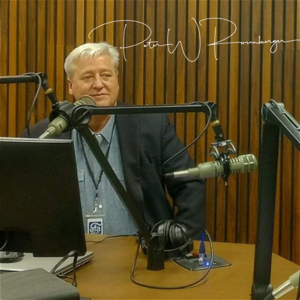
Welcome to Hope for the Caregiver. This is Peter Rosenberger, and this is the program for you as a family caregiver.
So very glad to be with you. There are more than 65 million Americans right now. who are serving as a caregiver. They're taking care of a chronically impaired loved one. And they're doing it without pay.
without training most of them. just out of sheer love and sometimes grit. How do you help these people? Why should you help these people? What does that look like to help these people?
What are the consequences if we don't help those people? All of those things and more is what we discuss on this program. and I'm bringing you four decades of experience to offer you a lifeline. To help you as a family caregiver live a calmer, healthier, and Dare I say it? a more joyful life.
In the midst of all of this. And again, four decades. This is not my opinion, this is my experience. My opinion is worthless. My experience, on the other hand, is highly valuable.
And I'm offering it to you because I understand the stakes, I understand the journey, I understand the heartache, but I also. have seen The faithfulness of God, the things of God, the provisions of God, and I do all of this from a biblical worldview. Why? Because I have witnessed personally what happens. happens When we lean upon him, in these things.
And I maintain that while our circumstances are all vastly different, I mean, my wife's had 98 surgeries, both of her legs amputated. Most people don't have that in their family. But the things that we deal with on a heart level, the things that we deal with on a core human level, Those things are common to all of us. And every one of those things is covered in Scripture. For example, fear, we're all living with fear, is the human condition.
As caregivers, we live with intense fear. guilt, obligation, resentment, frustration, all of those things They're common to everybody, but we live with it in a kind of a nuclear amped up version, and that's why this program exists. Because I have walked in this path. I still do it. I'm very much involved in acute caregiving right now.
In fact, more than I've ever done in my entire life. And that's saying something. And on this program and in my writings and everything else I do, I share what I've learned through it, what I'm learning through it. And every day it seems like there's something that I'm seeing. Oh, oh, I didn't even oh yeah, look at that.
In fact, I will tell you something that happened just last week. Before we get to that, though, a little programming note. I've got, we'll get into this in the program. I'm doing. Issues that we as caregivers Hmm.
deal with that we don't want to talk about doing that later on in the program. Also The caregiver keyboard is fired up, and we'll be going through another hymn today.
So, lots of different things I'm covering here that people. penetrate into the world of family caregivers. I speak fluent caregiver. And so thank you for being a part of the program. HopefortheCaregiver.com.
Hopeforthecaregiver.com if you want to learn more. All right, something happened just this last week. I've been watching this thing in Texas. And it truly is just It's indescribable. I mean, the tragedy of this, of a level like this, it's just overwhelming.
I was listening to news media. I just had the news on in the background, and I was. Doing what I do as a caregiver, folding laundry and cleaning and everything else. And I heard a newscaster asking a member of the clergy. And I don't remember who the pastor was.
Hey, what do you say to this? How do you tell people about a good, loving God when you see this? And the pastor kind of. Didn't fumble. But he went down a well-trodden path of we can't know, but here's what we can know about God, his love, and this.
And he went there, you know, we've all heard these things. I don't think it penetrated much into the heart of the newscaster. I think it was nice words. We've all heard them. We've been at funerals and we've all heard these things.
But did it really go down to the depth of where that cry comes from? And I would suggest you know it did not. It didn't sound like that. But then I heard something that did. My wife.
Yelled at the television.
Now Here's the context. She just got out of the hospital a month ago. For five months, she was in the hospital. 11 surgeries during this run. bringing it up a total of ninety eight.
She's pretty much bedridden right now. We still got three drain tubes in her, and we're hoping to get her up on her prosthetics this week and so she could start walking a little bit. But she's got a long way to go, and she's been dealing with this since Reagan's first term.
Okay, that that that's that's quite a haul. And without even batting an eye, there was no moment to reflect, there was nothing, she yelled at the television. And what she yelled was stunning. She quoted her friend Johnny Erickson Tata from her book When God Weeps, which I'd recommend you get in that book, by the way. It's a very good book.
And She quoted a line from that that she and that Johnny and Steve Estes wrote in that book that has become a cornerstone of Johnny's ministry. which is He allows what he hates to achieve what he loves. He allows what he hates. to achieve what he loves.
Now On its own it's a powerful statement. When you throw the story of Johnny into this. That's that line that came from her. You know, and she's here in this month, in July, it'll be the anniversary of her diving accident. Fifty-eight years she'll be in this wheelchair now.
dealing with quadriplegia. Then you have Gracie, Forty two years. Of dealing with non-stop pain in a broken body and 98 surgeries, both their legs gone. And both of them, even though Johnny wasn't here when she said it, Gracie is in absolute lockstep unison with this. And Gracie had the wherewithal to not mutter it, not do anything, but to plant a flag.
Emotionally and spiritually, and yell at the television. Nobody was in there but she had the television. I could just hear it because I was in over here in the kitchen, and I just heard her yell it out. And I thought That's astonishing. He allows What he hates to achieve what he loves.
And I would actually go one step further. He ordains. People say, well, God has a permissible will.
Well, if He permits it, then He ordains it, He made a choice. And the question is: do we don't have to like this? In fact, most of us don't if we're honest about it. But if you look through all of Scripture You're not going to see God reaching out to mankind and asking mankind to be consultants. It's the doctrine of divine concurrence is what I'm circling here.
which says that things happen because of our own sin, because of the sin of this world. but that God superintends all of this. for his own purposes, for his own glory. for the good of those who belong to him.
So I go back to Genesis fifty with Joseph. And he looked at his brother and said, You meant this for evil. He meant this for good. That's the doctrine of divine concurrence. They crucified Jesus.
What they meant for evil God meant for good. And I heard one theologian say he uses sin. sinlessly.
Now that's grown-up theology. It really is. There's no question about it. It is going to take us into some deep waters. But I'm saying this to you, one caregiver to another.
that we can look at the broken fallen, sinful, horrific things of this world. and know that he who began a good work in us is faithful to complete it to the day of Christ Jesus. Floods? Famines Earthquakes, wars, disease, trauma, car wrecks, diving accidents, Alzheimer's, none of those things. None of those things can separate us from Him.
And none of those things can thwart his purposes. And I gotta ask you. What I'm gonna ask you pretty much every program we do. Christian. What do you believe?
Do you believe those things? If not, Why not? If so? Why? Once we settle that issue, Did it equips us to go back into the throes of what we're doing as caregivers.
And that is hope. For the caregiver. This is Peter Rosenberger. We'll be right back. Welcome back to Hope for the Caregiver.
This is Peter Rosenberger. This is the program for you as a family caregiver. Glad to be with you. Thank you also, Rob Galbertha, the Not Ready for First Service Players. As always, we are continuing on.
With a series of things I've been doing. It's topics that caregivers struggle with, but they don't always want to talk about it. I felt like, let's weigh into this.
So, we're going to talk about these things. And the first week, we talked about. praying that God would go ahead and take your loved one who is suffering. That's something a lot of characteristics don't want to talk about, but it's something that needs to be said. Let's get it out and let's talk about this from a biblical worldview.
And you can go back and listen to my podcast and get the show. that way if you if you missed that episode. Then we talked about the Corrosiveness. of resentment. that eats away at so many caregivers.
Maybe that's going on with you right this moment. And we talked about that in last week's.
Well, today I'm gonna. Delve into something else. Let me ask you a question. Why do faith healers wear glasses? Think about it.
Why do faith healers wear glasses? The context, of course, again, is my journey as a caregiver. Gracie's had nearly one hundred surgeries. Both legs amputated. and this has been going on now for a very long time.
And I have found that stepping into some churches Can be a bit hazardous to your faith. Have you found this to be the case? where people will say things to you. that they ought not to say. And yet they feel free to do it.
And they feel free to opine about why You know, Gracie's in the same shape she's in, or whatever. We've had, if I told you all the things that people said, you'd just be aghast. But they've said it. And a lot of times it comes in the charismatic world. And the Pentecostal charismatic type world, where they have this somehow thought process that if you had enough faith.
That God would heal you. I've had people say these things sometimes with a sympathetic tone, sometimes they've been very sincere. But they've been sincerely wrong.
Sometimes they've been glib. But they're still wrong. Oh, yeah, well, you just need to trust Jesus. Oh, well, if you're not enough, you know, why would God do such a thing to you? These are all questions that we've had.
Uh and more. And it harkens back to the book of Job, which evidently many of these people haven't read. Because. God was pretty put out with Job's friends, for all the speculation they did, about Job's suffering. None of them got it right.
The only one who got even close to it was Elihu. I think that was his name. In fact, Job was told by God at the end, go make a sacrifice and intercede for those guys, lest God visit that stuff and worse on them.
Okay, so there's a lot of people who just truly have bad theology, and a lot of people don't bother to correct themselves by reading the whole counsel of God. And you say, well, that's just Old Testament.
Well, look at the New Testament. Jesus, these guys said, why was this man born blind? Did he sin? Did his mother and father sin? Jesus says, boys, you got it all wrong.
But that doesn't stop people from doing this. And this is not something. That just takes place on certain Christian networks from the seventies and eighties and so forth. This is going on now. I've turned on television now.
I was scrolling through some things, even while we were in the hospital, and I see a prominent Christian television show And they're closing their eyes and reaching their hands out to the camera and saying, Somebody's being healed right now of a headache or whatever. No way of verifying it, but somebody's being healed of. Pancreatic cancer or something. I mean, just crazy things of saying, but you have no way of saying, well, wait a minute. The who?
And, you know, and I think that if um Gracie experienced a miraculous healing. I think we'd all know about it, don't you? you know, I think it'd be fairly evident. But, you know, to that God is healing these people on on television while they're doing this. It just seems a bit odd.
But I happened to notice one time this was going on and the guy had glasses on. And I thought, well What's that all about? I mean He's got faith. For other people to be healed according to him, and he's saying he has some kind of healing ministry or whatever, and he's wearing glasses. And I thought, well Okay.
Explain this. And there's a lot of inconsistencies in this world of this naming and claimant, blabbit and grabbit crowd. And I am the first to tell you that the Lord God Almighty. can and will and does heal But I'm also going to tell you with equal fervor that God more often than not sees fit To not. provide what we call a miraculous healing in this life.
That's our journey. That's our experience. That's what I've seen. I've seen too many of these things, not just with me. And not just with Gracie, but...
Show me. The difference. And, you know, and I'm not. in any way wanting to throw a wet blanket on someone's faith. But I would ask you to look for the inconsistencies In the book of James.
We're told if anyone's sick. Let the elders of the church go and lay hands on them and pray for them, anoint them.
Well, why would God command us to do that as people of the church. If he wasn't going to do anything about it.
So I am firmly in the camp that we should pray for the sick, that we should minister to them, we should lay hands on them, we should anoint them with oil, all of the above. But I am also very, very sceptical and wary. Of these kinds of people that get out there on television and do these things and place your hand behind the television and feel the power kind of thing. I'm careful I try not to mock, but sometimes they just invite it. you know, by acting so over the top.
And I go back to a time when I went, I was in Bible college. And several of us went to an Ernest Angely Crusade.
Now, this is back in the 80s. And we were in Bible College, and we were not there at the Ernest Angely Crusade to, in any way, support Ernest Angeli. I would love to say we had altruistic motives. I would love to say that we were there nobly and as.
Well, we weren't. I was young and We were full of a lot of hubris, and we went there basically to deride. And there was no shortage of things to deride. I remember seeing this one guy. He stood in a line.
He was a kind of decrepit fellow, and he was older, and he had a walker, and he barely could do it. And he shuffled all the way up to the front of the line. He got to the front of the line, and Ernest told him, no, you're in the wrong line. This is not the miracle line. That's over there.
This is the line to give $100 for the new miracle Bible that we're going to give out. I kid you not. I was there. I saw it with my own eyes. And the guy shuffled off, tried to go to another line.
I never did find out what happened to him. But That's the kind of stuff That does so much damage to people. They're desperate, they're hurting. and instead of ministering to them in their hurt, and walking with them through this We want to heap more stuff on them. Oh, if you just do this, if you go to that l that line over there, if you do this, or if you you know, stretch your hand out, or donate this, or or get this new this, there are people still selling little vials of water.
You know, or things such as that. None of that stuff. Didn't we have enough of that before the Reformation when people were buying little Talismans and things to say, oh, this, we got some of Joseph's trousers that you can come and see this, and you pay some money and you touch this, or you do that. Come on. We're doing the same thing.
Is that? The God of the Bible? No, it's not. And there is a greater healing, there's a greater miracle that's going on. And sometimes the miracle is not about escape and getting set free of these things in this lifetime.
all of the people that came before us the great titans of the faith, all of them The Apostles, all of them, they're all dead. They all died.
Some of them died horrifically. but listen to what some of those Who died horrifically, wrote, James 1, 2 through 4, Count it all joy, my brothers, when you meet trials of various kinds, for you know that the testing of your faith produces steadfastness. And let steadfastness have its full effect, that you may be perfect and complete. lacking in nothing. Paul says not only that in Romans five three through five, but we rejoice in our sufferings, knowing that suffering produces endurance, and endurance produces character, and character produces hope.
And hope does not put us to shame, because God's love has been poured into our hearts through the Holy Spirit.
Now. I want to contrast all of that with the Scripture that Paul wrote in First Corinthians thirteen, twelve, For now we see through a glass darkly, but then face to face now I know in part, but then I shall know even as also I am known. And this is the promise. We just cannot see it. And I go back to what happened in the first block when I talked about Gracie yelling at the television.
When we look at these tragedies around us and we try to somehow. imprint our understanding on this. We can't. Nor are we called to. And we look to the greatest sign of all.
That's what miracles were. They were signs. They were signs to point to something, signs and wonders, to point to something. And yet, we are constantly, Jesus castigated the Pharisees. You're a wicked generation, you're always looking for a son.
And what greater sign is there to see? than the cross. We see through a glass darkly. Even faith healers they're all subject to the same confusion, except some of them are trying to make a buck telling you that they can see better. You know, they executed false prophets in the Old Testament if they were wrong once.
That was the the penalty. You you want me to repeat that? They executed him. That was the penalty for a false prophet.
Now if we held that same standard to today's quote unquote faith healers. What do you think? I'm not saying that we should go out and execute them, but I'm simply saying that's how serious God takes it.
Now they're going to have to answer for this, but we don't have to subject ourselves to that kind of nonsense. And we don't have to, as caregivers, Put ourselves under that kind of bondage that somehow this is up to us to convince God to do something. He's already doing something. The question is: are we going to see it? Are we going to trust Him in it, even when it is so bleak and it is so difficult?
To the point where we too, just like Gracie did in that last segment I talked about, just like she did when she yelled at the television. I'll tell you why he's doing it because he allows what he hates to achieve what he loves, and I'll trust him with it because I see the greatest sign of all, which is the cross. Are we willing to do this? Christian, what do you believe?
So the next time you see these guys, you know Why do faith healers wear glasses? I mean, it's a great question. I put this in my new book, A Caregiver's Companion. I put these quotes in there, and one of the quotes I have was: Faith healers don't volunteer at the hospital for the same reason psychics don't win the lottery.
Okay. Think about that. Let's be wary of these people. Let's give a wide berth and understand that God is actively involved in what's going on in your life right now.
Okay. This is Peter Rosenberger. This is Hope for the Caregiver. We've got more to come in our hymn for the week. We'll be right back.
Welcome back to Hope for the Caregiver. This is Peter Rosenberger. Very glad to be with you. HopefortheCaregiver.com. I hope for the caregiver.com.
We are continuing our series on 30 Hymns That Every Christian Ought to Know. And actually it's going to be more than 30. Just tell you that right now. I keep thinking of new ones, but I've broken down the first section. I'm just the Magnificence of God.
Remember the first one we went to? Let's go to the caregiver keyboard. That's the first one we did, holy, holy, holy, because. Why? Well, that's what they're actually singing in heaven right now.
Holy, holy, holy. Don't know if it's that tune, but. That would be Wouldn't be surprised if it was. And the second one was... Um Let's see.
Oh, wait, let's see. Second one says, oh, this was a. That was it was how great thou art, wasn't it?
Okay, and then. Last week was Let's see, that was a Brages are faithfulness.
Okay, so this week. We're going to do one of my all time.
Sorry, my chair squeaks a little bit, so if I make noise, sorry. One of my all-time favorite hymns. Of course, I love all of these. But this one is often done as the processional hymn or the call to worship him in many churches. This is praise to the Lord the Almighty.
And I I seem to remember growing up hearing it praise ye the Lord the Almighty, but I think they've changed it to praise. to the Lord the Almighty, the King of creation. O my soul, praise him, for he is thy health and salvation. And then you get to this big course here, all ye Mm. Here now to his temple.
Drone. Yeah. See, that's again that call to worship. Join me. In Cladda.
Get away. Perfection.
Now this is a very very Wonderful. I mean, I love this hymn. And when I'm playing it for a congregation, you know, I'm going to be.
Okay, I'm going to put a little bit more oomph to it. But again, remember, I'm not playing it in a sanctuary right now, I'm playing it for you. I'm playing it for me, and I often play it for Gracie. Who struggles with many things.
So, I want to play these songs in a way that's going to reflect. The text To me. as a caregiver in the midst of whatever we're dealing with.
Okay. Mm-hmm.
So I'm gonna bring this down a little bit. I was playing that in G.
Now I'm going to bring it down to D. Uh Now just check just bear with me. Breathe. These two. The Lord, the Almighty, King of creation, oh my soul.
Praise the He is not. Just a little easier for me to sing. It's down in the lower register. When they wrote hymns in the old days, you had the very high soprano line.
Well, a lot of We've lost a little bit. We don't sing a lot of four-part harmony anymore, which is, I think, a real tragedy. But we've also lost people having higher registers. It takes a little bit of training to sing. A soprano line.
You have to really work at it. You get breath support. A lot of people don't have. They sing in what they call the chest voice. For sopranos, many sopranos, you're singing what they call the head voice, which is kind of like a man's falsetto.
You know, you're up there higher and you can go up there and do different breathing support and all that kind of stuff as opposed to kind of a rock and roll song. You have praise to the Lord. And that's why you see people straighten their neck. But a true singer is going to be praised to the Lord, the Almighty, you know, do that.
So we don't do that.
So it's hard for people to sing in those upper registers. But that's why I play them down a little bit lower. But but listen this verse here on this this is the fourth verse There's one word that's coming up here. This is the only hymn that I found that contains this word Okay?
So we're going to go to it. Fourth verse. Praise to the Lord. Who doth prosper thy work and defend? Surely His goodness and mercy.
Here they leave. Uh Surely his goodness and mercy. You think that was. You know, happenstance? No.
I mean, the writer of this, Joseph Neander, who wrote this song, it actually was translated into English by a lady named Catherine Winkworth, but it's based on Psalm 103. But Joachim, I'm sorry, Joachim Neander wrote this. And the tune is actually called, I think, Neander in some places. And. But you get to this bridge, you know, the park that I was telling you about in the other key.
Yeah. And we would think that same thing here. Mm. I could play it that way, but I'm not going to, and I'll tell you why, because I love this text.
So we just got finished going, praise to the Lord. Who doth prosper thy work and definitive? Surely his goodness and mercy Your daily utter And the word is ponder anew. But watch what I do here. I'm going to take the, instead of going to the tonic, I'm going to go to a minor five.
Pawn Uh Doesn't that grab your attention now because I put those chords in it? I'm not putting the chords in it so you'll say, yay, listen to the chords, Peter. I want you to hear the text, but differently, because I don't want to be singing it like just we're processing in the church. Ponder anew. I want you to think about what we're saying here.
Ponder. This is the only hymn I've ever found with the word ponder in it. I have this sign on my office. In my office, it was a little post-it up for years. And then my friends at Logos Bookstore in Nashville, Kennedy City, they made this.
It says, Ponder anew what the Almighty will do. Because I want to think about what God will do in the midst of our circumstances.
So that's why I put these cords in there. Because I wanted to stop and reflect on this.
So it goes, Ponder. Was he yourself? Almighty will do. If with this love And I've taken this from being a processional hymn, a call to worship hymn. to being a different kind of call to worship.
for us to be called to worship no matter where we are. Slow it down. We're not in a hurry. We could have sing these songs in the midst of whatever, but ponder anew what the Almighty will do. That's what I love about this hymn.
Um If with us now. And then you just can't help but Go straight to another song because he has befriended us. That's why we can sing what? To carry everything to God in prayer, what peace we often forefill what needless pain we bear because we do not care everything to God in prayer. Everything to go.
Then you can go right back to this part. Wonder anew what the almighty can do if with his love he be friend so these hymns man let me know. They just you They just bleed into one another. Remember what I said at the beginning of this thing: you cannot have good theology without a doxology. If your theology does not lead you to erupt in praise, Just like go back and look at the in when Peter and Paul were writing their epistles, they just in the middle of it they just started praising God And that's the whole point of this, is to give you the vocabulary.
People have written these things down, wrestled with the tunes, wrestled with the text, wrestled with the principle behind the text. And then you get to that last verse on praise to the Lord the Almighty, praise to the Lord. Oh man. All that is in me. Uh door.
All that hath life and breath come now with praises before And this is when the whole congregation just erupts. Let's see. Come in Sam Frost. From his people. And that's gladly for I, which is a short for gladly forever.
We adore him.
So the next time you're in the middle of something, whatever it is, well, you remember that line. Mm. Wonder What the old mindset is. Yeah. It will.
Do we hang on to that? If with his love Uh And he has befriended you. He hasn't abandoned you. And in the midst of the dark watches of the night as a caregiver, in the midst of the very difficult things we deal with as a caregiver, if you can come back to that phrase. ponder anew.
Stew on it, think on it, meditate on it. Cogitate on it. Hold that thought in your brain. Ponder. anew what the Almighty can do.
I'm telling you, y you will You'll be stunned. What happens to you may not happen anything due to your circumstances. They may not change. But you will. You cannot praise the living God.
And remain unchanged. In fact, Biblically speaking, we cannot praise God. Unless we are changed. But he has befriended us as this hymn says.
So ponder anew. what the Almighty will do. And when I do that, That is hope for this caregiver. We'll be right back. He will be strong to deliver me save.
And the joy of the Lord is my strength. The joy of the Lord. The joy of the Lord is my strength. Welcome back to Hope for the Caregiver. This is Peter Rosenberger.
Glad to be with you. That is Gracie with Russ Taff from her CD, Resilient. And the joy of the Lord. I love that. I love that arrangement that we did with that.
And it was just great for her to sing with Russ Taft. We're going to get her back singing soon. Have no fear. Listen, I didn't tell you the background story of our hymn. For the week, which was Praise to the Lord the Almighty, and the guy that wrote it.
Joaquin J O A C H I M. Joachim, Hakim, Hokim, Jokim. I don't know. But his last name was Neander, German fella, and it was translated by another lady, but it was um. He was really moved by a lot of things with nature and also personal suffering.
A lot of these hymn writers went through some stuff. He didn't have a very long life. He was. Not even sure that he made it to thirty. He he died in sixteen eighty.
And he was a a young man. They think he died from tuberculosis, but he had a profound impact on the church. Just with this one hymn. He wrote more, but this was his most famous hymn. He lived near Dusseldorf, and he was so well known, even in his short life.
But he was so well known for being a theologian and a teacher and a lover of nature, and he was often in this scenic valley. near Dusseldorf that he would go to to write hymns and and pray and have solitude. He was so connected with this that they named it in his honor, which was Neander. His na last name was Neander. Fall.
Neander's Valley, Neanderthal. And then two centuries later the fossilized remains of early humans were discovered in that very valley.
So they named the species Neanderthal Man. But it was named after Joseph uh I not Joseph, but Joaquin. I don't know how to say his name in German. but it was named after him, Neander's Valley, Neander Thaw. And whereas when most people hear the word Neanderthal, it's a pejorative against people who are kind of dull and slothful and it.
harkens back to man's earthly beginnings. But this young hymn writer wrote one of the greatest hymns of all time, That points us to heaven. And speaking of which, I believe that we're going to find out one day when we arrive in heaven that a lot of these guys got it wrong about early man and Christ. Cro-Magna and Neanderthal and all that kind of stuff, but that's just my personal opinion. It has nothing to do with being a caregiver today, but I.
raise an eyebrow at a lot of those claims that that are made uh in the name of science. I think we're seeing more and more that science has been co-opted. And when you divorce it from the things of God, you try to explain certain things away that you don't understand. But you don't Factor in God into this. And so I, anyway, that's an aside.
Put it this way: every time you hear the word Neanderthal. You think of this young man writing praise to the Lord the Almighty because he wasn't thinking of. Early man, he was thinking of a heavenly God. And that is, I think, that is a tremendous testament to his name and to his work.
So, how about that?
So, we'll do another hymn next week. I've got a, well, should I give it away? Should I tell you what it's going to be? No, I don't think I will. I think you'll have to tune in.
It's one of the greatest hymns ever written. And how am I supposed to categorize these things? I love these hymns. And then next week, also, I'm going to talk about, go back into my subject of difficult things that caregivers deal with. And one of them was.
prompted by um A fellow reached out to me through that listens to the show, and so I thought I'd address this one. I kind of bumped it to the top of the list here.
So we'll talk about that next week as well. Do you know what gel liners are? Gel liners. There's a company down in um Florida. that makes these things called Alps liners.
And Gracie's been wearing these things as an amputee since Since she became an amputee back in 1991, she's been wearing. In fact, they used Gracie as a model to do a tapered liner. It goes over the amputated limb and then it fits into the socket that you have for your prosthesis, and then you have a sleeve made of the same material that's open on either end. The liner is closed on one end, and so it creates a suction when you put that sleeve over it that goes up on the leg, and it keeps the leg on so you don't have to wear belts. In the old days I saw amputees wore their limbs they had belts around them and so forth.
You don't have to do that, but this company early on used Gracie as a model to create a tapered liner.
So we've had a long-standing relationship with this company over the years, and Gracie's been wearing their products. And we use them, these products, in our work in West Africa with the prosthetic limb outreach. And that's the model we use for building a leg. We don't use belts and so forth except with above knees.
Sometimes we'll do that because that's the way you have to do it with above knee. But below knee, we try as much as possible to do the liner and sleeve. Um and Predominantly, a lot of these Alps liners are being used.
Now, I want to tell you this because this company is donating a bunch of those to us for our work. And we normally get enough inventory. from our recycling process. Program that we have. You know, we recycle prosthetic limbs.
This is all Gracie's vision when she gave up her legs. She just said, I want to put legs on people and tell them about Jesus. And we've been doing this for 20 years ago. 20 years ago, this year, we started this in West Africa. We've been doing it for 20 years.
It's just me and Gracie. I mean, we're just a mom and pop, and right now, mostly just pop. And We started doing this as a way to just Pour into people's lives. The same Hope that we depend on quality prosthetics, and we point them to Jesus. You know, we lift them, physically lift them up, and then we point their eyes heavenward, just like we did with this hymn.
We have a limb recycling program where people send used limbs to the prison we partner with, run by Core Civic out of Nashville. And they're down in Arizona, this particular one, and they will help us recycle all the limbs. strip them all the way down so we can use all the parts that are available. Not the sockets, the sockets we have to make custom over there in Africa. But The pylons, the knees, the feet, all that kind of stuff can be recycled.
And we often get a lot of liners and sleeves come in.
Some of them are used, but if they're in good shape, we can reuse them. And a lot of times they're still in the box. A family member had passed away or something, they don't know what to do with it. We'll take it. But we ran a little short, and I called up Alps and asked, Do you guys have some surplus inventory that you could help?
And they're doing this, they're so gracious with us. And these are very nice. This is an incredible gift, and I'm very grateful for it. And so we're going to. Pick it up and ship it over there.
And I've got to buy some carbon fiber. The way you do this is you laminate a socket with carbon fiber and acrylic resin, and we buy all that stuff to make the socket, and then the sleeves, the liners, and then you put the foot, the knee, the pylon, whatever you got to do with it, and you get them up walking and leaping and praising God. And that's what's been happening for 20 years. And we could use a little help right now. There's a couple of.
We got to ship these liners over there. It can be kind of costly to do that. We've got to buy some more carbon fiber.
So that we can make high-quality, durable legs that are lightweight. You don't want to use the old way they did it with fiberglass, which made it very bulky. Carbon fiber is the way to do it. It's very lightweight, it's comfortable. This is what Gracie wears.
She she puts the same legs she wears. And then we need a vacuum pump because it creates the suction when you're laminating that socket to make that hard shell of that socket.
So these are. Things that we've got going on right now. And if that's something that resonates with you, they think, wow, that's, you know, that's pretty. Amazing. This woman here had 98 surgeries, both her legs gutted, and she's been putting legs on people for 20 years.
I want to be a part of that. And if you want $25, $50, $100, $500, whatever you want to do, we would welcome the help.
So we could ship these things over there, we could purchase these things. And it's an extraordinary ministry. You can go to standingwithhope.com and see more about that. uh standing with hope dot com slash giving You say, you know, I don't know any amputees, Peter. That's really not my thing, but I really do like your show.
Well, then help us do the show. We have two program areas at Standing With Hope. The Family Caregiver Outreach, which you're listening to. and the prosthetic limb outreaches for the wounded. and those who care for them.
Both of them are based out of Gracie and my own journey. I mean, this is who we are. And we are being stewards of what we have learned, and we're giving what we have, and we do what we can. And we welcome the help. If you are blessed by this program and you think, other people need to hear this, then please go out to standing with hope dot com slash giving.
Today. And get involved, whatever's on your heart. We have lots of things coming down the pike. And usually it's probably a little late this season, but if you still want one, you let me know. There's a contact form.
You let me know. You want a caregiver calendar. You'll get the last six months of it. Because I I've made that from just stuff we have around here in Montana, pictures I take, and I put a quote on there that's going to be in my new book that comes out in August. It's called A Caregiver's Companion.
And it's scriptures, hymns, And 40 years of insights for life's toughest role. This whole series I'm doing on the hymns is based on my deep love of these hymns, and I want people to understand the context of these hymns, how they were written, who wrote them, where all this fits in, and then more importantly. Importantly, I want it to be able to apply to your life as a caregiver.
So that during the most difficult times of our life in the hospital, in the Um the rehab center or you know, no matter where, that you'll remember that phrase that we did in the last block, ponder anew. what the Almighty will do Ponder anew. Remember that young man who who died before he was thirty. Sat there in that beautiful valley near Dusseldorf, and looked around all of creation. and he wrote those lyrics.
Ponder anew what the Almighty will do if with his love he befriends you, and he has. And this is what Gracie and I did when we looked at the devastation in our life from all the stuff she was going through. We both held hands and looked at it and said, ponder anew. what the Almighty will do. And Look at what he's done.
There are hundreds and hundreds of people who are walking. Who have stood and walked because Gracie was willing to ponder anew. You're listening to this program. because I pondered and knew what the Almighty will do. See it for yourself at standingwithhope.com/slash giving.
This is Peter Rosenberger. This is Hope for the Caregiver. We'll see you next time.