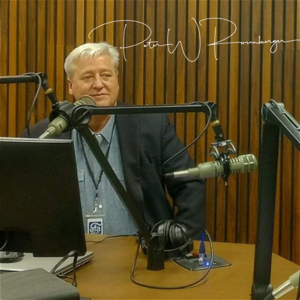
Welcome to Hope for the Caregiver. I am Peter Rosenberger and I'm so glad to be with you today if you've ever found yourself. Standing between a loved one with a chronic impairment and even worse disaster, you are a caregiver. He may not have a title. I may not have a paycheck.
But if you're showing up day after day, this show is for you. Maybe it's your spouse. your parent, your child, or your friend. Grandparents. You're dealing with doctors, insurance, medications, hospital stays, and doing it all on little sleep, They stretched budget.
an afraid spirit. Maybe. you have somebody in your family who's an alcoholic. or an addict. or somebody with mental illness.
No matter what the impairment is, there's always a caregiver, and if that is you, Then you are in the right place. If you love somebody, you're going to probably be a caregiver. And if you live long enough, you're going to need one. And I've been doing this now for four decades. and have learned usually the hard way.
In fact, I don't think I've learned anything the easy way. that if the caregiver goes down everything falls apart. That's why hope for the caregiver exists, to speak directly to the heart of the one pushing the wheelchair, managing the meds, or crying in the parking lot. I'm offering a lifetime of experience. As a lifeline to you as a family caregiver, you can learn more at HopeFlight.
Hopeforthecaregiver.com. Hey, let me give a big shout out to our newest affiliates. On the Hope for the Caregiver Family here, Sunday Faith programming on 105.5, The Legend, Big Spring, Texas, and the Sister Station Sunday Faith program on KBYG 106.3 Big Spring, Texas. And very glad to have you along on this program. Very glad that you all see the value of reaching family caregivers in your community there in Big Spring.
We're honored to have you with us. You know there's a new Superman movie that came out this week. Uh I it's I don't know how many numbers this makes for doing a Superman movie. They've been doing Superman for a long time. But thirty eight years ago this month, They had a Superman movie release.
And it was Superman 4, The Quest for Peace. It was the last run for Christopher Reeve as Superman. And I got to tell you, it was one of the worst movies ever made. I mean, it was dismal. I mean, it was.
So bad. And uh it was the final chapter in the original franchise. That started back in the 70s with that first one. The first one was magnificent. It was just Wonderful.
but they just kept going down. Once Richard Donner left and this is a little insight on movie stuff, but once he left it it just it was never the same. They did the one with Richard Pryor and the third one and this fourth one was just Yeah. It was just so ridiculous. The plot was absurd.
The budget was terrible. And it and it took two decades for Hollywood to even reboot the character again. And that's how bad it was. I mean, it's unwatchable. Except I want to talk about the title.
The quest for peace. And in this movie, uh Superman, Christopher Reeve kind of spearheaded the whole thing and he kind of injected some of his politics in it and he um Had Superman destroy all the nuclear weapons, and then you know that then we're going to have peace.
Well, it turns out it didn't work that way. And uh say what you want about the movie, and believe me, you will. But the phrase hits differently, the quest for peace. especially for caregivers. You know, and and it it Is there anything that sums up?
Our Journey. By the way, I haven't seen the new Superman yet. I don't know if it's going to be any good or not. They got Crypto the Super Dog in it. I have no idea.
I don't get to movies very often. Not I I used to see a lot of movies, but we lived when we lived in Nashville, we lived closer. But now I don't really live near a movie theater in Montana, so uh but I have I get to look out in Montana, so that's a better movie. But eventually when it starts streaming I'll I'll watch it, I guess. But And I'm and I'm not a movie critic here.
That's not what this is about. But I just want that title, The Quest for Peace. And it just because I was reminded of this movie coming out so long ago as part of this whole storyline of Superman. the quest for peace, and I thought that's us as caregivers. I mean that's what what which one of us isn't on a quest for peace as a caregiver?
Think about your life. as a caregiver. Sleepless nights, medical chaos, Mind numbing stress that grinds away Day after day, week after week, month after month, year after year for some of us, decades after decades for some of us, Peace. doesn't just feel elusive, it feels impossible. Is it?
You know, Here's what I've learned. in my own life. And and this is not a one and done. In fact, nothing did I do. Is a one and done where I've got it.
Okay, I've got mine.
Now I'm going to teach you how to get yours, and then we're going to go be happy, happy, happy. That's not the way this works. This is like going to the gym. And it's a relentless discipline of training our bodies, our minds, our hearts. to deal with the onslaught of never ending stress and demands upon us as caregivers.
This is the way it is. I'm sorry, it sounds kind of grim. And and it is at times for so many. And I get this.
So how do we withstand this? What are our options? I mean, just play it out. I mean, we can. Fold.
collapse, and then what happens? You know, what happens to our loved ones? We can go bankrupt. We there's a lot of there's a lot of options we have. Very few of them are good.
and I determined At a fixed point, where I said, you know what? I'm no good to Gracie if I'm fat, broke, and miserable.
So If that's the case, which it is, then what do I do about it? How do I reverse those trends? Because so many of us, as caregivers, end up becoming. unhealthy, whether it's fat or just unhealthy in general, broke or financially distrapped a lot. or miserable.
Or all three, or whatever. I mean, how many of us struggle in that arena? And if and if that is the the pull on us, Naturally Then how do we resist that? And how do we retrain our mind? And I go back and I look at...
The old hymn. It is well with my soul. And you know that hymn. When peace like a river attendeth my way, when sorrows like sea billows roll, whatever my lot, that was taught me to say it is well with my soul. And you know, I'm doing a whole series on hymns, and we'll get to that for the hymn this week later on in the program.
Not for that hymn, I'm saving that for another day, but I've got a series of them I'm going through to give the background for it, and I hope you'll stick around for that. But we're at peace with this, not because the storm is over, but because we know who's in the boat with us. And remember what Jesus said in John 14:27. Peace I leave with you. My peace I give you.
Do not let your heart be troubled. Do not be afraid. Not peace as the world gives. But what does the world give you? For peace, it says when you have plenty of money and you're healthy and things are going your way, then you could be at peace.
But Scripture says we can be at peace no matter what is happening. whatever my lot, Now the question I have to ask you And I asked myself this. Do we believe that? Is this something we adhere to? Is this a principle that we hold on to that says, yes, I'm anchoring my life in that?
Christian, what do you believe? Do you believe that? that peace is available no matter what is going on with you. Even as a caregiver, We live in a high stakes world. There's no stunt doubles.
But the true quest for peace It ends not in control, but in surrender. When we are willing to accept that not everything has to be perfect, But we trust. and the one who is. Do you see the difference? This is our quest for peace.
recognizing that we are not in control of this and we don't have to be. And it's okay that we're not. Because we trust the one who is. And we don't have to like it. And I've told you many times, I have offered my consulting services to the Almighty more times than I can count.
And you know, He's not taken me up on it one time. Not one time. And he invites us to trust him in this. He's in the boat with us. And that is the difference.
So this is the That is our opening statement into this journey we have of strengthening us as a caregiver. And we're going to talk more about this when we come back. By the way, I did watch Superman 4 way back when with popcorn, and I watched it with a lot of regret. But that's a different story. You don't have to watch it.
I watched it for you. You can thank me for my service. This is Peter Rosenberger. This is Hope for the Caregiver. HopeforthTheCaregiver.com will be right.
back. Welcome back to Hope for the Caregiver. I am Peter Rosenberger. Thank you for that great bumper music there, Rob Galbraith and the Not Ready for First Service Players. Healthy caregivers make better caregivers, and that's what this program is all about.
All right, I want to get into a series we've started of difficult. issues caregivers face but are reluctant to discuss. Uh last week we tackled one of the The hardest, I think, most gut-wrenching truth that many caregivers quietly carry. Which is, Lord, would you please just take them home? On the dead.
Prayer doesn't come from cruelty, it comes from exhaustion. From watching someone suffer relentlessly and feeling helpless to stop it. And we talked about that. I'm not going to revisit that. If you missed it, just go catch it on my podcast.
You can see it at PeterRosenberger.com or head over to the Caregiver Substack page, caregiver.substack.com. and you can listen and read more. But this week we're tackling another Reality that many caregivers, in fact, I haven't yet met a caregiver. Who hasn't wrestled with this? and that is resentment.
Okay. Let me let me set the table for this. Years ago, a pastor friend of mine, Pull me aside. I mean this is every bit of a dozen, thirteen, fourteen years ago. And he said, Peter, You do yourself a disservice.
I looked at him kind of puzzled. I said, What do you mean? He said You make what you carry look easier than it is and people have no idea what it is that weighs on you. And I've thought about that over the years, and I I thought, number one, he was right. Number two, I'm not the only one.
And if you're listening to this program, I'm willing to lay good money down. that you understand that sentiment, that feeling. that dilemma, that problem. Because it's part of, and again, let me also give you this caveat. I maintain that on a heart level, As caregivers, we don't struggle with anything that is not common to everybody.
On a heart level, on principle. We just do it on a nuclear level. It's relentless. There is no reprieve. It just comes and comes and comes at us.
and we don't get to back away from this. And so every day we're churning about these kinds of issues. We're forced to look at them. And it's very painful, it's very difficult. And when you have Resentment.
gaining ground in your life. And it could be a resentment for a lot of different things. Maybe you got family and friends. who don't help you. They don't even notice.
They like in the book of James, it says, Be warm and be filled with the Spirit. Oh, just trust Jesus with this. And they walk away, and you're left just just bleeding out. It's like they don't even see you. They can't they don't even wrap their mind as long as it's not affecting their vision It's like they don't even care.
It's like you feel like you're drowning. and they're walking by whistling while holding life preservers. This is the reality for so many caregivers. We're getting the job done. We're putting ourselves, our bodies, our wallets, our hearts, everything into this.
And there are people in our lives who should know better. who are very content to let us do it. who have the means and the resources to make a huge difference. They'll spend more on an evening out while we're looking for change in the sofa. And and we've all if you haven't been there, you haven't been a caregiver long enough.
I'm just going to say it because that's the reality of soul. Many people in this country and around the world who are struggling as a family caregiver, trying to somehow keep it together while others just blissfully walk by. Or worse, some of them will say, Well, it you know, it's your fault. Or well, you made the choice. And that cuts all the way to the bone.
And you're like Wow. How how is this How's this even possible that that a human being could be this way? And that resentment just builds in and you just look at them with incredulity. And sometimes you turn that resentment inward and you say, How could I have done such a thing? How could I have allowed myself to get involved in this?
And then sometimes we turn it to God. Where are you, going? Wha what what what's going on with this? Why are you allowing this? What would what did I do to deserve this?
What did this person that I love do to deserve this? Why aren't you stepping into this? And I've maintained since I've been doing this program, That For us as caregivers our goal is to one day stand at a grave. We don't want our loved one to die. after us.
We want them to die before us so that they don't have to live without us helping them. That's not always possible, but that's our goal. if you just want to get real honest about it. The question is, what kind of shape are we going to be in at that grave site? Are we going to be there with clenched fist?
And ourselves? at family and friends who didn't help who looked the other way and could have made our life easier and just were blissfully ignorant. Are we going to be that way at God? It's very difficult. to push a wheelchair with clenched fist.
You can't do it. I'm a pianist. You can't play a piano with clenched fists. You're not going to make good music.
Well, I mean, I'll show you. You can you can go over here and just That's clenched fist. But if I want to make music... I mean, that's I have to open my hands. I have to let things go.
And that is one of the hardest things we have as caregivers because we want to be seen, we want to be vindicated, we want to be recognized. for the extreme things that we're doing. I know so many caregivers. I've talked to so many of them, and they are just weary beyond belief. I get that way.
You don't do this for four decades and not get just spent and sometimes downright angry. Can't you see? I had one person come up to me in my life and they should have known better, been been been journeying along the whole thing. And they finally saw up close and personal some things and they said, well, I had no idea what you carried. And I looked at him and I said, Well, that's on you.
What do you think I've been doing this whole time? I mean, you know, how clueless do you want to live your life? I I was not I was not as gracious as I probably could have been. But do you ever feel like you just don't want to be gracious anymore? You're just like, what the heck?
I mean, what's wrong with you people? Can't you see? And the reality is, no, they can't. And until they've done it. And people try to identify with it.
They try to project their struggles so that they have some frame of reference, and they can't. I remember I had a guy come up to me at church one time. This is a long time ago. This has got to be every bit of 15 years ago. and this guy came up to me I didn't know him and and he said, I heard about your story.
And and he said, I know exactly what you're going through. And I thought, wow, I mean, I didn't know anybody in this town, much less. this church had walked this kind of path that Gracie and I have walked. And for those of you who are new to the program, Gracie just had her 98th surgery. Both legs are gone.
And that went up in the 90s. All from a wreck, she had an 83.
So this guy comes and says, I know exactly what you're going through. And I thought, wow, I'm really sorry to hear that. He said, Yeah, my wife uh broke her ankle last month. I normally am not speechless. and I was speechless that day.
I I I truly I truly had no idea what to say to that. And I searched the vault of my mind and finally landed on that great southern axiom. Bless your heart. And I stepped away 'cause I didn't know if that level of cluelessness was Catching. I had no idea if that level of ridiculousness was contagious, and I didn't want it to get on me.
And some of you may get offended By hearing me say that. But you haven't been a caregiver long enough if you are offended by that. Because those of you who've been doing it a long time, you know exactly. the level of response that you would struggle with in that moment. And you're like, Bless your heart.
That's all you can say at that point. And I had to back away.
Now, I'm not in a relationship with that guy. I didn't even know, I couldn't even remember his name. He knew me, but I didn't know him. And so I'm not, there's not a resentment play. But when you got family members, When you've got close friends pe acquaintances, people who should know better.
Who are that way? Man, that is a tough place. And Also, don't forget, we we can throw in medical providers who did things and made decisions that cost dearly. What about those who were hit? by a drunk driver.
And the family member has to. pick up the pieces. There is no shortage of places where we can direct our outrage and our resentment. The problem is What does it do to us? How do we deal with it?
Where do we go with that? How do we let that go? I promise you, it's not a one and done. It's not going to be something I share with you on this program, and you'll say, okay, thanks, Peter, I got it from here, and we just skip merrily along our way. It is a daily sometimes hourly, sometimes minute by minute.
pushback against that corrosiveness of resentment. And we do it by name deliberately repeatedly Lord How do I forgive this individual? How do I let this go? How do I trust you with this pain? and not feed my own anger and resentment to make myself feel powerful because I know that I'm not.
This is how we do it every day. I'd love to tell you there was an easier way, there's not. There is just not. And We go back to scripture, forgive us our debts as we have also forgiven our debtors. the only place that we can take this.
is to the cross. There is no other place. Anybody that tells you differently will lie about other things. There is no other place. and we have to daily take up our cross.
Jesus said this. We have to daily do this. We constantly want to feed our own indignation. And sometimes it really seems warranted.
Sometimes it seems like Yeah. Yeah. We should look at what the We can't carry this. It's too heavy for us to carry. This is why God says this belongs to Him.
It's too big for us. Here's the way we flip it in our minds and our hearts. CS Lewis said this beautifully. To be a Christian. means to forgive the inexcusable.
Because God has forgiven the inexcusable in you. Do you see the difference? The more we turn our eyes, onto what God has done for us, the less we have the bandwidth to carry what others have done to us. The more we turn our eyes, to what God has done for us. the less bandwidth we have.
to spend time thinking about what others have done to us. Can you hang on to that? We're going to talk more about this, and I'm going to get into the next block with our hymn for this week. But we're going to revisit this a lot. Yeah plague upon family caregivers.
But stand by. Because there is hope. There truly is hope. For the caregiver, and this is Peter Rosenberg, and we'll be right back. Welcome back to Hope for the Caregiver.
This is Peter Rosenberger. This is the program for you as a family caregiver. Glad to be with you today. HopefortheCaregiver.com. HopefortheCaregiver.com.
I want to continue on our series that I've started on 30 Hymns That Every Christian Should Know. Every caregiver should know. Number one was holy, holy, holy. You can go back and listen to other programs. Number two, How great thou art.
Now the third one today is one that you're going to know very well, most of you will, and if you don't, you're going to love this. And I'll go over here to the caregiver keyboard. I'm going to do this in the key of A-flat. I do it a little bit lower, starting off because, number one, My voice is a little froggy, so I want to stay down there. But this is where Gracie kind of lives vocally in this range, and she brings such a Power to it, and such a deep emotion when she's performed this.
And we performed this hymn together. I don't know how many times over our Four decades together.
So I played in this key. And some people don't like to play in A-flat. I do. But it doesn't bother me at all. But here's the thing about this hymn: you can immediately tell what it is just by a sharp five.
Do you know what a sharp five is? That is the fifth Of the scale in the key of A flat, the fifth would be E flat. And you sharp that.
So watch this. I put this with it.
Okay, that's the A flat.
Well, I threw in a B flat there, which makes it the two. I'm a little inside baseball on some of these, but I have a lot of musicians that listen to this program, so I want to throw in a couple of caveats for them. But here's the sharp five that you'll hear, and you'll know what the hymn is. Do you know what it is now? Of course you do.
So that sharp five is such a defining note in this hymn. Great is thy faithfulness.
Now, where did this hymn come from?
Well Let's talk about that. We'll get into the hem in just a minute, but I want to give you the back. drop of this thing. and it comes from a text from Lamentations three by the prophet Jeremiah. Let me set the scene for you.
The Jerusalem has been destroyed. The temple is in ashes. Bodies are in the street. The people of God have been conquered, enslaved, and left to starve, or, you know, a lot of them were hauled off to Babylon and so forth. Jeremiah.
often called the weeping prophet, is sitting in the rubble, I mean, he's grieving over this. And he says in this moment, He has filled me with bitterness He has made me drunk with wormwood He has broken my teeth with gravel. He has made me cower in the dust. My soul is bereft of peace. I have forgotten what happiness is.
This is the prophet Jeremiah, under the superintendent of the superintendents of the Holy Spirit. writing sacred scripture And he's saying this about God.
Now, is there any reason I'm picking this out for family caregivers? Of course. This just describes so much of what you and I feel like at different points in our journey as caregivers. Bitterness, wormwood. I mean, that's what a great, just a word that just, yeah.
He he has broken my teeth with gravel. He has made me cower in the dust. My soul is bereft of peace. I have forgotten what happiness is. Wormwood is a bitter, toxic herb, and throughout scripture it symbolizes sorrow, grief, and judgment.
And gall refers to bile. We just talked about resentment in the last block. Bitterness from the inside out. We got gall. It's just, I mean, these are so descriptive.
And it's so descriptive of us as caregivers. Grinding teeth on gravel, suffering so deep it feels physical. And Jeremiah says, I've forgotten what peace even is. Do you ever feel that way? Have you ever looked around and said, I don't even remember the last time I felt peace?
I've forgotten what it's like to be okay. If that resonates with you, then you've whispered those kinds of words through tears. You're not alone, you're in good company. You're with the prophet Jeremiah, who is one of the major prophets of the Old Testament.
Now, when we say major, we don't mean that he had something more important than the others. We're talking about the length and the weight of the writings.
So, Jeremiah stands next to Isaiah, Ezekiel, and Daniel. Those are the men who carry the heavy lifting of revelation and all of Scripture. I mean, they look at the body of work. They're called the major prophets, as opposed to minor prophets like Micah, Nahum, and Amos. Shorter books, but they're not unimportant.
It's still the voice of God, just shorter. These major prophets are called. And here's this guy, Jeremiah. He loomed large. And God entrusted him with words that cut like a scalpel.
But they come from So here he is in Lamentation. He is stripped down to the soul, and he doesn't pull out a a motivational so slogan like you see in so many places today in our churches and so forth. He doesn't declare victory or start chanting about a breakthrough. He preaches to his own soul. He anchors himself not in what God might do, but in who God has always been.
But this I call to mind, And therefore, I have hope. The steadfast love of the Lord never ceases. His mercies never come to the end. You know that little chorus? The steadfast love of the Lord.
That no one ever sees.
So His mercy's never Are bound to an end for they are not Every Every morning, new every morning. Great is that I love that chorus. You ought to hear Gracie sing that. That's but that's Lamentations 3, 21 through 23. And this is the spirit behind the hymn, Greatest Thy Faithfulness.
And let me bring you to Thomas Obadiah Chisholm. and he was born in a log cabin in Franklin, Kentucky. Ever been to Franklin, Kentucky? I've been there. In 1866, no formal education beyond age 16.
He worked as a school teacher, then a newspaper editor, and eventually as a life insurance agent. He came to faith. Through the preaching of a revivalist named Henry Clay Morrison. At 27 years old, he made a profession of faith. The same man who went on to found Henry Clay Morrison founded Asbury Seminary.
Chisholm became a Methodist minister briefly, but he had poor health and it forced him to resign after just one year.
So he spent the rest of his life dealing with chronic illness, modest income, and a a desk job. But what he could do was right. And he did. And he wrote more than twelve hundred Sacred poems, hundreds of which were turned into hymns. Remember, a lot of our great hymns were not written music and words together.
They were the words came, and sometimes decades later, they put the music with them.
Well, one day in 1923, Chisholm penned a poem based on that passage from Lamentations, and he sent it to his friend William Runyon, who was a composer affiliated with the Moody Bible Institute, and Runyer was so moved by it he prayed Lord, make this song a blessing to some one. And William Runyon wrote this Great is thy faithfulness, O God. My father, there is no shadow. Shadow of turning with thee for thou changest not. All their compassions Thank you.
Fail not as thou hast been thou forever will be great is thy faithfulness great is thy faithfulness morning by morning mercies I see all I have need remember the guy that wrote this was chronically ill That And health provided great is thy faithfulness hold on to me now as you are familiar now if you've been listening to my series on this and and even how I played. I slow these things down. intentionally because I'm not interested in rushing through it. And again, I play this for a woman who suffers all the time. And so when she sings it, she's singing from that place.
And then Gracie's got this power. powerful voice. I mean, she's got a big voice. And she can let it rip, but it has to come with that conviction. And I think that's the conviction that comes from suffering, of seeing God in this, of believing this.
Jeremiah turned that conviction onto the text that he had written just prior. You busted my teeth with gravel, wormwood, gall. He said, but this I recall to mind, and therefore I have hope. And I ask you, fellow caregiver, what do you recall to mind? and therefore you have hope.
This hymn. Is one of these hymns that we have got to embed in our souls as caregivers.
So that in the moment of whatever we're going through. We remind ourselves this. Again, what did I talk about in the last block with resentment? When we focus on what God has done for us. It won't be.
It it transcends what others have done to us. When we focus on what God has done, and this is what Jeremiah has done, he has focused on what God has done. and it gave him the wherewithal. to keep his face firmly fixed on God, and not on the devastation that he saw. and many of us look at devastation on a regular basis.
It it just it's there. We see it. And it's like The wormwood, the gall, the bitterness, the the Lord, what happened? But this I recall to mind, and therefore I have hope. And by the way, when this thing got out there, the Moody Bible Institute.
Everybody started singing this thing and it became this just Um I think uh uh Billy Graham Picked it up, and it just was everywhere. This hymn has become a fixture. in Christianity worldwide. and and you can't go to any Christian church, I don't think, in the world. and have somebody that doesn't know this help.
And it is such an amazing treasure for us. And I'm asking you to take this one. and bury it in your heart. Bury it in your soul.
So that when the time comes and you're looking at things that are so painful, and that may be this afternoon. That may be this morning. That may be right before you listen to this programmer, right? That you will have something that will anger you. And I'm going to talk about the other verses when I come back from the break.
This is Peter Rosenberg. This is Hope for the Caregiver. We'll be right back. Yeah. Welcome back to Hope for the Caregiver.
This is Peter Rosenberger. Glad to be with you, HopeForthecaregiver.com. We're continuing on our series of hymns, 30 hymns that every Christian should know. caregiver should know. And this week it is great as thy faithfulness.
And we covered verse 1. Ed, I want to get back to... By the way, hopefully caregiver.com. If you want to go to the website, I want to get back to verse 2. Of this magnificent hymn.
Now, you've got to remember the context. It went to, it came from Lamentations of Jeremiah, was so. just distraught over what had happened to Jerusalem and Israel. And he's reminding himself of the faithfulness of God. And then the guy that wrote this hymn.
Thomas Chisholm, Who also wrote a hymn that you may know, Living for Jesus? Remember that one? I don't know if you remember that or not, but anyway, he wrote that one. But great is thy faithfulness still remains. Yes.
You know, most famous piece, and it's just such an amazing hymn. And back to this: summer and winter, and springtime, and harvest. Sun, Moon, and Stars. in their courses. Uh Above, join with all nature in manifold witness to thy great faithfulness.
Mercy. And love. And so he's again, he's going back to Romans 1, where all, you know, nobody's without excuse. Everybody can see this everywhere. All creation cries out another scripture.
It's just he's looking at the scope. the magnificence of what God has done. And then it gets to the third verse. And that's where I want to camp out a little bit on the last part of this program. But let's take it up a little bit because I always modulate this for Gracie.
And he goes, pardon for sin. Yeah. There's that sharp five again. Sand. Had a peace there.
I didn't do Now, we started off this program today talking about the quest for peace. We go into the trouble with bitterness, the rancor, the wormwood and the gall, if you will, of bitterness. And then we. Go back to where Jeremiah took us in lamentations. And now, here we are in this last verse.
and a peace that endureth Isn't that what we're after as caregivers? And isn't that what we're after as human beings? Peace. Even the world recognizes the quest for it. Foolish movie of Superman, but the quest for peace.
But then go back and look at Field of Dreams when James Earl Jones said to Ray, he said, Oh, yes, Ray, they will come. for it's money they have and peace they want. People will pay through the nose for peace. Yet The Scripture is telling us it's available in Christ. Right now.
Thine own dear presence to cheer and to guide You know, what an amazing thing that. Party. Yeah. Let's see. And a Please that Endureth.
Thine Under presence. To cheer. And to God now. Here's where the music and the words Are so fabulous together. You have this bass note that's going to go down a step, and you're going to give this enormous tension musically.
Strength for Two Okay. You get that strength for you. It's gotta go somewhere. You're planting a flag. Today, now I'm on a Uh the third is in the base there, so it's not resolved yet.
And then you want to go and bright hope for tomorrow, but I throw in a different chord there. I thought, oh, you know.
So you got strength for today. And bright ho for and I throw in a flat nine there because it gives more tension for. then you land on this beautiful major seven chord. No. Do you see how great that feels?
We're not done though. You can tell. We're not ending this song yet. You can tell. And then you go up to this diminished Blessings.
Uh Now, you could feel the resolve, but you're not. You're not f final resolve there yet. Blessings on mine with ten Uh So Uh Peace out. Dayboard and ruins. And then Runyon put in this flat seven which gives even more tension.
Great is that. Faithfulness. Morning by morning will mercy. Please uh Oh, I see.
Now here's where we live as caregivers. Mm. All we have needed All we have needed, not some. No. Hath provided.
Remember, the guy that wrote this lyric was chronically ill for all of his life. Great is the Shay. Faithfulness. And then a lot of times they'll do the, they'll repeat that. Yeah.
One more time they'll do it. Rate is and they'll go up. Thy faithfulness Lord Unto And now you know why this hymn is one of the hymns that every Christian ought to know. And we ought to bury it. Hold on to it, cling to it.
in the midst of whatever Jeremiah wrote this in one of the most dire circumstances And you could just see him just groaning in this. And he saw devastation everywhere. It's hard to really imagine what happened to Jerusalem. And what that meant to the people of Israel. But God had been telling them.
Turn and turn and turn and turn and turn and they didn't do it. Finally the the the the city was sacked and people were were let off or captured or just left to just be desolate and and Homeless Nomads. in the desolation there. And it's in that that Jeremiah is groaning. And you and I as caregivers.
We we don't know that level. Of destruction, but we understand relentless suffering, relentless heartache. We understand looking at very painful things. And being like Jeremiah just cast down. within our souls.
And that's why we have to have an external Voice that speaks hope to us.
Now, not hope in the word that our English language is. The English language hope is more of a desire. I hope it's not going to rain today. I hope I can find a parking space. That's not what biblical hope is.
Biblical hope is conviction. That anchoring of the soul on this is true, and I will stand here I will die on this hill. Because my hope is in something greater. And that's what this hymn is. This is the prophet Jeremiah.
telling his own soul. Where to where to anchor. And this is Thomas Chisholm, through the centuries now, later, writing this down in the nineteen hundreds. And this is you and I, as caregivers, saying it back to one another.
So the next time you are going through these things, sing this hymn. And if your church hasn't sung this hymn in a while Go to your pastor and say, sing this hymn. And tell them to call me if they don't want to. Because any church that doesn't want to sing this hymn. I got a question what you're hearing from that church.
You don't have to do it every Sunday. But It needs to be sung free. frequently. And full-throatedly.
Now, again, I play it slower, I'm not in a hurry. And I love to just Just Meditate on it. But think about that short five. And then how lovely it feels to land on that four chord. I admit I'm throwing in cords that.
William Runyon didn't do. But I'm not taking away from the hymn. And so so forth.
So This is a hymn that speaks to what we've st we've talked about in this entire program. The quest for peace The problem of resentment The antidote For all of those things the anchor, the answer. It's God Himself. And when we bend our will and our thoughts onto the immutable Characteristics of God, the immutable attributes of God, the things that do not change about Him. Thou changest not The hymn writer said, Thy compassions they fail not, as Jeremiah saith.
When we focus our minds on those things. All the other stuff fades away. Thou wilt keep him in perfect Peace. whose mind is stayed, On the Now do you see these things? This is how we do it as caregivers.
This is how it's done. We gotta go. We're out of time. Listen, are you enjoying this? Are you enjoying this series?
Are you finding it meaningful? If so, help me do more.
Okay, I I could use the help. We have a very small organization here, but I could use the help. And you can go out right now to hopeforthecaregiver.com. Just click on the donate button. whatever's on your heart.
We've got prosthetic things we've got to buy, we've got equipment we've got to do, we've got this program and so many other things. I could use the help with it. And if you're finding value in what we do, help us do more.
Okay, and enjoy listening. And if you find no value, turn it off. But if you find value... Help us do more at hopeforthecaregiver.com. By the way, my new book comes out next month, and you can pre-order that right now.
It's still all at the website. It's called A Caregiver's Companion. scriptures, hymns, and forty years of insights for life's toughest role. This is Peter Rosenberger. We'll see you next time.