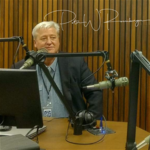
Welcome to Truth Talk Live. All right. Let's talk the truth. I can't hide it. I can't hold it.
A daily program powered by the Truth Network. This is kind of a great thing, and I'll tell you what. Where pop culture, current events, and theology all come together. Speak your mind. And now, here's today's Truth Talk Live host.
Welcome to Truth Talk Live. This is Peter Rosenberger. Glad to be with you. Peter Rosenberger.com. Peter Rosenberger dot com If you want to know a little bit more about what I do, why I do it, and why I'm here on the Truth Network.
86634 TRUTH 866-348 seventy eight eighty four Feel free to call and share what's on your mind. I wanted to talk to you about a topic today. That Certainly seems to be one that is in pressing need in our culture. And it was spurred on by a conversation I had with a friend of mine whose wife is dying. And she's had a lot of health issues for a while.
She's been taking care of you. Most of you know, I do a radio program for caregivers here on this network as well. And this is what I do, and I talk to people who are taking care of people. And this guy's been doing this for a while, but he's been kind of bearing the brunt of this. And he hasn't had a lot of help from the medical community.
Well, there was an event that happened, as there is often the case that'll happen. And everybody saw, okay, here's where we are. And now Hospice has been called in and this is it looks like it's it's Here at the end. And I asked him, I said, uh you know How how you doing? What's what's going on with you?
And he said that the hospice folks had arrived, and for the first time, in a quiet, quite a bit of time. Uh things were calm. Nothing had it improved. In fact, actually, it's going to get A bit worse. Nothing about their circumstances have really fundamentally changed.
other than there was help in in there His wife was still dying And the grief was still there and But the phones weren't ringing and there was not a crisis that demanded immediate attention like there normally was. um for a free of just just a brief moment. Um he found himself doing something he hadn't done in a long time. He said, I'm sitting down right now and I'm resting. I haven't done that in a while.
I haven't rested in a while. I know he sleeps. but he hasn't rested in a while.
Now what do you think the difference is? What do you what what does rest look like to you? Jesus said, Come unto me, all who are weary and heavy laden, and I will give you. Sleep? Nice, at rest.
What does that look like? We live in a culture that goes at 90 miles an hour with our hair on fire. And if you're taking care of somebody with chronic impairments, you know, it gets amped up pretty quickly. When you spend any kind of time in a hospital, and hospitals move at a much different kind of pace than most of life. I mean, it's just churning 24-7.
In many respects, it's, you know, it's, it's. It's kind of like the same thing with a casino. You go in there and you lose track of time and space and the world outside it. I guess casinos design it that way. Maybe hospitals do too.
I don't know. But taking care of the sick doesn't involve a lot of rest, if you've noticed. And this guy was resting. His wife is dying. Hospice has been called, and he's resting.
Does that sound like something that would facilitate rest. And yet it was. You know, and those of us who have been doing this for a long time understand what he meant. You know, there's always another appointment, there's another medication, another setback, another crisis. and you just become accustomed to being vigilant and standing watch.
There's very few times in my life where I'm not on duty. Um very few times. And he understood this. I mean, he's the same way, and almost offhandedly. I said something to him, and I didn't really think about it.
Until we started talking about it, I said, you know, you could have a picnic. In the Valley of the Shadow of Death. What do you think about that? Am I am I right? Am I wrong?
You can have a picnic in the Valley of the Shadow of Death. You know, the more I thought about it, the more appropriate it seemed. You know, when we read Psalm 23, when you read that, And we say, Yea, do I walk through the valley of the Shadow of Death I will fear no evil, for thou art with me. We kind of imagine that. I think most people do.
It's a seasonal short stretch. Don't you think that maybe is the case sometimes?
Okay, we're going through the valley of shadow shadow of death. We'll be out of it pretty soon. But Some valleys aren't short. I get a picture of that every day here because where we live, we're up about 6,000. We look out over the valley, and the valley where we live.
in between these two ranges of the Rocky Mountains, it stretches down I don't know, every bit of fifty miles. That's a long valley. Um maybe even more than that. But sometimes suffering is a very long valley.
sometimes the valley of the shadow of death. is a very long valley, And are we going to white knuckle it the whole way through? D do you do that? Is that what you think scripture leads us to do?
Sometimes the valley stretches way beyond the horizon. And we don't see the end of this thing.
So, what do we do? How do we live? And what do you think Scripture is calling us to do in this. White knuckle it, like I said. Are we supposed to kind of, you know.
Hold our breath real tight, you know, whistle past the graveyard, that kind of thing. Or can we have a picnic in the Valley of the Shadow of Death You know, most people can endure crisis for a season. You know, we we'd stand on our heads for Give them three months. But what about when it's going on for years? And what about decades?
Many burns can last A lot longer than we think they will. Caregiving, chronic illness, grief, disability, loneliness. A lot of hardships in this world often hang around long after we've exhausted our plans for getting out of them. And a lot of our prayers reflect that: Lord, get me out of this, Lord, get me out of this. But Scripture doesn't promise that God's going to remove every frightening, uncomfortable, or painful circumstance just 'cause we don't like it.
In fact If you go back and look at Jeremiah 29, which a lot of people take way out of context, everybody knows Jeremiah 29, 11. I know the plans that I have for you, declares the Lord. And they look at that as kind of a rubber stamp to an entrepreneurial thing. The Lord's going to prosper you.
Well, let's back up. What was the message? Who delivered the message? And. And and Who is he talking to?
What what was the context? They were waiting for word from the Lord. Oh, they were excited. It came from Jeremiah the prophet. They were really excited about this because he's going to tell them they can come home.
They be done with this exile. Let's go back to Jerusalem. That's where we want to go, back to Israel. And that ain't what he said. In fact, he said.
Y'all. I'm translating the Southern Ease here. Y'all settle bail. Get married. Build houses.
Have children. Have grandchildren, plant your vineyards. you know, be be a part of the community. You're going to be here for a while. In fact, I think it was 70 years.
He said, I'll come get you when I'm ready because I know the plans I have for you, declares the Lord.
Now it takes on a whole different meaning, doesn't it? Be still. Sit down.
Well, I don't think God expected them to white knuckle it. The whole time they they were there. And to kind of be on edge, I think he planned on them living. In fact, he told him that. Get married.
Have kids, have grandkids, plant something. He wasn't abandoning his people, but he was teaching them how to live faithfully in a place they did not want to be. How many of you all right now are living in a place that you don't want to be in? You don't like it. It ain't cool.
How are you dealing with that? How are you handling that? Are you resting in that? Like that guy, his wife is dying. He said, You know what?
I'm going to rest for a while. I'm gonna rest. I haven't done that in a long time. We're going to talk some more about this. when we come back.
This is Truth Talk Live. This is Peter Rosenberger. What's the difference between sleep and And rest. Rest. Jesus calls us to Him.
He gives us rest. 866, 34th Truth. 866-348. 7884. We'll be right back.
Truth talk line You're listening to the Truth Network and TruthNetwork.com. Welcome back to Truth Talk Live. This is Peter Rosenberger and I am very glad to be with you today. 866-34-TRUTH is the number if you want to be a part of the program, 866-348. 7885.
If you'd like to weigh in on this, we're talking about rest and truth. And it was prompted by a friend of mine whose wife is dying. And he said to me, You know. I'm going to rest for a minute. Hospice has been called in.
You know, I think he realized that the decision was made. All right, we're on a track now. I don't particularly like where this train is going, but We're in for the ride. And that's when I said, you know, you can have a picnic in the Valley of the Shadow of Death.
Some of us have been here for a while. I've brushed up against this many times with Gracie. wondering how in the world is she going to get through the next couple of hours kind of thing. And That's why I went back to Psalm 23 and I thought, wow, that really kind of resonates with me. And um You prepare a table before me in the presence of my enemies.
Well, the enemy for us The great enemy is death. You know, and and Christ defeated that. And so we he puts a table before he in front of our enemies we can do it. And and that includes death. There is no reason as believers biblically.
that we can't be at peace no matter what's going on. Paul talked about this. To live is is cry to die is gain. You know, and it's not that we, I love what R. C.
Sproll said. He said, I don't fear death. Dying terrifies me, but I don't fear death. And I thought that was a pretty good quote. But David doesn't say in Psalm 23, the enemies are going to disappear.
He said, God prepares a table in their presence. The shepherd doesn't always lead us around the valley. But he's always feeding us in it. We're always in it. Can you rest in that?
Do you feel like you can rest in that? I've seen provision arrive in countless ways over the years. You know, a friend who called at the right moment, a hymn I remember when I needed, you know, a laughter on a tough day, a warm meal, a horseback ride, whatever. There's so many things of resting, not sleeping, resting. And I'm curious to know.
if that resonates with others. Larry in Ohio. Larry, welcome to the program. Glad to have you here. Um what do you know today, Larry?
Hey, Peter, I think God for you and um Uh, your home sounds wonderful where you're living, I think. Anyways, um It's God's witness. Uh god's in In that rest. You know, when people have rest and um bad situations, it's actually the testimony of God that you have that peace that passes all understanding, and He allows us to have that rest.
So I think when God's in it, that's how you know. It's it's God's uh Torge. And that lets the uh loss know that you know, God is real and He does help those who are His. Uh And um Do you have any question, Larry? Let me ask you a question.
Do you, when you meet somebody who is striving or somebody who is resting, can you tell just by looking and just by observing them? I can tell it. I can tell it whenever I'm in a restaurant and I got a waiter or a waitress and they have an attitude or they don't have an attitude. You can sense these things. And um Well, when you when and then I can also sense when a person has the power of God in them because it's a It's a special present step.
Um If it's working correctly in your life, it will give peace to whoever comes in contact with you. And I've run into other Christians who go through situations, and I'm like, how are you doing that? But, you know, in our own strength, we can't. It's only God. Who allows us to be able to do that.
And so, in my opinion, it's a witness to God's. Glory and power. And it could be a a a tool to actually bring somebody in. I got to go to work, so I'm sorry, Peter. I got to go.
Well, there's no rest for you right now, is there? Yes, there is. You could rest while you're at work, Larry.
Well, listen, thanks for calling and checking in with us. Thanks for having that particular comment. I do appreciate it very much. You go and be at rest today. Thank you.
You have a good day. Bye-bye. Bye-bye. Bucksman in Ohio. How you doing, Bucksman?
It's always good, always good talking to you, Brother Peter. Always good talking to you. Hey, you came to my mind. Um rest Well, a couple of things come to my mind, brother. Resting is Intentionally taking a solid break.
for a decent amount of time to get refreshed.
so that you can go back into the battle. Mm-hmm. Because A break from taking care of Gracie, a break of taking care of my my uh uh A handicapped Uh nephew. That requires a lot of time and effort. and takes away from regular life when I don't have my nephew with me.
So you know this as you know, as a caretaker for your life, for your wife. You have to intentionally take a break, don't you? I do. And so I've had to figure out I've had to define break differently because I this is my regular life. Right.
Now, that's the thing. I don't get to take a situation where this is something I'm going to do, and then I'm going to get back to my regular life. This is my regular life.
So I don't get to clock out and say, you know, take a week off. In fact, I don't get a day off. You've got to abundantly clear. You've made that abundantly clear. And you, my friend, are exactly in the same boat as my sister Danielle is.
Her son is handicapped, can't read, can't write. can't do anything for himself. He can walk, he can cook a few things. But she is is entangled. and her 31-year-old son.
She is the lifetime of her sons. caretaker. And so either A, God gives her the ultimate rate and she dies, or Gerald like.
So my question to you. is um how does she Respond, Peter. to uh her sister-in-law. who will not take care of her father, And once my sister Danielle, to take care. Um Co father.
My sister's uh father is dead. But her sister-in-law Which is the uh sister of her dead husband, white sister's dead husband. Uh once my sister to take care Up with that.
Now her dad loves my sister. My sister loves her father the law. The sister-in-law does not work. She'd stay at home. She doesn't have any small kids.
the husband Uh works. And The sister is telling my blood sister Hey, you go take care of that. as much as you possibly can. And my dear sister Danielle, She's got a heartbeating in taxes, Peter. And she says, Bus, how do I do this?
She goes, I work from home. I've got to punch in, punch out. and take care of business for my employer. I got to take care of Jerry. I've got a grandbaby that comes over because her other daughter Her other uh child, her mother.
Brain's grandbaby old.
So she's struggling with three balls. Her job. Hushan And your grand baby.
So she's caretaking for three separate people, and she's got a person on the peripheral saying, hey, go take care of my dad too, Danielle. What do I tell Danielle, my sister? Peter. No is a complete sentence. That's it?
I can.
Okay. Just say no. Just say no. Just say, you know how it is, but you know how it is, especially as the heart of Christ. It's hard to say that.
And here's the wild part.
Well, hold on, hold on. Take a beat. My sister doesn't believe in Christ. Take a beat. No is a complete sentence.
If she doesn't want to do it. Then don't do it. if she's going to if she wants to do it, then do it and don't complain about it. She's not obligated to do it. She does it either because she wants to, or she's feeling guilty or obligated to do it, and she's not obligated.
No is a complete sentence. And she could tell her sister-in-law, no, thank you. I'm busy. I can't do it right now, but I appreciate the invitation. And then go take care of her son.
And that's Truth Talk Live, 866-34-TRUTH, 866-348-7884. You're listening to the Truth Network and TruthNetwork.com. Welcome back to Truth Talk Live. This is Peter Rosenberger, 866. 34 Truth, 866-348-7884.
I want to go back to that last caller, that conversation. No is a complete sentence. No is a complete sentence. That sounds a little bit abrupt, doesn't it? It sounds curt, it sounds too harsh, is it?
If somebody well take it out of the caller's family situation. If somebody in my family was asking me to go take care of somebody. that was Not Related to me. and it would compromise my ability to take care of Gracie. Do you think I should say yes?
What is my primary Covenant responsibility. with Gracie. And I don't mind telling anybody else no. Because she's the one I'm responsible for. Ultimately, that's a picture of what's been going on with our country.
We have a real hard time understanding that kind of principle. When somebody is enscripted to To go and take their resources and their time, which time is a resource, and money and take care of somebody else, it compromises their ability to take care. of who they're called to do. That's why allowing 20 million illegal immigrants into this country was so wrong. We're asking people to shoulder the burden.
So if I told you that somebody said, well, this guy down here has a special needs wife. Or a special needs child or disabled wife. And Peter, we want you to go down there and take care of her too. We're going to force you to do that.
Now, where's the math in this?
So it the the decision is very clear. It is not a complex decision. It may be hard to maintain it. it may be a difficult thing to enforce. But it is not a complex problem.
And that's the problem we have sometimes. is that we try to merc it up a little bit. And say, well, this is, you know, you don't understand, you know what I'm saying? Yeah, I understand just fine. I can't take care of anybody else.
I've got all I could say Gracie over. And I'm not going to do it. She's the one. If it compromises my ability to take care of her. Then what have I done?
Because I have to answer to her father for this. Her father's still alive, but I have to answer to her heavenly father. Because This is this is my charge, my stewardship. And I'm sorry? for other things that are going on.
And I'll tell you a perfect example of this. It doesn't mean I don't hurt for people with it. It doesn't mean I don't want to do what I can. That's why I write books. That's why I do this show.
That's why I do my other show. That's why I have my Substack page. That's why I put all this stuff out there that doesn't compromise my ability to care for her. and I could take the wealth of information I've learned, Over 40 years of this and distribute it in a way that makes sense to other people who are going through it. But I cannot come to your house and show you how to do it.
You can get my book. You can read my blog. You can listen to my podcast. You can go on my substack and subscribe to that, caregiver.substack.com. There it is.
Go get that. It's all there. I put it there, but it doesn't compromise my ability to care for Gracie. One time I was walking down the hallway with her, this time last year. We were still in the hospital last year.
And I'm walking down the hall, And she has two wound vacs on. She's got her prosthesis on, but she's walking very slowly. I have a CNA that is helping me. And she's got multiple drains and all kinds of oxygen, the whole thing. I mean, just we we're we're we're walking with a body shop here.
It's it's pretty gnarly. And we're just minding our own business. and all of a sudden we hear this pandemonium. And security guards started rushing past us. They called what they call a code gray.
You've heard of a code blue. You've heard of a code RED. That's a fire. Code pink is when a well, that's that's the it's been co-opted by a bunch of wackos of this country, but uh coat pink is when they have a child that's been abducted. But a code grey is when there is a violent, destructive situation going on.
And a patient is out of control. And you could hear In this room, it was a couple doors down from us, and you could hear just screaming and profanity and everything else. And I saw this woman standing outside the door. And she looked to be, you know, maybe in her fifties. And the look on her eyes and her face it j it just said it all.
and you could tell this woman was truly at the breaking point. And I was trying to navigate Gracie with all this equipment and one CNA to help me, and I'm trying to navigate her to get her out of the way so these security guards don't knock us down. And I see this woman, and I see her in her distress. And I cannot walk away from Gracie to go and talk to her. I I I can't.
I hate it. I want to, I can't. And that's one of the reasons I'm on the radio. That's one of the reasons I do my podcasts. That's one of the reasons I do interviews.
That's one of the reasons I write books and have all the things that I do online. Because I can't go. But that doesn't mean I can't be a good stewards of what I've learned and put it out there. But boundaries, boundaries, boundaries. And boundaries are important to God.
There was a boundary in the garden before the fall. Don't do this. After the fall there was a boundary to get into the garden. You're not coming in here. There are boundaries with the law that was given.
How many people could just walk into the Holy of Holies? There were boundaries. How many people could touch the Ark of the Covenant? There were boundaries. How many people could approach the mountain of God?
There were boundaries. And we say no to certain things in our life. not because we're rejecting someone else.
So the caller's sister is not rejecting. This father-in-law. But she's choosing her disabled son. Because she has to do it. And it's painful.
I don't doubt that it's painful. I don't doubt that it's going to be a costly thing. It may cost the relationship, but what kind of relationship do you have at that point? If somebody is so insensitive to a woman who is working full-time, taking care of a special needs child, and demanding that they go do something else when they're not.
Well, what kind of relationship do you have? That's not a relationship. That's indentured servanthood. That's one person take advantage of another person. You know, it's okay to say no.
No is a complete sentence. Are you comfortable saying no to people? This obligation thing is it it takes about I don't know. Three. maybe four seconds to turn obligation into full blown resentment.
Now, if this woman goes over there and starts taking care of this guy and she runs her, you know. Out of steam. and not able to take care of her her son. Then what have we what's been accomplished? It's okay to stand your ground.
It's okay to say no. It's okay to Offer an alternative. You know, this is not going to work for me, but maybe you can go and I can give you some pointers that I've learned. As you take care of him. You know.
That that that th these are very acceptable Pushbacks. But just to keep that as there's this sister-in-law, or whoever it is that's that's imposing This is a person who's not going to stop. The boundaries are not there. for her benefit. They're there for my benefit.
for the one who's being imposed on. And the people that hate your boundaries are the people that you know Don't want you to have them. They want to take advantage of you. You have boundaries. And you have godly boundaries.
And you say no. I can't do that. This is my responsibility over here. And you say, well, I feel guilty about it. I'm sorry.
What do you do with the guilt? Why are you are you really guilty at that point? Guilty of what? Prioritizing your disabled son? Over a grown man who has other resources and other people who can help?
Is this what you're feeling guilty about? Why why are you feeling guilty? What are you guilty of? And sometimes guilt is not the right word. We feel bad about it.
And we use the word guilt to say this is what's going on with us.
Now, if you're guilty over breaking God's law... then guilt's doing its work. You feel guilty because you are guilty. But this is not a this is not a moral situation here. She has a responsibility to that disabled son.
who cannot fend for himself, And the one person standing between that disabled son. an even worse disaster. is her. I have a responsibility to my wife. The one person standing between her and even worse disaster is me.
And if I compromise me. All this I've done for forty years. Is for what, if I leave her without me? and I can't guarantee that I'm going to outlive her. I can't guarantee that, none of us can.
That's why I went and got well, I get regular checkups and find out that I have cancer. Got it early. We're going to deal with it. Start to morrow. But I wouldn't have known had I not gotten a physical.
And sadly, there are a lot of caregivers out there that don't do that. They don't see to their own body's care. They don't look after themselves. They put this aside and say, okay, we'll deal with this when Mama's with Jesus. But as I said in the first block, sometimes the valley of the shadow of death can last a very long time.
Should I have waited until Gracie's with Jesus before I go get a physical?
Well, that's forty years. Show me the math on this These are the kind of things. that are important to help families in this. And if you're a pastor and you've got family members in your church that are dealing with these kinds of things, pay attention to these things. Pay attention.
Because this is how you help these people. You help direct them to safe. Ground. where they can catch their breath, take a knee if they have to, and develop healthier strategies. And part of that is saying no.
Not because they're rejecting, but because they are accepting the stewardship responsibility that God has entrusted them with. This is, I mean, Paul wanted. How many missionary trips did Paul want to go on? And the Holy Spirit said, no, you ain't going there. I mean, you know, it's everywhere in Scripture.
Boundaries are everywhere. And they're not inappropriate. You don't have to do it with meanness. And I promise you, she's not going to compromise the relationship because there is no relationship.
Somebody who puts pressure on me to abandon Gracie and take care of somebody else I don't want a relationship with that person. I don't care who they are. They're not in a position where they're helpful to me in a spiritual way, in a physical way, in any kind of way. They're hurtful. That's a toxic relation.
I don't need that. Nor do you. Is somebody doing that to you? Is somebody putting pressure on you to make you feel guilty and obligated to do something like this? These are things that we cannot just continue to perpetuate.
Sometimes it's okay to say, No. That is Truth Talk Live, 866-366. 34 TRUTH 866 348 7884 I look forward to your call. Truth, talk, lie. You're listening to the Truth Network and TruthNetwork.com.
Welcome to Truth Talk Live. Thank you so much for being with us today here, 866-34-TRUTH, 866-348-7884. We're talking about a couple of things, rest and boundaries. And sometimes those two belong in the same sentence. Because learning to rest does involve taking some boundaries.
to say no to certain things, so that you will be able to just be settled where you are. Cease striving. Striving is one of the most difficult things that we deal with as believers. We're striving. And I'm there with you.
I mean, I've been. you know I got a PhD in striving. Been dealing with this a long time here. And, you know, I look at, you know, when I said to the caller, No is a complete sentence. You know, I've asked God to heal Gracie.
What do you suppose his answer was? You know, and God has not seen fit to explain it to me. He has not said, you know, here, Peter, this is how it's going to go out. And, you know, I love what Rodney Dangerfield said.
Somebody asked him, he said, How's it going? He said, everything's going to plan. going according to plan. Not according to my plan, but it's going to according to, you know, so God hasn't seen fit to clue me in on this.
So I trust him. Why do I trust him? Because of the cross. But no is a complete sentence. And we don't have to burden ourselves with uh turning ourselves into pretzels over these things.
And it and if it If it costs somebody being in your life because you laid down a boundary and you kept it. You have to ask yourself how important is that relationship. Hello. meaningful is that relationship? How healthy is that relationship?
Healthy relationships respect boundaries. You know, and learning to delegate and learning to offload certain things. Go back and look at Moses and his father-in-law. Remember that? You know, Jethro of Midian and Moses is out there saying, Look at all the people come to me for advice.
Look at all I'm doing. And his father-in-law said, Man, this ain't good. Again, I'm translating that to the new American Southern version. Oh, he said this ain't good. You you need your your your stretch way too thin.
You need to delegate this out. You need to offload some of these things. You need to have some boundaries. You're too you everybody's come to you with everything. Have some boundaries.
You know, and and Uh I I would Go to Galitian six five, for every man shall bear his own burden. Do we? Do we believe this? And what does that look like? How do we help people?
make these kinds of decisions. And this is why I've made an appeal to if you're a pastor listening to this program right now, this is how you do it with people, because you're going to find people coming into your office, sitting in your pews, who are twisting themselves into pretzels, trying to do way more than they can. Because they feel guilty, they feel obligated, they feel pressured. They're up they're feeling fear. In the caregiver world, I call that the fog of caregivers, fear, obligation, and guilt.
And what do you do with the fog?
Well, you slow down. Slow down, let's think this through here. And these are things that I've learned painfully. over a lifetime. If you don't want to listen, you want to do it your own way, that's okay.
Learning curve is a little steep. And let me know how that works out for you. But I'm You know. I have failed in just about every way you can. I've forgotten more failures than most caregivers are going to make.
And one of the biggest ones is not keeping good, healthy boundaries. The other one is not learning how to rest. and what does rest look like? And I would suggest to you, that I can rest while I'm doing my chores. I do lots of chores every day.
And I'm doing laundry, I'm cooking, I'm doing meals, I'm doing all those kinds of things, working here, doing the show. As soon as the show is over here, I will go be a caregiver. And well, I'm still a caregiver now, but I think things are okay for the next couple of minutes until we're done with the program. But I learned that rest Does it have to be Uh I don't have to set an appointment for rest. You know that hymn um Jesus, I am resting, resting.
Oh. Mm. Um You know that one? That's the new tune. It used to be Jesus, I am resting, resting.
The lady that wrote that. a young lady, she was in her like late twenties. And she, um She wrote this great hymn, and then she died shortly after. And it was real tragic. Her brother and his wife went to work for Hudson Taylor.
of Inland China Mission. You know those guys? Uh real big hit a big role there and He And I think his name was Thomas, and his wife. And they're they're their son. were killed.
on the mission field. They were they were uh uh butchered some I don't know exactly all the details but Uh some it was a real terrible thing. And it just tore. Hurts and Taylor up. And he was very close with him.
The way he dealt with this is that he would hum that song and sing it around his office while he worked.
sometimes multiple times a day. that this guy's sister had written and she had died. And Hudson Taylor would sing that tone to Jesus, I am resting, resting. in the joy of what thou art While he's working.
Now what do you think is going on here? This is why I said at the beginning of the show here. in and in the first block, having a picnic in the Valley of the Shadow of Death. We can rest there. Because the shepherd's with us.
Doesn't mean that things have gone away. Does it mean that we're out of the valley?
Sorry. It doesn't mean that all these things that we're carrying have just disappeared. It means we're going to be able to do that. reordering our thinking. We're looking differently at it.
Give me just a minute, y'all.
Sorry, I I went out I went out with the horses and It gets a little bit gnarly sometimes. We're focusing on him. Jesus took a nap in a boat when a storm was brewing. You know? Be like Jesus.
Take a nap in the boat. Hudson Taylor sang to himself throughout the day while he's working. Never left the mission field with it, didn't didn't circ his job at all. Jesus, I am resting. Not Jesus, I am sleeping.
Jesus, I am resting. And here's the crux of all of this that I've learned over the years of why I can do this. Because my wife has a Saviour. I am not that Saviour. And if I ever get confused on that, I look down at my hands and I don't see nail prints.
And that clues me in that I am not her Saviour. I'll be that. I'm saying that sarcastically. She has a Savior. I'm not that Saviour.
I'm a steward. I don't own this. I didn't do this to her. I can't undo it. But I care for her.
To the best of what I have. Knowing that ultimately, and it's really called the doctrine of divine concurrence. Do we believe that God is superintending all of this or not? Does God play defense? You think he plays defense?
You think he reacts? Yeah. Joseph said to his brothers, You meant this for evil, but God meant it for good. That's where that doctrine comes from, the doctrine of divine concurrence. This that he uses sin sinlessly.
That's astonishing, isn't it? And it frees me up to know. That I do the best I can I make amends. When I fail, which is often, I have lots of sanctification opportunities. And Knowing that he who began a good work in me Is it?
is going to complete it. As the Epistle Jude says.
Now unto him who is able to keep you from falling. Can you rest in that today? Could you Gotta hang on to that one. If you feel like you're kind of teetering, A bit. Does that Stabilize you.
So that you can say, you know what? I will not fear any evil. For his rod and his staff are with me. And I don't know how long this valley is. In my case it's been a pretty long valley.
I don't know how long it's going to go. But I know that he's going to be with me the whole way. and he will shepherd me through this. and I can rest in this. I don't have to strive.
I could even have a picnic in the Valley of the Shadow of Death. What about you? And I can by the way echoing that caller. I could say no. to things that would pull me away and pull me off mission.
The hardest thing I have learned as a caregiver. A reporter asked me this many, many years ago. What is the hardest thing you dealt with as a caregiver? And it's Hands down, no question. knowing what is mine and what is not mine to carry.
That has been the toughest thing for me to learn. And that's where boundaries come in, and that's where I'm learning to say no, because that's not mine. And once you learn it, you have to own it and stay with it.
Alright, if you want this article that I was talking about with a picnic in the Valley of the Shadow of Death, if you want. To see any more of the things I have, let me give you a website. You can do it on your phone, you can do it on your computer, caregiver. dot substag Dot com. Substack is where I keep all of my stuff there.
It's my online. The depository for all these things: video and audio, and print, and everything else. caregiver. Yeah. Dot com and that substack with a K, S U B S T A C T.
Go out today. and be a part of this and what we're doing here, okay? This is Peter Rosenberger with Truth Talk Live. Thanks for the time today. We'll see you, Nick.