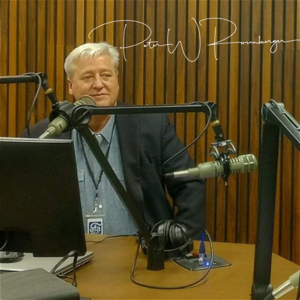
Hey, do you know a caregiver in your life who is struggling with something and you don't really know what to say?
Well, guess what? I do. So get them this book. It's called A Minute for Caregivers. When every day feels like Monday.
They're one minute chapters. And I'd love for you to put that in the hands of somebody who is struggling as they care for a chronically impaired loved one. And it could be somebody dealing with an aging parent or special needs child. Somebody that has an alcoholic or an addict in their family. Somebody who has a loved one who has had a traumatic experience, mental illness.
There's so many different kinds of impairments. There's always a caregiver. How do you help a caregiver?
How do you help somebody who helps somebody? That's where I come in. That's where this book comes in. And that's what I think you're going to find will be incredibly meaningful to them. And if you're going through that right now, they get a copy for you.
Friends don't let friends care give alone. I speak fluent caregiver for decades of this. This will help. I promise you it'll pull you back away from the cliff a little bit, point you to safety, give you something solid to stand on so that you or that caregiver you know can be a little healthier as they take care of somebody who is not healthy. Caregivers make better caregivers. It's called a minute for caregivers when every day feels like Monday wherever books are sold. And for more information, go to PeterRosenberger.com. PeterRosenberger, this is the program for you as a family caregiver. And I am so very glad that you are with us today.
PeterRosenberger.com. Let me ask you something. Do you struggle with worry? Is this something you have wrestled with?
Are you having late night conversations with a ceiling fan kind of thing in your life? You're looking at finances. You're looking at health. You're looking at job situation. You're looking at whatever. Politics. It doesn't matter.
I want you to fret. Decades ago, I got the bad news from my wife's surgeon that she had gotten an infection in her back after a particularly difficult back surgery. He came up to the room to see me. I was waiting in her room. She had gone down for surgery.
I was waiting in her room. And he said, look, she's got an infection and she's going to need to be here for three months. And we're going to have to go in every couple of days and do what they call a washout, an irrigated out.
And re-sew it and do it again several days until we are sure that this infection is out of her body. So it's going to be about three months. And I just looked at the wall. I'm standing there. I can see that moment in time still today.
It's fresh in my mind. I was thinking about our children at home. They're at school. My job. And Gracie's in the hospital.
And everything else is going on. And I said, I can't do this for three months. I wasn't saying it to him. I was just saying it to the wall.
And I felt his hand on my shoulder. The surgeon said, you're not going to do it for three months. You're going to do it for 24 hours.
You're going to do it for today. And then he added that passage from Matthew 634, tomorrow will worry about itself. And up to that point, I knew that scripture, but I had not had it applied to my life in the way that it was getting ready to be. And I had to learn that in a much different capacity. And that was one of several three plus month stays that we've had in the hospital.
Currently still here in this four plus month stay. Tomorrow will take care of itself. Do we believe that? Do we believe Jesus when he said, therefore do not worry about tomorrow, for tomorrow will worry about itself.
Each day has enough trouble of its own. Now that we believe that, do you think it's worth our time to go back one verse prior to that? To understand what the therefore is. Therefore.
When Jesus said, therefore, don't worry about tomorrow. Okay, well what is the therefore? Therefore. And the verse before that says, but seek ye first the kingdom of God and his righteousness and all these things will be added to you. Therefore.
Don't worry about tomorrow. But then hold on. It says, but seek ye first the kingdom of God and his righteousness.
Okay, well what is the but therefore? That's in verse 33. Go back to verse 32. For the Gentiles seek after all these things and your heavenly Father knows that you need them all.
But the Gentiles seek after what things? 31. Therefore do not be anxious. What shall we eat? What shall we drink?
What shall we wear? Wait a minute. There's another therefore. What's that therefore? Well you go back to verse 30. But if God so clothes the grass of the field, but if you notice there's another but there.
It says, but if God so does this. Okay, well what do you mean but? But what?
But what? Go back to 29. Yet I tell you, even Solomon in all his glory was not arrayed like one of these. One of these what?
Go back to 28. Are you anxious about clothing? Consider the lilies of the field. How they grow, they neither toil nor spend. Yet I tell you, even Solomon in all his glory.
Alright. Are you anxious about clothing? Consider the lilies of the field. Now is that where he started the thought process? He went from clothing, lilies, to tomorrow will take care of itself? Where did this thought process that Jesus was outlining come from?
And you go back even one more. And it says, and which of you being anxious can add a single hour to his span of life? Okay, now we've gone from adding an hour to clothing to being anxious what shall we eat or drink?
And then don't worry about tomorrow. Well where did this all start from? If you go back to Matthew 6 you can see this whole discourse that Jesus set up. We started with the Lord's Prayer. Teaching us how to pray and then saying don't lay up treasures here on earth. There's more going on here. The eye is the lamp of the body.
If your eye is healthy your whole body will be full of light but if your eye is bad the whole body will be full of darkness. You remember that discourse. And then he says no one can serve two masters for either he will hate the one and love the other or he will be devoted to the one and despise the other. You cannot serve God and money. Therefore, verse 25, I tell you do not be anxious about your life, what you will eat, what you will drink, nor about your body or what you will put on. Is not life more than food and the body more than clothing?
Look at the birds of the air. Then he goes through this whole lengthy series of things about harvesting, food, clothing, drink, everything that we spend our time fretting on and Jesus saying you don't have to worry about this. You're seeking first the kingdom of God and his righteousness.
All these things will be added unto you. And so I ask you, Christian, what do you believe? Do we believe this?
And if we believe this why do we worry? And so when I sat there in that hospital room and that surgeon said to me, tomorrow will take care of itself. Now he wasn't saying seek ye first the kingdom of God. He took that one verse and gave it to me and I appreciate that. Scripture never returns void.
I get that. But the proper way to do that, to exegete that, is to go back and look at the whole passage. Jesus is laying it all out of how we're to live as Christians.
That is absolutely in contradiction to our American culture. Which says we got to do this, we got to do this, we got to do this, we got to plan for this, we got to have a five year plan. Let me tell you something.
I've been in the hospital for four and a half months. You can't have a five year plan when you're dealing with what I'm dealing with. I can't have a five week plan.
In reality, I can't even have a five hour plan. But what does scripture say about our plans? And what does scripture say about his plans? And what does it say about worry? What are we worrying about? I understand we get afraid of these things and they're fear worthy.
My wife just had her 98th surgery. These are not insignificant things. And this is the human condition. Mark Twain said, I've had a lot of worries in my life, most of which have never happened. We imagine things. We live in the wreckage of our future. Corrie 10 Boone says, worry does not empty tomorrow of its sorrow, but it empties today of its strength. But go back to what Jesus himself said. Seek ye first the kingdom of God and His righteousness and all these things will be added unto you.
Now look at this. He's got the flowers. He's got the birds. He's got the clothing. He's got the harvest.
He's got it all. And He's got you too. He's got me. He's got my wife in the hospital. He's got her. He's there.
None of this caught him by surprise. And I heard a quote the other day. If we could hear Jesus praying to the Father on our behalf in the next room, how would we deal with life today differently? And somebody said, well, I'd bust through the drywall to go over there and grab a hold of Jesus. And say, help me, help me, help me.
I thought that was pretty good. But you get the point. You have a great Savior who is praying for you. You have a Father who's got you. Who's got you.
Sorry, that's my southern accent that comes through. Who's got you. No, He's got you.
And He does have you. You know the scripture that says, the effective fervent prayers of a righteous man availeth much. Now we tend to think about that on a human level. But I think about that on a Savior level. Because who is righteous?
Christ. It's His righteousness. And He is fervently praying for you and me. Fervently praying.
Without ceasing. You think His prayers are effective? Does that give you comfort? Does that strengthen you?
Does that equip you? Think about this. Christian, what do you believe?
Am I worried about certain things? My father used to ask, are you looking at it from man's point of view? Are you looking at it from God's point of view? Is this the way God talks about this? Or is this the way you fret about this? Does that resonate with you today?
Does that lift your eyes a little higher? Let's talk about this a little bit more when we come back from the break. This is Peter Rosenberger and this is Hope for the Caregiver and this is the nation's number one program for family caregivers. Actually, we're the number one radio program in the whole world.
Todo del Mundo. And we'll be right back. Welcome back to Hope for the Caregiver here on American Family Radio. I am Peter Rosenberger.
That is Rob Galbraith in the not ready for first service players. Thank you, Rob, for that. By the way, if you want to find out more about what we do, why we do it, how we do it, go to PeterRosenberger.com. And you can see all kinds of things about what we do for the family caregiver. Books, music, articles, videos.
There's so much stuff up there. I hope you'll take advantage of it. I have a sub stack page as well.
You can get to it from my website. I would encourage you to do that as well. And then sign up for our e-letter. We only send out one a month or so.
Not very many. We put in there a patient that we've been treating over in Africa through our prosthetic limb outreach. We put in various things such as a blog from me, from Gracie. And also I'll be telling you about my upcoming book that comes out in August.
It's called A Caregiver's Companion. And it's scripture, hymns, and insight from a 40 year caregiver. And things I've learned the hard way. I don't think I've learned anything the easy way. But I share these things that I have gleaned over a lifetime of this. And that will be coming out this summer. And I will share more about that as the program unfolds.
PeterRosenberger.com. We're talking today about worry. Which is something, I mean you cannot turn on the news and avoid seeing somebody worrying about something.
They're fretting about something. Particularly cable news. I mean the angst on cable news is a bit alarming. I don't know how they do it without just guzzling Pepto Bismol. Try turning off the news for 24 hours and see how your temperament changes. But they are vested. That's how they make a living is keeping their audience amped up.
And it takes an enormous amount of concentration to not get sucked into that. Oh what are we going to do about this? Trump said this. Or this person did this.
Or Biden did this. Everybody's fretting about something. But what about the church? You remember last week I said the church has a responsibility to speak with a prophetic voice into the state, the secular world. And when I say prophetic voice, a lot of people misinterpret that and think I'm talking about speaking with prophecy and saying this is going to happen here and here. All we have to do is speak what the scriptures say. That's the prophetic voice that God has provided us the scriptures to say what His decree is and all we have to do is say it. Declare it.
Pronounce it. We're not responsible for results. We're not responsible for other people believing it.
But we are responsible to say it. And to speak truth into this. Not my truth. Not your truth.
His truth because He is truth. That's it. Period. It's not complex. It's very direct.
Very distilled down to. But first before we can say it to our culture. Before we can say it to the state. Before we can say it to the media. We have to be able to say it to ourselves. And if we are consumed with worry, how can we speak the confidence and the boldness of the gospel if we're double minded? If we're fretting, fretting, fretting. Oh Lord.
How can we do this with calmness and assurance? And I go back to what happened in the hospital room with my wife when this wound opened up. I mean it was graphic. Ten to twelve inches. Four inches wide on her entire thigh. It's called dehist. That's the word. Medical term.
Dehist. And I helped her sit up. The surgeon had taken the sutures out and left.
Gracie was laying down and after she left I helped her sit up and that's when it just opened up. Now for those of you surgeons and nurses in this audience, you may not get worked up about that sort of thing. I studied music. Okay.
So let me just clearly communicate to you. I was reminded vividly of why I'm not a surgeon. But my wife needed me to help her stay calm in this thing.
And not fret. And I grabbed her hand and she was breathing very hard and she was really struggling. It was on the verge of panic and I said don't look down. Just look at me. And then I started singing with her. In my life Lord be glorified.
Be glorified. And she started singing with me. Now I have a team of nurses and then surgical residents came in there. I mean there were a lot of people in there. And Gracie starts singing on her own then.
In my leg Lord be glorified today. That's extraordinary isn't it? I was stunned. They were stunned. They couldn't believe it.
They didn't stop working. But they couldn't believe it. That she wasn't screaming. She wasn't panicking. She wasn't yelling. And she wasn't anything. She was asking God to be glorified in her leg. And it was laid open.
This is what the scripture speaks to for us as believers that we can exhibit this to the point of the world marveling at that level of calmness and clarity and focus in the midst of hardship. She wasn't thinking about tomorrow. I promise you she was not thinking about the next day. She wasn't thinking about our taxes. She wasn't thinking about what are we going to get at the grocery store.
She wasn't thinking about anything. Her leg was laid open and she was saying God be glorified in this. This is not unique to my wife. This is available to all of us. It is available to every one of us who put our hope and our faith and trust in Christ. Around midnight Paul and Silas were singing hymns while in prison after being beaten. This wasn't around midnight for us. It was about 8.30 in the morning. But Gracie was singing a hymn while her leg was laid open and that's on top of being in the hospital for months.
And the medical teams all around her marveled at this. Why? Well they hadn't seen that before.
That's the first reason. But that is not what you normally expect for something like this. They expect people to panic and people to freak out and people to scream and rage and despair and all these kinds of things. But they do not expect people to glorify God and ask Him to be glorified in it. Yet this is what we are called to do as believers. It is so mind boggling to the world.
It cannot process this. Jesus said my peace I give to you. Not as the world gives. The world says you are at peace when you have everything you want or think you want.
Jesus says you have me. Even in horrific circumstances. And so this worrying that affects us and I have struggled with this for a lifetime. I may struggle with this for the rest of my life. But that's the point of the body of Christ is that we keep affirming this in one another.
We keep saying it back to one another. And this is not something I ever graduate from. This is something I reinforce every single day. I have to.
It's life itself. I'm frustrated here in Denver because I don't have a piano. And I'm a pianist. And I practice all the time. And I'm a little bit worried about my chops when I get back home. But I have to deal with that when I deal with that.
But I remember the quote from Tchaikovsky who said the great Russian composer and pianist. And he said if I don't practice. If I skip one day I'll know it. If I skip two days of practice my public knows it. And if I skip three days of practice the world knows it.
If he is saying that about his skill as a pianist. What is the natural correlation to us as believers? If we skip one day of trusting God with our finances, with our health, with our job, with our marriages, with our relationships. If we skip two days.
If we skip three days. Do you see the parallel? Do you see the precept here?
The concept of what we as Christians are called upon to model. And we cannot do this in a vacuum. We can't just squint our eyes real tight and say, oh okay this is how we do it. I'm not going to worry. I'm not going to worry.
I'm not going to worry. No. We anchor ourselves in the truth of the gospel. Do you not think that Jesus was hungry when Satan tempted him with bread? Turn these stones into bread. You don't think he was hungry? He'd been fasting for what, forty days?
He was hungry. He had a felt need and how did he respond with the word of God? How do you and I respond then with the word of God?
What does it say? And some right now that are listening to me right now are going through some pretty brutal things. I get it. I understand it.
We are too. So I say to you Christian, what do you believe? What does the word of God teach? What does it say? It says, seek ye first the kingdom of God and His righteousness. And all these things, bread, clothing, fields of the harvest, all these things.
The birds neither sow nor reap. All these things and more than we could ever imagine will be added to us. Will it come the way we want it? Will it come the way we demand it? Will it come when we want it? Not that I've seen. You've heard the saying that God is never late and I've often when praying said, Lord, you are choosing to ignore some great opportunities to be early.
But He's God all by Himself and I choose to trust Him. You know, I've got a quote coming up in my new book. It'll be out this summer. And it's a book of just quotes I've said over the years. And one of them is, and we talked about this over the last couple of weeks. We fall asleep. Sleep creeps up on us. But resting is a decision. You've heard me say this now over the last several weeks, but this is foremost on my mind because of this lengthy journey that Gracie and I have had. And resting is, well, it's just foremost on my mind, but resting is a decision to trust Him when all these things seem to be just glaring at us right in our face.
But as we said, Jesus covers all this in the Gospel of Matthew when He says, look, don't worry about your clothes, don't worry about your food, don't worry about what you're going to drink. Don't worry about these things. It's hard, isn't it?
It is hard. And I want to not do that and it's a decision. I don't accidentally trust God. I have to intentionally trust God. I don't accidentally rest.
I intentionally rest. And that's the journey, I believe, that we're called to. From what Scripture, I see that in Scripture as we walk by faith, not by sight. And when everything in our sight is just overwhelming us, it's just so in our face that our hearts get a little fluttery. And we're like, okay, Lord, really? But, you know, go back to Elisha with the servant and the servant was just dismayed.
And the Lord says, open His eyes and He could see the whole host of heaven. Do we trust Him? Can we rest in Him? Or are we going to worry? You know, worry is a decision, too.
Resting is a decision and worry is a decision. And that's what faces us as caregivers, doesn't it? And we're going to talk more about this when we come back. This is Peter Rosenberger. This is Hope for the Caregiver.
We'll be right back. Welcome back to Hope for the Caregiver here on American Family Radio. This is Peter Rosenberger and I am so glad to be with you as we talk about things that beleaguered the caregiver's heart. What is going on with you? How are you doing? How are you holding up as you serve as a family caregiver?
You know, how's your head space? Is worry a big problem for you? Is that something you spend a lot of time with? I have talked to thousands and thousands of caregivers and that's a common thread that I've seen.
Now, if you're not that person, congratulations. But every caregiver I've ever seen has dealt with this issue on some level. It doesn't mean we're doomed to do it. It doesn't mean that we're fated and sentenced to a life of worry.
But let's be frank, or Dean, Sammy, or Joey, whichever one of the rat pack you like, but as part of the human condition, worrying seems to be one of the things that we are beset with often daily. And I'm reminded of a conversation I had with my mother. My mother told me this a while back and it made, it was such an impression on me. She and Dad were going through some challenges in their journey. They were married for 66 years. Dad is with the Lord now, and that happened last year. But as they were getting close to the end, and Dad had Parkinson's, and Mom was struggling. And Dad looked at her and said, it's going to be okay. And she looked at him and she said, how do you know this? He looked at her and he said very calmly, because I know God. And she said, immediately settled her down, because it reminded her of a greater truth and the ultimate assurance that we have. And I thought, what a profound legacy to leave, saying such a statement, because I know God. Oh God, our help in ages past, our hope for years to come, our shelter from the stormy blast and our eternal home. I'll quote that hymn for the rest of my life, Isaac Watts. It's one of those great defining statements that we can say to ourselves, I want to be able to say that to myself.
How about you? Can you say that? I know God. And by the way, a great story on Isaac Watts, who was basically the author of the American hymnal there for many years, the Protestant hymnal. He authored so many great hymns.
Of course, oh God, our help in ages past, alas and did my Savior bleed, when I survey the wondrous cross, joy to the world, Jesus shall reign wherever the sun, I mean, the man was prolific. And the Psalter, I mean, the hymnal that was used during the early part of our country was written by Watts. He literally compiled the hymnal. And there was a great story about a Presbyterian minister named Joseph Campbell, and he was from Rhode Island. And during the Revolutionary War and the conflict that was going on all there in the New England states, colonies at the time, I guess, he was a minister and his wife, I believe it was his child, but certainly his wife was killed when British troops or Tories or somebody shot into their home and killed her. And he was then, he left what he was doing and became a chaplain embedded in the Continental Army, which, by the way, the Continental Army was established and chaplains were established in the Continental Army before there was a country. That's how long that we have had military chaplains. And he was a chaplain embedded there with the troops. And at one point they ran out of wadding paper for their muskets. And Campbell, Reverend Campbell, he ran into a church.
They came upon his troops, his regiment that he was with, and he ran in there and he came out with a hymnal holding it high up in the air to use the paper for wadding paper, the pages of the hymnal. He said, give them watts, boys. And I thought that was such a great statement.
Give them watts, boys. One of my favorite stories. And there was such a, yes, we're using the paper for wadding, but you're also anchoring yourself in these great hymns of the faith. And Isaac Watts was certainly a titan when it came to hymn writing. But we remind ourselves of these things that we do know God. The problem is, I have found for me, is that I have theological amnesia. I have gospel amnesia.
I've got to be reminded of it over and over. I remember I was talking to a pastor one time and I said to him, every sermon needs to reflect the gospel. We need to remind of the gospel. Everyone preaches it constantly. And he said, well, I'm comfortable knowing the gospel.
And I looked at him and I said, I'm not. I've got to be reminded every single day. I have gospel amnesia. And I think that's where worry takes root when we are not focused on the things of God and we let our eyes lower down. I go back in this, I've been going through the book of Acts and I go back in this story of Paul and Silas.
You know the backdrop. They had gone to Philippi in Macedonia and they were preaching. And as they were going around, there was this slave girl that followed them. And she was possessed by a spirit of divination. And she had owners that gained a lot by her, quote unquote, fortune telling. And she was going around and sneering at Paul and Silas.
These men are the servants of the most high God who proclaim to you the way of salvation. But she was not saying this in a way of honoring and giving praise to God. She was saying it in a very demonic, sneering way. And finally, Paul just got greatly annoyed. He turned around and he just said, look, I command you in the name of Jesus Christ to come out of her.
And it came out that very hour. And the owners saw this and they were like, you know, we've lost our money maker here. So they dragged Paul and Silas to the marketplace and said, hey, these guys are causing all kinds of problems. And the crowd jumped on them and tore their clothes. Sometimes they would strip them naked. But in this particular case, I would imagine it was to expose their backs because they started beating on them with rods. They were just lashing into them. And I don't know how many beatings they got.
I mean, I'm sure it was pretty rough. And then they took them into the prison and put them in stocks. And they took them deep inside the prison, not just to the outside, into the inner, maybe even underground. And they put them in stocks, not the kind of stocks that were just to hold them immobile, but the kind that actually caused them even more pain. I mean, they were in great distress. But then you look and see them singing around midnight that night and a great earthquake came and they were set free. And then this jailer had, he saw that the prisoners under his watch, you know, I mean, this had happened. The doors were flung open. He assumed they'd all escaped.
It's probably pretty dark. He doesn't know what's going on. And so he's going to kill himself because he knows that his life is forfeit. And just as he was about to kill himself, verse 28, one of the greatest words in the entire Bible. But.
All is going this way. But. But God. But God stepped in. And in this particular case it says, But Paul cried with a loud voice, because Paul was filled with the Holy Spirit. And he said, Do not harm yourself.
We're all here. He didn't go anywhere. He could have left, but he didn't.
He stayed right there. Recognizing that God had work for him to do. But. And God and the people of God intervene in these situations. Under the supervision of God, intervene in what could have been a disaster for this man in a couple more seconds than he would have taken his life.
And he would have died not knowing Christ as his savior. And the jailer called for lights and he rushed into the darkness. Paul's yelling this out from the darkness. And he fell down and he said, you know, what do I got to do to be saved? When we think about worry.
When we are in a situation that is incredibly uncomfortable. And quite frankly fearful. They were in the dark. They were beaten. They couldn't even get wound care.
I have. I'm here at the hospital and I have wound care people show up almost instantly. Anytime there's any kind of wound going on with Gracie. They're coming in all the time to put stuff on. Dress the bandages. All kinds of stuff.
There's so much care going on for her. These guys were beaten and they had none of that. Not one ounce of care. And they were, you know, they were dirty. They were bloody. They were tired. They were hurting.
Probably a very nasty smelling place. And they were singing hymns. They didn't seem to be worried enough to stop singing hymns. They didn't have an account of saying, oh God, what are we going to do? They just praised God. They prayed and they sang. And then the earthquake came and they were set free, but they didn't go anywhere. They just stayed right there. And the jailer didn't know because it was dark.
There's not electric lights in there. That place is just a pit. They said, don't kill yourself. Don't hurt yourself.
We're here. And he runs in there and says, you know, what do I got to do to be saved? I'm not totally sure he wasn't just thinking of his own skin. Maybe he was thinking of eternity. I don't know. It sounds like he was. And Paul and Silas, right then and there, believe in the Lord Jesus and you will be saved.
You and your household. And they spoke the word of the Lord to him and to all who were in his house. And he took them in the same hour that night and washed their wounds. They didn't get their wounds washed until well after midnight. They had been beaten during the day. They had gone eight, nine, ten hours, possibly, with just bloody wounds. And they were bruised and they were hurting and they were smelly and it was just awful.
And here's this guy now washing their wounds. It's an exceptional story and an account of tremendous faith that God is who he says he is. Is there any doubt in your mind that Paul knew God?
He certainly knows him perfectly now. That's where the confidence comes in and that's what I aspire to. I got to tell you, during these four and a half months here in the hospital, my faith is quelled at times. This has been a grind for us and we're no stranger to grinds.
I mean, we've been doing it for four decades. But this has been a grind. And I look at Gracie and I sometimes wonder, Lord, are you sure? And my Father's words come back to me, I know God. And I am reminded of these things because my worry is foolish in the presence of an Almighty God. But I see through a glass darkly and it's hard for me to see that sometimes.
Maybe that's where you are today. And that's why we go back to the text and we see the evidence thereof and we remind one another to build one another up. Do not be anxious about anything, Paul later wrote, but in everything give thanks. And the peace of God, which surpasses all understanding, will guard your mind and your heart in Christ Jesus. Jesus said, don't let your heart be troubled. Don't worry about this.
Don't worry about tomorrow. It's hard for us to do that. But that's yet, that is what we are commanded to do. And scripture gives us evidence of why. We are to walk by faith, not by sight. Paul and Silas were literally in a dark cave, if you will, underground, most likely. There was nothing to see. I don't even know how he knew the jailer was going to kill himself.
But he did and he stopped him because Paul knew God. I want to as well. This is Peter Rosenberger. This is Hope for the Caregiver. We'll be right back. Welcome back to Hope for the Caregiver.
This is Peter Rosenberger and that is the second chapter of Acts. I went way back into the groove yard with that one. I still remember learning how to play that on the piano. It's in the key of G flat, for those of you who are interested in that sort of thing. I can play in any key. The only key I don't like to play in, quite frankly. I literally can play in any key. But I don't like to play in the key of B. For some reason my mind doesn't work well in B. I mean I can do it, but I have to knuckle down and do it. Playing in G flat, you know, that doesn't bother me. None of those things bother me. But it's just for some reason the key of B just causes me to have a collision in my brain sometimes.
And I just don't think that well. I guess my favorite key to play in probably is E flat or A flat. But I don't mind playing in G. If I do play in F, I'll end up modulating it at some point. D is okay. But I enjoy playing in E flat, I think, the most.
I think I can do the scales and the runs in E flat a little bit better. I haven't played in almost five months now. So I am a bit concerned about my chops when I finally get back to the caregiver keyboard. I'm looking forward to that. But I am a bit concerned about this. So I'm going to have to practice a lot when I get home. I'm not going to inflict it on you all. The moment I have the caregiver keyboard hooked up to the radio, I may give it a week or two just to get my chops back. Because otherwise you're going to listen to me playing chopsticks or something. That would be just wrong.
I can't do that. I'm not worried about it though. We've been talking about worry today and I'm not worried about it. And I love that tune from the second chapter of Acts. Why should I worry? Why should I fret?
Because I've got a mansion builder who ain't through with me yet. Do you all remember that tune? Just a show of hands, how many of you all remember that tune? Remember that group?
They came on the scene back in the 70s and the two sisters and a brother. And just were amazing harmonies. And Annie Haring wrote some wonderful songs. And Matthew Haring is, man that guy's got one of the best male voices in music, period.
Christian, nor secular. I mean just got a great voice. A very distinctive voice. I love their stuff. I used to learn how to play the piano to their stuff. One day maybe I hope to meet them.
That would be a thrill for me. But anyway, it was a great album. I remember when the album came out. That's back when we had albums. We didn't just download stuff.
We actually physically bought a record and played it on a record player. Gosh, it sounds so old, doesn't it? I saw a thing online the other day. It says 1977 is closer to 1930 than it is to 2025. I didn't need to feel any older than I already do.
But there you go. I mean, you know you're getting old when your birth certificate's got an expiration date on it. You know, so old. You sit behind Jesus in first grade. You know you're old when you drove a chariot to high school.
Well, I'm not that old yet, but I'm working on it. It's sneaking up on us, doesn't it? Weeks fly by. I mean, it's hard to believe I've been here five months, here in Aurora. I did not plan on spending a half a year in Aurora.
I think I could vote here now. And given what I've seen, they could probably use the help. Why should I worry? Why should I fret? That's what we're talking about today. Are we struggling with worry? And if so, why?
And if not, why not? And how do we assist others who are doing so? And I come to you with what I anchor my life in, which is Scripture. There is no other place to go.
You can try, but look at what the world offers. You know, have the success, have the money, have the health, eat, drink, and be merry. You know, don't worry about all this. And quite frankly, we shouldn't worry about it. That's what we're commanding unto. But not for the reasons that the world gives.
Ours are much different, and they're more sustaining. You look at what the world promulgates. Just look at the advertisement that you see. If you have this, you'll be happier. If you have this, you'll be healthier.
If you have this, you know. Look at the television shows and the media and what it promotes. But none of it is saying we have a sovereign God, that we can rest on His promises. His promises are true and good. The world doesn't want to say that.
The world doesn't want that. I saw a great quote the other day that when you see people that are seeker-friendly, if you will, they're seeking God. You say, oh, he's really seeking God.
And there's a lot of conversation about that. Well, Scripture says no one seeks after God. What they seek after are the benefits of God without Christ.
That's what they're seeking. They want the benefits of it, but they don't want Christ. They want His peace. They want His blessings. They want His abundance and all those kinds of things, but they don't want Christ. Scripture says this. No man comes to the Father unless he is drawn. And so when you see somebody who's seeking after God, what we're doing is we're seeing it on this side of the cross, and so we're saying they're looking for the things that we have found in Christ, so therefore they must be looking for Christ.
And no, that's not what they're doing. Only believers seek after God because our hearts have been changed. Now, He's drawing people because He's equipping them. Remember what Charles Wesley wrote, Long my imprisoned spirit lay, fast bound in sin and nature's night. Thine eye diffused a quickening ray. I woke the dungeon flamed with light.
We've been talking about Paul and Silas. My chains fell off. My heart was free.
I rose, went forth, and followed Thee. He makes us willing to be willing. And that's how we approach the subject of worry, to understand that He has summoned us from prison, from the grave. We were dead. It's hard to kind of wrap your mind around that, but that's what it says.
That's what the text says. And He knows what He's doing. And I go back again in Jeremiah 29 and 11, and I want to end with that, that whole verse, not just Jeremiah 29 and 11, but that's the verse where everybody lands on, but God puts us where He wants us. He says, you stay there.
Go look at Jeremiah 29, 4 through 11. Stay right where you are. Build a house. Get married. Have kids. Have grandkids. Plant your crops.
Live life. And when I'm ready, I'll come get you, because I know the plants that I have for you. Okay? That's what we say to our spirit, that He knows where we are. He knows what He's doing.
We can trust Him, and it's always because of the cross. And that's what anchors me, and that's what anchors Gracie in this very, very challenging journey we have. I'm going to let her sing it to you as we close out the program.
This has been Hope for the Caregiver, hopeforthecaregiver.com. I'm Peter Rosenberger. Glad that you took the time to listen today, and I'll see you next time.
Here's Gracie. Jeremiah 29 and 11 says, I know the plans I have for you, declares the Lord. Plans to prosper you and not to harm you, to give you a future and a hope. I know, I know the plans I have for you.
Oh, I know just what you're going through. So when you can't see what tomorrow holds, and yesterday is through, remember I know the plans I have for you. Oh, thank you Jesus, thank you that He knows the plans He has for you.
Oh, yes He does, He knows just what we're going through. When you can't see what tomorrow holds, and yesterday is through, remember He knows the plans He has for you. Oh, plans to give you hope for tomorrow, joy for your sorrow, strength for everything you go through. He'll give you hope for tomorrow, joy for your sorrow, strength for everything you go through. He'll give you hope for tomorrow, joy for your sorrow, strength for everything you go through. Remember He knows the plans He has for you. Oh, He knows the plans He has for you.
Oh, yes He does, He knows just what you're going through. So when you can't see what tomorrow holds, and yesterday is through, remember He knows the plans He has for you. Oh, to give you hope for tomorrow, joy for your sorrow, strength for everything you go through. He'll give you hope for tomorrow, joy for your sorrow, strength for everything you go through. He'll give you hope for tomorrow, joy for your sorrow, strength for everything you go through. Remember He knows the plans He has for you. Oh, yes He does, He knows the plans He has for you. Oh, thank you Father, you know. Oh, I'll rest in your love Father, He knows.