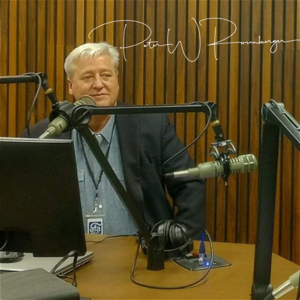
This is the Truth Network. Welcome to Hope for the Caregiver here on American Family Radio. This is Peter Rosenberger, and this is the program for you. as a family caregiver. More than 65 million Americans right now are serving as a family caregiver.
If you're one of them, you're in the right place. If you're not one of them, you're still in the right place. Because if you love somebody, you're most likely going to be a caregiver if you live long enough You're going to need one.
Now why do we do a program?
Well... How do you help someone who helps somebody? How do you help a family caregiver stay strong and healthy? as they take care of someone who is not. What are the stakes?
What's involved in this? What is a caregiver?
Well, a caregiver is somebody who puts themselves between a chronically impaired loved one and even worse disaster. And that impairment could be Autism. Could be Down syndrome. Could be trauma. could be some type of other chronic disease.
Alzheimer's, Parkinson's. It could be addiction. alcoholism, drugs, there's so many different kinds of impairments. And there's always a family caregiver, and that family caregiver is a person who is at risk. This program is committed.
To helping My fellow caregivers stay strong and healthy as they take care of someone who is not in healthy caregivers. make better Caregivers. Speaking of healthy, I've had this conversation now twice within the last week or so. And the overwriting issue that I talk about is: okay, what is the healthy thing? And, you know, most of us want to say, well, I just want to be happy, or I want them to be happy, or I, you know.
Whatever. We hear that a lot. We get happiness thrown around a lot. Is that what we're really after? Is this perpetual state of happiness because I haven't met someone.
Who is perpetually happy. I've met people who have seasons of happiness, who have events that make them feel better. But everyone's going to deal with something That is painful, hard. Sad? Tragic?
But that's just life. Are you happy in those moments? No, because something is happening that is uncomfortable. And if you are trying to be happy at the same time with all these other things, it's going to have a weird effect on you. And so I have backed away from that and asked my fellow caregivers to consider healthiness instead.
I have found that when I chase healthiness, Happiness chases me down. We are going to go through sadness in this life. We are going to go through things that are not going to change this side of glory. Anybody that tells you different We'll lie about other things, too. That's just life.
That's just the way it is. We're promised that by Scripture. In this world, you will have this and this. But what do we do about it?
Now, we're called to be joyful.
Now, joyful is different. Joyful and happiness are two very different things. Again, happiness depends on what is happening, thus, the term happy, happening. Good lab report, you're happy. Pain under control, you're happy.
Insurance approves something without a fight? Yeah, that's a revival service at that point. If the check clears. You're happy.
Sometimes I think we're one stable bank account away from thinking, okay, Lord, we got this. But when things happen that's bad news, then the happiness tends to Erode on us or dissipate sometimes very quickly. But joy is different. Joy is not a mood. Joy is not optimism.
It's not pretending that everything is fun. Joy is anchored. joys produced by the Spirit of God in a life rooted in truth. It's not tied to the latest update from the surgeon. It's tied to the unchanging character of God.
Joy rests in sovereignty. It says God is still God, even right here. Joy flows from reconciliation. It is How about this? A settled gladness.
that comes from knowing you are at peace with a holy God. The judge has declared you righteous in Christ. The verdict is in. That doesn't change when your circumstances do. Joy and sorrow can live in the same house.
happiness and sorrow don't. Our Saviour was sorrowful, a man of sorrows, acquainted with grief, and yet his joy for the joy set before him he endured the cross, it says. Scripture speaks of sorrowful yet always rejoicing. That's not a contradiction. That's Christianity.
We understand this as caregivers. We can sit by a hospital bed, exhausted and uncertain, and still know that something deeper is going on, something deeper than happiness. we may not feel cheerful. we may not feel light. But we can be anchored.
Happiness says things are going well. Joy says God is faithful. Happiness requires favorable conditions. Joy requires a faithful Saviour. one rises and falls with the moment the other is rooted in eternity.
So when you're pushing the wheelchair through long corridors And you've argued with insurance companies and you've prayed prayers, you're not sure you could even finish. You learned something. If your stability depends on happiness, You won't last long.
Now how do I know this?
Well Doing this for 40 years does teach you something.
Okay, you will learn something in 40 years. If you're still standing at the end of being a caregiver for 40 years, I promise you, you will have learned something. and what I have learned. Is that I can be joyful. in the midst of this.
that I'm not chasing happiness I chase healthiness. and healthiness spiritually, physically, emotionally, financially, professionally, all of the above, because those things are available to me right now. Happiness waits for good news. but it's healthy for me, as a Christian, to remind myself, to anchor myself, that I've already gotten the good news. The good news is ever present.
That's called the Gospel. Do you see the mind shift that happens here for us as caregivers? And I know so many caregivers I just want to be happy, or I want them to be happy. You're taking care of somebody who suffers and you're saying, I want them to be happy. But they may not ever be happy.
I I remember a lady called into this programme years and years ago. I just want my mom to be happy. She treats me poorly, and I can't make her happy. And I said, Well, of course you can't make her happy. That's her decision whether or not she's going to be happy or not.
That's on her. She can get mad in the same shoes she got Glad in. That's not up to you. I'm not responsible for someone else's happiness. I'm responsible to bear witness to the truth.
to just simply Promote what I have seen, witnessed, experienced, learned, touched, tasted, all those things, my experience. Of understanding God's provision, faithfulness, and sovereignty in this, what the Word of God said. And by experience, I don't mean, you know, it's all one big feeling. It's experiential faith. Here's what I read.
Here's what it says. Here's what I memorized. Thy word have I hid in my heart that I may not sin against thee. This is what it says in his word. And I anchor myself in that no matter what my circumstances are looking like from the vantage point of wherever I am as a caregiver.
And if I tie everything to how I feel, Well, what good is that?
Now you think about this with Gracie. Gracie hasn't known a day without pain. Since Ronald Reagan's first term.
Now you put that into some perspective here. She's not going to feel better. There are moments when she bursts out laughing and she has happy things, and particularly when she sees her grandchildren and all those kinds of things. But that's that's not what drives her is to have this euphoric feeling of feeling good all the time because she knows she's not going to, not this side of heaven.
Some things just aren't going to be fixed.
So what do you do? And I think I could speak for her when I say she would tell you that the joy of the Lord is her strength. She is anchored in His provisions, His sovereignty, His faithfulness, His goodness in the land of the living. Right now. Not some kind of distant thing where, okay, one day I won't have to deal with this body.
Right now, she can have joy, and she does. That's why if you listen to her CD, she's got that song. I did it a couple weeks ago. She did the that Twilight Paris wrote, and she did it with Russ Taft. The joy of the Lord.
is my strength. And then you have to ask yourself at some point, do you really believe this? It's one thing to say, it's another thing to live it. And so this is where I struggle as a caregiver, and this is where I found that a lot of caregivers struggle. We're trying to always look for the thing that makes us feel better, but while living a life where nothing will feel better, but we can be better.
And that's what angers me as a caregiver. Healthy caregivers do indeed make better caregivers. We're going to talk about this more when we come back from the break. This is Peter Rosenberger. This is Hope for the Caregiver.
Don't go away. We've got more. Welcome back to Hope for the Caregiver. This is Peter Rosenberger, HopeForthecaregiver.com. That is Rob Gabrith and the Not Ready for First Service Players.
And I love his stuff. I love his music. Talked to him the other day, and just a wonderful, wonderful musician from Nashville. I get a lot of comments about the music I do here. Start off the opening with my theme song, and then I weave it in periodically here.
And somebody said, Well, where did you get that theme song? I said, Well, I wrote it. I don't know if you knew that.
Some of you who have been listening to the program for a long time knew that, but the opening theme song, that's the, I don't have lyrics for it. I just call it the theme for Peter show. But my friend Chris Latham and I wrote that years ago. Chris wrote the melody of that when he was working the 10 Lizzies at the old amusement park he had in Nashville called Opryland.
Some of you may have been to Opryland in the old days. It used to be a pretty good little amusement park. And they tore it down and made them all. And then Dolly Parton took a lot of that stuff and she made Dollywood and made a fortune. But I miss Opriland.
I used to take the kids out there all the time. We had season passes and they had great music and just fun rides. And in the weekdays, we'd go out there and just have a ball right after school and pick them up sometimes and we'd go out there and it was just it was great. But Chris, when he was in college and a lot of my fellow students at Belmont there in Nashville worked. The um at Opryland and doing various things, and he worked those old-time cars, you know, the 10 Lizzies.
And he was developing this melody in his head. uh during that time. And then I was You know, messing around with the chords on this thing with the guitar, and I did it for years trying to figure out what I could do with this. And then When I started the radio program, Somebody said, But you need to have your own theme song. And I thought, well, how do you do that?
You know, because I looked at Rush Limbaugh, for example, he had My City Was Gone by the pretenders, and he had that section from in there: dun dun dun dun da da da da, da da da da da, you know, and but he had to license that. He had to pay for that every time. Whoever wrote that. I think Chrissy Hind, I think it was, that did that, but it was it you know made a fortune off of that with Rush. And then I think Sean Hannity had Let Freedom Ring.
He had that for a long time on his show. I don't know if he still does. You know, all these guys had their own different kinds of theme songs, but they were licensing to someone else, and somebody said, Well, you ought to write your own. I said, Well Easier said than done. But I went to Chris.
I said, Hey, what do you think? Can we do something with this? And he said, Sure. And so we worked it all out and recorded it. Been using it ever since.
And I updated it just a couple of years ago with a guy named Jeff King that does the the version that you hear at the beginning of the the program. And at the end, I usually do the older version that Chris and I recorded some time ago back, I mean, when I started doing the program in 2012.
So, we've had it for a long time. And remind me, I need to pay Chris some more royalties on that because I've got to pay royalties on it to me and Chris. But I own it. You know, that's the story behind it.
So, I came up with my own theme song. And you're welcome to submit lyrics to it if you want. And we've been singing on the air. This is the theme from Peter's show. Anyway, so that's, but then I weave in some stuff from Rob Galbraith sent me some stuff of his, and I loved his stuff and still do.
And I I enjoy various different kinds of music and so forth, but when you have podcasting, it can get a little bit gnarly. There's there's a lot of forms you have to fill out and people get paid in licensing agreement and all that kind of stuff to use intellectual property.
So I try to use things that I have you know, permission for. On the radio, it's different. On the radio you can have a blanket license. For example, American Family, they have a blanket license to play songs coming in and out of the bumper. There's a fair use thing for 30 seconds.
But if you put it on the podcast, Then that's another form of recorded media, and it gets a bit gnarly.
So the world has changed a bit.
So I try to be. Make my life a little bit easier so that I don't have to go chasing down all the permissions and copyrights and licensing and all that kind of stuff. And so I just wrote my own stuff and I can pay myself. And just the other day, I wrote myself a check for $2. No, I'm just kidding.
But anyway, that's.
Sorry, I went off on a little bit of a tangent there, but music is such a big part of my life, and I love it, and I love weaving in it. And I wanted a theme song for this program that reflected a little bit more. Optimism that wasn't just, you know, sounding dramatic or orchestra coming in and sounded sad and, you know, or classical, things like that, but just something that. you know, lifting you up. Say, okay, look, we're going to listen to Peter's show for a while.
And hopefully I'll leave you better than I found you. And we're talking about healthiness today again because I'm going to keep coming back to this over and over. I'm going to give you a real-life example of what this looks like. I was talking with a lady who was struggling because She is in a bit of a bad relationship with her son. uh grown son and Um He has A a significant problem with alcohol.
She's trying to be there for him, and the relationship is very strained. and he came and asked her for some money. And she wanted to You know, do the best she could with it and to help him out and so forth. She felt like this is her son. She wants, you know, I think it's her only son.
And So she gave him some money and she said, was I wrong to give him the money? And I said, well, let's pause the right or wrong here. And let's just talk about healthiness. I said, Has your son demonstrated In the past, That He has a handle on making good financial decisions. And she said, Well, no.
And I said, has he demonstrated in any way that his alcoholism Is not affecting his judgment or his abilities to function. There's a you know, fully independent human being. I mean, he's he he's not a young man. He's in his uh early forties, I think. She said, No, he has not demonstrated that he's able to do that well.
And I said, Does he show any signs? of walking in any kind of recovery plan. And she said, No.
Now If you'll notice I have not at this point given her any advice. I have not told her what she should and should not do. I just simply ask questions. I think they're pretty good questions, don't you?
Now, the facts are for somebody who is an addict or an alcoholic. Here are three And the only three possible outcomes. They will either sober up They will get locked up. Or they will Get covered up. That's it.
You're either going to walk in recovery, or you're going to end up going to jail, or you're going to end up dying of this. This is going to kill you in some some way, some fashion, somehow. But those are the only three possible outcomes.
Sobered up? Locked up? or covered up. You know, that's it. I mean, and people may want to, well, you just don't understand, Peter.
Well, Really? I don't? And and what what's the fourth one? They're either going to walk in sobriety Were they going to deal with the law? This guy had already gotten at least one DUI that she knew of.
or something's going to happen that's going to kill him. I mean Show me a show me an alternative to this. And and so I I have not at this point said what she should or shouldn't do.
So Given that Do you think it's healthy? to give money. Do you think that's a healthy financial decision? Is that a good financial investment? These are hard won resources.
Do you think turning it over to somebody who by your own definition is not walking in recovery, has not shown to be a responsible, stable fully functional adult. and has not managed this well in the past. Do you think that's healthy? I didn't say right or wrong, just healthy. The answer, of course, is no.
Do you see how it works there? We get so twisted up in knots over things. But if we just ask a better question, is this a healthy thing to do?
Now what is healthy? For you. Most of you know that I've been on a a kick to get myself physically in better shape. You know, and I'm maintaining that and I'm doing well, but I could do better. But I'm doing a lot better than I was.
I mean, I got so big, my shadow weighed 37 pounds. I mean, you know you're getting big. when that happens. And so I I had to lose weight. And I say the same thing over and over and over to anybody that will listen to me.
I am no good. To Gracie, if I am fat, broke, and miserable.
Now what do all three of those things have in common? They're all unhealthy places to be. Emotionally? physically and financially. And I would suggest to you that.
misery. The emotional state is really directly tied to our spiritual state. I'm no good to her if I'm fat, broke and miserable. How about you? Who are you taking care of, and how do they benefit from you being fat, broke, and miserable?
Well, they don't.
So instead of saying, well, I'm not happy, And you may not be. Am I healthy? Am I doing something that's healthy right now?
Well, right now you're listening to this program. That is healthy. You're listening to a fellow caregiver with credible experience, forty years of it. Who is saying out of his own mistakes, out of his own failures, here's what I've learned the hard way, admittedly, but I don't think I've ever learned anything the easy way. Here's what I've learned, and here's what anchors me when it gets gnarly.
And I think you could agree that our circumstances are pretty intense. What we what Gracie and I live with. This is not a passing fling I've had with caregiving. This is a whole lifestyle for me. Forty years.
So And it's not been 40 easy years. It hasn't planed out. There's never been a. Stretch where we said, Okay, we got it from here, Lord. It's every day something new.
We have crisis all the time with her.
So that's a measure of street crid. that says, Okay, here's what I've learned. And again, I did not tell this woman what to do. I didn't say she was wrong. I didn't castigate her.
I didn't do anything other than ask her questions. born from years and years and years of experience. And so I ask you the same question, Are you physically healthy today? Would you like to be healthier? Do you feel overweight?
Would you like to lose some weight?
Well what's stopping you? This is Are you fat? And if you are, would you like some help with that? Would you like to be able to have Some type of Help with this. I did.
My friend Dale Richardson saw that I was getting kind of porky. I mean, when you fall down and the pavement cries, you know you've got some weight on you. She said, Look, your future self's going to thank you. Make the call, Peter. Go out to richerhealthforyou.com if you want to see more about Dale and learn about what she does.
You tell her I sent you. And it doesn't cost anything. It's not an infomercial. This is just my friend Dale, who helped me lose weight. Got a pretty good program, and it worked.
And I'm maintaining. over 30 pounds now down from when I started and that's including five months stretch in the hospital. And so I've had some ups and downs with it, but but here I am. Why? Because I'm no good to Gracie if I'm fat, broke, and miserable.
And along the way, I started feeling a lot better because I was getting this weight off. Healthy caregivers make better caregivers. We'll talk more about this when we come back from the break. This is Peter Rosenberger. Don't go away, we've got more to do.
Welcome back to Hope for the Caregiver. This is Peter Rosenberger. HopefortheCaregiver.com. HopefortheCaregiver.com. We're talking about being a little bit healthier.
today. A little bit healthier because healthy caregivers Do indeed make better caregivers. You know, I actually trademarked that phrase. I own the trademark for that. I've never owned a trademark for anything in my life, but I own that one.
Healthy caregivers do indeed make better caregivers. That's it. Healthy caregivers make better caregivers. And that phrase just speaks to me all the time. I'm saying it to myself.
I've got it on my mugs that I offer. I have, what do you call those things? Tumblers. And I've got that. They're beautiful little tumblers we had made for people who want to get involved with Standing With Hope.
And if you want one of those, you can go out to Standing With Hope right now, standingwithhope.com/slash giving and donate whatever's on your heart. We'll send you one. If you like it, I'll send you one. And you can have it. It'll be a reminder to you every time you drink a cup of coffee or have whatever you like to put in your tumbler, a smoothie or whatever.
You'll be reminded, it says, healthy caregivers make better caregivers. I don't have it out there promotion on the website or anything like that, but just send me a note and said, hey, Peter, I want one of those. And I'll be glad to send you one of those things because it's a great reminder for us as caregivers. And it's my gift to you. For getting involved with what we do at Standing With Hope, which is the ministry that sponsors this program, we have two different things we do: we do this show and the whole caregiver outreach, including our support groups and everything else.
And then we have the prosthetic limb outreach, which is what Gracie envisioned after giving up both of her legs. Either way, you can Whatever you want to do, whatever's on your heart, this is just my gift to you. It's something I created. You know, sometimes ministry gives out gifts and. You know, it I wanted something a little bit more personal to say thank you.
If you're going to take the time and trouble to get involved in what we do. Then I wanted to give you something a little bit more personal. We still have some caregiver calendars if you want it, but I know it's February, but if you want one, I'll be glad to send that to you as well. Just say, hey, Peter, send me that. If it strengthens you.
and equips you to be Stronger and healthier as a caregiver. That's mission accomplished. That's what I'm about. And so, and then do take advantage of talking to my friend Dale. The phone call doesn't cost anything.
I mean, if she can help you, she'll help you. And then there's a she's got a pretty good program. You don't have to get involved. There's no obligation. Just call.
And it's out there at richerhealthforyou.com. It's on my website at hopeforthearegiver.com under different resources that we have. And But you can reach out to Dale right now, richerhealth4you.com. That's just like it sounds, richerhealth for you, because it's always about getting healthier. As a caregiver.
So we covered in the last block a little bit more on the financial component of this, where you've got, for example, this woman I was talking to was, what did I wrong to send money to this? And I moved her away from the cliff of right or wrong, the cliffs of insanity, for Princess Bride fans, if you know what that means. But I moved her away from that and said, Look, look, we're not dealing with sin at this issue. We're just. You know, we're hoping that you can make healthier choices for you.
And in the process live a calmer, healthier, and and dare I say it a more joyful life. as a caregiver. And whether your son goes into a recovery program or not, you don't have to be miserable.
Okay, you don't. And and you're not going to help him or your grandchildren if you are.
So again, go back to my situation with Gracie. Y'all know how dire her life is. I mean, she has a tough life. How is it improved by me being a nut job? by me being fat, by me being broke.
How does that help her? And and it keeps me up at wake at night.
Sometimes because I'm thinking, okay, Lord, you know, what are we going to do about this? And what is this we business? You know, because I ain't got much to work with here, Lord. But, you know, that's. That's a walk of faith that I've been on with it.
But the point of it is: do I go to him or not? Is it healthy for me to go to the Lord with my check book?
Well, yeah. But why wouldn't it be? If he's who he says he is, and if he's who I'm saying he is, well Well, then I'd be an idiot not to go with him. And before you say, well, Peter, you've been an idiot in the past.
Well, yes, that's true. I have been. And I have documentation to that effect. But I don't have to maintain that idiocy. You follow that.
I could hopefully grow from that and maybe transition from profound idiocy to moderate idiocy. That's kind of the hope I have for my life. But it's one of those things where, okay, am I. Going to God And say, God bail me out of this, or God send me a check. What is the point of going to God with these things?
Am I asking him to just write a check? Or to heal Gracie's legs? Or what what am I doing here? And I think the first thing I start with, the healthy thing, is I'm going to God.
Well, what does God have to say about it? I remember I was in a church. They were going through a pretty big conflict. It was pretty ugly. And everybody was giving their opinions and just, you know, hurump, hurump, hurrump, and, you know, you know, about that kind of stuff.
And I. I listened and I listened and I listened and then finally I asked the question, Well, what what does God have to say about this?
Well, how dare I bring up God in a church fight? These people looked at me like I was speaking Chinese to them. What's the matter with you? How dare you talk about what God thinks? We're trying to have a big argument here in our church.
Does God have an opinion on these things?
Well, yeah, he does. How would we know? If we don't read His Word, how are we going to know? everything that we need to know to stabilize us, to steady us, to anchor us, to increase our joy, is already in His decreed word that's right in front of us. The question is, are we going to read it or not?
And then if we read it, are we going to apply it? And everything I do on this show, in fact, I've got my tutor that listens to this show. He's my theological tutor, and every now and then he'll. Slapped me around a little bit. But he says, What you have done, I've got a new book that will be coming out.
I'll tell you about that down the road. But he did an advanced reading for me on this. is applied theology. And that's something that's rare. And I would love to take credit for that.
I truly would. But y'all know me better than that. I'm not exactly a Rhodes scholar here. But what I have done in the trenches is ask the hard question, okay, well what does this look like here? What does this mean?
To me, as a kicker, when I'm watching Gracie go through all this stuff, what does this even mean? What does this look like? Nobody could answer it, so you know what I did? I went straight to the source. and I didn't leave the source until I started understanding it.
And I just stayed there and stayed there and stayed there.
Now, I didn't mean just sitting around in a locked room all day reading. I'm listening to this and teaching and scriptures and everything else while I'm doing the laundry. while I'm mopping, while I'm driving, and and in Montana it's seventeen miles for us to get to the the grocery store, so you know, you got some drive time here. And I listen to these things. and I go back and listen to it again.
And I've been working through sermon series And all of a sudden, I realize I've gotten up to about 400 sermons and lectures, theological lectures, and so forth, that I've been plowing through. And and another you know, thirty here on a on a course that I took and another this you know, and all of a sudden it started adding up. And I realized how much time I had to be able to listen. I don't have time to sit down sometimes and study the same way I I used to, like, when I was in college and so forth. But I can listen.
And I can I I was digging up a septic tank. out here. And I was listening to systematic theology. And I think, hey, hey, I'm going to go ahead and just say right now, I hold. The title For being the only person in Montana to be digging up a septic tank while listening to systematic theology.
I'm going to go ahead and accept that title, that award, right now, because I don't think there's anybody else that's done it. And if they have, I will gladly concede the throne. But speaking of throne, I was digging up a septic tank for the throne. But I. I was thinking, okay, I got to dig this thing up.
I got to find it. because my father in law couldn't remember where he put it. And let me just say To you right now. Knowing where your septic tank is in Montana. is an important piece of information to have.
Particularly in February when there's snow on the ground and it's 10 below, and all of a sudden something goes kapooly, you better know where this thing is. And he couldn't remember where it was, and so I was motivated to find it. But while I was digging it up, I was listening to something that was building me up. And I was digging into the things of God to understand: okay, why do I believe this? Why why why why why do what does this mean?
And how does this apply? to me as a caregiver. And I got to tell you, there were moments When I was studying I'm studying theology here, okay? This is not a motivational speech I'm listening to. I am going through the nuts and bolts of theology.
And there were times when I had to pause and lean on my shovel, and think about what I just heard. I would get out there and mow. in one of the pastures. And there were times I just had to stop. As tears filled my eyes and I realized what was what I was hearing.
And what that meant to me as a caregiver.
Now, I'm going to ask you a question. Do you think that's healthy? Do you think that's a healthy thing for me to do? Absolutely is a healthy thing for me to do. Because I'm being anchored now in the eternal.
Remember when we started off in the first block talking about joy versus happiness?
Now I'm anchored. Doesn't mean I won't have sorrow. Doesn't mean that Gracie's legs grew back. Doesn't mean she's out of pain. Doesn't mean that all of this is gone.
It just means that my hope. is built on nothing less than Jesus' blood and righteousness. I dare not trust the sweetest frame. but wholly lean on Jesus' name. On Christ the solid rock I stand.
Now I'm standing there with understanding. I'm not standing there stupidly. I'm not standing there uneducated or ignorantly. I'm standing with understanding. Not as much as I'm going to have, but more than I used to have.
And that's what steadies me in the storm. That's what My anchor holds within the veil, as the hymn writer said. And all of a sudden these things start moving like dominoes in my life. And they're falling into place. Oh, oh, that's what that means Oh, oh, that's how you apply that.
Oh, okay.
Now I understand. Does it mean I won't have sorrow? I know I'm going to have sorrow. But it means that my tears are not a sign of defeat. and they're not a sign of despair, and they're not rageful tears.
but they are tears. that I grieve out what is While still anchored and what I know is coming. and what I know is to be true. I have seen it in the land of the living. And I don't have to wait until we get to heaven Before I start accepting all these things, I accept them now.
and I anchor my life as such. and I preach to myself regularly about this. Because I have to hear it over and over again. Remember, two weeks ago we did this, sing them over and over again: wonderful words of life. Beautiful words, wonderful words.
Do you think that's healthy for me to do that? And if it's healthy for me to do it as a 40-year caregiver who's still doing it. Then I have one simple question for you. Would it be healthy for you? to do the same.
We'll talk about that when we come back. This is Peter Rosenberger. This is Hope for the Caregiver. HopeforthTheCaregiver.com. We'll be right back.
Welcome back to Hope for the Caregiver. This is Peter Rosenberger, and this is my theme song. Don't have any lyrics yet. Oh, but you can submit them. We'll take a look at them.
Otherwise we'll make it up as we go cause these are the lyrics. to Peter's show. Welcome back. I'm glad you're with us today. I love my theme song.
I have a good time with it. We have a good time on this program. We deal with a subject matter that is very, very tough, but. My goal is to always leave you better. Then I found you, and I am very grateful for that opportunity.
Let's get to our him. Of the week, hymn that every caregiver ought to know. It's a series I've been doing now for some time. Uh we started this Wow. September, October.
I can't remember. Anyway. We started this a while back ago, and it's uh these are hymns that I have loved, cherished, sung my whole life, and played. And I go to the caregiver keyboard and play these things, and I just love doing it. This hymn.
was written the music came first. It's a tune called Lancashire. Lancashire. For those of you just now joining the program never heard anything, I I I'm a pianist. I was a pianist.
before I became a caregiver. And that's saying something because I've been a caregiver for 40 years.
So I've been a pianist for a very long time, studied and got my degree in music, composition, arranging, piano principal. And I love to play. I love to play the hymns. But I like to take it apart and find out why this hymn is important. Hymns are what you call compact theology.
And they take very difficult complex theological concepts and put it into a very easy to understand Prose. That is memorable. For us as caregivers, I want to find hymns that build us up, strengthen us, encourage us, fortitude, provide us with fortitude. but are easy to remember when the craziness hits. Things that you could sing in the middle of the night.
The first one we started in this entire series, I was going to do 30, and I think we're going to end up getting to 300. But the first one was Holy, Holy, Holy. That was the first one. Because that text they're singing in heaven right now. And we can sing that in the dark watches of the night.
We can sing that in ICU. We can sing that while we're watching somebody who is dealing with very painful things. I know because I've done those things.
So if I can do it, I know you can do it too. And it's memorable. Holy, holy, holy.
Okay.
So, and I've gone through all kinds of different hymns, but this one today is an incredibly special hymn to me. I love this hymn. It was one of my father's favorites. And it was we closed his memorial service with this hymn. And I played my heart out with it.
Now I'm not going to play it as big. on the program today as I did At the service, and I do when I play it for congregational singing. But I just want you to be able to hear the hymn. But it started off with the tune, the tune came first. And it was uh the tune again is called Lancashire.
Or Lancashire. No, I'm just kidding, it's Lancashire. And it was written by a guy named Henry Smart. And he was an amazing. Victorian era church organist, and he, um, He he composed a lot of hymns and he was quite talented what he was able to accomplish, but here's the deal.
He was going blind. and eventually he lost his sight altogether.
Now my mother listens to this program every week. My mom has slowly, over time, lost most of her vision.
So, mom, you're listening. This guy wrote the hymn that dad loves so much. But he was blind. And I'm stunned by what this guy has accomplished. He kept composing.
He held. all of it in his mind and Um you know, he was able to write the melodies. That really moved us forward without ever seeing the page. It was all in his mind that he wrote it, and then it came out of his hands. And this tune is one that that marches, but it it it It's not frantic, it doesn't rage, it just goes forward.
And 27 years later, After he wrote this, Over the Atlantic on the other side of the pond. a seminary student named Ernest Shirtless. was asked to write a hymn for his graduating class at Andover Theological Seminary.
Now somebody of the great educational institutions in our country started off as seminaries. I I I think m probably most of you all know that by now. Princeton, Harvard, uh Harvard was was Established for the sole purpose of equipping men to share the gospel and to preach the gospel. Boy, they've kind of come a long ways, haven't they? But Anyway, young ministers were about to step into a world that would test them.
And he wrote these lyrics Lead on. O King E Turtle. The day of March has come. He did not know Henry Smart Henry Smart had already died. But when some one paired Shirtliff's words with Smart's tune, It was like The the music was waiting for those lines.
The hymn corrects our understanding of marching. Not with swords or loud clashing, as the text says, not with the roll of stirring drums. This is not a conquest by force. This is obedience under authority. And then all of a sudden you got something remarkable.
A blind composer writes a forward-moving tune. A young seminarian Writes a hymn about marching under Christ, and these two are joined after both men finish their work. Um This hymn, I I have such wonderful memories of my father singing this hymn. and he couldn't get it out. Strongly enough.
He would sometimes just rise up on his tiptoes to sing this hymn, just belt it out. And so, when I played it at his service, I knew what the task was that I was going to need to make sure I really laid into this thing.
Now, I'm not going to do that now at the Caregiver Keyboard. It may blow the sound here on the speaker, so I've got to be careful with that. But let's go to the Caregiver Keyboard. Lead on. O King Eternal.
The day of March has come. Henceforth In fields of conquest. Thy tents shall be our home.
Now listen to this lyric. Through days... of preparation. Mm. Thy grace.
Has made us strong. Remember, these are seminary students. And now, O King Eternal. We lift. Our battle song.
Now, how are they any different than you and I? We're in a seminary. Lead on, O King Eternal. Mm. Till sin's fierce war shall cease.
And hold. Loneliness. Shall whisper Or the swing. Oh man. End of peace.
Now here's the line for not with swords loud clashing. Nor wrong. of stirring drums. With deep So flow. Oh fail.
Oh see Thy heavenly kingdom come thou with deeds of love and mercy, that's caregiving. Lead them on. O king eternal. We follow. Not with fears.
For gladness breaks like warm. Where Up here's thy cross. Horses men. We journey in its light. For the crown awaits the conquest.
Lead on, oh God of my. Do that tag again. The crown awaits the conquest. Lead on, oh God of my And now you know. Why, this is one of the hymns that every caregiver ought to know.
Lead on, O King eternal, till sin's fierce war shall cease, and holiness shall whisper the sweet amen of peace. For not with swords loud clashing, nor roll of stirring drums, with deeds of love and mercy, the heavenly kingdom comes. That's us as caregivers, that's our life. That is us. And so, you know, I'm playing this as well as I can here in my little studio.
you know, on the on my keyboard and so forth. But when I play this I instantly go back to when I was very young, you know, and I remember seeing Dad sing this song. and he belted it out. and I think of all the seminarians Who did the same, and all the pastors since then, and all the church members since then. And I thought, you know what?
We as caregivers need to sing this song as well. Lead on, O King Eternal It doesn't make sense to the world. The world wants Swords loud clashing. They want the role of stirring drum. People want the big drama of all these kinds of things.
But that is not the kingdom of God. with deeds of love and mercy. And remember this hymn was written by a man who went blind. And then by a young minister who wanted Fellow ministers. seminarians to be able to have a psalm that would take them into their lifelong ministry.
For many of us as caregivers, this is our lifelong ministry. And gladness does break like mourning wherever his face appears. The cross is lifted over us. We journey in its light, and the crown awaits the conquest. Lead on O God of might.
I hope you're enjoying this series on the hymns. I love them. I love doing them and I love being able to play them for you. I'm sorry about my singing. Yeah, I'm doing the best I can with what I got.
Standingwithhope.com is the presenting sponsor of this program. It's the ministry Gracie and I founded, standingwithhope.com/slash giving. If you go out today, you can be a part of this program right now. If you're liking what you hear, we would welcome the help to do more. Standingwithhope.com/slash giving.
We'll see you next time. Gracie, when you envisioned doing a prosthetic limb outreach, did you ever think? The inmates would help you do that. Not in a million years. What does it mean?
I would have ever thought about that. When you go to the facility run by Core Civic and you see the faces of these inmates that are working on prosthetic limbs that you have helped collect from all over the country that you put out the plea for. And they're disassembling. You see all these legs, like what you have, your own prosthetic legs. And arms, too.
And arms. When you see all this, what does that do to you? Makes me cry. because I see the smiles on their faces and I know. I know what it is to be locked someplace where you can't get out without somebody else allowing you to get out.
Of course, being in the hospital so much and so long. When I go in there, and I always get the same thing every time, that these men are so glad that they get to be doing, as one man said, something good finally with my hands. Did you know before you became an amputee that? Parts of prosthetic limbs could be recycled? No, I had no idea.
I thought we were still in the. 1800s and 1700s. I mean, you know, I thought of peg leg, I thought of wooden legs. I never thought of. Titanium and carbon legs and flex feet and C legs and all that.
I never thought about that. I had no idea.
Now that you've had an experience with it, what do you think of the faith-based programs that Core Civic offers? I think they're just absolutely... Awesome. And I think every prison out there. have faith-based programs like this because return rate.
of the men that are involved in this particular faith-based program. and the other ones like it, but I know about this one. Are just an amazingly low rate compared to those who don't have them. And I think that that says so much. But that test so much.
about Just, that doesn't have anything to do with me. It just has something to do with God using somebody broken. to help other broken people be whole. If people want to donate a used prosthetic limb, whether from a loved one who passed away, Yeah. You know, somebody who outgrew them, you've donated some of your own.
What's the best place for them to do? How do they do that? What do they find? Please go to standingwithhope.com/slash recycle, and that's all it takes. It'll give you all the information on there.
What's that website again? StanningwithHope.com/slash. Slash recycle. Thanks, Cracie. Take my hand.
Lean on me. We will stay.