This is the Truth Network. If you're feeling overwhelmed, exhausted, or carrying more than you could put into words, I've created something just for moments like that. Go to hopeforthecaregiver.com. Right at the top of the page, click the blinking Caregiver 911 light. That page will take you to a short, guided audio I made to give caregivers a quiet place to pause, breathe, and set the load down.
You don't have to fix anything. You're allowed to rest here. Hold on. Hopeforthiver.com. Click on Caregiver 911.
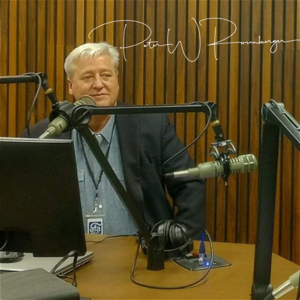
Welcome to Hope for the Caregiver. This is Peter Rosenberger. Glad to be with you. HopefortheCaregiver.com. HopeforthTeCaregiver.com.
Many years ago, Gracie and I were regularly visiting Walter Reed when we lived in Nashville. And it was at the beginning of the war there in Afghanistan and Iraq and a lot of Wounded military were coming back. A lot of women were coming back as amputees. First time our country had really seen this. And Gracie was in demand.
The leadership there at Walter Reed, the commanding general, the chaplain, and so forth, really. Appreciated her coming and spending time with a lot of the servicemen and women coming back, but the highest-ranking officer. Who was wounded in Afghanistan at the time? And I think he held the record for many years. And my guest here will have to confirm whether or not that record has been broken or intact.
But was a brigadier general who Gracie grew up with the family there in Fort Walton Beach. And they said her dad said, Hey, you need to go see General Maney. He's there. And so we got to meet he and his lovely wife, Caroline. Gracie had met them when she was a little girl.
And we got to see them quite often because he was there for some time. And he's doing great, by the way. He's gone on back into civilian life. And he's a very, very prominent judge and just a wonderful man. And his daughter is with me today.
Her name is Lindsay Funches. Yes, you got it. And I said it right the first time, Lindsay. You did. Surprisingly, she married an army guy, too.
What are the odds? Of an army girl. They might actually be high. An Army girl married an Army guy. Lindsay has had her own journey as a caregiver, and her dad sent me an article that she had written.
And I was so taken with it, and I said, I've got to have her on the program. And then Lindsay, you got all nervous saying, I've never been on a podcast before. And I was like, well, it's just me, Lindsay, just you and me. Nobody else is listening. No.
Right, right. But no, I'm thrilled to have you here and to tell your story, tell your journey. And it was such a treat. Lindsay, she and her husband are married in the same church. Gracie and I were married in.
She went to a competing high school in the Fort Walton Beach area that Gracie went to Fort Walton Beach High School. And she went to Choctaw, which is on the other side of town. But it's just really a wonderful treat to be able to connect with your folks there at Walter Rita. I hated that your dad was inpatient for so long, but I still think is he still not the highest-ranking officer to be wounded? You know, I don't actually know that statistic well enough to say.
Well, he held the title for a while. No, he did, but I don't. I don't know if it's been broken. He got his bell rung pretty hard, but he has done well and come back. And you have just delightful folks, and I'm grateful.
To know them, and they've been just a wonderful source of encouragement to us. But your journey. is no small journey. What you and your husband have been through. And so, why don't you bring us up to speed and tell us how we got there?
Sure. Mike was in the Army, and we had two children. who were um about One and three, two and four when our third child was born. And our third child was actually born in the middle of a 15-month deployment to Iraq.
So born in the middle of the surge in 2007. And when he was born, he had some really puzzling Oddities, medical issues He was born a solid nine pounds, and then he rapidly began to fall off the growth curve. He was born on R and R and Mike headed back to Iraq and In the next, I guess, seven months or so, everything just fell apart with our sweet boy Steele. And um After about 16 months and a whole lot of drama, he was. Diagnosed with Cruzon syndrome, which is a rare cranial facial syndrome that affects.
Yeah. Out of every million births.
So I think there are maybe 5,000. people in the United States with Cruzan syndrome.
So essentially his his midface doesn't grow correctly. And so that affects breathing, eyes, hearing, speech. And then it also affects room for the brain, and so the skull can become too small. and put pressure on the brain. Where were you guys living when this all happened?
We were at Fort Bragg, which I think is now Fort Liberty, North Carolina.
So, I would assume that you started at the Army hospital and then. Actually, we did not. Steele was born in Civilian Hospital, Cape Fear Medical Center. And he had a civilian pediatrician. And I will say his early months were just.
Very challenging. in that so much was going wrong, but Doctors really didn't know why or. Think that there was something wrong.
So I do think we probably went through five doctors. in the first year of his life. Did they move it along the food chain or did you push against the system? I pushed against the system, but I did have to really learn, and this is something I've had to learn over the years, to push. To say, no, I really think there's something wrong, and I don't know what it is.
But can you help me figure it out? And if if you can't, I need to go to someone else.
So that was a learning curve. as kind of an obedient, you know, oldest child. I don't naturally necessarily do that, and that's something that I've really grown in and learned in the past 18 years of Steele's life.
So we ended up leaving that pediatrician. And some several other doctors, and I went to a pediatrician who. Graduated from Davidson as well, just was 10 years older than I am. And he was fantastic.
So I walked in. Still in North Carolina? It was still in North Carolina. And I walked in with five typewritten pages of everything that I had observed about Steele. Steele was six months old.
And I just sat down and handed him this document and said, These are all the things I've observed.
Something is wrong with the baby. And Steele, at this point, had failed his two-month markers, his four-month markers, and he failed his six-month markers. And that was a great pediatrician. And he, I remember, he put on his reading glasses. And he just sat there and read all five pages, which is really a gift for a doctor to do.
And then. the ball sort of got got rolling. Had he ever seen a patient with this syndrome? He had not. He actually called me that night and said, I've been looking through my medical school textbooks.
and I think he has something called Cruzon syndrome. You know, he gave me a little thumbnail sketch. He said, I want to send you to Chapel Hill to see what they think.
So we got routed up to Chapel Hill, and they have a very, at that point, very early and young craniofacial center. Mostly doing cleft palate, not craniofacial syndromes. And the surgeon and the team that they sent us to. actually said oh no he does not have cruz on syndrome And they proceeded to test Steele for just about everything you could possibly be tested for, except for Crusan syndrome. And our pediatrician stood down at that point and said, well, they're the experts.
You know, we'll let them do their thing. By the way, that's a line that I don't use anymore. The experts. They're the experts. We'll let them do the thing.
I stopped using that line a while back. Yes, I agree. I'm tired of people getting it wrong. And let's have a conversation. Let's not start poking and prodding.
And I understand it. I get it. And I understand that world. But there is a point where you say, no, no, no. Back up conversation here.
Right. And Yep. And our pediatrician was right. They found out that the specialists, the experts, found out that your pediatrician was right all along and all those tests were irrelevant. Yes.
What was their response when they got to that decision point?
Well, because we were military. They discovered Steele's skull was fused. That was He had his first skull surgery where they took his skull. By the way, that has nothing to do with the military, their skulls are not fused. We thought there, Lindsay.
Yeah, that's right. That's right. They found out his skull was fused. No, that's Marines, not Army. We don't want to have a conversation, Lindsay.
We're going to get upset with us here. All your letters need to go to Lindsay at the internet.google. No, I'm just. But no, so they, so what, what, because you're military, what happened? Oh, because we were military, we had to move.
That was the thought there. That was, see, that was the part of the sentence that was missing there, Lynz. Yes. So we had to move. And we moved when Steele was 17 months old, and it was about a month after his first skull surgery.
And at that point, I called back to Chapel Hill and said, Did you all do that Crusons test? Like, you were supposed to do it, you know, when you took blood work. Was that done? Because I want we had reordered it. And they had forgotten to reorder it.
So I ran Steele to a clinic and did blood work. And long story short, he was diagnosed after we left all the doctors at UNC Chapel Hill. Our next stop was Atlanta. And they were pretty great. And then we ended up out here in Seattle.
And one thing I really love about our Seattle team, which I'm sure you'll appreciate with your journey with Gracie, is. They're wonderful about saying, Lindsay, I don't know. I have no idea. That's what I respect the most. I don't know.
We're going to think on this and then let's talk about it. Gracie has humbled many surgeons and not said a word. Yeah. Because they come thinking they know what they're doing, and all of a sudden it falls apart on them. Last year, I told him before we started, I said, Look, you need to be prepared.
If something can go wrong, it usually goes wrong with her. She's very complex and. And he said, We got it, Peter, we got it, we got it. And he came back after this thing really went south on her. And he said, In all my years, I've never seen this as a surgeon.
And I looked at him square in the eye and I said, Doc, the first time I heard that from a surgeon, Ronald Reagan was president. And so, you know, so I appreciate when they say we don't know.
Now, did you get the diagnosis when you were in Atlanta? Pardon me for asking, but what hospital were you guys at in Atlanta? We were at Children's Healthcare of Atlanta.
Okay, so you had really good facilities there, and you got great ones in Seattle, too. And when did you get the official diagnosis? This is what it is. We got the official diagnosis. He was about 17 months old en route during our move from.
North Carolina to Atlanta. Did that give you any relief? Just a little bit. It did. It did.
It did give me a lot of relief. And, you know, I could learn about what the problem was, and I didn't. Your imagination can take flight when you don't know what's wrong.
So it was helpful to know what the problem was. And to have some hope that Things could be fixed or corrected or improved. Um Well, I guess it would give you a lot of clarity.
Okay, here's what the path looks like now. It's kind of opened up. Yes. We don't need to worry about all this stuff on the left and the right. Here's where we're going.
Yes. So then the treatment part started.
Okay, now we know, and here we go. Right. And how did that commence for you guys? And then, how were your other two children doing during this process?
Well, I would say the two-part question: he had his first cranial vault remodel before he got the actual diagnosis. And then having the diagnosis helped us understand that as he grew, his face would never grow correctly. And so surgeries were expected and Planned throughout his growth because you can't correct everything in one blow as a child goes, and you have to wait until the longest period of time that you can wait without causing permanent damage and then let the child grow more and then correct again. And so that gave a little bit of a road map for where we needed to watch. And provide feedback.
We were routed through to a craniofacial clinic, which was helpful. And we went down that path. My other children I really think it's been a huge blessing. The oldest two. responded so well.
You know, it was all they ever You know, really new. My oldest, Mary Boyd, was four when Steele was born. and Sam was two. And then Haley came along When Steele was 17 months old.
So they're only 17 months apart.
So, four children in under six years.
So, it was really baddy. It was kind of crazy, but I do. Were you guys scared having a fourth child? Yes, yes, we were. And she had a, we got to have a 3D ultrasound of her.
Steele syndrome can be genetic. In our case, it was just a spontaneous mutation. But they were concerned about Haley, and she was very, very healthy. Uh which was a blessing. But the kids, all of them, I think.
really cherish their brother and have learned to protect the weak. They're very good with anyone who is ill or elderly They're not scared by someone on oxygen. They have a different outlook. And I remember being grieving. during say the early years of Steele's life.
that My older kids were being shorted, you know, like I couldn't. Take them to soccer, or I couldn't. Take them to ballet. We had to miss church a lot because he was sick. We missed a lot, we still miss a lot of gatherings and feeling guilty, I guess, as a parent.
That I couldn't do everything I wanted to do for all of my children. And I had. A friend point out that the Lord would use this situation to shape and bless them. And he really has. Yeah.
Pretty much peace with that now? And the kids, it has blessed them so much to have a brother with medical special needs. I've seen a lot of today's youth, and I've had a lot of special needs families on this program. And the overwhelming response is: there are worse things you can do. For healthier children.
than to expose them to unhealthier children. Because it gives an opportunity for them to grow in ways they would not have grown. And I look at today's children, and so many of them have no concept of what it's like to be around somebody with special needs. And the overwhelming evidence and feedback I've gotten from specialties family is they're able-bodied children. are light years beyond their peers.
particularly when it comes to I guess the the word they're using now is an emotional IQ. I would say. My oldest, she's in graduate school to become a speech-language pathologist. and she sat through so many appointments with her little bag of books, and she knew that was what she wanted to do from ninth grade on. And I just see just the Lord's hand in exposing them.
Hmm. the situations in which they were exposed. And how he used it for a great good. And they Well, this is an example to my youngest. She's applying to colleges.
And you know, for scholarship, she's a senior in high school, and we were looking at one of her prompts the other night for a scholarship competition, and it said, you know. Describe a challenge that you have faced in your life and how it has shaped you.
So we were coming up with different, you know, she was like, well, what challenges have I faced, Mom? And I said, well, Haley, you know, what about having a brother with medical challenges? And she said, well, that wasn't hard. And that was another, I was like, oh, but I just kind of got a little quiet. 'Cause since she's been born, he's had twenty-four surgeries.
So twenty-four times when You know, she was staying with someone else, or grandparents flew in and cared for her, mom wasn't available, dad wasn't available. You know, the stress level it goes up in a home. Children don't get to go the places they want to go necessarily or do the things they want to do because mom and dad are busy. How long would the average hospital stay with each surgery roughly be?
Some of them were two and a half weeks. I think were the longest ones.
So nothing compared to what you and Gracie have done.
Well, and don't try to compare to that. Gracie is a she's an outlier anyway, but you know, a lot of people have these lengthy hospital stays. And part of the thing with Steele is that because he was so prone to infections. And so, you know, and hospitals are not known for being infection free.
So yeah, I can see where this just topsy-turvy, but is he done with surgeries for a while? Lord willing, yes.
So permanently. No, I don't believe so. Because he does have a shunt, and their failure rate is very high. And the surgeries that would come, would they be these heavy-duty reconstructive, or would they be. For lack of a better word, a maintenance type of surgery.
But is he done with the big reconstructive ones, you think? The jury is still out, but we hope so.
So he had his last reconstructive one summer of 25, hopefully.
So, but we're still waiting on all the results and. Then what about school? How did that work out? Uh we home schooled him for Till he was in fifth grade. Which I think was extremely helpful because we could homeschool around medical appointments and surgeries.
He had a period of stability. For a good four or five years. The bottom fell out his senior year, and that was very, very hard. But he made it. And now he is at Lipscomb in college and doing well.
And Vanderbilt is his pitch-hitting hospital.
So it's right there by Lipscomb. We live right around the corner from Lipscomb for 30 years.
Okay. What is he studying there? He's studying business and minoring in music. He plays a guitar and he's a songwriter and he loves music.
Well, he's in the right place for it. Yes, he is. And when do you get to see him? Because you're all the way out in Washington. I am.
Was that was that pretty nerve-wracking to let him go off to college? I think it's sort of crazy, yeah. But I don't want my fear to hinder my children. And the Lord has provided so much all along the way. And he provided for steel in Nashville in amazing ways.
You know, my daughter got into grad school in Nashville, she's at Vanderbilt. And she is 13 minutes' drive from Steele at Nashville. And she's got a couch.
So when he had some issues earlier in the year, I went and slept on her couch and went with him to his neurosurgery appointment. And it's just like the Lord has. Paved the way, and I couldn't have planned all that. I didn't plan all that. The Lord did that.
Is he still sub subject to infections and things like that now, or is he pretty much past that? Um I think we're past that from the surgeries. He can have a harder time with his breathing and illness and colds. Does the sinus is does he deal with sinus issues a lot? Yes.
Well, because he he had um he has a prosthetic skull and they had to remove some of his sinuses.
So, you know, things just don't work quite right.
So, what could be just a cold for you and I. Can be more serious for him. Yeah, they made a 3D skull for him with the cooter, didn't they? They did. It's fascinating.
It's crazy.
Well, I will give you a heads up on Nashville or something, but growing up in Fort Walton, you would know these things. Nashville is a horrible allergen mecca. There's more allergens than there are country music singers. Oh, gosh. And that's what Gracie had, the worst type.
She had some of her frontal sinuses obliterated. Because she had such problems with, and part of it was when she had she banged her head pretty hard in the wreck, and they ended up obliterating some of her sinuses. And so she's just stayed with. You know, singular and things such as that all the time. Out here, she does a lot better because the air is just drier and it's just less floral stuff, you know.
And, but that's right. They got a lot of great allergy specialists there in Nashville because there's plenty of work. And yes. But that's wonderful. And so, what brought me to you is your dad sent me this article and then.
I'm reading about how you grew through this journey. And you know, you're you come from a very sharp family. And you're you're Sharp and aggressive, and you got that mama bear thing where you started, you know, I'm going to go down this path here, and I'm going to learn about this, and I'm going to push back on these people. And what do you think has been the biggest change for you. As you've been on this journey now for how many years is this?
18 years? 19? 18 years. Yep.
So 18 years, you've been.
So, what's changed do you think the most in you as a just as a person, as a caregiver, or or advocate or mom? Or just what comes to your mind? I think. being you're being honest with God. About Everything.
As much as I possibly can. Learning to ask him for faith, learning to ask him for help. learning Stewardship. I was a pretty hard charger, you know, type A And I definitely had to learn. that the Lord is in charge and I am not as much as I would like to be, and as much as I desire good things for my children and for my family.
The Lord desires better things, and I may not see that or know that. But submitting to his will for my life and for my children is the safest and best place to be. I think Corey Tinboom says that, you know, Lord, keep us in your will. Your will is the safest place to be. There's no other place that's better.
And that was a comfort. You know, when my husband was deployed to Iraq, like it's the Lord's will that he is there, and there is no safer place for him to be. but in the Lord's will. And I've had to learn that, and by God's grace, keep learning it and be reminding of it that. God's will for my son was that he would have this syndrome.
And that is a safe and a good place to be. I had a pastor friend of mine. who said to me, he was preaching a sermon and then we talked about it afterwards. had been king for a while. And there's a place in scripture Where David is sitting there, and it said, In the spring when the kings went out to battle, David stayed back.
He just got tired of going out to battle, evidently. And that's when he saw Bathsheba. Right. And the lesson learned from that is sometimes the safest place to be is in the heat of the battle. Right.
Is that a fair statement for you as a caregiving mom? I always say so. Yes. This is where God has called me to be. And I can rejoice in that.
And it's a beautiful place to be. It's just different from what I had initially expected.
So. By the way, I love that quote from Corey. I don't know if you knew this or not, but Corey used to vacation down in Fort Walton. I did not know that. and when Gracie was a little girl, Gracie's aunt was friends with that lady.
Said, Gracie, we're going to go meet this special lady and we're going to take her a little present. And Gracie had been wanting to come to know Christ, and she'd been talking about how do I become a Christian? And everybody kept saying she was too young, and we'll tell you later, that kind of thing. And Gracie's a little bit impetuous. And uh She's a Well, if you look at pictures of me, you'll see what Gracie has done to me.
I mean, I look old. My son is a photographer, and he was taking some pictures of the website for me. He said, and I looked at the pictures, I said, Man, I look old and tired. He said, Dad, you're going to hate what I'm about to tell you. But anyway, so Gracie's headstrong, and she gets over there, and it was Corey Tinbun.
Wow. And she looked at Gracie. And she said to Gracie in that thick accent of hers, Is Jesus your friend? And Gracie kind of understood her, but she was only six. And she said, Well, I want him to, and nobody's to tell me how.
Oh, wow. And Corey, right then and there, laid out the plan of salvation for Gracie and led her to the Lord. Wow. And right there in Fort Walton, your hometown in Gracie's. Wow.
And it's a journey that we, none of us, you know, you and your husband and Gracie and I, we certainly didn't seek this out. Your dad and mom, when he went over to Afghanistan, and he's doing his job over there. and gets hurt and he has to spend a year or so in Walter Reed and And yet There are things that we learn in these paths that are so profound. They truly shape our life. And when I was reading your article, I I was watching the the progression of your thought.
how you went from Almost panic. To a place of great stability in your life. And the name of the article, by the way, and I'll link to this in the podcast, and you can go out and do a Google search on it. Parents, be where your feet are. And it's a powerful article, and I think you have more coming.
So, were you a writer prior to this, or did, or did this develop along the way? Did you journal, or how did that come about? I've always loved writing and reading. But I would not say that I was necessarily a writer. I have taught English for middle school and high school.
I enjoy editing and proofreading, which means I torment my children on their papers. Bleed, they call it bleeding all over the papers. My first manuscript I turned in came back from an editor with so much red ink I thought I'd been stabbed. You know, it was just, it was painful. That was, you probably did it.
I really have. Yes, my children are like, mom, just pick a couple things. I'm like, no, we have to work on all of this. But so I do enjoy writing and journaling. Yes.
So, and then Steele. I'd thought about trying to write about this experience around when he was 10. And honestly, you know, life was just too Crazy. and sending him off to college. I want to write this down.
Just the things that the Lord has done in our family's life through Him.
So I started writing different thoughts, articles, chapters. I thought, well, this will be a good record for our family, or maybe one day I'll try to publish something. And Steele called me around this time from Lipscum, and he said, Mom, I think we need to write a book. And I said, oh, really? Yes, mom, we need to write what God has done.
I said, well.
Okay, I've already been writing down things for our family. And pardon me for interrupting, but that's an amazing statement that he made. A lot of people say we need to tell our story. Steele said we need to write down what God has done. Yes.
That's an amazing moment of clarity for a young man. He he loves the Lord. And he has suffered. A lot. It's a lot of pain.
And I think that you know, shapes you. differently. And that. He's seen God God's hand over and over. in his life.
So he definitely feels a call to Share what God has done with others. He actually goes and he he plays the guitar at the hospital. He's done that for the last two years for patients. when he's well enough. And it just makes my heart so happy.
You know, the verse in Corinthians: we comfort others because God has comforted us. And he's been comforted in the hospital. Through the music man, or through the art therapist, or people coming to visit and Now he's doing the same thing. And I think he feels that way, you know, with his life. Like, how can I share God's goodness?
With others who may need to hear it. I think that's marvelous. I love that verse. That's what has shaped so much for Gracie and me. You know, we comfort one another with the same comfort that we ourselves receive from the God of all comfort.
And then the natural question I ask myself is this, and I want to ask you this too, Lindsay. What is your comfort? What does comfort you? You know, Gracie's still in pain, still has to deal with the residual impact of all of the things he's been through.
So, what does comfort you, Lindsay?
Well, I think at the end of the day, and I alluded to this in my article a little bit, and I think you've alluded to it specifically: like, Christian, what do you believe? And when everything is stripped away, Like the comfort is God. And he is there, and he is. Close to the brokenhearted. He saves those that are crushed in spirit.
And it's hard, you know, as a child growing up. And, you know, I think I became a Christian around age six, you know, like Gracie. Those words their words and of course their scripture. But they become very real when you are the brokenhearted and you are the crushed spirit. I got to write that one down.
They become very real when you are the brokenhearted. I love that. That is beautifully said. Because it does. There's something about being in the crisis of this thing that distills it all down, doesn't it?
It does. You're just.
Okay. What do I believe in? Is God here? Yes, he is. And that is enough.
And is it like that all the time? No, you know, like I forget, I'm a chronic forgetter. Um If I could just I know why God tells us over and over again: remember, remember, remember, it's because we forget. A pastor friend of mine says: we have gospel amnesia. Yeah.
Well, now, I know you can't tell his story, but allude a little bit to Mike and his journey, your husband. Sure. Because this must have been very, very frustrating to him. He's got a job to do in the military. He's deployed away.
You're handling everything at home by yourself as so many Army spouses do, and yet you've got this extra challenge. And this must have been extremely difficult for him. It was. It was. Unpack that a little bit, Lindsay.
Well, I think. you know, being deployed. in not being able to help. When I'm you know, overwhelmed. is difficult, you know, worrying about the kids not remembering him.
He was going through surgeries while Mike was deployed.
Well, actually his first well, yes, throughout the eighteen years, yes. And um but Mike has been very proactive about trying to be as present as he can be. And putting our family first, which he really did. When he was deployed to Korea for a year, Steele was about 10. And the bottom fell out.
He had pressure on his brain. He needed a skull surgery. And then It got infected and it ate most of his skull bone, which is why he didn't have a skull. But Mike came home on emergency leave twice. And the second time with the infection, When it came back, he beat the Red Cross message.
I don't know how he did it. I called him from the OR. and told him the situation. And my mom did get here faster. From Florida.
She was like. Wonder Oma. Um Got on a flight and ended up in Seattle within 24 hours. Your mom's very capable. She is very capable.
And she's very capable. My oldest was in eighth grade at that point. You know, the kids couldn't be left at home alone. And still was an ICU with a bone infection in his skull. And my mom just got on a plane.
And then about 10 hours later, Mike got on, you know, Mike landed from Korea. And he's had very supportive bosses. which has been great. But I would I mean, he will acknowledge too it It was hard not to be here some of the time. And he's our fun guy.
You know, walking through these 18 years. Fun is so important. I'm not very fun. You know, I kind of like administrate fun and I make sure everybody has food. Are we regulation type fun?
Right. Like, I just, okay, we're all going to go skiing. Everyone needs water bottles. And That kind of stuff, but my husband is just straight fun and. Fun is really important when you're walking on this path.
And he can walk into a hospital room and he'll do things like bring a bunch of cardboard and duct tape. and we would make cardboard armor and swords. And The little boy in the hospital room next door in a wheelchair, you know, were having sword fights. Um that type of stuff. And it's just so valuable.
So, whenever dad is able to be there, it just brings extra joy. Do all your kids have a pretty decent sense of humor? I would say so, yes. That's helpful too. Just helpful.
My sister-in-law Kim and Richard, my brother, they have a special needs daughter, 37 years old, and Um, and two sons, and the whole family is just goofy with humor. And, you know, and it's really, I mean, because they've been through some very dark, dark, dark times. And uh, now Richard, I feel bad for him because he thinks he's funny, and it's a terrible affliction because he's really not, but he thinks and you know, it's just no, but it's the whole family is witty and clever, and they laugh and they engage, and um, and Kelsey has um she's she's non-ambulatory and non-verbal and Um uh developmentally pretty stunted like about like an 18 month old. But she's right there with the family. I mean, she's just everything is, they just do it.
They're just a family. And There's just that this is our life. It's not a bad life. It's a hard life, but it's not a bad life. Right.
And you guys seem to have shaken hands with that same principle. This is our life, it's not a bad life, it's just a hard life. But here we are, and we're going to live it. We're not going to postpone life. And I think this is the thing a lot of people do: they try to somehow sequester this part.
And Either leave themselves out of living life or think, okay, I'll put this on hold until this is dealt with and then we'll go live life or whatever. But it's all one big messy life and it's okay. Right. Yep.
And I've learned that the hard way with Gracie. There is no surgery that's going to help us resume and get back to normal. This is normal for us. And that's okay. And you learn to shake hands with it.
And that's when you see the principles that God lays out, and what you laid out in your article: be where your feet are. You know, I'm going to be present in this moment. Did you find that as you would, and none of that happens accidentally, by the way? Is that a fair statement? Yes.
You don't intentionally I mean you don't accidentally just Decide you're going to be pre, I mean, you don't accidentally decide. It's an intentional act. And it doesn't necessarily get easier, but it gets more, you get more competent at it. And really, this is our life, and it's okay. And I've learned in my life, and I want to hear your thoughts on this.
that I I have to be very careful what I call bad. Mm. Have you found that to be true? Not sin, I'm not talking about right or wrong, but but but we had, you know, well, I'll give you an example of Gracie when she got hurt. You know, people were asking one, onebody asked one time, what did you do that God would do this to you?
I you know I'm sorry I wasn't there I would have I would have I would have taken some some type of action on that but yes but we we need to be very careful what we call God's judgment or punishment. Versus God's leading us into a different place. to reveal more of himself to us in anything that brings us to the cross. I I'm I'm a little bit more careful now. of what I've Of how I designate things because we look at blessings as new cars and big bank accounts and health and wealth and prosperity.
And I don't see it as such anymore that way. I look at prosperity as a deeper understanding of the gospel. And I know uh I think Steele was He was under a year old, really during the time when I was. Struggling with what is this? What is wrong with the baby?
Why is everything going wrong? Um You know, my life was rapidly changing before my eyes, and I didn't even know what was happening. Um, as we moved from crisis to crisis, and John nine one through three. Um You know, when Jesus is asked why was this man born blind? And he says, this happened so that the work of God would be displayed in his life.
And You know, thinking about that, why is Steele have Crusan syndrome? You know, it's not a bad thing. Neither this man or his parents sinned. You know, like it's not. a punishment.
It's actually a gift. He has Cruzon syndrome. He was born blind. You know, this accident happened.
So that the work of God would be displayed in his life. And I think for me, embracing that. helps me in reminding myself of that. to be more of a steward, Like the Lord gave our family this gift. Um It's a hard gift, you know, it's a severe mercy.
But it's a great Gift. And when I You know, people, I guess you're calling things that are bad that Your statement on that. You know, people think, oh, going to the hospital all the time is bad. Um But does it have to be? Is it actually A joyful experience.
You know, can we bless people who are there? Can we be blessed by them? Can it be actually fun? Um Because that's where God calls me to be today.
So That's how my thinking I think has changed. and grown over the years. Yes, it's a pain to drive to Seattle Children's in the traffic on I-5. But we can listen to an audiobook together. We can have fun.
We can joke with the guy at the front named Jacob who recognizes Steele without even. you know, we don't even give them our name anymore. Like they just Know us literally. And there's a lot of joy in that because. They're good gifts right there.
That God has packaged. I just have to have eyes to see them. And if I'm angry or wishing I was somewhere else or Even just numb. or not paying attention, I'll miss those good gifts. If that makes sense.
Does that make sense? It makes a lot of sense. You know, we're called to be a peculiar people. And whether we like it or not, if we bear the name Christ, People are watching. People are watching.
They're watching how we deal with adversity because the world deals, it's the human condition. And people do watch and they pay attention. And they see the way we handle these things. Do we is this? Faith of ours real.
that we tout. And is there something different? About the way we're approaching this, I can promise you, I haven't met Steele, but I can promise you. that any room he walks into, he's elevating the quality of conversation in the room. And I've said this about Chrissy.
I've said this about Johnny. They can both, all three of them can show up. In the same room. And immediately, there's a theological conversation going on in people's minds. when they see them.
How is that a bad thing? How's that thing? And so, yeah, it's a hard thing, but. not nearly as hard as the cross. Right.
And so he said, take up our cross and follow him, not take up our platform and our pulpits and our wealth. He said, take up the cross. And the cross is not necessarily the affliction of suffering that we have in that sense. I think the cross is that demand that somehow God. bend to our will.
And when we say not mine but thine, Something changes. It changes. And as you said, as we embrace that, and I have found that very same thing that you said, when I embrace that. I found that that truth embraced me even tighter. And it steadied me so that when I'm looking at the things that I have to look at.
I'm not blown here and about. Uh it's hard and you weep. And uh and you mourned. But Jesus also said, Blessed are those who mourn, for they shall be comforted. And you're not mourning if you're raging or despairing.
Right. And mourning means you're accepting this, and it's okay to grieve it out, but that's where the comfort comes. When you realize, oh, he is sustaining me in this. He's sustaining Steele. He's sustaining all of your children.
He's sustaining Mike when he was in Korea or when he was over in Iraq. He's sustaining you in a hospital parking lot when you're just at your wit's end. He was sustaining your mom and dad at Walter Reed, and he was sustaining Gracie. Um ever since she hit that Concrete abutment. And he sustains me.
And so this is the this is such a Well, Lindsay, I'm really grateful that you took the time for this today. And I want to do more of this. I want you to come back home because you have so much to offer, and you have this calmness and assurance and this thought that you've put into it. Last thing that I would ask you to say. Right now, I don't know who's listening.
But there is a a young special needs family. Maybe they just got a diagnosis. Maybe they just have been introduced to this world. What would you say to him? Should we I would say You've been given a great gift.
if you've been given a special needs child. And You might have You probably can't, you know, see the gift. For what it is right now. I still don't see it in all its fullness. Even though I've seen much of it.
But I think of Psalm 23. And your cup is going to overflow, and goodness and mercy will follow you all the days of your life. The Lord will shepherd you through this. He will discipline you. He will bless you.
This is a great gift. It's just different from. the gift he might be giving your next-door neighbor. Uh embrace the gift and accept the gift. Mm.
Um One last question. And I know it's a leading question, but that's okay. It's my show. I can do that. Yeah.
Yeah. Would you It's pretty cool. Would you Agree. That When you turn into it, like you just described, of embracing the gift, of recognizing, okay, I'm not fighting God on this anymore. I I'm not gonna be Hurling accusations at God anymore.
I'm going to accept that this is His hand on my life. in this circumstance. Would you Did you see a change in the way you approached moments of poignancy music, art, Nature, food, relationships, everything just took on such a A deeper Poignancy is the best word I can come up with. I was driving down the road with my nephew, Gracie's sister's son. And I was playing a new song that Gracie had cut.
Um this is two years ago. And he looked at me and he said, Wow Every song Aunt Gracie sings takes on a whole different meaning, doesn't it? Oh, absolutely. And I thought that's it because it does, it takes on a whole different meaning. Every meal, every romantic moment in a marriage, every Piece of music, every worship song in church, everything just has texture to it that we would not have otherwise.
Is that a fair statement? Oh, absolutely. There's a richness. There's a A gratefulness. There's a A sharper understanding.
You know, every birthday that Steele has. We celebrate all our children's birthdays, of course. It's exciting. They made it another year, you know? Put another candle on the cake.
This is great. It's someone's birthday. Steals? Wow. Mm-hmm.
He didn't have a skull this year. And he's alive. Or, you know, it's just. Does that mean There's less of joy with the other children? No.
It means that the Lord is putting it in sharper relief. Like, look at all these great, wonderful things that I have blessed you with. I desire to give you good gifts. And you see the gift in sharper relief. and see it for what it is instead of, Oh, I gotta make a birthday cake.
Okay. We're going to, you know, Everything just becomes richer, I guess. And music has been huge, beautiful music, and hymns. Um so meaningful. Um You mentioned Joni Erickson Tata.
We had her hymns from a child's heart. Um C D's. And I would play those all the time when the children were little in the car and in the house. Yeah, it was difficult to you know have a lot of alone time with the Lord or When you have four children under the age of six and one of them has special needs, it's kind of bonkers. Um But I could listen to hymns.
Even if I couldn't have a long Quiet time with the Lord or Or make it to church. And I remember one time when I was just crabby, you know, Steele hadn't been doing well. The stress level was rising, and Steele was, I don't know, seven or eight. And he came up to me and he said, Mommy. I think you need to put on your hymns.
I said, ah, yes, I do. Um and the words of those hymns become more clear. And more sharp, like praise to the Lord the Almighty, the King of creation, the king of this child who fashioned this child. who made all of my children Give him praise. You know, immortal, invisible, God-only, wise.
He's wise. Um I am not and just the relief, the the sharpness of those words and the beauty in which they are sung and spoken is so meaningful You know, praise to the Lord the Almighty. I have a lyric from that on my. office door. Ponder anew what the Almighty will do.
If with his love he befriends thee. And it's one of the only hymn that I know of that has the word ponder in it. And I did that. I do a series on the program on the radio and it's um of hymns that every caregiver ought to know. And that was one of them.
And the story behind that. The guy that wrote it, his name is Joachim J. O. C H A I M He lived over near Dusseldorf. And uh his last name was Neander.
And he would go out to this little valley area in the woods. He was known for going out there and writing these amazing poems and hymns. And they named this after him. And they named the valley after him. The word was Thal.
the fall after him. A couple hundred years after he died, and he died when he was like 29 years old of tuberculosis. I think is what it was. couple hundred years after he died. They discovered Um bones that they named after where it was discovered.
Uh four. early man, they said, and they called it Neanderthal man. Named after this guy that wrote that hymn.
So where scientists We're looking into the dirt to see man. The guy they named it after was looking to the heavens to see God and lifting his head. And praise to the Lord, the Almighty. It's just, I love that hymn. It's one of my all time favorites.
It's one of my favorites, too. And we have done such a disservice to so many in our churches by shelving our hymnals. And so that's something I'm on. I started off to do 30, and I'm going to probably end up going to 300 because I just love them so much. But that's a great one: immortal, invisible.
What it's doing, and what you're doing by quoting those things, Lindsay, is telling us all to lift up our heads with God, folks. There's more going on here than we could possibly understand, and we can trust it. Yes, and that's the God who created you and your child and watches over you every day, your wife. Um You can just Relax and rest. And this and the shelter of uh of his wings, in the shadow of his wings.
And that's a great way to end. Lindsay, if people want to get in touch with you. I don't even know if you have a big social media presence or anything like that, or website, or anything like that. Do you want people to get in touch with you? Sure.
Or do you want to stay do you want to stay kind of sequestered in life? But if somebody wanted to get in touch with you, what would be the best way? Is there a website they can go to or they can see more of your writings? I'm going to link to this on the podcast, but how would people want to find out more about you?
Well, I'm a pretty unsophisticated gal at the moment. I would be happy to encourage anyone along their path. I think probably the best way would be email. I don't really have a a website. Um Well, I'll tell you what, Benthe, go out to rootedministry.com if you want to read her article.
Sure. Rooted ministry.com. That's root with. Two two O's, not a U. Rootedministry.com, and you can look up Lindsay.
Uh functions in the Just type in the search engine there, and I will link this in the podcast and put it out on social media. And if you were just burning to get to Lindsay, you know what? Just contact me and I'll send it on to her. I'm on LinkedIn. Sure.
Yeah, I don't want her to give out her personal email, and then she'll get all kinds of spam and everything else. And so, but if you want to get in touch, but I hope that we can have her back on. Lindsay, you got an open invitation. You can bring the whole family, even mom and dad. You can bring everybody.
We'll just have a group chat here. But I very much appreciate you taking the time to talk with us today and to share your heart. And would you let me know anything else that comes about that we can, I'd love to be able to have you on anytime. I really would. Sure.
We'd we love it too. And steel is quite a He's quite good at podcasts. He's been on one of these organizations. He's 18. Yeah, he's.
Very glib. He's a big extrovert, so well, we can look at having him on as well. It's it's uh, as Groucho Mark says, it's so easy a child of five can do it.
Somebody get me a child.
So, well, thank you, Peter, for having me on. Too my privilege, my privilege, it's been a joy and. Please give my love to Gracie and. It's pretty fun. We're from the same place.
It is indeed. And my best to your mom and dad. And I think your dad may even take the time to listen to this today. He just might. He's a good man.
Your mom and dad are just wonderful people. All right, well, listen, thank you. This is Peter Rosenberger. This is Hope for the Caregiver, and you can go to hopeforthecaregiver.com. To hopeforthecaregiver.com.
Right at the top of the page, click the blinking Caregiver 911 light. That page will take you to a short guided audio I made to give caregivers a quiet place to pause, breathe, and set the load down. You don't have to fix anything. You're allowed to rest here. Hopefortharegiver.com.
and click on Caregiver 911. Gracie, when you envisioned doing a prosthetic limb outreach, did you ever think? The inmates would help you do that. Not in a million years. What does it mean?
I would have ever thought about that. When you go to the facility run by Core Civic and you see the faces of these inmates that are working on prosthetic limbs that you have helped collect from all over the country that you put out the plea for. And they're disassembling. You see all these legs, like what you have, your own prosthetic legs. And arms, too.
And arms. When you see all this, what does that do to you? Makes me cry. Because I see the smiles on their faces and I know. I know what it is to be locked someplace where you can't get out without somebody else allowing you to get out.
Of course, being in the hospital so much and so long. When I go in there, then I always get the same thing every time. These men are so glad that they get to be doing, as one man said, something good finally with my hands. Did you know before you became an amputee that? Parts of prosthetic limbs could be recycled?
No, I had no idea. I thought we were still in the. 1800s and 1700s. I mean, you know, I thought of peg leg, I thought of wooden legs. I never thought of.
Titanium and carbon legs and flex feet and C legs and all that. I never thought about that. I had no idea.
Now that you've had an experience with it, what do you think of the faith-based programs that Core Civic offers? I think they're just absolutely... Awesome. And I think every prison out there. have faith-based programs like this because return rate.
of the men that are involved in this particular faith-based program. and other ones like it, but I know about this one. Are just an amazingly low rate compared to those who don't have them. And I think that that says so much. But that's so much.
about Just, that doesn't have anything to do with me. It just has something to do with God using somebody broken. to help other broken people be Yeah. If people want to donate a used prosthetic limb, whether from a loved one who passed away. Yeah.
You know, somebody who outgrew them, you've donated some of your own. What's the best place for them to do? How do they do that? What do they find? Please go to standingwithhope.com/slash recycle, and that's all it takes.
It'll give you all the information on the what's that website again? StanningwithHope.com/slash. Slash recycle. Thanks, Chris. Take My hand.
Lean on me. We will stay.