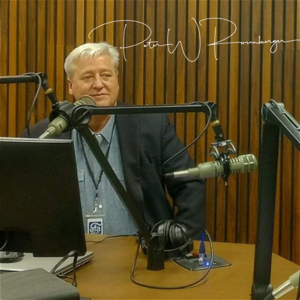
This is the Truth Network. Welcome to Hope with the Caregiver. This is Peter Rosenberger. This is the program for you as a family caregiver, and I am so very glad to be with you today. Hopeforthecaregiver.com.
Hopeforthecaregiver. If you're one of the 65 million Americans right now who are serving as a family caregiver, You're in the right place. If you're not, you're still in the right place. Because if you love somebody, you're gonna be a caregiver. If you live long enough, you're gonna need one.
How do you survive this? How do you thrive in this? How do you stay strong and healthy while taking care of someone who is not? That's where I come in, and I'm bringing you four decades of experience to offer a lifeline to my fellow caregivers. Glad to be with you, HopefortheCaregiver.com.
I am thrilled to be joined today by two special guests. They're from Colorado, and this is Ken and Mary Sue Grind, and they have an extraordinary story. As caregiving parents, and I thought you all would find their story not only meaningful, but inspiring and would also lift you up to hear their journey, what they've learned through it, what they've accomplished through it, and what they've become as a couple, as a family, all of the above.
So, Ken and Mary Sue, welcome to the program. Glad to have you here. Thank you. Thank you, Peter. We appreciate it.
You bet.
Well, I tell you what, let's just jump into it. You guys didn't set out to become exceptional caregivers.
Sometimes that just happens, doesn't it? Tell us a little bit of your story. What happened? Tell us about Jacob. Tell us the whole thing.
Uh in nineteen eighty one uh We were twenty 22 years old. And uh Jacob was born, and he had some problems from the get-go. Uh he ended up uh We ended up being told by the doctors that after a week of him being alive that we should just let him die? and that if he was to live he wouldn't live more than six months. And we opted to say, no, if God gave us this child, God can take him home.
We're not going to decide that. And so we accepted Jacob with all the conditions and all of the issues that he had going on. and decided we would we would make the best of it as long as we could because we were so blessed to have a A newborn baby. Can I jump in real quick on that? And and you were children.
And you hear that from a doctor. What was your first reaction for both of you? We were very angry. We thought how could you go ahead and And tell us to do this because they were trying to decide what was best for our life. at that time, and they thought that this was a burden that wasn't uh needing to have have us bear And that we could just let him slip away, we could hold him, we could.
comfort him as he passed, and And it caused great grief inside of us because uh We we just That's just not our way of thinking, and it's somewhat become that kind of way of thinking nowadays. And And we would have lost out on a tremendous blessing through the years. And I uh had Just given, you know, everything I had as a mama to bear him. birth him and Everything in me was to promote life. and I wasn't as much angry as I was amazed that someone would be that willing to Let let true life Go in the respect that I, as a mother and he, as a father, should go on and live our lives.
And there was a definite crisis that hit my heart. I wanted to believe the doctors were good. I wanted to believe they had the best in mind for. My son, but in the end, um I realized it was really going to be me and my husband. Choosing life.
for our son. Because every life is worth living. That's what we've come down to. It doesn't matter if you have... Tremendous disabilities or not any disabilities.
or disabilities that are hidden inside of you because nobody can see them. Every life is worth living, and that's been our mantra with our son. And for anybody that's in any kind of a disability or difficult situation. I have some very dear friends of mine. We lived in Nashville for many years, and I have some dear friends of mine who had a special needs child born over in East Tennessee when they lived there.
They were a young couple as well. And this is back in the um Late Yeah, mid seventies, I guess. And the doctor said to them, similar to that, except that the doctor is even more callous, said, take it home and love it. Yeah. And my brother has a daughter who's 37, nonverbal.
cognitively impaired, non-ambulatory, cerebral palsy and Doctor they said to the family take her home and love her. And uh And so you have a lot of these things out there, but you guys were children when this happened. I mean, you were children, and that had to be a gut punch. Did you find that people knew how to interact with you on that? I mean, that, that, you know, okay, so you just hear this from the doctor, and now you've got to.
Come up with a life. And you've got a nursery, you've got changing and taking care of a baby, but you also have a baby that may or may not live through the night. Did people around you rally? Did they know what to say? Did they engage with you?
Or were you kind of just. thrown to the wolves. We were thrown to the wolves. We had family on his side and my side. who attempted to be there and not by any means saying they weren't, but They had their businesses, and Ken's family was farmers.
So it wasn't something they could just break away and come down and support us. And honestly, at that point, I realized the trauma of his birth. had had the surgeries, they've given us that been ultimatum that he was probably not going to do well.
So I left the job that I had. And um Therefore, I became a lonely caregiver sitting beside my son in a hospital. on a metal stool, with him in an incubator. Literally Kind of like gazing at him and praying into him, but. Uh The support around me was my husband.
Because he would eventually go back to work. We had a nice two weeks off or what have you. But then It came down to The two of us negotiating and navigating who was going to go and how long we were going to go. Uh so for 137 days. uh we stood beside his um in the NICU.
With Jacob praying over him, knowing. All along, people were praying. My mother did come down for the first couple weeks. which is super support. To me, emotionally.
She had had five children. I was her middle child. She honestly was a beautiful woman who poured into me, unbeknownst to me, how to Nurture. And so I felt like between her giving me that and God supporting me. Those two people were the ones who I leaned on.
You know, Peter, it's you probably know this from your situation, but It it ends up being the in our case, Mary Sue and I have responsibility. We had a lot of people that were praying. We had a lot of people that would once in a while stop in but they're not able to do what know what to do They're not able to, it's over the top of them, and it's very hard. We had people give us some meals. We had people help us with finances once in a while.
We had support from family and friends that that we're we're praying but it ultimately ends up being our responsibility At least at the get-go at the beginning, and pretty much. through our whole time of of watching over Jacob. for his thirty-seven years uh people were there, but it always falls back on your shoulders. It does. For caregivers, that a lot of people don't understand until you've been there.
People, I think, really want to try to do something, but it's so. overwhelming, they don't know what to do, and you know, and and a tuna noodle casserole You know, I remember a friend of mine, Sunday school class wanted to adopt this family. They wanted to go in there and start bringing meals to them. And the woman was taking care of her husband, who had some kind of brain. issue and she had two children.
She was a teacher. And it's been going on about five years, and she wanted to do this. They wanted to take them on and say, We're going to take meals to them, and we're going to go over there and clean their house. And I stopped him and I said, Don't do this. He said, What do you mean?
I said, Well, think it through. This has been going on five years. Are you prepared for that level of commitment? What's going to happen is they're going to bring meals over. In the first week, the meals are going to be great.
By week three, it's going to be dominoes. Yeah. And then I said, then you're going to get over there and clean their house, and you're going to start to resent it. You're going to be up in their business. It's going to be weird.
stock their pantry. and pick up stuff at the grocery store for them, deliver to them. uh in that regards of uh and and then hire a service to clean their house. Yeah. If you want to do that, maybe once a week or once every two weeks to come in and just do a heavy clean to help with things like that.
But that way, you give them agency, you give them independence, you're providing the support that is desperately needed, but you're not up in their business. Yep. What do you think of that? Great wisdom. We also felt the same, knowing that it was on us, we didn't feel bad about that.
We were the chosen ones as parents. And we did have a few meals come our way. We had groceries appear on our front doorstep. Even had some pretty expensive milk product that Jacob needed at one point.
So there were some sweet deliveries of life and hope and gift giving. But yes. I look back. And people said, how did you make it? And we don't know how we made it because we just did what everybody else we thought were doing.
You said we were young.
Well, now this was our life. We didn't know anything else.
So we just had to wake up. And do Jacob. And that was a good idea. I get that. And I did.
It took me a while to understand that with me. But this is our life. And we don't wait to get through this and this and this before we start living life. We have to live a life in the midst of this. And we have to be successful.
We have to have a marriage. We have to have, you know, all the things that go on with the family. We have to do that, but we have to do it with this incredibly difficult. Set of circumstances. And it's a hard life, but it doesn't have to be a bad life.
Right. Correct. Is that a fair statement to make, Tom? That's a very fair statement. In fact, I don't think people.
Get that you can have a good life. in these circumstances. And and because people always want everything to be like perfect. And if you have this perfect life, then you really have a great life. But they don't understand that the blessing that you're getting.
by caretaking and helping A loved one, the blessings that flow back to you. are are just unbelievable what what you can learn from them. and what they end up teaching you about kindness, about patience. About long suffering. about caring, about giving when you don't have have the strength to give anymore, but somehow And and not having Angry feelings over, we had angry feelings, we went through all that.
But but the The the upside is is that Just having them With you and loving on them, and them loving on you, it's unbelievable. I'm going to throw out a couple of statements. I'd like to hear your thoughts on this. One of them is back to your anger issue. It's exhausting to stay angry.
What are your thoughts on that statement? Yeah, I'd say this is my own thinking on this. And how I I got through. Is that If I go ahead and I stay angry. Everybody is going ahead and being abused or.
in the whole household. and it's like life is too short to stay in that place. For me it was too short. The Bible says that in the morning, each and every morning, His goodness and mercies are new each day. And I would wake up with that motto of: okay, this is a brand new day.
Yesterday was yesterday. I think I'm done, and it's over, and I'm not reliving that day. I get to start afresh. and anew today. And it's it helped me.
Because otherwise I can't carry that burden like you said. I can't carry that anger. Uh it eats you up, and then you are worthless. At the end of the day. Mm-hmm.
Uh that's Well said. Mary Sue, what are your thoughts on that?
Well, you got choices. Uh one of my favorite phrases is We make choices every day to either despair or repair. And when we choose to despair, that involves anger, that involves. You know, a cascade of emotions, of hopelessness. But when we repair, we look and we count our blessings.
We see what we do have. Many times the things with Jacob was at least he didn't have. You know, cancer. At least he didn't have to wear a helmet because he had seizures. I mean, we went down the road and so.
I always did an exchange of despair to repair. And that motto or that feeling inside of me came from my faith. From all the old-fashioned songs, count your blessings, name them one by one.
So in that sense, that. that foundation that I had in me. Literally had I got to plant those seeds. Into the ground of this new life that we are living. To see what would grow out of them.
And we produced a child who was very thankful. Jacob became He wasn't the kind of kid that was um angry or frustrated. Um, I think it's basically his nature to be happy, but also on the other side, he was watching us not fall into pity or you know, fits of despair.
So, just to give you a little background more on Jacob, he had. six or seven heart attacks within the first week or whatever that he was born.
So we ended up having cerebral palsy. and was able to walk with a walker. or use a scooter, His brain functions were probably about six year old. In some areas, he couldn't read, he couldn't write. He knew a few words, but Uh his cerebral palsy was on his right side, so he was uh um you know crippled up from all of that um He had kidney problems and ended up having a kidney transplant.
Uh when he was fourteen. Multiple, multiple surgeries between his birth and 14 years old. Um So he was He He had a rough life. And could have A lot of anger and a lot of uh despair and and not have hope, but Um He chose to be happy and thankful for being with us and us with him and with his siblings. We had three more children.
After we had Jacob, so we had a family of six total. Was that a. Was that a pretty scary place for you guys? when you started when you looked at having other children? It's a common question.
We both have our own opinions on it. Personally, I was so naive. I said, oh, God would never do this to me again. In other words, Push me over the edge and give me a second child that had handicaps.
Well, living the whole Bunch of life now, I realize many families deal with multiple children with disabilities.
So I did not feel that way, and I certainly was blessed with three healthy children. Um On Jacob? And I was scared to death. And Uh Yeah. our second our second child, Hannah, came.
18 months after Jacob. Thank you. So our hands were quite full, and then our third child, Luke, was. two years after Hannah.
So we had three children four and under. And our fourth child was nine years behind or ten years behind Jacob. There was a little spread there, but after we had Hannah, I didn't have any more issues about having. More children.
Well, y'all figured out what was causing that, right? Yes, and we're grateful. That's quite a handful.
Now, how did your other children respond to Jacob? How do they engage with him? Um well Hannah was eighteen. 18 months later. 18 months later.
She, to this day, is a caregiver in her own nature.
So she responded well, Jacob, to her. Life was normal. Having Jacob in her life. And to this, and so when she became a married. and also a mom herself.
She never stopped. uh having Jacob come over to her home, spend the night. He was just part of her life. Lucas. was all boy.
He just Playing you know, rough tasks with Jacob. In fact, Jacob actually roughed house with him or even he Jacob would roll Lucas off the couch. onto the floor in this role across the room.
So you could say Lucas went with the Flow. Flow. And that's his nature. He was a very active boy. Inwardly, he felt bad that Jacob couldn't join him on things.
But they and then our third child after Jacob, our fourth child, but Gracie was came six months six years later. And she's a nurse, so she also was affected by just the nurturing, taking care of, and wanting to promote life. I can go back to Luke. His whole heart was to teach and train people how to. Cope and how to respond to children with disabilities.
So his career was a school teacher in the middle school and high school. and he would take Jacob into his classroom. And I call it like show and tell, but the whole point was he wanted, he was so proud of Jacob that he wanted to show these children. Your life isn't anything compared to him. And look how happy my brother is And I'll add to that and just say all three of the kids.
did not know anything different than disability issues with with our their brother. and all three of them embraced him wholeheartedly, were not embarrassed by him, Uh All three of them would, like Mary Sue said, would invite them over. He'd go over to their houses. He'd He'd spend the nights, he was just loved, and he loved them back. And so it wasn't a burden.
For the kids, even though they ended up having to do a lot of Caretaking like we did because there were times we weren't around. I think basically they became more responsible as young. people and it helped them look at life with new eyes and it wasn't about them.
So that self-centered part of them kind of got pushed away at the nothing like caring for somebody with severe disabilities to kind of sand those things down. Yeah, that's true. And I have to tell you, many, many people don't understand how come. My kids maybe got mad at him or got fed up or Just didn't want him in their lives, but it really wasn't that way because I believe Jacob's personality was so fun. and enjoyable And they learn to communicate.
I have four brothers and a sister, and sometimes they felt that way about me. But that's a separate issue that requires a lot of therapy. No, I'm really quite moved by. you know, the family dynamic that has happened, so many families don't do this. And they they you know, the divorce rate in couples with a disability in the family, not just in a spouse, but just in the family, is nearly 90%.
Wow. I believe it. We didn't, we, I look back. Peter and I go, how did we make it? All we did was plow.
We plowed forward into everything we knew that was healthy, and good, and right. It was hard work, and so we get it why the voice divorce rate's so high. And we're just thankful to God that we persevered through and didn't have that happen. And yeah. I like what they said uh when they asked Ruth Bell Graham about she and Billy Graham.
They said uh Has divorce ever been Yeah. On the table. She said, no, but homicide has.
So I thought, I'm paraphrasing, but that's what she said. And I thought that was, but you know, it's just life. I mean, like I said, you guys said, okay, this is our life. And um we can we can sit there and like i said earlier it It's exhausting to stay angry. I mean, you can't maintain bitterness and resentfulness.
is and resentment is just It is truly Soul-crushing to do that. Yeah. And I have found that, like you alluded to earlier, it's very difficult to be resentful when you're grateful. Yeah. We all have something to be grateful for, if nothing else, just for our salvation, which is the greatest thing because this is not the end of the story.
Yeah. And I want to run s another thing back. I I've said this for some time. Blessed are those who mourn. For they shall be comforted.
And We as caregivers understand the need for comfort, but the mourning has to happen. And when you're despairing and raging, that's not mourning. Yeah. That's still not accepting that this is really happening, and I've accepted it. I don't particularly like it.
I'm mourning over it, but I'm not raging against it, and I'm not despairing against it. And that's when the comfort can come: is when you accept this is the way it is. And we're going to shake hands with this. We don't have to necessarily like it. I say this often on my program.
I've often offered my consulting services to the Almighty. He's never taken me up on it. And uh You know, and I and I think, okay, well, this is okay. But then once you make that switch in your mind. And you say, okay, this is where I'm going to turn my feet towards.
Life really does open up, doesn't it? Yeah, it does. One of the things that you're reminded me of is the very beginning when I was Watching Jacob not Crawl. not be able to sit up, He was gagging when he ate. Couldn't roll over.
Couldn't roll over. Um Couldn't dress himself. It went on and on. I came to these milestones, but. I was around all kids that were being healthy, born to my friends.
And I was doing that comparison. And I realized I had to get to that place of. not being upset or Even jealous. that other people had a better life, in my opinion. And so I did that exchange.
by saying a very interesting thing. I think it's interesting because when it happened to me, it was a milestone. I had accepted the word, my son was multiply handicapped. I never had to go back after that and go, well, the doctors didn't do this, or they should have done that, or and I should have eaten better, I should have known, or you know, any of those mind things. That play on you, and I just ran full steam into This Is His Life.
And it's not going to get better unless by chance God does a miracle, which we always pray for. I truly accepted him and he was a couple of years old at that point, 'cause I had been hoping that his hearing wouldn't be As impaired as it was, I was hoping that he would actually be able to crawl and walk. without assistance and that he'd be able to eat Fine.
So I I really agree. you have to come to this It's like come to the the line, whether you're going to jump over and live for yourself, or are you gonna pour yourself into the situation as it is. And these things are huge hurdles that face you. Like every day. that you have to come to grips with.
And I know that One of the mottos that Mary Sue and I talked about, and that maybe your listening folk will. take hope in this is just live one day at a time. And we even got down to one moment at a time. Because there's a lot that can happen during the day. And and and it's just reality.
You know, and I and I also know that God tells us that He doesn't give us more than we can handle.
Well, technically, he doesn't tell us that. That's really not in scripture. He does that there's no temptation that hasn't overtaken man. But in the sense of that, he doesn't give us a path out of temptation. But I have found that God gives us.
Every day, more than we can handle. He asked a blind man to see, a deaf man to hear, a dead man to come out of the grave. But he doesn't give us more than he can handle. Right, right, right. And I think that's where I live in this: okay, this is way beyond my pay grade.
To deal with this, exactly. And I looked at Gracie when I was praying with her. Right before she went in for her 91st surgery earlier this year, we spent five months in the hospital this year. And so, this is surgery number 91. And I was praying and I kind of got stammered through it and I said, Lord, 91 is too much.
And after I finished the prayer, I kind of muttered through something else. I don't remember what I even said. Gracie looked at me and she's in pre-op, and she took my hand and she said, Look. Ninety one is not too much. It's whatever he says is necessary.
Full stop. Yeah, that's good. And so, and I think that's the place that we got to in our life when it just, like you said, a lot can happen in a day. And and We're solid ground in this. And solid ground for me has been knowing that, okay, Uh If he's lord at all, Then he's Lord of all.
Yeah. Yeah. Do I believe this or not? Uh-huh. Christian, what do you believe?
I ask myself that on a regular basis when I'm looking at things that are just so far beyond my ability to wrap my mind around. And so that's what I Um that that's what kind of steadies me when I feel like I'm I'm you know my knees are getting a little bit wobbly. Yeah. And so I have to remind myself: how have you? I'll start with Mary Sue, and then I'll just let you both ping-pong back and forth.
But how have you? Change from what you were at 22. What do you think is the biggest change in you? As you look back now over this landscape of your life and you see what you've become, this is certainly not the path you necessarily chose. But what what happened to you?
personally, this is wow, I would have never understood this or become this. Had I not gone through this.
Well I don't have to have a perfect life. I don't have to have the big house, the big cars. and the materialistic things to make me happy. I know that life is precious. And when You have a relationship with someone who is disabled.
and you're pouring yourself into them. You gain life. because you are learning how to give up. what you thought you had to have, And give in. to someone who needs it more than you.
And so that foundation was established.
So Much so in me that I look back and I go. I wonder what I would have been. If I didn't have the opportunity to Give Two another person, and especially to Jacob. Every life is worth living, but when they're your baby. Or your part of your heart.
You'll do anything. And I look back and I say, I'm so glad I had the chance. to give. And that's the part of caregiving. Is I still want to.
He's been gone seven years, but I still want to. Still give. And pour myself into him. Just like when the Lord pours himself into you. He reminds you that he's your friend.
What a friend I have in Jesus. Mm-hmm. He's It's so close to my heart. That When Jacob's, because he's in heaven, I know that I'm still. caring and still giving.
to that love relationship that I got to have. and learn. as a young 22 year old. And live through you know those live that life and i poured into Me a sensitivity. And I would call it a supernatural discernment.
The Holy Spirit gives us all discernment, but. There's something that comes with um when you're giving to a deaf person. You have another sense, and that sensitivity that gets developed keeps going on and on and on. It's like your heart gets rewired, isn't it? Yes, yeah.
That's a good speaking of hearts, it is you get rewired to think differently. Yeah. And you see things, hear things, feel things that you would not normally. Ken, is that? A fair assessment of you, or what are your thoughts on it?
What did you become that you would not have? And you look back and say, Man. Here, I mean, for example, a reporter asked me one time, you know, would you do it all over again? And I said, I don't, reality's hard enough for me. I don't deal with hypothetical, you know.
But I said, that said, I love the way I play the piano now. I I was a pianist long before I became a caregiver. And that's saying something. I started playing when I was just a kid. I love the way I write.
I love the way I'm able to engage with people and see things.
Now, I I I hate how I got here, but I'm grateful. for what God has brought out in me that I would not have had. And and so I can look back and say, oh. Oh, okay. I see this now.
This has value. And this has helped shaped who I've become. And I am I am more grateful for that than I would be, like you said, basically, for the material possessions. Ken, what are your thoughts on that?
Well, we talk often as a family with the kids about this and All of us say that we are just so grateful for this opportunity that took place. in having Jacob because uh a lot of times people think you're You're here to help that person. And that's true. They they can't make it without your help.
So that's definitely true, but If you allow them the opp the opposite to take place where What do they have to teach you? All of the family says We have learned so much, and I personally. have a deeper Uh love and compassion. and have eyes to see When I say that, when I say ISA see that, I can actually. Notice and can comfort someone who is going through Difficulties.
that I take the time and I share with them. I I spend time with them. consoling them. Where before I'd say something to the effect of, well, maybe I'll be praying for you, or I'm sorry, that happened to you. And kind and polite, but no depth to it.
And now I engage to a deeper level. And it impacts people because of that. They know that you really are caring because you're You're meeting them at their level. And then a lot of times they don't know that I have a disability, had a disability son, and so they. They don't even know that that's why I'm doing that, but that's why I'm doing it because of.
what I learned. But but being able to see The bigger picture Other than what is just out in front of you. Being able to see that deeper picture. It is a huge thing that that my son It's almost like seeing it in black and white versus seeing it in color. Yeah.
And uh how you're a builder. How has this affected you? In your business, I mean, I would assume that you have high recommendations to make things more handicap accessible when you build. Yes, absolutely. It's very comforting to the people that That needs that done in their home.
They trust me. Because I've done this multiple times just for our own.
Son, but then for other people, and I'm very adept at being able to do that, and it's It's such a joy and Um A feeling of gratitude to give back that way to be able to help. and talk people through that and explain why and and The end results then are always such a blessing too, they get to experience it then. We've been remodeling out here. And for many years, we were chasing Gracie's disability and trying to retrofit, retrofit, retrofit. And you as a builder know that retrofitting is a bit Pretty tough.
Yeah. That's where there's a, it'll, it'll test your metal at that point. But we have an old cabin on our property here in Montana and a family's property. And we had asked Gracie's dad to burn this thing down many years ago, but he wouldn't do it. And so we decided to go ahead and build a new addition to this that was 100% accessible for Gracie.
I mean just As many things as we could think of, we've always wanted, we did it.
Now, we kept the kitchen and the rest of the little cabin. This little cabin was tiny. I mean, I could make a grilled cheese sandwich from the bathroom. That's how small it was. And we were That's funny, by the way.
Y'all should laugh at that. It's like processing it.
Sorry. That's all right. We have to get a laugh track in here. Is this thing on? Is this thing on?
It was so small, you could throw a rock through the window and hit everybody in the house. I mean, this was a small place. You need a large pizza outside. And so, what we did is we just graded, put everything to grade for Gracie.
So that there's no steps, no thresholds, anything like that that she has to encounter with. And then all the doorways that we have in the new edition, we only put two doors, and both of them are big barn doors.
So she can easily move them from her wheelchair without having to pull the door open and then kind of go through kind of thing. She just pushes them aside. The shower has no door, no step, just roll in. Beautiful. And all these things, and then we tried to marry it to this older cabin.
Now, the new cabin, the new addition, is built during Trump's second non-consecutive term, but the old one is built during Grover Cleveland's second non-consecutive term. I'm not kidding. As a builder, does that cause you to flinch when you marrying those two things together? But in the old part of the cabin, a level is not more of a suggestion than a tool. There's only one room in the entire place now that is not handicap accessible.
You'd be very proud. There's only one room, and that's the laundry room. And Gracie said she would go ahead and give that up. Yeah, she's okay with that, huh? She said, I'll surrender.
You know, I'll take that one on the chin, and I just won't be able to get into the laundry room. Why is a woman there? But no, it's it's and I thought, how many families. When they build a house or they buy a house, and they don't think that anything is ever going to happen. That they're never going to break a leg, you know, or anyway.
And so give me just. On a little bit of a tangent, give some good builder advice for folks that are in that position right now, particularly if they're 50 years old and looking at building a house. Finally. Yeah, so if if you're already disabled Having something built, if you're able to do that, is the best aspect and the best way to go because you've walked through that and you know. rebuilding an existing home is so, so difficult.
Um Three foot doorways are always recommended if you're in an existing home. wider hallways of four foot wide Always, always recommended.
So for turning radiuses. into the bathrooms, do exactly what you were talking about. Nice big open areas. and and roll in showers.
So, if you're not disabled and you're looking to buy. It's really hard to find those things. It almost has to be custom built. to to make that happen. Because most homes don't have what I've been just talking about.
They don't have the. Accessibility to do that. Everything is on steps, and so you got to do ramping.
So it's just it's really challenging and I and I I feel for the disability community because Mm-hmm. The builders aren't required to do a lot of this because. It's a small percentage of the people that need this and require it, and so it's just very, very hard. For people that are already disabled to get into a place. And it's really hard to be able to afford a builder to build a brand new.
Uh and implement those things.
So it's a tough challenge. It is. And I would say from experience, I see this with so many people. Think it through. If you are going to build something, think it through.
Because the longer you can stay in your home, the less you're going to have to worry about. assisted living and things such as that. Everybody, 90% of the population wants to at a survey I saw AERP or something, they said they want to be able to. spend the rest of their life in their home.
Well, that's just not possible. if if the home is not accessible. And that's one of the things that weighed heavy on me is that to make sure, okay, can I take care of Gracie? Properly. And I thought, this is because I don't want to outgrow our home.
We've done that. And her physical needs have just gotten a bit more challenging. And you guys went through this with Jacob. My brother deals with this with their daughter. And it's one of those things that you just got to think it through.
And you may have to give up something on the front end. Like you said, Mary Sue, maybe not drive the nicest car. But. But on the back end of it, you'll be glad you did. And on the other side of things, I'm very practical.
You don't have to have a two-story if that's what your dream house was. Yeah. You gotta have the ranch. And no carpet. Right.
I am well, we gave, for example, when we lived in Nashville, we had a den and a living room in our home. And when we did this floor plan, We didn't do that. We don't have this house, it is smaller. It's still not, I mean, this is it, it's a smaller home, but it's all built around taking care of Gracie. The floor plan doesn't work for anybody else except for us.
But last night, we have a very large master bedroom for her because it's got full wheelchair turn radios. And I didn't want her to have to leave the room. To be able to make music. Gracie's an amazing singer. I mean, no kidding singer.
And and and so I put the piano in our bedroom. Oh, perfect. That's cool. And we still have space with it because we didn't need a formal living room. We didn't need a big den.
I didn't want her to be isolated from everyone because she's bedridden so much of the time now. We hope that's going to change, but it's been that way for some time.
So let's bring everything to her. And that's really good. And then my kitchen is like living on a little boat. And you have to have everything in its right place, but it works. But I thought it through, and the kitchen is accessible.
Everything's accessible except the laundry room. But it's, you know, she mourned over it for a while. No, but those are the kind of conversations a family has to have when you have a disability that is not going to get better. Right. And it's not going to change.
Her legs are not going to grow back. And so what do you do?
Well, you adapt. And then you build the life that works. And it just works. It just works.
So, anyway, thank you for letting me diverge into your business there a little bit. But I knew that you were. This has been heavy on my mind as I have been picking up skills. When it comes to carpentry, Ken, I'm a really good pianist. And so I get into a pitched battle with things as I'm doing, but I'm learning.
And that's part of my journey as a caregiver. And I want to run this by you and see what you think. I have pushed myself to learn something new on a regular basis. How to do certain things.
Now, living out where we live in Montana. I found that if you don't learn how to do it, you're just going to be out of luck because we live a long ways from the beaten path. And you've got to learn to do certain things. I had to, I called up my piano professor, he's in his late 80s, and I called him up and I said, You missed some things. In music school, I had to chase a moose out of the barn.
I said, you didn't cover that in music school.
So, you know, but you learn as a caregiver. And I'm not, Gracie and I are not content to just. Um Endure. or survive it. We really want to live life in it.
And so we do, and we live life large. Did you find that you guys live life large with Jacob? Yeah. Well, we didn't let his disabilities hold back. Uh our life and his life.
And we did live large as far as we, whatever we did. He did with us. And so if we were going snow skiing We got a sit ski and hired a guy to Taking me on a sit ski, and if we were going. water tubing We'd get him on the back and he'd tube and We We there's a place in Glenwood Springs, Colorado, called Hanging Lake. It's a Mile or two-mile hike up to this beautiful lake.
We carried him on our backs. Mary Sue and I traded off carrying him on our backs all the way up there.
So in other words, we did live life large. Ken was an athlete. He was a farm boy. I was a mountain girl. Um Enjoyed being outdoors.
And so every chance we had. When Jacob was healthy, many times we couldn't go and do So it wasn't like we were. really free. But when we did get free, We really We made the most of it. Yeah, I was going to say, did the moment become that much more poignant because you did do it?
Yes. Oh, yeah. It was the moment. It was. It was like, what?
Look at what Jacob can do and doing it with us, whether it was hiking or uh pulling them behind the boat on a tube. you know or Uh Gracie learned to ski with the disabled ski program out here, and she skied on her prosthetics. And we, the four of us, our two sons, and I'll never forget, it was one of the most amazing moments, flashball moments of my life, to watching my four. Family members, our two sons, and I were over at Big Sky skiing. We look at the back of Big Sky's ski resort over out here in Montana.
And she's going down blues. Yeah, cool. Two prosthetic legs and she's nailing it. Yeah. And the kids are skiing in and out with her and the four of us are skiing.
And a lot of families ski together. Yes. That was sick. But a lot of films don't ski together with our story. We had a lot of things.
So we made it more poignant. In Breckenridge, Colorado, they had a handicapped school and the program, and so I tapped into that and. Jacob got to go s sit skiing as you're speaking. Our kids would all skated with him too. It was very beautiful.
Oh, well, it's it's it's it's It's so it's heartbreakingly beautiful, but not in a sad way. Right. It's one of those things that just like, this is life. This is beautiful. Yes, it's in some ways you think you're giving up your life to care.
Give for him, but it gives it gives everyone a new life. That's I think so too. And we're getting. Out of time here, and I'm sorry I've taken you guys a lot longer than I said I was going to, but I loved just where you guys went with this. If people want to get this book, About Jacob's life and your journey.
Where do they go? I'm going to Amazon. It's called Jacob's Story. And then put in our last name, grind, G-R-E-I-N. Because there's another book out there called Jacob's Story also.
And that'll take you right to ours. Don't get that one. Get yours. Yeah. I'll link to it in the podcast and so forth and on my Facebook page and put that out there.
We're on Facebook, TikTok, YouTube. Instagram, all of those things. We can be found on that too if they're wanting to follow because we're doing blogs and we're doing, there's a website. We have a website, jacobalifeworthliving.com. Perfect.
Go to the website. And also, if you go to the website, there's an Amazon link to take you right to the. Amazon to buy. Perfect. Perfect.
Last thoughts. Mm-hmm. I'll start with Ken on this time first. What are your thoughts, family members who just got The same kind of news you got when you were Young in your twenties there. And you're dealing with a special needs child, or a trauma that has happened, or something event that has happened, and a family realizes the weight of what's about to happen to them.
What would you say to them? Uh don't be afraid. Um God is with you. He'll help come take you through this situation. It's not the end of the world.
And he'll Yeah. You'll find faith, or you'll find strength to work through it, and open your heart up. And that's a process that takes place. It doesn't happen all in one day. But you open your heart up to the situation and and just know that you can do it.
you can you can go through whatever it is that's put before you. you can make it through and you will be so blessed and so grateful As you follow that path or you open your heart up, because there are so many blessings awaiting you that And I know that sounds weird, okay? You'll know, Peter, you know what I'm saying is to be true, but there are so many blessings. Awaiting you as you go on that journey with that person, that child, that sibling, that. parent, whatever it is, that wife or husband.
Yeah. May you say? Same question. I would say to that person Let yourself Be who you are. When it hurts, it hurts.
And Cry Don't be afraid. to cry And in that crying it makes you Tune in to God. And he hears? Everything. And sometimes our internal thoughts are That you um I found that It's not a formal prayer, Dear Lord, help me.
It's the cry of your heart that the Lord hears. and he will answer, and he will meet you. And um So develop that. That's uh heartfelt. Desire to link up with God, who is the one who will sustain you.
Oh yeah. Good words for both of you. Thank you. It's been a real treat to have you here on the program, and we'll have to do this some more. I enjoyed this immensely, and I just enjoy hearing your hearts.
And I look forward to it. Ken and Mary Sue Grine, thank you. Thank you very much for being a part of this program. And thank you, Peter. Thank you, Peter.
I can tell you're a blessed, you're a caregiver of all.
Well, listen, I'm just on this journey with you.
So thank you very much. This is Peter Rosenberger. This is Hope for the Caregiver. Thank you for being with us, and we'll see you next time. Gracie, when you envisioned doing a prosthetic limb outreach, did you ever think?
The inmates would help you do that. Not in a million years. What does it mean? I would have ever thought about that. When you go to the facility run by Core Civic and you see the faces of these inmates that are working on prosthetic limbs that you have helped collect from all over the country that you put out the plea for.
And they're disassembling. You see all these legs, like what you have, your own prosthetic legs. And arms, too. And arms. When you see all this, what does that do to you?
Makes me cry. Because I see the smiles on their faces and I know. I know what it is to be locked someplace where you can't get out without somebody else allowing you to get out. Of course, being in the hospital so much and so long. When I go in there and I always get the same thing every time, that these men are so glad that they get to be doing, as one man said, something good finally with my hands.
Did you know before you became an amputee that? Parts of prosthetic limbs could be recycled? No, I had no idea. I thought we were still in the. 1800s and 1700s.
I mean, you know, I thought of peg leg, I thought of wooden legs. I never thought of. Titanium and carbon legs and flex feet and C legs and all that. I never thought about that. I had no idea.
Now that you've had an experience with it, what do you think of the faith-based programs that Core Civic offers? I think they're just absolutely... Awesome. And I think every prison out there. Have faith-based programs like this because Return rate.
of the men that are involved in this particular faith-based program. and the other ones like it, but I know about this one. Are just an amazingly low rate compared to those who don't have them. And I think that that says so much. That test so much.
about Just, that doesn't have anything to do with me. It just has something to do with God using somebody broken. to help other broken people be whole. If people want to donate a used prosthetic limb, whether from a loved one who passed away, You know, somebody who outgrew them, you've donated some of your own. What's the best place for them to do?
How do they do that? What do they find? Please go to standingwithhope.com/slash recycle, and that's all it takes. It'll give you all the information on the what's that website again? StanningwithHope.com/slash.
Slash recycle. Thanks, Crazy. Check. My hair. Lean on me.
We will stay.