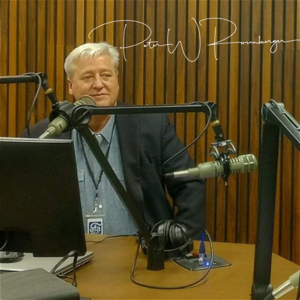
Welcome to Hope for the Caregiver. This is Peter Rosenberger. This is the program for you as a family caregiver. More than 65 million Americans right now are serving as a caregiver. If you're one of them, you're in the right place.
And if you're not one of them, You're in the right place because if you love somebody, you're going to be one. If you live long enough, you're going to need one.
So, we all got some skin in this game. That said. It leads to several questions, which is, How are you doing? How are you holding up as a caregiver? What's going on with you?
The purpose of this program is to help you stay strong and healthy as you take care of someone. Who is not? And I'm bringing 40 years. of hard-won insights. To offer you a lifeline in the midst of whatever you're dealing with, the learning curve is pretty steep.
If you're new to this, if you're just a few years into this. it's still a pretty steep learning curve. Do you have time for that? Or would you like to glean from somebody who has already logged at the timing, and that's where I come in. To help you develop a healthier path as a caregiver, because healthy caregivers.
make better caregivers. This was moving. Weak. this week. Can I indulge for just a moment?
Would you bear with me? I've been remodeling this cabin that we have here on this property here in Montana. Gracie's dad bought this. I was just talking with him this week, and he was telling the story of him buying this piece of property. He came out here to hunt for many years.
And he fell in love with the place.
Now, this was long before people started coming out to Montana from New York and LA, and you know. All the stuff you see on television, everything else. I mean, he was out in the middle of nowhere at the time. That's what this was considered. There was no electricity here on this property.
They had to Bring it in. from a the closest line was about a mile down the road. And then he had to drill a well, And he had to he had paused. pumped water in from a creek. and that he had to boil so that it wouldn't get everybody sick.
And then he had to put in septic tape, the whole thing. I mean, in this cabin. was thrown in. on this property. It was not considered a valuable addition to the property.
It was built in the late eighteen hundreds. And it was kind of You know, they threw it in like a free toaster kind of thing. And Gracie's dad modified this. In fact, he had to live in his truck while he was modifying this because there were so many mice in here. And Over the years, he added on to it and did some things to it and We told him many times to give it a Christian burial.
Just put it out of its misery, but he wouldn't do it. And he a lot of people have rented this place out over the years from him. That have lived here and kind of looked after the place, and it was really tiny. I mean, how tiny you had to eat a large pizza outside small. And so when we moved out here, We renovated this thing and made it more handicap accessible for Gracie.
And it was um And we did a nice job with it. I mean, it really worked. I mean, it's a little uneven. It kind of leads, you don't want to use a level with any type of fervor in this cabin because, well, you know, it's just not there. But We thought about Um What to do?
Should we build a house, a whole house, or should we modify this cabin some more since we've already. got it this but this far down the road and it worked for Gracie but it was just really small. I mean, you could make a grilled cheese sandwich from the bathroom. I mean, it was a small place. And it It was functional, but I couldn't see us living in this for many, many more years.
And his house that Gracie and her parents had. was is a really nice home, but it's not accessible. and it's there are a lot of stairs and so forth, and so I didn't see that as being a possibility.
So we developed this plan to renovate this cabin and make it more accessible. How many of you all had to retrofit things for accessibility? It is frustrating. It's expensive and it doesn't really come out right. Like you'd like it to, but you sometimes have to make these decisions on the fly, and so that's.
uh what we wanted to avoid. 'Cause we had done that in Nashville to our home in Nashville. And Gracie it was a it was accommodating, but it and she had to accommodate it a bit. But I wanted something that really was built around Gracie. And wide doorways.
And when I say wide doorways, I mean you know, drive a go-kart through 'em. And I wanted a shower that she didn't have to dangerously transfer from her wheelchair to a shower bench. Over a threshold and deal with the door. And so we built this really big shower that she could wheel her wheelchair into, and she has a chair that she can get wet.
So she can. Transfer to that chair, wheel into the shower, take a shower. By herself. You know, independence is everything. And she was able to do that for the first time this week.
But she had not seen all this. She had seen pictures and she had planned a lot of the things that we we done for it. We picked the colour out for the walls in the hospital over the phone. Using pictures with the contractor, who is a wonderful guy that lives out here and he really specializes in remodel jobs and doing a lot of. Design work of logs and so forth.
So it really looks very Montana old. Log cabin, but it's got it's very updated.
So, this whole new addition, we just tore out a wall and went and built a whole brand new addition that connected the two buildings. Half of this was built in the 21st century, and the other half was built in the 19th century.
So it's a. You know, it's an odd pairing, but then again, so are Gracie and and We're both an odd pairing anyway.
So it it's um But she she came in To hear, and then we, you know, went with her being in the hospital for five months, so she walked in. and she walked in. I wanted to stop for a moment. She walked in, with her walker. and on her prosthetics, and she was able to come into the house And Just see her place.
Now we made a decision to, for example, in Nashville, we had a den. And we had a living room, and we had a dining room, and we had a foyer, and you know, just a normal stuff you have in a house.
Well We made a decision on this one that Gracie is so Bedridden. most most of the time. I mean, she's not just able to get out to do stuff. and she stuck in her bedroom. And so we wanted to build a bedroom where she could Receive guest.
More comfortably.
So we built this massive bedroom with the seating area. We have no den and no living room in this area. It's this huge room that's our bedroom, but we didn't want. Like her dresser and closet and stuff like that in the that part.
So that's separate. And she can wheel into that and has a full wheelchair radius. It's a roll-in shower, I mean, roll-in closet. And um but we made the decision to put our piano in the bedroom. And we have a a a grand piano that was that belonged to her aunt that she had given to us.
It's a beautiful piano, and we've had it for for many, many decades, and I've I've logged a lot of time on this thing. And so that's sitting there in the bedroom because I didn't want Gracie to have to leave the bedroom to go make music. I wanted to bring the music to her. And so that first night, she walked in, she walked into her closet. She looked at me, she said, that's a big closet.
And it is. But again, I wanted, in fact, we didn't have a lot of shelves. Everything is hanging. We have double stacked hanging, and she won't be able to reach the top without help, but she could see everything. Because if she reaches from her wheelchair to a shelf, for example, she's off balance and I don't want to risk her falling.
So now she can look at it and tell what she needs and what she would like and so forth.
So we did all that and then she got settled in for bed. And we have these massive windows. And I told the contractor that the big thing I want is accessibility, space, and windows. I want her to be able to see this view. And she's got this.
View of miles and miles and miles. The peaks are 50 miles down the valley. You can see the tops of them on a clear day. That's a pretty big view, and she has these massive windows, and it just opens up her world and the very high ceilings and so forth. And it just she had gone from being contained.
in one bedroom.
Well, first off she's in a hospital for five months. And one one of those rooms was she was there for three months and didn't even have a view. And then she was kind of stuck in a room up at her dad's place while we were finishing this up. It just wasn't the same. It was a nice room, but it was just kind of stuck there.
And now she has space. and we've got a big fireplace and I had a fire going and I'm sitting at the piano. And she was singing Great is Thy Faithfulness on her first night.
So it was really quite a moving time. And I will, I'll tell you what, we'll take a break and I'll finish telling you some more stories, but I think you'll enjoy it. But this is Peter Rosenberg. This is Hope for the Caregiver. Thanks for the indulgence on that.
We'll be right back. Welcome back to Hope for the Caregiver. This is Peter Rosenberger, HopefortheCaregiver.com. HopefortheCaregiver.com. That music, by the way, coming in, that's Rob Galberth and The Not Ready for First Service Players.
I got a. Um email this week About somebody wanting to know about the music that comes back from the breaks.
Well, that one is Rob Galbraith, and we'll. a long time friend of mine in Nashville, producer, great producer. Got a lot of session players on that one, and it's just a great groove. The others that most of what I use is the theme song. That I wrote with my friend Chris Latham, who's a wonderful producer and engineer in Nashville, a Grammy Award winner.
We wrote this together, and I've used this as my theme song from the get-go, and I've had various iterations of it. one of it that Chris played on and I played on. And another one Jeff King did, and we kind of updated a little bit, so you'll hear various versions of it. But anyway, that's a little piece of music trivia. If you want it, I try to play things that I I've done over the years as bumper music.
And I'll weave in some other things periodically, but most of the stuff it's stuff that I've done, and that's my theme song. I don't know what the name of my theme song is, it's the theme of Peter's show, I guess. I don't know, whatever. Hey, if you want to come up with some ideas for it, go ahead. I've got all I can say, Grace over just maintaining the caregiver keyboard.
and everything else that I do. But speaking of the caregiver keyboard, I left off telling you about Gracie singing the first night in our new edition, and I know I'm going off. a little bit on this, but you have to excuse us because Gracie's been disabled since 1983. And we have constantly been chasing our tails. trying to accommodate her disability as it progressed.
She didn't just plateau it one place. She was walking when I met her. She had both legs. Then she had a lot of surgeries to fix. both ankles at different tums.
Then she gave up her right leg, so now she's a single amputee, so she's got a prosthetic leg, but she can get around pretty well. But then she became a double amputee, and we had to make accommodations for that. And then, as she started getting more and more. Pronounced disabled with not being able to walk very well, bedridden most of the time, it just became very problematic. And so I really spent some time on this.
Addition for her. And the contractor and all the workers will tell you, I was down here all the time with a wheelchair going through the doorways. And then I spent a a lengthy amount of time adjusting the bit. I had to actually cannibalize two bits. because she needed a lower profile But she also needed the handrails for the bed to be able to pull herself up to get up.
It's not a rail like a hospital rail, but those guys that you do it, but they don't, they have them that they slip under the mattress, you know what I'm talking about, and then you belt it across the bed, that kind of thing. They're not as strong as you'd think. And so I actually kind of bolt them to a piece of plywood that's under it.
So I had to kind of cannibalize some things. And she had to have the wheelchair at the same level of the bed to be able to transfer safely and so forth. And then I tried it with everything, with the toilet, with the shower, with everything to make sure we had enough space for everything.
So I spent an awful lot of time. And so that first night, though, she's not thinking about her disability. She's l she's lying in bed, I'm sitting at the piano. And again, I did not want her to have to leave the room to go make music. It's such a big part of her life.
And she told me, she said, growing up, I always wanted to have a piano in the bedroom, but I thought it would be kinda decadent. I said, Well, baby, welcome to Decadent. You've got a not only a piano in the bedroom, you've got a pianistre. And I'll play whatever you want to play. And I started off with uh And she started singing.
She said, It's too low.
Well, that's the key she always sing it in. And she was singing, used to sing it a lot in what you call the chess voice, but then she was flipping into head because her voice has been so out of shape. And she said, Can you raise the key?
So I raised the key. And I'm doing this basically, no lights on. We have a little tiny bit of a glow from the light on the TV, and that's about it. And so then she said, now, can you go a little higher?
So I. And so I went up a little higher. Just to let her know that I could.
Now you have to understand. When I met Gracie, She she's a v Yes, she's an incredible singer. But she's also a very good musician. She she understands music. She understands music theory.
She understands music. She was majoring in music. She used to be a double major in piano and voice. But after. Her professors told her, said, look, you can't do both.
You need to pick one and be excellent at that one. And after her wreck, she couldn't play the piano very much anymore. Her fingers have, she's lost some feeling in some of her fingers and so forth. And that's always troubled her. I said, well, baby, I'll play anything you want.
So I played it in her key. And she wasn't thinking about her disability. She was thinking about this song. And that She has a place that was built for her and she was so grateful. And she just belts it out.
And it was just lovely to hear her sing. And I know I've already done this hymn on hymns that every caregiver ought to know, but every caregiver ought to know this hymn twice. And then she just let loose. Great is that. Faithfulness.
Great is thy faithfulness. Morning and morning, the mercies I see. And I thought about this a lot as I was working on this house. All I have needed. There he And heath providing greatest faithfulness alone to me.
And I thought. What is the command I have as Gracie's husband? To love her as Christ loved the church, He gave His life for her. But I also thought about this as I was doing this, and I'm just sharing this with y'all. It's just you and me, okay?
Don't tell this to anybody else. It's just you and me, all right? but as I was doin' all this work, I couldn't help but think about, well, what did Christ say to his Brad. His wounded bride, said I've gone to prepare a place for you. And what I've done is for Gracie is just a Poor.
poor imitation of what awaits us, Of what our Saviour's done, And yet I I share a little bit in that excitement because when she walked in Her eyes just she was almost in shock. She had not seen any of this. She had seen pictures. She had planned it out in her mind, but she hadn't seen anything. And it really is lovely.
The guy did a great again. Half the house was built in the 1800s, the other half in 2025. But it's, you know. It bridges the centuries, and you can tell where the centuries meet because that when we blew out that wall to go to the old cabin, it's you know a little uneven and so forth, but that's okay. It works.
Where she is is nothing but beauty, and she just looks out over this massive landscape. with these massive windows. And when I say massive, they are big. There's five by n there's two five by nines.
So it's five by eighteen. And then she's got two the same on top of that, but they're only two feet tall. And then at the bottom, they're only two feet tall.
So the whole front wall is just massive. And the ceiling goes up to logs. And it's it's like 19 feet. I wanted her to have the space. as much space as she could have, that she didn't feel claustrophobic.
I watched her in that hospital room and she felt so claustrophobia. All she had was a view was a brick wall for months. And I've watched her struggle be being bedridden, and I thought this is just unacceptable. And I can't do much. I couldn't afford to build the whole house, so I have to stay over in the servants' quarters in the 1800 house.
But I For this rope. I wanted it to be something special for her. And it is. And the next morning we got up, and I built her a fire before she got up. And I played And I play it like I play things a little slower, but we sang that song a lot in the hospital.
I would come to her in the morning, I'd say, you know, this is the day. But I'd show up at the hospital every morning. And I said, this is the day. And she said that the Lord has made, we will rejoice and be glad in it. And then I heard her sing that morning.
And you know, in the morning, your voice is still a little bit froggy with her, but she still said it great. This is the day. That the Lord Have made I will rejoice. And be glad in it. This is the day, this the day that the Lord has made and so this was.
You know, music is a part of our life. And I wanted the piano to be in the room with her so she could have music anytime she wanted. And um it it it it was really uh quite meaningful to see that and to to build a fire for her. It was kind of snowy this week, and so she had a fire and And I'm playing the piano for her, and she's had such a hard life. It was a joy to be able to do this for her.
You know, and if it's a joy for me, imagine. The joy. That Christ has. for what he's prepared for us. My the stuff I've done is not even worthy to be compared.
But the principle still remains If I'm called to be like him, Then I'm in sharing his sufferings. I'm also sharing a little bit of that joy. You know? I I don't suffer on the level that Christ suffered. And I don't have the joy.
On the level that I can understand that he has, I can't pray. process that yet. One day, hopefully, I'll be able to process that a little bit better, but I have a taste of it that I can think, oh. This is this is This is joyful. I I I've made a place that's for her.
that's built around her. Everything is for her. And it's basically make do with stuff. and be limited in what you can do, even in your own home, for so long like she has. to have a place that It was intuitively for her.
There's a little tiny sink. In the bathroom, she has the vanity of the bathroom, and then she has a little tiny sink, it's 11 by 7. It's very tiny, and it's on the side of the shower, and it's there for her to be able to roll into in her wheelchair. She can wash her hands before she goes to bed at night. From her wheelchair.
She doesn't have to worry about banging into the vanity. She didn't want a handicap vanity. You know, if we had that in one of the other bathrooms, that we she could wheel under, but she didn't care for that as much.
So she wanted that. It's a little tiny one.
So we got that. It's little things like that that make her life so much easier. And it was a joy, but imagine the joy that Christ has of what he's doing for us. And that's hope. for this caregiver.
This is Peter Rosenberg, and we'll be right back. Welcome back to Hope for the Caregiver. This is Peter Rosenberger, HopefortheCaregiver.com. HopefortheCaregiver.com. That music, by the way, coming in, that's Rob Galbraith and the Not Ready for First Service Players.
I gotta. Um email this week About somebody wanting to know about the music that comes back from the breaks.
Well, that one is Rob Galbraith, and uh. a longtime friend of mine in Nashville, a producer, great producer. Got a lot of session players on that one, and it's just a great groove. The others that most of what I use is the theme song. that I wrote with my friend Chris Latham, who's a wonderful producer and engineer in Nashville, a Grammy Award winner.
We wrote this together, and I've used this as my theme song from the get go, and I've had various iterations of it. One of it that Chris played on, and I played on. And another one, Jeff King did, and we kind of updated a little bit, so you'll hear various versions of it. But anyway, that's little piece of music trivia if you wanted. I try to play things that I've done over the years as bumper music.
And I'll weave in some other things periodically, but most of the stuff it's stuff that I've done, and that's my theme song. I don't know what the name of my theme song is, it's the theme of Peter's show, I guess. I don't know, whatever. Hey, if you want to come up with some ideas for it, go ahead. I've got all I can say, Grace, over just maintaining the caregiver keyboard.
and everything else that I do. But speaking of the caregiver keyboard, I left off telling you about Gracie singing the first night in our new edition. And I know I'm going off a little bit on this, but you have to excuse us because. Gracie's been disabled since nineteen eighty three. And we have constantly been chasing our tails.
trying to accommodate her disability as it progressed. She didn't just play. Plateau at one place. She she was walking when I met her. She had both legs.
Then uh she had a lot of surgeries to fix Both ankles at different times. Then she gave up her right leg.
So now she's a single amputee, so she's got a prosthetic leg, but she can get around pretty well. But then she became a double amputee, and we had to make accommodations for that. And then, as she started getting more and more. Pronounced disabled with not being able to walk very well, bedridden most of the time. It just became very problematic for her.
And so. I really spent some time on this. Addition for her. And the contractor and all the workers will tell you, I was down here. All the time with a wheelchair going through the doorways, and then I spent a lengthy amount of time adjusting the bit.
I had to actually cannibalize two bits. because she needed a lower profile. But she also needed the handrails for the bed to be able to pull herself up to get up. It's not a rail like a hospital rail, but those kinds that you do it, but they don't have them that they slip under the mattress, you know what I'm talking about, and then you belt it across the bed, that kind of thing. They're not as strong as you'd think.
And so I actually kind of bolt them to a piece of plywood that's under it.
So I had to kind of cannibalize some things. And she had to have the wheelchair at the same level of the bed to be able to transfer safely and so forth. And then I tried it with everything, with the toilet, with the shower, with everything to make sure we had enough space for everything.
So I spent an awful lot of time. And so that first night, though, she's not thinking about her disability. She's l she's lying in bed. I'm sitting at the piano. And again, I did not want her to have to leave the room to go make music.
It's such a big part of her life. And she told me, she said, growing up, I always wanted to have a piano in the bedroom, but I thought it would be kinda decadent. I said, Well, baby, welcome to Decadent. You've got not only a piano in the bedroom, you've got a pianistre. And I'll play whatever you want to play.
And I started off with... And she started singing. She said, It's too low.
Well, that's the key she always singing in. And she was singing, used to sing it a lot in what you call the chest voice, but then she was flipping into head because her voice has been so out of shape. And she said, Can you raise the key?
So I raised the key. And I'm doing this basically, no lights on. We have a little tiny bit of a glow from a light on the TV, and that's about it. And so then she said, Now, can you go a little higher? And so I went up a little higher.
just to let her know that I could. And you have to understand. When I met Gracie, She she's a v Yes, she's an incredible singer. But she's also a very good musician. She she understands music.
She understands music theory. She understands music. She was majoring in music. She used to be a double major in piano and voice. But after.
Her professors told her, said, Look, you can't do both. You need to pick one and be excellent at that one. And after her wreck, she couldn't play the piano very much anymore. Her fingers have, she's lost some feeling in some of her fingers and so forth. And that's always troubled her.
I said, Well, baby, I'll play anything you want.
So I played it in her key. And she wasn't thinking about her disability. She was thinking about this song. And that She has a place that was built for her and she was so grateful. And she just belts it out.
And it was just lovely to hear her sing. And I know I've already done this hymn on hymns that every caregiver ought to know, but every caregiver ought to know this hymn twice. And then she just let loose. Great is that. Hateful now.
Sure. Great is thy faithfulness. Morning and morning the mercies I see. And I've thought about this a lot. as I was working on this house.
All I have needed. Thy hand hath provided greatest faithfulness alone unknown to me. And I thought. What is the command I have as Gracie's husband? To love her as Christ loved the church, who gave His life for her.
But I also thought about this as I was doing this, and I'm just sharing this with y'all. It's just you and me, okay? Don't tell this to anybody else. It's just you and me, all right? but as I was doin' all this work, I couldn't help but think about, well, what did Christ say to his Brad.
his wounded bride, said I've gone to prepare a place for you. And what I've done is for Gracie is just a Tour. Poor imitation of what awaits us, of what our Saviour's done. And yet I I share a little bit of that excitement because when she walked in, Her eyes just she was almost in shock. She had not seen any of this.
She had seen pictures. She had planned it out in her mind, but she hadn't seen anything. And it really is lovely. The guy did a great again, half the house was built in the 1800s, the other half in 2025. But it's, you know.
It bridges the centuries, and you can tell where the centuries meet because that when we blew out that wall to go to the old cabin, it's you know a little uneven and so forth, but that's okay. It works. Where she is is nothing but beauty, and she just looks out over this massive landscape. with these massive windows. And when I say massive, they are big.
There's five by there's two five by nines.
So it's five by eighteen. And then she's got two the same on top of it, but they're only two feet tall. And then at the bottom, they're only two feet tall.
So the whole front wall is just massive. And the ceiling goes up to logs. And it's it's like 19 feet. I wanted her to have the space. as much space as she could have, that she didn't feel claustrophobic.
I watched her in that hospital room and she felt so claustrophobia. All she had was a view was a brick wall for months. And I've watched her struggle be being bedridden, and I thought this is just unacceptable. And I can't do much. I couldn't afford to build the whole house, so I have to stay over in the servants' quarters in the 1800 house.
But For this rope. I wanted it to be something special for her. And it is. And the next morning we got up, and I built her a fire before she got up. And I played And I play it like I play things a little slower, but we sang that song a lot in the hospital.
I would come to her in the morning and I'd say, you know, this is the day, when I'd show up at the hospital every morning. And I said, this is the day. And she said, That the Lord has made, we will rejoice and be glad in it. And I heard her sing that morning, and you know, in the morning, your voice is still a little bit froggy with her, but she still said it great. This is the day.
That the Lord Hath made I will rejoice and be glad in this is the day this the day that the Lord and so this was You know, music is a part of our life. And I wanted the piano to be in the room with her so she could have music anytime she wanted. And um It was really quite meaningful to see that and to build a fire for her. It was kind of snowy this week, and so she had a fire and And I'm playing the piano for her, and she's had such a hard life. It was a joy to be able to do this for her.
You know, and if it's a joy for me, imagine. The joy. That Christ has. for what he's prepared for us. Ma the stuff I've done is not even worthy to be compared.
But the principle still remains If I'm called to be like him, Then I'm in sharing his sufferings. I'm also sharing a little bit of that joy. You know? I I don't suffer on the level that Christ suffered. And I don't have the joy.
On the level that I can understand that he has, I can't. process that yet. One day, hopefully, I'll be able to process that a little bit better, but I have a taste of it that I can think, oh. This is this is This is joyful. I I I've made a place that's for her.
that's built around her. Everything is for her. And it's basically make do with stuff. and be limited in what you can do even in your own home for so long like she has. to have a place that It was intuitively for her.
There's a little tiny sink. In the bathroom, she has the vanity of the bathroom, and then she has a little tiny sink, it's 11 by 7. It's very tiny, and it's on the side of the shower, and it's there for her to be able to roll into in her wheelchair. She can wash her hands before she goes to bed at night. From her wheelchair.
She doesn't have to worry about banging into the vanity. She didn't want a handicap vanity. You know, if we had that in one of the other bathrooms, she could wheel under, but she didn't care for that as much.
So she wanted that. It's a little tiny one.
So we got that. It's little things like that that make her life so much easier. And it was a joy, but imagine the joy that Christ has of what he's doing for us. And that's hope. for this caregiver.
This is Peter Rosenberg, and we'll be right here. Welcome back to Hope for the Caregiver. This is Peter Rosenberger. Glad to be with you. HopefortheCaregiver.com.
We're continuing on. In our series of hymns that every caregiver ought to know. And today's hymn is one of my personal favorites. Let's go to the caregiver keyboard here. Um But this one behind this Beautiful hymn.
There's a A real threat of sadness. This was written by a Presbyterian minister. A lot of our hymns are written by Presbyterian ministers. And his name was Maltby D. Davenport Babcock.
Maltby Davenport. Babcott, born in Syracuse, New York. Remarkable man. Brilliant, athletic, musical, the kind of person who seemed to do everything well. He pastored several large churches, and people flocked to hear him preach because he had a rare gift for weaving together theology, poetry, and the wonder of God's.
Creation. He loved to walk in the hills around his home in upstate New York. Before he'd head out, he'd tell his wife, I'm going out to see my father's world. He ended up writing a 16-stanza poem about this, and after his death, a friend adapted several stanzas into the hymn we sing today, which is Which, by the way, is the opening theme for the hobbits in The Lord of the Ring. Howard Shore composed that.
That's the hobbits theme, but here's just an aside there, okay. But here's my this is my father's world, one of the most beautiful hymns ever written. Yeah. My father's word. And to my list.
Now I like to put in that flat seven right there. What that means is I just borrowed a chord from another key, but it really Does something to your ear, doesn't it? When you play that, because here's the original voice. Wait a minute, I'm playing the hobbits theme again. This is my father's world.
And to my listening ear. They just go to the five chord, but I like going to that flat seven. This is My father's world. And to my listening. Oh, nature sings.
And round me rings the music. Of the spheres. This is. My father Yeah. Uh rest.
Me. In the thought of rocks. And trees of skies and seas, his hand, the wonders wrought. And I love that when I hear Gracie was singing that. Just the other night, I was playing that before we went to bed.
And it's nice having a piano in the room. I will tell you that it is very nice. Because where we live, there's so much of nature to see that's so beauty and beautiful, and all of creation cries out. to the glory of God. We're without excuse.
It's written everywhere. And and this guy Malby Babcock really loved. Nature. He loved to just go out and be in it. And I get that.
I'm the same way. But what we sing as the last verse is the one that gets me every time with this hymn. This is my father's world. Oh, let me. Never forget.
Here it is for us as caregivers. You ready? That Though the wrong seems oft so strong. God is Is the ruler yet? Can you sing that with me?
That though, the wrong. Seems often. God is the ruler yet. And then you go to this course. This is.
My father's war The battle is No, I don't. Jesus Who died will be sad? Satisfied and earth and him be one This is my father's word all the battle is not done for Jesus who died will be sad. Yeah it is. Five and earth and heaven be one.
Isn't that a great hymn for us as caregivers? And it's kind of sad because. This wonderful ministry went over to Israel. It was called the Holy Land back.
Well, it's still called the Holy Land, but this is back in. 1901. And on the way back, he became very, very, very sick in Naples, Italy. And I don't know all the details, but He had a severe fever and possibly depression. And at 42 years old, he took his own life.
Now, some people, everybody was stunned, but I think a lot of people thought it was just in delirium that he did this. I don't think there was this long-standing oppression of mental illness that took his life. I think he became very, very sick with whatever he had and he got some kind of thing, and then just in delirium, he took his own life. And that just breaks your heart because this wonderful minister, wonderful writer and speaker, and yet he left this tremendous legacy. And I'm grateful that he had it.
But I think the thing for Me, when I hear his story, it is to remind ourselves that we need to look in after our preachers. and that all of us carry very difficult things We never know what's going on with someone else, but I'm grateful for the legacy that he left and this particular hymn and Specifically, this verse, and this is the one that I just wanted to leave you with as a caregiver today. Um As you go through the day, That this is Our Father's World. Oh, let us never, ever, ever, ever forget. And this is the part for us as caregivers that.
Though The wrong seems all so strong, and it does. I know it does. But God is the ruler. Yet this is my fault. The battle.
Is it done? Because Jesus. Who died? We'll be satisfied. And earth and heaven be one.
Part of our series of hymns that every caregiver ought to know. A particularly good one for us as caregivers, isn't it? This is Peter Rosenberger. This is Hope for the Caregiver. I want to end with something a little bit different today.
I did an interview with Gracie a while back, and I wanted to share that with you. This is Peter Rosenberger, Hope for the Caregiver, HopefortheCaregiver.com, which is a ministry of standing with hope. And here's Gracie talking about that. Gracie, when you envisioned doing a prosthetic limb outreach, did you ever think? that inmates would help you do that.
Not in a million years. What does it do? I would have ever thought about that. When you go to the facility run by Core Civic and you see the faces of these inmates that are working on prosthetic limbs that you have helped collect from all over the country that you put out the plea for, and they're disassembling, you see all these legs, like what you have, your own prosthetic limbs. And arms, too.
And arms. When you see all this, what does that do to you? Makes me cry. Cause I see the smiles on her faces and I know. I know what it is to be locked someplace where you can't get out without somebody else allowing you to get out.
Course, being in the hospital so much and so long. When I go in there, then I always get the same thing every time. that these men Are so glad that they get to be doing, as one man said, something good finally with my hands. Did you know before you became an amputee that Parts of prosthetic limbs could be recycled? No, I had no idea.
I had, I had, I. I thought we were still in the 1800s and 1700s. I mean, you know, I thought of peg leg, I thought of wooden legs. I never thought of. Titanium and carbon legs and flex feet and C legs and all that.
I never thought about that. I had no idea.
Now that you've had an experience with it, what do you think of the faith-based programs that Core Civic offers? I think they're just absolutely Awesome. And I think every prison out there. should have faith-based programs like this because Winter. Return rate.
of the men that are involved in this particular faith-based program. and other ones like it, but I know about this one. are it uh it's just an amazingly low rate. compared to those who don't have them. And I think that that says so much.
That says so much. About Just, that doesn't have anything to do with me. It just has something to do with God using somebody broken to help other broken people be. Ho? If people want to donate a used prosthetic limbs, whether from a loved one who passed away, Yeah, or You know, somebody who outgrew them, you've donated some of your own.
What's the best place for them to do? How do they do that? What do they find? Please go to standingwithhope.com/slash recycle, and that's all it takes. It'll give you all the information on the What's that website again?
DanningwithHope.com. slash recycle. Thanks, Chris. Take my hand, lean on me, we will stay.