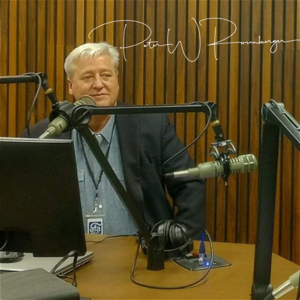
I'm Peter Rosenberger and after 40 years as a caregiver for my wife Gracie through a medical nightmare that has soared to 98 operations, both legs amputated, treatment by more than 100 doctors in 13 different hospitals and you can't imagine the medical bills.
Well I've learned some things. I learned every one of them the hard way. And in my new book, A Caregiver's Companion, it's a journal from that journey. It's filled with hard-won wisdom, practical help, and yes, an ample dose of humor. Because let's face it, if we don't laugh, we're going to blow a gasket.
And I've learned that I am no good to my wife if I'm fat, broke, and miserable. How does that help her? Healthy caregivers make better caregivers. And that's what this book is about, pointing my fellow caregivers to safety, to learn to live calmer, healthier, and dare I say it, even more joyful as a caregiver. It's one truth I've learned, punctuated by either a verse from scripture or a stanza from a hymn, and a space for you to share your own thoughts.
While this is my journal from a 40-year journey, you can journal along with me in this book. It's called A Caregiver's Companion, available August 20th from Fidelis Publishing, wherever books are sold. Learn more at peterrosenberger.com. Welcome to Hope for the Caregiver. This is Peter Rosenberger.
This is the program for you as a family caregiver, HopefortheCaregiver.com. I am joined today by a gentleman I've wanted to have on for some time. I've been following his work on social media, and we have crossed paths virtually, but never had the chance to sit down and talk. And that is Dr. Barry Jacobs, who is a clinical psychologist, family therapist.
He's a principal for Health Management Associates, which is a national healthcare consulting firm. But he's also Caregiver. He's got some real skin in the game. And he and I have crossed paths many times. Both of us have worked with AERP through a variety of things.
And so this is our first time to be able to sit down and have a conversation together.
So, Barry, welcome. to the program and I'm very glad to have you here. Thank you so much, Peter. Really my pleasure to be here. Tell us a little bit about your background in this.
It's a rather dramatic one.
So when I was fourteen years old, my dad developed brain cancer. And uh He had been a a He was out of work as a consequence. He lost his, he couldn't work any longer. He was quite ill. My mother, uh, Went to work and actually worked two jobs to try to compensate for my father's loss of income.
But my family went through. a very, very tough time financially. There was a lot of conflict in my family between my father's mother and my mother over who was going to control my father's care. My father really wasn't in a position where he could make decisions for himself. And uh I learned at a really early early age that uh Illness like cancer, as well as many other illnesses, don't just affect individuals, they affect families My dad died when I was 15, and then my family really had a hard time afterwards for a number of years.
Um and I didn't Know at that point that I wanted to grow up to become a clinical psychologist focusing on the needs of families and illness, but I It kind of the seed was planted, and later on in life, in my 20s, when I Was in the middle of graduate school for clinical psychology. I happened to work in a hospital working on a physical medicine rehab floor where I was working with people who had suffered strokes and traumatic brain injuries and brain cancer. And I immediately felt there was something really familiar about what I was seeing. And I did a lot of work with the families there. And that was back in 1987.
I recognized that this is the work I wanted to do with my life. And that's now almost 40 years later, 38 years later, and I'm still doing the work. You know, you touched on something that it is a, it affects the family. It's a family. Event.
And You don't just one person doesn't just suffer something like this in isolation. I am struck by how this really evolved into your life work because you saw the pain and saw the trauma and you stepped into it. But that had to have been a. Uh quite a process for you to grow into that. Um Can you talk about that a little bit?
Uh yeah, so I was uh A 15-year-old male who was trying to be a tough guy, and I had to be strong from, I was the oldest of myself and my brother, and I had to be strong for my mom.
So she was struggling.
So I had to keep it together emotionally and do everything I could. And I basically had this kind of tough guy stance that I wasn't going to. Keep my, you know, let my emotions out. I was, I was gonna keep everything inside. Um and that went on probably for almost another ten years.
Um I I really Saw myself as somebody who could handle anything. I dealt with cancer, my father's cancer when I was a teenager. I could now handle it. There was not much else in life that was going to be thrown at me that was going to be. that I couldn't handle.
But then um Somewhere in my mid-20s, I realized that I had shut off by shutting off my emotions. I was shutting off my ability to really. emotionally connect with other people. And it took me a while then to kind of grow out of that.
Alright. Into Did anyone help you? Did anybody stay? Step up to offer you guidance or structure to help you as you cared for so many others, trying to hold it together for everybody else? Was there anybody else like that for you?
Well, you know, I mean, we're going back a long ways. My dad got sick in 1972 and Uh Back in 1972, cancer was often a death sentence, and as it was for my father, but cancer was a death sentence for a lot of people, and so people didn't talk about cancer, they talked about the big C. I mean, and And they, in my family, I mean, literally, nobody talked about my father's cancer while he had it. Nobody talked about his cancer, what had happened to him after he died. There was a kind of shroud of silence over everything, and the message I got was.
We don't talk about it, we just keep pushing forward. And that's what I did. It really wasn't up until I I literally I I was Going out with a woman for several years in my early 20s, thinking I might marry her, and we had a very bad breakup. I went all to pieces that that I suddenly realized that I wasn't I wasn't just feeling the sadness of the breakup, but I was feeling the sadness of grief that I had. Basically, stuffed down for a long time.
And that led to me in a whole other direction in my life. Uh so that that uh That breakup in my early 20s was an off turned out to be a very good thing, especially since I'm married to a wonderful woman now. I I my wife Who I've been married to for 35 years is also someone who is extremely understanding and has Has encouraged me to not be the tough guy, but to be a more feeling male who can relate to other people emotionally and deal with sadness and not have to run from sadness.
Well, and that brings me to a subject I've thought about a lot in my conversations with the caregivers, and certainly myself. We caregivers tend to defer grief. But I look at what many of us have as incremental grief, but we keep pushing it off.
Well, I think as a Certainly, as somebody who's been through this experientially and also as a psychologist. You would Would you concur that grief cannot be deferred? I mean, it's going to be what it's going to be. Is that a fair statement? I think it is a fair statement.
What I have seen caregivers do is To defer grief, they become very focused on the tasks at hand.
So they'll take care of dressing someone, they'll take care of feeding them, they'll take care of picking up the medicines, they'll take care of driving them around. They know every day they'll tick off things on their list of things to do. Um But by keeping their head down and focused on the tasks, they're really avoiding that grief. But it it catches up with them. And I think I personally believe that caregivers that don't allow themselves to feel whatever they're going to feel, not just grief, but anger, oftentimes, that they may make themselves more prone to burning out.
I don't think you could just hunker down and be the resilient caregiver that most of us need to be when we're in the middle of caregiving. I concur. It's that reservoir of grief does not dissipate on its own. It's going to be there and it's going to accumulate and accumulate and accumulate. And we've got to deal with it and the fear.
And the guilt, or the resentment, or whatever it is that we're feeling. And I'm grateful that you have. drawn from your own experience into this. When did you start making that transition to helping Deal with aging parents, which has become such a big part of your world now.
So When I started working in in a in medical settings back in 1987 and then and then you know my during my career I uh I I worked in Um First, one physical medicine rehab unit, and then I worked in a physical medicine rehab hospital. Then I worked as a faculty member in a primary care office working in a family medicine residency program. But I spent most of my clinical career working in medical settings. A lot of the folks who have illness are are older people. It just so happens as we get older, we're more likely to develop complications with diabetes, we're more likely to get dementia, we're more likely to get cancer.
So A lot of the work that I was doing already was focused on older adults and really began understanding some of the family dynamics around that. Uh, oftentimes, these are very proud people who had been very self-reliant all their lives, and now they. We're having One functional difficulty or another. They couldn't walk so well, they couldn't see so well, and they sometimes they couldn't think so well. But they were very reluctant to letting their children step up and help them.
Sometimes adult children who were more than willing to help. And so I began to get a glimpse of that. and began working with those families and trying to help them do a better job dealing with old age and illness than my own f family had done with dealing with illness. And I I mean Then it kind of morphed into eventually dealing with my in-laws as they aged and and dealing with my mother and and and later my well, my stepfather. My mother my mother did remarry and my stepfather had Alzheimer's disease and I was very involved in his care.
And then my mother had kidney disease and vascular dementia. I was very involved in her care.
So I wound up doing a lot of work with aging parents. because of my own family, but also just because of the work, the nature of the work that I was doing for a long time. What what surprised you? In this journey, I mean, here you bring this wealth of information experientially, and then you bring this wealth of information as a clinical practitioner. And as you got into this more and more and engaged more and more with families, What surprised you maybe pleasantly, and what surprised you maybe on a heartbreaking level?
What surprised me pleasantly was really to see how devoted people were to one another. Um Sometimes I couldn't articulate. why family was important to them, but By and large, most of the folks that I saw stepped up when asked. I mean, certainly not everyone. And certainly, we could look at our own families today and see that there are folks that step up and folks that don't.
Most people, most families stuck together. And I thought that was, I still to this day think that's. Marvelous. I mean, it's really speaks to the cohesion and the strength of families. What has unfortunately sometimes been Unpleasant is to see some of the dissension that goes on in families.
Over uh whether someone who needs care is going to accept the care or whether they're going to resist it. Or how the care is going to be given. I mean, a lot of the work I do nowadays is working with adult siblings. who may or may want to take care of their parents, but Have very different ideas of what their parents need or how they should be taken care of. Can really get into some knockdown, drag out fights about how that care is going to be provided.
And it's not for lack of caring. It's just people want to, each sibling wants to be in control here. And there's a lot of rivalry, a little bit of internal family power struggle.
So that, to me, is very unfortunate. It's so much better if folks are pulling in the same direction than pulling apart. And I tell them as much. Do you find that people are receptive to hearing that from you? Not at not at first, because Well, I mean I so Um Most people think they're right, you know, and they're not always so interested in hearing how the other person might have a.
a legitimate point of view. I also think, frankly, and this goes back to what we were just talking about with grief, that. Especially if, let's say, a parent has dementia and everybody, you know, everyone in the family is sad about that. But maybe nobody really wants to express that sadness. Everybody wants to hang tough and just do what needs to be done.
what it what what happens sometimes is people cover grief with anger. And so, if they're angry at their brother for not helping out enough, or they're angry at this one who maybe is being too bossy, or angry at that one for not. contributing enough money. That anger tends to take center stage when Um it's not that it's not that there aren't real uh disagreements, but What should be taking center stage is the underlying sadness that everybody's feeling, but no one really wants to acknowledge or express to one another. And what I try to do with families is to help them not just acknowledge.
That they're all grieving that their parent is declining, but pull together around that, commiserate with one another. I mean, in my opinion, you know, sadness. makes families stronger. It doesn't destroy families and anger often tears families apart. I I I really love what you just said because I in my own life I spent a lifetime striving and trying to, okay, we got to get through this surgery, we got to get through this, we got to get through this.
And I was rebelling against it, I was railing against it, I was trying to push myself, and I didn't give myself time to be sad. And I found now, I mean, I'm 40 years into this. But I found that I am sad more, but I'm not. Distressed, if that makes sense. Am I saying that?
in a way that that that that makes sense Yes, yes, you are saying it in a way that makes sense. I mean, sadness. doesn't debilitate people. It doesn't render us. Uh Useless, where we can't do anything.
I think. I frankly think sadness acknowledging it. Feeling it expressing it i mean that i think it makes us stronger and What I'm hearing you say is that you've come to a place where you can allow yourself to be sad. but you're not falling apart as a result of that. Yeah, it's it's it's like it's um I'm accepting, you know, there's an acceptance of what this is really happening, this is the way it is.
It's okay. I don't have to like it. But I'm not going to be debilitated by this. And you know, and Gracie feels the same way on it as we look at the the landscape of the trauma and so forth. And I think this is something that I would like to continue on with The audience of this program and other things that I do is to go deeper into that.
And I think you've really inspired me on that because that's a great word to go into. It's okay to be sad. It's sad worthy. And um And that's a great way to put that, Barry. I really appreciate that.
And I've never heard the term sad worthy, but I think it's a great term. I think that there's. Unfortunately.
Well, I just made that up right now, Barry. You could use that too. I mean, obviously I'll credit you whenever I use it again, but I mean, it's. It's a It's a good word because things happen to us in life that aren't sad worthy. We don't.
We don't ask for things, and no one's to blame, and things happen. I mean, people get cancer, and people have car accidents, and people have, you know, they get hit by branches that fall off trees and hit them in the head. I mean, you know, things happen, and we have to go on. Um You know, one of the things I learned, I spent about five, six years working in physical medicine rehab. And one of the things are Special type of medical environments where people are recovering from.
What are known as acquired injuries or acquired disabilities?
So someone was Hail and Hardy living their life and then. Know they had a stroke and half their bodies paralyzed, or they had they were a teenager who got drunk one night and crashed the car and had a head injury. I had many, many conversations, kind of existential conversations with people about. Who they were now, if this is how their life has. is run, you know, this is the the the the the way their life has been affected by adversity.
What are they going to do with this? I mean, we would use different metaphors.
So, one was: this is the hand you've been dealt. How are you going to play it? And I found that there were people who were ready to pick up the cards and play them as they were, and there were people who would basically say, If these are the cards I'm dealing with, I'm throwing, I don't want to play them. I'm not going to play them. I'm folding.
Yeah, another metaphor I would use is people who had been severely injured, maybe. lost a leg in an accident or um From diabetes, had a leg amputated or had a traumatic brain injury, and now. We're not able to walk nearly as well. Maybe we're going to be wheelchair-bound. Then I would say to them, you know, your life before was a full loaf, and now it's a half a loaf.
And, and, What are you going to do with that half loaf? And there were people who would literally say to me: if I can't have my full loaf again, I don't want my half loaf. And I sometimes saw people who went home from the rehab hospital and got in bed and lay there and died two years later. Uh it didn't happen very often. Um mostly people went through a A very severe grief process where they had a To terms with what had happened to them and then figure out who they were and how they were still going to live as well as they could in this world, and if you know, hopefully, still have an impact in this world.
But I though. Those were the existential questions I've faced. kind of early in my career and they've been very good lessons for me. You know, I had a very sober conversation with Gracie in the hospital earlier this year. She spent five months there.
We went down there for two surgeries. It morphed into 11. You know, so she's up to 98 now and both of her legs are gone. It's been a journey. And she was hurt during Reagan's first term.
So we've been doing this a long time. And I had a, and I don't think she'll mind me telling this, and if she does, then I'll hear it, get an ear full of it.
So I have to come see you for something else here, Barry. But I, but I looked at her and I said, you know, Gracie. What do you want to do? She was very tired. I could tell it had been one of these surgeries that she'd come back from.
And I said, you know, it's okay if you. What do you want to do? Do you want to ask God to take you on home, or what do you want to do? And she looked at me and and she was very thoughtful. She says, I have things to do.
I've got life to live. I want to see. I want to live. I want to sing. Gracie's a no-kitten singer.
And um she said, I want to see my grandchildren. And I want to get back to Africa. She started a prosthetic limb ministry many, many years, 20 years ago, to put legs on her fellow amputees as a faith-based outreach. And she said, I want to get back over there. and see these people that we're treating.
And I thought God bless her. I mean, that that's exactly what That was such a profound moment. Here she is with all the things that she's got going on. chronic pain both legs gone 98 surgeries all that kind of stuff And she had that kind of clarity to say, nope. I've got purpose.
I've got things I'm going to do, even in this broken body. We're going to live. And I was like, okay, let's go. You know? And I thought that was such an amazing moment for us personally as a couple.
And then for her, I've just never been prouder ever than something like that. Do you see that with folks, that they they're able to dig deep and go into that kind of purpose? I I want to say I think Gracie's amazing. That is fantastic that she has that spirit. Not everybody does.
I mean, there are, as I said, there are people who just say, I don't want to live anymore. And then there are people who. Um basically just struggle and struggle and struggle sometimes for years. still pining for their old identity, their old their old functioning ability. Who can't have that again, and are struggling to find a sense of purpose.
And I have folks now that I see in my clinical practice who. have very significant autoimmune disorders. And uh that that really have changed their lives and and changed Who they their dreams for themselves. They are not going to be able to fulfill the dreams that they have for themselves. And then the question becomes: can they still find sweetness in life?
Can they still find A way that they can make a difference in life. And frankly, some can and some can't. And for those who can't, it's tragic that they just haven't been able to recover. I mean, despite my best efforts in helping them, they haven't been able to. I'm not talking about recover physically, I'm talking about recover.
Psychologically, that they can see themselves as still living well and living the best life they can. I often say To myself, because I don't say anything on the show that I'm not saying to myself. That's the secret. It's not much of a secret that I tell everybody. I said, look, I'm just preaching to myself here.
And But I often say respect the trauma. Respect the trauma. And uh I find that a lot of people Don't don't do that. That's not an instinctive thing to do. We tend to, like you said, muscle through it and we just grit our jaw and we're going to white knuckle ourselves through this thing.
But trauma is trauma of any kind, and it deserves to have the respect Of time and what it takes to walk through that, to honestly assess it. It's like coming after, the way I liken it to people is it's like coming out of a hurricane. Gracie grew up on the Gulf Coast of Florida, so I got to see a lot of the way people respond to hurricanes or a tornado or something like that. And you have to come out and you have to assess the damage and respect what has happened to you. Do you find that people are willing to hear that from you?
Because I know that's got to be a big part of the conversation that you have with these families and individuals who are in distress, that they've got to honestly assess what's happened here. Yeah, so they're they're there's a balance here. They're they're they're Two things we're talking about today. One is some of the downside of muscling through. And yet The other side of that is people who not only not don't muscle through, but they almost give up trying.
Because they feel such a sense of trauma and loss, and they don't feel like they can ever recover. Uh any any any sense of purpose whatsoever.
So we're talking about people who could acknowledge. The trauma of what's occurred and its impact on them physically and mentally. that can feel sad, can grieve what they've lost. But yet still retain a drive to to to find a good purpose in this world and to to propel themselves forward. not in and not not in some ways not in s in not forgetting what happened, but remembering everything that happened.
But in some ways, using what happened to give them even greater sense of purpose to make a difference.
Sometimes it's people who, for instance, survived cancer who became the most Fervent advocates for cancer research, for any sort of cancer advocacy, because. They They were traumatized by their cancer. They were, they almost. Were killed by their cancer, and maybe they're living with the kind of sword of Damocles hanging over the head, wondering if and when cancer is going to come back for them. But they are going to use whatever time they have.
To fight this disease not only within their own body, but in the world writ large. They that I think those folks, and maybe Gracie's one of them, I really tip my hat to them because they're taking. Um The adversity that they've been handed and deciding that they are going to experience it, take it, learn from it, and go forward and make good in the world. And that's. That's remarkable to me.
Well, I look at Michael J. Fox, you know, comes to mind.
Somebody who has done exactly that. And I look at Gracie. I don't have to look very far because I look at what she's done and I look at. A friend of mine, Johnny Erickson Tata, who has lived with quadriplegia since 1967. And she Has a huge ministry, it's a Christian ministry to the disabled through putting wheelchairs for folks all over the world.
It's called Wheels for the World and other things written, I don't know how many books, and just an exceptional individual. And uh granted a lot I think a lot of faith-based things. Come to play on that. But I know a lot of people who have a walk of faith that don't do these things. And my hope is that they will find purpose, that they'll find a way to dig into that because it is.
Loss is inevitable. Pain and loss is inevitable. We are going to face it, but joy and purpose. is optional. We have a choice on that.
We can be as miserable or as joyful as we choose to be. And I've been very, very inspired with Gracie as she's gone through this to watch what she's done with it. It's very meaningful. Let me. Transition a little bit because I want to talk about this book.
I want to have you for a little bit of time, and I want to be careful of that time. You and your wife have written a book together. I wrote one book with my wife, and it was a challenge. I promise you, it was a challenge. And we're very, both of us are pretty strong personalities.
And I got to the point where I just don't let Gracie edit any of my stuff anymore because it comes back with so much red ink on it, it looks like it'd been stabbed. And uh I hope that it's not the case with the two of you all, but that's been our life. But you and your wife took on a book project together, and I'd like for you to talk about that, about why, what precipitated this, and then let's talk about it. Sure.
So Going to give you a long version here.
So, I wrote my first book on family caregiving called The Emotional Survival Guide for Caregivers. It came out in 2006. And I was supposed to deliver that book in two years, and I delivered that book in six years, right? I was four years late. And my publisher was just furious with me.
My wife is furious with me. And um And then uh I got offered another book contract somewhere down the line. And I mean, a couple of things had happened. One is that. Um Our kids had grown up and left home, and we were empty nesters, and My wife and I were kind of looking toward one another and saying, Well, now what do we do?
Right. We had been so child-focused for most of our marriage. And um And so I thought, you know, it might be nice for us to write a book together. And my wife is, in addition, she's also a psychologist and also was previously a writer.
So, um, But also, she is much more organized than I am. I have attention deficit disorder, and so she. By bringing her into the writing process, you know, we were going to be much more efficient. We uh as opposed to delivering the book Four years old. It was going to be much more efficient.
Is that right?
Well, it actually turned out to be that way.
So, what happened is like. Yeah. Yeah. The second book is called AARP Meditations for Caregivers. It's inspirational stories for caregivers that published in 2016.
And we were supposed to deliver it in a year, and with my wife. Uh Basically, pushing us forward delivered in six months. Cracking the whip, I think is what they call that. Cracking the whip. Yeah, no, um and uh I mean, I trust her even with the editing.
I wasn't always happy with how she edited me, but we would edit each other's writings, and but we've come to respect and accept. have our different styles and try to blend those styles a little bit. And then we wrote, that was our first book together. We wrote another second book together in 2020 that was called AARP 11, meaning after 50. This is a book we wrote for people over 50.
How to basically maintain your marriage or maintain your long-term relationship because. As you may know, in the last 30 years, there's been much higher divorce rates among people in their 50s and 60s and even 70s than there had been previously. And in part, it's because we live longer. People are going to live, you know, figure if they're 50 years old and they're in a marriage which is not so wonderful. You know, why hang around with this person for the next 20 or 30 years when I can try my hand at go out there in the field and see if I can do better?
And so people. Break up their marriages in the 50s, break up their marriages in the 60s.
So, we wrote a book about how to maintain marriages. And that came out, unfortunately, in August of 2020, right? Right smack dab in the middle of the pandemic.
So it kind of didn't get the attention it might have otherwise. But now the third book that we've written together, which just came out in July, is called the AARP Caregiver Answer Book. It is nearly 150 questions and answers that questions that caregivers commonly ask and are answers to those questions on a whole range of topics regarding caregiving.
So not just the psychological topics like self-care and normal emotional reactions to caregiving and family dynamics, but also other practical things like how do you pay for caregiving? How do you deal with caregivers? communicating with healthcare professionals and social service professionals. How do you manage insurance forms? I mean, well, we won't quite get into insurance forms in all that much detail, but we do touch upon it.
It really is is intended to answer a lot of the questions that people have right at the beginning of this caregiving process. Because most folks, as you know, are pretty lost. I mean, even if they Been in healthcare as a healthcare worker before, even if they've known people who've been through caregiving, when it's your turn, it can just be overwhelming and mystifying. And so, the idea was to give people a little bit of the lay of the land in a book which has really digestible answers.
So, people could, you know, they would get the answer, ask a common question and answer in another, in a page and a half, two pages. And so they have some idea of what to expect, some idea of what to do. And so, this book is out now and covers a lot of things, including some of what we're talking about today: the importance of grieving. And that includes what's a question a lot of people ask. What what what did you find was a I mean I mean, I don't know if you rank him top 10 or anything like that, but but what do you Give me an example of one of the questions that people asked.
Uh One of the things that people ask unfortunately is how do i make my brother Help me care for our parents, right? That's uh. You know, those are adult siblings who are fighting. I mean, it's often the daughters who become the primary caregivers, and then the sons. They often get away scot-free.
They say, Well, I got a job. I got to take care of my family. I can't be. You know, spending time with mom, you can spend time with mom. And um that So, that is one of the most common questions I've heard in my work.
Another is: I mean, people. People are really afraid they're going to just mess this up. And so, just the most basic question right early on is like, I don't know what to do, and I don't know. I'm afraid because I don't know what to do, I'm gonna make some terrible mistake, and I'm gonna cause harm. And just helping people understand that that This is a learning process.
At the beginning, they're going to be very green, but they're going to learn fast, and there are things that they can do to learn. learn more and and faster and And that they will become pretty good at this after a while, and gain skills that they never thought they'd gain, and even be in a position where they can now. coach other caregivers, new caregivers who are green. Um and that's a you know, we talk about that process. We we also talk a lot another uh Another question people ask is, you know, after all this is over, after the person I'm caring for dies.
presuming that they'll die before me. I mean, can I go back to my old life? And Um That is Is the answer to that is That doesn't typically happen. People are changed by caregiving. Most of the times, when they go try to go back to doing exactly the same things they did before, with hanging around with the same friends, maybe working the same job they did before, it doesn't satisfy them in the same way that they've now been in a caregiving position where the stakes were really high.
Where they felt like every day they were getting up and doing essential work. And if they go back to just a nine to five, you know, punch the clock kind of a job, it doesn't suffice. The answer is no, you're not going to bounce back to where you were before. Hopefully, you're going to bounce forward into something. Else, where you are going to redefine yourself and redefine your purpose, given what you've been through with caregiving, taking the skills that you've learned and taking maybe even the sense of mastery that you gained through caregiving and apply it in different ways.
And so I've seen many former caregivers, I still see a lot of former caregivers in my clinical practice who After having gone through maybe a very hard caregiving, they couldn't, they felt guilty about this, but they really wanted to escape caregiving at some point. But when it's over, they feel lost and then they have to figure this out. And I help them figure this out. And oftentimes, they go on to be caregivers for other people, or they volunteer for hospice, or they, you know, they take up some other way of helping people that had never occurred to them prior to being a caregiver. You know, I've shared this with my audience many times.
that we get lost in someone else's story. And it is very difficult as caregivers to Maintain our sense of self in this because I can't count how many people over the years have asked me about Gracie. but I can count the ones who ask about me. And because of that, It's very difficult when i if the caregiver outlives The patient, which is not necessarily a guaranteed case, you can't guarantee that. We hope that'll be the case.
Um but but what are you gonna do? What is your life going to look like? And I've thought about this for myself a lot. over the years and and that's why I have I'm When I started doing a radio show, For caregivers, it was interesting because my wife is the singer. I mean, she's got this amazing voice.
I'm the piano player. And But I had to find my voice. I had to to speak in first person singular. and become Peter Rosenberg, whatever that was going to be, it didn't come easy. It's a lot of work, it's intentionality, you don't just kind of haphazardly do it.
And that's the message I hope that a lot of caregivers are getting from this conversation with you right now is that there is a path. It's not an accidental path. It's not one that you're just going to just fall into. You have to be intentional about. claiming real estate emotionally for who you are.
What is one of the questions that that maybe dismayed you or that you didn't expect. I mean, one question is I still to this day here is: you know, why do I want to feel any of these feelings? I just got too much to do, right?
So that. Falls in line with our conversation earlier where people were just trying to muscle through. Emotion becomes an impediment to getting these done. And there's just this fear of the. they'll break apart if they feel too much.
And so that, I mean, I have to almost provide a little bit of education for folks about. what emotion can do for them positively before they'll risk letting themselves feel anything. Um Uh so that that's dismaying. I I mean uh you know sometimes a question I'll ask folks who are really immersed in caregiving, I'll say to them, You know, what do you do for fun? And they'll like look at me like.
What are you talking about? I don't, you know, I'm not allowed to have fun. They don't say I'm not allowed to have fun, but it's like they're looking at me like. Fun, that's not part of my life. I mean, and I And then I say to them, well, prior to being a caregiver, did you ever have fun?
And well, yeah, I did this and that. And they'll say, well, what happened to this and that? they'll say, well, that just doesn't fit into my life anymore. And we'll we'll have a conversation about how What was fun before, I mean, that may not be exactly fun now, but The need for fun doesn't end when you become a caregiver because fun is what replenishes you and enables you to continue being a caregiver. But I still see people who feel like they're not allowed to have fun.
If their loved one is suffering, then they have to suffer. That's the thing is they're, yeah, that's it's that shared misery, but it's it's not that way. And I've learned that. Firsthand with Gracie. I mean, I remember somebody asked me one time, how do you How do you find the time to do the things that you do?
And I said, I don't find the time, I make the time. And the other day I had somebody that came right now because I can't leave her very long. I'm having to do everything about 25 yards away from her. And that's okay. And I can slip down to run a quick errand, but I can't leave her for more than an hour or so because she can't transfer very easily until she heals up from these things.
But I had somebody come and stay with her. And we put some, we live in Montana up in the Rockies. And I had a neighbor, rancher, put some cattle up here. And I got on a horse and moved some cows the other day. And I promise you, Barry, I wasn't thinking about caregiving at that point.
I was moving cows and hearing the theme to Lonesome Dove in my head while I was doing it. And it was just. It's soul satisfying. And it makes me better as a human being to be able to go back to Gracie then and bring some of that to her. And show her and be a part of that because if I don't.
If I don't do that, then I'm just going to end up becoming a husk of a person. And I came to this conclusion after one of her long hospital stays: that I'm no good to my wife if I'm fat, broke, and miserable. Uh How how does that help her? And I choose not to be any of those things. And some days it's a little easier, and some days you're the pigeon, some days you're the statue.
But doesn't matter, you still keep pushing ahead and I love what you've done here. This is a book, I would assume, and correct me if I'm wrong, that you don't have to read. Right to left, front to back, in a linear fashion. You can pick it up in different places and go through it. Is that a fair assessment?
Yes, yes it is. I mean you wouldn't you're not gonna ever read this book. Front. to back because I mean, for instance, there are chapters on caring for parents, caring for a spouse, dealing with siblings. I mean, not everybody's situation will Will warrant you reading a chapter, a specific chapter, but there are also chapters that are very general, like dealing with communicating with one another with dignity or dealing with healthcare professionals or dealing with financial issues.
Those are cross cutting issues that pretty much everybody has to deal with.
So you've given a buffet of wisdom that people can access and go through and find things that are going to apply right there in their life, questions that they may be struggling with that very day. Where can people go to get this book?
So, this book is available through the usual book outlets, you know, Amazon and Barnes Noble Online, or Bookshop.com, which is a Independent bookseller book site, or I mean, just your, you know, the AARP website has this book listed. You could purchase it through ARP or through the publisher Guilford Press.
So it's not, it's readily available, and I hope people will check it out. Wherever books are sold. Exactly. I am um And if people want to find out more about you. How do they get a hold of you?
So I do my wife and I do have A website for this book is it's Simple enough, it's you know, the book is called the Caregiver Answer Book, and so The website is Caregiver Answer Book and Caregiver AnswerBook.com. And there are bios of my wife and I. There is a way of contacting us, there's information about our other books. But you know, folks contact Contact me. I'm happy to contact you or reach back out.
You're on all social media and everything else, and you're out there. I appreciate you really taking the time to this. Last word. You know, there are a lot of people listening to this who Are isolated. They're struggling.
They feel all the things that we covered here today. What do you want to say to him? I I want to say that um In my career, the most important thing I've tried to do. Is to help caregivers be kind to themselves, to reach up and pat themselves on the back and And because what I often see is is caregivers that are really hard on themselves. They drive themselves hard.
They're very critical of of the mistakes that they make. They don't take into account well enough all the good things that they do, all the difference that they make. And I'm just gonna say there's no perfect caregivers in this world. They're just good enough caregivers. If you're a good enough caregiver, and I'm sure most of you are.
Please be good to yourself and really. Pat yourself on the back and Um and feel like you've you have really done well. You know, you've done, you're right. As a caregiver, you've done something that few would and less could in many cases.
Sometimes you feel like you're not seen and not heard. But I hope that As you listen today, you realize that somebody like Barry, who brings an enormous wealth of wisdom and understanding, experiential and clinical. It does see. And his Going to you with the best that he has to offer. And I hope you'll take advantage of it and read this book and check out all the things that he and his wife have put together.
Friends don't let friends caregive alone.
So if you know somebody who's struggling with something like this, Get him a copy of this. You know, if you don't know what to say, don't worry about it. Barry and I do.
So share this interview with them and get them a copy of Barry's book. Barry, I do appreciate you taking the time. This has been a treat for me because, you know, we've been passing through the night here and And some of the things that we both have done with AARP, and I appreciate very much you taking the time with me today. It means a lot. Peter, great conversation.
We talked about some emotional things that mostly I don't talk about with other folks all that much, but really important things about sadness and avoiding muscling through. And maintaining a sense of purpose, really good stuff. You know, I've been doing this so long. I think I just know the terrain. And so I know this is where so many caregivers live.
And I appreciate you being willing to go into those places. And if you and I don't talk about this as caregivers, as husbands as as men, then, you know, who's in line behind us to do it? And that's the thing: we've got to start having these frank conversations. And I appreciate very much you taking the time here. This is Dr.
Barry Jacobs, and please go out and take a look at all of the information he has, a lot of stuff he's written at AARP and so many other places. And I think you'll find him to be a wealth of information. Barry, thank you again for. For being here with me today. The book is called The Caregiver Answer Book.
Please check this out and let Barry know that you appreciate him. Bringing his life and his wisdom and his scars into your world today as a caregiver. This is Peter Rosenberger. This is Hope for the Caregiver. HopefortheCaregiver.com.
We'll see you next time. Gracie, when you envisioned doing a prosthetic limb outreach, did you ever think? the inmates would help you do that. Not in a million years. What does it mean?
I would have ever thought about that. When you go to the facility run by Core Civic and you see the faces of these inmates that are working on prosthetic limbs that you have helped collect from all over the country that you put out the plea for. And they're disassembling. You see all these legs, like what you have, your own prosthetic legs. And arms, too.
And arms. When you see all this, what does that do to you? Makes me cry. 'Cause I see the smiles on their faces and I know I know what it is to be locked someplace where you can't get out without somebody else allowing you to get out. Of course, being in the hospital so much and so long.
When I go in there, and I always get the same thing every time that these men are so glad that they get to be doing, as one man said, something good finally with my hands. Did you know before you became an amputee that? Parts of prosthetic limbs could be recycled? No, I had no idea. I thought we were still in the.
1800s and 1700s. I mean, you know, I thought of peg leg, I thought of wooden legs. I never thought of. Titanium and carbon legs and flex feet and C legs and all that. I never thought about that.
I had no idea.
Now that you've had an experience with it, what do you think of the faith-based programs that Core Civic offers? I think they're just absolutely awesome. And I think every prison out there. should have faith-based programs like this because The Return rate. Of the men that are involved in this particular faith-based program.
and other ones like it, but I know about this one. are it uh it's just an amazingly low rate. compared to those who don't have them. And I think that that says so much. That says so much.
About Just that doesn't have anything to do with me. It just has something to do with God using somebody broken. to help other broken people be Hole? If people want to donate a used prosthetic limb, whether from a loved one who passed away. Yeah.
You know, somebody who outgrew them, you've donated some of your own. What's the best place for them to do? How do they do that? Where do they find it? Please go to standingwithhope.com/slash recycle.
And that's all it takes. It'll give you all the information on the What's that website again? DanningWithHope.com. slash recycle. Thanks, Chris.
Take. My hand. Lean on me, we will stay.