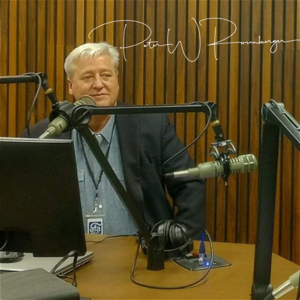
I'm Peter Rosenberger, and after 40 years as a caregiver for my wife, Gracie, through a medical nightmare that has soared to 98 operations, both legs amputated, treatment by more than 100 doctors in 13 different hospitals, and you can't imagine the medical bills.
Well, I've learned some things, and I've learned every one of them the hard way. And in my new book, A Caregiver's Companion, it's a journal from that journey. It's filled with hard-won wisdom, practical help, and yes, an ample dose of humor, because Let's face it, if we don't laugh, we're going to blow a gasket. And I've learned that I am no good to my wife if I'm fat, broke, and miserable. How does that help her?
Healthy caregivers make better caregivers. And that's what this book is about, pointing my fellow caregivers to safety, to learn to live calmer, healthier, and dare I say it, even more joyful as a caregiver. It's one truth I've learned, punctuated by either a verse from scripture or a stanza from a hymn, and a space for you to share your own thoughts. While this is my journal from a 40-year journey, you can journal along with me in this book. It's called A Caregiver's Companion, available August 20th from Fidelis Publishing, wherever books are sold.
Learn more at PeterRosenberger.com. Welcome back to Hope for the Caregiver. This is Peter Rosenberger, PeterRosenberger.com. I am pleased to introduce you all to a wonderful author and fellow caregiver. Her name is Jessica Ronnie, but she goes by Jess because she says that's what her mother calls her.
So we're going to call her Jess too, even though it says on her book, Jessica. But we don't stand on formality here. We're caregivers. We're crazy caregivers, I tell you. And I'm glad to have her with me.
This is a book that's been sitting, waiting for me for some time. But while we were dealing with all the stuff with the hospital this year, I couldn't get to this. And I am thrilled that she's been patient with me. Her book is called Caregiving with Grit and Grace. And the first thing I noticed about it was that she's from the north, because if she's from the south, the grit would have been plural.
And it would have been caregiving with grits and grace, which is my life because my wife is grace and we both like grits. But evidently that is not what this title means. It is something else. And I'm thrilled to have you here, Jess. Thank you for your patience.
Thank you for your graciousness. I look forward to hearing what you have to say. How are you feeling? You know, I'm feeling pretty good. It's a crazy week.
I had four kids start four new schools.
So kind of all over the map, but I'm grateful to be here with you. Do you drink a lot of coffee? I do drink a lot of coffee. Yes. I'm mainlining it now.
Yeah. I have a podcast called Coffee with Caregivers.
So yes. I'm doing that a lot myself. When you start drinking coffee at like three or four in the afternoon, you know that you're in some serious caregiving water here. Yes, exactly. Your story was incredibly gripping to me.
And, you know, you didn't start out like most of us do. We don't start out to do this. This is not the life path that we would choose. And yet here you are. And I wanted to start first off with your husband, your children, and then what has happened since then.
But let's go back to the very beginning. Like the very beginning, like when I was in the childhood.
Well, not in the beginning was the word, not that far. Right. How far back are we going? Go back to your journey, your first steps into being a caregiver. And I know part of it is you were kind of prepared for it because you're the oldest of 11 children?
12, yes. And that's what I was referencing. As I've kind of processed these past couple of years, I've realized I've been in a caregiving role my whole life, really. When I was two years old, my mom had twins. And there are all these pictures of two-year-old Jessica, you know, holding her twin baby brothers and feeding them bottles.
And then she had, you know, 11 kids after me.
So it's just, did she ever figure out what caused that? I think so. I'm pretty sure. And then, yeah, just grew up in this large family, helped care for the siblings. That was just kind of the expectation and ended up getting married around 23 or 24 years old.
And wait, wait, wait, wait, wait, back up. Do you not know how old you were when you were married? No, I don't. I would have to think about it. Has it come to that, Jess?
Has it come to that? It has come to that. And I could figure it out. But yeah, 23, 24. We were excited to have our first child.
We had our first son, Caleb, in 2002. And we wanted to add to our family very quickly.
So I got pregnant again. And we thought everything was going well with the pregnancy. I ended up going to my 20-week ultrasound appointment alone because my husband had to work that day. And it was there that I was told that my unborn baby had experienced a stroke in utero and there was very little hope. It was suggested that we terminate and try again.
In the doctor's words, you're young and healthy. You won't have any problems getting pregnant. It's just nature's way. These babies aren't supposed to make it. My husband, Jason, and I decided to continue with the pregnancy our faith would not allow for us to uh can you back up just a hair yeah what was that ride home like uh you know it was i do it was prior to cell phones um and i i write about that in depth in my memoir sunlight burning at midnight uh stepping out of that room and not being able to find my vehicle in the parking garage, like my brain just could not fathom where I'd parked.
And I finally found it, pulled over into a gas station and used the pay phone to call Jason. And he said, I'll meet you at home. He was at work.
So he rushed home. And I was just in a daze, that 30 minute drive, walked into the apartment that we were living in to find him on his knees praying for my safety and for our unborn baby. But yeah, I vividly remember just feeling it was such an out of body experience after having heard that, like, is this truly my life? What just happened? And then taking, you know, the next couple of weeks to really allow that information to sink in.
But it was never a question as to whether or not we were going to terminate. We were going to put this baby in the Lord's hands and allow His will to occur in the baby's life and in our life. What was the reaction for friends and family and so forth? Devastation. I mean, I can't even...
Were they supportive of your decision? Oh, absolutely. Absolutely supportive. But it was the most lonely situation. It was the loneliest situation because I was the only one pregnant.
I was the one who continued to feel every movement, every kick, every glimmer of life. And yet I was carrying what I had been told was a dead baby. This baby would either die prior to birth or die a few hours after birth. In the specialist words, there was very little hope for this child.
So every day I'm praying, I'm believing for a miracle. I'm feeling this baby kick with life. And even my husband, Jason, can't really understand the loneliness of the journey, which is what led me to rely so heavily on the Lord because there was nobody else who could understand what I was going through or even enter into that space with me. As you struggled through this, you were obviously a Christian. Your husband was a Christian.
And were you in a good church situation? We were. We were attending a megachurch that believed in healing. And I kind of entered into this, speak it and believe it. I am going to claim healing for my baby, period.
And not just, you know, partial healing. In Jesus name, this baby will be completely mentally, physically, emotionally healed, period. um that's not what i got and that was another uh intense lifelong lesson that the lord is not a magician um and that his ways are not our ways no the the blabbit and grabbit crowd that stuff doesn't hold up in this world nope now i actually i am firm in knowing that your child is healed it's just not on our timetable knowing that gracie is healed just not maybe in this life but but his promises ring true but they you know this this demanding that god act on it it it's a hard thing when you're looking at every day and you're facing it and you you get pulled into that because we're we're you know i i've i've got um well we once got a basket of fruit from Benny Hinn. You know you're having a bad day with Benny Hinn. You know it's a bad day.
So you don't tell that to anybody. We'll just keep that twixty. You know, and I was, somebody was asking about this the other day, you know, does God heal? I absolutely believe that he does. James tells us that we should pray for the sick.
And We should lay hands on them. The elders should lay hands. We should all these things. And it makes absolutely zero sense for Scripture to command us to do this. And God's not going to do anything.
There is no chance of healing. I mean, that doesn't make any sense. But then again, I also look at the fact that he allows, I don't know if you read her book, When God Weeps. Have you read that book? I haven't, no.
Oh, do yourself a favor. It's a wonderful book. when God weeps, she and Steve Estes wrote this, and this is Johnny Erickson Tata, and she wrote this line in there that came out of this book. It's been kind of a defining quote of hers for a lifetime here, and it's, God allows what he hates to achieve what he loves. You've seen that firsthand.
Yeah. And that's a hard thing for people to wrap their mind around because they want to fix things. They want to do things. And so here you are, this young mother, you've already got one child and here you go. And you go all the way.
And then what happens? Yeah. Supreme fixer here too. I mean, oldest of 12, black and white personality. You aren't bossy, are you, Jess?
I'm going to fix it and I'm going to control the situation too. If I polled your brothers and sisters, would they say that you were bossy? I don't think at this point in my life, no. I think the Lord has done a deep work in me, and I know nothing. I have some bossy brothers and sisters, but I don't know that I would be at the top of that list at this point.
Were you at the time when you were younger? Oh, I'm sure. A hundred percent. Yes. I grew up in a large family too, but I'm the third.
And so I have younger and older brothers and sisters. But I would imagine that being in a family that large, being the oldest, that you were wired that way. And all of a sudden that stuff gets sanded down pretty hard. Oh, it does. Yeah, those neural pathways are embedded pretty deeply.
So what happened in the hospital when you had the baby? Yeah, we had the baby. And they cut me open from one side of my belly to the other because his head was the size of a two year old's head at birth that was so full of cerebral spinal fluid that he would have. I mean, we both would have died 100 years ago in childbirth, but they managed to get him out and he screamed with life and I just wept in relief. I couldn't believe my miracle baby was alive.
And then I just kind of held my breath and waited for him to die. And they whisked him off to the NICU and then they brought him back and they said, you know, Mama, you can try to nurse your baby. And I did. And he just kept living. And he went through brain surgery 48 hours later and he continued to thrive and grow.
And he spent two weeks in the NICU. And as they discharged us, we sat in this room with this big board meeting table with all the specialists who had cared for him. And they said, you know, sometimes we get it wrong. And we really don't know. We really don't know what's going to happen with his life.
He could have, you know, profound disabilities or he could live a pretty normal, typical life. We'll just have to wait and see. and you know aren't and as a side do you remember when governor ralph northam of virginia had that conversation on the air about when a child is born like that and they put the child aside and have a discussion kind of thing do you remember that i know i don't know that i was oh that happened several years ago in about two 2017 18 and i remember talking about this on television And I was just like, and he was a, he's, he was a surgeon, a pediatric surgeon or a pediatric, some type of doctor. And that was the, the point was just letting the child die, putting the child aside. And it was, it was pretty grisly to listen to him and, and, and then contrast that with where you are.
And, and I've got a friend of mine who has a special needs daughter and they told the family, you know, they would, the child wouldn't live to be five. And she's getting ready to turn 21. Yeah. My brother and his wife were told, take her home and love her. And she's 37 now.
Yeah, they get it wrong, don't they? They do. They get it wrong. And so we went home with this umbrella diagnosis of special needs. We're really not sure.
Just do your best. And we tried to settle into life. It was extremely challenging. Lucas hardly ever slept. Um, he was delayed in every aspect of life.
I didn't get much sleep because I was terrified that if he were to flip himself over in the middle of the night, he didn't have the strength to lift his head back up.
So, you know, we would put him to sleep on his back, but if he happened to flip, he, he would have suffocated himself, um, because his head was so big. And I don't know, We somehow got through those first couple of years and 2007 found ourselves pregnant again. It was planned. We had our daughter Mabel and that's when our story shifted again. My husband started having all of these different health scares.
He lost his vision. He was disoriented. He was losing weight like crazy. and he kept going to specialists and they would say, you've been diagnosed with type one diabetes, which was so random and so strange. You just have to get your sugar under control.
And this was a man who owned a gym, was a personal trainer and a tennis professional, like the epitome of health and fitness. And he just could not manage the sugar levels. And one night I said to him, Um, we had the three kids. Caleb was about five Lucas three and Mabel was about six or seven months old. And I said, I have to quick run across town.
I'll be right back. Are you feeling okay? Cause he would have good and bad days. He said, yeah, I'm good. And I pulled into my dad's driveway and the phone rang and I picked it up and it was Jason.
He said, Jess, call 911. And the phone went dead So I called 911 rushed back home My driveway was full of cop cars and ambulances rushed inside the house My husband was laid out in a stretcher and asked the paramedics what had happened. And they said, your husband had a seizure, but right before he passed out, he had enough sense to put a movie in for Caleb, put Lucas in his exorciser and put baby Mabel in her bouncy seat. And then he seized until he passed out. And so that became one of the longest nights of my life.
We ended up in the local ER. I don't even remember who watched my kids. And it was there that the young doctor, I was sitting on the floor with my sister and he said, you know what, we're going to run an MRI to rule out the possibility of a brain tumor. And it all just clicked in that moment. And I thought, yeah, that makes sense.
He has a brain tumor. And sure enough, he had a baseball size brain tumor. He was prepped for surgery the next day, they removed the brain tumor. And the biopsy showed it was just a grade two.
So not cancerous at that point. And we were given the option to just watch and wait with quarterly MRI scans. And so we went home, we were told, you know, sometimes these tumors don't come back for 20 years or so, just go home and live your life. And we were like, okay, we've been tested. We're good.
Let's just move on with our life. And that's what we tried to do. And there was no malignancy. No, no malignancy. And so they said, you know, typically these tumors do come back at some point, but it might not be a problem and it might not come back for 20 or 30 years.
So just go home and and try to move on and that's what we tried to do and and uh ended up pregnant in that period of life um and moving on um and after we found out we were pregnant with our fourth child jason started having symptoms again he began losing weight becoming disoriented and he went for his quarterly MRI appointment. I remember it distinctly because I had my 20-week ultrasound appointment with this new baby.
So I was feeling a lot of anxiety around that. And then Lucas also had brain surgery scheduled for that June, June of 2009. And then Jason had his quarterly MRI appointment that same June.
So that June of 2009 was just full of anxiety and worry for me. And I went to my 20 week ultrasound appointment, everything looked great.
So that was, you know, check number one, Lucas had his brain surgery for his tethered spinal cord and Chiari malformation. That was solved. He was recuperating beautifully at home. Check number two. How functional was Lucas at this time?
I mean, walking? No, Lucas has never walked without assistance. Very delayed in every aspect. He's been incontinent his whole life, nonverbal. Can he feed himself?
No, needs assistance, bathing, moving, feeding, everything, full assistance.
Okay. And then Jason drove himself to his quarterly MRI scan. And I was busy at home with the kids and being pregnant and the phone rang and I picked up the phone and he said, Jess, the tumor's back. I have to check myself into ER immediately. And so it became the frantic scramble of who's going to watch the kids, especially Lucas.
People were happy to help with my typical kids, but Lucas kind of had the fear factor. People weren't real willing to jump in and help with him like they were with the typical kids. But somehow somebody offered to help and I went down to the hospital to spend time with Jason. And the next day he had another successful brain surgery. And I was sitting beside his mother after a very long night.
And the brain or the surgeon came in and he said, I'm really sorry to have to inform you both of this news, but the biopsy came back, stage four glioblastoma. And I had done enough research at that point to knew that that was pretty much a death sentence. The typical life expectancy of someone with a glioblastoma was about 14 months.
So... And this, he had already had one quarterly, I mean, this was just normal quarterly thing.
So this all happened within three months? He had been clean for a year and a half.
So within that year and a half period, we ended up getting pregnant again. And then every three months, he had to go back for another MRI just to make sure that the tumor hadn't come back. And it was during this particular MRI that they discovered that the tumor was growing again, that it had returned.
So as much as they say, you know, they get the majority of the tumor, there's always those cancer cells that have the possibility to reemerge and grow again. And that's what had occurred.
So this time we couldn't do the watch and wait. They suggested immediate chemo and radiation, and he started that protocol. And that became the most difficult year of my life, basically going through chemo and radiation. We ended up having our fourth child, our third son, Joshua Isaac on September 15, 2009. And Jason fought cancer for the next year and eventually passed away August 24, 2010.
At that point, I was a 33-year-old widow with four children under seven.
So, I mean, I lived in a constant state of hypervigilance for that whole year. I don't feel like my heart ever hardly stopped racing. One of the things I've learned over my years of this is that it's unsustainable to have that level of hypervigilance. Did you crash and burn? Did you learn how to cope different?
Did people come alongside? What happened to kind of steady this ship that was just all over the place? I know it's not an instantaneous thing. It's always a process. But what are some key things that you look back and say, oh, okay, that was a defining moment for me.
This was a stabilizing moment for me. I didn't have many of those in that year.
So much so that even when I was pregnant, I had a panic attack and fell down the stairs. And I went to the doctor and it was really strange advice. And he said, this is not typical advice, but I need you to go home, take a bath, have a small glass of wine and calm down. And I was like, what? He said, you are on the brink, just managing everything.
And, you know, I, what did you think of that? What was your first thought? What he's saying that to the doctors looking you in the eye and telling you this, you're on the brink. What was, what was going on in your head at that point? I knew I was, but I didn't really know how to walk away from the brink.
I mean, my life was so overwhelming and I did have a tribe of people who brought meals and did my, my yard. But, you know, at one point, too, in my life, everybody was incontinent except for my oldest son, Caleb.
So that's a lot of incontinence. That kind of sums up what that period of life looked like for me. That was like the perfect metaphor for how I felt like my life was going. There are a lot of people who are listening to this program right now who understand exactly what you just said. And they are just saluting you because they get it.
When he tells you to go home and you're on the brink, and what you just said there a minute ago, I don't know how to come back from the brink. That is a place where so many caregivers are. We don't know. I've been there. If you haven't been there, then you haven't been a caregiver long enough.
because there is a brink and we get there and we don't know how to come back from it. What did that look like for you to somehow be either back away yourself or be backed away from the brink? And I know it didn't happen overnight. Yeah. And I've been able to look back over the years too.
And I realized that when we're in that hypervigilance, we either fight, we flee, or what's the other one? Freak out. Freeze, freeze. Oh, well, you free.
Okay, well, I freak out. No, I fight and I've learned that. And in that fight, I get angry. And I've learned that it's that anger becomes an adrenaline source. And it's a pretty decent adrenaline source when you're going through something really difficult.
I mean, it does get your butt out of bed in the morning and it keeps you going. and it kept me caring for four kids, but I kind of lived with this low grade anger for a really long time until about two weeks before Jason died. And the Lord and I had this moment. I was in the shower and I was just sobbing saying, I am so exhausted, Lord. I don't even know how to continue to do this and fell to my knees and literally had a Garden of Gethsemane moment with God, the father.
This is too much for me. I don't want to drink this cup that you are making me drink. And came to this place of surrender where I finally said, but not my will, but yours be done. And in that surrender, I was able to be very present for Jason in his final two weeks of life, laying beside him, talking to him, sharing with him, praying with him, listening to praise and music worship with him. And I was able to escort him into eternity.
And I think that it was because I surrendered, I was able to have those moments. But after he died, I was so exhausted. I have never felt an exhaustion like that before. I did nothing. I would get up, put Caleb and Lucas on the school bus to go to school, and I'd go lay on the couch.
And when Mabel and baby Joshua took their afternoon naps, I would nap every day with them. And I even think back, like Caleb was seven. He was getting himself up by himself at seven years old to walk and get on the school bus because his mother was so depleted. And he just kind of owned that. He did it.
And I have such guilt over that even. He just. What do you do with that guilt? Oh, I mean, I've talked to him about it. I've said, I'm sorry.
I was just so tired. What is his response? He's like, you did the best you could, Mom. He has so much grace. You did the best you could.
A friend of mine a long time ago told me something that I've never forgotten, that even in the worst of things, God, he has found, he was a counselor, and he said, God will put raincoat and galoshes on kids and allow them to go through those things without it tearing them apart. And I always took great comfort in that. And I look back with our own children, and I get that depleted, tired, frustrated anger, smoldering rage at all times, and anger with God. I get that. Bless your kids' hearts because that's an amazing gift that you can have those conversations with them.
And we don't know the end of the story, of course, of what God has in mind for them as they continue on this path of how it shaped them and what he's prepared for them. But I understand that kind of guilt.
Well, this is why I had you on the show, Jess. This is why I had you on the show. I want to switch gears. One of the things in your book, and again, the title of the book is Caregiving with Grit and Grace, not Grits and Grace. Jess is from Michigan, so she really doesn't understand grits.
I lived in Tennessee for seven years.
Okay, okay. God bless you. Where'd you live in Tennessee? Bass Springs. Bass Springs.
Well, Gracie and I were in Nashville for 35 years.
Okay. Gracie is a ninth generation Tennessean.
Okay. But her family was so far back up in the hills up in East Tennessee that the Presbyterians were handling snakes. Right. But we live in Montana now, but it's where we have to have our grits imported by sled dog out here. Right.
But if you don't mind me jumping through time a little bit, take me to that healing service that you went to where you saw that man talking about diabetes who was overweight. This is in the book. And it's a standout moment because you were incredibly frank and candid in this. Take me there. Yeah, so frank and candid.
My publisher said, you might want to soften this a bit. No, I'm so glad you didn't. And I'm a pretty frank person. And I'm very black and white, as I've already shared. And as I was sitting in this healing class with this morbidly obese man, and I'm pregnant with Lucas, I'm pregnant with this baby who I've been told is going to be terminal.
And we were asked to share our prayer requests. And Walter, this morbidly obese man, asked that we would all pray that he would be healed from diabetes. and I'm asking to be prayed for this baby who I've been told is going to die in my belly. And I'm getting kind of annoyed with Walter because I'm thinking to myself, you can control your situation. You can lose weight and you can heal your type two diabetes diagnosis.
I can't do anything to control my situation. I am completely at the mercy of what the Lord wants to do with this baby. And it's just getting me kind of fired up. Like, why won't you just lose weight? And then you won't have this type two diabetes diagnosis.
And it's, it became kind of a struggle for me. And a few weeks or a month, a month or two later, I was at church and read in the bulletin that Walter had passed away from diabetic complications. And it kind of dawned on me. Walter relied on the Lord and sought the Lord for his healing and for something that he couldn't control. And I was still in this, I need to control phase and wasn't fully surrendered.
And so Walter's life really became a testimony to me during that time. When I read that, I was really stunned, and I'm glad you put it in there. It needed to be in there because it's real life. I remember there's some things I put in, and it was actually Gracie's book that I helped her write, and there's some very unflattering things about me in there. And I asked, Jeff Foxworthy wrote the foreword to it, and Johnny Erickson Tada helped kind of mentor me a little bit as I wrote it.
If you know Gracie and me, it makes perfect sense that Jeff and Johnny would be the two people to bring together to this project. But I remember Jeff saying something to me. He said, no, you got to put it in there. It's real life. Yeah.
People need to hear real life. He said, I got a buddy of mine who's right all the time, but he's never real. And this is real, Jess. This is real life and it painful and it the wound is not pretty to look at But in order for us to heal we got to deal with it We got to look at it We got to look at the rage that simmers in us as caregivers all the time We got to look at the guilt that tears us apart We got to look at the fear We got to look at the way we choose to medicate all those things. It is unpleasant.
Nobody likes it. But I have noticed that God is not uncomfortable with my discomfort. And he knows. He knows. And he's interested in dealing with it.
And it's painful. And I don't like it. And I've had many conversations where I've offered my consulting services to God. He has yet to take me up on it one time. Me too.
But, you know, and I remember one time when Gracie was groaning. I mean, groaning in agony. And this went on for some time. And this is not a one-off with her. And I was in the hospital with her.
and I looked up at the ceiling and I said, do you even see this? Does this even register with you? Do you care? I tell you what, why don't you give her an hour's worth of relief and I won't tell anybody so it won't thwart your plan? That's how real I got with God.
And I have also found that God knows these things and he's going to press on it and press on it till it comes out. My father had this statement that he would say that most of life's ailments can be dealt with by popping it, puking it, or taking NyQuil.
Sounds about right. And I think God does it. He likes to pop things, and he likes to get it out of us because he knows it's in there, and he knows it's toxic. And he knows that you were sitting there with Walter watching this thing. He knows that was in you, and he wanted it out.
He saw the things in me, and he wants it out. And it's not going to be pretty when it comes out. But what a moment that he goes back then, and you're able to write about it and say, oh, this is what I saw of myself, and this is what I saw of the cross. And that's why I have you on this program today, Jess, because I look through what you've done, releasing anger. You talk about fixing your gaze.
that's a big thing that you obviously weave in throughout a lot of what you do because your eyes were so misdirected by all the spiritual and physical incontinence and your eyes were lifted upwards when you started writing when did you start writing this book in 2023 the story even behind when I started writing this book is such a God orchestrated event. We ended up purchasing a home for our son, Lucas, that we turned into a group home. And I wrote this book while my husband renovated that home for Lucas. And it almost became God downloading this love letter for a grieving mother who was grieving the fact that I was going to release my child into the care of others. I would always be a caregiver and I am a caregiver on some level to Lucas, but I no longer am his primary day-to-day caregiver.
And by the way, this was, was this Ryan building the home? We bought a home and Ryan renovated the home. Because Ryan, we hadn't even got to Ryan yet. No, we haven't. Ryan, you met Ryan after your husband had passed away and you and Ryan married and he had three children.
Yes. Ryan lost his wife to brain cancer four days after Jason died. The way we met is pretty remarkable. I blogged about our journey from Michigan and Ryan blogged about his journey from Oklahoma. And a stranger from Pennsylvania happened to read both of our blogs.
And she reached out to me and she said, hey, there's this widower in Oklahoma. He's not doing very well. You just have a lot in common. I think you could be a source of encouragement to him.
So I left a comment on his blog and woke up the next day to an email from Ryan. And we ended up on the phone together in the next week or two. We met a couple of months later, and we were engaged and married. Within the year, he ended up moving to Michigan with his three young children. Did you help him with subtitles, being from Oklahoma to Michigan?
Was the language barrier an issue at all? It wasn't. I thought it was sexy. No, it's part of the appeal, this Southern gentleman. It worked for us.
Um, no. And we adopt each other's children, uh, to make one big happy family of nine. And, um, we thought we were done at nine. Um, and then a couple of years later, we decided to have a child together, uh, Annabelle Ryan.
So now we have eight children. You know, uh, your, your mother evidently. Evidently. bless your hearts well do you um as you as you started writing this book you as you go back and look at these things and this i just finished a book myself here and i realized this book was 40 years in the making because and i saw this quote and don't ask me to get it exactly but i'll give you the broad brush of it from c.s lewis that the god will redeem things backwards so i'm not saying it very well and it's we'll start to see his redemptive work backwards and look at these things and and i think the hymn writer said it best through many dangers toils and snares you know we have already come and then isaac watts wrote you know oh god our help in ages past our hope for years to come our shelter from the stormy blast and our eternal home And we look back and we see these things. And Moses preached this in Deuteronomy to look back at the things that God has done.
And now you look back, are you able to start?
Well, I know you are because you wrote this book about it. But as you start to trace his fingerprints on things. Oh, yeah. Oh, it's incredible. I mean, my whole life has sort of blossomed into this caregiver advocacy work that started with Lucas.
And, I mean, it led to documentaries that ended up on PBS and books and a podcast and speaking all over the United States and sharing about how desperately caregivers need help and support. And that's all from Lucas's humble little life. I mean, he is the most humble human being on the planet. He doesn't care if anybody knows him or cares about him. He just wants his VeggieTales videos and he wants to be fed and he loves to sing Praise Baby videos and maybe some chocolate cake.
Tell Lucas I'm right there with him. Yeah, it's his mother's ego that the Lord keeps working on. Like Lucas is good. He's humble. He's probably closer to the Lord than many of us because he just doesn't have the cares of this world on his shoulders.
And being his mother has been such an honor. I mean, he's taught me more than any man or woman behind the pulpit ever has. And walking beside my husband, Jason, and, you know, meeting Ryan and adopting his three kids and this big family. And it's all just been about God's glory. And that's what the word says, too.
Why should we not go through these things? It's to bring glory back to God. And I live now with such an eternal perspective. It's really not about this life and the here and now. It's about being faithful to whatever God calls us to walk through.
It can't be about getting everything we need to have our little slice of heaven right here on earth. It cannot be. We've been told over and over and over in scripture, in this world, you will have. And so when we have that, go back to the name and claim it, blab it and grab it crowd. When confronted with things that are very uncomfortable, people want to somehow impose, well, if you would, or, you know, why do you suppose?
I mean, I'll never forget, you know, the times that people have said that to us. If you had this, if you would, you know, whatever. They don't do it anymore, but they did. We were young and we didn't know. No, in the word sense, crucified with Christ.
I mean, we are crucified with Christ in this caregiving work that we do, and we're becoming more Christ-like in every action that we extend towards our loved ones. And is the servant greater than the master? Right. And so it is not that we have to go out and look for it. We don't have to go.
God will bring it our way of what he's going to accomplish. but I'm going to ask you this and if you want, I'll cut it out of the podcast. You don't have to have it in there, but you recently unable to do a media event that they said that you were too honest. Can you talk about that? You don't have to mention any names, but just what, what made them so uncomfortable with talking frankly about real life?
You know, that's probably a whole other podcast episode, really. I do find myself frustrated often with these faith-based organizations or media outlets or publishers that feel the need to sugarcoat the truth or to eliminate the anger or the rage. Or you had a great word earlier about, I don't remember, the smoldering. smoldering rage. And I guess as believers, we're not supposed to have those feelings, or we're certainly not supposed to share about those feelings.
But I think only, well, I believe wholeheartedly only in sharing do we then connect with other people. And it's in connecting and sharing our stories that we heal and we find commonality and we grow and we understand a tiny little bit about the meaning and purpose of it all.
So that has been frustrating for me. I've found oftentimes a larger audience in non-faith-based circles. Oh, I'm the same way. And isolation is one of the toughest things we face as caregivers. And I've told this many times too, that caregivers can feel isolated in a crowded room and we can feel isolated on a crowded pew.
And we desperately need community in our suffering. How is that going to happen unless we have a conversation about it? And people need to know that they're not the only ones with smoldering rage. And they're not the only ones that have driven down the highway at 100 miles an hour, shaking their fist at God and screaming. Because I've done that.
And I'm not proud of anything that I've done. And I don't share that to in any way, do these things. I have failed on every level. But here's what I've learned. And here's where God met me in this place.
Because now we're having a conversation.
Now we're having a real conversation. Not just this, you know, Lord, just if it be thy will, Lord, just really, just Lord, just really, just really, Lord, just really help. No. There's a point where you just groan. You just groan.
And even a sigh is a prayer of faith. Even a sigh. I've learned that over the years because I've sighed a lot. And even that because, you know, and I've been going through a series on my show of uncomfortable things that caregivers deal with that they don't want to talk about. And other people don't want it.
It's very uncomfortable. And when people see Gracie, they immediately want to, you know, we got to pray to get Gracie healed. Or we, and my brother's talked about this with their daughter. We got to pray, you know, get Kelsey healed. And my brother looked at him and said, Kelsey's fine.
She's loved. She's well fed. She's cared for. She got a family that loves her. She's fine.
Yeah. And, but we, we, we can't process this because we see this, this is not, doesn't fit our ideal. This is obviously something that, that has weighed heavy on you because everybody would, you, yourself, and then others would put this pressure on you to somehow we've got to squint our eyes real tight and then God will answer our prayers. And Philip Yancey talked about this in one of his books where we have this compulsion to wash God's hands.
Somehow God can't be involved in this. You know, this can't be God. You had to have done something. What did you do that was so bad? You know, and that's why it's important.
Your book is important, Caregiving with Grit and Grace. That's why it's important to have these conversations. What's next for you? Oh, what's next? Are any of your children married?
Yes, one is married. One is getting married this March. We are down to just three children at home. We moved our 18-year-old into college yesterday, so that was bittersweet. I am working on, I have four other books I'm working on, And so I'm hoping that now that the kids are back in school, I have some time for that.
And I'm in a bit of a transitional period with the Lucas Project, the nonprofit that I started about 10 years ago. I resigned as executive director, hired a different executive director. And I'm just trying to clear some space in my life now that Lucas lives in this group home that we created. It's about 10 minutes away from our house. He lives with three other disabled individuals about his age.
We see him numerous times a week. And I'm just trying to figure out who I am now that I'm no longer a 24-7 caregiver. And what do I want to pursue?
So I, past eight weeks, I've been taking a pottery class with my 20-year-old daughter. That's been very enjoyable. By the way, if history continues as it seems to be with your family, it won't be long, but probably because you'll be a grandmother. Probably. I'm still the 10-year-old at home.
Well, I just want to prepare you for that. There's a proclivity in your families. I'm just saying. I'm just throwing that out there. Yes.
What's a hymn that you love? Amazing Grace. Amazing Grace. Everybody loves that one, Jess. Come on, you know more than that.
Blessed Assurance. Oh. I have the caregiver keyboard hooked up. You know the story behind that? I do.
Maybe I have the wrong hymn.
So maybe I don't. Maybe I better not claim that.
Well, Blessed Assurance, you don't have to name it or claim it, But Blessed Assurance, Phoebe Cates had this tune and she wrote it in 9-8. It's a really odd key signature. And she talked to her friend and said, do you have a lyric for this? And her friend was Fanny Crosby. And in 15 minutes, this hymn was written.
Oh, wow. I've been going through another series on the hymns, on hymns that every caregiver ought to know.
Now, I will play Amazing Grace for you. What's another one that means something to you? Great is I Faithfulness. Oh, that's a great one. I never get tired of this one.
And I never, ever get tired of Gracie singing this. music And I just love these hymns And I go through and I play them a little slower. I had in some chords that are non-sanctioned by the Presbyterian church. I was playing this one time, pastor. We went to the church there in Nashville where that shooting was, Covenant.
Oh, yeah. And I used to play every Sunday morning before the service. He wanted to just create an atmosphere of reverency for the church because it was kind of like a barn and a lot of people were coming in. And so I would go out and play and do a lot of these hymn arrangements. and he was lighting the candles as he was going across.
And I'm at the front of the church. There's hundreds of people out there. And I threw in some of those flat nine chords, and I looked at him and I whispered. And he kind of looked at me as he was lighting the candles right beside the piano. And I said, you know, I can get brought up on charges at some churches for that chord right there.
He was trying to light the candle, and he started bending down and started laughing. But I love these hymns because sometimes that's all you got is that you could just hum a hymn and remember that there are people who have been through such brutal things that live to write about it and live to sing about it. And Jess, you've lived to sing about it. You've lived to write about it. You've lived to talk about it.
And you've lived. And so has Lucas. And I don't understand about Josh. I truly don't. And anybody that tells you that they do will lie about other things too because we can't know.
But we know the one who does. And that's what brings me great comfort. And I appreciate your frankness. I appreciate your honesty. This is a book that I highly recommend for any and all caregivers because she's real in this.
And that's what we need. We don't need any more people pretending and talking about, you know, how, oh, I just love being a caregiver. And, you know, we need people that could be saying, you know, my life was described by incontinence. and it's okay. It's all right.
And Jess and I are just two weary caregivers who sit by the side of battle and have a conversation and say, we're going to be okay. Not because what we're dealing with is fine and it's good. I mean, we had a challenge last night that was pretty significant and I get it. And it's just, it seems like it's just relentless and I'm 40 years into this, but God, but God. And he sustains.
And as the hymn says, all I have needed, not some I have needed, but all I have needed, his hand has provided. Close us out, Jess. What is last thoughts that you have that you want to say to an audience full of caregivers? I think it's this theme in my book. What you are accomplishing is holy work.
and that came to me after a very challenging day with Lucas. He was homesick. He had diarrhea. He was throwing up. He was screaming.
And I had a lot of important things to accomplish. I had a book deadline. I was working on a documentary, like lights, camera, action, grand, important things. And I was getting really irritated with Lucas, who just kept screaming and just kept needing his diaper changed. and as I was mumbling under my breath again, I felt the Holy Spirit whisper, this is holy work.
This is the holiest work you will do this side of eternity, and in fact, this is the work that makes you more Christ-like. Not all the grand, you know, lights, camera, action, book deals, and this is what brings me joy, is your faithful obedience to caring for your 15-year-old profoundly disabled son. And it was such a profound moment that I had a sign commissioned that says, this is holy work. And I hung it above Lucas's bed as a constant reminder to myself that what I was accomplishing was holy work.
So I would just say, remember that what you are accomplishing is holy work and the Lord is pleased as you continue in obedience. you know um the first hymn i did on the series i was doing was holy holy holy and i said this is a hymn that every caregiver needs to know because this is a hymn they're singing in heaven right now i don't know if they're using that tune but they are singing those lyrics holy holy holy and i and the question i have for myself and for my fellow caregivers we love to sing this at church can we sing this in the middle of the night in the bathroom while we're cleaning up something that is i think that is the call for us and you're absolutely right it's holy work because he's in this he sees this this is not something we do apart from our walk with god this is something we do and i've had to learn this in very painful ways but now i'm grateful that i can say I have been crucified with Christ. I no longer live. The life I live in the body, the life I live as a caregiver, I live by faith in the Son of God. And he who began a good work in us is faithful to complete it.
And now we are also to comfort one another with the same comfort that we ourselves have received from the God of all comfort. And I want to ask you, I could keep you on all day, Jess, and I'm sorry that I'm just wearing you out here. I'm probably taking up more of your time. Oh, you're fine. What is the, because that verse, when people say, you know, we comfort one another, what is the comfort you have received that you were able to extend to others?
What is that comfort? That's a good question. The comfort I've received from the Lord or from others? From the Lord. Comfort one another with the same comfort you yourself have received from the God of all comfort.
You know, becoming intimately acquainted with the Holy Spirit has been a game changer for me. And understanding that intimacy with the Father, Son, and Holy Spirit. What does that look like? That's a very tangible act that I do every single day. I have a prayer mat and I lay down on my prayer mat with palms open and invite Father, Son, and Holy Spirit into my day.
I crucify myself, my ego, my desires in that moment. I speak to Father, Son, and Holy Spirit. I pray for a fresh anointing on my life. I pray that my life can bring glory to God and that I can be obedient in whatever I'm asked to accomplish. and just the peace that I have felt.
I struggle to answer this because I don't want it to be just more like Christianese fluff. We have an interpreter. No, I'm just kidding. I was like, really?
So providing some sort of tangible action behind what that looks like for me. And it's just laying on that prayer mat for 10 to 15 minutes a day that I'm overwhelmed with such a sense of peace where I know Father, Son, and Holy Spirit meet me and will sustain me for that day and that day alone. It's that manna for the moment. And so I think it's just that faith aspect of truly having the faith to trust that I will be sustained for each and every day. I think that's where it comes down for us as caregivers is that act of faith that somehow, somehow God is weaving in this and will sustain us that we are not called to get through this so then we can have our meaningful Christian life.
We are having our meaningful Christian life in this right here. My mother says this to me a lot. The Lord thy God in the midst of thee is mighty. not on the other side of your travails right here now and we think somehow we're going to we're going to have our breakthrough we're going to get this what a lot of people promise you know we're going to get your breakthrough you're going to you're just around the corner you're set up for a step up you know that kind of stuff but everything in scripture tells me he's right here with us right now in the misery in the incontinence in the suffering in the screaming in the hollering all these kinds of things that are going on you ain't never had much fun as a caregiver doing an interview until you hear the toilet flush while you're doing it.
So true. You know, and I used to apologize for all the clatter I make and so forth around because I'm always doing something. But I don't because this is my life. It's not a bad life. It's a hard life.
It's a hard life for Gracie. It's a very hard life. She suffers tremendously. me. And yet he has not said to us that he's going to, okay, you get through this, then I'll meet you over here on this side of it.
You can have that intimacy in the midst of your horror, in the midst of your suffering. Because Paul and Silas did it, being beaten around midnight, singing hymns in prison. Isn't that amazing? I mean, that story always shocks me because I don't know that I've been there to that amount of faith yet in my life. I will tell you what I told Gracie, and the only reason I was able to tell this to Gracie is because the redemptive work of God in my life, because it didn't come from me.
I exhausted everything I had on the, I think, the seventh day of our marriage.
So I was it. I had nothing else and everything else had to be gone, but I had to be depleted of this. And she was going through a pretty rough stretch in the hospital, but she was clock watching because she was in so much pain and she couldn't get anything else. They had to wait for X amount of time. And I looked at her and I said, Gracie, she lay there at her bed the tubes everything and it's pretty rough and i said um they say that when you took the apostle paul's tunic off that he had 195 scars from where he was beaten five times minus one wow and i said he had no anesthesia and she looked at me big tears in her eyes she said i'm not the apostle paul i said no you're not.
I took her hand and I looked at her square in the eyes and I said, no, you're not, honey. But the same spirit that sustained him will sustain you. I promise you this. And she set her jaw and she set her face like flat and she endured. And I would love to take credit for saying those things.
I would love to, but I can't. And everybody that knows me knows that I can't, that God supersedes everything that I've done with this and weaves something in. I don't know how he does it. I don't know why he does it. I'm just grateful that he does do it.
Johnny told me that many years ago, that God reaches into the most horrific of circumstances and pulls out something that gives him glory. And this is what he's done in your life, Jess, and is continuing to do it. And the story's not over by any stretch of the imagination. because you're at the rate, let's see, I think, let me do the math. You're about to have 64 grandchildren over the next couple of years.
And if my math is correct. Yay.
So you're going to have lots and lots and lots of stories. And I really hope you'll come back on and tell every one of them. Oh, I would love to. You are a delight. Tell me this, where can people find this book and where can they find you?
uh i am at jess plus the mess.com yes um is that all one word or is the plus sign it's all one word jess plus the mess.com yes facebook the same and instagram the same and the book can be purchased on amazon barnes and noble walmart has it so anywhere books are sold anywhere books are sold.
Okay. Well, Jess, Ronnie, what a treat. Thank you for spending so much time with me today. And I look forward to every time that you can come back on.
Okay. Oh, my pleasure. Thank you. This is Peter Rosenberger. This is Hope for the Caregiver.
Hopeforthecaregiver.com. We'll see you next time. Gracie, when you envisioned doing a prosthetic limb outreach, did you ever think that inmates would help you do that? Not in a million years. What does it do to you?
I would have ever thought about that. When you go to the facility run by CoreCivic and you see the faces of these inmates that are working on prosthetic limbs that you have helped collect from all over the country that you put out the plea for and they're disassembling, And you see all these legs, like what you have, your own prosthetic legs. And arms, too. And arms. When you see all this, what does that do to you?
Makes me cry because I see the smiles on their faces. And I know what it is to be locked someplace where you can't get out without somebody else allowing you to get out. Of course, being in the hospital so much and so long. When I go in there, and I always get the same thing every time. that these men are so glad that they get to be doing, as one man said, something good finally with my hands.
Did you know before you became an amputee that parts of prosthetic limbs could be recycled? No, I had no idea. I thought we were still in the 1800s and 1700s. I mean, you know, I thought of peg leg. I thought of wooden legs.
I never thought of titanium and carbon legs and flex feet and sea legs and all that. I never thought about that. I had no idea.
Now that you've had an experience with it, what do you think of the faith-based programs that CoreCivic offers? I think they're just absolutely awesome. And I think every prison out there should have faith-based programs like this because is the return rate of the men that are involved in this particular faith-based program and other ones like it, but I know about this one, is just an amazingly low rate compared to those who don't have them. And I think that that says so much. It says so much about just that doesn't have anything to do with me.
It just has something to do with God using somebody broken to help other broken people be whole. If people want to donate a used prosthetic limb, whether from a loved one who passed away or somebody who outgrew them, you've donated some of your own. What's the best place for them to do it? How do they do that? What do they find out?
Please go to standingwithhope.com slash recycle. And that's all it takes. It'll give you all the information on there. What's that website again? DannyWithHope.com slash recycle.
Thanks, Gracie. Take my hand. Lean on me. We will stand. you