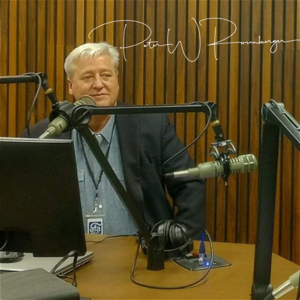
Hey, do you know a caregiver in your life who's struggling with something and you don't really know what to say? Well, guess what?
I do. So, get them this book. It's called A Minute for Caregivers. When every day feels like Monday.
They're one minute chapters. And I'd love for you to put that in the hands of somebody who is struggling as they care for a chronically impaired loved one. And it could be somebody dealing with an aging parent, especially each child. Somebody that has an alcoholic or an addict in their family. Somebody who has a loved one who has had a traumatic experience, mental illness.
There's so many different kinds of impairments. There's always a caregiver. How do you help a caregiver?
How do you help somebody who helps somebody? That's where I come in. That's where this book comes in. And that's what I think you're going to find will be incredibly meaningful to them. And if you're going through that right now, they get a copy for you. Friends don't let friends care give alone. I speak fluent caregiver for decades of this.
This will help. I promise you it'll pull you back away from the cliff a little bit, point you to safety, give you something solid to stand on so that you or that caregiver you know can be a little healthier as they take care of somebody who is not healthy. Caregivers make better caregivers.
It's called a minute for caregivers when every day feels like Monday wherever books are sold. And for more information, go to PeterRosenberger.com. We're grateful to have him with us today to break down what AI and healthcare really means and why it's mattering.
It's going to matter to all of us. And Dr. McLaughlin, we're so grateful to have you here. And thank you for being here. Welcome to the program. Well, Peter, thank you so much for having me on and allowing me to share a couple moments with your listenership.
So thank you so much. Well, I've got an audience full of caregivers. And so I want to right off the bat just ask you, what are your thoughts on how AI, and a lot of people are very scared of AI. And I understand that. I work with it all the time.
But I understand a lot of people don't. What are your thoughts on how AI can help caregivers who are overwhelmed and just trying to keep their loved ones healthy and safe? Yeah, AI can be scary. Any new technology can be scary. And there is an article that was recently published by Bessemer Ventures, and the title was AI and Healthcare in Overnight Success Decades in the Making, an Oxymoron. And number one, any technology that occurs is scary because we may not understand it.
And you're probably old enough, and your listenership is as well, to remember the Netscape days of the internet back in 2000. And we call that like, you know, that was the bubble, if you will. And previous to chat GBT and open AI, that conversation was very difficult to have about AI. How does that help you as a caregiver, your physician, your nurse, your licensed professional, and your loved one or patient. But now that people have been able to touch AI in real life using those tools, the understanding and acceptance has grown significantly, not only by caregivers, but also by physicians.
And that growth from 2019 was 29% acceptance now up to about 72% acceptance. So, mildly, basically what our technology does, Peter, is we now we're the first biologically validated AI, which means that our predictions and forecasts have been proven to be true and accurate by companies such as United Healthcare, Innovative Renal Care, Ascend Clinical. And because we process 84 million patients, and we have all this data, and we're able to predict in the future, will someone have the chronic disease? And will it progress?
And what do we do as the caregiver or as the patient or as the physician to retard that progression or prevent it from happening? And I think if anybody asks that question about being scared, I always give the analogy back to, do you want to be on a plane from New York City to London or New York City to Dallas with just the pilot, just the computer or the pilot and the computer? And I know I want to be with both the pilot and the computer because there's a fail safe. And I think it gives an opportunity really to support the medical demands of our healthcare professionals and caregivers. So let's break this down into some real world things here. What are some of the prediction models that you have? Is it for kidney disease?
Is it diabetes? Things such as that? Yeah, so we're in five different disease areas, renal or kidney, which is both chronic kidney disease as well as dialysis, cardiovascular disease, diabetes, COPD, and mental health. And what we do, what the tech does for those is it predicts, number one is it gives you a real time risk today of an adverse event like hospitalization happening. But then it predicts in the future, Peter, will that person get better, remain stable, or will they have an adverse event such as a hospitalization or a heart attack or a diabetic event? Two weeks, three weeks, four weeks out.
So we're talking about in the future. And the next thing it does is gives a prediction as to what do we do as a team, the caregiver, the doctor, the patient to prevent that from happening. So for example, our accuracy in predicting heart attacks in three weeks is about 89%. So if you're driving from Denver to the Aspen area, right, and someone has a heart attack, they're gonna have a low survivability because they're in the rural area. But if we can predict that two weeks out, that person could go to the cardiologist, maybe it's a pharmacological or a drug intervention, or maybe they have to go for an echo or an EKG, but we've saved that life before putting them into that situation. Another example might be someone that's on dialysis and we predict, hey, they're going to go into hospital because they have too much fluid, their heart's working too hard.
And so right there, if our nurses take our next best actions, 99.987% of the people don't go to the hospital. Well, so we're looking at mitigation, we're looking at prevention, we're looking at treatment options way before the event happens. So how do you, where does this start? I mean, does it just start by going to your PCP? How do people engage in this type of path?
Yeah, so there's two ways really. So we started off serving insurance companies and then we learned very quickly that physicians, so your PCP or your cardiologist or your nephrologist, really are at the point of care. And that's where you get the best bang for your buck is when you're in the doctor's office and the AI is working with the doctor. And I want to make that point very clear is that, you know, we work hand in hand with the doctor, we give them all the information they need. And so the question really is, you know, is your physician using this technology and do they have access to it?
Well, this is, yeah, that's a very good question because, you know, you're going to your doctor and they may not have any clue to what this is talking about. How widespread are you involved in this with practitioners and so forth? I mean, are you in major like universities or are you out in rural community hospitals?
You know, where are you guys? So I came off a farm, Peter, so rural health is very important to me. And I think that the AI has a lot there to prevent from hospitalizations and heart attacks and severe acute events. So we're working really, really hard to get into those markets. Currently, we are deployed, again, so we've processed 84 million patients. We're currently deployed at over 450 dialysis centers across the United States. We are rolling out to 230 nephrology or kidney doctor's offices. And we are now moving into cardiology practices, as well as skilled nursing facilities.
So short term care after a surgery or whatnot, but also long term care as well. Back up a little bit to the psychiatric component of this, of mental illness. Kind of unpack that a little bit.
How does that work? Because I mean, with the dialysis and so forth, you got blood markers and urine and everything else that you test for. What does this look like in a psychiatric environment? Really good question, Peter. And, you know, I don't mean to be funny when I say this, but I grew up Irish Catholic and, you know, mental health was not my dad's top priority, right?
It was something to cry about. And so it wasn't on my list to want to do as a scientist, because it's a very subjective area of medicine, if you will. And so our accuracy for renal and heart is like 85, 87%. We're very proud of that. But when you look at mental health, it's 72%. And the story is UnitedHealthcare was a client and they asked us to do the mental health part. And we worked really hard and we got to 68% accuracy and then we get to 72. And when I was showcasing it to the executives, I was like, you know, this isn't as good as I'm usually.
I'm very worried. And when we showcased it, they were very impressed with what it was. And what it is, Peter, is it gives the ability to predict objectively, you know, what stage of depression a person is at. So if you ask a practitioner, are they stage one through five?
If you ask three practitioners, you might get three different answers. If you get three different answers during medication, they have to titrate. Some of your listeners may have heard a family member say, well, they're working on my medication or trying to figure out the dosage, the proper dosage. And that means that maybe they overdiagnosed or they underdiagnosed and they're trying to titrate that medication up.
So what our technology does is that it gives an objective with a 72% accuracy of where that is to support the physician in their diagnosis and allows a faster vehicle, if you will, to getting to the right dosage of the medication. You're basically giving them the access to the HOV lane. Absolutely. I mean, I should hire you. By the way, you could use that one if you want.
My initials are PR. Yeah, and I get that and I could see the subjective part of it. But I think as we look at the mental health issues going on in our culture right now, which are substantial. And I'm here right now. We live in Montana, but I'm doing this interview with you in Denver where we've been here for some time in the hospital and mental health issues are just exploding here in this area. In Colorado here, it's a big issue where they're talking about it. I see people, addicts and so forth, laying on the ground sleeping, you know, all this kind of stuff right here.
I mean, when I'm walking back and forth to the hospital, so this has been ever present on my mind. How do we go after something like this? How do we mitigate this? What are the intervention methods we can do to pull this back? Now, are you dealing with just depression or do you feel like that you guys can penetrate into schizophrenia, bipolar and all those kinds of things as well?
So multiple good questions there that we need to unpack. So I completely agree with you that, you know, the mental health aspect is huge. And I credit a kidney doctor giving a talk last year to why my belief is that it's so big and we need to make some inroads there because people suffering from chronic diseases such as chronic kidney disease or dialysis or cardiovascular, they can become depressed.
And if they become depressed and they don't take their medication or are treated for that, that leads to a whole host of advancements in that chronic disease that could have been, it retards it, right? And so we have to treat the patient, I mean, the physician is to treat the patient with a holistic approach. And so I'm a big advocate of, you know, if we're working with nephrologists or cardiologists, bringing in our mental health as well. And so we are starting to do that and that you'll see decreases challenges with medical adherence.
So taking your medication or going to your appointments, which are very important. Now you bring up another good point, Peter, about the other areas of mental health, schizophrenia or bipolar. And we have looked at that. The challenge what we're seeing is we can do depression very well because of the data size. The challenge with the other disease states within mental health is we don't have the level of data we need currently to be able to make the predictions that we need to. Well, and that makes sense because these, yeah, I get that. What about, what are some areas that you are envisioning doing, but you're not there yet, but you really want that area. You want to put your flag there. What would that look like for you?
Absolutely. The two really great examples are high risk pregnancy and muscle skeletal. So like muscle in the back from falls or from strains or accidents or whatnot. So I'll go back to high risk pregnancy. You know, on our list of things to do is how do we mathematically model this and predict which individuals will have a preterm or a preemie baby. And then how do we prevent that or help the child or the fetus get to a further point in pregnancy or be able to go be naturally birthed.
So they don't have to go to the NICU and spend all those months there, but also for the maternal or mom's health as well. So that's high on our list as and again, back to the muscle skeletal, which is huge for, you know, all of us aging individuals and getting in those long term injuries. How do we ensure that individuals get the best treatment? And usually, you know, it's physical therapy or exercises at home that extend the quality of care that's needed. Again, huge on to the caregiver in these points. What about Alzheimer's and other related like Parkinson's so forth? My father had Parkinson's and my mother-in-law as well.
So I didn't know if that was something you guys are trying to wrap your arms around as well. We are working with a couple academic units and a couple other companies in that. So both of those disease states have a lot of new data that is coming available as well as data, Peter, that is being collected now. So down to voice or coughing and things of that nature in the voice box that can give premonition to the stage or quality of the disease. So that is something that we've been asked to look at as well as cancer.
And so we're starting to go down those pathways currently. I'll give you an anecdote. One of our clients is a health company that provides in-home nursing, if you will, or visiting support in the Northeast. And they are using Alexa's or Avatars to talk to their aging population. And what we found is that those individuals are more honest when the Avatar asks them how they're feeling versus a home health nurse. And so that data that's collected when the Avatar says, you know, hi, Sally, how are you feeling today, where she might tell the nurse, hey, sweetie, I'm doing great.
She's being very honest with the Avatar and saying, you know, I'm having lower back pain today. You know, I woke up early. And that small amount of data could alert to a urinary tract infection or that could have been a kidney function or whatnot. And we can get treatment modalities faster. Well, as you say these things, I mean, I'm just so many things are floating in my brain here of cancers, of glaucoma, of, you know, all kinds of things going on that affect the human condition here. And I know that you guys are I mean, this is your brain, not brand new because you've been doing this for a while. But at the same time, data's coming at you so fast. I don't know how personally you're able to keep up with it.
But I do have one final question on a condition. And I'd love to hear your thoughts on it because it's very close and personal to me with my wife, chronic pain. And hers comes from, of course, enormous amount of trauma that she had. But managing chronic pain comes with its own set of challenges. You can't just I mean, we could get her out of pain today, but she wouldn't be able to function.
So she'd either be sedated or she would be numb. And neither of those are good outcomes. So you have to manage it.
And it's a it's a it's like whack-a-mole sometimes. Do you see your models being able to assist chronic pain management physicians in tightening up a little bit more precise? So we're not throwing things against the wall to see if this works or this works, that kind of thing.
Correct. We're actually working with a pharmaceutical company. We're in discussions, I should say, with a pharmaceutical company. And I would say this is an area of medical adherence, Peter, is that not every person responds to the same treatment protocol of a pharmaceutical drug or combination thereof. So what we're trying to do now is mathematically model that journey for different types of people. And then what are the different changes? May that be pharmacological or adaptations to home? So that as the disease or the pain progresses, we are treating that in a hyper personalized way to that specific patient so that, you know, it's not one fits all. We are dressing with like an 80 percent accuracy that we can lower that pain at month one.
But the the modality we do at month two is going to be completely different. I understand. What you do is fascinating to me, Dr. McLaughlin.
It truly is. When you get up in the morning, what are you the most stoked about that you're getting ready to, you know, be elbows deep into? Yeah. So if you asked me 20 years ago, would I be sitting here doing what I'm doing?
The answer is no. And the journey through my life and the gift that I have to share this technology with patients and physicians is huge. You know, I own you know, I'm the CEO of the company, so I get up to I get up in the morning to do what I do every day. And I love what I do is, you know, we are predicting future health events. So people and their families have choices earlier. Right. So if we can if we can identify that disease at an earlier stage, sometimes up to five years, the conversation with the physician and the caregiver is completely different.
And they have different treatment modalities, which likelihood will extend people's lives. And what I and I call that giving more hugs. So when people say, what do you do? I said, I'm on a mission to give more hugs to a grandmother, to a wife, to a husband, to a brother, to a sister. That gets me excited. And that's from a from from a personal level, from a from a from a professional level, the ability for us to implement technology that has the ability to predict chronic disease onset as well as progression and change people's lives for that is immensely rewarding. And recently in the last two years, I've been able to meet those individuals that our technology has has impacted. And there is nothing better than that, that that that is that that is that is what motivates me every morning is to be able to meet those people that we've impacted upon.
You know, you you give a whole new definition to an ounce of prevention is worth a pound of cure. It's curious, right? It's it's five years, right? It's a completely different it's a different story.
It's a different path. When you look down the highway here and it's twenty twenty five. So twenty twenty thirty. What are some things you expect to see? You know, we're not there yet, but you really believe we're going to hit by twenty thirty. I think what we're talking about right now, my technology or someone else's technology and be able to predict is going to be table stakes and is going to be standard of care. And it's going to be in every doctor's office.
You know, there's going to be ambient A.I. that's recording all the notes for the doctor. And it's going to be inputting it into the electronic medical record. You're going to be able to be precision diagnosed.
The diagnosis hopefully will be like five years earlier. So the treatment modality will be easier chosen. We're going to be having hospitals of the future where they're fully digitized and and the efficiency.
I think pharmacological companies are going to be in line with all of their adaptation as well as development is going to be implemented via A.I. So I think and a lot of that's going to have to do with the government and the centers for Medicaid and Medicare dictating value based care by twenty thirty for all types of medicine is going to drive that. And, you know, hopefully from my point of view, the Veterans Affairs will be able to adopt this. So there's standard of care. So our great veterans can be cared for. Indian Health Services Department of Health for CMS. Well, you've got in the Native American population, you've got such high risk for diabetes.
Oh, and so this would be I would think this would be just an amazing tool in that world. We are there are choose two groups that are close to my heart is one is Native Americans and the other ones are veterans. And both are disproportionately affected by diabetes, chronic disease and heart disease. And for veterans, mental health disease. We've got so much are dealing with PTSD or whatever they're calling it now. But depression, certainly. But a lot of you know, when you got twenty two vets a day that are committing suicide, we got a problem. So we can predict we can predict suicide.
We can actually we believe we can at least reduce that suicide by 10 percent per day. And so we're trying to work. I got to stop. That is that is astonishing. Astounding. Really? Really?
You really you can land on that square. Yes. Yes.
That is astonishing. Yes. And it's it's in our mission. Like we are trying to lobby the VA as hard as we can, because so this is I believe this is we have if there is a technology that has the ability to predict chronic disease, maybe mental health or suicide or heart disease, it's available. We have a moral obligation as a society to use it. And so I'm on a mission with the we're trying to get into the VA to do this. We have formal white papers on it.
Happy to share that with you, Peter. But we're also working with a Native American nation or trying to down in Arizona in dialysis to be a pilot, if you will, for for Indian Health Services. So, again, both those populations, there's a lot of opportunity for for improvement. And I think, again, this A.I. is going to be I believe it's standard of care now, but it will be realized as standard of care by 2030. Well, I am truly fascinated by this. I. As my wife's caregiver for this four decades journey that I've had with her, one of the things that is incumbent on me as her caregiver, I can't provide the diagnosis, but I'm the historian of her chart. And it's sometimes up to me to make sure. And I had this experience in this last five month stay that we've been here where I had to step in quickly and bring a historical context to my wife's care. I was just actually talking with her ortho surgeon this morning. And that gets a bit tiresome to be that because I was I'm a pianist by training.
I'm not I'm not a physician. And so but but yet if I don't bring that historical narrative, then things get wonky and I'm able to step in and keep this thing from going off the rails. Do you foresee that burden on fellow caregivers being lessened through what you're trying to do so that historical, even if you're in multiple hospitals and things like that, that historical narrative is not going to be laid squarely on the shoulder of the caregiver, which has been my experience.
And I'd like to see that hopefully change. And you see this is a realistic possibility. So, Peter, I would say yes is the short answer. Yes, as the long answer to but two separate answers. Number one, our AI technology integrates into a number of different databases, the electronic medical record claims and others. And so what it does is bring billions of records together to the physician at the point of care and summarizes and gives all the recommendations so that they can practice the top their license. So from that perspective, I would say, yes, they have all the information they need historically or whatnot that is available, which is key.
The second answer. Second part of that answer is available because we have so many different electronic medical records or you maybe move from one state to the other, or you have a cardiologist, a pulmonologist and your general practitioner. Sometimes those records are not available to one another. So another area of technology is called blockchain. And people would know this from Bitcoin, so that nature.
Again, maybe when I finish with the AI, this is my next journey. But in 2017 and 18, there was a big push to use blockchain to bring all of our electronic medical records together. And imagine this, we're like, why can't we? Again, the technology is available.
Why can't we have a fob on our keychain or our phone that is secure? Technology Bitcoin is available that you download from your kidney doctor and then you go back to your general practitioner and it updates their file. And then you're with your orthopedic surgeon and it downloads there. So they have all that information that is available. So again, the technology is available. We now need to actually operationalize that. Well, I think the security of that technology is going to be probably the driving issue for everything. Because you're right, it's there.
We could do that now, but can we keep it secure? And I don't envy the people that are going to have to solve that particular algebraic question, but that's OK. That's what they do. And once that happens, I feel that I'm very optimistic about what you're trying to accomplish here because I see it real time with me. And there's so much data when you've had, in my case with Gracie, you know, she's had 98 surgeries. She's had well over 100 doctors treat her in 13 different hospitals. Well, that's an enormous amount of data. And I'm able to pull that together pretty quickly just because I've had to do it. But a lot of people can't.
And a lot of people are, the learning curve for that is pretty steep. And I've had to go back and summarize things. I've actually sat down with her surgeons and I've helped draft the summary of it. So we had that data.
And so that would be a tremendous burden off of my shoulders. And I'm sure quite a few other caregivers to have that uniformity of data so that they can predict, OK, don't forget. Because I said this to her surgeon before this particular round. I said, look, don't forget, if something can go wrong with her, it will. And quite frankly, Dr. McLaughlin, it did.
That's why we've been here five months. And he told me, he said, you called it. He said, Peter, I've never seen this happen in all my years as a surgeon.
I have never seen what happened with her. And I said, well, doc, the first time a surgeon told me that, Ronald Reagan was president. And I said, so but I don't need that responsibility on my shoulders. I take it. But I don't. It's not helpful to put that in the hands of a piano player.
It needs to be in the hands of a quality medical tool. And this is where I hear you saying this. These are the things that we can accomplish. Now, we're not there yet on all of it. It's going to take a while.
But I love what you're doing. Can I ask you very quickly before we close? I want to be sensitive to your time. And we're about at the end of ours here. If people want to find out more about you, where do they go?
Absolutely. So we're DeLorean Artificial Intelligence or DeLorean AI. Google us. We're at www DeLorean AI dot com. My name is Severance McLaughlin.
I'm the only one Severance, I think, in the world right now. So feel free to do a quick Google. But Peter, I would I'd end I'd end our conversation with this is that, again, the technologies are available, but it's the consumer, right? The people that are listening to you who will drive the adoption, right? If enough people ask their insurance company for these types of technologies or they ask their physicians, then this will become table stakes as well as the block chain. So we're all advocates. We're all taxpayers. We're all consumers of our health care. You know, and I would encourage your listenership to be vocal upon that. Well, hospitals are the great equalizer. No matter what station you are in life, race, creed, color, doesn't matter. You're either going to walk into a hospital or be carried into one.
It's there's just no getting around it. And and so we all have a stake in this on on helping improve health care for the human condition here. And I am very grateful to have you on. I hope I can have you back on.
Would you come back on? Absolutely. Any time. You know, make sure Gracie's doing well. I will.
I'm getting it. We're hopefully leaving tomorrow and I'll get her home and get her get her statement. She's going to she's going to be OK.
This is just it. She's an orthopedic train wreck. But it's but she's tougher than a Waffle House steak and she's going to be OK and we're going to get her back. She learned how to ski as a double amputee.
So she's got she's made of iron. And I would say so. But but it's been a journey. It's been an illuminating journey. That's why I wanted to have you on today, because this is where my headspace is with when I'm dealing with so many medical records and so many things that are going on with her.
And I see it with my fellow caregivers. So I am most grateful for your time today. And I look forward to every time I can have you on the program. Well, Peter, thank you so much for your time. And thank you for allowing me to be in the homes of your listeners and all my best to Gracie. Please tell her I send my best wishes and prayers as well, sir. Dr. Severance McLaughlin, CEO of DeLorean AI. This is Peter Rosenberger. This is hope for the caregiver. Peter Rosenberger dot com.