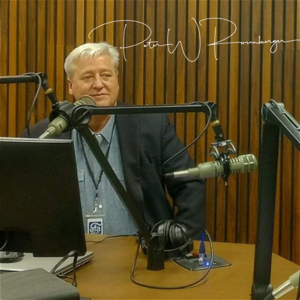
Good morning. Live from Nashville, Tennessee, this is Hope for the Caregiver on American Family Radio.
We are so thrilled that you're with us and it's a kind of a dreary morning in Nashville, but you know what? We're up and at them because caregivers, we keep odd hours. So if you're a family caregiver, this is a show for you. Those of you who've been listening to this show for some time, you know this is your hour, but for those who just happen to be tuning on the radio and saying, are you serious? There's a show for caregivers?
And yeah, there is. And it's on American Family Radio and we're committed to strengthening and equipping America's 65 million caregivers who are out there every day dealing with often horrific circumstances. Some people ask, you know, what is a caregiver?
You know, what does that look like? Who is it? You know, if you have somebody with an impairment and you have an individual who's standing between that person and a cliff, that's the caregiver.
It doesn't matter what the impairment is. It just, there's somebody between them and even worse disaster. And that's the caregiver. I'm Peter Rosenberger and I am so glad you're with us. The number to call, by the way, if you want to be on the show 888-589-8840. 888-589-8840. And you're going to hear a different voice when you call the sleepier voice of Abby, because our normal call screener Collette is out doing a registration at the Alzheimer's walk in Mississippi. Jim, tell us a little bit about that.
Well, my father-in-law suffered from Alzheimer's and he passed away earlier this spring. And so the last couple of years we participated in the walk and this year Collette's going to be there. The walk this morning is in Tupelo, Mississippi. It's at Ballard Park and I know that they're having others across the country as well. But so she's going to be participating in that this morning and we're going to go over after the show and give her moral support because I'm not going to walk that far.
It's too early and too cool. So I just, I'm honest if nothing else. Well, and I appreciate the fact that she's doing it and it's a great event. And so a big shout out to her and to all the others that are participating across the country.
And this is a difficult thing. I've got an article that's in the Memphis Commercial Appeal. How far are you from Memphis, Jim?
About 90 minutes south. The Memphis Commercial Appeal did this article and I think other papers are now picking it up. And it's called, it's not a blue wave, it's not a red wave, it's a gray wave that's threatening so many families. And I know that politics right now consumes the media, but we have so many individuals who are standing between a vulnerable loved one and even worse disaster. And if you get a chance to go out and take a look at it, the article, and I think you'll find it very meaningful.
It kind of helps put perspective. For those of you who just now joined and never even heard of the show, A Show for Caregivers, we are the nation's largest show for the family caregiver right here on American Family Radio. And I really, I need to continue to affirm American Family's decision to do this. As believers, we have sadly turned over the leadership of a lot of social issues to the world.
The church kind of sequestered themselves and didn't get out there and really get in the trenches as a unified front. But this issue of caregiving and the families that are at risk, American Family has taken this to heart, what I've been trying to do for some time. And they have embraced this message and embraced you all as listeners to say, you know what?
We recognize that you're an at-risk individual if you're serving as a family caregiver. And we understand the strain, we understand the heartache, we understand the fear, the anger. And today we're going to even talk about another topic. I'm going to spend a little bit more time on this one.
I've touched a little bit in other shows, but we're going to talk about resentment. And if that's where you're struggling right now, this is the place for you to call. This is the time for you to call. And that's 888-589-8840.
888-589-8840. Now a little bit of background on me. Those of you know me, just bear with me.
But if you're just now tuning in, you've never even heard of the show before, my name is Peter Rosenberger. I've been a caregiver now for over 32 years for a wife with severe medical disabilities. She had a car wreck 35 years ago this fall. And one resident later told us that when they got her to the ER, that she had 200 breaks. And I didn't know her at the time. I met her a couple of years later. She returned to college. She had a pretty significant limp and some scars and lower legs that I saw.
But I didn't understand the reality of being in a relationship with somebody who was hurt. She'd had about 20 surgeries by the time I met her. And I heard her sing and I saw her. She was just a beautiful young woman.
Don't take my word for it. Google her. I was Googling her that day and we didn't even have Google back then. And then I heard her sing and I thought, it's all over.
I'm going to be taking care of this woman for the rest of my life. I had no idea what that meant. I had no idea what it would cost me. I had no idea how great I would do at it and how miserably I would fail at it. And I'm kind of what you call the crash test dummy of caregivers.
If you could fail at it, I failed at it. But I've learned some things along the way. Her surgery count now has soared to well over 80. She's had at least another 80, 90, 100 smaller procedures. She gave up both legs in the 90s. At least 90 to 100 doctors have treated her.
12 different hospitals, seven different insurance companies, well over $10 million. It just becomes ridiculous to try to even keep up with it. And she lives with significant pain from all these massive orthopedic traumas that she's had in surgeries. And this is our life. And it's been our life since Reagan was president. Now it doesn't mean it's a bad life.
It just, it is what it is. In fact, somebody, I remember a reporter once asked me, what's, what's the hardest thing that for you as a caregiver. And for me, it's been to, to learn what is mine and what is not mine. To deal with what is mine and not mine. And not mine. And I don't know about you.
And by the way, I want to just keep giving the number out because a lot of times folks will start calling about the last five minutes of the show and we can't get to everything, but 888-589-8840. But it's, for me, I would overstep and I would take on things that weren't mine. Things that were hers to do, or I would take on things that were the doctor's to do, or I would think take on things that were God's to do. And so the wisdom to know what is mine and what is not mine has been a constant battle for me. And so when I wrote my first book, Hope for the Caregiver, I didn't write this book to tell people how to deal with the insurance companies and things like that.
I mean, I figured, you know, how long a chapter does that got to be? It's not that hard. You don't get emotionally involved. You deal with math and there are certain things that you can do. And I show some things and then I give some tips on that, but that's not really where the battle is because once you got it, you got it. And I didn't really want to spend a lot of time dealing with doctors, even though I've dealt with so many of them.
Yeah, I show you how to do that. It's a very small little section in the book. And the real issue for us as caregivers, I have found in my 32 years as a caregiver, is that constant angst of fear, of obligation, of guilt, that what I call the fog of caregivers. And that obligation, you can tell you're struggling with obligation when you use words like I must, I have to, I need to, I should be, I'm supposed to be. But what happens is that obligation turns into resentment very, very quickly. Are you dealing with resentment this morning?
Is that something that's heavy on your heart that you're just seething with resentment? We're going to talk about that. And I want you to, I want you to just stay with me on it and let's, let's unpack that a little bit because you know what? We can speak to that issue and we can work through that as caregivers.
We are not bound to this. 888-589-8840. This is your time as a caregiver.
American Family Radio has set one, set aside this time for you as a caregiver. I'm asking you to take advantage of it and walk with me through this. Have you ever struggled to trust God when lousy things happen to you? I'm Gracie Rosenberger and in 1983 I experienced a horrific car accident leading to 80 surgeries and both legs amputated. I questioned why God allowed something so brutal to happen to me.
But over time my questions changed and I discovered courage to trust God. That understanding along with an appreciation for quality prosthetic limbs led me to establish Standing with Hope. For more than a dozen years we've been working with the government of Ghana and West Africa, equipping and training local workers to build and maintain quality prosthetic limbs for their own people. On a regular basis we purchase and ship equipment and supplies.
And with the help of inmates in a Tennessee prison, we also recycle parts from donated limbs. All of this is to point others to Christ, the source of my hope and strength. Please visit standingwithhope.com to learn more and participate in lifting others up. That's standingwithhope.com. I'm Gracie and I am standing with hope. Welcome back to the show for caregivers about caregivers hosted by a caregiver. This is Peter Rosenberger. This is hope for the caregiver on American Family Radio bringing you three decades of experience to help you stay strong and healthy as you take care of someone who is not.
888-589-8840. We're live and this is your time as a family caregiver. I want to go back. I'm Peter Rosenberger and I'm so glad that you're with us. I want to go back to this topic we're talking about in the last segment of fear, obligation, and guilt and that obligation and how you know that if you're in that obligation quagmire, it takes you to the place where your vocabulary is filled with, I'm supposed to, I should be, I need to be, I have to be, I must, I've got to. All those kinds of words and I'm telling you that what that does is it leads to a place of resentment. Now some of you when you first hear the show you think, okay, well he's going to teach me how to care give.
No, I'm not. I can't tell you how to take care of your loved one any more than you can tell me how to take care of my loved one. I can't tell you how to take care of mine. But what I can tell you is some of the things that I've learned along the way that cripple me. I've got a new book coming out. It hits bookstores next month and it's available at all the dot coms right now, Amazon and so forth, but it's called Seven Caregiver Landmines.
Seven Caregiver Landmines and how you can avoid them and see that's what this show focuses on are the things that can really cripple a caregiver. We need all of our faculties about us. We need our wallets. We need our hearts, our spiritual lives, everything about us in sync.
And if we don't, we're going to end up getting hurt. And there's a thing I learned a long time ago. I'm a pianist. I've been playing the piano since I was five years old and I majored in music and I play quite a bit, but I've learned that I can't play a piano with Clint's fist. Now think about that for a moment. I can't play a piano with Clint's fist. In order for me to be able to let music flow out of what I do and who I am at the piano, I've got to open my hands and let things go. You know, I also learned that I can't push a wheelchair with Clint's fist. I've tried it.
I've tried it and it's not too easy. And I'm asking you to take a leap of faith here to recognize that whatever resentment that you're holding onto is only hurting you and that you can live a calmer, healthier, and even more joyful life while dealing with some very, very harsh realities. Okay. So we're going to spend some time on that. I'm going to go to the phones here and take your calls because this is your time as a caregiver. This is your time.
American Family Radio, the family is in the middle of their name and the family caregiver is an at-risk individual. So 888-589-8840. And I don't know exactly who I'm going to here, but we'll just take it and we'll jump in. You don't have a call yet, sir. Oh, I'm sorry.
I see a whole bunch of things. Yeah. Okay.
She's still processing. Yes, sir. Okay.
She'll have it loaded for you in just a moment. All right. So we're starting to see the lines blinking up here. And I, I, I do this from Nashville there in Mississippi. So there's a lot, there's not a lot, a whole lot of coordination going on, uh, sometimes. And we do it on the fly, but that's okay.
I like live radio. Um, I want to get back to this whole thing though, of resentment and, uh, what it does to the family caregiver. Now you can, you can grind your teeth. You can clench your fist.
You can do all those things as a caregiver. And who are you hurting? Now think about it. Who are you hurting? What are you doing to yourself? You cannot change necessarily your circumstances in the sense that you may have somebody that for the rest of their life, maybe the rest of your life, that you're going to be dealing with this. You may have a special needs child that will outlive you. Uh, I think one of the things that we as caregivers mistakenly believe is somehow thinking that we're going to, um, outlive our loved ones. Sometimes that happens and other times it tragically goes the other way. And the stress on caregivers is so real and is so significant that if you somehow think that we're just going to white knuckle this and get through this, and then when our loved one passes away, then we'll get on with our lives.
That's a horrible mistake that all too many caregivers make. And we push ourselves to the breaking point, thinking we're just going to get them over the line and get them onto heaven. And then all of a sudden we find out that we're broke, spiritually, financially, physically, and everything else.
And they're still going. And then that resentment keeps creeping back in and so many other areas. And this is what we're trying to work on on this show. We want to spend a lot of time on this over the next several weeks and months to come is helping you back up to a place where you can stay healthy on your heart level and your body and your wallet while you deal with these horrific things. Uh, speaking of which, um, this is an issue right here. What I'm talking about, I'm going to go to the calls here and I don't know who it is, I don't know who it is, but it's caring for her mom, saying it wiped her out financially.
So, um, oh, we're in Jacksonville. And this is one of the things that I see on a regular basis that, uh, and we're going to get to her in just a second here, but I see this on a regular basis where people will get wiped out. Their, their checkbooks, everything, it will consume them. This disease, uh, or trauma, whatever it is you're dealing with will take you way down on every level. And so if we don't back up and learn how to properly navigate through these things, it could kill us. It really can. On so many levels here, we can, we can find ourselves in such danger. So let's go to this.
Uh, this is in Jacksonville. Good morning. How are you feeling?
Good morning. Well, um, and thanks to the Lord, I'm feeling a lot better. Um, but, uh, I, you know, picked up, uh, you know, tuned into the radio and I realized that when you said that you were the, uh, crash dummy of all caregivers, I thought, okay, I am right with you right there. I just, I have just tuned into you. Um, and so since you have gone through everything and, you know, you sound like you're in one piece, we're not in one piece, you know, we're all broken, but we're standing because of the power of the Lord.
Um, how do you get over, um, when other people have not helped the way they could have? Well, that's one of the things that, that tell me, by the way, I have your name as a nun. You didn't want to give your name. Right. Right. Okay.
Well, I'm going to call you Jackie. How about that? Okay. Sure.
Cause I don't like to call you a nun. Um, but it's one of the things that I have discovered with caregivers is that, you know, our, our goal is to one day stand at a grave. Okay. That's it.
Let's just be blunt about it. We're hoping we're the ones standing at the grave. All right. But we don't want to stand there with clenched fist at, um, at our loved one, at family and friends who didn't help the way we thought they should have helped, at ourselves or at God. And, you know, ultimately, uh, the one person who, who could really take all this away from us, but chooses not to is God. And so we can get mad at family and friends for not helping, but we got to, at some point, we've got to deal theologically with why isn't God helping us? Why isn't God helping us? Why didn't God take this away from us?
And that's a, that's a hard question to ask, isn't it? Well, I don't have a problem with God because I know that he allows things for a reason. Well, let's back up then. Hold on.
Let's back up. Because a lot of times we get into the, that, that circular loop of talking about things about God. But when we talk about family and friends, we get mad about it, but God allowed family and friends not to help either.
Okay. Ultimately, your issue is not with family. I've been able to separate, I've, I've been able to separate, you know, the personalities, you know, God, God is in his own place and he has his grand plan.
It's just when I see family and friends, uh, benefiting financially, uh, from the fact that I gave my life and my health and they're able to live normal lives. Um, you know, that's not God who's doing it. That's the people who are doing it.
So my way back up, back up, back up. Are you saying that these people are, are doing something that God is helpless to do something about? You see where I'm going with this?
They do. And there is free will and there is all those kinds of things. But at the same time, there's nothing that is happening to you that is not filtered through the hands of God. And so my question is, do we trust God with family members and friends who are not helping the way we want them to help? Do we go to God about this and we say, all right, Lord, you're allowing this for some reason.
You're allowing these people to treat me poorly for some reason. Now you, if you go back and look at Psalms and you look at some of these prophets, you look at Jeremiah and some of these other things, you will see this this theme repeated over and over and over. Why did the wicked prosper? You ever heard that inscription? But David saw what you're seeing. And he went to God and said, look, I don't understand what's going on.
But then what did David do? If you go back and look at so many of these Psalms, David would say, but this I recall to mind. And then I focus on, okay, God's faithful. I'm going to trust in this. I'm going to trust him with this family member who has treated me like garbage or has gone on to be incredibly successful, look down on me.
And I'm over here carrying a huge burden. And that's where our battle is as caregivers. Can we trust God with family members who are successful when we are struggling? Can we trust God with people who look down on us or try to parachute in and give us lousy advice and they're not even doing the work? Can we trust God with our resentment?
Can we trust God with our broken heart as we labor under these, what just seems to be just terribly unfair? Yeah. And this is what I want to spend time with myself. Look, I'm preaching to me here. I mean, I hear you.
I feel exactly what you're saying. And I am with you on this. Well, listen, we got to go to a break. I want you to know how much it means to me that you took the time to call because this is the issue for us as caregivers. I believe this.
I believe this is where we live. So keep listening. We got to go to break. Hey, this is Peter Rosenberger, 888-589-8840. This is Hope for the Caregiver.
We'll be right back. Have you ever struggled to trust God when lousy things happen to you? I'm Gracie Rosenberger. And in 1983, I experienced a horrific car accident leading to 80 surgeries and both legs amputated. I questioned why God allowed something so brutal to happen to me.
But over time, my questions changed and I discovered courage to trust God. That understanding, along with an appreciation for quality prosthetic limbs, led me to establish Standing with Hope. For more than a dozen years, we've been working with the government of Ghana and West Africa, equipping and training local workers to build and maintain quality prosthetic limbs for their own people. On a regular basis, we purchase and ship equipment and supplies.
And with the help of inmates in a Tennessee prison, we also recycle parts from donated limbs. All of this is to point others to Christ, the source of my hope and strength. Please visit standingwithhope.com to learn more and participate in lifting others up. That's standingwithhope.com. I'm Gracie, and I am Standing with Hope. Welcome back to the show For Caregivers, About Caregivers, hosted by a caregiver. I am Peter Rosenberger, bringing you three decades of experience to help you stay strong and healthy as you take care of someone who is not.
That is Russ Taft. If you want to hear the interview I had with his wife, Tori, you can go to our podcast at standingwithhope.com. It's right there. There's a big button that says podcast. It's free, and you can listen to them. They have a movie coming out on October 30th. The two of them, it's about their life. It's a documentary.
It's a one night only, but it's across the country, and I would really recommend this. It talks about their journey through some very, very difficult times of alcoholism with Russ. They've been very open about it. Been married 42 years, and they have worked through these. If you have a chronic disease, you have a caregiver, and alcoholism is a chronic disease. There's no cure. There's recovery.
You can walk in it, but you're going to have somebody in that orbit. Tori is that individual for Russ, and it's a good interview. Caregiver, it's on our podcast at standingwithhope.com. Standing with Hope is the presenting sponsor of all that I do. It's the ministry Gracie and I founded years ago. We have two outreaches.
One is a prosthetic limb outreach to her fellow amputees, and the other is the caregiver outreach, which we're doing right now. Let me get back to the phones. 888-589-8840. Let's see. I'm going to try to think of who's going first.
Okay. It's Larry in Texas. Larry, good morning. How are you feeling? Hey, I'm okay.
I'm calling on behalf of a couple that have been very dear friends of mine for many years. He was a Navy vet. He had severe plutonium poisoning from having to handle the nukes on the ships and stuff.
There's a struggle whether the Navy will acknowledge disability or whatever. Okay. His wife has had to nearly just her entire life, as she puts it, to meet his needs and take care of the head of business.
He was a fighter, but six months ago, he passed away from a heart attack. Suddenly, he was out of town and that puts her in a world that is, I have no way of understanding it. I mean, I'll see her sometimes, but I'm wondering if I should recommend her watching, listening to your show. Yes. Okay.
Absolutely. And my books and my music. I've got a CD called Songs for the Caregiver and you have to, there's a detox period of this thing for caregivers. Now I've been a caregiver for 32 years, so I haven't reached the detox period because I'm still doing it. But when it stops, it takes a long time to reorient your thinking and you got to work through a lot of grief. One of the things that I want to do on this show and through everything I do is help caregivers learn how to grieve in a healthy manner. We know how to grieve in a rageful manner or despairing manner, but do we know how to grieve in a healthy manner? Do we know how to look at our suffering for what it is in the light of the cross and grieve this out?
Grieve without, not like those who have no hope, but we still need to grieve. And I did a CD called Songs for the Caregiver. Gracie sings about half of it and Gracie's got an amazing voice. I mean, she's a real no kidding singer.
That's my wife. And I'm playing the rest on every track. But it's hymns, great hymns of the faith. There's one original song that I wrote for caregivers, and the rest of it is to comfort and to strengthen her and to get her in her journey of learning to be comforted in that. So yes, I would recommend her listening to the show. I would recommend you share the show with everyone that you even think that's a caregiver or may be related to a caregiver. Here's the deal. If you love somebody, you're going to be a caregiver.
If you live long enough, you will need one. And I was privileged to sing at a funeral. That's how close I was. And see what reason that I call to ask. I don't know the fine line between whether listening to your show is going to heal or plunger into, you know, the negative of the past. It won't plunger into the negative of the past. I promise you.
Because we don't live in the negative of the past. What we deal with, we look at it for what it is, and we take it all to the cross. And you send her to the show. You can trust me with her. I'll take good care of her.
How about that? Hey, by the way, what did you sing at his funeral? Oh, my gosh.
He asked me suddenly now. It's a song that I never saw in the hymn in my songbook. I didn't ever see it until the day he died. And I didn't know he had died. And I came across his song.
And so, I mean, it was just for him. Can I email? Yeah, you can go out to our website. You can contact me from there, standingwithhope.com.
Or you can follow us on Facebook as well at Hope for the Caregiver. God bless you for that. But yeah, you can always call back and let us know what it was, okay? Okay. Yeah, yeah. Yeah, okay.
All right, Larry, listen, I'm gonna jump on some other calls here, but thank you so much for calling. And you can trust us with your friend, okay? If somebody wants to pray, her name is Diana. We will do that.
In fact, we'll just do that right now. Lord, we just thank you for Diana. We thank you for her service to caring for this man who gave so much and lost so much in service of his country. We thank you, Father, for your help. We thank you, Father, for her and her strength. And we'd ask right now for comfort.
I know that people are agreeing with us all over the country on American Family Radio throughout whoever's listening to this signal. They're agreeing that we want to lift her up to you, Father, for comfort and for strength. We thank you for Larry for caring about this wonderful family.
They've been through a lot. And we'd ask for strength for today, bright hope for tomorrow. And we thank you for that in Jesus' name. Amen. Larry, thank you so much for the call. Let's go to Darlene in Indiana. Darlene, good morning.
Good morning to you also. How you feeling? Well, since you started this, I've brought back a lot of memories and still things that are eating at me, okay? What's eating at you? Because I wasn't there.
Okay. I couldn't handle it. It was just too strong. My sister was in Iraq. And I saw her go slowly down until she didn't remember me anymore. Her memory was gone.
I'd say it lapsed, in and out for about eight months. Who took care of her? Mainly her son.
You live closer to her than I do. I did. Okay. Let me ask you a couple questions, Darlene. First off, do I hear an echo or something?
We do. Do you have the radio on, Darlene? It's off now.
Thank you so much for that. Darlene, how often do you talk with her son? Quite a bit. As a matter of fact, he's a missionary. Have you had this conversation with him?
Not a whole lot, but he knows I hurt, that I haven't really told him how deeply it hurts. It sounds like you felt guilty because you weren't there for her and for him. Is that correct? Yeah.
Yeah. What do you think about maybe having that conversation with him? Yes, I really should.
Yes, I really should. Well, what's keeping you from it? The fear, I think, what he'll say, I don't know. The fear of him saying, well, why weren't you there then? If this was so heavy on your heart, why weren't you there?
Well, that's a reasonable question. I think that if you're going to make any kind of headway in dealing with this guilt that you're carrying, at some point, you're going to have to make amends to him at some point. If you feel guilty that you abandoned him, and just say, look, this was on me.
I did this, and I did this out of my own fear, out of my own heartache. I was focused on me, and I was not there for you, and I regret that, and I'm deeply sorry, and I'm asking you to forgive me. I know he knows how I feel.
And I want to make amends. Yeah, I know he knows how close I was to her. Yeah, but it may be very healing to him to hear that you care enough to want to make amends to his heart. See, it's not about necessarily you feeling better. It may be about him feeling him being healed in this area.
Maybe you could speak to his own healing, his own griefing, and take your eyes off of your grief for a minute and put it on his, because he's the one that actually did it. Yeah, he was there almost every day. And you weren't. He was in the town where she was out, you know, and it was closer to him. Well, that's true. I wasn't. Did you send any kind of financial resources to him or anything like that?
Not actually, no. So basically, you kind of left him hanging out in the wind a little bit, and so it's time to repair that relationship. He may be okay.
He may be just kind of on the surface saying, well, that's just the way it is. But maybe, just maybe you could be a source of strength and comfort to him to come to him and say, you know, look, I regret this. I allowed my own grief to consume me, and I did not make good decisions, and I wasn't looking at your sorrow and your situation, and I left you hanging out in the wind, and I want to make amends for it. Now, that takes a lot of guts to do it. During this period, I started drinking very heavily. Well, are you sober now? Yes. How long have you been sober?
Oh my gosh, maybe a year. Do you have a sponsor? No, I don't.
Are you working a recovery program? I was. All right, how about this? I bowed out. Well, how about getting back in it?
I need to. What's stopping you? I bowed out because of the hurt. I couldn't spill it out. I just couldn't spill my guts out. Well, what's stopping you from going to a meeting? What's stopping you from going to a meeting?
Uh, transportation, maybe because of, well, I'm blind. Okay. Okay. I feel as if I'm really hard to handle. I'm a gab. You may be. You may be very hard to handle, but that doesn't mean that you can't work a recovery program, and it may be all of those things, and you may be so limited you don't feel like anything you can do to help. I don't even have, I don't even have sponsors with my family. Well, I tell you what.
Because of them. Do me a favor. Hang on just a minute through the break, and I'm going to come back and we're going to talk about this a little bit, okay? This is Peter Rosberger. This is Hope for the Caregiver.
This is the nation's number one show for the family caregiver 888-589-8840. We'll be right back. Have you ever struggled to trust God when lousy things happen to you? I'm Gracie Rosenberger, and in 1983, I experienced a horrific car accident, leading to 80 surgeries and both legs amputated. I questioned why God allowed something so brutal to happen to me, but over time, my questions changed, and I discovered courage to trust God. That understanding, along with an appreciation for quality prosthetic limbs, led me to establish Standing with Hope. For more than a dozen years, we've been working with the government of Ghana and West Africa, equipping and training local workers to build and maintain quality prosthetic limbs for their own people.
On a regular basis, we purchase and ship equipment and supplies, and with the help of inmates in a Tennessee prison, we also recycle parts from donated limbs. All of this is to point others to Christ, the source of my hope and strength. Please visit standingwithhope.com to learn more and participate in lifting others up. That's standingwithhope.com. I'm Gracie, and I am standing with hope. Welcome back to the show, Four Caregivers About Caregivers, hosted by a caregiver. This is Peter Rosenberger. I am bringing you three decades of experience to help you stay strong and healthy as you take care of someone who is not.
And we're glad you're with us. 888-589-8840, hopeforthecaregiver.com if you want to see more information. Hey, listen, Darlene, real quick, and I want to jump back into this. We're talking with Darlene, who is in Indiana. She's struggling. She was not there for her sister and for her sister's son while her sister declined and eventually passed away. And Darlene is feeling very, very guilty about this. She started drinking a good bit.
She's blind. And Darlene, do you know of anyone that's working in an AA program who can give you a ride to a meeting? No. All right.
Do you know of anybody who can get online? Actually, I am newly into this area. Well, let's start with this. A recovery program is essential for you. You're not going to be much good to anybody if you're not working a recovery program, if you're drinking again. So your sobriety is paramount right now, okay? Whatever that's going to take, and I don't know what that's going to look like.
If you've got friends, somebody could go online and help you find a meeting that's close enough to you that you could get a ride to, something. But to work your recovery program has to be the paramount driving force for you, because if you stay sober, then you have a better shot of patching up any relationships, dealing with all the trauma that you felt, all those things that are going on with you. So your sobriety is paramount in this, okay?
Yeah. Right now, my gut hurts because I'm just thinking about her, but I don't want to drink it. No, I don't want to drink it. I don't want to. I understand that, but if you try to white-knuckle this by yourself, it's only a matter of time.
So what I'm asking you is to find somebody, somebody in your church, somebody in your church, somebody who can get you regularly to a meeting where you can get a sponsor, and you can start on a path of working this recovery program with an intensity, an intentional ferocity of making sure that you're sober, because then you'll be able to process your grief better, then you'll be able to make amends to your nephew better, and then you will be able to walk a calmer, healthier life. But if you are trying to battle alcoholism all by yourself, I promise you this thing will beat you, okay? Yeah, you're absolutely right. You know, I've got, I had to try. I had to think about how she would feel if she was here and I was doing this.
She would like it. No, but let's focus on how you feel and what is going to be necessary for you to get to a place of safety, all right? Yes, yeah. All right, that's your next action step is to find somebody who can get you to a meeting.
Absolutely right. If you can't take public transportation, if you can't walk to one, and there may be one within walking distance, I don't know, but the point is, find a meeting, go, get a sponsor, and start working your recovery program. It's not any more complicated than that. That's going to set you on the path towards dealing with the pain that's in your heart about this, towards dealing with your nephew and all these things, because all that guilt and that torment and all those bad feelings, what's going to happen is, you're going to want to make those go away by drinking. I just want to, that's the reason I called. I don't want anybody to go through the path that I did.
It's wrong. I don't want you to go through the path that you did, and I don't want you to go through it again, and if we don't get you on a safer path, it's only a matter of time before you go down that path, okay? I have all the faith in the world of the Lord, and I know you'll help me. I want everybody to know, don't do that. Well, I want you to know. I don't want you to preach at everybody else right now. Let's just preach to you. Let's just deal with you, okay? All right.
All right, darling, keep us posted on what's going on, all right? All right. Thank you very much. Thanks so much for the call. Thank you very much. All right, Michael.
Michael's in Illinois. Michael, no, Mitchell. I'm sorry, Mitchell, and good morning. How are you feeling? I'm doing great. How are you? Oh, for a man of my age and limited abilities, I think I'm doing all right.
Well, how are you limited? Not spiritually and mentally, I can tell that. Well, there are some who would disagree with the mentally part, Mitchell.
There are some who would disagree with that. Yeah, me too. Me too. All right, what's going on with you? I've been listening to your program. I've been listening to your program.
That's probably the second or third time I've caught you on a Saturday morning here in Illinois. We are in the process of starting a caregiver's afternoon. We purchased an old boy several years ago, and we have a youth center now, and three afternoons a week we have youth there after school. But we would like to do something for caregivers so they could drop their loved one off, say like at one in the afternoon and then come back and get them at four or five. And trying to get this off the ground hasn't been going quite as well as we thought.
I also, like your last caller, I'm recovering and have been in recovery for more than several years. So I understand those concerns, and that's why we want to give something back to the community. But we're just not, I don't know, we're missing a component somewhere.
We're just having a little... Well, let me help with that. First off, I'm a caregiver, and I don't know that I would want to drop off my loved one. Gracie doesn't want to be dropped off anywhere. So lots of different kinds of caregivers, children with special needs, people with all kinds of special physical needs. And then when you get into dementia and Alzheimer's, that's a whole different ballgame. And so you are probably not going to be set up for a lot of people to trust you with their loved one. Caregivers are reticent to do that, because if I trust you with them, then I got to trust that you're going to be able to take care of them as well as I can. And so there are a lot of different kinds of caregivers. What I would recommend, I think a better course of action, find somebody who's doing this that's an approved facility that already has these types of things, they have these types of qualifications and so forth, and then volunteer with them.
I see. Because then you're under their umbrella for liability, you're under their umbrella for training and all that kind of stuff, and then just volunteer with them and let them give you, assign you a role so you can participate in a skilled place that's doing this. These little moms and pops that jump up and do this kind of stuff, you're not going to want to, you're opening up a place that I don't think that's going to be helpful for you.
It may make you feel good in the short term, but in the long term, that's going to be a difficult thing. But there are plenty of programs out there that do this, that have skilled trained professionals that are overseeing it, that are engaged with it, and they could always use an extra pair of hands. That would, to me, be a better source of concentrated help than you try to go and reinvent the wheel, and you guys don't have the training for it, the skill set for it. You follow me?
Yeah, that's a point well taken. Last year we did go to about an hour away to Sterling Rock Falls, and they're doing this, three churches went together, and they're doing this and so we've got all their criteria and what they did, and so we just thought we'd do something here more local. Well, there are a lot of ways that you can get involved. Johnny and friends, excuse me, my friend Johnny Erickson-Tada. You ever heard of her? You know her? Oh, I'm real familiar, yeah. Well, she's a dear friend, and she has this thing called family retreats, and they're all over the country.
Actually, she's gone international with them, and that's where people can come and volunteer to help families with respite care and so forth, where families with special needs and disabilities and all can come. That's another place that you can volunteer to participate in something like this, and you're doing it under their curriculum, their program, their training in a Christ-centered environment, johnnyandfriends.org, and I would recommend doing that as opposed to you trying to reinvent the wheel. There are people that are already out there doing this, and they've worked through all the issues, and if you get out there and try to do this, you're opening yourselves up for a lot of challenges, a lot of problems. There are things about being a caregiver that unless you've done it for any kind of length of time, you're not going to know, and it's going to come, and it's going to really just knock you over. So don't put yourself in that position.
Take that passion you have to help, which is well founded. I found it. I love that, and I appreciate it, and then bring that and those willing hands to people who already have an infrastructure to deal with this, okay, and there are plenty of places. I guess I was trying to do something locally. Well, I'm sure there's something locally.
There's something within your sphere somewhere that's going on with that. It could be United Cerebral Palsy. It could be, there's churches that have all kinds of senior care setups and so forth. There's all kinds of things, and you can be a light in all of those, and they don't have to be necessarily a Christian organization. You could be the Christian in that organization if you show up to volunteers. Let the light of Christ shine in you wherever you are, okay? So you could go to a place that's completely secular, but you're taking the gospel into that because you're going in there, and you just bring your hands. The church father Augustine said, preach the gospel always, and if necessary, use words.
Your hands can be a source of great help to people, and you don't have to go find somebody that has the five points of Calvinism or this, this, and this, and this. Just go. Just go start helping. I remember a guy called him one time, Mitchell, that was frustrated because he didn't have, churches weren't paying him to come on staff and be a minister, and he had a calling to be a minister, and he couldn't find a job doing it. I said, well, go minister. Your calling is to minister.
It's not to go have a vocation, just to go minister. And you have this passion to go and help folks with this. Go do it. Don't try to start something that's going to take on more than just really outside of your purview. Go find somebody that's doing it. Bring your hands, bring your passion, and bring, more importantly, the light of the gospel that's in you to whatever situation.
There's something in your community that's going on, even if it's embryonic, but bring your passion to that, and I think you'll find that'll be an incredibly rewarding experience. All right? Thank you for your time and bless you. Thank you very much, Mitchell.
Appreciate the call. Hey, listen, we're out of time. We got to go.
This is Hope for the Caregiver. Hopeforthecaregiver.com if you want to see more. We have a podcast that's free. We put these things out there. We have books. We have CDs. We got it all. We put it all out there for you. Will you take advantage of it? How are you going to do this all by yourself? Friends don't let friends care give alone, you know? Hope for the Caregiver, and I'm Peter Rosenberg, and we'll see you next week. The views and opinions expressed in this broadcast may not necessarily reflect those of the American Family Association or American Family Radio.