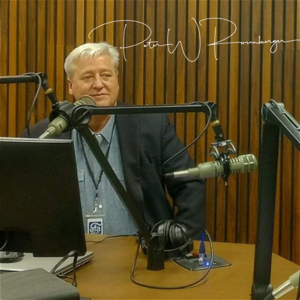
This is the Truth Network. Welcome to Hope for the Caregiver. This is Peter Rosenberger here on American Family Radio. Glad to be with you today. Hope you have power in your home.
For those of you who have been in the path of the storm, I've been talking to quite a few friends. back in the southeast, particularly the Nashville area, and it's been grizzly. Um and What a difficult time. I remember when this happened to us, when we lived there, we were without power for five days and. It's a bit challenging.
At the time, we had two small children, and Gracie, of course, with her significant challenges. And I made some changes after that so that we wouldn't be caught unawares. And I put in a gas water heater that was independent of electricity.
So we always had hot water, and we had a gas cooktop in a gas oven, but we couldn't use the oven, but you could use the cooktop to. To make food with, and then we had a gas fireplace with logs there that. For heat, and that helped us in subsequent times when it happened. But in 94, it wasn't a real bad one. We were living there and it was just awful and they're saying this is rivaling that.
So, it's going to be a long time before people are back to normal. And we certainly hurt with them and grieve with them and pray. But I've been checking on them and with some friends of mine, and it's been a tough situation. And so, I hope that you are prepared. And that, you know, that brings me to a point with us as caregivers that we have to kind of think this way.
And I have some of that issue here where we live in Montana. Winter doesn't really bother me too much in the sense that we're prepared. This winter, heavy winters are a part of life out here. But ice, when you have that with the trees going down and losing power, that's where it gets a bit gnarly. And we don't normally deal with that.
where I am. But we still need to have some type of preparation, some type of. plan of what we're going to do as caregivers, you know, when the power goes out. We have two small generators here, but the challenge for us is that you still need to have electricity to run. Certain components of the heat and things like that.
I was hoping to get a larger generator hooked up to the house. that would kick in and run by propane. If the power went out, a neighbor friend of mine has one, but I just couldn't afford it this time around. I'm hoping that's down the road where I can get one of those things because they're kind of expensive. And then I've looked at some solar things and all those kinds of things.
You just want to be prepared. The winter season. It's challenging out here and you get pretty cold and all those kinds of things, but for us it's fire season. And that's when it can get pretty rough for us. I I remember seeing that last summer.
I was watching and I hit I saw lightning strike On the hill down the valley, you could you have large vistas here, so you could see a long ways, and this is. you know, every bit of ten miles. But we're up high so you can see it. uh down there and I watched the lightning strike and within twenty four hours thirty five hundred acres were burning. And that dry grass, and we haven't had the snow this year.
Normally this time of year we've got a foot or so of snow that is perpetually on the ground. and we just haven't had it. In fact, it was fifty degrees yesterday, or close to it. And it it it was um So we we need that. We need lots and lots and lots of snow, particularly up in the the mountains.
So in the summertime we have that runoff and you have a lot of water. but Montana itself has had pretty good bit of snow. But not in our area, and so I, you know, I don't know what that's going to look like come February, March, and April. I've had three feet of snow on our deck. in the first week of May.
So winter in Montana is a bit weird for us, but But I I've been watching this thing with the ice down there and it it's just heartbreaking. And you see all these trees. I had a friend of mine driving around town and showing video footage of streets that we were very familiar with there. And you see these trees down and It's it's really tough to see and These people are hurting, and so we keep them in our prayers and. All through the South and down in Mississippi, man, they just got brutalized.
In Tupelo, where AFR is located, they did okay, but Oxford is just Man. I mean, it it's heartbreaking. And so we continue to lift them up in prayer because even when the power comes on, it's going to take a long time. To recover from something like this, we know this as caregivers. You don't just bounce back like nothing ever happened.
I mean, it takes a while. For some, the battle is just beginning with insurance claims and so forth. But aren't you glad you're not in California where all those people lost their homes in the Palisade fire and they ain't even started to build anything back yet? And it's been a long time.
So I have great confidence that FEMA and state, local officials down there in the South are going to be on this. Get it going, but it takes a long time. Those folks in North Carolina are still reeling from the flood, from the hurricane, and so they're still. Digging out from underneath that.
So it just, you know, if you, by the way, if you want to. Give to an organization that does help with stuff like this, that helps well, Samaritan's Purse is always a great one. They do a great job. They didn't ask me to say anything. I'm just doing because Gracie and I give to them as well.
And they just do a great job of being there to. Extend the love and care and Christian ministry to people who are just in trauma of all kinds.
So I would heartily recommend that. But I also recommend that we as caregivers take a Inventory. of what's going on with us. How how close are we to uh catastrophe. And are we prepared as best as we can?
I mean, you can't live in a bunker. I mean, I've thought about it, but I don't think that's going to work too well. But you can't do that, but you can be prepared. Do you have Supplies. Do you have Flashlights and batteries, and things that you can charge up for your phone, and all those kinds of things.
And you don't go in the middle of an ice storm or right when they're saying it's coming to go buy your generator. You do it when the weather is beautiful and sunshiny, and nobody's thinking about it, and you can get a better deal on it. But you plan for it, you recognize that eventually it's going to happen. And so I've got Two generators in the barn. They're small, but they'll work and they'll plug in some stuff.
I can plug in stuff to my truck and just leave that running. But I have to keep that going because when it gets bitter cold, I have a diesel and so it won't crank unless you keep it plugged in.
So I got to be able to plug that in and maybe plug that into the generator first and then get my truck going. But Uh you know solar powered battery packs that you can keep charged up so you can charge up your phones and things such as that. You know, we got to just think through these kind of things. And you know how close to the edge so many of us as caregivers live. And and we are you know One lengthy power outage for this thing turning kinda weird on us and So, you have to kind of prepare for it.
The good news is, if the power goes out here in the wintertime, we always have the freezer that works because we just stick everything outside. But you gotta watch for the mountain lions if they come up to the. uh to the porch or something because they'll do that. But I I got a rancher friend of mine that talks about the old days. When they were without power for three weeks up here, they couldn't even be.
accessed because the snow was so deep. The drifts piled up so high. I mean it was as high as their truck's roof. And had a big, you know Ranch trucking. And the drifts would pile up.
That wind would come and just blow that snow in just these massive drifts, and to dig out. With tractors or whatever they could use to dig out. I mean, they're driving through a canyon of snow. And so starting in the winter time, They would I mean, well, actually in the fall, right in the fall, before the first real snow hits, they just made it a practice that every time they were down at the grocery store or whatever, they would bring extra supplies, put sock it away somewhere in a cellar or in a box freezer or something like that, so they had plenty of food. And um You know, just little things like that to be prepared for because it it can turn on you very quickly.
Here and for us as caregivers, we have that extra thing of maybe you've got oxygen in your house. We do. I mean, Gracie has to take oxygen right now until she gets a little stronger and is able to walk more and get that blood flowing in her, but she is doing it by the way, and I'm going to give a report on that. later on in the program but Do make an inventory list. You know, maybe that's something we can do together.
If you've got some ideas of what you've done, send them to me and we'll talk about it on the air and just remind each other of what we need. What are the essentials that we've got to be able to access and do? because this thing can go south on us pretty quickly. And out here again in Montana, the winter doesn't bother as much as fire season. In fire season, when you have to evacuate.
And you get a raging fire. We had a lot of those this summer. It was pretty frightening to watch. But those are things that, practical things for us as caregivers. Stay safe out there, and we'll talk some more when we come back.
This is Peter Rosenberger. We'll be right back. Welcome back to Hope for the Caregiver. This is Peter Rosenberger. Glad to be with you.
Hopeforthecaregiver.com, HopeForTheCaregiver. Dot com. I've been writing quite a bit on various things, and I want to encourage you to go out and take a look at it at my Substack caregiver.substack.com. And one of the things I just posted out there this week, you can go take a look at it. a couple of things, one audio and one written on What happened in Minneapolis with this church was interrupted.
A lot of people have opined about this and weighed in. I have a little bit different take than what I've been seeing. I haven't seen anybody go down this particular path, so I wanted to run this by you. It's a little bit out of the caregiving lane, but if you'll just bear with me. Um something really important shifted.
in that Sunday worship service in Minnesota. And this was not a disagreement expressed outside a building or criticism offered afterwards. This was a deliberate intrusion into a space set apart for worship. particularly for Christian worship. It was not spontaneous.
There was planning, There was agreement, there was training, there was coordinated action. Premeditation by one reflects intent. Premeditation by many reflects coordinated strategy. And strategy requires a different posture.
Okay? A lone gunman, a lone disruptor. Who for whatever reason, chooses to act. Like with the Charlie Kirk assassination, like what happened at the church we used to attend in Nashville when we lived there, Covenant. Presbyterian, school shooting.
But when you have a coordinated group of people Then that requires something different of us. For generations, you know, the houses of worship. Or you know, understood to be off limits. Not because churches are fragile, but because they're serious places. This country exists.
Because of this deep commitment to having the state stay away. From our worship. And when that boundary is Yeah. We're no longer debating policy. We're testing whether or not restraints still exist and whether consequences still matter.
And just Show of hands. How many of you all think that there will be severe consequences for these people that did this. You know? A lot of us don't feel like that people are going to have to pay the price for some of these things. that they're going to get away with it just because of the political climate.
But the lines are now unmistakably drawn. It's not an issue that can be treated casually. or observe with indifference, if you refuse to condemn that coordinated disruption of worship. Or, worse, excuse it. Then you've already chosen a side.
Silence is not neutral in a case like this. It's an assent. And moments like this tempt us as Christians toward outrage or even bravado. You know? We want to fight back, want to do something.
Fear sharpens our instincts, and we're looking, you know, we're indignant, and we want to be able to express that indignation. But Scripture does not train the church for theatrics. It trains the church for endurance. Clarity? and readiness.
I have a hard time thinking. that this would have happened in a church out here in Montana. People here are not especially Theatrical about that sort of thing. You know? And I have a um Also, there a lot of people are armed out here.
And that's just the pastors. You know, that the responsibility is assumed out here. I mean, you know, you don't you don't mess around with it. I remember a guy came up to our door and we got a knock on the door one afternoon.
Now That doesn't sound like much to anybody else, but where we live, if you're knocking on the door, you made a deliberate attempt to come where we live pretty remotely. And I walk out of the house, who's knocking on the door, you know? And I saw this young man. and he had knocked on the door and then went walked and stood way out in the driveway so that I could see him clearly. And he said, I know that everybody's armed here, so I didn't want to spook anybody.
And I just wanted you to know that I'm not armed, but our car is stuck in the snow right up here in the mountains, and you know, yada, yada, yada. But notice his posture. He was aware. that if he goes up and knocks on somebody's door out in this part of the country, it it could go sideways if he's not careful. And I thought that was very responsible of him.
Well, that's not what happened at that church. You know We're already on high alert as as Christians. because of these shootings. And if that had happened in a place like out here, or Texas, and Tennessee, and some other places, there may have this may have escalated into a really horrific scene. quickly, because people would have assumed the worst.
Do you realize how fragile that is? that that these people did such an something so stupid. And they are going to get away with it, maybe, I don't know. But You think about the where you go to church. There are security teams.
I would imagine they take it seriously.
So when a bunch of people stand up and start doing this kind of thing, You're poking a bear. And irreversible outcomes are are highly Uh likely. And this is the kind of thing that we really need to think about this.
Now, police officers understand this really well: that domestic calls. are often the most unpredictable. and volatile because uh not because violence is inevitable In a family dynamic like that, Messes up your judgment, and there's it compresses everything when emotions are raw. And trust is thin, even small disruptions can really escalate quickly.
Now multiply that out when you saw in that church. This thing went from zero to sixty in about two seconds. And it got real real quick. What do you think is going to happen with this, particularly if you've got a a well-armed security team? Families who live with you know addiction and mental illness.
They get this, and many of you all in this audience do. This is where it comes into the caregiving world. Many of you all deal with this. You have an addict in your family, you have an alcoholic in your family. You have somebody with mental illness that con consistently acts out.
And you live in this constant state of vigilance and on edge. And you have to set these boundaries to protect yourself. And even then you're kind of wondering, okay, is this going to hold? Will it w will the bree will there be a breach in the wall?
So would you have that level Now you're taking that kind of volatility and putting it in the sanctuary of a church? A space that is you know, shaped for reverence. and restraint and peace is all of a sudden Like it's a space that could absorb this kind of chaos without consequence? And and You know, we've got to be better stewards now of not only our lives, our loved ones' lives, our families' lives as caregivers, but now of churches? And this is what's got to happen.
The same principle of what we do to survive. as caregivers in a volatile situation. With the loved one who is acting out It's now going to be applied. in mass now in our churches. Because I don't think this is going to stop.
These people now have a a new tactic that they're doing. They agreed on this.
Somebody met and said, this is a good idea. And they acted it out.
So, what do you do? If you have a family member that is behaviorally out of control, what do you do? How do you respond? Is this the way our church is going to have to respond? Because you can't live in fear with this.
That isn't that isn't Honor God, that doesn't honor what Scripture tells us to do. But when tensions are high like this, somebody's got to lower the temperature.
Somebody's got to slow this thing down. And If one side refuses, And those of you in a relationship with an addict or somebody with mental illness, and if they refuse to change, what do you got to do?
Well, you're going to have to establish even bigger boundaries for safety. That's not escalation, that's containment. You cannot force somebody to do the right thing, but what we can do, though, is. Set better boundaries.
Now here's the here's the deal for people who are dealing with Addiction. Recovery incarceration or death. are usually the three outcomes. You're gonna get sobered up, you're gonna get locked up, or you're gonna get covered up. And if that person doesn't change, that's the pattern that they're going to have.
That's not threats, that's just reality.
Well How is that any different from people who are acting with willful destruction and? Aberbant behavior like this, what you're seeing that what you're seeing in Minneapolis, how sustainable is that for these individuals who are acting like this?
Somebody's going to get hurt.
Somebody's going to get locked up.
Somebody's going to get killed, and it's already happening.
Well, what do we do?
Well, Scripture never promised that we're going to have A life free of this kind of stuff. Jesus warned his followers: Hey, look, hostility is coming. Paul urged believers not to avenge themselves, but to overcome evil with good. But in Hebrews 12, 27, Scripture says, That that What can be shaken will be shaken, so that what cannot be shaken may remain. And that truth is echoed in a lot of our hymns, hymns that I've done on this show through the series that we do, but it applies to us as caregivers because we are shaken as individuals as we deal with this onslaught of suffering, onslaught of changes.
Sometimes, for many of you, an onslaught of somebody in your life whose behavior is very, very volatile. But the hymn that comes to mind: the soul that on Jesus hath leaned for repose. In other words, I'm putting my weight on him. I will not, I will not desert to his foes. That soul, this is this is God's promise.
That soul, though all hell should endeavor to shake, I'll never, no, never, no, never forsake. This is God's promise. He's not going to forsake you in this. That is not a clenched fist in this stanza. When you lean on Jesus for repose, you are admitting that he is ca able to carry your weight, than the weight of whatever you are carrying.
It is a relief from the strange because that vigilance has been transferred to somebody who is stronger. Calm is possible, not because the threat is small. But because God is not.
Now this is something we as caregivers have learned. The path for believers is steadiness shaped by truth. restraint and trust in God rather than provocation. with reaction. The church has never endured.
because it intimidated back. Caregivers are not going to endure because we intimidate our loved one back when they act poorly. We endure because God does not abandon his people. And that is. Hope for the caregiver, and it's hope for this nation as well.
This is Peter Rosenberger. We'll be right back. Welcome back to Hope for the Caregiver. This is Peter Rosenberger. Glad to be with you, Hope for the Caregiver.
Hopeforth the Caregiver.com, where you will find a library of things. for you. There are links to my books, my music. Substack.
Some people may ask, What is substack?
Well, think of substack as a modern version of a personal letter or regular column. that comes straight to you. When I write something or post a podcast episode, it doesn't get lost in social media noise. It shows right up in your email because you asked for it. That's really kind of the point of Substack.
It's where people can pick the things that they're interested in that will come directly to them and not filtered through anything else. The name comes from two ideas put together: sub, meaning subscription, you choose to receive it, and stack means a growing collection of writing and audio built over time. And I have quite a bit of library there, a stack of thoughts, stories, and encouragement delivered directly to you. I like it because it's quiet. There's no ads yelling at you, no algorithms deciding whether you're allowed to see it, just a direct connection between me and you.
Some of what I post is free. Other folks who want to support the work more deeply, there's an option to do that too. If you want a place where caregiver encouragement shows up reliably without the circus, that's why I use Substack. And I can write anything I want to write about, talk about. I do video.
Audio Print.
Sometimes a combination thereof, and I just put it out there and said caregiver.substack.com. Caregiver.substack.com if you want to check that out. The driving scripture for everything that I do is comfort one another with the same comfort that you yourself have received from the God of all comfort. And so, again, I ask you. What comforts me?
I'm forty years into this. Obviously, I've got to get some kind of comfort. I mean, you can't do this four decades, you know, and be depleted.
So, you've got to have something that is comforting, strengthening, building up. Encouraging.
Well, what does that look like to me? And that's what I write about. That's everything that I write about, everything I do on this program. And I put out the podcast. Podcast is free.
So you can go out and listen to the podcast, wherever podcasts are. I do this because I believe that I have the scriptural mandate to do this. What do I have that I haven't received, and what do I do with what I receive? And I didn't have anything like this. There is nothing else like this.
I listen to my own show, I read my own stuff. Because there's nobody else out there that has done what I've done that's writing and doing all the things that I've done. I'm almost at a thousand podcast episodes. I I I've written I don't know how many published commentaries and everything from Fox News to Guide Posts to AARP to now a regular column for caregivers at Blaze Media. I I I put as much stuff if it comes into my mind.
I try to sculpt it to say, okay, how would this work for my fellow caregivers? That's what I do, and I'm going to give you a preview on something, two things here. Actually, one of them is: this is my newest book, it's called A Caregiver's Companion: Scriptures, Hymns, and 40 Years of Insights for Life's Toughest Role. You can get this wherever books are sold. And what this is, is basically my journal for 40 years of things that I've learned: nuggets.
This isn't long, you don't have. To sit down and laboriously go through this. You can pick it up, put it down. 30 seconds, tops, 30 seconds. If you want to write in it your own thoughts, I left a place for that too.
But if you spend more than thirty seconds reading each entry, Well, then you're going through it pretty slow, and that's okay. I got a friend of mine that I always tell him that I write my stuff slow because I know he doesn't read fast. But my stuff is really simple and slow because I understand the journey for us as caregivers. And how would you like to have something that you could at a moment's notice Pick up And just read 30 seconds tops and you've got something that's going to steady you. That's why I did what I did because we really don't have time in the heat of the moment when things are kind of flying off the rails to go through this long discourse.
For example, let's just go to, you know, today is the 31st, okay?
So if I go to page 31, actually, the quote is on. The even number page, and the scripture or the hymn is on the Opposite page, so that's on page 31.
So let's look at page 30. Page 30 says, You can't push a wheelchair with clenched fists.
Now, how long did it take me to read that?
Somebody count it out. Ready? 1 1000 200. I mean what five seconds you can't push a wheelchair with clenched fist.
Now, how many times have you been in that situation where you as a caregiver have been doing the task that you do, but you're doing it filled with resentment? You're emotionally, if not physically, trying to push a wheelchair with clenched fists. You're trying to be a caregiver to take care of somebody who's infirm, but you're doing it with resentment. You can't do that.
Okay, that's a truth now that we can hang on to. That's okay, this isn't going to work. Lord, I see this isn't going to work. I can't do this. And I'll give you a scripture, Hebrews 12:15, that goes with this.
You can time out how long it takes me to read this. see to it that no one fails to obtain the grace of God, that no root of bitterness springs up and causes trouble. and by it many become defiled. How long did it take me to read that? That's it.
That's the quote. That's the scripture.
So thirty thirty seconds tops see to it that no one fails to obtain the grace of God, that no root of bitterness springs up and causes trouble, and by it many become defiled.
So now we got the scriptural anchor. It's not just a nice quote that I came up with. It's a truth that I realized by doing this for 40 years that this is harmful if we try to operate with resentment. It's just not going to work. And I gave you the scriptural foundation for that, Hebrews 12:15, that says, hey, Don't let a root of bitterness get in there.
That's the whole point of this book.
So, you could turn to any page.
Well,. Here's another one. This is on page 108. I just flipped to it. When learning complex medical tasks at home It's okay to be confused, but it's not okay to be too embarrassed to ask for clarification.
I'm going to read it again. How long did that take me to read it? When learning complex medical tasks at home, it's okay to be confused, but it's not okay to be too embarrassed to ask for clarification.
Now how many of you all have had to learn complex medical tasks at home? or before you left the doctor's office, or before the hospital, or whatever. And they are complex. I mean, I didn't go to medical school, I went to music school. You know, I'm not an idiot.
Don't let the looks fool you. I'm not an idiot. But At the same time, this is not my wheelhouse.
So when I brought Gracie home from the hospital last year, she had three drains. a catheter and two legs missing after being in the hospital for five months. That's complex, wouldn't you say? Let me tell you something. I asked a lot of questions.
Do you ever measure once, cut twice? No, you measure twice, cut once.
Well, in my case, I measure 17 times and cut once. because I don't trust myself with it. I'm going to ask and I don't care if they think I'm stupid. I really don't because the stakes are too high. And you want to know the scripture that goes with this?
Proverbs 19:20. Listen to advice and accept instruction, that you may gain wisdom in the future.
Well, there's your scriptural foundation for it. I'm not giving you these things in a vacuum. I'm giving these things out of 40 years of this. where I was too embarrassed or I was, you know. to whatever.
too bewildered. And so now I look these doctors and these nurses and these physical therapists and so forth in the eye, and I say, tell it to me again, and speak to me like you're speaking to a third grader. And if they think that I'm slow of thought because of that, so be it. Don't care. Because if I get this wrong, what happens?
And if I let my pride stop me from asking questions until I feel confident. Then I've done nothing. I I I've I've missed the mark.
So that's one of the entries, and then there's an opportunity for you to write your thoughts there. And Here's one more. I'll give you one more, okay?
So I don't want to belabor this, but I want to show you how I've distilled this down over 40 years of this. Because I cannot carry around a textbook. You know, we can access many things on our phones, but you can't access this.
Okay, this is hard-won nuggets that you can hang on to right now. Yeah, for a long time, both of my boys did rock climbing. Our youngest grand, I mean, our oldest grandson does rock climbing. And believe it or not, for a season, Gracie did rock climbing. She went to a rock wall that she did this.
It's pretty amazing. And she went actually to a place in East Tennessee where she did this. She I don't think she wants to do it anymore. I think she's kind of done with that part of her life, but she did it as a double amputee. But there's a point when you're climbing when you find a little tiny.
Alcove of the rock, or where it sticks out, where you can put your hand on it and grip it and hold on to it. and then move safely to the next place.
Well, that's all this is.
So I've got one here. It says, while many yearn for the big victories, Sometimes the wind for caregivers can be a less painful walk. through the often drama-filled caregiving journey. Six seconds to read that. while many yearn for the big victories, Sometimes the wind for caregivers can be a less painful walk, through the often drama-filled caregiving journey.
that it just doesn't have to be filled with craziness. And that's the the victory for us. that we can live a calmer healthier, and dare I say it, Even more joyful life as caregivers. How many times have you heard me say that on this program?
Now, what do you suppose the scripture I put with that is? This is Proverbs 17, 1. Are you ready? Better is a dry morsel with quiet than a house full of feasting. with strife.
I'm gonna read it one more time. I love that scripture. Better is a dry morsel with quiet. than a house full of feasting with strife. See, what we're really looking for.
We're looking for less drama. We all want peace. We want to have just settled discontentment. Scripture says this is available to us. It does not say that it's available to us unless we're a caregiver.
It says it's available to us, period.
Now Christian, what do you believe? Do you believe that or not? Do you believe that you can be at peace no matter what's going on around?
Well, what does that look like? How's that going to flesh out in your life? And this is what this book is about. I'll give you one more. I just got one more minute.
Here's another. See how long it takes me to read it. resentment gnaws at our souls. As caregivers, we already bear enough. lose the grudges, But keep the boundaries.
Resentment gnaws at our souls. As caregivers, we already bear enough. Lose the grudges. but keep the boundaries. And Ephesians 4:31 is my Scripture with it.
Let all bitterness, and wrath, and anger, and clamor, and slander be put away from you, along with all malice. Don't this stuff. Get rid of it. We don't need to carry it. Look unto Christ, the author and perfector, the finisher of our salvation.
We don't need, let Paul says, letting go of all these things, press on. We don't need to carry these things. We can have boundaries, and boundaries are very good. God has boundaries. That was the whole point we had in the garden.
Boundaries are good. Grudges or not. Don't carry these things.
So that's my book. It's A Caregiver's Companion: Scriptures, Hymns, and 40 Years of Insights for Life's Toughest Role. You can get it wherever books are sold. Don't go away, we'll be right back with our hymn of the week. Welcome back to Hope for the Caregiver.
This is Spirit Rosenberger.
So glad to be with you, HopefortheCaregiver.com. HopeforthTheCaregiver.com. I want to introduce our hymn of the week. I'm doing something a little bit different because this has been. A month of Gracie.
You've heard of a month of 70s.
Well, this is a month of Gracie because she turned 60 this month. Nobody expected her to live to be 18. But she got hurt when she was 17.
So nobody expected her to live till she was 18. Here she is now, 60 years old, raised two sons. She has five grandchildren. She has launched an international prosthetic limb outreach, sung on I don't know how many stages. The accomplishments are amazing.
And just.
now has walked for the first time in over fifteen years without crutches. She walked for one hundred and fifty steps the other day. She is improving.
Now it's very painful for her, and she is dealing with a lot of discomfort. Because she's pushing her body to do things it hasn't done in a very long time. She has not stood up straight. in uh close to twenty years. And so all these surgeries have done What they needed to do to correct her, but now the rehab part of it comes along.
Liberation happens quickly. Rehab takes a while, but that brings us to the hymn of the week. And technically, it's not a hymn. It's probably not in a lot of hymnals, but it's from Nehemiah 8. Oh.
Let me give you the context. Nehemiah, who was the governor, And Israel is trying to rebuild. You know, they've been in captivity, and Ezra was the priest, and the scribe, and the Levites who taught the people, they were all there, and this is Nehemiah 8. And he said to all the people, This day is holy to the Lord your God. Do not mourn or weep.
For all the people wept as they heard the words of the law. Then he said to them, Go your way, and eat the fat, and drink sweet wine, and send portions to anyone who has nothing ready, for this day is holy to our Lord, and do not be grieved. For the joy of the Lord is is your strength.
So the Levites calmed all the people, saying, Be quiet, for this day is holy do not be grieved. And all the people went their way to drink, to eat and drink, and to send their portions, and to make great rejoicing, because they had understood the words that were declared to them. And that brings me to this song, which I heard Many years ago in the 90s, Twyla Paris wrote this. and is called the joy of the Lord. And she did it kinda Celtic.
Version, you know, the way they did it, and it was really nice, nice arrangement. But I wanted Gracie to cover this song. I wanted her to sing this. And I reached out to a very familiar figure that many of you all know, Russ Taff. who is just You know, he's Russ Taff, and we grew up listening to Russ.
And I thought, this is something that Gracie and Russ should sing together.
Now, both of them have had a pretty rough journey. Russ has been very upfront about his struggles with alcoholism and the very difficult times he's had. And of course, you know Gracie's story. And so, in the context of what, just, you know, of where this scripture comes from, where Nehemiah is having Ezra. And the priests and the Levites read this to the people, and they're hearing it for the first time, and their hearts are just decimated.
because they see their shortcomings, their failures, their weaknesses. And that's when this great scripture comes. Hey, hey, hey, this is not a day of mourning. You've heard the law, but rejoice. The joy of the Lord is going to be your strength.
Now, that sounds really good when you hear just the joy of the Lord is my strength, but when you hear the context of where that came from, the people were despondent. And we as caregivers understand. that kind of thing, don't we? Think about Gracie. Singing the joy of the Lord is my strength, a woman who's had all that she's had, rushed half, all the journey he's had.
This is where it is. Not the happiness, not the feel-good, the joy of the Lord. The the presence of the Lord. is what sustains us in these brutal journeys. And so when I started working on this arrangement, I worked with a guy and I said, okay, here's what I'm looking for.
Twilight had it kinda Celtic. And that was good. It was really nice. You can go back and listen to it. You didn't stream it anywhere.
Music is streamed. And it's really nice. But I wanted something a little bit more. Pop to it, you know, just something that kicked it. I grew up listening to Earth, Wind, and Fire and Chicago and And, you know, don't tell anybody, but the Deweby brothers and the Eagles, you know, I grew up in the 70s.
I listened to the Commodores and just great music. You know, we don't have a lot of that anymore, but I grew up, I love Motown and everything else.
So I wanted something that had a little bit of just. pop to it, just really groove. And we sat down and we worked out the arrangement and I worked it out with Gracie. And then I called Russ. I said, Would you do this with Gracie?
And he absolutely showed up, and it was just a great time in the studio. And they nailed it. They just nailed it. I've got wonderful pictures of the two of them when they're singing it. And they just nailed it.
And This is important for us to understand the context. Context is always key to driving home the point of this. This scripture stands alone. It doesn't need me, Gracie, Russ, anybody else. It doesn't need anybody else because the Word of God stands alone.
God in His mercy allows us to see the poignancy of these scriptures, though, by giving us the context. of what happened, that this was just not random, this was specific. To people who were despondent over their shortcomings, over their sin, over their failures. over their their the the the mess of their lives, the disrepair of the nation. Does that sound like us as caregivers?
I mean, come on. I mean, how hard do I need to work at this? You know, this is us as caregivers, and we can see the devastation. Gracie could certainly, she's standing on two prosthetic legs when she sang this song. And this was back before her back was fixed.
So she's leaning over, she's having to kind of work to get enough breath support to be able to do this. And when you hear her sing this, you're going to think there's no way this woman was struggling to sing it, but she was. And and You know, Russ brings his lengthy journey of not only performance, but of having to wrestle with and trust God in the midst of his own failures. Of which he has been very, very upfront about. There's a wonderful movie about it, a book about it.
And I would. Highly recommend you you you reading it and and seeing the movie about it. But Here are these two people, veterans of fighting. pretty significant battles. Coming together and just planting a flag saying the joy of the Lord.
And so I couldn't do an arrangement that was just going to be you know, eh, that's nice. I needed something that was going to be just reaching out and grabbing you by the lapels as these two people with significant battle scars. Sing to you and say, Listen to me very carefully. and very clearly. The joy of the Lord is my strength.
This is how we do it. This is how we survive. This is how we endure. This is how we persevere. And so, our hymn this week, as I conclude this month of Gracie, is Gracie and Rustav.
This is from her CD, Resilient. And if you want to copy that, you can reach out to me and let me know. Or you can stream this. This song is available to be streamed anywhere you want to stream it. And I just love it.
And I watched the playback, and I was watching them sing it together in the studio. And I got to tell you, it was. It was a bit surreal for us because we grew up listening to Russ. And Gracie said, you know, I mean, I she she just she doesn't get stars in her eyes very she's been with a lot of celebrities, but singing with Russ Taft was a big deal for her. And she enjoyed it immensely.
And and Russ did too. He seemed to have really enjoyed as well.
So we had a good time, and I was very grateful. But here is our hymn of the week. By the way, you can hear the entire recording of this. Wherever you stream music, it's available Spotify everywhere you go, but I can only play on the podcast. Just a snippet of it.
So here's the joy of the Lord with Gracie and Rustaff. This is Peter Rosenberger. This is Hope for the Caregiver. We'll see you next time. He will be strong to do you.
And the joy of you. Look. Is my Three Gracie, when you envisioned doing a prosthetic limb outreach, did you ever think? The inmates would help you do that. Not in a million years.
What does it mean? I would have ever thought about that. When you go to the facility run by Core Civic and you see the faces of these inmates that are working on prosthetic limbs that you have helped collect from all over the country that you put out the plea for. And they're disassembling. You see all these legs, like what you have, your own prosthetic legs.
And arms, too. And arms. When you see all this, what does that do to you? Makes me cry. Cause I see the smiles on their faces and I know.
I know what it is to be locked someplace where you can't get out without somebody else allowing you to get out. Of course, being in the hospital so much and so long. When I go in there, then I always get the same thing every time. These men are so glad that they get to be doing, as one man said, something good finally with my hands. Did you know before you became an amputee that?
Parts of prosthetic limbs could be recycled? No, I had no idea. I thought we were still in the 1800s and 1700s. I mean, you know, I thought of peg leg, I thought of wooden legs. I never thought of.
Titanium and carbon legs and flex feet and C legs and all that. I never thought about that. I had no idea.
Now that you've had an experience with it, what do you think of the faith-based programs that Core Civic offers? I think they're just absolutely... Awesome. And I think every prison out there. have faith-based programs like this because The return rate.
of the men that are involved in this particular faith-based program. and the other ones like it, but I know about this one. Are just an amazingly low rate compared to those who don't have them. And I think that that says so much. That says so much.
About just that doesn't have anything to do with me. It just has something to do with God using somebody broken. to help other broken people be whole. If people want to donate a used prosthetic limbs, whether from a loved one who passed away, Yeah. You know, somebody who outgrew them, you've donated some of your own.
What's the best place for them to do? How do they do that? What do they find? Please go to stanningwithhope.com/slash recycle, and that's all it takes. It'll give you all the information on them.
What's that website again? StanningwithHope.com slash. Slash recycle. Thanks, Cracie. Take my hand.
Lean on. Yeah. We will stay.