This is the Truth Network. If you're feeling overwhelmed, exhausted, or carrying more than you could put into words, I've created something just for moments like that. Go to hopeforthecaregiver.com. Right at the top of the page, click the blinking Caregiver 911 light. That page will take you to a short, guided audio I made to give caregivers a quiet place to pause, breathe, and set the load down.
You don't have to fix anything. You're allowed to rest here. Hold on. Hopeforthiver.com. Click on Caregiver 911.
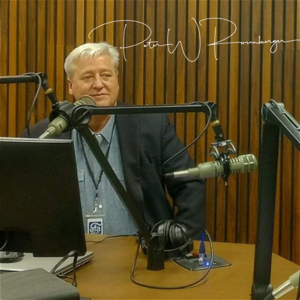
Uh Welcome to Hope for the Caregiver. This is Peter Rosenberger here on American Family Radio. Glad to be with you today. Hope for the caregiver. Hope for the caregiver.
Dot com. Hey, you know The holidays have a way of prompting conversations that. Many families would rather avoid, did it happen to you? Is that what happened after You got everything put away. For the holidays, and you started thinking about some things that you saw over Christmas.
I mean, I don't know if you put all your stuff away for the holidays. I've got some stuff I need to put away. I'll get to it before Easter, I promise. But every year, though, after things settle down, after Christmas and New Year's, people start thinking about: okay, what did we just see? Adult children coming home to see aging parents.
gather around the table family. concerns kind of um Escalate at that point.
Someone's struggling with the stairs.
Someone tires more easily.
Someone forgets. What was once routine, and with those observations comes a discussion that caregivers know real well. what I call the promise. I'll never put mom and dad in a nursing home. I'll never put you in a nursing home.
I promise.
Well, that's often spoken earlier, many years earlier, in healthier days, and it's always with sincerity. and at the time it feels like a declaration of love and loyalty. Assisted living seems distant, unnecessary, and meant for other families, not ours. That's for other people to go with.
Well the problem is not the promise. The problem is that life Keeps changing. Have you noticed that? over time what began as devotion can quietly become more than one person can manage alone. needs grow, safety becomes a concern, medical issues multiply, and caregivers often find themselves trying to do on their own what usually requires trained professionals proper equipment and constant oversight.
And if you want to see examples of that, go out to my Facebook group. It's a private group that I started called Hope for the Caregiver.
Now we have a Facebook page, Hope for the Caregiver, but you have a private group, Hope for the Caregiver. You have to sign up to join it. And you can see the things that are posted in there of this very issue, where one person is just trying to do it all. And at some point The issue is no longer love or loyalty, it's capacity. And that reality came into focus recently.
I was having a conversation with a friend.
Now, he's got a small cottage on his property, and he. Had offered to help a friend move his aging parents closer. His father's got some health issues. His mother is uh using a walker, this this friend of a friend. Um and the father has been her caregiver But now his Heart issues have begun to limit what he can do.
And the conversation kept circling back to the promise that neither would go into the assisted living or nursing home. And the adult son is caught in the middle, trying desperately to make everybody happy, which is a fool's task, by the way. You're not going to make everybody happy.
Okay, you can't make anybody happy. You make 'em feel better. you know, but that's not going to make em happy. Happy is their that's their decision. When fear, obligation, and guilt collide, No one wins.
You know, over the years, those of you who've listened to this program for a long time know this term. I've called it the caregiver fog since I've started the program. fear, obligation, and guilt. And it blurs perspective and it narrows your options and it makes even familiar paths hard to see. Just like entering fog while driving, we become disoriented.
and unsure of the path? The visibility drops and we tense up, and in that tension, judgment narrows.
Now every highway and safety officer tells us what to do next. Slow down. Turn on the low beams. Stop trying to see miles. A hit.
Try to turn on your high beam sometimes in a fog. All it's going to do is glare back at you.
Well, that's the same way it is with us as caregivers in the caregiving fog. We got to slow down and not try to look way down the road. And so, in this conversation with my friend, he asked me what I thought, and I suggested. lowering the emotional temperature because everybody was starting to take sides and it was starting to get kind of gnarly. And I said, just start with one issue.
Not the promise. Not the arguments. Not the guilt. Start with the toilet.
Now, laugh if you will. It sounds abrupt. But toilets have a way of bringing clarity.
Sometimes the toilet is what I call ground zero for caregiving challenges. If the toilet is not safe and accessible, the demands on the caregiver are going to intensify immediately.
Now you don't have to have an accessible toilet. in your home if you're taking care of somebody. But if you don't and they have mobility issues, As a caregiver, it's going to dictate. Your job and your life and what you're going to be doing every single day. And if the toilet is not very handicap friendly, the transfers become harder.
You get tired, falls become more likely. But once the toilet is safely Access. Then you move out from there. The shower, the bedroom, doorways, lighting, entrances. But sometimes, you know, the problem can be.
modified uh with uh small changes like grab bars. a raised toilet seat, a walk in shower, None of these are really exotic. But that decision alone. becomes clear once you've asked the honest question, Can you get to the toilet? And if you can't get to the toilet, if your loved one can't get to the toilet, then you got to make some decisions.
And when you address that. Honestly. That's when reality kicks in. The cost, time. Budgets that are weighed against needs.
What once felt like an emotional standoff becomes a practical evaluation. The fear and obligation and guilt begin to dissipate because something steadier has taken their place. Planning, stewardship, and direction, and it starts with a conversation about the toilet, and that kind of thinking matters because emotions tend to rush decisions. That creates bigger and sometimes more expensive problems. Have you ever noticed this?
Look on the news every night. Politicians do this all the time. They rush into decisions and make it worse.
Now In all fairness, politicians and toilets often deal with the same subject matter. But toilets remain honest. They don't respond to intentions, promises, or speeches. They simply reveal what actually works. Far cry from politics.
Families do not decide on Living arrangements, nursing homes or assisted living in the abstract. I promise you, toilets always have a seat at the table.
Sorry, I couldn't resist that one. Surveys consistently show that most older Americans really want to remain in their homes as they age. They want to die in their home. And I get that. That's sincere, it's understandable.
But it ain't going to happen without meaningful accommodations. You could stay in your home. Like I said, without an accessible bathroom, but what do you think is going to happen to the caregiver? Think about all that's involved if you can't get to the toilet. Or then the shower.
And that's when caregivers Well That's when it becomes a little bit rough. for family caregivers. Th those promises are made. in sincerity. They really are.
but they're often made without a full understanding of how diseases progress. How bodies change. how deeply caregiving affects everyone involved. Honoring a promise does not mean freezing it in time. It means continually asking how we can care well given the reality of to day.
Assisted living is not a surrender of care, but in some cases it's going to be an extension of it. It can allow families to return to being sons and daughters and spouses. rather than exhausted amateur medical staff running on guilt and fumes. We're not obligated to preserve every arrangement exactly as it was. We're called to steward what has been entrusted to us, and that includes finances, time, energy, and the people involved, and it includes the caregiver.
Circumstances change. What once worked? May no longer work safely or wisely. Important decisions are best made with clear heads. Honest assessments and wise counsel, not under the duress and even resentment they so often produce.
Now that you've had a time to see these things going on, The circumstances with your loved one may be jarring. But the path forward is rarely determined by emotion. or decades-old promises or guilt. More often. The starting point is clarified by something far more unassuming.
the appliance. In the nearest bathroom. This is Peter Rosenberger. This is Hope for the Caregiver. We'll be right back.
Welcome back to Hope for the Caregiver. This is Peter Rosenberger. Glad to be with you. Hope for the Caregiver. Dot com.
Hopefully, Caregiver.com. I want to touch base on something I talked about in the last block about letting the toilet have a seat at the table. I'm not suggesting that you put a love one in assisted living. I'm not suggesting that you don't. I'm just saying, if you're going to have the conversation, try to remove the emotional temperature.
from the conversation. If you can make it work to be in your own home for the rest of your life, God bless you, because these places are expensive. But it's also expensive to lose a caregiver. It's also expensive. To have a fall and things such as that, and remodel a home, and things such as that.
Everything is expensive.
So look at what's best. For the whole unit. and have an objective conversation, not a subjective one. Switching gears a bit, years ago I worked in an office building, a large office building, with a woman who had a terrible limp, and I may have told this story on this program before. She didn't have just a slight hitch, but it was a pronounced jarring gait.
That was caused by a car accident that left her with a significant bone loss in one leg. I mean, there was like two inches. And she was a delightful person, but there was no escaping the fact that her limp. was just an unignorable aspect of her life. It shaped how she moved through the world, and at times how the world responded.
to her And she lived that way for 25 years when I met her. And then one morning everything changed. And she walked into the office. and she was upright and steady, And everything about her changed. I mean, there was no limp, there was no sway, her posture was different, but her every everything I mean, her whole countenance changed.
It was really Striking.
So much so that everybody just stopped what they were doing just to stare. People were just amazed. And she just beamed because for the first time in a long time, She was aligned and able to walk straight. An orthotist had fitted her shoe with a lift on it, you know, the built upper shoe. And it was dramatic.
Three weeks later, however, she showed up at work limping again. And I asked her What what happened? And she kind of looked down and she said it was just too painful.
Now for years That moment stayed with me. and I incorrectly assumed that she should have pushed through the discomfort. I I I was mistaken thinking that she didn't really want to walk straight, and if if she did, she would have endured the pain. And I put the burden back on her, but I got corrected on this. Not too terribly long ago I was talking with my wife's prosthetist.
It's the guy that makes her prosthetic legs. And he's also a certified orthotist. And I I mentioned this story to him, and he didn't even hesitate. He said, That's the orthotist's fault. Prosthetics do.
Prosthetic limbs, prosthetic arms, legs, that kind of stuff. Orthotists do back braces and shoe lifts and inserts and orthotics and things such as that. And the orthotists. he said made the made the mistake. Again, this is many, many years ago, but he said, with that degree of limb difference.
Okay, when you've got one leg that is two inches shorter than the other one. Or more, may have been more on her case. The correction, he said, has to be done in tiny increments over time. You can't force a body that has adapted to that for decades. into an alignment overnight.
It'd be one thing if she had this happen and then they wanted to get her up in three weeks. And her body has not adjusted. But see, this has been going on for 25 years for her. and her body adjust adjusted to this. And he said the shock alone can undo the good you intend.
The pain in her case was not a weakness. I see I thought that if she just pushed through it, And I was wrong on this. He said no. It's a warning. And the problem was never the goal of walking straight.
It was the pace. How fast are you going to make these changes?
Now the change looked impressive and dramatic when they made it. But it couldn't last. It wasn't sustainable. And had she had she been led wisely She might be still walking straight to day. And When I heard him say this, that realization reshaped how I think about far more than just posture and gait.
We we talk a lot about sustainability in our culture. You hear that a lot, particularly with the environmentalist. But the the word is often treated as corporate. type jargon on. You know, you hear this where the company is moving towards sustainability and all that kind of stuff.
But in real life, it means something simpler. Can you keep going without being damaged by the very solutions meant to help you? And the real question is not whether disruption. For example, can be endured for a season, but what happens when it lasts long enough to reshape the body? You know, like it did with this woman.
If she had had this wreck, her leg was now two inches shorter. And then, when they started doing physical therapy, they made a lift for her leg right then. she would not have had the issues. But the disruption endured for more In just a couple of weeks. A couple of months, even a couple of years.
It endured for a couple of decades. And it reshapes the whole Body.
Sometimes the whole household, or in a nation's case, the whole culture. The longer that there's misalignment, The more people adjust to it, not because it is right, but but because it becomes familiar. And I can't help but think of us as family caregivers who, like this woman with the limp, we adapt to dysfunction. How many of us have done this? How many of us have normalized?
exhausted. One day I'm going to write a book called Exhausted. Why Do You Ask? People ask me how to do it. Exhaust it.
Why do you ask? We normalize it. we compensate for the imbalance. What once felt untenable becomes routine. The standard lowers.
sometimes slowly. But it creates space for despair and resentment to take root. And that pattern doesn't stop with individuals, with caregivers. It appears in institutions and nations, especially those emerging from long seasons of corruption Beer. or misrule.
Look look at what's going on in Minneapolis. in Minnesota. Do you think they got there overnight? You think that's going to change overnight? Look at Venezuela.
It didn't unravel overnight. And it's not going to be restored. all at once. Iran? They're going through an enormous amount of upheaval right now.
Almost fifty years of tyranny. You think they're going to change quickly? Do you think that's going to be a smooth process? Do you think they could just flip a switch and all of a sudden they go to being a capitalist country? Did Venezuela Just gonna just be a f you know, a smoothly functioning democracy?
It doesn't work that way. You think Minnesota is going to start. Uh having a balanced budget. This is where It's going to take a lot of time. and tiny steps.
Liberation may begin with a D-Day assault. You know? Think about the Utah beach, Normandy, Omaha beach. Liberation may begin with something that dramatic. Or in most recent cases here of our military with precision, middle-of-the-night special forces strike, but rehabilitation.
is always slower. LIBERATION It's really the difference between our justification. and our sanctification. Our justification was accomplished, boom, at the cross. But our sanctification takes a lifetime.
Hard ground is taken a little at a time. Institutions are rebuilt inch by inch. The work is costly, it's unglamorous, it's unavoidable. And if you try to fix everything at once, it's like trying to force a damaged body into alignment without preparation. And the result may look decisive.
But it often collapses. under its own weight, just like it did with this woman. This is where leadership is tested. not by how loudly change is declared, but whether it can be endured. Real leadership is not just naming what's wrong.
Yes, we know Minnesota's got corruption there. We know pretty much it's widespread across the country. But it requires patience and competence to change it. It understands limits. It works deliberately.
It produces progress that people can live with and live inside over time. People can endure difficult change when it leads to somewhere stable. what they cannot endure is repeated pain with no lasting gain. It is possible to move at a deliberate pace without abandoning the goal. They could have done this with this woman.
Gracie's prosthesis assured me that that would have happened, but he would have had to do micro steps with her. Real leadership, whether for a caregiver or a nation. recognizes and respects the trauma that brought us here. It refuses to confuse speed. with progress.
Instead it commits to patient, deliberate steps, that restore what has been bent without breaking what remains. That kind of leadership does not rush healing. It makes healing possible. For caregivers Alignment imposed too quickly can injure the very people it claims to help. Alignment applied with patience, competence, and affectionate.
and resolve can change a life permanently. That woman wanted to walk straight. She simply needed to be led wisely enough, to get there. And think of it in those terms. Our Saviour justified us.
God did the work. The sanctification part of our life, it's a little bit slower. It takes microsteps. There's a lot of retraining that goes on. Think about what happened with Israel.
They weren't just freed from Egypt the moment Moses showed up down there. There was a series of things that went along. that God delivered them out of this bondage. a very orderly step. We serve a God who's very orderly.
And aren't you glad? Margie Blade. Hey, by the way, go out to my website, hopeforthecaregiver.com. Right at the top, you'll see Caregiver 911. If you're struggling like that today, if you feel like it is just too painful, that you don't even know where to go.
I've got something for you out there. Hopeforthearegiver.com, just click on the Caregiver 911. I made this specifically. for folks in that situation. HopefortheCaregiver.com is where you'll find that.
This is Peter Rosenberger. We've got more to go. HopefortheCaregiver.com. Don't go away. We'll be right back.
Yeah. Welcome back to Hope for the Caregiver, HopeForthearegiver.com. This is Peter Rosenberger. Glad to be with you. Do you feel like you're floundering?
Do you feel like you're struggling? Do you feel like you're overwhelmed as a caregiver?
Well, I understand that. I really do. And I made something for you. It's out at the website, Caregiver911. You'll see it right there at the top of the page.
Hopefullycaregiver.com. You'll just see, click on it. It's blinking. Caregiver 911. Go there.
I made something just for you and that. And I've got a lot of things out at my website that I put for fellow caregivers' music. Articles, books, just so many different things that I have put out there. We still do have some caregiver calendars left, and we're doing a special offer of that right now. If you want one of those, we'll be glad to give that to you as a gift, as a thank you to you for your gift to Standing With Hope, which sponsors this program.
I've got some of these left. I've made these. These are pictures I've taken from out here in Montana where we live, and I've put a quote that I've said from one of my books or here on the program on each of these pictures, and they're pretty breathtaking. Montana, you don't have to really be a good photographer, but everybody that's gotten them has loved these things. And they just commented they said, we've gotten calendars before.
From various organizations, insurance companies, and that kind of stuff. He said, but yours is really spectacular. Really beautiful. And the people that helped me fabricate this is an outfit in Nashville. It's actually the daughter of one of our board members who helped put all this together with me.
I took the pictures and the quotes and kind of laid out the vision. But it's the caregiver calendar.
So if you want to get a Copy of that calendar sent to you. Go out there to the website standingwithhope.com/slash giving. Last Sunday was a very special day. It was Gracie's birthday. She turned sixty.
Now she doesn't want me to tell you that. She said, I can't believe I'm 60. Nobody can believe she's 60. Nobody can believe she made it to 18 that knew her at the time of her wreck. They didn't think she lived through the night when she had her wreck, and they didn't think she'd live to ever wake up again.
She was unconscious for three weeks. But it it sh it's an amazing Journey that she's had. Her prosthetist returned back out to Tennessee. couple um just well week and a half ago. And she got her new legs.
And it's astonishing to watch. And it basically talks about what I talked about in the last block. Gracie's been bent over. since well, she started bending over at about two thousand two. Her back her disc started collapsing.
But she was never really aligned properly at the time of her wreck back in 1983. You know, they had to kind of work with what they had. And once her and then her body adapted to her dysfunctional legs, and then once she lost her legs, her prosthetist made new legs for her that helped accommodate what her body had adapted to. And then her back started going further and further over. And we kept accommodating, accommodating, accommodating.
And when they redid her back, they kind of did a whole systemic. realignment with her. It's been Pretty painful. You've been following along for those who've been listening to the program for a while. And she had to go into Denver last year and to get her back I mean, get her hip flexors redone because those were so tight she couldn't stretch them out even though her back's spinal alignment was now proper.
Her hips wouldn't move, and so they had to release those. And it's just been a long journey. But then her prosthetics. were a design for her bent over state.
So it was pitching her forward, even though her body now was properly aligned. Her legs were now causing her to pitch over. She was on her tiptoes, basically, and it was like walking in ski boots on tiptoes.
So it's pretty uncomfortable for her.
So her prosthetist from Tennessee came out. The only way we could figure out how to do this, and he came out and measured her, took a mold of her, and then he went back and made the legs, came back out and brought the legs. I told Gracie that a third of her body was flying across the country to meet her. She didn't think it was nearly as funny as I did. But We got her there and the results are pretty dramatic.
But like I said in this last block with this woman who had a lift on her shoe, this is going to take time. and he gave very strict instructions of what she is to do and not to do. And every one of her muscles intended. She looked at me and she looked at him. She said, Everything is screaming on me.
He said, It's going to. That's why I want you to walk. from your you know sit in your chair Get up, walk to the front door, come back, sit down. Take your legs off a little bit, then get back up, do it again a little bit later. Don't kill yourself trying to get out there and go for long walks here.
You're not going to be able to do it. And it's going to hurt. That's what it does. I mean, when you when you've been misaligned for so long, And in Gracie's case, it's been 40 years. He showed me, he was making her socket.
the same way we make the sockets for the patients we treat in in West Africa over in Ghana. Jim, her prosthetist, has been with us several times. He's the one that helped set up the whole system for it. And that's going on right now. We just sent a bunch of supplies over.
We've got more coming. I talked to the prison the other day where they recycle the prosthetic limbs. I don't know if you knew this or not, but we have a. The prosthetic limb recycling program and people donate uselands all over the country. They go to a prison.
Down in Arizona, run by an outfit out of Nashville. We got to know. We started this in 2011. Called Core Civic. Uh they were headquarters like Two miles down from our home, and one of our board members she's passed away now.
She worked there and made the introduction, and they have a lot of faith-based programs they do for. The inmates to Reduce recidivism so that you know it. Hopefully, there's a transformation in their life. They didn't become criminals overnight. You know, get them back into society.
We see how this all works, it ties together. But they have been for years now taking our used limbs. in a workshop and the inmates will disassemble them and will use the parts. And so anyway, Jim helped us set all of this up, Gracie's prosthetist, and I watched him making her legs. And I was able to video conference in Moses, the clinic director in West Africa, who watched while Jim worked on Gracie's legs.
and showed him all that was going on.
So that was kind of cool. And and and Watching him align, Gracie, he showed me on her knee, for example. When he put the socket on her, he t what what what he does is he um He he takes a Bandage like you're doing for your broken arm, you know, when you when they cast your broken arm or whatever.
Well, it's the same kind of stuff, and they put this over a liner that's on her leg. The liner is covered with basically saran wrap. You know, they we call it over in Africa, they call it film. And then he uses a grease pencil to mark We're very parts of her knee and so forth are, and then when he cast it, he put it wraps cast around it. And then when that hardens he pulls it off and you've got that grease pencil transfer those marks to the cast.
And then he will and he showed me in that cast how off-centered Gracie's knee is. On her right knee, it's externally rotated out 25 degrees.
So it kind of points off.
So if you're standing looking straight, her knee is kind of pointing off at 2 o'clock. basically on the clock.
So he's got to compensate for that. and build it so that her feet are straight under her.
So that's no easy trick. And yes, they use computers and CAD machines and three D stuff and all that kind of thing, but there's still an art to what he's doing. And this is a man who's been treating patients, started in nineteen sixty four. He was a 20-year-old kid basically got hurt in the uh Navy lost his own leg and started on the on j on the job program. with uh prosthetics there with the VA.
Now you think about how many people have had a 60-year career. How many patients has this man touched?
So he's seen it all. When it comes to amputations, of course, he's an amputee himself.
So anyway, he was making this and showed me the challenges involved. In Making a Leg for Gracie And this is why we keep standing with hope so small in what we do because you take on these patients for life. I mean, he's been making Gracie's legs since 1991.
Now you think about that. George Bush's father was president when he started treating Gracie. And, you know, so when you take on an amputee, you're taking them on for life.
So we keep Steady with Hope very streamlined so that we can give the kind of care to each patient so they can come back for children, for example. They have they grow and they need a new limb. They get taller or their body changes or whatever. And so These are the things that we took into consideration when we started this prosthetic limb outreach. And if you want to be a part of that, by the way, it's very easy at standingwithhope.com.
Slash giving. And you can sponsor Lim, sponsor. Materials being sent back and forth. You can sponsor the radio show, whatever is on your heart to do. And there's a special thing on there for Gracie's birthday that you can donate.
We're asking for 60 bucks. To honor her birthday for this whole month. I mean, the fact that she's alive is really truly astonishing. Nobody expected it. And so when she stood up and walked, It was pretty astonishing.
And you have to remember, I've been married to Gracie now for almost 40 years. In fact, on her birthday, Forty years ago. On her birthdays when I asked her dad if I could marry her. Oh, it was it was embarrassing 'cause I I was a dumb kid. And I said I said, her dad's name is Jim as well.
And I said, Jim, I love your daughter. And he's got this voice that sounds like gravel. Do you really?
Now, yes, sir?
So. Um but so I've been married a long time, but I've never seen Gracie as straight as she is.
Now I want you to think about that for a moment. I've never seen it. She was hurt before I met her. And they had already set things in motion for her. With her alignment and her legs and so forth.
So she had a Gracie had a pretty significant limp herself. And She lived like that for eight years. Until she gave up her right leg, and then another four years after that, she gave up her left leg.
Well, you think about what that did to her, just like that woman I talked about in the last block. And Gracie's body kept adjusting to these things. and accommodating it. To this level of dysfunction, that she was the way she was put back together.
So now, when we did this extensive surgery that we've done in Denver over the last several years. She's been completely c reworked. And in fact, her orthopedic surgeon called me after I sent the picture of him to him, of Gracie Walking, and he called, he was just ecstatic. And this is the guy down at the teaching hospital in Denver. And he had Mentioned to me what he did to her when he got in there, how he kind of reworked those tendons and everything else, the flexors, to give her more of a.
A straighter structure.
Now, we can't do anything about the way that knee is externally rotated, but that's where good prosthetics come into play. where you know Jim is able to make that for Gracie, but she's standing straight. It's astonishing to see. I'll never forget the first time I saw her laying flat. I haven't seen her lay flat in a lifetime.
Where her Knees, her thighs, her hips, and her back are all laid flat. You and I take that for granted. She has been able to do that. She's had to either lay on her side or she's had her feet on a pillow. because they wouldn't Lay down.
But now she's standing straight. And standing with hope. This is Peter Rosenberg. We'll talk more about this when we come back. Don't go away.
This is Hope for the Caregiver. We'll be right back. Welcome back to Hope for the Caregiver. This is Peter Rosenberger. Glad to be with you today.
We're continuing on our series of hymns that every caregiver ought to know. Hymns that every caregiver ought to know. Caregivers hear a lot of advice. Most of it assumes that if we just adjusted our attitude, took a break, or tried harder. The weight would somehow Lift.
The hymn today, and I think this is a repeat, and you'll have to forgive me, but I'm doing it for a very special reason because I'm honoring Gracie for this whole month for her birthday. But the hymn today offers none of that. It is Be Still. My soul. And it's not a suggestion.
to calm down. By the way, that's how you get into a fight. You say, calm down. Yeah. It doesn't work.
So don't do that, okay? But Be Still, My Soul is not how you get in a fight. That is how you bring your own soul into submission. It's not a denial. It's a call to stand firm.
when there is nothing left to brace against. The words were written by Katharina von Schlegel in the 1700s in a world where suffering was pretty intense back then, disease, loss. all those kinds of things. But she didn't speak to circumstances. She spoke to the soul.
Because the soul is what must survive. when circumstances don't improve. Most people know this hymn by the melody Finlandia written by Jean Sebilius during a season of national oppression. The music itself is very restrained and resolved. It doesn't rush.
It is not in a hurry at all. And then there's Gracie's version. when she recorded this hymn, She didn't have her legs on. She did this at a home in Nashville. And my friend Chris brought all his gear over there to the house and recorded her.
She was actually in our bedroom. and she was in her wheelchair, and she rose up and stood on her knees. in her wheelchair. Not for a fact. And not for drama, she had to be able to get breath.
She couldn't sit, she couldn't wear legs at the time, and she couldn't sit and sing it, so she got up on her knees. And She's saying this. A cappella. She sang, Be still, my soul, the Lord is on thy side, while she was balancing on what suffering. had left her.
It's not a metaphor, is it? How with Gracie? That's theology with muscle. And she is she's tough. We caregivers understand this.
We we understand that stillness does not mean inactivity, it means refusing to collapse inward. Placing weight where it can actually be borne. Leave to thy God to order and provide What a tremendous statement But we struggle with that line, don't we? We're managers by necessity, medications, appointments, equipment, all that kind of stuff, but stillness can feel irresponsible. But this hymn does not call us to abandon responsibility, it calls us to abandon the illusion that everything is resting on us.
Leave to thy God to order and provide. An astonishing statement that is, it sings nicely, leave to thy God to, it sings nicely. But it is When you align your life with that statement, It is a difficult thing to sing. More specifically, it's a difficult thing to sing. impassively.
You you can't just It's a difficult thing to sing dispassionately. You're invested in it. If you really understand what that text is saying and you really understand the nature of our life as caregivers, that text cannot be sung casually. Later, the hymn actually says something even harder. Be still, my soul, thy Jesus can repay From His own fulness all He takes away.
And we know what's been taken away. Mobility, sleep, Plans, independence.
Sometimes our identity feels like it's been taken away. Friendship, some part of the you know, ourselves. And this line does not promise ease, it promises a reckoning. Nothing is unseen by God, nothing is wasted by God. Nothing is outside the reach of his resurrection.
And that's why this hymn belongs in the caregiver's vocabulary, even if we do it twice in this series. Not because it makes us feel better, but because it teaches us how to remain upright. When the body, the future, or the outcome will not cooperate. We've been talking about this for the entire show: of what happens when we're not aligned properly. What about our souls?
That woman had a terrible limp, because her body was damaged and her right leg was shorter than the left one. Gracie's body was traumatized in a wreck, and it was never really put back properly, and we've had to make adjustments. But what about our souls? What has sin done to us And so when Gracie sang this hymn, she wasn't standing on her own strength. She was standing on trust of knowing that he is aligning her far better than her surgeons and her prosthetists could.
And that is what this hymn teaches caregivers to do. When you can't stand the way you used to, When the answers don't come quickly. or maybe not even in this lifetime. When prayer feels a bit thin This hymn is the hymn, it's the go-to hymn. Be still.
My Soul. And I want you to listen to Gracie sing this, and then she coupled this with an arrangement I did of Bob and Gilead. which was my father's favourite hymn. And it was an old spiritual that just talks about the soothing balm. That is the gospel.
It just The soothing balm That is God's mercy and His compassion and His love for us. That makes the wounded whole, That s that heals the sin sick soul. And so I thought I'd, again, it's Gracie's birthday. And uh she's sixty years old. Nobody dreamed she'd make it to sixty.
Nobody dreamed she'd have the life that she's had. She has two sons that she brought into this world. She has now five grandchildren. She launched a prosthetic limb ministry to to to amputees ov uh an ocean away. She has sung for hundreds of thousands.
Including presidents and governors and senators and men on big stages, all these things. that God has seen fit to allow her to do. It's an extraordinary life. And the whole way She is saying to herself, Be still, my soul. The Lord is on thy side.
Be still, my soul, that Jesus can repay from his own fulness all he takes away. This is not theory to her. This is her life. And I bet you it's the life of some of you to day as well.
So let Gracie sing to you in this hymn that every caregiver ought to know. Be still my soul. The Lord is on thy side. Bear patiently the cross. of grief.
Look at. Leave to thy God. Toward Provide You'll never change Be faithful. Will remain be still, my soul. Thy best thy Hmm.
Heavenly friend. Through thorny ways. Needs to a joyful be still, my soul. Jesus can Repair. From his own fullness, all he takes away.
There is a bomb in Gilead to make wounded whole There is a bomb in Gilead to heal the sinsick soul There is a bomb in Gilead to make the wounded whole There is a bomb in Gilead to heal the sins Soul sometimes I feel discouraged and think my works in vain But then the Holy Spirit revives my soul again There is a bomb in Gilead to make the woman whole There is a bomb in Gilead to heal the sins So you may not preach like Peter You may not pray like Paul But you can tell the love of Jesus and how He died for all there is the one in Gilead to make wound There is the one in Gilead to heal the sins Soul sometimes I feel discouraged and my days are filled with pain but then my holy spirit revives my soul again reminds me reminds me about a bomb you heal the end to make the wounded whole There is a bomb In Gillia to heal the sins, so that makes the wounded whole body. doing a prosthetic limb outreach. Did you ever think that inmates would help you do that. Not in a million years. Not in a million years.
What does it do? When you go to the facility run by Core Civic and you see the faces of these inmates that are working on Prosthetic limbs that you have helped collect from all over the country that you put out the plea for. And they're disassembling. You see all these legs, like what you have, your own prosthetic legs. And arms, too.
And arms. When you see all this, what does that do to you? Makes me cry. 'Cause I see the smiles on their faces and I know I know what it is to be locked someplace where you can't get out without somebody else allowing you to get out. Of course, being in the hospital so much and so long.
When I go in there, then I always get the same thing every time. That these men are so glad that they get to be doing, as one man said, something good finally with my hands. Did you know before you became an amputee that Parts of prosthetic limbs could be recycled? No, I had no idea. I had, I had.
I thought we were still in the... 1800s and 1700s. I mean, you know, I thought of peg leg, I thought of wooden legs. I never thought of. Titanium and carbon legs and flex feet and C legs and all that.
I never thought about that. I had no idea.
Now that you've had an experience with it, what do you think of the faith-based programs that Core Civic offers? I think they're just absolutely... Awesome. And I think every Prison out there should have faith-based programs like this because. The Return rate.
Of the men that are involved in this particular faith-based program. and other ones like it, but I know about this one. are it uh it's just an amazingly low rate. Compared to those who don't have them. And I think that that says so much.
Chino. about Just that doesn't have anything to do with me. It just has something to do with God using somebody broken. to help other broken people be whole. If people want to donate a used prosthetic limbs, whether from a loved one who passed away, You know, somebody who outgrew them, you've donated some of your own.
What's the best place for them to do? How do they do that? Where do they find it? Please go to stannywithhope.com/slash recycle, and that's all it takes. It'll give you all the information on that.
What's that website again? DannywithHope.com. slash recycle. Thanks, Crazy. Take.
My hair. Lean on me. We will stay