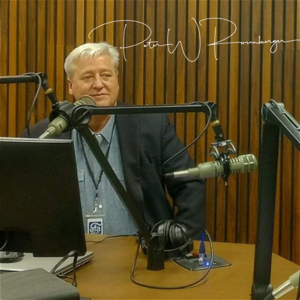
This is the Truth Network. Welcome to Hope for the Caregiver. This is Peter Rosenberger here on American Family Radio. Glad to be with you. Hopeforthecaregiver.com.
We're going into Christmas week. I trust that you are well on top of things and you feel completely ready, and there's no stone left unturned, and there's no gift not wrapped and under the tree. Yeah, right. We're caregivers, we're doing it to the last minute. But that's all right.
What else is new? What else is new? Got a jam-packed show today, and I want to jump into quite a few things right away. I was in North Carolina earlier this year. I spoke at a conference, and you know, when I speak, I can't stay very long.
I mean, I flew in. Rush to get there to the dinner. I was going to be with the team people there the night before. and crashed that night in the Hotel there, got up the next morning. Drove to the venue, spoke, and was at the airport.
I was there in North Carolina for less than 24 hours. And so that's pretty normal for me. But while there, I caught a shuttle bus to get to the rental car from the airport terminal. Which, by the way, if flying is so safe, why is the first word you see terminal? Just write that down.
But I I I went to the rental car lot and the guy driving the bus was a very nice man, and I could tell from his accent that he was not from Lower Alabama. And I asked him, I said, Where are you from? And he said he was from Kenya. and I said a few words to him in Swahili.
Now, I know that may come as a surprise to some of you all that I know some words in Swahili, but I do. I've actually tried to learn. A few phrases in a lot of languages. And the look on his face was astonishing. I mean, he just lit up.
How does this white man know my language? kind of thing. And I've had that same experience. In fact, earlier this year when we were in the hospital, there was a CNA there that was taking care of Gracie, and she was from Ghana. But I could tell by her accent she was from Sub Sahara West Africa, where we do our prosthetic work.
And I said, Where are you from? and she said, I'm from Ghana. And I said some words to her in her language. And again the same reaction. She just lit up.
Her face just erupted in smiles. How do you know my language? How do you understand me? And we talked for a little bit, and I explained to her my connection with Ghana. And I've had that.
Reaction many times, whether it's I know some things in Japanese, Arabic. Um you know just lots of different languages. I've picked up French, Spanish. I could speak Spanish Pretty well. Um, not great, but I do okay.
And I just pick up a few phrases every so often and just try to speak to people in. in their language, what little I can. And I I have been astonished by it every single time. what comes over their face when somebody speaks to someone else in their language, in the language of their hearts. And I thought about that a lot as I do this program.
I speak fluent caregiver. I speak fluent caregivers, and I've seen. The reaction when I speak to people, whether it's one-on-one, whether it's speaking to a large group, It it doesn't matter. when I start speaking the things that I talk about on this program. speaking fluent caregiver.
The reaction is always the same, just like that bus driver, just like that CNA. Their faces just widen and light up and comprehension fills it a lot a lot of times tears. It is so lonely. to not be able to communicate. In your native tongue, in your language, in the what you're feeling.
That's what the language of your heart is: is what you're feeling. I got friends of mine who are Wycklift Bible translators and and for example, they're over there in the Democratic Republic of Congo and most people speak French, most people speak uh speak uh Swahili over there. And the Bible's been translated into those languages. That's the that's the common tongue. But then there are tribal tongues.
what they call the language of the heart. And they're translating the Bible into this, and that's when it comes alive. That's when the gospel comes alive. because it's in the language of their hearts. It's not a trade language in that sense.
That's why music is so powerful. Music is the language of our hearts. When we play a song, we don't know exactly what it's doing to us, but we know that it's doing something. And we feel it because it's tapping into something that transcends The normal conversation. And when I speak to my fellow caregivers, that's what I'm doing.
In many respects I have Put these words down in my books, and people are using them now and say, This is how you talk to a caregiver. I've kind of mapped out. Language for caregivers. In my books. And I've heard this from, and in my articles that I write, I've heard this from more than.
Uh a few people. They said, you said what we were feeling. I didn't even know I was really thinking this way until you said it. And it was like, yeah. And there are several people that modeled this on a regular basis.
I'll tell you one of them, Johnny Erickson Tata, when she speaks. You know what she speaks? Fluent. Suffering. She understands suffering so profoundly particularly framed By the Gospel.
that when she says things it is so distilled down that there is no ambiguity in what she's saying, and those who suffer immediately understand what she's saying. It's it's astonishing to watch. And I have had the privilege of interacting with her many, many, many, many times over the years. We've become dear friends. That's that's it.
That's the language she speaks. She understands suffering. And she speaks it so clearly and with such precision that her audience immediately resonates deeply with her. And I've watched this happen many times. And I didn't really think about that until I launched out to what I do and I realized that I speak the language.
that caregivers understand. And there's no ambiguity. Nobody's scratching their head saying, I didn't understand what you were saying there. If you're a caregiver, you understand what I'm saying because I'm speaking to what you're feeling. Not necessarily what you've put a vocabulary to, just simply because I've spent the time with it.
And I love to be able to have those moments with fellow caregivers. Because I know what it's like when somebody talks to you In a way that's not connecting with what you're going through, people didn't really know what to say to me. and quite often they still don't.
So, I understand what that isolation in our thoughts does, and we feel like nobody can really. Speak to us in a way that we can understand. And it's like that CNA said to me: How do you know my language? How do you know my language? And we all have those experiences where somebody.
connects with us and speaks to us, that pierces our hearts, that pierces through all the the words and the rhetoric and down to the the deep seated feelings that we have in our heart that we we don't even know quite how to process. Again, it's like a piece of music. Tell me what you like. on music and it'll tell a lot about you. And some people can listen to a symphonic piece by Ravel.
and be um a puddle of tears. And other people can listen to a song by George Jones and be the same way. And others can, you know, just go down the list. Whatever. It doesn't matter.
There's something that is calling out to you. Harlan Howard's world famous songwriter he's passed away now, but Nashville, and and just an icon in Nashville. But he used to say about country music, it's three chords and the truth. Three chords and the truth. And it just cuts all the way down.
to the core of things. That's why country music uh is so It w it's such such a wonderful art form. because there's such a distilled understanding of the human heart, In those wonderful songs.
Now, today's country music, maybe not so much, but old country music there was. The old country music, in fact, there's an old story about Hank Williams Sr. And who was, bless his heart, he lived a hard life and he was a heavy drinker and lived a pretty rough life. But there was a psalm that he cut. And he told the the engineering and producing team after he cut it And the song he wrote.
He said, that's a hit right there. He said, how do you know, Hank? And he said, because it came from the bottom of a mean bottle. And is there ever a more accurate depiction of old country music? But it was truth.
It was something so visceral. that it cut through everything else and it spoke to this. And when you speak someone's language to to the point where it cuts all the way down. it causes a reaction. And we're going to talk about that when we come back because that is the nature of everything I'm doing for my fellow caregivers, is to speak in a way that they can understand.
It speaks to the heart and the passion and the deep feelings that are there. Understanding and being understood cuts all the way through that loneliness, and that's what helps us have hope as a caregiver. We'll be right back. Welcome back to Hope for the Caregiver. This is Peter Rosenberger, and that is, of course, from Handel's Messiah: for unto us a child is born.
And as I played that, there are many of you that are listening right now, based on our conversation we had in the last block, that that takes you back. 10, 15, 20, 25, 30, some of you 50 or 60 years ago. When you first heard that, or maybe you performed it with a community chorale or at your church. And it just immediately something happens inside your heart. You just hear it.
It just, I'm telling you, it's the language. The music transcends everything. That piece of music, for example, I mean, it transcends time and space and every, you know, you can't. When I hear that, I have to stop for a moment. And I can reflect on so many memories of where I was when I first heard it, where I was when I first performed it.
and the orchestra and all those kinds of things. And so that's what that's the power of music. More importantly, I think the greater principle, that's the power of communication without impediment. communication without the the blockage of misunderstanding. We understand it.
We hear it and we feel it down at our core level. And this is what I wanted to spend some time with you today, and I'll tell you why in a moment. But last block I talked about one person I know who speaks in the language of suffering, particularly under the the the frame of God's redemptive work through Christ, and that's Johnny Erickson Tata. There's truly no ambiguity in what she says. If you're a sufferer, if you live with any kind of disability, and that woman speaks.
You understand her.
Okay, she cuts right through it. There's a couple other people that have inspired me this way, and it may surprise you.
Some of them may surprise you. One of them. is Rush Limbo. I used to listen to Rush all the time. for for two reasons.
I liked his show, but I also liked the way he communicated. The style of which he did it. Of course, I liked his humor and so forth. A lot of people didn't like him. And if you don't like him, that's okay.
You're not required to, and you're not required to like me. You're not required to do anything. I'm just telling you, somebody I saw do this. And over and over and over, over the 30 years that I heard him on the air. He repeatedly said that the what happened he found with the audience is that they would say to him, and I heard callers say this, you're saying what I was thinking, you're saying what I was feeling, but I hadn't told anybody.
You're giving a vocabulary. to the things I was processing. and Rush spoke in the fluent language of patriotism. And a deep love for this country.
So there was no doubt when you heard him speak. of what he Was where his mindset was. There was no ambiguity in what he was saying. You didn't have to scratch your head and think, what? You know, a lot of times when Joe Biden would speak, you never really quite knew what he was saying.
Trump would sometimes say these things and he kind of ramble a little bit. You know, it's got to be, you know, that kind of thing. But there's some politicians they do. They kind of go off on tangents and they ramble a little bit. Um but but not Rush.
He he And George Bush, bless his heart. That's why he said Yogi Berra was his patron saint. He was a real hero to him, 'cause he would, you know, say things and you're like, What what did he just say? But there are some people that When they speak to you, There is just no gap or barrier to understanding them.
Now, you may not like what they're saying, but you understand it. You may not necessarily even agree with it. But you understand them. You you see where I'm going with this. And Rush was that way.
I watched him many times over the years. I had a chance to interact with him on his show a time or two. And I was stunned by the way he connected with his audience. and there was a bond there that only rush could break. Nobody else could you couldn't separate Rush from his audience because he's the one that built the bond with him and he's the only one that could break it.
And it's the same thing you look at with Johnny, for example. The only person that could break that bond between Johnny and your audience is Johnny herself. And that's not going to happen. She understands her mission, her work, her message, and more importantly, her Savior in this. Rush understood very clearly his mission.
His Beliefs, his under his work, his audience. He knew his audience. I remember hearing from a speakers bureau one time that worked with me, and they said, one of the things that we've watched about you is you really know your audience. And I said, well, doesn't everybody? They said you'd be surprised.
How many people don't know their audience? They don't know their audience. How can you go out and speak to people if you don't know them? I've never understood that. I'm not speaking to nameless people or faceless people.
I'm not speaking to strangers. I'm speaking to my fellow caregivers. In fact, when I go out and speak, I will say to the audience, look. If You're not a caregiver. You're going to get something out of what I'm saying, but I'm not here for you.
I'm here for this group of people. These are my people. I know them. I know the way they're processing these things. And I want to speak to them so that just like I said in the last block, that bus driver, that lady in God, or that Uber driver that I had, when I would say something in his language.
And They just light up. How do you know my language? How do you know me? And so I learned some of those things from Johnny. I learned those things from Rush.
And I'll tell you somebody else I learned them from. Jeff Foxworthy. Jeff has told the story many times, told me many times this, about when he started doing You Might Be a Redneck. and the reaction that he had he knew that he was on to something. When he looked out at the audience and he would say things like If your mother or sister's hair got caught in a ceiling fan, you know, you might be a red day and people are elbowing each other Saying that's you, that's Bob, you know, that kind of thing.
And everybody saw themselves in what he was saying. And he realized it was universal, that there was that connectivity of people were seeing their story. in what he was saying. And they could laugh about it. They didn't feel so isolated.
They didn't feel so alone. They felt connected. There's, again, that bond that Jeff has with his audience. Nobody's going to break that but Jeff. And he's not going to break it 'cause he loves his audience, he knows his audience.
He understands them. And he's many times he said, you know, I don't have to write a lot of jokes. People come up to me and tell me stuff. Oh, listen, I got one for you. And people come up to him all the time.
as if they know him. And he's one of the most gracious celebrities you'll ever meet. I mean, he's everything you would hope celebrities would be. And he's just as who he is. I mean, you know, he doesn't have to put on an act.
That's who he is. and he's funny, but he's also a very wise person when it comes to just understanding people. And rednecks feel understood when he walks into the room. How many of you all have seen him live? You know, the moment he walks out on stage.
You feel understood. You feel connected. Here's a man who understands us in all of our redneck glory. He defines redneck as those who have a glorious lack of sophistication. And he's not wrong.
But you feel connected.
Somebody is seeing you and you could picture every joke he tells. You could picture it. If you've ever financed a tattoo, you know, I mean, you immediately know somebody like this. If you smoked at a wedding, you know, you know somebody like this, or you're that way. Either way, there is a commonality of it.
And it's incredibly engaging and just it's overwhelming. And these are three of many, but three. Important ones in my life that I've watched, how they did this. And I thought about this a lot with the language of caregivers. Speaking to people in a way they understood, nobody really knew what to say to me.
My dad told me this. On more than one occasion he said, I I I didn't even know what to say to you, Peter. I hurt with you. I didn't know what to say. I didn't and he didn't know how to reach into that place with me.
I had to forage for a lot of the things. that I've come to to learn and understand and and hold dear. I had to basically Chart out the language of caregivers. We've been feeling it for as long as the human beings have been around on this earth, but nobody took time to write it down. And so many of us just have to kind of go through it.
stumbling and bumbling. And I said, Enough's enough. I'm going to write it down. I'm going to say these things. I'm going to put it on my podcast.
I'm going to put it on my radio show. I'm going to talk to people in a way that that they can understand and feel understood. And you know why I do that? Because that's what God does for us. And there's one word.
I've talked about different celebrities, I've talked about music and all these things, but there's one word. Word. One word. That sums up every bit of that, and it's the word we use a lot during this time of year. And it is Emmanuel.
God With Us. Because when we speak to someone in their language, They feel connected. When I spoke to that bus driver, For one moment he was not an immigrant from Kenya and I was not a white traveller business guy. We were two people who understood one another. When I looked at that C and A from Ghana, And I just spoke to her in her own language.
How do you know my language? We were two people. Who could just speak? When I spoke in French to the housekeeping lady at the hospital, who was cleaning the rooms. And she was from Haiti.
And all I did was get out of my mouth, bonsoir. I didn't get that hardly got any further than that. And You'd have thought that we were family. God spoke. One word.
His own name Emmanuel. And it cuts through everything. And when I see anything. Everything. It cuts.
Through. Everything. Because God penetrated into the ultimate isolation. which is our sin that isolated us from Him. We could not go to him.
He came to us. God with us. Diane Langberg says, there is no they. We use that word they, like they did, well, if they didn't do that, or if they didn't do that, if you know, like, their choices are somehow worse than ours. She said there is no day.
We're all us. And the only one who could say they was him. and he became like us.
so that we could be with him. And that is. Hope for the caregiver. This is Peter Rosenberg, and we'll be right back. Welcome back to Hope for the Caregiver.
This is Peter Rosenberger. This is the program for you as a family caregiver. And I had to go back one more time to the groove yard with that one. We did last week, but it's such a great, great, great song, an iconic song. Emmanuel.
That's Amy Grant, of course. And I love that. Michael W. Smith wrote that. Great song.
We're talking about the language of caregivers. We're talking about That This time of year, we use that one word and we kind of gloss over it, Emmanuel. But what does that really mean for us if what it means is we are connected? We are no longer estranged. You know, suffering isolates us.
We all know this as caregivers. We know what it's like to be isolated. Affliction isolates us. And it puts us in a in a very, very lonely, lonely place. More importantly, sin isolates us.
It isolates us from God. And there's nothing we can do about that. But he did. He did something about it. We were forever cut off.
Unless he did something Unimaginable. And he came to us. And we could all be like that little C and A down there in in the hospital. How is it, Lord, that you know my language? How is it that you're speaking to somebody like me?
Charles Wesley wrote in that great hymn, Amazing Love, How Can It Be? How can this be? that thou, my God, would die for me. Amazing love. And once you see that, when I survey the wondrous cross.
on which the Prince of Glory dies. Once you've had that It's like somebody kind of tilts your head and you start seeing the world a little straighter, you know, and you realize what all these hymns mean, what all these scriptures mean. What everything is coming at you clearly. I had a friend of mine who was a messianic rabbi. and he was raised his entire life Jewish.
And then when he came. to believe in Christ, As an older man, he's been in business for years and so forth. He was like in his late 30s, early 40s. He said, when I saw the scriptures then in the context of my salvation, It's like they went from being in black and white to vivid color. Remember in The Wizard of Oz when Everything was in black and white and then Dorothy opened the door and she saw Oz and everything was in color.
He said, That's what it was like. when I saw The Scriptures with the understanding of Christ. And it just he said it just my senses were filled. And he said, I read through. the entire Bible.
I mean, he absorbed it. I mean, his story is astonishing. I have him back on, I've had him on before. and it's astonishing. what happened to him.
And this is what happens to us. when we are regenerated. By the very word of God. And Lazarus was laying in a tomb, and Jesus said, Come forth. He didn't ask Lazarus to come forth, he didn't give an invitation to him.
Did you notice that? He didn't play one more chorus of Just As I Am. He didn't try to convince him of it. He summoned him from death, And that is what Christ did for us. Stubbornness, from death.
'Cause he conquered death. He who knew no sin became sin, conquered death, died.
so that he could conquer death. And go back and look at all the hymns and all the scriptures that talk about Christ conquering death. Death. That's penetrating into the ultimate isolation, and that's what happened. And that's what happens every day.
And this is the gospel that is the great news. The bad news is we're cut off. The bad news is we're sinners. The bad news is we are not in any way able to get to God. The good news is he came to us.
And we can be like that bus driver, like that CNA, like that Uber driver, that just our faces light up with he knows our language. More importantly, he knows your name. He knows who you are. And everything we do is a mere shadow of that when we do it with one another, but yet we are commanded to do it with one another, and that's why I do this program. Comfort one another with the same comfort that you yourself have received from the God of all comfort.
But what comfort do I have? Gracie's still suffering? She still has to go through all kinds of stuff. I'm still a full time caregiver. I'll do four loads of laundry, you know, and m before lunch I'm still doing it, so what's my comfort?
is that I belong to him and that he understands me. and he gives me the wherewithal to understand his words. He not only condescended to me to be able to speak in a way that I could understand. He unlocked it.
so that I could speak in a new language. From my own heart. that there was no disconnect. I was not speaking a A secondary language. This is the language of our hearts.
I can't remember the guy's name. He was a seminary professor over in Holland, said that. With good theology. you always erupt into doxology. And so as I'm saying these things, you get that picture of the...
the angels coming out in the host singing glory to God in the highest. I mean, that's glory to God. You know, all I did was say words to somebody in their language. How do you know my language? You know me.
Oh my goodness. Oh my goodness. And there was just this connection. That is only a tiny, tiny, tiny glimpse. of the real transformation that goes on in our hearts when he gives us a heart of flesh.
and takes away a heart of stone. In the last few moments of this block, I want to. reference something speaking of this language. I want to reference something that happened in the news this week. I wrote an article about it.
I write every week for Blaze Media, and I wrote an article about what happened with Rob Reiner and his wife, their son. brutally killed them. And I have zero political Um and and ideological connections with Rob Reiner and his wife. I mean, from what I saw in him, he was vitriolic in his hatred for people that believed the way I believed. But what happened to him wa and his wife was just just horrific.
being slain by their own son, and one of them had to watch the other one. And I grieve for them, and I also grieve for the people whose chests tighten up. There are people that listen to this program. who've had family members that they've had to call police officers for. That they are at their wits' end.
I I I know that because you've reached out to me. that you've had situations where you have felt so afraid. Of your own child, brother, Parents even. because of addiction and alcoholism. And you bore that by yourself.
You bore it in shame. You bore it by just. It's just. Horrific. And we have A responsibility.
as believers to step into this kind of trauma with the same zeal that our Saviour stepped into ours. Comfort one another with the same comfort. That we ourselves have received from the God of all comfort. I was real disappointed in Trump. when he shared what his thoughts were on that with the with the runners.
And I know they were bitter political enemies, but it it it was so sadly it was typical of the man, but beneath the office. And and he could have done better, and somebody should have got a hold of him and said, Hey, look, that that's messed up That is not the response we have as believers. Do not rejoice when calamity falls on your enemies. Scripture says this more than once. Do not do this.
Grieve. grieve and go into their heartache. Don't turn away from it. And if you know somebody who is going through something like this, don't don't pass judgment. Just be with them.
And if you don't know what to say, here's how you start. And you can, by the way, you can read the whole article. I shared it on my Facebook page, Hope for the Caregiver, and then I have a Facebook group that you can join. That's Hope for the Caregiver as well. Then I have a sub-stack.
Caregiver.substack.com, and you can access all the stuff that I have out there. But If you don't know what to say to somebody who's going through something like that, they got a kid that's pretty messed up, or something, wife, or spouse, husband, whatever, doesn't matter. whatever's going on, and if if if you see this Try saying this. Just look at them very quietly and say I see you. I see you.
And I see the magnitude of what you carry. And I heard with you. Uh if it's okay I I'd like to just stay with you. Can we just sit here for a moment? And then check on them again tomorrow.
And the next day, And the next day. What does that really cost us to do that for another human being? A few moments of our time. A little vulnerability. What did it cost?
him. to do it for us. What is a little awkwardness? or vulnerability Or a little bit of time. on our part compared to what we have received.
And that's the kind of thing that we could start with it. and caring for one another. And that applies across the board, whether it's addiction, or alcoholism or Alzheimer's. I'm the only one, to my knowledge, that has any kind of national platform for caregivers. that equates family members of addicts and alcoholics as caregivers.
And I stand by that. In many respects this is Similar to dealing with Alzheimer's.
Sometimes it's even worse. There's that sometimes that clarity that comes through, and there's an apology, you know, I'm going to do better, that kind of thing. And then it comes back in and even. more intensity. And this upheaval with Alzheimer's, you know what's going on and you have a diagnosis for this, but addiction is a permanent condition that you either live in recovery or you don't.
and recovery is a lifetime commitment. Very similar. To our Christian walk. We are recovering sinners, if you will. and we fight against our sin nature every day until he takes us home.
And compassion. Should be Our overwhelming attribute. That's why I was so disappointed with the President this week. Compassion should be our overwhelming attribute. If he couldn't say anything nice about Rob Reiner, just talk about all the people out there who are dealing with very similar things.
So I know he's not listening to my show, but, you know. If I had the opportunity that's what I would tell him. compassion. Don't don't tell me. You're Christian.
Show me. Don't don't we don't have to tell other people. We just showed them. and go into their trauma. Even if they don't believe like we do, even if they don't even like what we do, even if they're our enemies.
Because that's what our Saviour did for us. We were enemies with Him. He didn't come to us because we earned it. that we deserved it. We somehow warranted this.
While we were yet enemies. He did this for us. It is our nature to lash out at him. It is our nature to crucify him. And he came into that.
Emmanuel, God with us in that. Who were we to withhold compassion? and consideration for one another. It's not terribly complex to minister to someone. In distress, all we have to remember is how much distress we are in when He ministers to us, and that is hope for the caregiver.
This is Peter Rosenberger. We'll be back with our hymn of the week. Yeah. Mm-hmm. Always no crib for a bed The little Lord Jesus lay down his sweethead The stars in the sky looked down where he lay the little Lord Jesus asleep on the head welcome back to Hope for the Caregiver.
That is the incomparable BJ Thomas, who I think Head. One of the best voices Bar nut out there. I just loved his voice. I mean, he was so recognizable. And I got to see him.
in concert one time. When he came to Greenville, South Carolina, he was amazing. Amy Grant opened for him. That takes you back a long ways, doesn't it? She was a student at Furman then at the time, but she opened for him.
But BJ um. I mean, what a voice. I told you my friend Hank, who I played one of his songs last week, he could and he could sing just like that. I mean, he could just nail it with BJ just. You know, I've well, fair girl.
I'm not gonna be trying to do it. I love Christmas music. I love this time of year and I love all of the music. And thank you for letting me spend a little time with you today on This issue of speaking the language of caregivers. I want to close with a psalm that did just that.
It transcended. suffering transcended all of these things. Because it's Christmas, I'm doing this as our Christmas edition of Hymns That Every Caregiver Ought to Know. And I'm sure that every one of you all know this, but you may not know some of the backstory behind this hymn. A young Catholic priest named Joseph Moore.
wrote this poem, and it was Christmas Eve in eighteen eighteen in uh the village of um Ober uh Oberndorf, Austria. And the organ at the church was unusable, and some say it was the flood damage. From the local river, or the bellows were chewed up by the mice. I don't know. Either way, the instrument that normally carried the worship was silent.
And rather than cancel the music altogether, Moore remembered um he remembered a poem he had written two years earlier while serving in a mountain parish there in Austria, and he brought it to Franz Gruber, not to be confused with Hans Gruber from Die Hard, And he brought up with a simple request, sorry about that, set to music that he can sing with the guitar. And they did the the the Catholic Mass There with a guitar, which was not exactly the way it was done back then.
Nowadays, we have guitars everywhere. I've even seen a banjo in a church before, right? You know, we. Had to stop for a moment, but no, I'm just kidding. But you didn't back then see a guitar, but they didn't have an organ that worked, and pianos were not as common as you might have thought during those time.
Okay, they really came out with the first it was called the pianoforte. Then it was shortened to piano, and then it had a lot of harpsichords, but mostly things were done with the organ. And the two of them, Moore sung tenor and Gruber accompanied on the guitar, and they played this hymn for the first time: silent. Night. And um and it just you know it became in so Well, You know, a hundred years later.
Um a guy named Walter Kirchhoff. Kirshoff. Kirchh. K I R C H H O F F Kirshoff. He was a German opera tenor.
who was trained for the concert stage, not not not for serving in trench warfare. But World War I was going on and he was pulled into the German army and he found himself on the Western Front in December of 1940. And it was mud and you know the the trench warfare was horrible. And on Christmas Eve, um Kershoff began to sing. And he's saying it in German first.
I can't pronounce the German very well. My wife took German and she could say it, but I can't. Steele nacht, Heulig nacht, you know. All German sounds real harsh to me. You know, it's like you're angry all the time.
Um. But his voice carried across the still night there. That night. They said it was the the later description was it was just a still night.
Now the Pope had been trying to go negotiate a cease fire and he failed.
So here it is, Christmas Eve, and this opera singer started singing Silent Night in German.
Now, the history accounts are varying.
Some say that he then repeated it in English. but others say that the British line across the field started singing it in English as well, and everybody was singing it together in their own language. Again, what did I say from the whole get-go of this show? Music transcends all these things. And they're singing Silent Night, it's Christmas Eve, and they all laid down their weapons and came out and talked to one another.
And for a moment They were not At war. For a moment they were Just People. They're just human beings. And Nobody really remembers who You know, said, Hey, get back to your fighting. And nobody remembers who fired the first shot once that was over.
History only remembers the guy that raised his voice to sing. that raised his voice to heaven. to sing. And in the process People put down weapons. Isn't that Astonishing.
You know, the Pope couldn't do what this guy did. He was just a s a tenor, out of place, really. He didn't belong there on the battlefield. He belonged on the stage singing opera. But he used what he had in the midst of a horrific circumstance.
Gracie and I spent Christmas a couple of uh years ago in the hospital, two two Christmases ago. And it was Different. I promise you this. And I remember playing Silent Night. There's a grand piano down in the atrium at the hospital.
And I went and sat down at the piano and I played this. And there's a balcony on this uh the from the second floor looking out over this atrium. And the security guards are down there, and some of them wanted me to play, you know, Mariah Carey's All I Want for Christmas. Is you that kind of thing, and I want you to all know, and you'll be very proud of me. I declined.
I wasn't going to play Brian Carey. But I played Silent Night, among other things. But when I played Silent Night, I saw up in the balcony. A lot of patients and their families had come to the railing. They're carrying IV poles, some of them in wheelchairs, some of them looked pretty rough.
and all of them had this look on their face. They were just um it it's really hard to describe. They were so disoriented. They didn't want to be there for Christmas. I didn't want to be there.
But, you know, Gracie and I, we spent a lot of time in hospitals, and I made peace with that before going down there. I had a feeling that we would end up staying that long, and we did. And I made peace with it. And I brought a keyboard into her room and I decorated her room, and she and I made the best of it. And our son came up and spent time with us there at Christmas time.
We didn't get to see our oldest son and the grandchildren there for that, but it was a special Christmas. And I wrote about this this week. In fact, if you go on to my Facebook page and join and be a part of that, you'll see the post on this. Uh that I'll do um for Tomorrow. And and it 'cause it airs on Sunday.
Um And you can see The story about this. But I played Silent Night and I watched these people in the hospital.
Some of them got pretty misty eye. They were crying. And they were so appreciative because it felt like it felt normal. For just a few moments. And it felt like Christmas.
and I thought, wow, the power of music That it can do this.
So I thought I'd end with the hymn that every caregiver ought to know: Silent Night. And Gracie does such an amazing job of this. And with your indulgence, I would like to close the program. With our version of Silent Night, and I've played this in I don't know how many churches, how many Christmas Eve services, but none quite as poignant as that Christmas Eve in a hospital atrium while patients and their families gathered around. Gracie and I wish you Merry Christmas.
We thank you for letting us spend some time with you and for listening to this program. And just remember. Emmanuel, he is with us. This is Peter Rosenberger. This is Hope for the Caregiver.
HopefortheCaregiver.com. This is Gracie and me performing Silent Night. Side. Silent night, oly night all is cold, all is right around so tender and mild sleep in heavenly peace sleep and heavenly peace. Silent night, only night, Son of God, love's pure light raiding reams from thy holy face with the dawn of redeeming grace.
Jesus, Lord, at thy birth, Jesus Lord. Lord Jesus Lord Jesus Lord and thy birth Jesus Lord and I am Gracie. When you envision doing a prosthetic limb outreach, did you ever think The inmates would help you do that. Not in a million years. What does it mean?
I would have ever thought about that. When you go to the facility run by Core Civic and you see the faces of these inmates that are working on Prosthetic limbs that you have helped collect from all over the country that you put out the plea for. and they're disassembling. You see all these legs, like what you have, your own prosthetic legs. And arms, too.
And arms. When you see all this, what does that do to you? Makes me cry. because I see the smiles on their faces and I know I know what it is to be locked someplace where you can't get out without somebody else allowing you to get out. Of course, being in the hospital so much and so long.
When I go in there, then I always get the same thing every time. These men are so glad that they get to be doing, as one man said, something good finally with my hands. Did you know before you became an amputee that Parts of prosthetic limbs could be recycled? No, I had no idea. I thought we were still in the.
1800s and 1700s. I mean, you know, I thought of peg leg, I thought of wooden legs. I never thought of. Titanium and carbon legs and flex feet and sea legs and all that. I never thought about that.
I had no idea.
Now that you've had an experience with it, what do you think of the faith-based programs that Core Civic offers? I think they're just absolutely... Awesome, and I think every prison out there should have faith-based programs like this because. Return rate. of the men that are involved in this particular faith-based program.
and the other ones like it but I know about this one. Are just an amazingly low rate compared to those who don't have them. And I think that that says so much. But that's so much. about Just, that doesn't have anything to do with me.
It just has something to do with God using somebody broken. to help other broken people be whole. If people want to donate a used prosthetic limb, whether from a loved one who passed away, Yeah. You know, somebody who outgrew them, you've donated some of your own. What's the best place for them to do?
How do they do that? Where do they find it? Please go to standingwithhope.com/slash recycle, and that's all it takes. It'll give you all the information on there. What's that website again?
StanningwithHope.com/slash.com Slash recycle. Thanks, Crazy. Take My hair. Lean on me. We will stay.