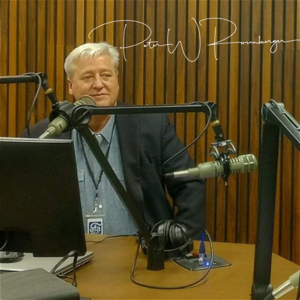
Welcome to Hope for the Caregiver. This is Peter Rosenberger, and this is the program for you as a family caregiver. We're so glad to be with you here today on American Family Radio. Hopeforthecaregiver.com. Hopeforthecaregiver.com.
We're in. The what I call the um Bermuda Triangle for caregivers. It's going into the holiday season. It's November, it's National Caregiver Awareness Month, but Thanksgiving, Christmas, New Year's, these are very difficult times for us as caregivers. We have to plan extra stuff.
There's a lot of sentimentality going on, there's a lot of urgency. and it can wear us down. I've told you my favorite holiday. is Arbor Day. You plant a tree, you water it, you say a prayer, you walk away, nobody gets hurt.
No parade, no gifts, no special meals, just You know, no drama. But the holidays can be rough. And if that is your experience, fret not. Help is on the way. In fact, not on the way.
Help us here. And that's what this program is all about: to help you stay strong and healthy as you take care of someone who is not even during the holidays. Hope. For the caregiver.com. Hopeforthecaregiver.com.
Rejoice with me for a moment. I did something this week, and I'm very proud of myself for this.
Now, some of you. May roll your eyes, some of you may laugh, some of you may look at me with scorn and derision. By the way, that's our word for the day: derision. Last week it was beleaguered. This week is derision.
Some of you may look at it and you say, Peter, what are you talking about? And I'm glad you asked. I leveled my refrigerator.
Now In the scheme of things that we do as caregivers, that may not seem like much to you, but let me give you the context here and tell you why I'm having this conversation. You know, we've been remodeling our cabin. We added this extra room, in addition, that was more handicap accessible. The foundation for that is solid, it is all level, it is wonderful. But the other part of the cabin that was built in the eighteen hundreds Well, not so much.
In fact, a level is one of the most useless tools you could use in this cabinet at times. I mean, it is my little kitchen. Is like a ship's galley.
Now I'm working on it. We're going to eventually hopefully remodel that, but that's way down the road. But it's functional now and I can do okay with it. And it's like a little ship's galley, and everything has to be in its right place. But the cabin kind of has a slope to it.
And it kind of leans a little bit. It's okay. It's not going to fall down on us. It's been here for a very long time. But my father-in-law remodeled this thing way too many times.
And we did ask him to give it a Christian burial and just blow this thing up, but he didn't want to do it. And so we decided to do what we did, and then we'll just eventually fix all of this as we have funds available. It's going to be a working project. I'll get it done. I could tell you exactly when this will all be done.
It'll all be done just hours, if not maybe just the day before Jesus comes back. That's when it'll be done. I'm certain of it. I'm just certain of it. But that's okay.
We're going to work on it. But this thing is not now, it's all handicap accessible. The entire place. We have two handicap accessible bathrooms now, which is really quite nice. The only room she cannot get into comfortably.
in her wheelchair is the laundry room. And Gracie said that she would make that allowance. She'd be willing to give up getting into the laundry room. If that's the case. And that's fine.
I do a lot of laundry. By the way, that's part of being a caregiver, I think, is doing a lot of laundry. But that's all right. That's good.
So the whole thing works, but it's not very level. And the refrigerator was.
Somehow, with all the construction going on, and some things got moved around, and this thing was just even worse than normal. But I was making do with it. simply because I had so many other things going on. And finally, I just said I'm going to do it right now, and I put everything aside.
Now that's not easy for me to do as a caregiver because I have if I get involved in a project like painting or anything like that, I can be called away at a moment's notice.
So it's very difficult to take on certain things, even doing this program, writing and all that kind of stuff. I did an article for AERP earlier this summer, and it started off with I write short sentences. Because I have to, because I could get called away at any moment. And I've literally had to tell Gracie at times: hold on, baby, I need my whole brain for just a moment. And that's a conversation we have regularly, but that's just part of being a caregiver, at least it is for me.
I don't know if it's that way for you. But it is that way for me.
So I knew that this was going to be involved. I would have to get out certain tools. I'd have to figure this thing out. You can't just adjust it like normal, like you would if it was in a regular house. You have to really be creative and fix some things.
And I did. And I was able to do this. I did get a level out. And the bubble is right there. It could be better.
But let's just say, and some of you may understand this, it's Montana level, okay? It is rural Montana level. And it works and it's much better. And it I got the job done.
Now Why am I telling you all this?
Well, again, I'm glad you asked. For so many of us as caregivers, and I think I can make the argument here, our life is like those old plate spinners that you saw on the variety shows back in the 60s and early 70s. Mrs. Producer, do we have any plate spinning music that we can put on right now to give the soundtrack of our life as a caregiver? Ah, yes, that is the soundtrack of my life as a caregiver.
Particularly from the hours of 7:30 in the morning till about 7:30 at night. It may slow down a little bit after that, but that is an accurate sound of what. is playing in my head when I serve as a caregiver. I don't know about you, but that's what's going on. Thank you, Ms.
Bruce. By the way, this is an example of the kind of top quality entertainment you're going to get on this show for caregivers. I don't know what the other people are doing for caregivers, but I know what this show, we're going to bring you top quality entertainment.
So, producer Pat is on our game today. Listen, that's what's going on with us.
So for me to stop. and take on a project. Like I've got to do some painting on some things. And I I don't mind painting in the sense of that I'm I'm pretty good at it. but it takes a long time for me to prep.
the thing and then once I'm going I don't want to stop And you know, put the paint away and take off gloves or whatever it is I'm going to do because it's it's involved. I want to get the task finished.
So it's when I take on a project, I have to make sure everything is settled for Gracie as best as I possibly can.
So, this refrigerator was not going to be a simple thing of taking a crescent wrench and adjusting the feet. I knew that there was going to be physics involved, there was going to be calculus. I may even have to check with the supercomputers to be able to level this thing in this old cabin. But I got it done. And if you put a level on it, you will at least look at me with a.
A pity smile, not with derision, our word for the day, but with a pity smile. They say, you know what, Peter, bless his heart, he got it done. But this is so important for us as caregivers. Here's the lesson I learned.
So much of what we do is not fixed. It's not settled. It's just constant maintenance. It's constant attending to. The laundry never ends.
We always have to cook meals and so forth, but I don't have to fix that refrigerator every day. And my question to you. Is there anything in your life right now that you could do that would be of one and done. That would be settled. It's annoying you.
It may be something very small. hanging a picture a certain way or something I don't know. Whatever it is. Is there something that you could accomplish to day? that you can look at And say, you know what?
I did it. It's not perfect, but it's done, and I don't have to do it again. I do not have to fix that refrigerator again to morrow. And if I have this play out the way I want it to, I won't have to fix that refrigerator again before I go to glory.
So that is my hope and prayer: that that refrigerator will stand the test of time. But I fixed it, it's done. I can't fix a lot of things in my life as a caregiver, but I fixed that. What about you? Is there something you can do today?
And if you don't have anybody to rejoice with you over it, go out to my website, hopeforthearegiver.com. There's a contact form right there. Send me a note and say, you know what, Peter, here's what I fixed today. I may even read these on the air, okay? Send me whatever you fix today, send it to me and let's just rejoice and clap together, okay?
Because that's what gives us hope. As a caregiver. This is Peter Rosenberger, Hopeforthecaregiver.com. Don't go away. We'll be right back.
Welcome back to Hope for the Caregiver. This is Peter Rosenberger. Glad to be with you. HopefortheCaregiver.com, HopefortheCaregiver.com, where I have quite a bit of information out there for you to help you along your journey as a caregiver. I've got video, I've got audio, I've got print, I've got blog posts, whatever, resources, whatever you need.
To help you stay strong and healthy as you take care of someone who is not. and healthy caregivers. Make better caregivers. I got a call last week from a friend who was struggling with her aging parents. Her mother's pretty sick.
Her father is elderly, he's in his nineties, and he's starting to show signs significant signs of cognitive impairments, but he's very, very, very stubborn. He's not wanting to Cooperate at all, and they're really in a bind. And he's not working with she and her brother to make some type of transition for her mother's safety. She's thinking about bringing her mother to live with her. Her father is just belligerently.
Um defiant.
Some of it is Age and senility, but other parts of it are not. I had a A pastor friend of mine said one time years ago when he was talking about somebody who was dealing with some impairment issues due to medication and so forth, he said, Well, there's sin in there somewhere.
Sometimes we just can't get to the sin because of impairments, whether it's alcoholism, addiction, or disease. But make no mistake, there's sin in there somewhere. But what do you do? How do you deal with this? And she was just at her wit's end.
And I get that. That's the purpose of this program: we all get at some point to our wit's end with this. And so one of the things we talked about it, just laid out some of the things that she's dealing with. And I've recommended A couple of logistic things. One of them is They're they're in a different state.
So I said, y get a um social worker. They have some legal stuff going to try to help corral in her dad so that he's not driving anymore. He's 93. He doesn't need to be driving and She knows this, the family knows this, but he's the only one that does it. And because there are several states away, it's very difficult.
to enforce that. They're away from everybody, and now he's kind of making all these decisions and they're not very good ones and her mother's health is in jeopardy. And and so I I recommended that they continue on with what they're doing. They won't have an answer from some of that till uh next month. But I said his primary or her primary care doctor.
May be able to give you a recommendation to a social worker, a master of social worker, MSW. A licensed clinical social worker is a counselor, and they can help too. But a social worker may be able to help with some of the logistics there in that community of what can be done. Extricate yourself from being the heavy hand of this. because you're not going to be able to do it.
And let Greater authorities than you do this. if possible.
Now, sometimes it has to be this way, but if possible, extricate yourself from this and let. other authorities get involved. And they're working on doing that. We're going to find out. I'll give you an update if I have it.
And That's one of the things. But... she goes back to the Scripture, Honor your mother and father. That thy days may be long in the land which the Lord gives you, which is one of the ten commandments. And that one's been so drilled into our Consciousness that we are driven by that particular decree.
But we're not using reason with it. Let me 'splain, as Ricky said to Lucy, Honouring your father and mother does not mean honoring the impairment. Sin And disease don't get a vote.
Okay? They just don't. They do not get a vote. when it comes to certain things such as driving the car. That means you're putting a weapon in someone's hands.
And he may be belligerent now about wanting to drive, but if he hits somebody, and kills them. Then what's going to happen? Or injured some Now, let me ask you a question. A ninety three year old man who's showing some type of cognitive impairment. even slight.
What do you think they odds are that he's going to get into a car wreck. have some type of mishap behind the wheel. How do you think his reaction time is? And he's taking his wife to and from medical appointments or the pharmacy or whatever, and she's in there with him. How do you think this is going to turn out?
Well, I think we all know that. But if you say, well, I got to honor him, so I got to let him do what he's going to do. Is that what honoring looks like? Is that what honoring your mother and father looks like? or do you step in and protect them even against their own decisions that are guided by sin or disease?
If impairment is guiding their decisions, How are we honoring them to let the impairment guide their decisions. You follow?
Now they may get mad and there may be blowback. And there often is. But honouring them does not mean capitulating to them. I know plenty of people. who have had a father who was a raging alcoholic, When they didn't want to say anything, they didn't want to do anything, because they had to honor their father.
and that was used against them, and that was used to manipulate them. I see nowhere in Scripture. where someone is required to honor alcoholism. Addiction. In fact, if you will go back to Genesis, Chapter 9, verse 20 through 27.
And what happens is that Noah. got drunk. He began to be a man of the soil, Scripture says, and he planted a vineyard. He drank of the wine and became drunk and lay uncovered in his tent. And Ham.
The father of Canaan saw the nakedness of his father and told his two brothers outside, then Shem and Japeth. Took a garment, laid it on both their shoulders, and walked backward and covered the nakedness of their father. Their faces were turned backward, they did not see their father's nakedness. All right, so why am I reading this?
Well, I'm. I'll tell you. the language implies more than just accidentally noticing. for him. In Hebrew, the word is ra urva.
I don't know if I'm saying that properly. I have to get some experts to tell me that. But he saw nakedness. It carries a connotation of lingering or exposing rather than simply witnessing. And many scholars believe that Ham treated his father's.
Vulnerability with mockery or scorn. He didn't protect Noah's dignity, he broadcasted it, his shame. And now, Shem and Japeth, they responded differently. They walked backwards. They covered their father with a cloak.
They turned their face away. They acted with reverence and restraint, deliberately protecting Noah's dignity even in his failure. And here's where this comes here for us. For family caregivers, this story strikes home in ways that most people overlook. When a parent or loved one becomes impaired, physically, cognitively, or emotionally, we We often Are privy to their most embarrassing moments, invulnerable moments.
We see them unclothed, unfiltered, diminished, and it can be very, very distressing and disturbing at times. And in those moments, the temptation to be complaining about it, resentful, f vent our frustrations or or you know kind of blanch at it Um that that's where we struggle. But the example of Shem and Japeth reminds us that true honor doesn't depend on the other person's strength or dignity. It flows. from our reverence for God.
They walt backwards. And that's what we caregivers do sometimes. We have to walk backwards. We carry a cloak and walk backwards. Not because they did it right, not because we're excusing the behavior, not because we're trying to capitulate to the behavior or in any way.
it further or enable that behavior. but because we're going to protect them. Even from their own foolishness. Noah got drunk.
Now by the way, he cursed not him, he cursed him's son, Canaan. for doing this. That's how serious this was.
Sometimes Honoring our parents. means stepping back emotionally, sometimes physically, Walking backwards, if you will.
so that we can care wisely. And sometimes it means protecting their dignity when they can no longer protect it themselves. Regardless, it always reflects an inner posture of reverence before God.
So if you've got a father who is acting contrary and belligerent and all these kinds of things, you're not there to grapple with his behavior. You're there to protect. And that may mean Walking backwards. It may mean calling a social worker to help guide this so that. that he doesn't get hurt or hurt someone else.
When a caregiver does this. They're clothing their parent, if you will. They're shielding them from something horrific at times.
Sometimes it's just embarrassment, other times it's more dire. like a car accident. But they're doing this as unto God. That's the point of this. And that's what we have to do.
You're not honoring... the behavior. Noah's sons did not honor No one getting drunk and getting laying there naked, passed out. And by the way, that was before the Ten Commandments were given, so they knew this. in in in their hearts.
That shows the kind of men they were. They were reflecting God's law before they had God's law. But they knew this. They weren't honoring the fact that their dad made a mistake. They were protecting him.
They were protecting him. whereas Ham was mocking him. Basically, from what I can tell, most scholars do think he was being scornful, making fun of the old man. Yeah, look at that. You know, kind of thing.
But that doesn't honour God. And we will all see someone we love in that kind of state. And we're we have a responsibility to protect them. as unto God. we may all get to that place.
And we would want some one to do that for us as well.
So, if you found that you woke up today and you're struggling with that issue of honoring your father, but your father was a raging alcoholic, your father was an abuser, your father was this, or your father is this now. Understand, there are ways that you can do this. It may be Kind of weird to some people. You may feel like you're walking backwards carrying a blanket to cover his shame. to cover his embarrassment, to protect him from his own foolish decisions.
This friend of mine may have to call authorities to get involved. because the man does not need to be driving, particularly with a disabled wife. and he's ninety three, and he's having cognitive impairments. But that doesn't mean that she has to mock him or even wrangle with him or argue back and forth.
Sometimes it's done with tears. I bet you Noah's sons were grieving over that. They were just like, oh, dad. But they did it to love him and to care for him, as unto God. And that is our call as caregivers.
As unto God, because let me tell you something, the first act of grace that he did was to clothe Adam and Eve. He covered us in our shame and our nakedness. And on the cross, He was naked, stripped naked. and the shame and the curse of the cross and he did that for us. And that gives hope.
to this caregiver. We truly have a Savior who understands, don't we? This is Peter Rosenberg and this is Hope for the Caregiver. HopefortheCaregiver.com. We'll be right back.
Welcome back to Hope for the Caregiver. This is Peter Rosenberger. Glad to be with you here on American Family Radio. HopefortheCaregiver.com. Hope for the caregiver.
If you want to weigh in on your thoughts, there's a contact form on there. I'd love for you to check it out. Send me a note. I try to respond back as best as I can, but I do. I really do try.
And I'd love to hear from you. HopefortheCaregiver.com. I was cleaning the windows. earlier this week. I know.
First, I've leveled the refrigerator, now I'm cleaning windows. I am the model of domestic. Engineering. You should see me in the laundry.
So, but I was cleaning the windows. We have um okay. We got the new edition. And when I First, talk to the contractor. I said, I have three things that we want to accomplish here.
for this new edition for Gracie. Accessibility? Of course. Space, absolutely, because we've been kind of cramped. I mean, it's when you have a wheelchair, it gets very cramped.
You know this, I know this, but sometimes you have to kind of lay it all out. And and I spent a lot of time with that to make sure her wheelchair did not get encroached anywhere. Space. Accessibility, but I wanted windows. I said we need to have big windows.
We live 6,000 feet up. going up into the forest behind us, and the peak is ten thousand up there. But we look at this massive valley in front of us, a huge expanse. And on a clear day, you could see the peaks down, way down south of the valley towards West Yellowstone. Montana and those peaks I think are about 50 miles away.
So it's a pretty amazing view.
Now, why is this important?
Well, yeah, we want to have a view. You always want to have a nice view. That's always nice. We were in the hospital this year and Gracie looked at a brick wall for three months. I mean, that was pretty pretty grisly.
But Gracie can't get out very much like she used to.
So I thought I'm going to bring the view. to her. I'm going to bring out To her.
So that she does not feel In any way, claustrophobic or small or contained, but she's got this massive room that she wakes up to every day. On a cold morning, I'll have a fire going in it for her, and she can look out those windows and see. the magnificence of God's creation. We got a full moon this week. And so at night she could see the full moon through the windows.
Just laying there in bed, you just look up and see the moon and the stars and everything else. And we'll talk about that more in the next block when we do our hymn of the week. But I I I I I wanted those windows to be there.
Well, they're very nice windows. They are They're they're very good windows. And they're beautiful. And they're big. I mean, they're they're very big windows.
and there's three sets of them.
So you got way up top. And then you got the big ones in the middle, and then you got the smaller ones down at the bottom that open up so you can let air flow. But they had a lot of dust on them. All this construction, everything else. And the window is still a great window.
But the view, the purpose of it, is obscured.
So I I I what good is it? What are we accomplishing here?
So I grabbed a squeegee and I went to work. It's one on a long pole, and I just. just wiping it down and getting it done and and You you see the clarity immediately when you clean a window. It's really you don't realize how poorly your vision has been until you clean it. And maybe that's the way it is for us as caregivers.
We we carry so much grime that it builds up before we know it. We the resentment, the fear, the exhaustion, and the And then and the constant pressures that we have. Can cloud the heart. It obscures the view. We still function, we still show up, we still love, but the.
the purpose that God put us, the light he intends to shine through us. Uh it gets kind of dimmed. by the debris. And sometimes It's time to let God wash the window. You know?
Let him clear away what is collected. It doesn't come with a fire hose. You know, I didn't get a big fire hose out there to do this on these windows. I got some, you know, Windex and a Squeegee. Created me a clean heart, O God.
Renew a right spirit within me. Psalm fifty-one. David prayed that. long before any of us were caregivers. But he saw that he was not clean.
And He saw that He saw filthiness. Those windows were not meant to draw attention to themselves. They were meant. to allow Gracie to see. The magnificence of God's creation And she can't clean 'em.
So she's limited. to look out windows that have dust marks and are covered up. With all the sawdust that's been going on around here and everything else, I'd clean the inside of them. But the outside wasn't very clean. I had to get out there and do that.
And I'm still not quite finished. There's some spots I've got to go back and do, and it's a little bit more detailed.
Now, once we get cold weather here, we're not going to have a lot of the dust. The snow will come and it'll be snow on the ground till maybe April. We'll not have to worry about that too much. And the air is so clear out here in the wintertime. And I want her to have the absolute best view possible.
But I want. everybody that I engage with to have that best view. If they look at me and all they see is a dusty window, then what have I done? What have I accomplished? What what what am I doing here?
They don't need to see me. You don't need to see me. You need to see God. And if I am in the way... Mm-hmm.
Then it's that's That's on me. Gracie did not need to get up every morning and look and see how big and expensive her windows were. She needed to see through the windows. to the magnificence of God's creation, so that her heart would be lifted. Those windows need to be clean.
What about you and I? It doesn't matter how good you and me, sorry, not you and I, you and me. If I'd known I was going to be a writer, I would have paid a whole lot more attention and. At school, but you know, that's why I graduated. Thank you, Laudie.
But what about you and me? It doesn't matter how good we are as caregivers. if all people see is resentment, Bitterness Fear. Anxiety. and they're not seeing the tremendous work of grace in our life.
And I'm not trying to put pressure on you to say, okay, you got to be better at this. I think that's the whole point, that we can't be better. David didn't say, Lord, I'm going to get myself washed up. And I'll get back to you. He recognized that he couldn't do it.
There's a great scene in C.S. Lewis, The Chronicles of Darnia, The Voyage of the Dawn Treader. And there was this young boy named Eustace, Eustace Scrubb. And the way C.S. Lewis introduced himself, he said his name was Eustace Scrubb, Eustace Scrubb, and he deserved the name.
It was just a terrible name. You know, Charles Dickens had a great way of picking out names for people like Ebenezer Scrooge and Fezziwick and all that kind of stuff.
Well, C.S. Lewis picked out some great names too: Eustace Scrubb. And they went to this enchanted island in this book, The Voyage of the Dawn Treader, and there was a treasure trove. And he put on a bracelet, but he didn't realize that it belonged. It was a magic treasure trove, and it turned him into a dragon.
And it basically cursed him and turned him into a dragon. And he tried to fit in with everybody else as a dragon. They recognized that they finally were able to figure out that Eustace had become a dragon. And but he couldn't go with it when the ship was ready to leave. He couldn't fit on the ship, and he was just distraught.
He's going to be left all alone. And then one morning he appears as a little boy. To his cousins, and they said, What happened? And he told them the story that he met the great lion. who was Aslan, who was the Christ figure in this.
And When he saw the light, he realized he had to get this. dra he was dressed as he was a dragon not dressed as a dragon, he had become a dragon, he couldn't get it off him, and the lion made motion that his his skin had to come off like a snake would shed its skin. And so he tried to dig and peel off his skin and and he did, and he was so glad that he looked down, he was still a dragon.
So he did it even harder and it hurt. as he peeled it off, but he's still a dragon. And then Haslan communicated to him that, no, I'm going to have to do this. And Lewis writes this beautifully. Aslan never said a word, he just communicated there.
It was almost like this unspoken thought that went, No, you can't do this on your own. And there's this beautiful little pool there, and he wanted to get in the pool because he knew it eased the pain of his arm. That bracelet that he had put on when he was a boy had was digging into his flesh as a dragon. And he wanted that refreshment that that pool offered. That pool was grace.
It was a beautiful metaphor for grace. And he wanted to get in there, but he couldn't do that till he got rid of the dragon skin and he couldn't do it on his own. And finally, Aslan reached his claws into him and peeled it off. And he said it hurt so terribly. And afterwards he was he was free of it and he was able to get into that pool and it felt so delicious.
So comforting. We can't claim. our own windows. Did you know that? Not by ourselves, we can't.
We're always going to get it wrong. We're always going to streak it. We're always going to you know, miss spots and everything else. But we have one who washes us clean. Foul I to the fountain fly.
Wash me, Saviour, lest I die. as the hymn writer said in Rock of Ages. Did we do that as one of our hymns? I have to go back and look and see. I can't remember because that's a great one if we have it.
So, what does all this look like? Why am I telling you all this? Because I saw this while I was washing windows. Those windows are no good to Gracie if she can't see out of 'em. If she can't see what God has for her, Through them, then what good are they?
They're walls at that point. I am no good. To Gracie, If I am filled with Angst. bitterness, resentment, fear, All of those things. How?
Can she see Christ? if all those things are obfuscating the view. She has an exceptional view here at our home. It's a view that is just you have to see it to believe it. It is amazing.
But she won't see it. If the windows are dirty. The question I have to ask myself is: Does she have an amazing view of Christ in me? More glorious than this valley that she looks out at. Does she have that?
when she sees me. Or does she see All the things that obfuscate it. That's a sobering thought, and it's too much for me to bear. I can't do this on my own. There is no way.
So how'd What what am I to do? You run to Christ. you run to Christ. Helpless, look to Thee for grace Foul I to the fountain fly, Wash me, Saviour, o'er I die. There is a fountain filled with blood.
Drawn from Emmanuel's vein, and sinners plunged beneath that flood, lose all their guilty what? Say it with me, all their guilty stain. Do you hear the gospel in this? Do you hear the great news for us as caregivers? That we cannot do this on our own.
But when we go to Christ The view becomes spectacular because people see the redemptive work of God. Keith Green said it best. And you ought to hear Gracie's version of it when he said, my one and only goal is his image in my soul. And that is hope for this caregiver. This is Peter Rosenberger.
We'll be right back. Welcome back to Hope for the Caregiver. This is Peter Rosenberger. This is the program for you as a family caregiver. I am so thrilled to be with you.
HopefortheCaregiver.com. HopefortheCaregiver.com. We're continuing our series of hymns that every caregiver ought to know And let me step over here to the caregiver keyboard. Uh we had a full moon this week. And out here, it just lights up.
I mean, it's like daylight. out here in Montana when this thing is I mean it is so bright And we have this massive valley that we look out over. And then, of course, we put big, big windows in the house. And you can watch it rise up over the mountains and it just arcs across this entire sky. And by the way, they call it big sky for a reason.
And it is a big sky, and so it the moon is just so full, and it just really brought to mind this hymn, Fairest Lord Jesus.
Now, there have been stories that this hymn was sung by the Crusaders on their march to the Holy Land.
Well, that sounds dramatic, but. History doesn't support that. It doesn't show up really until 1677. and a German hymnal. And the tune came even later from a Silesian folk music.
But the text and the music was not paired. for some time and then They they got matched up, and then that's the hymn that we know. Uh I I told you all a while back, I was quoting this um Seminary professor over in Holland that I had heard about. I was listening to a pastor, and it was his professor. and he said good theology is always accompanied by a doxology.
The more we Understand who God is, what scripture really says, that we just erupt into praise. You know, you see this in the writings, particularly of Paul and Peter. They would just erupt into praise in the middle of a sentence when they're saying these things. And I look at this hymn as a doxology. It starts with creation, but it doesn't end there: mountains, meadows, everything else, then the full moon.
All of it's beautiful, but the hymn keeps lifting our eyes higher until we land on Christ Himself. Let's go to the caregiver keyboard.
Now this one If you I've been in churches where they kind of played it pretty stiff, you know Lord G. Yeah. You know, I'm not gonna do that. Um I like to throw in a little bit more lush chords with it. I'll explain to you what I'm doing.
It may be a little technical musically for some of you, but there are a lot of people that listen to this program who play the piano at church and they're always looking for ways to play it. Better and do arrangements, and I hope this helps a little bit. But this hymn right here, take your time with it. We're not in a hurry. It's a worship Him.
It's a doxology. It's a worship, a hymn of praise. Pharis, Lord Jesus. Jesus. And then I do a little Gershwin thing here.
Right. Ruler. Love on day children. Oh thou of God. Amen.
The soul. The will I change. Thee will I honor Thou, my soul's glory joy and this is by the way for those of you musically adept here Mm-hmm. That note right there? That's an F in the key of E flat, and I'm throwing that in as a ninth.
Some would call it a second, but it's really a ninth. and it just adds a little bit more warmth to the cord. Four. Here are the men. But fear still.
The woodland robed in the blue. Blooming garb of spring.
Now, you think about how beautiful all of nature is. Think about the most beautiful place you've ever seen in nature. But then this hymn says Yeah. Jesus is fair. Jesus is pure.
Who makes the world flow? To Um we'll see.
Now that's us. We're woeful hearts. We're caregivers. We have woeful hearts. We have woe.
Woe is unto us sometimes. We have woe. And yet Jesus makes the woeful heart to sing. Domini, can't you just feel that in your heart when you hear these lyrics? And then here's that verse that made me think of it for this week because of the moonlight.
Fair is the sun. Shah. Fairer still The moon. And all the tween. Twinkling stars.
Jesus shines brighter Jesus shines purer than all the angels heard what a lyric what a lyric I'm gonna take it down just a little bit because my voice is not getting up there I gotta get Gracie singing these things she loves this hymn Beautiful sage. Lord of all nations, Son of God and Son of Man, Son of God and Son of Man, and then do this diminished chord right here: Glory and Lord Praise and Ration Now and forevermore. I just, I just love that. Yeah. Glory and all praise and origin now and forevermore.
I just love this hymn. I truly love this hymn. And I could play it just forever. I never get tired of it. And I do throw in those diminished chords.
Pause for a moment. If you're not interested in music theory, just don't listen to this part. But when you get this part of, I'm going up to the. The three chord, the diminished three chord, glory, and oh that's a flat flat nine, A7 flat nine. Oh no.
Uh And then you go to the minor seven, okay?
So it just throws in some texture and some color. Because you want that right there. You want it just to wrap around you. And if you're playing this for your church, you want to lead them in worship. That's the whole point, is corporate worship.
Slow it down. We are in no hurry to get through this song. How much in a hurry are you to sing glory and honor and praise adoration? Come on, slow it down. It's okay.
And if the church doesn't like it, they'll get over it.
Okay. Do it it's just they'll like it. Just don't worry about it. They'll like it because it's it's beautiful.
Okay, it's a beautiful hymn, and it needs to be sung with that kind of tenderness. Don't don't race through it. This is not a a pep rally song.
Okay, this is a psalm that every caregiver ought to know, and we, like I said, were filled with woe. and he causes the woeful heart to sing. It lifts our eyes. Everything I do on this program, everything I write in my books, every article I write. Is always about the same thing.
Knowing that we caregivers live with hard, hard realities. Pain, fear, exhaustion, re responsibilities that that have never taken a day off. And we need something that pulls our gaze up. Lift up your heads.
Well, what does that? What helps us see a higher view of God than the problems that are just right in front of us? And that's what this hymn helps me do. If you go through the Psalms, that's what they are. Bless the Lord, oh my soul, and all that is within me.
Bless His holy name. Tried singing that hymn. You know, the old Andre Kraussa, what is it? What's the law? Yeah.
Remember that one? We'll do that another time. But try singing that. Wow, having a woeful heart Watch what happens to you. Try singing these hymns.
So when you're singing, beautiful Savior, Lord of the Nations, Son of God, and Son of Man. Glory and honor, praise adoration forever be love. I mean, it just. It redirects everything about us. And so that's what I do when I write all these things.
I'm trying to help lift my eyes up and your eyes up. And I think that if you're a pianist at your church, that is your responsibility. Lift the congregation's eyes and hearts up to our Savior. That when we worship, our God inhabits praise as the only Uh When we worship, our God inhabits praise. You remember that song that the Imperials did?
Praise the Lord, praise the inhabitants. He can work through those who praise and praise the Lord, for our God inhabits praise. Let's praise him. Let's praise him with a great doxology. And that's what this hymn is to me.
And I'm grateful to be able to share it with you in this series. We're out of time, we've got to go. Thank you for the opportunity to spend some time with you. Go out to standingwithhope.com. Slash giving and help us do more of this.
If you're enjoying what you're hearing, help us do more at stadywithhope.com slash giving. This is Peter Rosenberger. We'll see you next time. Uh Gracie, when you envisioned doing a prosthetic limb outreach, did you ever think? The inmates would help you do that.
Not in a million years. What does it do? I would have ever thought about that. When you go to the facility run by Core Civic and you see the faces of these inmates that are working on prosthetic limbs that you have helped collect from all over the country that you put out the plea for. and they're disassembling.
You see all these legs, like what you have, your own prosthetic legs. And arms, too. And arms. When you see all this, what does that do to you? Makes me cry.
Because I see the smiles on their faces and I know. I know what it is to be locked someplace where you can't get out without somebody else allowing you to get out. Of course, being in the hospital so much and so long. When I go in there, and I always get the same thing every time that these men are so glad that they get to be doing, as one man said, something good finally with my hands. Did you know before you became an amputee that?
Parts of prosthetic limbs could be recycled? No, I had no idea. I thought we were still in the. 1800s and 1700s. I mean, you know, I thought of peg leg, I thought of wooden legs.
I never thought of. Titanium and carbon legs and flex feet and C legs and all that. I never thought about that. I had no idea.
Now that you've had an experience with it, what do you think of the faith-based programs that Core Civic offers? I think they're just absolutely... Awesome, and I think every prison out there. Have faith-based programs like this because return rate. of the men that are involved in this particular faith-based program.
and other ones like it, but I know about this one. Are just an amazingly low rate compared to those who don't have them. And I think that that says so much. That test so much. About just that doesn't have anything to do with me.
It just has something to do with God using somebody broken. to help other broken people be whole. If people want to donate a used prosthetic limbs, whether from a loved one who passed away, Yeah. You know, somebody who outgrew them, you've donated some of your own. What's the best place for them to do?
How do they do that? Where do they find it? Please go to stanningwithhope.com/slash recycle, and that's all it takes. It'll give you all the information on the what's that website again? StanningwithHope.com slash.
Slash recycle. Thanks, Chris. Take my hand. Leano. On me.
We will stay.