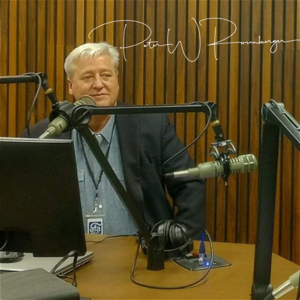
I'm Peter Rosenberger and after 40 years as a caregiver for my wife Gracie through a medical nightmare that has soared to 98 operations, both legs amputated, treatment by more than 100 doctors in 13 different hospitals and you can't imagine the medical bills.
Well I've learned some things. I learned every one of them the hard way. And in my new book, A Caregiver's Companion, it's a journal from that journey. It's filled with hard-won wisdom, practical help, and yes, an ample dose of humor. Because let's face it, if we don't laugh, we're going to blow a gasket.
And I've learned that I am no good to my wife if I'm fat, broke, and miserable. How does that help her? Healthy caregivers make better caregivers, and that's what this book is about: pointing my fellow caregivers to safety, to learn to live calmer, healthier, and dare I say it, even more joyful as a caregiver. It's one truth I've learned, punctuated by either a verse from scripture or a stanza from a hymn, and a space for you to share your own thoughts. While this is my journal from a 40-year journey, you can journal along with me in this book.
It's called A Caregiver's Companion, available August 20th from Fidelis Publishing, wherever books are sold. Learn more at peterrosenberger.com. Welcome to Hope for the Caregiver. This is Peter Rosenberger, and this is the program for you as a family caregiver. Glad to be with you today.
If you are one of the 65 million Americans right now who are serving as a caregiver, you're in the right place. And if you're not, you're still in the right place because if you love somebody you're going to most likely be a caregiver. If you live long enough, you're going to Need one.
So we all got some skin in this game, so... As we journey along it, How do you help a caregiver stay strong and healthy while taking care of someone who is not? That's the question. And that's where I come in. and I'm very glad to be able to share things I've learned over a lifetime.
to offer you a lifeline. as you do this. Healthy caregivers Make better caregivers, and that is the premise of this entire program and everything I do, the outreach we have at Hope for the Caregiver, which is a Ministry outreach of Standing With Hope, standingwithhope.com. Why do I do this? You know, I've asked that question a lot.
Would people get involved in any type of ministry? The first question I always ask is why? Why why are you doing this? What what's the passion behind this, for example, with my wife? you know, she wanted to launch a prosthetic limb outreach.
So we did. It's because she has two prosthetic limbs that she wears herself, and she sees the value of this, and she wants to. Provide those limbs to other people. That's what we do in our work through Standing with Hope. And she wants to point them to Christ.
It's that simple. This is how I survive. Uh by my friend Johnny Erickson Tata. started a ministry that provides wheelchairs to people. I mean You know, duh, that's not that's not a hard stretch to understand why she's doing this.
And why am I doing this for fellow caregivers? Because I understand how difficult the journey is. I understand how painful, how lonely, how isolating it is, how frustrating, how wearisome. How exasperating it is And I've wrestled with these things. The learning curve is pretty steep.
And my question to you is, Do you want to take the same kind of time I did? learn these things or would you like to glean from somebody who's already done it? And that's why I do the programming, and it's called Hope for the Caregiver. And you can go out and see all the things that I have available on the website, hopeforthecaregiver.com. Uh and and it's all there to put Yeah.
what I've learned. There's an old axiom I also live by. which is, you process the pain privately, you share the process publicly. Have you noticed that a lot of people, particularly in Christian ministry, tend to go out there and just share all the gory details of stuff? They just over-share, you know, like, oh, brother, I don't believe I'd have shared that, you know, kind of thing, you know, and just like, come on.
You know, do you really need to go down there? Are we there to talk about How lurid the tale are we there to talk about how great the Saviour? You all don't benefit from me sharing the difficulties of my life. You do benefit from me sharing what I've learned through them. And that's the difference.
And that's what I want us all to be able to do together because I'm going to learn what you've learned through these things. I want to hear that. And I appreciate all the letters and the notes and the calls that I get. from this audience that shares, hey, you know, I learned this, I learned that. And I'm I'm grateful to hear it because we we all Benefit when we help bear one another's burdens, like Paul talks about in Galatians.
You know, we're not there. I can't carry what you carry, you can't carry what I carry, but we can learn with each other and come alongside each other and exchange knowledge of what we've learned through this, what we've seen about the goodness of God and the mercies of God, what strengthens us. What does comfort me? You know, the scripture says, comfort one another with the same comfort. That you yourself have received from the God of all comfort.
Well, what does comfort mean? What comforts you? Is it money? Is it vacation? Is it time off?
Is that what really comforts you? And yes, that provides a little bit of help. But is that what comforts us? And that's where I drilled down on this program. What does Comfort.
Me. What does comfort you? When I play for funerals, and and I've done that for many, many years, I will ask the family, What what is a song that you want to hear? You know what they invariably say? This one.
Got a little preemptive here on the caregiver keyboard. We usually save that for the last block, but I Gave you a little teaser. That's not necessarily the song I'm doing at The Last Block. You'll have to hear the whole show to hear that. But when we do our hymn that every caregiver ought to know, the series we've been doing, but they want to hear it as well with my soul.
The vast majority of them. And there's only a few hymns that people can really, off the top of their head, when they're put on the spot. Recall now, if I start playing them, oh, yeah, I know that one. Oh, yeah, I know that one. But usually, people say, Well, amazing grace.
I remember one time I was asking this guy, he was going to come and work. And at the church, and that I was doing music at, and he wanted to come and play. And I said, Well, do you know any hymns? He said, Well, I know Amazing Grace. I said, okay, that's good.
Do you know any others? and he kind of hemmed and hauled and he said, Well, You know, of course I know Amazing Grace, and he said amazing grace three times. And I said, Buddy, you're going to have to learn a few more hymns. You know, there's no shame in not knowing. hundreds of hymns.
But if you're going to come and work at church leading music, you would think you'd have a little bit bigger repertoire of hymns. This this worship song mentality we've gotten into With people that you have the 7-11s, 7 words, 11 times, and you just repeat the same stuff, and it kind of really doesn't go anywhere. Or sometimes it's very artist-driven.
So the artist can make it sound good with the worship band, but can the congregation sing it? And the congregation can sing It Is Well With My Soul. They could sing it without a piano. There is nothing more glorious than to just to hear a thousand people singing It Is Well With My Soul. I mean, it is it is something to hear, or how great thou art or anything else, a cappella.
There's n it's it's phenomenal. Bolsters us, it comforts us, comes with strength, it gives us. Hope. and endurance and equips That's what comforts me.
Now, I don't know what comforts you, but that's what comforts me: is to give me endurance to be able to see higher. than I can see. bigger than I can see.
Something that is greater. than the miry pit sometimes we find ourselves as caregivers. The Heidelberg Catechism, you've heard me talk about this many times on this program. What is your only comfort in life and in death? And the answer is, this is a question one that I am not my own.
but belong body and soul, in life and in death, to my faithful Saviour Jesus Christ.
Now why is that comforting to us? That there is a God. And he knows me. And this is not happenstance. And this is not I'm not just put out to pasture somewhere.
He's not just dumping on us, that He has purpose, that He has plans. That He has fully paid for all my sins with His precious blood, and He has set me free from the tyranny of the Devil. He also watches over me in such a way that not a hair can fall from my head without the will of my Father in heaven. In fact, all things must work together for my salvation. And I ask you very bluntly, Christian, do you believe that?
Caregiver. Do you believe that? And if you do believe it, how would anyone know? What does that look like? And so, as we say these things, of what brings us comfort.
Of what strengthens us, what bolsters us. It's when we have our eyes lifted. You remember that little chorus we sang years and years ago?
Some of you maybe remember this. My glory and the lifter of my head. My glory and the lifter of my head. There's a reason that kind of sticks in my brain. This is what I need.
Gracie's legs aren't growing back. Gracie's body is not going to change this side of Glory. What strengthens me? What comforts me? What comforts her?
What bolsters us? And when people redirect my eyes. to the risen Savior. who knows my name And watches over me in such a way, as the Heidelberg Catechism says, that not a hair from my head can fall. without the will of my Father in heaven.
So for those of you who are bald, you're not bald by accident. That's comforting. But that's the whole point, is that he's sovereign over all of this. And that strengthens me, that bolsters me, that equips me. fortifies me.
Fortify, come forth, come with strength. to endure and that is hope. for this caregiver. This is Peter Rosenberg and we'll be right back. Welcome back to Hope for the Caregiver.
This is Peter Rosenberger. Glad to be with you as we continue our excursion into everything caregiver related. To strengthen and bolster and equip and fortify the family caregiver. And I'm bringing you a lifetime of experience to offer you a lifeline. As a fellow Caregiver 40 years.
40 years I've been doing this. You know, and I thought about this a lot, and allow me to take a moment of digression. May I take a moment of digression? Let us digress together. That's my word to day, digression.
This show, I look at some of the people that do caregiving shows. and people that do show for caregivers. and they have a common thread. They talk about self-care. They talk about things such as the Task of of caregiving.
And they'll offer stuff for people that are dealing with dementia and so forth. And there are some of you in this audience who are caring for somebody with dementia or Alzheimer's, Parkinson's, whatever, some type of impair neurological impairment. There are some of you here in this audience that are taking care of children with special needs, who have cognitive developmental disabilities, who have autism, who have Down syndrome, whatever. There are some of you in this audience who are dealing with alcoholics or addicts.
Some of you are dealing with mental illness. And some of you, like me, are dealing with the effects of extreme trauma. Paralysis or amputations and things such as that, and broken bones, and lots and lots and lots of surgeries in our case.
So I can't spend a whole program Every week, dealing with somebody with dementia, because that's going to cut out a vast majority of you all. But here's what Forty years has taught me. Every one of you all. are dealing with exasperation. Every one of you all.
are dealing with. Resentment. Weariness frustration. discouragement. All of those things.
And that's where I spend the time on this, so that opening monologue I did about what comforts you, that's why I'm doing this. We could talk about insurance companies and dealing with getting stuff paid for by insurance companies, but that's not really that complex. If you think about it, it's challenging, but it's not complex. The the every time I've won with an insurance company, you know how I've done it? I have convinced them that it's good business it's good business to do what I'm asking for them to do.
Because otherwise, it's going to have a dire consequence, and Gracie's going to end up in more expensive things. And you know what? That's why I've won.
So many insurance battles. I've had a few that we had to abandon, and a couple of them I just said, ah, it was too much effort. and we went a different direction. But for the most part I win Everyone. When I fight with doctors or nurses or whatever.
I have those confrontations with them that show I just had a friend of mine dealing with this right now with her father. and they made a mistake, and and it caught her off guard, but she she held her own. She did she did very well to confront them with it. And we could certainly talk about that. But that's not day in and day out.
And those are times, and if you want to write about that, want me to answer a question about that, feel free to write me. Go out to the website, PeterRosenberger.com. and you can contact me if you got a specific question. I'll try to write back or call.
Sometimes I call. People always get surprised when I call. They say, I can't believe you called me. And I'm like, well, why wouldn't I call you? I'm a caregiver.
I don't have time to sit down and write everything. I'm writing articles and taking care of Gracie, but I could call you while I'm doing the laundry. you know, if you don't mind listening to me do the dishes. In the background while I'm talking to you, I'll be glad to call if I can, and I'd try to do that. Because I'm interested in strengthening my fellow caregiver.
You know how many people called me? During all these decades. and b and w was able to speak to me in a way that I could understand. Try to imagine. I didn't have anybody like that.
Nobody knew what to say. It's not like people didn't want to, but they didn't know what to say. They didn't have the vocabulary. But I do. I speak fluent caregiver.
And so that's what this show is all about. That's what makes this different from any other show out there. I am just not that interested in telling people day in and day out how to give an injection. I mean, how hard is this?
Some of you give injections all the time.
Okay, you got it. It's a little queasy the first time. A little queasy maybe the second time, but yeah, after a while you're just like, okay, I got it. I got it. I can do it from here.
You know, I've pulled out drains from this summer from Gracie. That was a little queasy the first time. Second time I did it, it was still kind of, yeah, I didn't particularly like it, but I did it. How many of you had to empty a urine bag? You know?
Big deal. You got it? Yeah, okay. We didn't think that was something we wanted to do. It wasn't on Career Day in high school.
But you know, here we are. What do we do? You just do it. But it's those late night conversations with the ceiling fan. That's where I come in.
speak to my fellow caregivers. Because I understand. That level of discouragement. frustration, weariness. heartache.
anger. All of those things. And that's why this show is different. And why shouldn't the people of God be leading this conversation. I am not comfortable turning this over to the world.
What is the world going to say to me? Think about it. Who was out there? Go out there and do a search. Who is out there doing stuff for caregivers that you say, oh man, Peter really needs to hear this person?
Peter really needs to hear this person. They're going to talk about caregiving, and man, they're going to tell Peter things he doesn't even know. I mean, he just, you know, he needs to hear this. I always need to learn how to do tasks. I always need to learn the tips.
But if you're going to find something that I really need to hear, You're going to have to point me to Christ. Because that's all I need to hear. That's what strengthens me because it doesn't matter how good you are at the task if your heart is a train wreck. It doesn't matter how good you are at arguing with insurance companies if you are so bitter. Or so exasperated, or so.
discouraged that you can't think straight anymore. If your mind is a squirrel cage, what good is it to know all these skills? How do we de squirrel cage our minds? That's where scripture comes in. Because that's what Scripture speaks to.
Every single time. Um That's why I do what I do here. It is not because I have this Great. Repository of wisdom that I have on my own. It's what I have gleaned from the things of God.
That sustains me, that strengthens me, that settles me down. that calms me down. Does anybody besides me in this audience have any Trouble calming down? I mean, am I the only one? Do do none of you all get all wild and wacky and people look at you like, what is the matter with you?
I guess I'm the only one. All right, well, okay, I'm the only one. But this is how I deal with it. This is why I do the hymns. This is why I go to the piano.
This is why I go to scripture. This is why I do all these things. Because if I am a miss How do I take care of Gracie? It doesn't matter how good I am. It doesn't matter how good I've been able to argue with insurance companies or doctors or whatever.
It doesn't matter. If I am just a hot mess, I can't sustain that. That cannot be sustained over forty years. And you're just going to have to take my word for it on that, unless you want to try doing it for 40 years and then get back to me. and see how that went.
That's why I do this show. Because this is what I've gleaned. This is what I've learned. This is what I have absorbed. When I've been able to sit down.
and ponder. Like we did the hymn, Praise to the Lord the Almighty. It's one of my all-time favorites. I did it weeks and weeks ago. You have to go back and listen to the archives.
And I'm not, I'm plowing through with my 30 hymns that every caregiver I know and that has morphed into 300. But that one line in there, ponder anew what the Almighty will do. I'm back in my studio. We've renovated our cabin and remodeled, built this new addition for Gracie, and I'm back here and I've got on my wall where it says, ponder anew. what the Almighty can do.
I didn't take time to ponder. Do you take time to ponder? Do you think on these things? Ponder A new Are you spending time just Processing it out. One of the things I've noticed, and I see this going on in our culture every day, and I watch the news and I see stuff, and I see the lack of critical thinking.
People don't think They just emote. They just react. I mean we got out last week they had the No Kings Day. We don't have a king, and we know we don't have a king, and the king didn't try to stop them from having a no-king's day. I mean, you know.
Think, people. Think come on do you not have anything better to do? These people have a lot of time. You know what I didn't see out there a lot? I didn't see a lot of people pushing wheelchairs.
You know why? Caregivers ain't got time for stupid protest. We don't have that kind of time. We don't have time to go out there and rabble-rouse and create all kinds of. Nonsense like that.
Who's got that kind of time? These people need something to do. They're not thinking, they're not using their head, they're not pondering. Think about it. Think about it.
And that's why I brought out the Heidelberg Catechism last block there because I was thinking, okay, this is my only hope. What really strengthens me? If somebody gave you a pile of money right now, yes, you would be able to buy some help that would come along and help you. It would make some creature comforts in your life. It would solve a few of the logistics problem.
But in reality, is that going to change anything? Are you still dealing with somebody with dementia? Are you still dealing with somebody who has an addiction or. Mental illness, or somebody like in my case, Gracie's legs aren't going to grow back. They're in a check that Elon Musk couldn't write a check for that.
It's not gonna happen.
So what brings us comfort? If this is all there is in life, Then why should we stick around? D'ye see, that's what the world offers death with dignity. There's no dignity in death. But death has been defeated for us as believers.
This is not the end of the story. This is not how this is going to end for us. Gracie will walk and not grow weary. She'll run and not grow faint. She will mount up with wings like eagles.
She's going to do this. Because Scripture says she's going to do it. Those who wait upon the Lord. shall renew their strength. That is our comfort.
And Jesus said, I'm going to prepare a place for you. If it weren't so, I'd tell ye. And we have these tremendous accounts in Scripture. of what God has for his people. And the invitation is do we trust him?
Do we trust him with this heartache? Do we trust him with this physical ache, with this mental anguish that we deal with? Do we trust him with all of these things? It always distills down to that. And we can talk about giving injections or dealing with insurance companies or doctors or wheelchairs or whatever till the cows come home.
By the way, we just moved a bunch of cows, so they really do come home like that. I'll tell you about that later. But at the core of all of that is do. We trust him. Christian.
What? Do. You believe. That's something the world cannot deal with. But that's where I find hope.
this caregiver. This is Peter Rosenberg and we'll be right back. Welcome back to Hope for the Caregiver. This is Peter Rosenberger. Peter Rosenberger.
Peter Rosenberger dot If you want to go out and see all the different things that we have out there for you. as a caregiver by blog posts, articles that I've done, music. Video There's just so much resources, caregiver 911, books, everything. It's all out there. PeterRosenberger.com.
That's R-O-S-E-N-B-E-R-G-E-R. And we would love for you to check out all those resources available for you as a family caregiver. One of those is at my Substack page. I do Substack, which is an online newsletter that you can do, print, video, and so forth. And it's a really great way to be able to push stuff out.
To large groups of people. My Substack page is Caregiver.substack.com. You can reach it from my Peter Rosenberger site, but if you want to go straight to the Substack page, it's Caregiver.substack.com. And I put out a lot of different things out there.
Some of it is under a paid subscription, some of it's for free. But you have to just put your email in and we'll notify you with every new publication that comes out. I wrote an article this week that I wanted to talk a little bit about in this particular block. And remember, our word for today. Does anybody remember the word from the day?
It was just in the last block. Does anybody remember our word for the day is digression?
So I'm going to take a. Digression, but I digress. I put this article out there, and if you'll allow me just a moment of digression to just Update you one thing about our new house. It's a new addition that we built to the house, and this article is called Built for Grace. And you can see that out at my Substack page.
Because this audience, I think, will really understand why this is such a big deal with me. We've been. Retrofitting. for forty years.
Okay? The nature of disability. And after Gracie's first. First amputation. We had to widen doorways, build a ramp because we had steps going in the house, and she was.
not wearing a a prosthesis. a good bit of the time, particularly at the beginning. Eventually she got her first prosthetic leg and she was off to the races. and she was doing really well. We put in some few grab bars.
After the second amputation we Tore it out. Bathrooms, we worked hallways, added even more grab bars. We just did more and more stuff, built a ramp and all that kind of thing. Uh bigger ramp. because she was wheelchair bound more.
And I think we should have basically bought stock in grab bar companies. Maybe some of you will feel that same way. But as the surgeries mounted every new challenge sent us scrambling to reconfigure. what we had into something that might work for what she needed. I know this audience gets that.
Because it is just, we were just chasing our tails. And retrofitting is exhausting work. It's expensive? It's frustrating, and it's almost always a compromise. Have you noticed that?
You do the best you can, but it never quite gets it. But you chip away at it at what used to be. patching and adapting and sometimes using duct tape. And and you're trying to make It serve a new reality. It was never designed for.
And after decades of doing that, we decided to stop and we did something different. And that's what this new place that we've built is. It's not a retrofit. It's not a patch job on the past. is something new, built from the ground up, around Gracie.
And her needs. And I can't tell you how many hours I spent. with the contractor and the framers and so forth, the tile guy and where to put the faucets in the shower. And the way we build our shower is there's no door. There's no threshold, there's no door.
She can go in. She has a chair that she can get water on.
So she can take a shower in that, or if she wanted to transfer to a shower bench, she can do that. And then eventually she'll be able to walk in. On her prosthesis, sit down, take them off, take a shower, put her legs back on, and walk out. And I put grab bars, lots of grab bars. And you got them going into the shower, and then you got them coming out of the shower.
So if she's sitting down inside the shower, there's two other additional grab bars she could grab and pull up. But there's no door and there's no threshold.
So it all, you know, it doesn't go out in the hallway, it doesn't splatter everywhere, and we made it so that it wouldn't do this.
So she can get in, so she doesn't have to transfer awkwardly. Because that's what she was having to do. And you have to deal with the door and a wheelchair. I mean, you know. Most of you how many of you all struggle in the shower?
And let me give you, I'll give you a caregiver tip. We talked about that in the last block, but I'll give you a caregiver tip: 19-inch toilets. I'm just sayin', you'll thank me later. nineteen inch toilets. Because the low they they well, I don't know why they even made these low toilets.
because you can't get somebody up easily from there if they have mobility problems. and more grab bars. I mean, we got them, and we spend a lot of time. I sat there on the toilet. No, not what you think.
practicing with the grab bars. To make sure we built a small pony wall thereby so we could make sure it was all blocked in properly to hold full weight of a human being transferring so it wouldn't collapse on it. and th there's no impediments. To where she maneuvers. I posted a picture in the caregiver group, Hope for the Caregiver Group, of her walking in with her walker and they saw a rug and they were like, Oh, there's a rug there.
There's a rug. No, no. There is a 40-inch path on hardwood that she doesn't have to worry about. Even the floor registers are embedded in the wood.
Okay.
So there's nothing that's going to trip her up. And she can walk the entire length of the house without being tripped up. Why do I know that? Because we've had in the past, it's been a problem. And Gracie said, Well, we could do this.
And I said, No, no, no, we're not doing that. We're not going to. compromise at all. This is going to be your space to be able to do this.
Now she had not seen all this. I've been showing her pictures. She picked out the color of the room in the hospital. And she had not seen this, but I was down there with the framers and the contractors, and we had adjusting the mirror on the wall. sitting in the wheelchair, making sure that she could see herself in the mirror.
all those kinds of things. were were incredibly important. Every light switch, getting to the thermostat. Which has always been a battle for us because Gracie runs hot-natured, and I'm wearing a parka asking, you know, please, Mr. Scrooge, can we have another lump of coal on the fire?
you know, but she she is, um she's pretty hot natured. And she just runs hot. And people in chronic pain often do. You can hook up electrodes to Gracie and power our entire county out here in Montana. I'm convinced of this because she just runs hot.
And that's not menopause. That's just Grace. She's been that way since I've known her. Um but it's just She is, you know, this whole thing was just built around her. and when she came into the space for the first time I saw something I will never forget.
And it was the joy on her face as she realized she could move freely, No more workarounds. I made a closet For her, that is a wheel-in closet.
So she has full wheelchair turn radius in her closet. And and It works for her. And she said, she looked at me, she said, that's a big closet. And I said, well, you have a wheelchair. It's hard to maneuver a wheelchair.
You can't see your stuff. You don't know what you got. And I'm going to make her go through a lot of her clothes that she has not known what she's had, and we're going to be giving them away.
So don't tell her that. But it's that's going to be excruciating. But that's As I saw that look on her face, It was as i there was just joy there. And it was as if the house itself Just breathed out. and said, Welcome home.
I didn't want this to be this weird museum type thing where it's opulent and you're afraid to touch anything. I want it to just wrap around her. And it does. and one of the quiet joys of caregiving and and yeah, there are some, by the way Is seeing the look on your loved one's face when you've done something that meets them right where they are. You can't fix this disease.
or this injury. I I can't I can't undo this. This happened before I even showed up on the scene with her. two years before I met her. I I can't undo this.
But I can remove the obstacles that steal their dignity. and the independence. That's what you can do. And that matters. And after all these years I I I I I v I learned eventually you had to stop making it work and instead build around the life you have, not the one you lost.
This is the life we have. But you know, relationships are kinda like that. And they require retrofitting. Illness, age, hardship, they all change the blueprint we started with. We started with the blueprint for this remodel, and that blueprint got changed many times.
But Life changes the blueprint. And we can cling to what was There, one time, it once was, and we can wear ourselves out trying to force it to fit, or. We can accept. That this is what is. And start shaping life around that reality, and that's where love does its best work.
I've told people that the floor plan of our new home makes no sense to anyone else but us. And that's true. It does but it doesn't have to. It doesn't have to make any sense for anyone else. It works for us.
That's the beauty of it. What looks odd to someone else. for us is the design of freedom and grace. A lot of people probably wouldn't want a shower with no door. A lot of people hadn't tried to do it with a wheelchair.
Marriage caregiving, love itself, all of those things. They eventually require that kind of rebuilding. And Have you noticed they just don't follow the standard plan? The vows don't say for better or the way we planned it. Did anybody take when you when you got married did you take that vow and say for better or the way we're going to plan it.
You know. It's just for better or worse. And the worst always redraws the blueprints. But if you're willing to build again. A life you never expected can still become a home.
Even one with wider doorways and a whole lot of grab bars. Because that's what we have. You know, there's a great quote by Wendell Berry. He's still alive, I believe. Love changes.
And in changing It changes us. It is not always soft or easy But love that endures learns to build again with what remains. Isn't that a great quote? Love that endures learns to build again with what remains. And that's why I titled this article that you can find on my subsect page.
built for grace. And it is It has been an illuminating experience because, as I said last week on the program, it is only a tiny, tiny, tiny, tiny, tiny foretaste. of the love that our Saviour has for us, who is building something for us that we can't even imagine. I saw the look on Gracie's face. It was a look of wonder.
Can you imagine? the look on our faces. When we see what our Savior has done, that's what I was telling you in the last block. That's what gives us strength and hope to knowing that our Savior is doing so much more. than we can ever imagine.
Paul said it's not even worthy to be compared. And that's why we trust. And that's why this program is so different from any other caregiving program. Because I'm not going to waste your time on all the other nonsense. I'm going to tell you about this great Savior who sees you, who knows you, knows you by name, and is preparing something for you, and that is hope.
For this caregiver. This is Peter Rosenberger. This is Hope for the Caregiver. We'll be right back with our hymn of the week. Welcome back to Hope for the Caregiver.
This is Peter Rosenberger. This is the program for you as a family caregiver, PeterRosenberger.com. Come. PeterRosenberger.com. If you are new to the program, we've been doing a series called Hymns That Every Caregiver Ought to Know.
I started off with 30 hymns, then it's morphed into, I don't know, how many have we done now? We've been doing one every week. I don't know. We're probably up to number 20 or 25. We're going to go probably to 200 or 300.
Who knows?
So let's go over here to the caregiver keyboard. The caregiver keyboard. Hold on, let me have some caregiver coffee. Um All right, a couple of years ago well, not a couple of years ago. many years ago.
I was playing The Prelude at Church. This was big church in Nashville. The pastor had asked me to play as people were coming in and I played softly to hopefully settle people down and redirect their eyes to a time of worship, not just all meet and greet kind of thing in the sanctuary. And I'm up there playing and I'm playing hymns and those of you who know me know this is what I do. I play these hymns and I play them a little more expressively and I play them thoughtfully and I'm not in a hurry to get through them.
I play like somebody who's watched a woman suffer for four decades, which I have. And so I but it's affected by music. I mean, I can't just play, you know. Raucous stuff. I mean, I can.
I mean, I know how to play it, but why?
So I don't. But there was a gather grew up in a different denomination than we were there at the church. And he came up to me afterwards, an older man, and he said, You were playing invitation hymns at the prelude. And I thought that was kinda odd. Invitation hymns at the prelude.
He's played an invitation hymn and it's the beginning of the service. He was so used to having the service structured in such a way that it it kind of jarred him a bit for me to be playing an invitation hymn at the beginning of the service. I, however, come from the mindset that every hymn Is an invitation hymn? An invitation to worship, to repent, to reflect on the goodness of God, to praise Him. They're all invitation to Him.
The whole service is an invitation. I don't have a segmented invitation. It's all an invitation. And so when I play, that's the mindset that I bring to it. And this hymn today is no exception.
And there was a woman back in 1902. Her name was Adelaide Pollard. And she wanted to be a missionary in Africa. And she spent years preparing, teaching, praying. But when the time came, the funds.
never arrived. How many of you all, as a caregiver, can raise your hand and say the funds never arrived? That seems to be the story for so many of us. The funds never arrive.
Well, she was heartbroken. And she went to a prayer meeting, and she was questioning God's plan. There she heard an older woman praying. And the woman prayed, It really doesn't matter what you do with us, Lord, just have your own way with our lives.
Well, Adelaide Th those words just grabbed her. And she went home, opened her Bible to Jeremiah 18 Jeremiah 18 and you you may know that passage here. And that is where She read about the pottery. shaping and reshaping the clay As he saw fit. She just broke down.
She just broke down. And she wrote these words, Have thine own way, Lord Have thine own way. Thou art the potter I am the clay. Mold me and make me after thy will. While I am waiting, yielded and still, is there a better song?
for us. as caregivers. But capture Where we are, the frustration, the heartache, the sadness. And then a guy that wrote the lyrics of this, George Stebbins. He called this tune Adelaide.
And he wrote a lot for um I think um Um Dwight Moody, I think he did and he worked with Fannie Crosby. And he wrote this tune for it. She never got to Africa. But what a song she wrote. And it's an invitation here.
And the way I play it is. Again, I play things a little slower. I was talking to my friend Dale this week. She's the one that helped me lose all this weight that I, and she's cracking the whip to make sure I keep it off. But we were talking about.
Doing music for church services. And there's a place where you sing things a little more at a clip. For congregational singing, you can't have everything just be very soft and reflective. But A skilled musician's going to know the difference. And you know how to make a good hymn arrangement.
In case some of you all do that, maybe you're playing for your church or you're wanting to learn how to do this more. The way to make a good hem arrangement Do two things. My piano professor drilled this into me. You number one You love the text. You read the text, you study the text.
What is that text saying to you? And then you play it with one finger. Play the melody with one finger as expressively as you can with one finger, That's something that is torture for us as pianists. If you're playing one note at a time as a trumpet player, no big deal. But you know, but if you're doing it as a pianist, it makes our brains crazy.
But it's a great discipline to start learning how to do this and really understand the song. You see the difference? And then you can add stuff to it. And I add chords to it that have a lot of texture and richness. It's hard to sing harmony with what I play sometimes unless you know what I'm going to play.
And that's hard to do because sometimes I don't know what I'm going to play. But here's the hymn that that Adelaide Pollard wrote and George Stebbins set it to music. I'll have thine own way. Lord have done. Thou art the potter I am the clay Is there a better song for us as caregivers?
To just surrender this and say, Lord. I don't even know what to do. I just just have your own way, Lord. Mold me and me After thy will while I am waiting, yielded and still, and by the way. I don't take for granted that I'm waiting, yielded and still.
Nor do I take for granted that you are either. We're caregivers. It's hard for us to be yielded and still. and yet that is the invitation of this hymn to us. And I understand the concept of invitation hymn to people go forward at a church service.
I get that. I get that. But I have a different invitation hymn for you. I have an invitation for you to hold on to this text. For you to let it get into your DNA.
This is not an easy prayer for us. This is not an easy hymn for us to sing as caregivers, but it's an important one to do. for us and it Have thine own way, Lord. Which one of us want him to have? his way.
We want our way. This has me. That's by nature. But That's why this fourth verse is so awesome. And by the way, you could just hum this throughout the day.
Have thine own way, Lord. But listen to the text of this fourth verse. Have thine own way. Lord have thine own. Hold o'er my beat.
Absolute sway. What a text! Hold on. over my being absolute sway. Fill with thy spirit.
Spirit.
Now you ready for this? Until all shall see Christ only. Only one. Ways living in me What a text, what a text, what a text fill with thy spirit. Till all shall see Christ only one living room living in me now.
You got a song that you could sing. throughout the day, just hominent in those dark Watches of the night. When you think nobody is around And would you think that No hope is to be found. Christian. Sing this song.
Mold me and make Me after thy will while I am waiting yielded and still filled with thy spirit till all shall see Christ only once living in me That's our hymn this week of hymns that every caregiver ought to know. We're out of time and have to go. Thank you so much for spending the time with me today. I enjoy this. I hope you're enjoying this series we're doing on hymns that every caregiver ought to know.
Everything I do for caregivers is a ministry of standing with hope. And if you want to help us do more, standingwithhope.com slash giving. Standingwithhope.com/slash giving. This is Peter Rosenberg. And remember, healthy caregivers make better caregivers.
See you next time. Gracie, when you envisioned doing a prosthetic limb outreach, did you ever think? the inmates would help you do that. Not in a million years. What does it mean?
I would have ever thought about that. When you go to the facility run by Core Civic and you see the faces of these inmates that are working on prosthetic limbs that you have helped collect from all over the country that you put out the plea for. And they're disassembling. You see all these legs, like what you have, your own prosthetic legs. And arms, too.
And arms. When you see all this, what does that do to you? Makes me cry. Because I see the smiles on their faces and I know I know what it is to be locked someplace where you can't get out without somebody else allowing you to get out. Of course, being in the hospital so much and so long.
When I go in there, and I always get the same thing every time that these men are so glad that they get to be doing, as one man said, something good finally with my hands. Did you know before you became an amputee that? Parts of prosthetic limbs could be recycled? No, I had no idea. I had.
I thought we were still in the 1800s and 1700s. I mean, you know, I thought of peg leg, I thought of wooden legs. I never thought of. Titanium and carbon legs and flex feet and C legs and all that. I never thought about that.
I had no idea.
Now that you've had an experience with it, what do you think of the faith-based programs that Core Civic offers? I think they're just absolutely Awesome. And I think every prison out there. should have faith-based programs like this because The return rate. Of the men that are involved in this particular faith-based program.
and other ones like it but I know about this one. are is just an amazingly low rate. compared to those who don't have them. And I think that that says so much. That says so much.
About Just, that doesn't have anything to do with me. It just has something to do with God using somebody broken. to help other broken people. Yeah. Hold on.
If people want to donate a used prosthetic limb, whether from a loved one who passed away. Yeah. You know, somebody who outgrew them, you've donated some of your own. What's the best place for them to do? How do they do that?
Where do they find it? Please go to standingwithhope.com/slash recycle. And that's all it takes. It'll give you all the information on the What's that website again? DanningwithHope.com.
Slash recycle. Thanks, Chris. Take My hand. Lean on me, we will.