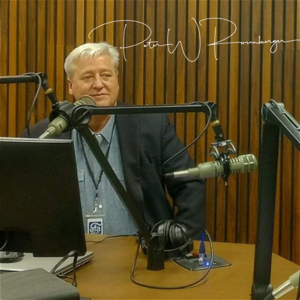
I'm Peter Rosenberger and after 40 years as a caregiver for my wife Gracie through a medical nightmare that has soared to 98 operations, both legs amputated, treatment by more than 100 doctors in 13 different hospitals and you can't imagine the medical bills.
Well I've learned some things. I learned every one of them the hard way. And in my new book, A Caregiver's Companion, it's a journal from that journey. It's filled with hard-won wisdom, practical help, and yes, an ample dose of humor. Because let's face it, if we don't laugh, we're going to blow a gasket.
And I've learned that I am no good to my wife if I'm fat, broke, and miserable. How does that help her? Healthy caregivers make better caregivers. And that's what this book is about, pointing my fellow caregivers to safety, to learn to live calmer, healthier, and dare I say it, even more joyful as a caregiver. It's one truth I've learned, punctuated by either a verse from scripture or a stanza from a hymn, and a space for you to share your own thoughts.
While this is my journal from a 40-year journey, you can journal along with me in this book. It's called A Caregiver's Companion, available August 20th from Fidelis Publishing, wherever books are sold. Learn more at peterrosenberger.com. Welcome to Hope for the Caregiver. This is Peter Rosenberger.
This is the program for you as a family caregiver. Glad to be with you today. HopefortheCaregiver.com. HopefortheCaregiver.com. I've got a special guest on the program today.
This is Carolyn Wheeler O'Byrne. She is from Northwest Alabama, Florence, Alabama. She has an amazing story and what God has done through this. And so I thought I would just let her tell it in her own words and welcome you to the program here. Carolyn, thank you so much for being a part of the program today.
Well, thank you. I'm very happy to be here. Take us back to how all of this started because you've had a rather dramatic journey. Take us back to the early days when you were there in Alabama, and all of a sudden, you found out something had happened with your daughter. Yes.
Well, we had a difficult pregnancy with her. She was the fourth child and about seventeen months old, when she was about seventeen months old. Finally, after begging doctors to help me figure out what was wrong with her. I had had her to the doctor that morning. That day at lunch.
And still that night deciding to take her on into the emergency room because. I knew something was wrong. When I got to the emergency room, they said she's fine. and I knew she wasn't fine. and I was terrified to even put her to bed.
So I just said, with all due respect, I'm staying until we figure this out.
So we did. What what what were the symptoms that caused you to Press forward like this. She had been of as a whiny child, but not in the spoiled, rotten kind of way, in a different kind of honey. On and off, she was happy sometimes, but then she would just get so Um frustrated and tired, That was one of her symptoms. Her legs We're blue, not.
crayon blue but blue Uh unusually blue. Um, the pedi I pointed that out to the pediatrician, and she said, Oh, that's just fat baby syndrome. 'Cause she was quite a chunk. But um At this particular point when it had gotten so bad, She had a cough. That just sounded horrible.
And you know, when you have that kind of cough where you just can't hardly. Take a breath between coughs. You just, you just lose all breath.
Well, it was that kind of cough.
Well, one of her siblings w had the crud and she was sick, and I totally see why the doctor would think Obviously this one's got a fever and this one's sick and this one's got a cough, but it was just different. It was just A different kind of cough. And it was just basically mother's intuition at this point. Absolutely. Yeah.
I mean, and against the face of every other, nobody else was agreeing with you. Nobody else saw what I was seeing. No one.
So even though I did really have one other child that was sick. When you know your kids. When you've got four. Maybe on your first one you feel a little Unsure, but when you got four kids, you kind of know what's normal and what's not normal. Um I had been through fevers and sicknesses and scarlet fever and strep throat and flu and.
the pukes and you name it for years.
So I knew What to expect on those types of things. But There was just something different. And when we got to the emergency room, that was. quite an eventful evening. It was mid-May.
And tornadoes and storms were everywhere. And I had never heard of code black, but I learned quickly what that was because the hospital was in code black, which means no one moves. The tornadoes were significant. And You stay put where you are.
So that's what was going on outside while I was inside trying to convince the medical team. Dive deeper unless find out what's wrong.
So by the next morning we were admitted into a room, thankfully Code Black had lifted. And the Pediatric cardiologist came in to say. Daisy has congestive heart failure. Um her ejection fraction is at thirteen percent. And if she lives long enough, she's going to need a new heart.
Well I didn't know. How old were you when this happened? She was seventeen months, so I was in my early thirties. That is a that is an incredibly young age to hear that kind of news. Yeah, I had zero experience with hospitalization.
Zero. I was Utterly in shock. What do you do when you have that? The only thing I could think of was at this time we were in the Huntsville Hospital. and we had lived in Nashville before.
And I had Connections at Vanderbilt. And the only thing I could think of was: we gotta get to Vanderbilt. We gotta get to Vanderbilt.
So it took them a few days to Get a Switch going on. And we and for those who are not in that area, Vanderbilt is a major teaching hospital with an outstanding children's hospital. You know, everything is, it's an amazing hospital. Gracie has had a lot of treatment there herself. And so.
I understand that rush there because that's a children's hospital and that's where you have all these the latest and greatest there. And so I can understand you wanting to get there. That was not met with excitement from the folks that you were dealing with at the time, was it? No, they really preferred me to stay there, but I insisted. Instead of Just transferring, I don't Remember all the details because it's been 20 years, but we actually took her home.
for a couple of days that we got out of the hospital on Friday. And weren't scheduled to go into Vanderbilt until Monday. And I thought. I'm bringing home a little time bomb. What's going to happen in between these days?
They did put her on. um some medication in those two days until we got to Vanderbilt. But that was a very scary thing in those two days to take her home. But we did go on to Vanderbilt Monday morning. And thankfully we had friends there that met me there and and went to the doctor's office with me and had other friends back home staying with the other kids.
But It was kind of like a doctor visit, an office visit. It wasn't even admitted. And the doctor said, Well, if she had this symptom and this symptom and this symptom, and I said, She has those symptoms, every single thing you're saying. She has.
So they decided to admit her that day. And Wow What a journey from there It was Things unimaginable.
Now they started to admit her, but they really weren't bought into the fact that there's something going on with her yet.
Well, I don't know. Is that a fair assessment? Maybe so. Maybe they didn't see how utterly Tragic. We were in the situation.
I don't know what Huntsville had talked to them about, but. When they finally did the testing, they were like, oh. Yeah. this is very serious. But I felt like I kind of felt like they didn't see the seriousness of it at the beginning.
But we did get in the hospital that very day.
So that's. what I knew needed to happen. And um Pretty soon. within one day they started taking action on things. They did a catheterization through her groin.
That was a moment that I just about lost all sanity of of them taking her from me to do that. Because I felt like maybe I wouldn't even see her again. After that moment, Um They decided that From that heart catheterization, it wasn't really her heart that was the problem. What had happened was, since her beginning of life, her immune system had somehow decided that her heart was the enemy.
So it had been Trying to get rid of her heart the whole time. Because of that, her circulatory system was extremely underdeveloped. Which is why, one of the reasons why her legs were blue, one of the reasons why she got tired and frustrated and didn't feel well. She just wanted to play in her little first walking self, you know, wanted to get up and play and run with the other kids, but she just couldn't.
So um when they tried to get an I V, Nothing worked. They literally tried from head to toe, had her strapped down, screaming bloody murder. trying to get an IV, and they couldn't. Then they decided to try a pick line in one of her arms. That failed.
They tried a pick line in the other arm. That failed. So they Put her in ICU and put in a central line in her chest. And that was their as you know very well, that was their access line.
So they decided to Give her by the way, I tell them with Gracie when they're trying to get lines and so forth and they come in and stick, and sometimes they tend to be a little bit cavalier. Oh, no, we don't do and I look at them, I say, We start charging after the second attempt. Yeah. Because she's hard to get up. A good stick on.
And I want them to know. And a lot of times I will. Call for the head sticker. I have found sometimes you have to go up the food chain to get somebody who is a little bit more experienced in this because not everybody can get a good stick. And clearly that was the case.
But going to a central line on a little baby is That's a big step. Yeah. It was. Um so they decided to try an experimental medicine. To see if that would stop her immune system completely, pretty much shock and kill her immune system.
and restart it. And it was a 14-day process. And in the first couple of days, I noticed these little tiny red dots on her body. And I called in the doctor, and she said, that's just contact dermatitis. And I thought, okay.
So Several hours later. I called her back in and I said, there's many, many, many more. She said that's just contact dermatitis.
So by that night Daisy started screaming. And her red dots started connecting. And she screamed for six and a half hours. before she finally stopped from excruciating pain and exhaustion. and she just laid in my lap silently.
and if I moved she would scream. and I called the nurse, and I said she's burning up. I I need you to come check. and her temperature was a hundred and six point eight.
So they were scurrying to find. cooling blankets and we're having a hard time with that. By mid midnight Mid, I don't know if it was midnight, but somewhere in the middle of the morning night. Um they decided to take her off that medicine Because it was obviously causing major problems.
So she stayed in that silent state for three days. if I didn't move, if I held her.
So I held her for three solid days, getting up about once a day to go to the bathroom. Because when I stirred or switched sides, you know, where you got to get a little bit comfortable from one side to the other. She would scream. Um what had happened was that chemical had fried her from the inside out. and all of a sudden her skin started falling off.
Um She people thought she was a burn victim. And she looked like a little cherub. If you can imagine the perfect. Ideal picture in your mind of this chunky baby with. Blonde curly hair.
That's exactly what she looked like. And in the process of her skin falling off as it started drying. It was about as thick as As a thin T-shirt. coming off. And I literally had to pull her scalp off.
through the ends of her curly little hair because It was so thick.
So that was quite. How long are you into this at this point? How many days? Um, well, three days of just laying there silently, unless I moved. Um About four or five days, she could start getting up and walk around.
Um and then her skin.
Well, her skin was solid 100% red, and then it just started. As it dried a little bit, It dried pretty quick, surprisingly. As it dried a little bit, that's when it started coming off. At this point, they were just doing tons of neurological testing to see what it did to her. They were doing liver testing.
They were testing the rest of her body, one test after the other, to see what damage this chemical had done. Um It was An unimaginable. thing that Some of it I just don't even remember until I start telling the story. Um Because of the shock that I went through and And some of it is worthy of forgetting. Yeah.
Many times they had to put her in a straitjacket. And that was. Absolutely horrible to stand there and watch her. Thankfully, I was. Kind yet adamant enough.
That Almost every single time she went into something, even the pick line, they let me go in. Excuse me.
So I was I was there. I did not want her to be anywhere that I wasn't there so that I could And they did learn that I didn't get in their way, but I would stay at her head and kiss her and. Rub her head and talk to her to actually try to help her cope. but try to help them be able to do whatever they needed to do.
So I'm grateful for that. I'm not saying that's what they're going to allow you to do these days. I don't know, but. I'm very grateful for oh I I I have uh I've kind of bullied my way into those places. And sometimes you have to do that.
I'm sorry to say it, but you do. And had you not She wouldn't have made it. Possibly not. I agree with that. And there's been times with Gracie.
Had I not been there and done what I did, that She wouldn't be alive today. And that's the nature. And I bet you, if I took a poll of everybody listed in this program that are any kind of caregiver for any length of time. We all have similar stories had we not been there. And so it took an enormous amount of assertiveness.
I mean, that I hate to say the cliché, but that mama bear in you kind of came out. I mean, you're not a mean person, and you're not going there and start throwing elbows, but. you have to be assertive and it's a little bit unnerving but it what is What's the consequence if you don't? You have to stand your ground. You've got to get feeling and you've got to get.
You've got a soft-spoken voice. I mean, you're a nice lady, a soft-spoken voice. You southern gal, you know, you've got all the all that. And that, but in moments like that, that has to be put on the shelf, and you turn into a warrior at that point. I've got a reputation of being a jerk, you know, but you don't.
I do, but you don't. And so they know when I say something, you know, and I, and I'm a guy too. And the system tends to be a little bit more misogynistic. I mean, have you found that to be the case? Yeah, but I feel like.
I mean, even Gracie says that to me all the time. She says, Look, I want to fight this battle. But I'm a woman and they're not going to listen to me. Which is a terrible indictment. Yeah.
But I'm just. I'm not here to I'm just calling balls and strikes. That's what it is. We've all seen it before. For many caregivers, it's very difficult to be disassertive, but you were left with no choice.
You had to be there.
Something is wrong. Her fever is 106. What's going on? She's got these splotches. This is not contact irritation here.
This is, no, there's something else going on. And you may not know the science, but you know your daughter. Right. And that's the difference. That's what I call caregiver authority.
And you wielded it, and she's alive.
Now, this has gone into now days. And now we're into Weeks. We're into weeks, yes. All right, then what happened? She started recovering from that.
She was able to get to go to the playroom, which she loved to do. And I felt like, okay. We're out of that. We're going to be okay. And then all of a sudden, she started throwing up.
So I called the nurse in and I said, She's throwing up, she feels warm. What's going on? And so they did some testing, and it just happened to be that the baby next door. Had Mercer?
So guess what? We had Marcia. Um it had gotten so It had the central line was the line that had gotten infected.
So she went straight into ICU and they put her under And That was the moment. That I didn't realize, 'cause the first time they put her in I C U it was just for the day.
So I didn't lose my room. But I I had no idea. I was clueless that when my child went in I C U they were going to not allow me to stay in that room any more. I didn't know that.
So I had weeks of my things, her things I had been dropped off because my band was needed for the kids at home. I wasn't leaving her anyway, so I wasn't really concerned about being there with no transportation until. I figured out that I had no place to go.
So thankfully that day A friend of mine who worked there found a cart and let me pile everything. Hi on that cart. and leave it in her office until I had arrangements. And an older couple that had been friends of ours that lives in Nashville, they've passed away since. They had an old eighties conversion band.
Do you remember in the eighties when everybody had a conversion band? Um it seemed like it yes, they had theirs still. I think it was the effect of the A-team, you know, that band that B.A. Barakis drove around, but that's dating me quite a bit. I remember I love that show.
But they brought their van and parked it in the parking lot, and that became my home. And Daisy was in I C U for over a week. They would come get my clothes once a week and wash them and bring me some snacks. and I would stay in the I see you Literally all day long. They really weren't crazy about you being in there.
There wasn't a bathroom available. You couldn't eat in there. There was one chair. If I remember correctly, I remember standing a lot. And about one or two o'clock in the morning, when I was about ready to pass out.
I would walk out. To the scary Nashville Vanderbilt parking lot and lock myself in that van and lay down and crash for a few hours. Of course, eat a snack before I lay down, eat a snack, bring a snack in my purse. 'Cause that's where my snacks were. 'Cause I wasn't allowed to eat in the ICC U room.
And then go back in first thing in the morning, just enough time. Have the rest to just make it through the day. And what I forgot to say when she was going through the experimental medication. They knew that she was going to have to have a blood transfusion through this process, but didn't tell me about it.
So when I found out she needed to have a blood transfusion, I said, wait. I want her to have my blood, if at all possible. Yes, I'm grateful for strangers' blood. I don't have a problem with that. But if she can have mine, wouldn't that be better?
So they weren't too happy about it, but they stopped the process long enough for me to go to the blood bank, give blood, and Within a few hours they found out that My blood was just trashed. I had so not taken care of me that my blood was. Not in good enough shape to help her, which is one of the things that I strongly, strongly speak about is. caregivers. You have to take care of you.
or you cannot take care of them. I've been saying that very thing for as long as I've been doing this program and I've been. Preaching that message, but I don't think I've ever had it. Driven home in quite the same way as that your blood actually suffered the consequences, and you couldn't even donate blood to your daughter. I cannot tell you how many times that phrase has been uttered about taking care of yourself, and we all say that, but you bring this home to a much different level when you say your blood was trashed.
That had to have been a big gut punch in a series of gut punches that you were having. Yeah, I was devastated 'cause Again, I was very grateful for Stranger's Blood, and that's what she ended up needing to get. Had she been able to have mine, what could be better than your own parents? blood, if it's a good match. Um, to me I don't think anything could be better.
But I I was very very saddened by that, but couldn't do anything about it, so fast forward back to I C U. she was just laying there. Lifeless, and I felt like this was probably. last time I was going to see her.
So that's why I've spent every single moment In there, that I possibly could. I wouldn't even have gone to lay down if I knew. that if I didn't I wasn't going to make it through the next day. But Surviving on very little sleep and snacks. Um And just prayer.
and faith. And I did a whole lot of Faith exercises. And My faith would not be what it is today had I not gone through that, although I'm not. Happy that I had to go through that. Yeah.
What kind of faith exercises did you do? Talking to God in my mind. And working toward knowing The Almighty knows. He has a plan. And Getting myself to the point that I.
Surrendered all. to be able to say, Lord, I want my baby. But if this is your will, I will accept it. I will accept whatever is your will, and I know. that it was for The good All things work together for good.
And I just had to get to that place in my mind. And that's how I survived. Working toward getting to that place in my mind where I could. completely surrender to God. I don't know exactly the steps that I did to do that, just prayer and working it out in my mind, knowing the truth.
Going back to the scriptures that I know, Going back to the faith that I Claim to have had before then, and now it was time to really see. Did I really have that faith that I thought I did before? It wasn't easy. You know, I've been asking myself this and fellow caregivers over these last several months. It's been a particularly difficult year for us.
But the the phrase that just keeps coming back to me is is Christian, what do you believe? Christian, what do you believe? And we ask ourselves: do we really believe this or not? And if we do believe it, then what is the implication of that belief? And it sounds like you were having that kind of moment there.
uh sleeping in a van Not down by the river, for those of you who are going to finish that sentence.
Sorry, I was a Matt Foley motivational speaker fan. Do you remember that? Do you remember that at all? I know. Chris Farley singing, I was sleeping in a van down by the river, but you weren't sleeping in a van down the rear.
You were sleeping in a van in the Vanderbilt parking lot, which, by the way, I would rather be down by the river than in the Vanderbilt parking lot. Because I've spent time in the Vanderbilt parking lot. You had that moment where you were. Saying to yourself, Christian, what do you believe? Yes.
And those are Watchman Nee calls that the dark night of the soul. When you are confronted with, you know, this is really happening. And what is my what does my faith tell me here? What was your response? I gave it to God.
And that's the only way I knew how to survive. I don't see. Help. People make it through these types of things without giving it to God. I really I don't know how I would have made it.
truthfully. She did start coming out of it. And we got back into a room. Out of Icu, that was a glorious day. A room with a fully functional bathroom and shower.
It's the little things, isn't it? Yes.
Our first room actually had a couch. It was wooden with a plastic. one inch cushion, but it was a couch. Uh the second room we were in. had a chair.
More importantly, it was a van. But it wasn't a van. but the window sill was bigger than the chair.
So I actually made myself a caught in the window sill. Because it was about four feet long and about Maybe. 18 inches to 2 feet wide. It was a nice little windowsill, and I could actually get vertical.
So that was Wait a minute. You could get vertical or horizontal? I mean, horizontal. I'm sorry. I could actually get horizontal.
How tall are you, Carolyn? I'm five five.
Okay, and you could get in the windowsill? Yes, I did. I slept better in the window sill than in that chair.
Now, you've done this. Flash forward now. All of this happened. Daisy lived. Daisy's gone on to live Daisy is now how old?
Daisy is twenty three. She will be twenty four in November. And she she lives a full life. She has certain limitations and certain guardrails, if you will. She has a job and she takes care of herself.
Yes.
And something else happened now because of that. You decided There are other people that may be struggling to sleep in a van in a hospital parking lot, and you did something about it. What did you do? For 20 years, I prayed, Lord, how can I help these people that are going through what I did? And 20 years later, It is called Daisy's Place.
I started a non-profit, and it's here in Florence, Alabama. I have a four bedroom house. that is fully furnished. Each bedroom has two twin beds. And we just opened last year.
I'm very excited to say. The kitchen is stocked full of food, just as it would be at your home. I don't come cook for you, but all you have to do is open the pantry, open the freezer. open underneath the the coffee bar and pick snacks or make a peanut butter and jelly sandwich or heat up a can of chili or chicken noodle soup or grab a pizza out of the freezer. Um we provide all linens, toiletries.
We have a washer and dryer, which is so very important to be able to get your clothes clean. And of course, we have bathrooms. We have two bathrooms. And it's very let's don't just let's just don't gloss over that. Of course, we have bathrooms.
You're not it's not a van in the parking lot at Vanderbilt. Yes, we provide every single thing that you would possibly need. We've actually gone beyond. I had one guest that. didn't have enough money to fill her minutes on her phone card.
And I'm not sure if ATT is supposed to do this or not, but I had her phone number and I marched into the ATT store and I said, Here's my situation. I need this phone number to have minutes. And they said, We're not sure if we can do that either, but they did it.
So I gave her a month of minutes. I've had a guest ride the ambulance with her mother. to the hospital, so sh obviously she didn't have a vehicle, she had the clothes on her back. She didn't find out about me. She she got there on a Sunday.
She found out about Daisy's place on Wednesday.
So she had been in the same clothes, since she got there.
So grabbed a gown of mine and I said it was it was night time 'cause she didn't contact me till Later in the day. and I grabbed one of my gowns and I said Get a shower Use my gown. I'll get it back whenever, and wash your clothes. And tomorrow we'll go into the clothes closet.
So I don't have room for housing clothing, extra clothing, but we have wonderful resources here in Florence that I have connections with. And I gave them a call and said, hey, we need some clothes. And they let her come in and get everything she needed: clothes. Hairbrush, hairbands, put up her hair for a week, and she ended up staying with me two weeks. and um got to meet her precious mother Her mother got they got to go home.
It was a good ending, and her mom just thanked me. Of course, the lady was my age in her fifties and her mother just thank me thank you for taking care of my baby Thank you so much for taking care of my baby while I was here.
So. People are so grateful. And When they find out that I understand, it even helps.
So it's it's my pleasure. It is Really and truly, my it is my gift to be able to do this, my pleasure. I can't imagine a better job. I know that everybody has their own gifts. But the gift that I have This is the best job I could ever have in the world.
So I'm able to Um pray with these people. talk to them. I have one guest that the mother had passed. She went home to Indiana, came back Indiana, came back for the funeral, and she said, I just have to talk to you again. I've got to see you again.
And I said, okay. She just wanted to sit at the table at Daisy's place and talk for a while. We got to talk about her mama. And It's not just about a place to stay. It is about a place to stay.
But it's not just about a place to stay. You need support. of all the times in your life that You need community and support. and help. It's when you are a caregiver.
Whether it's your mundane things of being a caregiver or whether it's the crisis situations like when your mom's in ICU. And I don't think unless you've been there that you realize. The need And if you're like me, if you say, Hey, Carolyn, what do you need? Is there anything I can do for you? No, I'm fine.
I'm fine. We're fine. No, I don't need anything. That is so not it. That is so not true.
But you don't, you feel. Like you got this. although you need that care, But you don't know how to ask for it. And if you do ask for it, you feel guilty for asking for it.
So, those of you that have been caregivers understand, but those of you who haven't, The question is not, what can I do for you? The question is, Hey. Um Do you have plenty of gas in your car? Has it had an oil change lately? Mm-hmm.
I'm at the grocery store. I'm going anyways. I'm driving right by your house. What can I pick up? Just give me a list.
Text it to me. I'm here right now. Like, give me a list. those types of things. And I just don't think people realize How hard it is as a caregiver to ask for help.
And accept that. What are some of the things you have found out about Daisy's house? Uh for example, you've got people that come in for One or two nights. two or three nights.
Sometimes you have people come in, stay for How long? What's the longest you've ever had anybody stay? November to July. And of course she went home to mow the grass and And switch out clothes. Of course, she didn't need to do laundry there, but because we have the laundry facility, but Get the mail, uh take care of her household things.
So she went back for maybe one or two days. a f a couple of times a month. But um Of course, we held her room, and she didn't even have to move out of her room. You know, we held her spot. But her husband was in the hospital.
had been in the hospital, got transferred to this hospital, and actually transferred out to another hospital when she left.
So Making that In August. last month they would have been in the hospital for a year. In three different hospitals, and um, I keep up with them. Of course, we get to be family by this time, and um. They are still in the hospital, in a different location.
Well, you told me a story that Your housekeepers, you have housekeepers that work for Daisy's place that come in and help tidy up after the guests leave. And you said there was the easiest job. They've ever had. That's what they said to you because the caregivers that come into your place at Daisy's place. Are so fastidious.
They don't trash the place. They are neat. They pick up after themselves. I mean, that's what we caregivers do. We can't help ourselves.
I stayed at the hotel. this year Uh, for five months across the street from the hospital with Gracie. There wasn't a Daisy's place where I was. Where I was, it was Crazy's place, not Daisy, but it was Crazy. That's just an aside, but it's I I stayed there for five months and I found myself.
Cleaning my own hotel room. And there was maid service there. But I would straighten up my own hotel room. I washed my own dishes. It was like an extended care.
And I mean, I did all these things. They would have done it for me. And oftentimes they did if I didn't get to it in time. I think that's the way we caregivers are. And you saw this firsthand that these.
These folks that come into your place. Don't leave it erect. They don't come in and take advantage. They come in, they're just grateful that they're not in a van. Yeah.
There's a gratitude that comes when somebody just says, I'll never forget this, Carolyn. I was on the way to the hospital. And the kids were with Gracie's parents. They had gone away. She was in hospital.
This was many, many, many years ago. Friends of mine stopped, they asked me to stop by their home, and it was right around the corner from our home. And they said, Come over here, we have something for you on your way to the hospital. And I get over there and I walk in. and there's a play setting for one.
They looked at me and they said. Gracie's in the hospital. She's okay. The kids are with your in-laws. They're okay.
You sit down here. And you have a meal. This is a safe place for you. And it was Hot Bowl of vegetable beef soup, one of my favorite, and a piece of cornbread and sweet tea because, you know, Carolyn, our dysfunction that we have in the South with sweet tea. I don't drink it anymore because I've really tried to watch my sugar.
But at the time, I indulged, imbibed, if you will. But here's this big old slab of cornbread. And Big old bowl of vegetable beef soup. And I sat there in the quiet, and tears were in my eyes, and I get emotional thinking about it because it was one of those things that they just saw. They saw the train wreck that was going on, and they gave me a bowl of soup in the middle of it.
And I thought, what you're doing with these folks. that are just devastated by what is going on. And you give them a place to stay. You give them a place to a shower, you know, clean linens. And you have people that sponsor like for a month you told me that you you'll have For this month, here's what we need.
And the supplies just show up, whether it's sheets or frozen pizzas or whatever it is that it is. It's not anything crazy, laundry detergent or whatever, but it's just simple things like that that people do. And it is an amazing ministry. That you have. And it's a long ways from a van in the parking lot, isn't it?
It sure is. It certainly is. I'm just overwhelmed. And that's when you and I talked, I thought, you know, this is something worthy of just telling people because this is Christian ministry at its core. And you pray with them, you feed them, you give them a good night's rest, clean sheets.
You know, the distress that goes on in family members with hospital stays, and I know this firsthand. Sadly, I know it really firsthand. And you, you know, I just groan thinking of you out in a parking lot at Van Brown, and I know the parking lot. and and I think of you as sleeping in a van. a young mother.
You've got other children that need you. Your husband is trying to Take care of that, and you're trying to run a household, and you've got this child that is hovering. You don't know, and then you're having to, on top of that, you're tired, and you're having to fight with. Medical providers to do this, and you had no place to go to put your head. To the point where you're sleeping in a windowsill, which, you know, if you could fit in a windowsill, God bless you.
I cannot. Yeah. But I just think what you've done at Daisy's place is marvelous. And I just wanted to have this conversation with you and let my audience hear about you and pray for you and support what you do. It is an amazing thing that you have done out of great pain.
If people want to get involved, If they want to sponsor supplies for a month or if they want to donate financial or whatever, what is the best place for where do they want them to go? Go to my website. It's daisies-place.org. And let me spell that because it's not plural. It's D A I S Y S.
And then a dash. Place dot org And I'm going to link this in the podcast as well so that people will have that link. Carolyn, this is just an amazing work that God has done in your life that has, you know, from deep pain. Look at the impact. I'm just.
Really, quite moved by this and by what you are doing and the work that you're doing. I love the stories that you've told about some of the people that stayed there, and then they just want to come back and just sit with you. There's places in Scripture where They would make markers of where God met them. Think about Jacob's ladder. Remember that story?
And and he had that dream and then he built an altar there. and it was a marker, for God had met him there. And that's what's happening at Daisy's place: that God met people there. in the midst of their great distress, And it's a marker. I'm Just thrilled to have you on and talk about this.
And I want you to know that your story is very moving to me because, and I know to this audience who's filled with caregivers, all of us have slept on in hospital waiting rooms. If you've done this for any length of time, you've been in a hospital waiting room, you've been in hard chairs, you've been in terrible situations with your gut just churning over stuff. and you're punching through fatigue most of us Again, if you've done it any length of time, have argued with somebody who just wasn't listening to you in the medical community and you've had to push. And here you are, very soft spoken. You know, you're just...
A nice southern lady who said, Here's where I'm going to stand, I'm not budging. And I will do what is necessary. And now you're coming alongside other people in that situation, and it's quite moving. Daisy's dash place. Dot org.
Right. That's right. That is correct. And I will link to this. Carolyn Wheeler O'Byrne.
Yeah. You are a delight. You have really touched my heart today, and I believe that all that are listening. I look forward to having you back on again.
Okay. Thank you. I would love to. This is Peter Rosenberger. This is Hope for the Caregiver.
HopefortheCaregiver.com. Don't forget the new book is out. A Caregiver's Companion: Scriptures, Hymns, and 40 Years of Insights for Life's Toughest Role. It's available wherever books are sold. You're going to love this book.
You can find out more at hopeforthecaregiver.com. Thanks for taking the time to listen today. I look forward to our next time together. And remember, healthy caregivers make better caregivers. We'll see you next time.
Gracie, when you envisioned doing a prosthetic limb outreach, did you ever think? that inmates would help you do that. Not in a million years. What does it hear? I would have ever thought about that.
When you go to the facility run by Core Civic and you see the faces of these inmates that are working on prosthetic limbs that you have helped collect from all over the country that you put out the plea for. And they're disassembling. You see all these legs, like what you have, your own prosthetic legs. And arms, too. And arms.
When you see all this, what does that do to you? Makes me cry. 'Cause I see the smiles on their faces and I know I know what it is to be locked someplace where you can't get out without somebody else allowing you to get out. Of course, being in the hospital so much and so long. When I go in there, and I always get the same thing every time that these men are so glad that they get to be doing, as one man said, something good finally with my hands.
Did you know before you became an amputee that? Parts of prosthetic limbs could be recycled? No, I had no idea. I had. I thought we were still in the 1800s and 1700s.
I mean, you know, I thought of peg leg, I thought of wooden legs. I never thought of. Titanium and carbon legs and flex feet and C legs and all that. I never thought about that. I had no idea.
Now that you've had an experience with it, what do you think of the faith-based programs that Core Civic offers? I think they're just absolutely Awesome. And I think every prison out there. should have faith-based programs like this because The Return rate. Of the men that are involved in this particular faith-based program.
and other ones like it, but I know about this one. are it uh it's just an amazingly low rate. compared to those who don't have them. And I think that that says so much. That says so much.
About Just, that doesn't have anything to do with me. It just has something to do with God using somebody broken. to help other broken people. Yeah. Hold.
If people want to donate a used prosthetic limb, whether from a loved one who passed away. You know, somebody who outgrew them, you've donated some of your own. What's the best place for them to do? How do they do that? Where do they find it?
Please go to standingwithhope.com/slash recycle, and that's all it takes. It'll give you all the information on the What's that website again? DanningWithHope.com. Slash recycle. Thanks, Chris.
Take. My hair. Lean on me, we will stay.