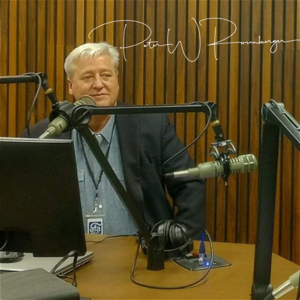
I'm Peter Rosenberger and after 40 years as a caregiver for my wife Gracie through a medical nightmare that has soared to 98 operations, both legs amputated, treatment by more than 100 doctors in 13 different hospitals and you can't imagine the medical bills.
Well I've learned some things. I learned every one of them the hard way. And in my new book, A Caregiver's Companion, it's a journal from that journey. It's filled with hard-won wisdom, practical help, and yes, an ample dose of humor. Because let's face it, if we don't laugh, we're going to blow a gasket.
And I've learned that I am no good to my wife if I'm fat, broke, and miserable. How does that help her? Healthy caregivers make better caregivers, and that's what this book is about: pointing my fellow caregivers to safety, to learn to live calmer, healthier, and dare I say it, even more joyful as a caregiver. It's one truth I've learned, punctuated by either a verse from scripture or a stanza from a hymn, and a space for you to share your own thoughts. While this is my journal from a 40-year journey, you can journal along with me in this book.
It's called A Caregiver's Companion, available August 20th from Fidelis Publishing, wherever books are sold. Learn more at peterrosenberger.com. Welcome to Hope for the Caregiver. This is Peter Rosenberger. This is the program for you as a family caregiver, and I'm very glad to be with you today.
Hope for the caregiver. Hopeforth.com. Earlier this week I had an article published of mine. And it was out of uh Blaze Media, the Blaze media. You may have heard of this organization and This article shares some of my thoughts in the aftermath of what happened with Charlie Kirk.
I did not know him. I was not... Highly engaged in Turning Point USA. I have been watching quite a few of his videos. And I've been amazed by him for several years.
I mean, the guy just was tremendous, just a force of nature. Actually, he was a force of supernature. That kind of clarity of thought And fearlessness to proclaim the gospel in such a way only comes from God. I was stunned by how many people. he allowed to get to the microphone at his events.
And say the most horrific things to him. I mean, things you just, you don't want to listen to in mixed company. I mean, you don't want to listen to it at all, but it's just horrific. And these people felt free to come and spew this stuff. And he sat there and took it and responded back to them.
He didn't react, he responded. And It was astonishing, but I wrote an article about this because this is going to be a, it's appropriate that his organization is named Turning Point. This is a turning point for the country. and particularly for us as Christians. And the name of this article is Reckless Hate Cannot Win.
Christ has already broken it. That was not my original title. My original title was called Ride Out and Meet Them. And they changed it. Editors do that.
And I'm not sure totally why, but they do. Which is normal and that's fine, but I thought I would share it with you this morning. I'm going to do something I don't normally do. Which is I'm going to read my my article. I don't like to do that.
As anybody that knows the behind the scenes of this program knows, we're never scripted on this program. Yeah, it's Uh to I I can't be scripted. I mean, I've had people just throw their hands up with me because it's just very difficult for me to follow a script. But in this particular case I want to Read this. Here's my article.
Moments after announcing Charlie Kirk's death on Fox News's The Five, Dana Perino, who I've Met and she was very gracious to endorse Gracie's book. wonderful lady and she's normally very composed and unflappable. But she was fighting back tears. I don't know if you saw this or not. Her voice trembled as she pled for what she called a Circuit breaker.
something to break the rising current of fury, now running through our culture. Her words were not political. They were profoundly human, and they named what many feel the world is burning too hot. and we're running out of ways to cool it down.
Now we've all sensed that current, and it hums beneath politics, families, neighborhoods, even churches. Rage lurks like a storm. waiting for the next spark. Dana wasn't just mourning a death, she was begging for relief. from the relentless voltage of hate, but no human circuit breaker exists.
History proves it. Every attempt to interrupt the current revolutions, reforms, resolutions eventually fails. We reset the breaker. And then the current surges again, because the overload isn't out there in the systems, it's in here, the human heart. It is the human condition.
There is only one. who has ever absorbed the full current of hatred, and did not pass it on. And Jesus Christ didn't just diffuse the tension, he took the lightning bolt straight into himself. The cross was the great interruption where perfect love bore the full load of human rage. and divine justice in one cataclysmic strike.
Stephen, the first Christian martyr, saw it. As stones shattered his body, he gazed into heaven and declared he saw Jesus standing at the right hand of God. That proclamation, if you'll notice, didn't calm his killers. It enraged them. They picked up more rocks.
Truth always incites the fury of hell. And we don't make Jesus Lord of our life. That may cause a few eyebrows to raise. But we don't make him Lord of our life. He already is Lord, whether we acknowledge him or not.
And Scripture says that one day every knee will bow, and every tongue confess that Jesus Christ is Lord, Philippians two, ten through eleven.
Some will bow in gratitude. Others will be brought to their knees by the rod of iron. Revelations 19.15. but all will bow. Which means this.
Hatred will not burn itself out. It will not abate. The closer Christ's light comes the more ferociously darkness will fight it. If you ever read Lord of the Rings, there was a king in there named King Theoden. And in and this is in the two towers.
And they were being besieged. at their fortress. and he voiced the dread that many feel. What can men do against such reckless hate? Aragorn's reply.
Aragorn was the Christ figure. In that uh in the whole story of the Lord of the Rings. His reply was simple. and defiant. Ride out and meet them.
Charlie Kirk did just that. He rode out and met the storm. Head on. But greater still Christ did that He rode out from heaven. into the teeth of our hatred, and took the full charge of it upon himself.
The cross was not retreat. It was the counter charge that broke the power of darkness forever. Centuries later Martin Luther stood before the full weight of Church and Empire. Knowing that they could kill him for refusing to recant, he said simply Here I stand I can do no other. God help me.
He wasn't fearless. He was anchored. and as the storm closed in around him he gave the church its battle hymn, The body they may kill. God's truth of God. Abideth still.
That's from A Mighty Fortress. And I've done that hymn on this series I do on this program of hymns that every Christian ought to know. That is one of the hymns that every Christian ought to know. And now you know a little bit more about that. Luther He never believed that the hate would abate that I could see.
I don't see any evidence that he believed the hate would abate. He simply knew that it could not win. And that is where we must stand as well. We don't stand with bravado, We stand with scars. We stand, not by denying the darkness, but by fixing our eyes on the one who has already absorbed its full blast and still stands.
He is the circuit breaker, but he's more. He doesn't only stop the current from destroying us, he rewires the entire system. What was corroded he makes new. What was dead he makes alive. He is not just the breaker, he is the pure current, the very life of God.
Now flowing, the Through those who belong to Him. I have lived long enough to see what hate does when it is unleashed. It devours. Not just its targets, but its host. It corrodes from within.
and it will not stop on its own. Hate is never satisfied. It must be interrupted that interruption has already come. The current has already been broken, and the one who bore it all now reigns. And one day So will we.
We? Like Aragorn. of the Lord of the Rings. And more to the point like Charlie Kirk of Turning Point. are only shadows of that great warrior Christ, who rode out to meet the Fury, and shattered it at the cross.
And our response to him, is not with clenched fist. but with lifted eyes. and steady voices. Lead on, O king eternal. We follow not with fears, for gladness breaks like morning wherever thy face appears, thy cross is lifted o'er us.
We journey in its light. The crown awaits the conquest lead on O God of might, The hate will not abate. Charley knew this. But God's truth. Abideth still.
and our king, rides before us. That's my article that's out at the blaze right now. It's also on my website. You can go out to hopeforthecaregiver.com, you'll see under mentions. and it'll be there as well if you want to share it.
I would recommend it because Charlie's life has inspired me to be Boulder. C.S. Lewis said, you know, if Christianity is true, there is nothing else more important. Do we live like this? Does the world see us and think that we believe Christianity is the most important thing?
They did when they saw Charlie Kirk. His last words were proclaiming the gospel. May we do the same. And that is hope for this caregiver. This is Peter Rosenberger.
This is Hope for the Caregiver. We're going to be right back with a very special interview that I did with a lady you're going to love listening to this woman's story. We'll be right back. Welcome back to Hope for the Caregiver. This is Peter Rosenberger.
Glad to be with you. I am joined today by a wonderful lady I want to introduce to you. Her name is Carolyn Wheeler O'Byrne, and I love doing interviews like this. I want to play some excerpts. From my conversation with her, you can hear the entire interview at my podcast.
Go out to the website. or wherever you stream podcasts. You can play it through your Alexa device, you can play it through Apple, you can play it through anything, wherever podcasts are streamed, it's there. And you could also go out to my Substack page, caregiver.substack.com, and you could subscribe to that. There's a free subscription, and then there's a paid subscription where you get.
all kinds of special things. Through that page. And I know a lot of this audience doesn't get out on social media, doesn't get out on computers and so forth. I know because you call me and write me letters. I've got a friend in Jackson, Mississippi.
I've got another friend I talked to, Bruce, over in Ohio, and they don't get out and do those things.
So I want to play these clips for that. Segment of the audience that doesn't get to do that of these interviews that I have. And so this is my conversation with Carolyn Wheeler O'Byrne. Take us back to how all of this started because you've had a rather dramatic journey. Take us back to the early days when you were there in Alabama, and all of a sudden, you found out something had happened with your daughter.
Yes.
Well, we had a difficult pregnancy with her. She was the fourth child and about 17 months old. Finally, after begging doctors to help me figure out what was wrong with her, I had had her to the doctor that morning that. Day at lunch, and still that night deciding to take her on into the emergency room because I knew something was wrong. uh when I got to the emergency room they said she's fine and I knew she wasn't fine and I was terrified to even put her to bed.
So I just said, with all due respect, I'm staying until we figure this out.
So we did. What were the symptoms that caused you to press forward like this? She had been a a whiny child, but not in the spoiled, rotten kind of way, in a different kind of whiny. On and off, she was happy sometimes, but then she would just get so frustrated and tired. That was one of her symptoms.
Her legs were blue. Not crayon blue, but blue, unusually blue. I pointed that out to the pediatrician and she said, oh, that's just fat baby syndrome. Because she was quite a chunk. But At this particular point when it had gotten so bad, she had a cough that just sounded horrible.
And you know, when you have that kind of cough where you just can't hardly take a breath between coughs, you just lose all breath.
Well, it was that kind of cough.
Well, one of her siblings had the crud and she was sick, and I totally see why the doctor would think Obviously, this one's got a fever, and this one's sick, and this one's got a cough. But it was just different. a different kind of cough. And it was just basically mother's intuition at this point. Absolutely.
Yeah. I mean, and against the face of every other, nobody else was agreeing with you. Nobody else saw what I was seeing. No one.
So even though I did Really, I have one other child that was sick. When you know your kids, When you've got four, maybe on your first one you feel a little unsure, but when you got four kids, you kind of know what's normal and what's not normal. I had been through fevers and sicknesses and scarlet fever and strep throat and flu and the pukes and you name it for years so I knew what to expect on those types of things. But There was just something different. And when we got to the emergency room, that was quite a quite an eventful evening.
It was mid-May. and tornadoes and storms were everywhere. And I had never heard of Code Black, but I learned quickly what that was because the hospital was in Code Black, which means no one moves. The tornadoes were significant. And you stay put where you are.
So that's what was going on outside while I was inside trying to convince the medical team. to dive deeper unless find out what's wrong.
So by the next morning we were admitted into a room. Thankfully Code Black had lifted. And the Pediatric cardiologist came in to say. Daisy has congestive heart failure. Um her ejection fraction is at 13%.
And if she lives long enough, she's going to need a new heart.
Well How old were you when this happened? She was seventeen months, so I was in my early thirties. That is a that is an incredibly young age to hear that kind of news. Yeah, I had zero experience with hospitalization. I was utterly in shock.
What do you do when you have that? The only thing I could think of was at this time we were in the Huntsville Hospital. And we had lived in Nashville before, and I had connections at Vanderbilt. And the only thing I could think of was, we got to get to Vanderbilt. We got to get to Vanderbilt.
So, it took them a few days to get a switch going on. And for those who are not in that area, Vanderbilt is a major teaching hospital with an outstanding children's hospital. You know, it's an amazing hospital. Gracie has had a lot of treatment there herself. And so, I understand that rush there because that's a children's hospital, and that's where you have the latest and greatest there.
And so, I can understand you wanting to get there. That was not met with excitement from the folks that you were dealing with at the time, was it? No, they really preferred me to stay there, but I insisted. We actually took her home. for a couple of days, but we got out of the hospital on Friday and weren't scheduled to go into Vanderbilt until Monday.
And I thought, I'm bringing home a little time bomb. What's going to happen in between these days? They did put her on.
Some medication. In those two days until we got to Vanderbilt. But that was a very scary thing in those two days to take her home. But we did go on to Vanderbilt Monday morning. And Thankfully we had friends there that met me there and and went to the doctor's office with me and had other friends back home staying with the other kids.
But it was kind of like a doctor visit, an office visit. It wasn't even admitted, and the doctor said, Well, if she had this symptom and this symptom and this symptom, And I said, she has those symptoms. Every single thing you're saying, she has.
So they decided to admit her that day. And wow, what a journey from there. It was Things unimaginable.
Now they started to admit her, but they really weren't bought into the fact that there's something going on with her yet.
Well, I don't know. Is that a fair assessment? Maybe so. Maybe they didn't see how utterly Tragic, we were in the situation. I don't know what Huntsville had talked to them about, but.
When they finally did the testing, they were like, Oh. Yeah. This is very serious. But I kind of felt like they didn't see the seriousness of it at the beginning. But we did get in the hospital that very day.
So that's what I knew needed to happen. And Pretty soon, within one day, they started taking action on things. They did a catheterization through her groin. That was a moment that I just about lost all sanity of of them taking her from me to do that, 'cause I felt like maybe I wouldn't even see her again after that moment. They decided that from that heart catheterization, it wasn't really her heart that was the problem.
What had happened was, since her beginning of life, her immune system had somehow decided that her heart was the enemy.
So it had been trying to get rid of her heart the whole time. Because of that, her circulatory system was extremely underdeveloped. Which is why, one of the reasons why her legs were blue, one of the reasons why she got tired and frustrated and didn't feel well. She just wanted to play in her little First, walking self, you know, wanted to get up and play and run with the other kids, but she just couldn't.
So, um, when they tried to get an I V, Nothing worked. They literally tried from head to toe, had her strapped down, screaming bloody murder, trying to get an IV and they couldn't. Then they decided to try a pick line in one of her arms. That failed. They tried a pick line in the other arm.
That failed. So they Put her in ICU and put in a central line in her chest. And that was their as you know very well, that was their access line.
So they decided to Give her by the way, I tell them with Gracie when they're trying to get lines and so forth and they come in and stick and sometimes they tend to be a little bit cavalier. Oh, no, we don't do and I look at them, I say, We start charging after the second attempt.
Okay. Because she's hard to get a A good stick on. And I want them to know. And a lot of times I will. Call for the hid sticker.
I have found sometimes you have to go up the food chain to get somebody who is a little bit more experienced in this because not everybody can get a good stick. And uh clearly that was the case, but going to a central line on a little baby is that's a big step. Yeah. It was. Um so they decided to try an experimental medicine.
To see if that would stop her immune system completely, pretty much shock and kill her immune system. and restart it. And it was a 14-day process. And in the first couple of days, I noticed these little tiny red dots on her body. And I called in the doctor, and she said, that's just contact dermatitis.
And I thought, okay.
So Several hours later, I called her back in and I said, There's many, many, many more. She said that's just contact dermatitis.
So by that night Daisy started screaming. then her red dots started connecting. And she screamed for six and a half hours before she finally stopped from. excruciating pain and exhaustion. and she just laid in my lap silently and if I moved she would scream.
And I called the nurse and I said she's burning up. I I need you to come check. and her temperature was a hundred and six point eight.
So they were scurrying to find cooling blankets and We're having a hard time with that. You're listening to my interview with Carolyn Wheeler O'Byrne. You can hear the entire interview. on my podcast and you can stream that wherever you stream podcast. And you can certainly find it at the website, HopefortheCaregiver.
Or at my Substack page, caregiver.substack.com. We're going to come back and hear more of her story. and the amazing things that God has Has done in her life and through her life, even through these very difficult things. This is Peter Rosenberger. This is Hope for the Caregiver, HopeForthecaregiver.com.
Don't go away. We'll be right back. Welcome back to Hope for the Caregiver. This is Peter Rosenberger. Glad to be with you.
We're continuing on with my interview with Carolyn Wheeler O'Byrne. And she's just a remarkable woman from Northwest Alabama. And let's get back to the conversation. Again, you can hear the entire thing on my Substack page, caregiver.substack.com, or at the podcast, wherever you stream podcasts, it's out there or go to hopeforthecaregiver.com. Let's get back to the interview.
They decided to take her off that medicine. because it was obviously causing major problems.
So she stayed in that silent state for three days. If I didn't move, if I held her.
So I held her for three solid days, getting up about once a day to go to the bathroom. Because when I stirred or switched sides, you know, where you got to get a little bit comfortable from one side to the other, She would scream. That chemical had fried her from the inside out. and all of a sudden her skin started falling off. people thought she was a burn victim.
And she looked like a little cherub. If you can imagine the perfect. picture in your mind of this chunky baby with blonde, curly hair.
Well, that's exactly what she looked like. And in the process of her skin falling off as it started drying, It was about as thick as a thin T shirt. coming off. And I literally had to pull her scalp off through the ends of her curly little hair because it was so thick.
So that was quite How long are you into this at this point? How many days? Um, well, three days of just laying there silently, unless I moved. Um About four or five days, she could start getting up and walk around. And then her skin.
Well, her skin was solid one hundred percent red and then it just started It quick it dried pretty quick, surprisingly. As it dried a little bit, that's when it started coming off. At this point, they were just doing tons of neurological testing to see what it did to her. They were doing liver testing. They were testing the rest of her body, one test after the other, to see what damage this chemical had done.
It was an unimaginable thing that Some of it I just don't even remember until I start telling the story. because of the shock that I went through and And some of it is worthy of forgetting. Uh many times they had to put her in a straitjacket. And that was Absolutely horrible to stand there and watch her. Thankfully, I was.
Kind yet adamant enough. That Almost every single time she went into something, even the pic line, they let me go in. Excuse me.
So I was I was there. I did not want her to be anywhere that I wasn't there, so that I could And they did learn that I didn't get in their way, but I would stay at her head and kiss her and. rub her head and talk to her to actually try to help her. Yeah. but try to help them be able to do whatever they needed to do.
So I'm grateful for that. I'm not saying that's what they're going to allow you to do these days. I don't know, but. I'm very grateful for oh I I I have uh I've kind of bullied my way into those places. And sometimes you have to do that.
I'm sorry to say it, but you do. And had you not She wouldn't have made it. Possibly not. I agree with that. And there's been times with Gracie.
Had I not been there and done what I did, that She wouldn't be alive today. And that's the nature. And I bet you, if I took a poll of everybody listed in this program that are any kind of caregiver for any length of time. We all have similar stories had we not been there. And so it took an enormous amount of assertiveness.
I mean that I hate to say the cliché, but that mama bearing you kind of came out. I mean, you're not a mean person, and you're not going there and start throwing elbows, but. You have to be assertive and it's a little bit unnerving, but it what is What's the consequence if you don't? You have to stand your ground. You've got to get feeling, and you've got to get a feeling.
You've got a soft-spoken voice. I mean, you're a nice lady, a soft-spoken voice. You southern gal, you know, you've got all the. And that, but in moments like that, that has to be put on the shelf, and you turn into a warrior at that point. I've got a reputation of being a jerk, you know, but you don't.
I do, but you don't. And so they know when I say something, you know, and I, and I'm a guy too. And the system tends to be a little bit more misogynistic. I mean, have you found that to be the case? Yeah, but I feel like.
I mean, even Gracie says that to me all the time. She says, Look, I want to fight this battle, but I'm a woman and they're not going to listen to me. And which is a terrible indictment. I'm just calling balls and strikes. That's what it is.
We've all seen it before. For many caregivers, it's very difficult to be this assertive, but you were left with no choice. You had to be there.
Something is wrong. Her fever is 106. What's going on? She's got these splotches. This is not contact irritation here.
This is no, there's something else going on. And you may not know the science, but you know your daughter. Right. And that's the difference. That's what I call caregiver authority.
And you wielded it, and she's alive now.
Now, this has gone into now days. And now we're into Weeks. We're into weeks, yes. All right, then what happened? She started recovering from that.
She was able to get to go to the playroom, which she loved to do. And um I felt like okay. We're out of that. We're going to be okay. And then all of a sudden, she started throwing up.
So I called the nurse in and I said she's throwing up, she feels warm. What's going on? And so they did some testing, and it just happened to be that the baby next door. Had Mercer?
So guess what? We had Marsa. The central line was the line that had gotten infected.
So she went straight into ICU and they put her under And That was the moment. That I didn't realize, 'cause the first time they put her in I C U it was just for the day.
So I didn't lose my room. But I had no idea. I was clueless that when my child went in ICU. They were going to not allow me to stay in that room any more. I didn't know that.
So I had weeks of my things her things No vehicle. I had been dropped off because my van was needed for the kids at home. I wasn't leaving her anyway, so I wasn't really concerned about being there with no transportation until. I figured out that I had no place to go.
So thankfully that day A friend of mine who worked there found a cart and let me pile everything. Hi on that cart. and leave it in her office until I had arrangements. and an older couple that had been friends of ours that lived lives in Nashville. They've passed away since.
They had an old 80s conversion band. Do you remember in the 80s when everybody had a conversion ban? It seemed like it. Yes, they had theirs still. I think it was the effect of the A-team, you know, that band that B.A.
Barakis drove around, but that's dating me quite a bit. I remember I love that show. But they brought their van and parked it in the parking lot, and that became my home. And Daisy was in ICU for over a week. They would come get my clothes once a week and wash them and bring me some snacks.
And I would stay. in the I see you literally all day long. They really weren't crazy about you being in there. There wasn't a bathroom available. You couldn't eat in there.
There was one chair. If I remember correctly, I remember standing a lot. And about one or two o'clock in the morning, when I was about ready to pass out. I would walk out. To the scary Nashville Vanderbilt parking lot and lock myself in that van and lay down and crash for a few hours.
Of course, eat a snack before I lay down, eat a snack, bring a snack in my purse. 'Cause that's where my snacks were. 'Cause I wasn't allowed to eat in the ICCU room. And then go back in first thing in the morning, just enough time. To have the rest to just make it through the day.
And what I forgot to say when she was going through the experimental medication. They knew that she was going to have to have a blood transfusion through this process, but didn't tell me about it.
So when I found out she needed to have a blood transfusion, I said, wait. I want her to have my blood, if at all possible. Yes, I'm grateful for s strangers' blood. I don't have a problem with that. but if she can have mine, wouldn't that be better?
So they weren't too happy about it, but they stopped the process long enough for me to go to the blood bank, give blood, and within a few hours they found out that My blood was just trashed. I had so not taken care of me. That my blood was Not in good enough shape to help her. Which is one of the things that I strongly, strongly speak about is caregivers. You have to take care of you.
or you cannot take care of them. I've been saying that very thing for as long as I've been doing this program, and I've been. Preaching that message, but I don't think I've ever had it. Driven home in quite the same way is that your blood actually suffered the consequences, and you couldn't even donate blood to your daughter. I cannot tell you how many times that phrase has been uttered about taking care of yourself, and we all say that, but you bring this home to a much different level when you say your blood was trashed.
That had to have been a big gut punch in a series of gut punches that you were having. Yeah, I was devastated 'cause Again, I was very grateful for Stranger's Blood, and that's what she ended up needing to get. had she been able to have mine, what could be better than your own parents? blood, if it's a good match. Um, to me I don't think anything could be better.
But I I was very very saddened by that, but couldn't do anything about it, so fast forward back to I C U. she was just laying there. Lifeless, and I felt like This was probably last time I was going to see her.
So that's why I've spent every single moment in In there that I possibly could. I wouldn't even have gone to lay down if I knew. that if I didn't I wasn't going to make it through the next day. But Surviving on very little sleep and snacks. We're going to have to stop here.
I hope you're enjoying this conversation with Carolyn O'Byrne talking about Daisy's place. We're going to have more of this next week, but there was just so much to fit on this program. But I wanted you to be introduced to her and hear her amazing story. We got more to go next week. You'll hear the rest of it.
You can always hear it right now on demand through my podcast, which is available wherever you stream podcasts and my substack page, caregiver.substack.com. We'll be right back with our hymn of the week that every caregiver ought to know. This is Peter Rosenberger. This is Hope for the Caregiver. Welcome back to Hope for the Caregiver.
This is Peter Rosenberger. Very glad to have you back and we're continuing on our series of hymns that every caregiver ought to know. Today, based on what we just heard from Carolyn and Daisy's place. I thought this hymn might be appropriate. It was written back in the 1700s by a pastor named John.
Fawcett. Not like F-A-U-C-E-T, which is your water faucet, it's F-A-W-C-E-T-T. He served a tiny poor church in rural England. And after several years he was invited to a much larger and wealthier church in London, and he accepted the offer. But when he and his wife they packed up their belongings and they were saying goodbye, the people of this little church gathered around them weeping.
They had been through so much life together. And their love was deep. and he looked at his wife and they both knew they couldn't leave. They couldn't leave. They unpacked the the wagon, Not the station wagon, just the wagon.
and he served that little flock for the rest of his life. And out of that moment he wrote this hymn, and it was a song about the kind of love that binds hearts together. And it's the kind of love that we as caregivers know all too well. And let's go to the caregiver keyboard. Bless me.
The time That buds our hearts increase. Mm-hmm. You know this one. The fellow Of kin. Dreadmines is love.
Like to that above.
Now here's what I want to tell you about on this song. We we cover several doctrinal things in this. And a lot of people were talking about this thing with Charlie Kirk and how it affected them so deeply. And yes, it's an incredibly painful thing to watch this. And I cannot imagine the the horror.
That his wife and his family and all are dealing with. These children got to grow up without a father. And people are saying, you know, I didn't even know him. Why is this hurting so much? And I.
And I say to you what someone said to me. There's a doctrine in the church called the doctrine of the communion of saints. And because we are in Christ, we are never separated. In that sense, we're always connected, and it's part of us. We hurt when one another hurts.
We share. Our mutual woe Our mutual burdens bear. That's why we feel it. That's why, when you're listening to Carolyn talk about Daisy's place, we're feeling that. This is a woman who's sleeping in a van in the parking lot of the hospital.
because there's no place for the sleep sh and everything. And we're hurting with her because she's our sister. And often for each other flows the sympathizing tears here. And That's why this song is such a special song. From Sarah.
Mm-hmm. And pay And sin. We shall be free. And perfect love. Oh then True.
Shall reign through eternity. How many of you all have sung this at your church? At the end of a meeting or a special dinner or whatever, and just sung this little hymn. And now you know the story because this pastor wrote this, he couldn't say goodbye to these people. And he turned down a a career.
You know what? Mobility, I mean, a career upward mobility to go to a big church in London and he unpacked the wagon. And he stayed with these people. people he was called to pastor and he wrote one of the most endearing hymns of the entire Church. We see this all the time.
You know, I grew up saying this.
Sometimes we didn't know what else to sing. There were two songs that we would sing at gatherings when we didn't really know what else to sing because people didn't know the lyrics or they, you know, whatever. We didn't have the hymn books. And I remember dad did this a lot. At church, and he would lead us in either the doxology, praise God from whom all blessings flow, which we've covered as one of the hymns that every caregiver ought to know, and this one.
How many fellowship hall dinners? Have you been connected with and they sang this hymn. Hearts in Christian love. It's just a little I mean it's only like Two sentences. The fellow ship Of killed minds is like to that above.
is like To the Uh So, as a caregiver. When we sing this song, Blessed be the tie that binds our hearts in Christian love. This connects us to the Church Universal. It's sometimes called the Catholic Church. the Holy Catholic Church, not the Roman Catholic Church.
the Catholic Church, Church Universal, the Invisible Church.
So, as you go about your day as a caregiver, doing things that you feel like you're doing in obscurity or Isolation, nobody's seeing it. Yeah, there are people seeing it. You ne you can't necessarily see them. But we're surrounded by a great cloud of witnesses. And we're all connected because of Christ.
It's called the Communion of the Saints. And we are all connected to the church universal, the invisible church. We may not see the visible church. That's when you go to local church bodies and so forth. That's the visible church, but there's the invisible church.
And that's what connects us all, no matter what's going on that you see in your visible church. You can have churches going through all kinds of conflict or whatever else, but the invisible church, my mother told me this years ago, the organization of the church. is in pretty rough shape right now. But the organism of the body of Christ, is doing just fine. is doing just fine.
And that's what we're a part of. That's what we're talking about right here. This little hymn that John Fawcett wrote. back in the seventeen hundreds. This glorious hope revives our courage.
Courage by the way, while each in expectation lives and waits to see the day. There's six verses of this. We only know the first one usually. When we are called to part, It gives us inward pain, But we shall still be joined in heart, And hope to meet again. Before our Father's throne we pour our ardent prayers.
Our fears, our hopes, our aims are one, our comforts. And our cares, you know, see there are our fears. Our hopes, our aims are one. Our comforts and our cares, it's all part. part of this.
You are not doing this in a vacuum. If you belong to Christ, you are not doing this in a vacuum. You are part of the great Church invisible. And there are saints cheering you on. It says this: we are surrounded by a great cloud of witnesses.
Do you do you know what a walk-off home run is? A walk-off home run is a home run that is hit by the home team in the bottom of the final inning that instantly. wins the game.
Now here's why it's called that. As soon as the batter hits it and the winning run scores, the game is over on the spot. The players can literally walk off the field because no more play is needed. The score is tied. In the bottom of the ninth, And this guy gets up hits his home run, knocks it out of the park.
He still has to walk the bases.
So he jogs it along. Everybody's cheering. And the whole team is waiting for him at home plate to welcome him in. And he jumps on the plate and wins the game. And there's a guy that collects pictures of all of these.
As many as he can. He's got a whole collection of pictures of walk-off home runs. And it shows the batter running around third and heading into home, and all the whole team is out there behind home plate, waving and cheering and waiting for him to hit home plate. And he said the reason he collects that It's because he said that's a that's a picture. of our Christian walk.
As we are all Heading towards the towards home. where we don't have to ever say goodbye. Blessed be the tie that binds our hearts in Christian love. The fellowship of kindred minds is like to that above. Isn't that a great hymn?
That's a great hymn that we as believers. should know. we as caregivers should know.
so the next time you feel like nobody is seeing anything you're doing. Understand. that you're hitting a walk-off home run. And there is a whole team of people cheering. Yeah.
Blessed be the tie that binds me. I hope you are enjoying this series about the hymns. I love the hymns. You know I do. And I love playing them for you.
I love doing this for you. And it ministers to me. I mean, I'm doing this for myself. I'm preaching to myself because I got to hear from somebody with my level of experience. And there's nobody else that has a radio show that has my level of experience.
I have to listen to my own show. Just like David did at Ziklag. He. Ministered to himself. He encouraged himself in the Lord.
That's what I'm doing, and I thank you for letting me do this and spend time with you to do that. If you like what you're hearing, go out to the website. Hopefortheigir.com. Donate buttons right there. Help us do more.
Anyone that donates $100 or more over the next week or so, You know what? I'll send you a signed copy of my new book. It's called A Caregiver's Companion, just as a thank you. And I appreciate it very much. We love what we get to do here.
and we appreciate the opportunity to do it with you. HopefortheCaregiver.com. This is Peter Rosenberger. This is the program for you as a family caregiver. And we do this because healthy caregivers make better caregivers.
Remember this this week. Blessed be the tie that binds. And I'm glad that we have that tie that binds us all together. Never forget that healthy caregivers make better caregivers and today's a great day to start being healthy. This is Peter Rosenberger.
Hope for the caregiver. Hopeforthearegiver.com. We'll see you next time.
Next time. Gracie, when you envisioned doing a prosthetic limb outreach, did you ever think? that inmates would help you do that. Not in a million years. What does it mean?
I would have ever thought about that. When you go to the facility run by Core Civic and you see the faces of these inmates that are working on prosthetic limbs that you have helped collect from all over the country that you put out the plea for. And they're disassembling. You see all these legs, like what you have, your own prosthetic legs. And arms, too.
And arms. When you see all this, what does that do to you? Makes me cry. 'Cause I see the smiles on their faces and I know I know what it is to be locked someplace where you can't get out without somebody else allowing you to get out. Of course, being in the hospital so much and so long.
When I go in there, and I always get the same thing every time that these men are so glad that they get to be doing, as one man said, something good finally with my hands. Did you know before you became an amputee that? Parts of prosthetic limbs could be recycled? No, I had no idea. I thought we were still in the.
1800s and 1700s. I mean, you know, I thought of peg leg, I thought of wooden legs. I never thought of. Titanium and carbon legs and flex feet and C legs and all that. I never thought about that.
I had no idea.
Now that you've had an experience with it, what do you think of the faith-based programs that Core Civic offers? I think they're just absolutely Awesome. And I think every prison out there. should have faith-based programs like this because The Return rate. Of the men that are involved in this particular faith-based program.
and other ones like it but I know about this one. are it uh is just an amazingly low rate. Compared to those who don't have them. And I think that that says so much. That says so much.
About Just that doesn't have anything to do with me. It just has something to do with God using somebody broken. to help other broken people be Hole? If people want to donate a used prosthetic limbs, whether from a loved one who passed away. Yeah.
You know, somebody who outgrew them, you've donated some of your own. What's the best place for them to do? How do they do that? Where do they find it? Please go to standingwithhope.com/slash recycle, and that's all it takes.
It'll give you all the information on the What's that website again? DanningwithHope.com. Slash recycle. Thanks, Chris. Take my hand.
Lean on me, we will stay.