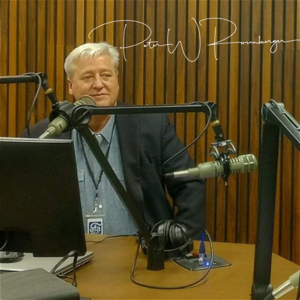
I'm Peter Rosenberger and after 40 years as a caregiver for my wife Gracie through a medical nightmare that has soared to 98 operations, both legs amputated, treatment by more than 100 doctors in 13 different hospitals and you can't imagine the medical bills.
Well I've learned some things. I learned every one of them the hard way. And in my new book, A Caregiver's Companion, it's a journal from that journey. It's filled with hard-won wisdom, practical help, and yes, an ample dose of humor. Because let's face it, if we don't laugh, we're going to blow a gasket.
And I've learned that I am no good to my wife if I'm fat, broke, and miserable. How does that help her? Healthy caregivers make better caregivers, and that's what this book is about: pointing my fellow caregivers to safety, to learn to live calmer, healthier, and dare I say it, even more joyful as a caregiver. It's one truth I've learned, punctuated by either a verse from scripture or a stanza from a hymn, and a space for you to share your own thoughts. While this is my journal from a 40-year journey, you can journal along with me in this book.
It's called A Caregiver's Companion, available August 20th from Fidelis Publishing, wherever books are sold. Learn more at peterrosenberger.com. Welcome to Hope for the Caregiver. This is Peter Rosenberger, and this is the program for you as a family caregiver here on American Family Radio. Glad to be with you today, HopefortheCaregiver.com, Healthy Caregivers.
Make better caregivers. But what does that look like? What does it look like to be a healthy caregiver? What does it look like to start moving in that direction financially, emotionally? spiritually, physically, professionally.
All of the above. How do you do that?
Somebody draw a map.
Well hell I have. And that's what this program is all about. And I'm glad to be with you today. Hopeforthecaregiver.com. Hopeforthecaregiver.com.
We've been doing a series, I've got two. series going on in parallel tracks here that I'm going to be doing over the next I'm not sure how long. One of them is the hymns, and we'll get to that today. When I take a hymn and I unpack it a little bit and tell the story behind it and why it applies to us as a caregivers, hymns that every caregiver ought to know. I started off with 30 and it's going to morph into probably 300.
Who knows? But we're going to go march through these things and bring to your attention maybe hymns that you haven't heard in a while, or maybe you've never even heard, but why it would mean something to us as a caregiver. The other series that I'm doing is titled Difficult Things That Caregivers Deal With That They Don't Want to Talk About. I can't think of a better title. If you have one, let me know.
You can reach me on the website and just say, hey, Peter, this would be a better title. But in the meantime, that's what we're going to call it. And I wanted to lead off with that today. And this one may be a two parter, a three-parter. I don't know, I may spend some time on this one because it's one that's Beset me for for many, many, many years.
Let me set the table for this. I had a pastor friend of mine years ago came up to me and he said, Peter, you do yourself a disservice. And I looked at him kind of quizzically. And I said, what do you mean? And he said, You make this look easier.
than what it is. And because of that, people have really no clue to how difficult this is for you to carry. And this is a this is a wonderful pastor friend, and he saw me, and he he saw up close and personal. Just how difficult our life is. And I think that's the first step: is that do people see, do we see one another?
But the lasting impact of what he said to me was that first off he saw me. And walked into MY CHALLENGES With confidence, he was a very humble man and a very kind man, but he walked in with confidence. He was truly a pastor. And as I thought about that, I juxtaposed that against the Journey for us as caregivers. And I look at us as high-functioning multitaskers.
Now, that's not probably the most accurate thing, but you get the picture. That we are by and large as a group of people. Pretty capable. You know, we're we're we're responsibility driven. and that we will take on tasks that are not necessarily assigned to us.
We will learn to adapt and be flexible. We will learn to be creative in these things. And nobody puts a gun to my head and says, Hey, you have to show up at this time of day to do the dishes and so forth and so on. It just needs to be done. It has to be done.
If I don't do it, who's in line behind me?
So we get the job done. But that doesn't mean that we're not train wrecks inside us. that we're not struggling. We're trying to not drown. And I Set out to do this program, and everything that I write.
to provide a vocabulary for family caregivers to identify what help looks like. while also working to help caregivers Take that first step to ask for help.
Now that we have a vocabulary, let's ask for help. we could identify this is what it looks like. But as I did all of that, I also set out to give Non caregivers. particularly the church vocabulary of what help looks like. and then show the scriptural mandate to offer that help.
For example, years ago I had a woman on this program who was the mother of two children with autism. And I said, if you could say anything. To Pastors and church leaders, what would it be in relation to your children with autism? She said, Turn the music tail. Turn the music down.
And I thought, how many churches have a worship team that is so blaringly loud? That Even though there are people that would love to be in there, they can't. Particularly with with special needs children like this, the the sensory overload is just too much. And what message are you sending? Do you just need to be that loud?
and I would suggest to you that you do not. And back to my hymn series, as you know, those of you who have been listening, I play them a little bit slower and a little bit softer. You don't have to just go full tilt on it. That doesn't mean I don't like loud music. That doesn't mean I don't like.
a great groove, a great jam. I love that and I love playing it. And I marvel at people that do. But there has to be some balance. There are people that cannot process that.
and family members then are prohibited from the corporate worship By just something as simple as Loud music. Or Bright, bright, bright lights. You see what I'm saying? Do you see the practical implication? And it doesn't mean that you have to throw out everything and you just have this very morose, quiet, dirge-like thing.
No, but you need to have some balance. And it's about seeing the needs. of others. Seeing them and recognizing them. And that's why I do what I do here on this program so that people can start having a vocabulary and an awareness of what's going on.
And this brings me to my point today of The difficult issue that caregivers face that they don't want to talk about, and one of those things for me is, and maybe this resonates with you. Nobody knew what to say to me. for years upon years upon years. In fact, they still really don't. And let me put it into practical terms here.
Gracie started having surgery. Before I met her, and then I went through my first surgery with her while we were engaged, and the surgeries kept mounting. In her lifetime she's had at least ninety eight that I can count. But under my watch there's been seventy-seven. that I can count.
That doesn't count all the hospital stays, all the we were in the ER this week. I had to go down there and and do a bunch of stuff. Just getting her to the hospital is an event, but it had to be done. There was some lab work and stuff, and the doctor of medicine that we are there in the little community hospital where we are, and I'm very grateful. th they they take good care of her down there.
But Getting her out of the house is no easy trick, and this is just this is still going on 40 years into this. Earlier this year, we spent nearly five months in the hospital. You've heard people talk about a five-year business plan.
Now put that into my world. How do you have a five-year business plan with something like this? I couldn't have a five-month business plan and in reality I couldn't even have a five-week business plan. We had no idea this was going to stretch to what it did. And it doesn't seem to be Progressing very fast at all.
So we're dealing with a very acute caregiving right now. And You know, evidently the Lord thought I needed some CEUs in this area and needed to go back and get a refresher course on a lot of things. But the point of it is you can see that it is difficult to plan for anything. I can't go out and work at a normal company. Think about it.
Where could I go? I mean, in order to replace me in the home, there has to be almost full-time care. And right now it has to be full-time care.
Well, think about how much that costs. What does that look like? How would I pay for that? What kind of job would I have? What kind of business, what kind of employment?
Somebody's got to make a living. You can only accept. you know, financial gifts for so long and then somebody's got to make a living. And nobody came to me and sat down and said, Hey, This thing is getting out of control. I made it look easier.
than what it was, and people had no idea the burdens that I was carrying. and the lack of direction that I had. They didn't know what to say. No business leader came to me and said, Hey, Peter, can we whiteboard something? What do you want to do?
This thing looks like it's going to be for the long term here. And you're going to have surgery after surgery after surgery. You already have them. you're having them now. Is there a career path that we could sit down maybe and just kind of Whiteboard out, just Throw some things up at the wall and see, and spend some time with you.
maybe mentor you as you develop this. No. Nobody knew the questions. Nobody understood the issues. Nobody had the intuition to say, okay, this is a young man who's taking care of his wife, and there's surgery after surgery after surgery.
They seem to be doing okay. But are they? And what does that what does okay look like? Does he like his job? Does he have a good career path?
Does this provide for him what he needs? Is this fulfilling for him? Is this going to be sustainable for him? You see the kind of questions that. start flowing out.
When you see Something like this. When you see it. And by the way, we serve a Savior who sees. And we'll talk about that when we come back. This is Peter Rosenberger.
This is Hope for the Caregiver. We'll be right back. Welcome back to Hope for the Caregiver. This is Peter Rosenberger. Hopefully, I'm going to be able to get away from the Prime For thecaregiver.com, thank you, Rob Gaborth, and the Not Ready for First Service Players.
for that great bumper music. We are talking about Issues that caregivers struggle with that they don't want to talk about. But I do. I'm going to. I've spent too much time in this world.
I've spent too much time with fellow caregivers and I see these things that plague us as caregivers. The the the the heaviness that's on us. And I'm delving into this. Because I I I believe this is at the crux for so many of us as caregivers.
Now, not every one of us are going to take a forty year journey like I have. I get that. but there are a lot who are in this for the long haul.
Sometimes a caregiving journey can go for A few weeks.
Sometimes a few months.
sometimes for a few years. And then there are those cases when it goes on for decades. No matter what it is, There has to be a sustainability pathway of some kind. Whether it's yeah for example You could bring meals to to somebody. And that's great.
Churches are really good at that. Bring a meal, bring a casserole. But eventually What has to happen?
Somebody has to learn how to cook. You can give a financial. Donation. and help out with some things. But eventually somebody's got to make a living.
I had a I was speaking to a church Long time ago, middle Tennessee, and I said, What would you And I just polled the audience there and I said, What would you say to somebody like me? What would you offer if you wanted to help somebody like me? What would that look like? And one really sweet lady said, well, you know, I could come and clean your house. And I said, that is such a thoughtful gift.
Thank you. But this has been going on now for decades. Are you prepared for that level of commitment? Hehehehe And she laughed and I said, Do you see the point? We've got to create sustainable caregivers.
We don't know how long this is going to last. But we know that it's not going to end well for anybody if the caregiver fizzles out. Emotionally? Physically? Financially.
So Why didn't anybody say anything to me? Why did anybody come up to me and say, let's sit down and develop a business? But Peter, what do you like to do? You're you're you seem to be pretty talented on the piano. Do you want to make a living in the music business?
And d if if so, what does that look like, and how would you achieve that? Let's map that out. You seem to be pretty good at speaking. Do you want to make a living as a speaker? Do you want to do what do you want to do?
What would you like to do? And I couldn't. I I didn't know how to reach for that and nobody was reaching into me with that. I did have a really good friend who Put me through a battery of tests. He was a professional that did that sort of thing: IQ test, aptitude, all that kind of stuff.
And he just put me through a battery, and it gave me some good information. But Dracie still kept having surgeries. And it just I and I got the pressure I had was to make sure that I had insurance for Gracie. That was my number one issue. To make sure that I had her medical care and I to be a good caregiver, and you can ask.
Oh. of the people that have interacted with us over the years. Is Peter a good caregiver? And doctors Nurses PA s name it. They'll all look and say, Yeah.
He's about as good as they they come. And I am. But was that my calling? To be Gracie's caregiver? or to be Gracie's husband.
was a good husband. Oh, now we've gone from preaching to meddling, haven't we? Was I a good businessman? Did I know how to create business, wealth, or or anything? What Where were my skills?
And I think that I didn't even know what my skills were. I didn't know what I could do. I didn't know if I what kind of intellectual capability I have I do now. I didn't know a lot of those things, but I've had to learn everything through trial and error. And I have failed at a lot of things.
But at no point did anyone Of a concerted effort come to me and say, hey, we've been talking. The elders of the church have been talking, the deacons of the church have been talking, and you seem like a pretty capable young man. You've got a very tough situation, and We don't know what success looks like for you. In this situation, but we sure like to sit down and have some conversations and maybe just buy you some breakfast and you know, a couple Saturday mornings. Can we do that?
Can we work around that? Can we spend some time with you? and see your world a bit and and see what we may be able to offer to help. You know, those are things that would have been enormously helpful to me. Nobody did that.
Nobody did that. And I go back to what this pastor said: Peter, you do yourself a disservice. You make this look easier. that it is.
Now let me give you some perspective here on what I've done. Gracie's 77 surgeries under my watch. I just won an appeal last week. This is still going on. This thing has soared to now twenty million dollars.
13 different hospitals. And along the way, I built A non-profit. Called Standing With Hope, that we do prosthetic limb outreach. This was Gracie's vision. I built that.
Nobody told me how to do that. I just. just did it. I've written, I've published Five books. One of them just came out this week.
It's called A Caregiver's Companion: Scriptures, Hymns, and 40 Years of Insights. I've published five books. I was not trained as a writer. I have produced Two four C D's. and numerous other songs.
I have scored for films. I actually have an award at a film festival in Italy for best original composition for a film that I scored for. I have appeared on I don't know how many Interviews, national Fox News to Today Show, whatever. Hundreds of published commentaries and everything from AERP to Guidepost to Blaze Media to Fox News. I've done all these things.
And I've done all of these things. While dealing with this medical nightmare that I've had, Can I? Can we all agree that I'm fairly capable?
Okay, yeah. And that's why this pastor said, you do yourself a disservice. But does that mean that I didn't need help? No, I really needed a lot of help. I could have used a lot of help.
To take somebody with the kind of horsepower that I have and help direct it in a way that was productive and constructive without. hitting so many potholes. But I didn't know.
So I hit every one of 'em. Look at me, you can tell I hit some potholes. And I can look at my fellow caregivers. And I can see that horsepower that is on so many. They're straining with all their might.
I kid sometimes, when I tell Gracie likes to put the brakes on her wheelchair just to be able to test me a little bit to see how strong I am. But it's like pushing a wheelchair with the brakes on. And we are hamstrung because we don't Know what we don't know, and we don't have enough in ourselves to be able to do this. Lean not on your own understanding. And that's where the church can be so helpful.
To see somebody who's struggling with something that is way out of their depth.
So part one of this thing, don't believe everything you're looking at. If they're making it look easy as a caregiver, I'm saying this to non-caregivers and to church leaders and so forth. If they're taking care of somebody with a chronic impairment, They're struggling. I I just had Jay Leno on my program. Jay Leonard doesn't have any financial problems.
But do you not think that he has Things that he struggles with in his heart? That he uh and who's he going to tell? Who's I mean, he who's he gonna go to? You know, and he he's not comfortable just blathering about that to to anybody. And it's going to take people that are willing to go into those places with them and be trustworthy and be kind and be thoughtful and be insightful.
And where do you get that kind of insight?
Well, you get it from Scripture.
Okay, you get it from scripture. Remember when I said he's the God who sees as El Roy? That is the name that Hagar gave. It was only used in Genesis. But you see, scripture over scripture over scripture, where God is saying Himself, He's saying, He is seeing, He sees, I see this plight, I see this, I see this, I see this.
Jesus saw Zacchaeus, he saw Philip, he saw the multitudes. And if we are to bear his name, then we've got to see. We have cut to see. And we've got to see that people may look like they got it together. They may look like.
That they're handling it okay. They may be extremely capable people. But if you spend any time in the Word of God, You will start to understand the human condition is fraught. with frailty and and heartache and loneliness, And discouragement and frustration and the dying to ourselves, does it come naturally to us? Caregiving hits all of those buttons and more.
And if you see somebody who is out of balance, Like I was, who was accomplishing many things as a caregiver. I was unstoppable. Still am. But what about as a business man? What about as a husband?
What about Physically If you see somebody that's overweight, but they're a very good caregiver, but they're overweight. What's going on there? Are we willing to ask the right questions? And you don't have to go and say, Hey, why are you fat? That's not what I'm talking about.
I know why somebody's fat. They eat too much, they do too little. It's pretty simple. We know why they're fat. The question is How are they doing?
How are you holding up? How are you dealing with all this? And spend some time. I go back to this. Visual that I have of my friends, and they've been on this program.
I knew I knew them in Bible college. I remember when they first met and they've been married for 40-something years, they're just great people. And they're missionaries over with Wycliffe Bible Translators, and they're in the Democratic Republic of Congo.
Well, you don't just show up. In a site like that, and start translating the Bible on the first day. You have to spend some time in the village. You got to spend some time in the community. You got to spend time with people.
And in order to do that, you got to know how to communicate into their world. and see things and observe things. and ask the Lord to give you insights. Go back to that special needs mom of two children with autism. Hey, I haven't seen you in church.
Wow. Are we really ministering to you? Are we Are we reaching what what where are you in this? Can what can we do? How can we make it so it's easier for you to come to church?
If you see somebody who has Somebody with special needs and they're in a wheelchair bound all the time and they have cognitive impairments and so forth, maybe they feel embarrassed to bring them to church. Do we see that? Are we willing to have that conversation? If you see a young man whose wife is having dozens of surgeries over and over and over, do you have a business plan that maybe you could help sit down and develop with this guy and say, what kind of career can this guy have given what he carries? What can we do?
What does that look like? What does Scripture say? What are the things that can be done? I'm going to unpack that just a little bit more. I told you this may be a couple parter, but this is Hope for the Caregiver.
This is Peter Rosenberger. We'll be right back. Welcome back to Hope for the Caregiver. This is Peter Rosenberger. Very glad to be with you today.
HopefortheCaregiver.com. HopefortheCaregiver.com. By the way, I've released a new book this week, and I'd love for you to check this out. It's called A Caregiver's Companion. Scriptures, hymns, and 40 years of insights for life's toughest role.
And basically, this is my journal. for the last 40 years. And they're nuggets of wisdom that I've landed on that's solid ground. And then I pair it with either a scripture or a hymn stanza that punctuates that particular point. And I think you'll just love this book.
You can turn to any page. You don't have to read it in a straight line. You can pick it up, put it down, pick it up. That's the way I write for most everything I do because I know my audience. My audience doesn't have time to sit down and read these long.
Treatises. They want to just flip to a page and find something that's going to help them as a caregiver. If you don't know what to say to a caregiver, don't worry about it. I do. And I wrote it down.
And that's the whole point of everything that I do is to provide a Massive vocabulary.
So that we can, because that's the only way we know how to communicate is with words. And we go into people's lives and we ask questions, we get involved, we spend time with them, we get to know them. And that's what this book is all about, and I hope you'll take advantage of it. You can get it wherever books are sold. Right now.
It's called A Caregiver's Companion: Scriptures, Hymns, and 40 Years of Insights for Life's Toughest Role. And I'm talking speaking of the insights on there, we're talking about on this program today. What are the difficult things that caregivers struggle with we don't want to talk about? And that's that we're fighting this battle, and nobody really knows what to say to us. And I've met way too many caregivers to know how capable so many are.
And if you listen to this program with any regularity, and I've got people that listen. All the time that write me. I mean, these are highly trained people: doctors, lawyers, servicemen and women, accountants, every walk of life, teachers, medical professionals, name it. They're from every walk of life who are caregivers who step into this role of service. And they're doing it.
and they may be extremely good. at certain parts of this, But the rest of their life is is hurting. It's sometimes it's in shambles. They're very good caregivers, but aren't they good business people? They're very good caregivers.
But are they very good spouses? You see where I'm going with this? And I know it's an uncomfortable thing. That's why I said we're not comfortable talking about it, but here we are. And I was very good at the outward.
And I was Rocking. I've learned more medical jargon. I've participated in procedures. I have done complex medical tasks. I have won appeal after appeal after appeal with insurance companies.
Gracie is now twenty million dollars, and we're not bankrupt. And we They're they're it's all paid for. And not for me writing a check, but for me learning how to navigate the system. But during that time, there were many many many many moments Where I was just in. Empty inside.
And I pushed myself to inhuman levels, and nobody knew, nobody said anything. Nobody even knew what to say. And that excuse doesn't hold with me anymore because I'm giving you the vocabulary. I've literally written the book for caregivers. If you are not speaking to a caregiver, and I'm talking to pastors and counselors and church leaders particularly right now, if you're not speaking to them, with clarity.
It's because you didn't get the book. It's just that simple because I wrote it down. And you cannot make it any more simple. Look at me, do I look like I'm going to use a lot of complex words? I don't.
Okay, I graduated thank you lotie in high school. I wrote it down.
So that you don't have to fumble around it, so that you can go into it and you can offer insights. to people. If you see a caregiver who is fat, You don't go and ask them why they're fat. You ask them how their heart is doing. You ask, when's the last time you got to see your doctor?
Can I sit with them while you do that? Start with something simple like that. If you see a caregiver who is with bags under their eyes. who looked so tired, Do you think for one moment their car isn't tired? If they can't take care of themselves, when are they taking care of their car?
Maybe you could go and get the oil change or get the tires rotated and balance. If you see a caregiver who is haggard, Who was struggling? On whatever level. Do you not think their their check book is struggling? And I'm not asking you to write a check for them.
Maybe they just need some help with organizing their finances. Maybe they need a good CPA in their life. You know, there's so many different things. And if you see a young couple, facing these things with a special needs child. What is the what is the plan for employment.
Going forward. They're going to need all kinds of things. A job that has the flexibility to be able to come and go sometimes with emergencies. They're going to need good financial planning. They have to think what happens if something happens to them.
All of these things. Do you like your job? I never liked any of my jobs. I hated most of 'em. I learned to adapt at them, and I was pretty good at it.
But I hated him. Everything about it was constraining, but I felt like I had to work for insurance. I didn't know what I could do. I didn't know what was available to me, and I have built an I have built something where there was nothing. I have the largest radio program for family caregivers.
I have the longest running radio show. I I I'm doing it. Nobody else did it. I did it. And nobody told me how to do it.
Nobody trained me. Nobody came alongside or said, you know what? The one person. Was on our board of directors, Sam, and he calls me Pedro. He's when.
longtime family friend. And he said, Pedro, You seem to know a lot about the world of caregiving, and I think you ought to write a book and. have a radio show for caregivers. And I said, sure, Sam, I got nothing else to do. That he saw something in me.
And this was, I mean, decades into this. And he saw something in me that says, Here's something that this young man has to offer. that other people need to hear. But I still needed help in developing this. And and and even going and doing a a pitch package to a radio station.
First radio station I went to, they said, Oh, we don't see this happening. I don't think you'll be able to fill up an hour.
Well we We've got we're 13 years into this. And I'm just getting started. Nobody came to me and said, Hey. Let's sit down and have a conversation about this. Hey, Let's Let's explore what's available to you.
You're tethered by this. You can't go out and do something like a normal person. But that doesn't mean that Satisfying and productive and financially lucrative work is not available to you. It just means we're going to have to get kind of creative. May we be creative with you.
And we'll bring in some other people if we have to. Everybody knows somebody who's smart at something. But the question is, are we seeing the need? Are we talking about it? Are we going to them and saying, hey, you guys are a young couple and you're in and out of the hospital.
How has this affected your relationship? Are you okay?
Well, what can we do? Are you struggling? Are you getting along? And if not, why not, and what can we do to to walk into this with you? And you got to do this with a lot of humility, and you got to do this with a lot of scriptural preparation.
And people would throw things at us, and they weren't necessarily very trustworthy people either. And I've had to learn that the hard way with the church. is that there are people in there that will Opine about things, and they carry around the biggest King James version of the Bible, but they don't need to be speaking into your life. They didn't have the credibility to do so, they didn't have the spiritual acumen to do so. And the Holy Spirit gives us insight and wisdom.
Discretion, understanding, To be able to go into these things. But we have to work at this, we have to be diligent to study the scriptures. We can't just say, well, the Lord told me to go tell you. Oh, come on. That's why I wrote it all down.
That's why I've documented it for thirteen years. That's why I've done almost a thousand shows. Because I understand how serious this is. and their families at risk. The trauma.
that happens over a lifetime of this. And that's a longer radio program than I can do today. of what Gracie and I have walked through as a couple. Not because she was disabled, But because I didn't know how to respond. I was the only directives I had from the people in my inner circle.
family mostly. You gotta make sure her insurance is paid for. You you gotta make sure that you provide for her. I had no clue how to do that. And to this day it's still a pretty tender spot with me.
I didn't know how to be a husband to somebody who hurt all the time. I didn't know how to be a husband to somebody who was physically calm. compromised. I didn't know how to do this. And these are things that we've got to see and talk about.
How do you be a husband? To a wife who has special needs children. That mother is going to be different. Then Other mothers. Doesn't mean it's Bad, worse, or anything else.
It's just different. There's a set of skills that's involved. How do you be a spouse, a wife? To a husband who has a special needs child. How do you engage with a husband who has a mental illness.
How do you be a husband to a wife who has alcoholism. Do you see where I'm going with this? These are very, very serious questions. And they require serious engagement from serious people of faith. who understand the scriptures, who may not have the answers.
but are willing to ask the questions. Who are willing to see someone who is carrying a load that is not normal? And nothing about what Gracie and I have carried is normal. And just because I look like I carry it well doesn't mean that I always do. And I would say the same to each of you, my fellow caregivers, listening right now.
You may look like you carry this well. And you may be extremely capable. But I know. I know. the hurt and the weight of this thing.
That's why I do this program. And that's why I write what I write. And the question is, what are we going to do about it? And that's why I delved into this to day. And I'm probably going to have to do this over a period of time.
And I would welcome your comments if you want to reach out to me. I'm not doing the show live right now. There's just no way I can do it. I'd love to take calls. I would love to take calls on this.
I can't. But you can reach out to me. You can go out to my website, there's a contact form, and you can just reach out to me. There's a contact form. I try to respond to every one of them sometimes by just a phone call because it's easier while I'm doing the dishes.
So you'll hear me doing housework. But like that pastor told me, some of you are doing yourself a disservice. You make this look easier than it is, and people have no idea. But I do. And more importantly.
God does. And that is hope for the caregiver. We'll be right back. He will be strong to heaven. The joy of the Lord.
Joy of the Lord is my strength. Welcome back to Hope for the Caregiver. This is Peter Rosenberger. This is the program. you as a family caregiver.
That is Gracie and Rust Taff. The joy of the Lord, and I love that arrangement. And by the way, it's on her C D. And I have people that ask me Where to get the C D. And if you go online, You can see the button.
Or as they say now, the button, but that's to stream stuff. If you want to buy the actual CD, There's a l link there to Logos Bookstore in Nashville, Tennessee, and you can call them 615-297-5388. And they have a, they're the ones that do the hard copies. I don't do a lot of hard copies of the CDs. Everything's pretty much streaming.
That song can be streamed. And you can download that wherever you listen to music. But if you want to get the hard copy of the CD, that's how you do it.
So, because I have people write me about that. All right, let's get to our hymn of the week. We've covered one of the topics that caregivers struggle with, they don't want to talk about. And in light of that, I thought I would skip ahead to a hymn that was down the road that I wanted to cover, but I'm going to go ahead and do it now. You all know Fanny Crosby, who's written an unbelievable amount of hymns.
Yeah. Blessed Assurance, she's written.
So she's got all those.
Well, one night she was going to go speak at the Bowery, down there the rescue mission in New York, She'd been blind since birth. A Shyster doctor her her family's doctor was out of town, and a Shyster doctor he wasn't even a doctor told them to put a mustard poultice on her eyes when she was a baby, one year old, because she had some kind of infection. It blinded her. And It was, you know, I mean Always double check on your healthcare providers and the medicine. advice you're given.
Look at their credentials. But anyway, certainly this would fit the bill for calling this a tragic story, but in God's economy, What others meant for evil. He means for good. It's that doctrine of divine concurrence that he uses sin sinlessly, he uses. the tragic things of this world to do something exceptional.
And she went on to become this amazing individual through the School of the Blind. She got an education. She was in New York. She became very close friends with President James Polk of Tennessee. And she was the first woman to address both houses of Congress.
Now this is back when she was a young woman, like in her early twenties. She came to a strong faith. She had had a marginal faith by her own admission, but she came to a strong faith in her late twenties or so forth, and just went on to write amazing hymns. And she had a lot of sadness still left in her life. But This particular hymn was born from her going to speak at the Bowery there in New York, and she didn't want to go.
She didn't feel good. But they'd asked her to come. She was on the docket to speak. People were showing up, and she just didn't want to do it. She was tired.
She was just like, I just don't want to do this. But something in there Said, no, we're going to go do this. And so she went down there. She shared her testimony and spoke to an audience full of guys that are. you know, had some pretty rough times, a lot of drunks and so forth.
And this one man came up to her and he said, I want you to know that through your ministry. I heard what you said and and I stepped forward to give my life to Christ. My father died several years ago and Now I know I'm going to spend eternity being able to be with him. I've struggled with alcoholism and everything else. It was just a beautiful testimony of what happened.
with this guy. and she went home Mm-hmm. deeply moved. that that God had used her and she didn't want to go. And she recognized that God uses us in spite of our weakness, in spite of ourselves, because He's going to get the glory and He uses the things of this world that are.
Just don't make sense to us at times. And the passion to reach out to people who were struggling was. kindled even brighter in her life, and she wrote this hymn. Yeah. go to verse 3, down in the human heart.
crushed by the tempter, Feelings lie buried that grace can restore, touched by a loving heart, wakened by. kindness, cords that are broken will vibrate once more. and that of course is from Rescue the Perishing. And when that hymn is played, it tends to be a little bit...
Well, you know I'm going to play it a little bit differently, and so I tend to play a little slower, change the key a little bit. Because think about what you're saying. I don't think Fanny Crosby would mind if I put a major seven in there. Down in the human heart. Crushed by the tempter.
crushed by the tempter. Feelings lie buried. That Grace Can restore Remember what we talked about? Just to see people. See what they're carrying.
Touched by it. I'm loving her. Wakened by kindness. Cords that are broken. will vibrate What's more?
Feel the difference. And then you go. Rescue the perishing Care for the dumb. Jesus is Merciful? Jesus We'll see.
Isn't that a great hymn for us as caregivers? Particularly in light of what we talked about today in our series of things that caregivers thought. struggle with that don't want to talk about. in that do people s do we see? Do we see?
We're not going to rescue someone if we don't see them. And here's a blind woman saying, Do you see? She's saying it to herself. She didn't want to go. And I get that.
But we don't know how God is going to use us. We don't know what His story is. We don't know what our story is in His story at times. We just know to be obedient to what He's asked us to do, which is to see. The lost.
Keith Green had this great song that he did many, many, many, many years ago. Can't you see? Can't you see? And that's why I love this hymn. And I love the text of it.
I love the feel of it. But I just changed the music just a little bit. I took a little bit of liberty. Yeah. Rescue the parising.
And then I threw in this diminished cord right here. Uh Care for the die But see it feel that tension and then when you land on this cord it takes all that tension away. Careful the die But then I need a little bit more tension, so I'm gonna add this augmented fifth here. See, that sounds harsh on its own, but if you go. Rescue the perishing.
Care for the dying. Oh, when you hit that major seven, Jesus is. Merciful? Jesus you We'll see. You want to hear a real singer sing that?
I recorded this arrangement and I had a guy sing this, and I'll play it for you, just a little bit of it. Rescue The perishing Duty demands it. Strength for your labor, the Lord will provide back to the narrow way. Patiently win them. Tell the poor wanderer, a savior has died.
Rescue the perishing, care for the dying. Jesus is merciful, Jesus will save. Rescue the perishing, care for the dying. Jesus is merciful, Jesus will save. That's a real.
Yeah. Adam cutting him in. That that's that's a real singer. And I love his voice, and I love what he brought to that. I came up with that arrangement.
Uh some time ago. And I did it as a tribute to a pastor who was retiring, a friend of mine, and this was his hymn that he loved. Again, people sang it with all the you know da da da da da da da but it just Slow it down. I know, I know you think, gosh, Peter, every song you play is going to be slow, whatever.
Well, I live with a very difficult set of circumstances, so most of the stuff I'm going to play is going to be reflective in those moments.
Now, I have been known to groove with the best of 'em, but not something that I aspire to in the moments of reflection and worship. and poignancy of of learning these truths.
So That's my thoughts on it. I hope you've enjoyed this today. I think I may jump into this a little bit more next time on the things that caregivers struggle with that we don't want to talk about on this subject because we can help. We can see that single mom with the special needs child and help surround her and give her the tools to become a self-sufficient economic workforce. I mean, she can to create wealth.
There's opportunities out there, but it's going to take some creative thinking and some help from the body of Christ. That's what we can do for one another. We can teach people how to cook. We can teach people how to fix their car. We can do things.
We can learn things. Let's don't let somebody be very one-sided, okay?
So I'll delve into that. Don't forget, my new book is out this week. A caregiver's companion. Scriptures, hymns, and 40 years of insights for life's toughest role. Friends don't let friends caregive alone.
That's why I wrote the book, and it's all out at the website hopeforthecaregiver.com. While you're there, if you like this program, if you feel that what we're doing here has value and is something that is strengthening you as a caregiver and will strengthen others, will you help us do more? It's very easy, right out at the website. There's a donate button. There's a thing that comes up for the book when you first get there, but then you click on that or click off of that, and then you can go to a donate button.
And it's a 501c3. It's a tax-deductible gift. We would welcome the help. At hopeforthecaregiver.com. This is Peter Rosenberger.
Healthy Caregivers Make Better Caregivers. We'll see you next time. Gracie, when you envisioned doing a prosthetic limb outreach, did you ever think? The inmates would help you do that. Not in a million years.
What does he say? I would have ever thought about that. When you go to the facility run by Core Civic and you see the faces of these inmates that are working on prosthetic limbs that you have helped collect from all over the country that you put out the plea for. And they're disassembling. You see all these legs, like what you have, your own prosthetic legs.
And arms, too. And arms. When you see all this. What does that do to you? Makes me cry.
'Cause I see the smiles on their faces and I know... I know what it is to be locked someplace where you can't get out without somebody else allowing you to get out. Course, being in the hospital so much and so long. When I go in there, and I always get the same thing every time that these men are so glad that they get to be doing, as one man said, something good finally with my hands. Did you know before you became an amputee that?
Parts of prosthetic limbs could be recycled? No, I had no idea. I thought we were still in the. 1800s and 1700s. I mean, you know, I thought of peg leg, I thought of wooden legs.
I never thought of. Titanium and carbon legs and flex feet and C legs and all that. I never thought about that. I had no idea.
Now that you've had an experience with it, what do you think of the faith-based programs that CoreCivic offers? I think they're just absolutely Awesome. And I think every prison out there. should have faith-based programs like this because The Return rate. Of the men that are involved in this particular faith-based program.
and other ones like it that I know about this one. are it uh it's just an amazingly low rate. compared to those who don't have them. And I think that that says so much. Raise my hand.
About Just that doesn't have anything to do with me. It just has something to do with God using somebody broken. to help other broken people be Hold. If people want to donate a used prosthetic limbs, whether from a loved one who passed away. Yeah.
You know, somebody who outgrew them, you've donated some of your own. What's the best place for them to do? How do they do that? What do they find it? Please go to standingwithhope.com/slash recycle, and that's all it takes.
It'll give you all the information on the What's that website again? DanningwithHope.com. Slash recycle. Thanks, Chris. Yeah, take My hair.
Lean on me, we will stay.