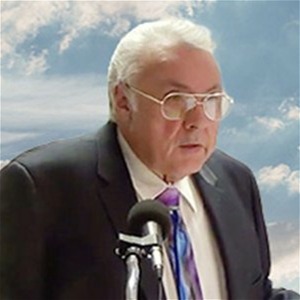
The following program is sponsored by What's Right, What's Left Ministries, and is responsible for its content.
Portions of the following program may be pre-recorded. I am Pastor Ernie Sanders, the voice of the Christian Resistance. Stay tuned, my radio broadcast, What's Right, What's Left, is coming up right now. Music Coming to you live from Independence, Ohio.
We change our life for the better in many different ways. Heard around the world every Monday through Friday. Pastor Sanders is always years ahead of the rest of the media telling you exactly what they're covering up.
This is What's Right, What's Left. I tune in every chance I get to hear exactly what's going on with the voice of the Christian Resistance. Unabashedly cutting through the rhetoric by exposing the hard topics facing our society and world.
A lot of the other news media don't pick up the news items like he does. And bringing to light the enemies of freedom who are out to steal your rights, your children, and enslaving you. You really get the truth out. I can tune into your show and hear the unvarnished truth.
Thank you. This is What's Right, What's Left with Pastor Ernie Sanders. Music Good evening and welcome to another edition of What's Right, What's Left, the voice of the Christian Resistance on this 25th day of May 2025. And tonight we have with us here my producer, none other than the magnificent one, Kenny. Good evening, Pastor. And he's back. That's right, the Missouri legend.
He has no problems fighting. Well, I was. I could hear you. Now I can't. Can't you hear me now? Now I can. Barely.
It was loud and clear. Now you guys are coming in weak. Kenny, can you strengthen that? I'm trying.
I don't know what else I can do. If you can't hear me, speak up, Joe. I can barely hear you. Can you speak up now?
Try again? Yeah, we will try to speak up. Kenny, I'll do something on my end here. Let me turn it up here on my end. Is that helping you all?
That helps a great deal. Thanks. All right, I got you potted up, boys.
Sorry about that. Hi, glad to be back, boss. Very good. We know, folks, let me tell you, tornadoes and earthquakes and all these things couldn't stop Pastor Joe. He's out there in Missouri to come through. Took his road away. Took his phones.
He hasn't had any phones. We've been worried. As you know, we've been praying for him because we had no idea.
We couldn't get in contact with him and all. Well, today would be about the fourth week and no end lines and we've lost power three or four times and had to dig our own selves out just to get out of here. So it's just been kind of a wild spring. Yeah, and it's tough when you get our age to do all that.
Yeah, that's tough at any age. Yeah, well, believe me, Joe and I know it's much tougher now than it used to be. But anyhow, I wanted to just hit again on what happened on Friday night. Friday night was, you know, some of the people out there listening that were there Friday night knew that what had happened to me and John McTernan at the same time, you know, me being in Cleveland and him being in Houston, at the same time, just prior to the program, as we were ready to go on, both of us suffered pains in our chest that felt like heavy, heavy pressure on our hearts and very shortness of breath. And as that was happening to me, I looked and my phone was lighting up and there was a message coming through from John saying, I can't be there. I'm very sick.
I'm going to the hospital. And so what happened was, you know, we had Elder pray. And Berkeley, he prayed and he prayed for a long time. And we all prayed and he had the people out there praying for us all across the country. And so the next day when I called John, I said, how are you doing? He told me what happened. And I said, that's exactly what was happening to me exactly at the same time.
But listen to this. So when Pastor Hal Larson called me, I asked him, I said, did you hear last night's program? He said, Pastor, he said, it's the craziest thing. He said, I was just turning it on. And when all of a sudden I got real sick, he said, I couldn't, you know, shortness of breath. And he was having, I think my blood pressure, he said, was going up. And he said, I had to lay down. And he said, I fell asleep. And so here, all three of us, he was in Youngstown, returns in Houston and I'm here in Cleveland. And all three of us at the same time, the same thing happened to us.
Now, what's the odds of that? That was an attack. That was absolutely an attack. But it was the prayers of the people out there that sent the enemy. And all of us kind of, we had some residue for the next day. But it was something. But anyhow, we're going to get into our message. I guess I should, just before I really get into it, make that one announcement that we need to make tonight. And so that Ken, you don't have to remind me to do it. I had it written down.
Did you? All right. And that is, I'll be speaking tomorrow at the Veterans Park Memorial Service. That's the Veterans Park Memorial Service at the corner of Route 87 and Auburn Road.
That's Route 87 and Auburn Road, and that's in Newberry, Ohio, and that is sponsored by Commander Ken Hunter and the Newberry American Legion. And that will be at 12 noon. So, again, tomorrow, Veterans Memorial Park, corner of Route 87 and Auburn Road, 12 noon, sponsored by the Newberry American Legion and Commander Ken Hunter. And then they have a parade afterwards, so we got that out. And so today, I'm going to, the title of the message was Memorials Established by God and by Man.
The definition of memorials are things established to commemorate an event or a truth. And we're going to start with three memorials that were established by God. And we start tonight in Exodus, chapter 12, verses 1 through 20. And so, I'll tell you, Joe, let's read, would you read a verse at a time, and we'll take a look and we'll comment on this as we go through.
Can you hear? Right, yep. And the Lord spake unto Moses and Aaron in the land of Egypt, saying, should I just read that?
Yeah. The first month shall be unto you, the beginning of months. It shall be the first month of the year.
Okay, so there, that month he was talking about the first month of the year, that was Abib, Abib, or it's April to us, it's in our calendar, it's April. And so, that's when this was established here, and this was to commemorate the Passover. Go ahead, read verses 3 and 4. Speak ye unto all the congregation of Israel, saying, In the tenth day of this month they shall take to them every man a lamb, according to the house of their fathers, a lamb for a house. And if the household be too little for the lamb, let him and his neighbor next to his house take it according to the number of the souls. Every man according to his eating shall make your count for the lamb.
So let's look at how that could be, if it could be too little. You could have a household that's simply, say, a young couple and a baby, or you might just have an older couple with nobody else but the two of them. And maybe next door, you might have a single parent, someone, a widower, with a child or a widow with a child, so they would combine together to share this lamb. Go ahead and... A whole spring lamb can be quite a bit of meat. Yeah.
Go ahead and pick your, read it 5 through 7. Your lamb shall be without blemish, a male of the first year, and he shall take it out from the sheep or from the goats, and he shall keep it until the fourteenth day of the same month, and the whole assembly of the congregation of Israel shall kill it in the evening. Okay.
Let's look at that. Now the lamb shall be without blemish. Now this is symbolic of who? Jesus Christ, spotless lamb of God. So he was without blemish, meaning he was sinless, perfectly sinless.
Okay. Oh, and notice there was a male too. Male of the first year, so Christ was the first fruits. Christ was the first fruit. Now, you shall take it out from the sheep or from the goats, and here in the scripture, when you had the sheep and the goats in Matthew chapter 25, when you had the goats were those that rejected the Lord, and they were sinners. But you had others, if you take a look at in Christ's lineage, were they all perfect, or did they have some people in his lineage that were, say, questionable morally? In the lineage there were some questionable people, yes. Well, King David was, I mean, he was a man after God's own heart, but he had a tendency, and you had Rahab the harlot, and she had not a good reputation, did she? She had quite a career change, let's put it that way. Yeah, so where there's repentance...
I kind of felt like I went from a helicopter gunship pilot to a Baptist preacher, kind of a major career switch. Yeah, and so what you had there, wherever you have repentance, you have forgiveness, huh? Amen. You have to keep the lamb from the tenth day to the fourteenth day, so you're going to keep the lamb three days and three nights, kind of symbolic, isn't it?
Yep, absolutely. It'll be in your household three days and three nights. Go ahead and read verse 7 and 8. And they shall take of the blood and strike it on the two side posts and on the upper door posts of the houses, wherein they shall eat it. And they shall eat the flesh in that night, roast with fire and unleavened bread, and with bitter herbs they shall eat it.
Okay, so now here, let's take a look at that. You notice where they put the blood. They used hyssop to apply the blood, and they applied it upon both sides and upon the top of the door post.
Where did they not apply it? On the bottom. On the threshold. The threshold of the door, right. The blood could never be trodden underfoot, could it?
No. And so here, he goes on to say, and they shall eat the flesh in the night, roast with fire and unleavened bread, and with bitter herbs they shall eat another. Bitter herbs, okay. Or the bitter herbs of bondage.
Yeah, that was symbolic of, like you say, of bondage and pain. But here, when Christ, when they had the trial, the unlawful trials of the Lord, when did that take place? At night. At night, right. And then here he goes on to say, eaten out of it raw, nor sudden at all, with water, but roasts with fire, his head and his legs, and with appurtenance thereof.
Now, Joe, you know what appurtenance is. Natural. Yep. You roast the whole thing. And you shall let nothing of it remain until the morning, and that which remaineth of it until the morning you shall burn with fire. And thus shall you eat it with your loins girded, and your shoes on your feet, and your staff in your hands, and you shall eat it in haste.
It is the Lord's Passover. So, let's ask Kenny. Hey, Kenny, why do they have their shoes on and their staff in their hand?
I'm not sure. Well, because they had to be ready to get out of there. This is the Passover. Something's about to happen. The angel of death is going to come, and then when that happens, when the firstborn of all of Egypt is killed, including Pharaoh's son, how do you think Pharaoh's going to take that? Yeah, he's not going to react very nicely to that. And so he's telling the folks to be ready to move on, huh?
Yeah. And so, he goes on to say, it is the Lord's Passover. So, this is what the memorial is, the memorial of the Passover. And I will pastor the land of Egypt this night, and will smite all the firstborn in the land of Egypt, both men and beasts, and against all the gods of Egypt, with excitement and judgment I am the Lord.
So, it's referred to usually as the firstborn male of every household, and the firstborn male of every beast. And he goes on to say, and the blood shall be to you for a token upon the houses where you are, and when I see the blood, I will pass over you, and the plague shall not be upon you to destroy you, and I smite the land of Egypt. Now, and this day shall be unto you for a memorial, and you shall keep it a feast to the Lord throughout your generations, you shall keep it a feast by ordinance forever. Seven days shall you eat unleavened bread, even the first day you shall put away leaven out of your houses, for whosoever eateth leavened bread from the first day until the seventh day, that soul shall be cast off from Israel. Cut off from Israel. What do you think that means to be cut off from Israel? You will no longer be part of the household of the children of God. No, that means you're not going to be among the living when you got cut off, when whatever God puts you.
When he cuts you off, you were cut out, okay? And so, here now, what does leaven symbolizes something? Leaven causes, it symbolizes sin, but also corruption. What does leaven do? You can put packets of leaven, a lot of people put packets of leaven in their septic systems, okay? And so... Bacteria grows and makes the bread rise and it makes bacteria grow.
Right, it's a corrupting, it's corruption, it's influence. When the Lord Jesus was given to make the wine for the wedding at Cana, he made the wine, do you think that there was any leaven in that wine? No.
No, because the... If he made it, it was pure. And the leaven causes fermentation, which causes the alcohol, and so it wasn't fermented. And what do people say about the wine that the Lord Jesus made? Everybody always gives... Yeah. He says, you've kept your best wine to last, okay?
And so, here, because most people would put their good wine up front, and then when people were drinking and getting a little drunk, they would notice that they bring out the cheap stuff, okay? And so, he goes on to say, and in the first day, there should be a holy convocation, and on the seventh day, there should be a holy convocation to you, no matter of work shall be done in them, save that every man must eat, and that only may be done for you. Now, two things. Today, on the first day of the week, what do we do? We call that the Lord's Day. The Sabbath, right, we are to rest, safe from work. And then, who does the same thing on the seventh day? The nation.
The nation of Israel. Oh, okay, yeah, because they came from the Lord rested on the seventh day, yeah. Yeah, and so, here, and so, and if ye shall observe the feast of that leavened bread, for in the selfsame day have I brought you armies out of the land of Egypt, therefore shall ye observe this day in your generations for an ordinance forever. Are the Jews observing Passover?
Ah, still, yes. Do a lot of Christians actually? I don't think they do it exactly like they used to, but they do observe the feast of Passover. Yeah, instead of slaughtering the lamb, they go to the grocery store out there. I think Heinen's up here is where they keep, you have the lamb, but they go and they buy it over.
They call it the lamb, but it's still been cleaned, gutted, and yeah, it doesn't have the entrails in it, I guarantee it. Yeah, and so, here, what about Christians? Do Christians sometimes observe the Passover? Not that I'm aware of.
None that I know. Yeah, they do, and a lot of, especially Baptist churches, they have, often we will have Jewish people, which were converted Jews, okay, what they call Messianic Jews. Messianic Jews, all right, now we don't have any of those out here where I live.
Well, they come out, they've been to our church several times and we observe Passover, and you know, going through the whole thing, and they explain piece by piece, and then it goes on to say, The first month and the fourteenth day of the month, and even that you shall eat unleavened bread until the one and the twentieth day of the month at evening. Seven days there should be no leaven found in your houses, for whosoever eateth that which is leavened, even the soul shall be cut off from the congregation of Israel, whether he be a stranger or born in the land, you shall eat nothing leavened in your habitation should you eat unleavened bread. So, here again, they make it very, very clear that that's a no-no, huh? What if they have a stranger passing through, God would punish somebody coming through that didn't know what was going on? If they had leaven in the house, yeah, it would be cut off.
He says whether it be a... So they would have to tell that person, either don't enter or you have to participate and go along with the ritual. Right, or if that stranger was eating leavened bread, at that time this would command no one was to eat leavened bread. There shouldn't have been any leavened bread found anywhere at that point. Right, during that time, yeah.
So any stranger that's looking for bread would not find leavened bread. All right, now, do we have our Christian version of the Passover? Let's go to Luke 22.
Oh, well, yeah, let's go... No, you know what? First of all, let's go to Exodus 16. Exodus 16 verses 31 through 36.
Okay, Exodus 16 verses 31 through 36. And the house of Israel called the name thereof, manna, and it was like coriander seed, white, and the taste of it was like wafers made with honey. Have we seen people, have there been people throughout the ages trying to duplicate manna? Yeah, yeah, there's been a lot of attempts to try to duplicate manna, and manna was a supernatural food.
You couldn't duplicate it. So, and Moses said, this is the thing which the Lord commanded, fill an omer of it to be kept for your generations that they may see the bread wherewith I have fed you in the wilderness when I brought you forth from onto the land of Egypt. Now, he commanded them to make sure they put, and they fill an omer, and they keep that for generations to show people where did they keep some of that manna was kept in a certain place? The Ark of the Covenant.
No, I was just going to say that. The Ark of the Covenant, I was just going to say, is kept in the ark because the rest of the manna would disappear by the, you know, before the next day came. It would be gone. So it was only by God's grace could they store it, and the only safe place would be the Ark of the Covenant. So the ground was covered with manna, but when morning came, by sunrise, it would all disappear, wouldn't it? It would just evaporate. Whatever was left would evaporate. And so he goes on to say, and Moses said, oh no, in verse 32, and Moses said, this is the thing which the Lord commanded.
Okay, I already read that. He goes, 33, and Moses said unto Aaron, take a pot and put an omer full of manna therein, and lay it up before the Lord to be kept for your generations. And as the Lord commanded Moses to Aaron, laid it up, therefore testimony to be kept. And the children of Israel did eat manna for 40 years until they came to a land inhabited. They did eat manna until they came into the borders of the land of Canaan.
Now, an omer is the tenth part of an ephoh. So why was it that they were out in the wilderness for 40 years eating manna? Did they suffer where it came to? Did they have enough nutrition through manna? Yes, they grew, they prospered.
You hear about all these super foods, but manna truly was a super food, wasn't it? It had everything they needed for the children to grow, to sustain the working adults, and you've seen the desert out there. There's not a lot of food, especially for nearly 3 million people. So you had 3 million people marching around out there, out in the wilderness, for 40 years. Where did they shop for clothes? Well, they didn't have to because the clothes didn't wear out, the shoes didn't wear out, and even with the children, the shoes seemed to grow with the child. The clothing seemed to grow with the child because they had no clothing, they had no cloth, they had no cotton, they didn't have cotton or anything to make, and there were certainly not enough animals for skins for clothing like found the Baptist.
So how do we take a look and see the symbolism there? How do we see Christ in the manna? The manna? It was total dependency on God. He took care of every single need. He fed them, he clothed them, he kept them warm, he kept them safe, showed if you followed him, what, he would take care of everything.
It was a great example and you hardly ever hear that preached. So manna? This is how he proved he could do all things for his people if they trusted in him. So manna was the bread of life. And Christ is what?
The bread of life. And so the people were sustained by manna. What is sustained by Christ? What things are sustained and held together by him?
All things in the universe. All right, so we're seeing that... All things in heaven and earth and beyond are sustained or taken care of, kept under control by him. So the manna was a type of Christ then.
Let's go... Right, it was a type of Christ. Okay, so that institution was, memorial was again instituted by God himself. Let's go now to Luke chapter 22 and we'll see...
It's the modern version. Yeah, and so here, now, this is spoken of several places in scripture. You've got it here, you've got it in Matthew 26, you've got it in Mark 14. But why are we going here to Luke 22 verses 19 and 20?
There's a reason. And that is because it was the first time, that is when the institution of the Lord's Supper was introduced here. And he took the bread and gave thanks and he break it and he gave it to them saying, this is my body which is given for you, this do in remembrance of me. Now was he speaking literally or was he speaking symbolically? Symbolically.
How do we know that? Because you can't eat raw flesh because God said the blood, the life is in the blood and you were forbidden to eat blood. Well, he goes and he says, and he took bread, he took bread. Bread, the bread of life, right. And so when he took this bread and he broke this bread, so they're sitting there at the table and they're sitting on the ground and there's a table there and they're breaking, Jesus is breaking bread and he's passing bread.
The broken body that he had symbolizes his broken body. So there are those that taste it, he was literally eating his dead, it literally turns to his flesh and blood. But here he says he took bread and everybody seen him take bread and breaking bread, okay.
He didn't break off a finger or anything like that, it was just plain bread. But we know that it couldn't be literal because what did Christ himself teach about cannibalism? It was an abomination. So it was an abomination, forbidden. Okay, so here, likewise also he made the children of Israel eat their children, at one point there they starved them and it was for punishment. So it was probably one of the worst punishments that could be rendered. Well, he put a punishment on them, he didn't make them eat their children, they did it themselves because... ...he caused the starvation, knowing they would do this, right, I mean he knew the end, you know, he knew the end before the beginning.
Oh, yeah, yeah. I mean he knew what they would do before he caused the starvation, so... Yeah, I mean you and I know what Democrats would do, right? I mean, they've already showed us what they would do, how they would perform, so, and God's a lot smarter than we are. He looks upon the heart of men, so he not only knows the future, he literally is the future, huh?
He is, yes. I was wondering, does a Democrat even have a heart, at least a godly, I know they don't have a godly heart, but... ...they don't have a heart like we would know it to be. You know, it's interesting because I was listening to some Democrats talking and they said, look, you know... ...we would really love to be able to sit down and find areas where we agree with Republicans and... ...but he said, they were saying that if they try to do that, then the progressives, they will be condemned and attacked by the progressives. And so what do they do? The progressives are anti-Christ and if you're a conservative or a conservative Republican, you are part of the kingdom, or at least a believer... ...and we've talked about it for years on the radio, underneath everything happening in the world is a spiritual battle... ...spiritual warfare between Christ and his children, his followers, and the anti-Christ system, the sons and daughters of Satan... ...and it's been that way from the very beginning, from the Garden of Eden.
Yep. And so here now, we're going to take a look at three memorial institutions that were instituted by men. And let's start in Genesis chapter 28. And in Genesis 28 verses 10 through 22. So let's go to Genesis 28. And this was the first, we're going to take a look at this, because this was going to be the first one of eight different theophanies that Jacob experienced. So we start in verse 10.
Let's take it verse by verse. And Jacob went up from Beersheba and went towards Harim, and he laid there by a certain place and tarried there all night because the sun was set, and he took off the stones of that place... ...and he put them for pillows, and he laid down in the place to sleep. Boy, I don't know if I'd like to have a stone for a pillow.
Not very comfy. No. Not in my life.
No, yeah. Put your cloak, your arms, something blade, you know, grass, anything, you know, other than a stone. I never did get that. And he dreamed, well, Jacob was a, he was a tough old bird, you know, and he dreamed, and behold, a ladder set up on the earth in the top of a, reached into heaven, and behold, the angel of God ascending and descending on it. And behold, the Lord stood above it and said, I am the Lord God of Abraham, thy father, and the God of Isaac, the land where thou liest to thee will I give it and to thy seed. So now, when we take a look at this thing, throughout Scripture when you're referring to certain things, for example, let's see, when you have, you have certain covenants that are made. The covenants always refer to God. God makes the covenants.
Now, when we have a Christophany, if it's an action where here an action has taken place, the Lord always refers to the person of Jesus Christ in one form or another as Christophany. But when, when it refers to God, that use is referring to the, to the Godhead. That means the Godhead is involved here. The covenants were made by the Godhead.
Okay. In other words, the Father, Son, and the Holy Ghost, now the Lord Jesus would be the one that would bring sometimes and announce this, for example, at the Plains of Mamre when he, when he came to Abraham and Sarah. And so, but the covenant usually was made by God. And for example, when we see over there in Genesis chapter 9, no covenant, it's instituted by God, meaning the Godhead. And so we see here, um, and behold, the Lord stood above it and said, I am the Lord God of Abraham, thy father and God of Isaac, the land of where thou liest to thee.
Will I give it and to thy seed? Now, now think about this for a minute. Isn't this a Christophany because Christ made it clear no man has ever seen the Father. He said it twice and so here he's seen the Lord. No, he's having a dream. That would have to be the Christ, wouldn't it? Well, he's having a dream.
He's having a dream here. And the Lord stood above the ladder. The angel of the Lord was, the angel of God was on the ladder and the Lord stood above the ladder, okay. And so, The angel, plural, right? Not the angel of the Lord, just the angels plural. Well, the angel of God it says here, depending on, and so here, Okay, plural, angels, I thought because of plural, angels of God, angels of God are sitting right. So now the Lord, the Lord himself stood above this so that would be, you would probably consider a Christophany, okay, because Christ is always referred to as the Lord, huh? Then he says, I am the Lord God of Abraham, now here's where the Godhead comes in, the Father and God of Isaac and the land whereon thou liest.
When it refers to God, we're referring to the Godhead, or it refers to the Lord, it's usually referring to the singular person of Christ, okay. And thy seed shall be as the dust of the earth, and thou shall spread abroad. Now listen to this. This is, you know, if you've ever been to Israel, it's about the size of Ohio. In ten days, in ten days I covered that entire state.
Of course we started in the morning at seven o'clock and we went to seven o'clock at night. From one place to the other, looking at this, but in ten days the entire country of Israel, and it's no bigger than probably the state of Ohio. Maybe a little bit, but I don't think, and so here, now that is not the land that the Lord has given them.
Listen to this. And thy seed shall be as the dust of the earth, and thou shall spread abroad to the west, and unto the east, and unto the north, and unto the south, and in thee, and in thy seed shall all the families of the earth be blessed. So that land that He gave actually would include all of Saudi Arabia, Iran, all of that area today, the Lord said He would give to them, okay. And so He goes on, and behold, I am with thee, and will keep thee in all places, whether thou goest, and I will bring thee again unto the land. For I will not leave thee until I have done that which I have spoken to thee of.
So in several places in Scripture, in the Old Testament, it says that I have said it and I will perform all that I have said to do. And so, and Jacob awaked up out of his sleep, and he said, Surely the Lord is in this place, and I knew it not. And did you guys ever have a dream that was like very, very real, I mean like very real? Unfortunately, yes. And yeah, sometimes I had a couple of flashbacks that were so real that I woke up in a horrible sweat shaking, yeah, really. Those are called nightmares. Oh, okay.
Yeah. But sometimes you've had something that seemed that you know was not a natural phenomenon. There was a message there, okay, especially when God was in it. Just knowing that something, yeah, the Lord speaking to you. Yeah, and it was not something natural.
But you know it was so real, okay, and where you woke up and you remembered every single bit of it, huh? And so, and then he says, and he was afraid, and he said, How dreadful is this place, this is none other but the house of God, and this is the gate of heaven. Now, that word dreadful, if I say to you, Kenny, there's something very dreadful. What would you say that I'm talking about? Usually, I mean it refers to usually something not being very good.
Okay. If I say Kamala Harris was elected president, would that be? That'd be pretty dreadful.
Dreadful, okay. That's not exactly the way that that word's used there in the Hebrew. That word there is the same word that we use for awesome. If I say that is awesome, in fact, what do you think that means, awesome? Kind of like something really good. Yeah, you know, our God is an awesome God, he reigns from heaven above, okay, and he was afraid and said...
Awesome is closer to spectacular, just something monumental. Yeah, and Jacob rose up early in the morning and took the stone that he had put for his pillows and sent it for a pillar and poured oil upon the top of it. So here you go, this is the memorial now, and he called the name of this place Bethel, but the name of that city was called Luz at the first. That means house of God. House of God is what Bethel means. And Jacob vowed a vow saying, if God will be with me... Bethel means house of God, right?
Yeah, Bethel means house of God. And so, Jacob vowed a vow saying, if God will be with me and will keep me in this way that I go, and will give me bread to eat and raiment to put on, so that I come again to my Father's house in peace, then shall the Lord be my God. So as he's saying, okay, as he's saying that if God will do this, is this a covenant that he's making that's a conditional covenant? And who is he making this covenant?
Jacob is establishing a covenant with who? He's trying to establish a covenant with God here, but it's... Right, with the Lord. So is he saying that God has to perform these things, or is he saying he's going to do this and he will be my God, okay? In other words, it's not on the condition of him performing these acts, but that he'll perform these acts and he's going to be his God. He's also saying he will come in peace, meaning he will make peace with God. He will do what is necessary to be at peace with God.
Yep. And this stone which I have set up for a pillar shall be God's house, and of all that thou should give me, and I will surely give the tenth into thee. Now, this here is the second time here in Scripture that tithing was mentioned. The first time is over in Genesis 14, verse 20. And here's to where you get the tenth, where you tithe one tenth of whatever your income.
So this was the first institution instituted by man. Let's now go over to Joshua 22. Joshua 22. And we're going to read verses 9 through 16. Okay, Joshua 22. Okay, Joshua 22, starting with, well, actually, we don't have time to do the whole thing. Well, let's do it. Go ahead. Read me verses 9 and 10, Joe.
Okay. Now, here, to see to now, here is where you have, is it, to presume and assume, when you presume and assume, what does that do? If you assume something. You make something out of you. Yeah, and that word, out of you and me, that's what that word to assume.
Out of you and me, yeah. So, to just presume and assume something without looking into it, we all make those mistakes, don't we? Well, it sounds like they had good intentions, just taking the altar, building an altar. It sounds like they thought they were doing a good thing. Well, yeah, they actually were doing a good thing, but what happened is the rest of Israel, all the children of Israel, assumed and presumed that they were putting this altar up. What did they do when they built altars up in those days?
What were they for? Sacrificing. Sacrificing their children, their children, which was an abomination in the land. Oh, they also had altars. Didn't they sacrifice, like, the goats and the lamb? Yeah, they did, but in this situation, when you put these big altars up, for everyone to see in those days, they were to sacrifice their children to mock or bail. Oh, wow.
Oh, I missed that. But you see, the children of Israel assumed and presumed when they saw this. Now, first of all, you had on one side of the Jordan, you had the children of Reuben and the children of Gad and half of the tribe of Manasseh, and on the other side, you had the rest of the children of Israel.
In verse 11, go ahead and read verses 11 all the way down through 16. And the children of Israel heard, say, Behold, the children of Reuben and the children of Gad and the half tribe of Manasseh have built an altar over against the land of Canaan, in the borders of Jordan, at the passage of the children of Israel. And when the children of Israel heard of it, the whole congregation of the children of Israel gathered themselves together at Shiloh to go up to war against them. And the children of Israel sent the children of Reuben and the children of Gad into the half tribe of Manasseh into the land of Gilead, Phinehas and the son of Eleazar the priest, and with him ten princes, of each chief house of prince throughout all the tribes of Israel, and each one was the head of the house of their fathers among the thousands of Israel. And they came to the children of Reuben and to the children of Gad and to the half tribe of Manasseh into the land of Gilead, and they spoke with them, saying, Thus saith the whole congregation of the Lord, What trespass is this that ye have committed against the God of Israel, to turn away this day from following the Lord, and that ye have builded you an altar, that ye might rebel this day against the Lord?
Now, so here now, so now, why would that matter? They were on one side of the Jordan and the others were on the other side, but if they were to do this... It looked like they were just taking their claim, was it? I mean, from what I've read before, they thought they were just taking their claim to that, the land to be given to them.
No, no, it was more than that. They had, what they were doing is, this altar was a reminder of the tribes on both sides of the Jordan of unity. It was, the whole altar was about showing, you know, wanting God and all men to know that they were one, even though half of them were on one side of the Jordan and the other on the other, they were still one nation, Israel, so the intention was good.
Start with verse 26 and read down through 29. Therefore we said, let us now prepare to build us an altar, not for burnt offerings nor for sacrifice, but that it may be as a witness between us and you and our generations after us, that we might do the service of the Lord before Him with our burnt offerings, and with our sacrifices and with our peace offerings, that your children may not say to our children in time to come, ye have no part in the Lord. Therefore said we that it shall be when they should so say to us or to our generations in time to come, that we may say again, behold the pattern of the altar of the Lord, which our fathers made not for burnt offerings nor for sacrifices, but it is a witness between us and you. So what would have been a better way of doing that with them sending emissaries over to Israel and saying, look, we're going to build this altar and here's what it represents, our unity, and that we are all God's children, we're His chosen people, and will you join with us in this? Wouldn't that have been a better way of doing that?
Much better. I guess what I'm thinking, I had looked at several different, what do you call it, Bible scholars, different things, and they had said that this, they thought this was not to be a sacrificial altar, but as a witness to their right to the Lord's established altar, west of Jordan, and the facade as a threat of civil war. They were staking out a claim, so a lot of the, what do you call it, I can't think of the word, other Bible commentaries. Well yeah, that was the assumption that Israel soon had presumed, but they also presumed that that altar was for the sacrificing of children. That's what, whenever they built those big altars in those days. So what would, why would that have mattered to the children of Israel being on the other side of, if? Because that would have been an abomination, a great abomination to the Lord, and that would have almost destroyed the nation of Israel, would have separated it forever. That when God's judgment come, did it come, did it rain on all the people, or did it rain on just certain people? When His judgment came...
It rained on all of them. If it was a national sin, so the whole nation would suffer, huh? Right. Yeah.
We have to stop right there because we're coming up to the end. It's interesting because national sin that we keep, the nation keeps having abortion, that national sin killing the children continues and, you know, people don't seem to get it that God has to bring judgment for, to this country at some point for that abomination. Boy, does He. I mean, boy, I'm going to tell you, people don't realize it, they just really don't realize it.
And you know what? Again, a lot of the blame goes back to the pulpit. The pastors were not spoken of. Here's what the Bible teaches about abortion. This is what God has said. That when a woman kills her child by abortion, that she deserves to die, that she deserves to die and burn in hell unless there's repentance. Now, that's what the Bible actually teaches.
Of course, the abortionists, you know, those involved in that, yeah. Why aren't the pastors preaching this? Why do they give such a soft message on this? Okay? There's just too many people away from the collection plate. They don't want to hear it.
Yeah, I know. And I actually had a Presbyterian pastor tell me, you know, I agree with everything you're preaching, but I could not do that in my church. I would offend too many of the women. We've had too many of them have had abortions that it would offend. Are you supposed to worry about offending them or offending God?
A preacher, is he supposed to preach the whole Gospel? Right. You're supposed to worry about offending God, not man. Absolutely. You know, if the Word of God offends you, then you need to repent, huh? Okay.
And that's why so many of the prophets, you know, ended up being martyred. We're out of time for tonight. It's good having you back, Joe. It's good to be back. I've been trying to catch up on several years of neglect on the ranch and all these storms and floods and power losses and whatnot.
It does not help getting caught up. It seems like as soon as you get one cleaned up, another one comes along. That's just about what is happening.
Yep, you've got it. Well, we're out of time for tonight, so I want to wish everybody out there a blessed Memorial Day. Let me just say this. Let us never forget those that paid freedom's price so that we could live free and guard that inalienable right to life, liberty, and the pursuit of happiness. We must be ever ready to make the very same sacrifices as those that went before us. For if the time ever come when we're not fully committed to fight for those freedoms, we shall surely lose both the liberty and life. And let us never... And if there's time, I'd like to ask the listeners to pray for those that are suffering this holiday with survivor's guilt. A lot of the men that came home had trouble understanding why they made it home and their brothers in arms didn't come with them. And guilt's a heavy thing to bear, and a lot of men suffer this time of year. Absolutely.
So pray for them, please. Let us never, ever have any doubt about who was the greatest warrior ever. He that paid the greatest price and sacrificed it all. Right. And that was Exodus 15, verses 1 to 3.
The Lord is the man of war. Well, we're out of time for tonight. Again, I want to thank all of you folks out there being here with us. And have a blessed, blessed, blessed Memorial Day.
And Lord's willing, we'll be back here tomorrow, all three of us. And so, until then, we want to say good night. Good night.
Good night. God bless, and always, always, always... Always, always... Keep fighting the fight. Fight. Fight. Fight.
Fight. Thanks for listening to the Voice of the Christian Resistance, What's Right, What's Left, hosted by Pastor Ernie Sanders. To learn more about our ministry, please visit us online at www.wrwl.org. Please tune in next time for another edition of What's Right, What's Left. The preceding program is sponsored by What's Right, What's Left Ministries, and is responsible for its content.