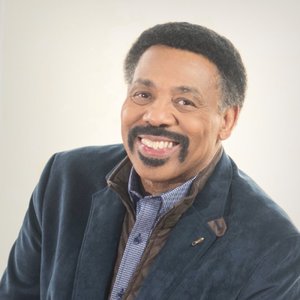
If you are looking for the meaning of life in life, you won't find life. Dr. Tony Evans talks about why so few people find what everybody is searching for.
You'll never get it, because as soon as you think you have it, you lose it. This is The Alternative with Dr. Tony Evans, author, speaker, senior pastor of Oak Cliff Bible Fellowship in Dallas, Texas, and president of The Urban Alternative. Dr. Evans says we have the right to pursue happiness. What it doesn't say is that we'll never find it unless we pursue something completely different. Dr. Evans will tell us what it is today as he begins his brand new series on the book of Ecclesiastes. Let's join him.
So I can start my career. Okay, that's great. What then? Well, then I'm planning to get married and have a family.
Okay. Okay, what then? Well, then I'm going to raise my kids and get rid of them when they become 18. Well, what then? Then I'm going to look forward to retirement when I don't have to work anymore and travel and see the world. What then? Well, then I'm going to die.
What then? The question of life—what it is, how it works, what it means, is it worth it—what is this thing called life? God knew we would have that question, and he knew he would have to provide an answer for that question. The book of Ecclesiastes is a book about life and how not to waste it.
Solomon is the author of the book of Ecclesiastes. And at the core of what he's going to tell us—tell you and me as we work our way through the book—is simply that a philosophical perspective on life disconnected from God means you don't get to live. So what you have to do is establish a saccharine existence, sugar substitute. You have to keep finding things to make life life because the life you want is empty.
It becomes a placebo. There's no real content in it except the temporary things you fill it with to make you forget that you don't have it. He starts off his book after identifying who the author is in Ecclesiastes with the summary of the book. Verse 2 of chapter 1. Vanity of vanities, says the preacher.
Vanity of vanities, all is vanity. He starts off the book telling you he doesn't have anything to talk about. That's how the man opens the book.
He opens the book. Let me translate it. Empty, empty, says the preacher. Empty, empty, all is empty.
Let me give you another synonym. Meaningless, meaningless, says the preacher. Everything is meaningless.
Vanity means meaningless, purposeless, without real value, fleeting or transitory. He says all in life is empty. That's how he starts.
Now I hope he doesn't go down from here, because we're already at the bottom. He lays out his thesis at the beginning of the book, and what he's going to go into is how you look at life from a human perspective. That's why you'll see throughout the book this word vanity, and you'll see as in verse 3, which he does under the sun.
Under the sun means on earth. So he's talking about man's view of life from earth's perspective. So he's being real earthy. He's being nitty-gritty here. He's being real. He's not talking pie in the sky. He's talking nasty here and now. He's talking under the sun.
That is where people live, work, play, raise families, and all the other stuff in life. He says vanity of vanity, says the preacher. Now he is highly qualified to be the author. He is very qualified. He is qualified because he has experienced everything that life could throw at you for you to find the meaning of life in life. In today's dollars, Solomon would be a billionaire, a mega billionaire. He would probably be the richest man on the planet if you were using today's dollars from when he lived.
In other words, if you could buy life, he could afford it. When he became king, he made a request. That request is recorded for us in 1 Kings chapter 3. Solomon is being anointed king and he makes a prayer. He says in verse 9 to the Lord, So give your servant an understanding heart to judge your people, to discern between good and evil for who is able to judge this great people of yours.
It is a prayer for wisdom, an understanding heart. He says, I need to know how to make good decisions. He says, because this thing is too big for me.
This thing, this thing, this responsibility that's on my shoulders is too big for me and I won't know how to make the right choices. So give me an understanding heart. God tells him, verse 11, because you've asked this thing and have not asked for yourself long life or riches for yourself or the life of your enemies, but have asked for yourself discernment and understanding justice. Behold, I did according to your words, I have given you a wise and discerning heart so that there has been no one like you before, nor shall one be like you to rise after you. I have also given you what you have not asked for, both riches and honor. So I gave you what you asked for and I gave you what you didn't ask for. So I guess by way of parenthesis, maybe we should change what we're asking for so we can really get what we want.
You asked me for the more important thing, not for what people think is important, because the reality is, if most of us, if not all of us, learn to make better decisions, then we wouldn't be dealing with some of the things we're dealing with. So he asked for wisdom. Fast forward to chapter 11 of 1 Kings. Now King Solomon loved many foreign women, and he listed different countries and cultures in verse 2, from the nations concerning which the Lord had said to the sons of Israel, You shall not associate with them, nor shall they associate with you, for they will surely turn your heart away after their gods. Solomon held fast to these in love. He had seven hundred wives, princesses, and three hundred concubines, and his wives turned his heart away. For when Solomon was old, his wives turned his heart away from other gods, and his heart was not wholly devoted to the Lord his God as the heart of David his father had been. So his relationships drew him away spiritually from God. His relationships—and so he accepted idolatry, drew him away to other gods. So when you're reading the book of Ecclesiastes, you're reading a man between the answer to his prayer, chapter 3, and the result of his departure, chapter 11.
He has departed from God. When you read now in Ecclesiastes, you're reading about his return and the experiences in between. So you're looking at where he started, where he departed, the experiences within his departure, and the lessons he's sharing with you and me upon his return. So that gives you a framework for understanding his thinking. He's going to let you know through this book he has tried it all.
It is departure from God, and he doesn't want you and I to waste any more of our lives than perhaps we have already wasted, and to remove ourselves from the word he uses, vanity, emptiness. When Dr. Evans comes back to continue our message in just a moment, he'll tell us more about why all the new problems we face in our culture today aren't new at all. Before he does, though, the lesson we're listening to is the first in Tony's brand-new series called How to Avoid a Wasted Life. In this collection of sermons, Dr. Evans takes a deep dive into the Old Testament book of Ecclesiastes, looking at what it has to say about the fleeting nature of our time on earth and how we can maximize our days, making sure our existence counts for something of everlasting value.
Through these lessons, you learn to find joy in life's simple pleasures and discover new ways to cultivate meaningful relationships that can enrich your life and the lives of those around you. There's a lot packed into this powerful series, and all nine messages are yours as our gift when you make a contribution to help support our work here on this station and others like it around the world. You can get these audio messages on CD or digital download, along with an extra bonus, a 365-day kindness flip calendar featuring daily prompts, prayers, scriptures, and words from Dr. Evans that'll help you develop a passion for the simple fruit of the Spirit, kindness. Visit us at tonyevans.org before this limited-time offer runs out, or call us at 1-800-800-3222 to get some in-person help from our resource team.
I'll have our contact information for you again after part two of today's lesson and this. Hey, fellow dads. Jonathan Evans here, and I want to put you on a new parenting tip. You know the constant struggle of finding something safe and engaging for our kids on those screens. Well, I have the solution. Stories from the Storyteller, the safe option for our kids to use technology. No compromises. Every episode is a chance to teach valuable biblical and life lessons connecting our adventures to the teachings of Jesus.
So dads, make sure you head on over to tonyevans.tv to catch up on our season one, because season two is coming back this summer. So let's go through this chapter and at least get an orientation of his thinking. What advantage, verse three, does man have in all of his work which he has under the sun? He says, A generation goes, a generation comes, but the earth remains the same.
He says, what is the lasting benefit to what I do? You ever felt like you just wasting your time, spinning your wheels, just going over the same thing over and over again? How many times have you thought, I wish I could do something different? I wish I could go someplace different. But your crying is, I wish I could break the routine.
I wish I could break the routine. That's why people go to things to help them escape. He's going to talk about that too.
They go to places, to people, to circumstances, to help them escape, to help them to forget the routine of life. He goes on to say in verse eight, these are words from the main man is not able to tell it. The eye is not satisfied with seeing, nor is the ear filled with hearing. You hear his frustration, his mood.
He's frustrated because he's in this place where with all the stuff he has, it ain't working. That which has been is that which will be, verse nine. I've seen this before. And so his point, verse nine, there's nothing new under the sun.
So let's get that in your head. Here's the preacher, the philosopher telling you, it ain't new. It's reconfigured. Is there anything of which one might say, see this is new? Never been here before, never seen it before?
Already it has existed for ages, which were before us, because anything new is used, it's only new, because people have found a way to present it differently or get it to do things differently, but the raw material for it has always been around. So there's nothing new in terms of its core. It may be new in how it looks. It may get a new paint job.
It says it's been here before. There is no remembrance, verse 11, of earlier things, and also of the later things which will occur. There will be for them no remembrance among those who will come later still. You know, one of the bad thoughts about life is the idea of being forgotten. The reason why rich people will make big donations to projects is so they can get their name on them. One of the great fundraising tools is to get people who have resources to give to something so it can be named after them because they do not want to be forgotten. They want to be remembered. He says in verse 11, where is the remembrance among those who will come later?
How much do you remember about your grandfather, or maybe let's go back one, your great-grandfather, or your great-uncle? I mean, there's a snippet here. There's a picture there.
They're vague scenarios that you may remember, but in terms of the details, they dissipate and they disappear. He says that's reality. He says, let me be cold and let me be real.
This is a real deal. This is life under the sun. Under the sun, if you're trying to find life under the sun, you're going to be disappointed. Now, he's going to be real practical because he's going to tell you, he's not expecting you to run into a cave. He's not expecting you to go into Never Never Land. He just wants you to look at life for what it is under the sun.
Watch this. Then you won't expect from it what it can never give you. If you are looking for the meaning of life in life, you won't find life. If you're looking for the meaning of life in life, then you will not find life. And he says, if you check this thing out under the sun, in the place where real people live and work and talk and walk and play.
Verse 12, I, the preacher, have been king over Israel and Jerusalem. I have set my mind to seek and explore wisdom concerning all that has been done under the sun. I didn't search this thing. I didn't study this thing.
Not only did I study it, search it out, I explored it. I tried it out. So I'm not just talking from what someone told me.
I'm talking from what I tried. It is grievous task which God has given to the sons of men to be afflicted with. But God has given you a task that drives you nuts under the sun. Now we're going to find out why he's given you such an empty task underneath the sun.
That is where people live. I have seen all the works which have been done under the sun. And behold, all is vanity and striving after the wind. So let me ask you, or let me give you a challenge.
To understand this principle, he's given you a practical test. He says, if you want to understand my point, I want you to do something. I want you to strive after the wind. So here's the challenge. When you go outside tonight, when the wind comes by, I want you to plan this thing now. I want you to do this thing right. When the wind blows by, I want you to decide which piece of it you want to grab.
Just decide, okay, this next piece that blows my way, I'm going to get you. I'm going to get you. I'm going to own you.
You mine. And then whatever piece of wind that blows by that you want, I want you to grab it. Now hold it. I mean, hold tight to it. Don't lose it. The piece you want is the piece I want you to grab.
Only to discover that the piece you grab, you lose when you grab it. Okay, but I don't want you to be discouraged because he says, striving after the wind. Go get it. Chase it down. Don't lose that wind. Don't lose that breeze. Don't lose that thing. Go get that thing. Come on, now.
You go get that piece of wind that you just reach for, grab, slip out of your fingers. Come on. You're a better man, a better woman than that.
Go get it. You'll never get it because as soon as you think you have it, you lose it. He says, he uses that to define life. He says, I've seen the works which men have done under the sun. I've seen men at their best. I've seen men at their worst, and it is striving after something they can't keep. What is crooked cannot be made straight.
What is lacking cannot be counted. Verse 16, I said to myself, here we go, my boy talking to himself. He's gonna do a lot of that. I said to myself, self, behold I have magnified and increased with wisdom more than all who were over Jerusalem before me. I am the wisest man ever made, ever created, and my mind has observed a wealth of wisdom and knowledge. So I got the info.
I got the 411. He says, and I set my mind to know wisdom and to know madness and folly. I done looked at the best way to do it and the worst way to do it, madness and folly. He says, I know I done done the whole range of decision making. Made bad choices, good choices.
So I've gotten the range down, and I realize even this was striving after the wind. Because in much wisdom, there is much grief, and increasing knowledge results in increasing pain. And there's some things in your life you wish you didn't know about. You know, you look at a child, you look at a child, and they don't have information.
And so when they get the information, then they become dangerous. He says, he looked at his empire, he looked at his experiences, and he says, there's got to be more than this. Dr. Tony Evans, beginning his look at what Solomon learned during his search for meaning in life. Now, as I mentioned earlier, today's lesson is the first installment in a brand new series called How to Avoid a Wasted Life. And don't forget, for a limited time, we're offering the full length version of all nine lessons in this series on CD or digital download, along with a 365-day flip calendar that will help challenge and inspire you to practice a life of contagious kindness. They're both yours as our thank you gift when you make a donation to help us continue this ministry to a world desperately in need of more Kingdom believers.
People who embrace the love of God and live their lives for good, not just for their own benefit. Call us to make the arrangements at 1-800-800-3222. Our resource center never closes, so you can call us any time of the day or night. That's 1-800-800-3222 or visit TonyEvans.org to take advantage of this special package.
You'll find the details right on the home page. Again, that's TonyEvans.org. The world says work hard enough and you can have everything life has to offer. But Dr. Evans says there's a catch. The one thing life can't offer is real life itself. Be sure to join us tomorrow when we'll talk about a man who learned that lesson the hard way. The alternative with Dr. Tony Evans is brought to you by the Urban Alternative and it's made possible by the generous contributions of listeners like you. Music