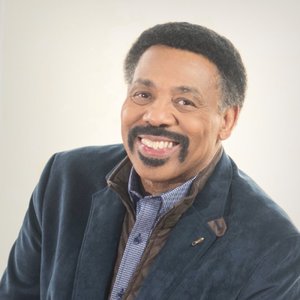
If you're unwilling to move when God calls you, you have a fundamental disbelief that God will provide. Jonathan Evans says obedience begins when we trust God with the outcome. I can move and make sacrifices that God calls me to make because either way, God will provide for me. This is the alternative with Dr. Tony Evans, author, speaker, founding pastor of Oakcliffe Bible Fellowship in Dallas, Texas, and president of the Urban Alternative.
Have you ever felt like God was asking you to give up the very thing you waited on Him to provide? Today, Pastor Jonathan Evans reveals how faith is proven when obedience costs us most, and why trusting God's provision, even when we don't fully understand it, changes everything.
Now we know That fathers sacrifice Many things. sacrifices Of time and peace working out in the world. We want to make the sacrifice to. Provide. We want to make the emotional sacrifice.
A lot of times we may be the last one to be checked on emotionally because. We want to make sure everybody else is okay first. You got to be willing to go out there and sacrifice even yourself. Because you're the husband, the father.
Now, I know God is not a God of confusion, but this sacrifice we're talking about in the Bible in Genesis 22, that's confusing. That's not a sacrifice that any parent, any father is looking to make. When he tells Abraham to sacrifice his own son, that's not one of them sacrifices we want to be a part of. It doesn't make sense that this is a promise from God. Given to Abraham, Genesis 12, Genesis 15, God makes a promise to Abraham.
that he would have a child, a son from his own body. And that he would make a great nation of him. This was the promise of God on Abraham's life, and God tells Abraham to sacrifice it. That's a contradiction. It's not just a contradiction because it's the promise of God.
It's a contradiction because of the provision of God. That God provided this son miraculously.
So he made a way out of nowhere. to provide a son from Sarah who was 90 years old and barren. And so here Abraham is getting this contradictory word from God. Not only is it contradictory, but it's also crushing. That Abraham would not only have to sacrifice his son, but he's sacrificing his son that he waited 25 years for God to provide.
He put Abraham in a situation, your only son, whom you love, you got one of them. And I'm calling you to sacrifice the promise. I'm calling you to sacrifice even with great provision. I'm calling you to this crushing contradiction in your life. But the reason why I'm calling you to a crushing contradiction is because I want to see if what I gave you has become more important than the one who gave it to you.
God will often call you to crushing contradictions. Where you were praying for a position and you got it, but then he tells you to go a different direction. And you're like, why would I do that? You gave me this promise. I prayed for it.
You provided it in a miraculous way. And now you're calling me away from it. Yeah, it's a crushing contradiction, isn't it? Because I want to see the priority of your affection.
Well, you just gave me this windfall of money that I needed and that I prayed for, and now you're telling me to give it to somebody else?
Well, I just want to see where your heart is. Because where your heart is... Your treasures will be there also.
So I just want to see where you're at. I want to see where your affections really lie.
Well, you got that dream person, and now I'm telling you to walk away from the person of your dreams. And no, I'm not talking about your marriage. Why would you tell me to do that? I thought that this was perfect, and now you're telling me to sacrifice it and go in a different direction? Yes, it's a crushing contradiction.
because I want to measure the priority of your affection. Wait a minute, my influence is just now growing. I'm just now getting the followers. The residual income is just now starting to come in. And now you're telling me to abstain from social media.
Why would I do that? That's a crushing contradiction when you've given me the influence. Oh, he just wants to know. Where's the priority of your affection?
So oftentimes he will have you move. And give you a word that does not make sense. Because he's trying to see where you really are as a believer. What got me the most about this story at first was not my focus on Abraham. My focus was on the innocence of Isaac.
Who's just following his dad not even knowing that he's the sacrifice? The innocence of a child. It's so unfortunate that these innocent children are trusting and following crooked parents. Adults who are so selfish. that they would use their children as leverage or a ransom.
just to do something selfish that they wanna do. Right. Poor kids. Two, three, four, five, six, seven years old, eight years old, ten years old. And they're walking behind their mom and dad thinking that this person has the best intent for my life, and that I can give them my life and trust them with their life.
And the whole time, they're prepared to bind them up on an altar and sacrifice them on their own sins. How terrible is that? If you are a parent and you're leveraging your kids in a divorce, you're leveraging your kids in contracts, you're leveraging your kids to try to figure out how to use them to get what you want, stop it. Mm-hmm. Shame on us.
for abusing kids because you're selfish. Isaac shows his innocence in Genesis 22:7. He says, Hey, dad, where's the lamb? He's just following his death. He's trusting in Abraham.
He's following his dad. Your kids are trusting you? And you're just gonna sacrifice them because you're selfish? Man, that's a hard pill to swallow. That we would do that.
You say, well. Whew, I got too many kids and too many baby mamas. That's only you. Pray for the Lord's provision. But you keep showing up.
Well, she won't let me. Don't quit. It's a kid. Because that ain't got nothing to do with the kid, the fact that you don't like your baby daddy. If he's a good father.
That child needs his father. Stop sacrificing kids. This call that came to Abraham didn't come to you. I'm sorry, that was in parentheses, but now we're going back to the story. Because I'm reading it and I'm thinking, man, poor Isaac, he don't even know.
He just. He's just following his dad. How does Abraham respond? to something like this. Verse 3 says, So Abraham rose early in the morning and saddled his donkey and took two of the young men with him and Isaac his son and split the wood of the burnt offering and rose and went to the place which God told him.
Alarm goes off. Hey boys, let's go. Isaac, get the saddle up the donkey, split the wood, let's hit it. Early in the morning? I only wake up early if I'm excited about something.
He gets up early with no hesitation that means hesitation for those of you that don't. He gets up early in the morning. With no hesitation. And saddles up the donkey, grabs two boys, gets Isaac, splits the wood, and starts heading to the place where God told him. How is he able to trust God in a crushing contradiction?
Where does that level of faith come from where he can move on God's word when there's a great sacrifice that God is calling him to make? Let me tell you. Abraham had a fundamental belief. His fundamental belief was this. My God will provide.
When Isaac asked in Genesis 22:7, where is the lamb? Abraham's response to his son. Was God will provide. He had a fundamental belief that I can move and make sacrifices that God calls me to make because either way, God will provide for me.
Okay. Therefore, If you're unwilling to make the sacrifice. If you're unwilling to move when God calls you. If you're unwilling to step away. From something God tells you to step away from, to leave a situation God calls you to leave, to put down something God calls you to put down, you have a fundamental disbelief that God will provide.
Mm. The reason why you're not moving is because you're hesitant on what's going to be on the other end of your obedience. And so you have a fundamental disbelief that God is actually going to provide. And so you stop. Psalm 37:5, though, says, I was young, and now I'm old, and I have never.
Seeing the righteous forsaken. Romans 8:32 says, If God would give his own son, would he not also give you all things freely with him? That we have to believe that God will provide, or you will struggle as a Christian to move when God speaks. He had a fundamental belief. And what would it look like if dads were like, God has spoken, saddle up the donkey, you two come with me.
Isaac, let's go split the wood. Let's go make a sacrifice. What it looks like if women were to saddle up the donkey, split the wood, grab two girls and their daughters, and show them what an experience of God is about to look like. What would it look like if the believers in the church weren't just sitting in a church but were ready to move on the call of God? What would it look like if the believers in the church really believed that God would provide?
We didn't just raise our hands, we raised our life. up to the call of God. Because of that fundamental belief. We'll learn what happens when faith turns from an idea into an action. When Jonathan continues in just a moment, First, though, as we're learning today, following Jesus often requires trust.
even when we don't fully understand what God is doing. That's one of the key themes in Pastor Jonathan Evans' current teaching series, All Eyes on Jesus. This eight-part collection walks through scripture. To show how God consistently calls His people to fix their focus on Christ. especially in moments that test their faith.
When you receive this full audio series on C D, USB flash drive, or digital download, you'll be able to revisit these truths any time. helping you apply them to your own walk with God. We're making the entire series available as our thank you gift. when you make a donation to support the ministry of the alternative. And for a limited time, we'll also include Jonathan's book, Your Time is Now.
A powerful reminder that delayed obedience often keeps us from experiencing God's best. Together, these resources will encourage you to trust God more deeply. respond to him more quickly. and live with greater spiritual purpose. Request your copy today at TonyEvans.org.
or call our resource request line at 1-800-800-3222. Our team is available twenty-four-seven to help. Again, that's one eight hundred eight hundred three two two two. We'll get back to today's message right after this. Brokenness isn't the end of the story, it's where God's work begins.
Listen to hip-hop artist Le Crae as he talks with Dr. Tony Evans on the Unbound podcast. God uses broken things to paint a picture of his glory and his goodness. Hip-hop was this broken thing. Growing up in a broken home was this broken thing.
I was fascinated at how God could use something like this. Listen now to the Unbound podcast. The Unbound podcast is available 24-7 on Tony's YouTube channel. as well as on most major podcast streaming platforms. Let's return now to more of today's lesson from Pastor Jonathan Evans.
Now let me show you What happened next? Abraham got up and he moved. Saddle up the donkey, split the wood. Boys, y'all come with me. Isaac, let's go.
Verse 4 says, On the third day he raised his eyes and saw the place from a distance. Abraham said to his young men, the two he brought with him. Stay here with the donkey. I and the lad will go over there, and we will worship and return to you. Abraham had a belief that God would provide.
And I know what you're thinking. You're thinking he believed that God would provide a ram in the bush. That's not what he was thinking at all. Abraham's belief. And what God would do was at a whole nother level.
I'm going to give you a few clues. Verse 4 starts out by saying on the third day. Verse two says, Go sacrifice your only son, your only son, whom you love. And then he says, Don't worry, we're gonna go, but we're gonna return. In Hebrews 11:17, it says, by faith.
Abraham, when he was tested, offered up Isaac, and he who received the promise was offering up his only begotten son. Verse 19 says, watch this. He considered that God is able to raise people even from the dead, from which he also received back of the title. What? Abraham said, We'll be right back because I'm gonna kill my only son, whom I love, and then I'm gonna stand there and watch God raise him from the dead, and we're gonna come right back down the hill.
Abraham believed in the resurrection, who he also received back as a type. A type means a foreshadowing of Jesus Christ. This whole story is about the sacrifice of a father that's telling you about the sacrifice of the father. This means that you have to have a spiritual belief. In the resurrection of Jesus Christ.
You also have to have a practical belief in the resurrection of Jesus Christ. A spiritual belief in the resurrection of Jesus Christ says, I believe that he died and was raised on the third day.
So that I can place faith in him, and those who place faith in him will live even if they die. You are now a participant in the resurrection, which is why when you get baptized, you die with Christ, you go under the water, and then you are raised with him to the newness of life. It's all about the resurrection. Which means you're in church, but you don't believe in the resurrection of Jesus Christ. When you die, you're going to be dead.
You cannot be saved. and forsake the resurrection. Your life comes through the resurrection.
So, you have to believe in the resurrection of Jesus Christ spiritually. If you confess with your mouth and believe in your heart that God raised him from the dead, you will be saved, the Bible says. But you also have to have a practical belief in the resurrection. That the same power that raised Jesus up from the grave is the same power that can raise up any situation I have to sacrifice. See the reason why.
You won't walk away from that person, that thing, that job, that money, and you believe God is telling you to abstain from it, sacrifice it, walk away from it, put it down, but you won't walk away is because you have a fundamental disbelief in the practical power of the resurrection. You don't believe if you leave that person, God can just raise it back up. If it's a promise, He just gives it right back to you. If you have that belief, you can walk away like Abraham did. Because if that's the promised person, the promised place, the promised provision, then I don't have to worry about it.
God, I can sacrifice it, and God can raise it. We're hesitant. Because we believe in it for heaven, but we don't believe in that power on earth. Abraham had a testimony. I wonder if there's anybody that has a testimony that God can make dead things come alive.
He can make your hope come alive, your purpose come alive, your marriage come alive, your family come alive, your child come back, your joy come alive. He can make dead things come alive. That's just if you have a testimony that God has done or He can do exceedingly. Abundantly beyond all that you can ask or think. But you have to believe it.
To walk this walk. Abraham said, we'll be right back. Because we're just gonna see a resurrection today. And he takes His son Isaac. The Bible says in verse 9, then they came to the place which God had told him, and Abraham had built an altar.
And there they arranged the wood and bound his son. and laid him on the altar on top of the wood. The angel of the Lord comes through in the midnight hour. In verse 11, but the angel of the Lord called to him from heaven and said, Abraham, Abraham. And he said, Here I am.
And he said, Do not stretch out your hand against the lad. And do nothing to him. Watch this. For now I know that you fear God. Since you have not withheld your son, your only son, from me.
Then Abraham raised his eyes and looked and behold Behind him a ram caught in the thicket. By his horns. And Abraham went and took the ram and offered him up. for a burnt offering In the place of his son. A burnt offering, Leviticus 1:1 through 3, is for the purposes of devotion and faith, but it's also for the purposes of atonement.
Atonement is the restoration or reconciliation because of sin to God.
Okay, restoring you to God or reconciling you to God. That's what atonement means. That moment when Abraham looked up and saw the ram in the bush. He saw way more than a ram in the bush. Yeah.
He saw the sacrifice of a father. Hold on. You say, wait a minute. Abraham was the father. He didn't have to make the sacrifice.
No, he saw a different sacrifice from a different father. Yeah, yeah, yeah.
Okay. John chapter 8, verse 56. Jesus is talking to the Pharisees. And he makes this statement. He says, Your father Abraham was glad to see my day, and when he saw it, he rejoiced.
Yeah, that's good. Wait a minute now. The Pharisees said, but Jesus, you ain't even close to 50. What you know about Abraham? Oh, he said, Abraham saw me.
And when he saw me, he was glad. When he saw me, he rejoiced. When he saw me, he had a worship service. Trust me. You see, when Abraham looked over and saw that ram, he didn't just see a goat.
He didn't just see a lamb. He didn't just see a ram. Abraham looked up and saw substitutionary atonement. Abraham looked up and he saw a Redeemer. Abraham looked up and saw a deliverer.
Abraham looked up and saw a savior. Abraham looked up and saw a rescuer. When he looked up, he saw the foreshadowing of the King Jesus who would be the substitutionary atonement, the true and final burnt offering, so that you and I wouldn't have to put ourselves on an altar. Abraham looked at. And saw A father.
Who would sacrifice his only son? His only begotten Son. Who would make such a sacrifice? This is a sacrifice not just of a father. This is a sacrifice of the Father.
And what should our lives look like? Knowing that we are no longer bound. Knowing that we are no longer on the altar. Because Jesus came. By the will of the Father.
And allowed himself to be bound. and placed on a curse tree. Yeah, yeah. can walk away with your life. This is a father's sacrifice.
This is the reason why we praise This is the reason why we worship. Because it should be you. Pastor Jonathan Evans, reminding us of what God was willing to give for us. and he'll return in a moment with some final words to close out our broadcast. What we've been hearing today is part of Jonathan Evans' powerful teaching series called All Eyes on Jesus.
As I mentioned earlier, we're making all eight messages in this series available to you on C D, USB flash drive or digital download. along with Jonathan's encouraging book, Your Time is Now. These resources are designed to help you strengthen your faith. Trust God more fully. and step into the purpose he's already prepared for you.
They're available as our gift to you when you make a donation to support this ministry. Just visit Tony Evans dot org to request your copy. You'll find all the details right on the home page. And while you're online, be sure to sign up for a free weekly devotional from the Urban Alternative. Again, that's tonyevans.org.
Or call 1-800-800-3222. To speak with one of our friendly team members. Our resource center is open day and night. The number again one eight hundred eight hundred three two two two. Pressure has a way of exposing what we really believe.
It's one thing to follow God when it's convenient. But what happens when the culture demands you compromise?
Next time, Jonathan shows us what it means to be fireproof. to stand firm when everyone else is giving in. Right now, though, let's listen as he wraps up today's message.
So if you've never given your life to Jesus Christ, That means By definition, you remain on the altar. If you have not allowed him. To come out of the bush. And put himself on the altar for you. The Bible says he has died for the world, especially believers.
Which means believers have a unique experience with Jesus Christ. His life is death and resurrection. He did it for everybody, but only some will get the benefit.