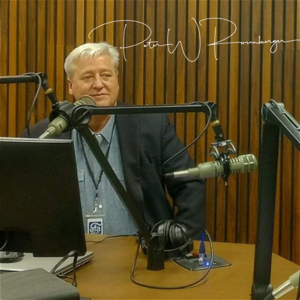
This is Peter Rosenberg, and I'm thrilled to tell you that our new 2026 Caregiver Calendar. Is now available. There are photos of the breathtaking scenery out here in southwest Montana where we live. Each month, you're not only going to see something extraordinarily beautiful, but I put a quote on there for us as caregivers to strengthen us, to equip us. This is what does it for me.
These are things that I've learned, bedrock things that I've learned that I can depend on in my 40-year journey as a caregiver, and I know it's going to strengthen you and yours as well. This is an exclusive gift that we give only to supporters of Standing With Hope, the ministry that Gracie and I founded many years ago for her fellow amputees and for my fellow caregivers, all for the purpose of pointing to the one who helps us continue Standing With Hope. Go to standingwithhope.com/slash giving. Standingwithhope.com/slash giving. Welcome back to Hope for the Caregiver.
This is Peter Rosenberger. Glad to be with you. HopefortheCaregiver.com. HopefortheCaregiver.com. Well we've covered a lot of ground today and I've saved the best for last.
Ha ha ha ha ha ha. Oh.
Well, she really doesn't wait for an intro, does she?
Well, I thought the intro was when you said. Yeah, I'm back. This is Peter Rosenberg, and I thought I was going to go into, and this is Gracie Rosenberg.
Well, I was going to introduce you. But you decided to go ahead. For those of you who don't know who this is, I'm Peter's wife, Gracie. This is Gracie Rosenberger. Hold on just a second.
I had to adjust the mic there a little bit. All right now, Gracie. Hello, Peter. Welcome to the program. Thank you so much.
There have been quite a bit of Conversation going on about you for the last Well Decades since we've been in the hospital, certainly. And now that we're home, and people have been concerned about you. And they still should be. They should be concerned about you. How are you doing?
I'm doing better. Not as well as I'd like to, but I'm definitely not like we were. What is doing better? What is the general issue you're dealing with the most right now.
Well, do we need to give any background? For those of you just now joining the program, This is my wife, Gracie. We've been married now almost 40 years, and Gracie's had, to my best count, 98 surgeries, 11 of them this year alone. And she gave up both of her legs back in the 90s. And all this is from a car wreck that happened 42 years ago this week.
Did you know that? Did you remember that? You know, I remembered that, but I was trying to forget it.
So thank you for reminding me. I wanted to bring that to your attention. But. We've had a pretty rough year. We got her home in June, and we're still dealing with the aftermath of what happened this year.
But we were in the hospital for five months. Yes, we were. And we went in the wintertime, came out in the summertime almost. Literally, it was horrible. But here we are.
So, my question to you is: what is the general. Big issue right now moving forward with you. You do want me to sing, don't you? But instead of cry, you don't need to get into the gory details. The big picture.
Big picture is that I would like to get back a lot of.
Well, no, no, what's keeping you from getting back? What's going on with you?
Well, I mean, I'm having 12 surgeries in the last five months. Clinically. Clinically, like if there was a clinical thing, clinically, not emotionally.
Well, I mean, there's a lot to this.
So, I know without graphs and diagrams and stuff, charts are PowerPoints and exactly. You know, I had to have my hips released. And when we did that, Um, it left a lot of of space in in in there when they went in to do it. And then it usually is supposed your body is supposed to and ninety nine point nine percent of the people that have this, um, it's supposed to fill in with tissue. But instead of filling in with tissue, mine decided to fill in with fluid.
And so we're still dealing with that and a lot of lack of Ability to what is the best thing for you right now? That would change a lot of that. I'm trying to walk more. And why aren't you walking more? But I need new legs.
Mama needs a brand new pair of legs. Exactly. New legs.
So, all right.
So, Miss I started a prosthetic ministry. Uh what's involved in getting your new legs? I have to get my prosthist who knows what's going on because he's been my prosthetist for Good grief. Thirty eight years. Pretty close to it.
Yeah, and now, and we've got to get him out here.
So, what's he going to do when he gets here? The first thing he's going to come on two trips. The first one, he's going to do what? He's going to make. Basically, um What is it we used to do in school that um I didn't make legs in school, Grace.
Well, no, but we used to make. I made detention. Earths. We used to make paper earth and paper mache. No, he's not going to do paper mache.
Basically, it's kind of though like doing paper mache.
Well, he's going to take a cast of a cast of my residual limbs. They amputate part of your limbs. They make a cast of it. That sounds all nice. Basically, my residual limbs, they're stumps.
Like tree stumps. She said delicately. I know.
Well, I mean, I'm just, I'm not, there's no pussyfooting around.
Well, Prosthetic footing around. Exactly. But it's a So they go take a mold of your legs. And then from that mold, I mean he's going to take a cast of it. He'll make a mold from the cast.
And from the mold, he'll make the socket. And then he'll come back out here with the socket and the leg finished. And then he'll adjust it to you once he gets back out here. Yes, as long as he's m been able to do it correctly. Because a lot most of the time we don't use a CAD machine with me.
making legs because Um When you put my What comes back from that cast into the CAD machine, usually it ends, it'll come back the opposite way of doing it.
So, for those who are playing along at home. Gracie is saying, see, I have the gift of interpretation. Thank God. And I speak fluent, Gracie. I speak fluent caregiver and I speak fluent Gracie.
What happens is they nowadays they use machines to make the lace, kind of like 3D printers, but a little bit more involved in that. But when they put the Gracie's measurements in it, it doesn't always work that way. And it comes out a little bit woppy-jawed, and you have to do a lot of things by hand because her alignment is so bad. Gracie's amputations were due to. the results of trauma.
If you have somebody, for example, who has diabetes, and or as Wilford Brimley would say, diabetes, if you have that and they amputate the limb, they're doing it because of circulatory issues. There's not a lot of scar tissue and misshapen bone and everything else, like you would with a trauma patient. And Gracie was a trauma patient.
So her legs and hips and everything were pretty woppy-joggled.
Now, that's the bad news.
Sort of. But the good news is The surgery that you went through did work. You are straighter than you've ever been, you're more aligned than you've ever been since your wreck forty two years ago this week. And so we just got to get new legs so you because the legs she has now are adjusted to the way she used to be before this surgery experience this year, she was bent over at 48 degrees. And her legs were built for her to accommodate the way her back was.
But now that we've fixed her back and her hips and everything else, her legs are still anchored in that position.
So she's fighting a little bit with that. and we're going to get that fixed. It is a fixable issue. It just takes time and patience. And we're both you and I are both known for our patience.
Oh, yes, that's what people call us for all the time. Patience. We have yes.
So, but all right, so we're going to get some legs. We're working on that. In fact, I just got a letter from your prosthetist back in Tennessee. We can't really take Gracie to Tennessee. Her other prosthetist she had out here moved to Idaho.
And it's easier to bring the process from Tennessee here. Who's worked with her? And instead of trying to transport Gracie, he said he'd come out here, crash for the night. He's actually the man that helped launch our prosthetic limb ministry 20 years ago this year. Yes, and he's been to Ghana West Africa.
Ghana, West Africa, with us seven times. He's also an amputee himself, and he's been a prosthetist now for well over 50 years. He is one of truly one of the best in the world. And so we're very grateful for that. That may be your Christmas present.
We'll put out stockings for Santa and we'll get legs in them. That would be a wonderful, that would be a wonderful Christmas gift. All I want for Christmas are my two front legs. No, but so we're going to get it done. It's going to happen.
And we just got to be a little bit patient with it. But. I wanted to be able to have you on, particularly this week. I mean, you know. This week, 42 years ago, it was pretty bleak.
And Hmm. You know, nine months ago. We've not been married 40 years. No, no. I didn't know you when you got hurt, but but nine months ago, it was pretty bleak with you.
And here you are being all sassy. Uh I don't know if y'all know this or not, but Gracie can be a bit sassy. Yes, because Peterson never says that. Oh, I'm the model of genteel and uh we're you know Sassy is what's kept us going here. But We're in our new place.
We finally have our new edition set up, and it's been wonderful. It's been a lot easier to take care of you. We're still struggling to put away stuff. I know you're here in my studio. I'm looking around.
No, don't look at my studio. I am in just not awe, but nausea. That would be more like it. You put the awe in nausea. I'm looking around going, my studio is a little bit disheveled right now, and I'm going to need you to come in here and help me with it.
But you've been a little bit preoccupied because we're still trying to put up stuff. And you know how that goes. It just takes a while to get settled in and moved in. I didn't know it was this bad.
Well, you know, I'm sorry, but you know. I'm doing the best I can with what I got, baby.
Well, you should have called me in sooner. That's an understatement. Oh, yeah, that's what I should have done. All the things I should have done. But, you know, we're going to get it done.
And I do like having the piano in our room. Yeah. And so we've been working on that. I'm doing some music. I've got a bunch of stuff on the top of it right now.
Yes, you do. Very, very fragile stuff that we're trying to figure out where to put it.
So I can't. And I've got a blanket over the piano because we haven't got blinds up, and the sun's come in through our windows, and it's pretty intense. And so, I don't want it to fade out the piano, but we're getting there and we're making some progress. And it is easier to take care of you in this new room. And it's easy for you to be more independent.
Yes, it is. And you do have a nice view. A wonder a wonderful view. I'm going to get up on the uh the Get up there and get those high windows and clean them this week. I couldn't get to it.
It's going to be a little bit of work. I'm going to do something I don't normally like to do, which is to get up on a roof to do it, but it's not too bad. It's just the porch roof. You need some carabiners and yeah.
Well, I'm not getting on the roof of the house, but I am getting on the porch roof so I can get those top windows for you. I've got a long squeegee that I have with it, and I'll get those windows cleaned. Is that how you're going to do the inside part of those? We hadn't got that far yet.
Okay. I'm still working on that. The flies have found them there. We have, yes, I've got to get the flies out of there. I'm really ready for the flies to die.
Well, this time of year, a lot of flies come out and then they buzz around, and we try to get them out the door as best as possible. But Gracie's got her fly swatter close by, but we don't have the windows open. They just fly swater. I don't know how they get in here, but we're waiting for a good hard freeze, which we haven't had yet. But we've had our fireplace going a couple of times.
Yeah, but that's just making the flies feel more at home.
Well, we can't have that.
So, anyway, I wanted you all to be able to hear her voice. She is, as you can tell, doing significantly better than she was earlier this year. It's been a tough year, but she's a tough gal. And we've got more to go when we come back. We're going to delve into our hymn of the week.
This is Peter Rosenberger. This is Hope for the Caregiver. We will be right back. Gracie say we'll be right back. We'll be right back.
Hehehehehehehehe Um Welcome back to Hope for the Caregiver. This is Peter Rosenberger. Glad to be with you. I am joined today with Gracie, my wife, and she's had a A challenging year. She's had a challenging four plus decades.
But here we are, and Gracie, glad to have you here live in the studio with me.
Well, thank you for having me. um and you don't even have to get camera ready for my show thank god It's wheel as you are. I like it. And so we've been doing a series on hymns that every caregiver I know. This is technically not a hymn.
It should be. But that we're going to do, but it's one that is. Certainly incredibly well known, but I don't know a lot of people know the story behind it. There's a young guy, his name was Henry Smith. and he had just graduated from college and he wrote this song as he was struggling with degenerative eyesight.
I don't know if you knew that or not. No, I didn't know that. And so he wrote this song based on boasting all the more glad in our weakness, talking about Christ's strength resting on us, but what Christ has done. That transcends our sicknesses, our all those things. And it's a song that Gracie and I have sung a bazillion times, and we love doing it.
And I'm gonna um figure out what key that probably works for her, but I think it's this one. Is that a good key for you? Guess the Thanks with a grateful heart. Give thanks. Thanks to the Holy One.
Give thanks. Because He's given. Jesus Cruel To Son, give thanks with a grateful heart. Give thanks to the Holy One. Give thanks because He's given.
Jesus Christ his Son and now let the weak say I am strong Let the poor say I am rich because of what the Lord has done for us and now let the sick Say, I am whole. Let the bow. Say, I am free because of what the Lord has done for us.
Now, if you're gonna cry, we're gonna take this down a little bit lower.
Alright, because let's take it down a little bit longer.
Well, I don't want to cry. Give thanks. With a grateful heart, give thanks. Yeah. To the Holy One, give thanks because He's given Jesus Christ, His Son.
Give thanks with a grateful heart. Give thanks to the Holy One. Give thanks because He's given Jesus Christ His Son. And now let the weak say I am strong. Let the poor say I am rich because of what the Lord has done for us.
And now let the sick say I am whole. Let the bound say I am free because of what The Lord has done for us. Give things, give things, give things and that is um. A hymn that every caregiver ought to know. We sang this.
I don't know how many times in the hospital, how many times we've done this in our life together. It it just fits Our journey, it's Thanksgiving this season, and so I thought this would be the most appropriate one to do. I mean, there are lots of great hymns.
Now, thank we all our God. Come, ye thankful people, come. Those are all wonderful hymns. I'm not discounting it, but there's something about this particular song. that Ever since Don Moen did this with Integrity Music on the well, I think he's the one that introduced it to the world.
Well, I'm used to hearing the Myelin Lefebvre one.
Well, the Myelin came along much later than that. My Don Moen story is this: I would see him at the post office in Nashville where we lived, and I ran into him and I told him about when we were in Ghana one time, and I was in the van going to the prosthetic clinic, and they have a lot of street vendors. He loved this. Oh, he thought it was hilarious. And there were street vendors out there.
They come up to the car at every intersection, and they got everything. I mean, you don't have to go to the grocery store. You just, I mean, they got a big stick with toilet paper on it. They've got, name it. It's there.
And I had this one guy came up to the van. That's kind of scary. And he had an entire collection of Don Moen C Ds. I mean, a huge collection of them. And I told Don when I ran into him at the post office, I said, I've heard of good distribution, but Don, you.
Got street vendors with your stuff, bid. I mean, that's that's taking distribution to a whole nother level, but it's uh, anyway, he, I think he's the first one that. Did this song, I think. Henry Smith, though, wrote it. Really?
He was dealing with his eye problems, and it's a song that every caregiver ought to know because when we're saying these things, and now let the sick say, I am whole, let the bound say, I am free. That's a, I don't think Henry Smith wrote those lyrics. I think Milan Lefebvre added those, but it those are the ones I learned. She sings those, and we'll probably get in trouble for that. But it's send all the letters to gracie at the internet.google.
But it's now let the weak say, I am strong. What a great text for us as caregivers to be able to say that. And certainly when you're dealing with the things that Gracie is dealing with, for her to be able to sing that. And thus you are.
Well, yeah, but. But you can just kind of go through the day and just hum that. And then it's just a walk-down for those of you who play the piano at your church. It's a waltz down, but sometimes I'll add this minor five chord right here.
Now I don't know that that that's uh Redeemed cord. It's not a sanctified cord. And I'll never Da da da da da da da da. But I don't think Thanks for being Cause you scared. Yeah.
Jesus Christ Mm-hmm. And then you Get this ass in the And so forth and so on.
So you can add some different chords, not too many because everybody knows it and you don't want to get too weird on the chords, but I throw in a lot of different kinds of passing chords. And then when Gracie goes up a little bit on it, that's a song that we did a lot in the hospital. And then. What this is one we did a lot, Gracie. I think we did, um, we did good things at Walter Reed.
We did. Making me whole. Is that a good key for you? Thank you, Lord, forgive me. Giving to me thy great son.
Salvation so Rich and free seems like a little half for you. Right now I'm having to sink things higher. Thank you, Lord. Four sweet. Saving Bye.
Yeah. Thank you, Lord, for making me whole. Thank you, Lord, for giving to me thy great salvation, so rich and free. And that's another one for this time of year. You know, there's that attitude of gratitude because it's very difficult to be in a place of self-pity.
when we are grateful. And there's always something we can be grateful for, and most importantly, our salvation. that what what Christ has done, that this is not the end of the story.
So Gracie and I, we can laugh and cut up. We we get I mean, she does get sassy. She's got a real attitude. She's got a real attitude problem. But you know.
But we can do this. Why? Why can we do this? Because we know this is not the end of story. If this was the end of story, what hope would we have?
What's the point of living with this kind of difficulty? When I look at like Canada and so forth, they're wanting medically assisted suicide and all that kind of thing. People are people. Make no mistake. People are wanting it here too.
Well, they do want it here too because they they feel so hopeless and everything else and yet Gracie is as a testament to this that, you know what, 42 years of living with non-stop pain. Almost a hundred operations. Wow. Both legs gone, and then living with me. You know, not just living with you, but I mean, I talked with Johnny Erickson Tada this week.
She's lived with pain and suffering a lot longer than I have, and she still looks at every day just a day closer to. Yeah. A sweeter time with him. Indeed. We're out of time, and I thank you all very much for allowing Gracie and me the opportunity to spend a little time with you today.
She is improving. It's been a challenging year, but she is improving. And I'm very grateful that she was here with me today. By the way, you can go to the website hopeforthecaregiver.com for more information, and you can go see the prosthetic limb industry that Gracie envisioned at standingwithhope.com. Standingwithhope.com and take a look at what God has done through her life.
It's extraordinary.
So, thanks so much for being here, Gracie. Thank you. And you all have a happy, happy Thanksgiving. This is Peter Rosenberger. This is Hope for the Caregiver.
We will see you next time. Uh