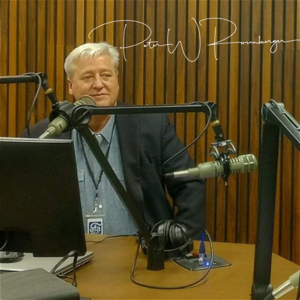
Welcome to Hope for the Caregiver. This is Peter Rosenberger here on American Family Radio. This is the program for you as a family caregiver. For those of you who are putting yourself knowingly, voluntarily, often without training, Often without sleep, Between a chronically impaired loved one and an even worse disaster. How are you holding up?
What's going on with you? What is your life like today? You may not be used to answering that question. It's very difficult for us as caregivers. to answer how we're doing when somebody asks us, when they ask us.
And I can't tell you over the... many many years I've been doing this, how many people have asked me about Gracie? But I can tell you The ones that ask about me. And that's over 40 years. A friend of mine was at an event the other day with a well-known person that we've had the opportunity to meet with.
And she said, hey, we have a mutual friend, Peter Rosenberger. And she said, oh, I know, Peter. How's Gracie? That Yeah. The journey of a caregiver, right there.
That is summed up right there. I know, Peter. How's Gracie? So, anyway, you learn to laugh about it, but on this program, we're going to talk about it. And I'm glad that you are joining the program today.
HopefortheCaregiver.com Tom, I had a chance to do something this week that. We we work with local ranchers here in Montana. used some of the Property, the pastures on this property that Gracie's parents have had for many, many years. And we let them do summer grazing. We're about at the end of it, but we were putting some cows.
up on the upper north west side. And it's a little bit higher country up there. We're up pretty high in the Rockies, and there's still some grass, and it's been some warm weather. We had snow this week, but it warmed up, and we haven't really gotten. The winter stuff that starts to come in just yet.
It's coming.
So the cows are leaving here next week. But we wanted to graze a little bit more up in this area. There's not that many. I got to push them up there, and that was kind of fun. Play cowboy a little bit, and I always enjoy that.
But we had a bucket that you put out there for minerals. Uh for the cows. And they went through it pretty fast, and so I told the rancher I'd pick up some more. And I went there and they were closed when I got there.
So I made sure to go back the next day. And I was home and I thought, oh, I forgot those.
So I had to go back and get the minerals. I'm glad I did because I went up there. I was going to move that bucket. It's a big metal tub, kind of like a five-gallon drum, but it's kind of a little bit shorter. height wise and a block of salt.
The way that we had the fences that there were we opened up Two of the gates to get up to where we put the minerals.
Well, And he was a young steer. But He had wandered off, evidently, and he went down the other side of the fence where I had a gate that was closed. But there was a little opening between that gate. and that calf had tried to get through this thing and it was stuck. Had I not gone out there, He would have been mountain lion food that night because we have mountain lions out here.
And and actually, last year, no kidding, I saw a wolf. And I was, this was before we went into the hospital with Gracie. This was in the winter. And I looked out, and there was a, I thought it was a big dog running across the pasture. And I thought, well, Wow, what's a dog doing?
And then I realized what I was looking at, and it was loping across this thing because no dog is going to be going up into the forest uphill. And and I know pretty much most of the dogs around here. We don't have a lot of neighbors. And and so the next day I went out on a snowmobile and I looked at the the prints of this thing. And the stride of this thing was amazing.
So yes, there are predators out here. And so I looked at this poor calf and he was kind of pitiful. He was on his knees and he had been crying a little bit, but now he was just kind of quiet and he was struggling, trying to get through this thing and join up with the rest of the herd. He was just pitiful. But the problem is, he was stuck in there so tight that that chain that I had holding the gate there was, I couldn't get it.
unclasped. And uh fortunately I had a um A pair of wire cutters in the machine that I was on, and I was able to. Kind of worked that out and ended up cutting one of the links of the chain, was able to free him. And then he bolted out of there. But he, I mean, he was pitiful.
And again, I almost didn't go up there that night. I thought, oh, I'll. I I better go check on 'em. And I don't do it because I'm I'm Required to do that. We have a I love working with these ranchers.
I enjoy going out and just looking at the cows. I don't get to do a lot of things. full-time caregiving and my I can't leave Gracie alone for more than 90 minutes. on any given time unless I have somebody there with her. And so I'm glad I went because this poor critter, which is, you know, this is a livelihood for the rancher, that would have been money.
That a mountain lion would have certainly eaten this thing. I did see a carcass of a deer. That had been Kind of strewn about. And so these are things you see when you live here in Montana, out in the wild. But as I was working on freeing this calf, You know, and I felt the pressure of it because I was afraid he had a broken leg or he'd hurt himself or hurt his hip or something.
But he turned out he was okay. He didn't express any gratitude whatsoever to me. He just walked off and went back, joined the rest of them, and seemed to be okay. But why am I telling you this? What does this have to do with caregiving?
Well, very little, quite frankly, but it was a lot of enjoyment for me. I did something for me. That I enjoyed doing. And at that moment, I wasn't thinking about being a caregiver. At least not in the conventional sense.
I was caring for this poor steer that had gotten himself into a mess that looked strangely a lot like my Christian walk. Yeah. I have that steer. I have gotten myself into predicaments. You know, you kind of have to wonder: does Jesus ever roll his eyes?
You know? It goes. You just have to kind of wonder sometimes the things that we get ourselves into and the things that we do. And I I am going to ask him that when when we get to heaven, I'm going to ask him, Did did you ever just roll your eyes? And he'll probably say, Yeah, but that's okay.
But it was a very moving moment to be able to look at this poor animal. who was certainly facing a grisly death had I not shown up. Had I not gone out there. And I don't go out there every day to look at them. They're pretty self-sufficient.
In fact, one of the ranchers that we work with leaves them in the forest all summer long. And I've watched when we go out there with the dogs and the horses, and I've watched the cows circle around the young ones, and they're fighting. I mean, some of those cows get pretty angry. But this poor steer just this young steer he was he was in bad shape. And he was he was going to die.
he would he would most certainly die. Had I not been up there to free him from this thing, there was no way he was going to free himself and. I enjoyed the moment. I'm way up there on a hill. And if you can picture this.
I'm 6,000 plus feet up in the Rockies, looking at this massive expanse of a valley in front of me here. The peaks are snow-covered, and I'm fighting with a chain to free this calf. and loving every minute of it. It had nothing to do with being a caregiver. I wasn't dealing with an insurance company.
I wasn't dealing with a doctor. I wasn't getting prescriptions. I wasn't. Cooking, cleaning, doing laundry, I was just freeing a calf. Think with me just a moment.
What do you think that did for my soul? What do you think that did for my state of mind, my well being. I can tell you what it did. It lifted me. It was it was such a moment and when that Poor calf got freed.
I you know, I all I wanted to do was just rejoice. 'Cause I kn I he didn't know what was coming, but I knew, 'cause I've seen the mountain lions out here. I knew what was coming. I was thrilled to be able to do that. It took me out of the acute caregiving mode that I'm in most of the time now.
And it was just a moment just to do something that w I can tell my my grandchildren about. And that's the kind of thing that I want for each of us as caregivers. I I know that most of you are not planning on freeing a calf from a mountain lion. I understand that. And and our beloved producer, Pat, of this program doesn't want it to have anything to do with the snow out here.
But there's something in your life that brings you just as much exhilaration that has nothing to do with being a caregiver, has everything to do with just living and doing something exciting and beautiful and wonderful. And that is my hope for you. And we're going to find those things together, okay? It doesn't have to be something you do every day. I am certainly not doing that every day.
But there is something. that just lifts your spirit. And that is what We're after here. We're going to find that, we're going to find it together because that is. Hope for the caregiver.
This is Peter Rosenberger. This is Hope for the Caregiver. We'll be right back. Welcome back to Hope for the Caregiver. This is Peter Rosenberger.
Glad to be with you. HopefortheCaregiver. Hopeforth.com. I want to Circle back to what we talked about in the last block. I'm not asking you to create something.
That Out of nothing, or you know, try to do something elaborate or whatever. But I cannot tell you how important it is for us, or as the kids say today, important. how important it is for us today as caregivers. to find things that lift our souls. I don't know what that is for you.
I didn't know that this was it for me. I, you know, my mother's listening to this program. My father's with the Lord right now, and I would imagine that my father and the Lord both are rolling their eyes at me. Simple. But But They would be the first to tell you.
I have four brothers and a sister. None of them expected me to be doing what I do. out in Montana.
Okay, none of them did. I've got all my brothers hunt, fish, everything else. I did not, I didn't do any of those things. And I have found that I love doing every one of them. And I love being around livestock.
And I've been riding horses since I was a kid. I've been around horses since I was a kid. And I enjoy it immensely. But Not in this kind of setting. And I never thought I'd be out.
Saving a calf from being an entree for a mountain lion. That wasn't on my list of things that, okay, I could see where this is going with me. But I've found it to be an amazing environment of healing for me.
Now What is that for you and how do you find that? Again, I've grown up around, I grew up in the country in South Carolina. I've grown up around Farms, barns, livestock, all that kind of stuff, but not in the same setting that I'm in now in Montana. And so the I think the first question I want to ask you is. to find your thing, to find what works for you.
What makes you lose track of time. What's an activity that you do that makes you lose track of time? It may be reading. Maybe working puzzles. It may be you know gardening What what is it?
Have you asked yourself that? And I think, but let's back up even further. Do you give yourself permission? to to have this conversation. Do you think that you are worthy of this conversation?
Do you think that you have the freedom to have this conversation? That may be a good place to start for you as a caregiver. Many of us do not. many of us push down everything about ourselves so that we can care for someone else. And we help others live but it's at our expense.
And I am not in any way abandoning my responsibilities with Gracie. In fact, I would suggest to you that I become a better caregiver. I came back in the house and I looked at her just before I started preparing dinner and I said, I saved a calf tonight.
Well, what do you think that does for her? She loves this place out here. She loves. cows and horses and livestock and everything about it. And and you know I was able to share with her something that happened that had nothing to do with surgery.
had nothing to do with doctors. And it lifted her spirits as well. But even if it didn't, it did it for me and it made me a better, healthier individual. And so I gotta ask you. What is that for you?
What makes you Lose track of time. What are movies that you like? television shows that you like, books that you like to read, art that you like to look at. You ever do you ever look at art much? I didn't really consider art a whole lot until I got a good bit older.
And now I I find myself studying art. I just look at it. And I I love there's a guy that lived across the the dirt road from us out here who was a very, very prolific Western artist. His name is Larry Zabel. We have a lot of his print and his art around the house.
And we got to be just very close friends with him. And you can see it, go online, look at his stuff, Z-A-B-E-Hill. Amazing work. And I found it fascinating just to watch. I'm not an artist.
I mean, I can't. draw anything. And I admire people that do. I'm fascinated by this. In fact, I have a cousin of Gracie's who is a very, very good artist.
But she hasn't been doing it because she's been so wrapped up in other things. And I told her the other day, I said, your job. It is to sit down with pencil or brush today, and I don't care if it's just a daisy. draw something. Do something, doodle something.
Draw something. And I said, I want to see proof. And she texted me later that day. And beautiful work that she's done. Very creative person.
And I admire people like that, who are very gifted visually. With that. Gracie's like that. She sees things and can do things, and the artist in her is spectacular what she does with colour. colors and crafts and things such as that.
She can't do as much as she liked to, but she's very good at it. Does that work for you? Do you find things that you study? and that you get lost in. that you're fascinated by.
Why aren't you doing it? You can't do it all the time. I can't do what I do all the time. I can't do that. We're caregivers.
I understand. We have responsibilities. We have jobs, but we have to do it sometime. At some point, We have to give ourselves permission to do this.
Now, we're going into a season of winter and Dark Days, I mean, you know, shorter days, and sometimes cold nights, and you don't get outside as much.
So what do you like to do inside? What does that look like for you? Do you like to work a jigsaw puzzle? I love jigsaw puzzles. I've got a table now set up in this new ad Place now that we have that we remodeled it, we've got some space because before we didn't have any space for that, it was so small.
I mean, I'm not kidding when I say it was small, I could make a grilled cheese sandwich from the bathroom. I mean, it was a small place, y'all. But now we got a little bit more room, and I'm going to have a table, and I'm going to work a jigsaw puzzle in winter hours. And I love doing that kind of thing. But I think it starts with, do you give yourself permission to do it?
A lot of caregivers don't. And they say dark things to themselves, like, well, it doesn't really matter. as long as I am doing my job as a caregiver. I gotta take care of mama, or I gotta take care of this, or I gotta do this. I gotta, I gotta, I gotta, I gotta.
But you never say I get to. You say I got a lot. We gotta all the time. But do we get to? Do we get to stop and do something that we lose track Of time with because it is such an enjoyable experience for us.
Such a meaningful experience. It's such a It's like oxygen for us. What about is there a place where you feel most like yourself? Where you just you feel like you. What does that look like?
When I'm out on a horse, that's what I feel like. But you know what? When I'm out on stage, I do that. when I'm on television. Uh Those are things I I I have a speakers bureau that Books be for different things when I can go out.
I can't do that right now very much. But they had a survey that they would give to the client. You know, how did our speaker do? I always get kind of nervous about those things because they'll come back and just be all red ink and say, This guy is awful. No, but I never always got very good reviews back.
But one particular stood out. And they said We watched Peter. And he was so different from other speakers in that when he was on stage it was like he was breathing pure oxygen. He was just taking it all in, we did not have to protect him from the audience. He thrived on engaging with the audience.
And that was such a refreshing thing for us from other speakers that we've had who we had to cordon off and protect from the audience. And I was stunned by that. And I actually called up the client that booked me for that. They're wonderful people. And I said, Tell me about this.
Does that really happen? Do you really have to protect speakers from? From the audience, they said, Oh, you wouldn't believe how many are like that. They come in, they do their thing, they get their check, and they leave. And you're out there until the last person leaves, you're talking to people, you're shaking hands, you're walking out in the middle of them.
And we've not seen anything like that. And I just, that's where I feel most like myself when I'm on television. I don't, I never get nervous when I'm on television. Because I feel like I'm just I'm having fun. I'm having a good time.
I'm talking about things that I'm passionate about.
Now that's not for everybody. But do you know how that started with me? I gave myself permission to do that. I said, this is what I'm going to do. This makes my heart sing.
This makes me be able to breathe better. And then I can bring that Back to Gracie. But it started with permission. Not from Gracie. not from anybody else.
But from me. I'm going to do this. It's okay for me to do this. I get to do this. I get to do this, not I got to do this.
Get to do this. And my question to you is, what do you get to do? And who's telling you that you can or cannot? And if you're telling yourself that you cannot do this Tell me why. Why not?
Now, you may not be able to logistically do it. I'm not on television all the time, I'm not on stage all the time. I can't do that right now in this season of my life. I'm not saving a calf all the time. I'm not on a horse every day.
But that doesn't mean I'm telling myself that I can't do it. I'm waiting for the opportunity. And I'm looking for the opportunity. And when the opportunity arises, I participate in it full-throated because I know this is life-giving to me. And you take it in small stages.
Don't go out and try to do something dramatic. Just maybe just do something small. But say, this is what I get to do. Today. and if nobody else rejoices with you on this.
Then send me an email. Go out to my website. Hopefully.com. It'll take you to PeterRosenberger.com, but that's neither here nor there. Just go out there.
There's a contact form. And send me A a short note to say, Peter, guess what I get to do? Guess what I get to do? Rejoice with me And I will. I may even call you.
And I've told you this before.
Sometimes I just call people. Don't give out my number if you see it. Just don't do that because I don't want to get a lot of phone calls. I'm kind of busy, but you may have to listen to me while I do the dishes. But I'll rejoice with you.
I rejoiced by myself that that calf was able to walk away, and I called the rancher and I said, Guess what? And the rancher was very grateful because that's money for that rancher.
Now that calf, I saved it from a grizzly death yesterday, but eventually that calf's going to end up at Burger Geek or somewhere. But let's not, hey, let's let the story stand on its own without going down that path. Because Okay. But what do you get to do today? And if there's nobody in your life to rejoice with you on this.
I'll do my best to do it. But let me tell you about a greater one. who does rejoice with you. And that's the one who made you. the one who saved you, the one who redeemed you, the one who watches over you.
and the one who meets you in those places. This is who He built you to be, and He rejoices with you. I promise you he does. I see it all throughout Scripture. He shall rejoice over thee with singing.
The Lord thy God in the midst of thee is mighty. is mighty. And that is hope for this caregiver. This is Peter Rosenberger. This is hope for the caregiver.
We'll be right back. Welcome back to Hope for the Caregiver. This is Peter Rosenberger. Glad to be with you. HopefortheCaregiver.com.
Hope for the caregiver. Dot com. Tom, do you know what a gel liner is? and a gel sleeve is These are devices that you use with the prosthetic limb. Gracie uses these.
And what they are is they fit over the amputated limb. The liner does. It's like a tube sock, if you will, but it's made out of this really nice gel that gives a lot of cushion to the limb. And that's what fits into the prosthesis. And then you take the sleeve, which is opening it on either side, and you have it around the bottom of the sleeve, it is around the prosthesis, and then it.
you roll it up so it covers that liner and and and touches the skin of the limb. and it creates a suction. It's called a suspension sleeve, and it keeps the leg on. It's very comfortable to wear. And it keeps the leg on.
You ever wore kind of a knee brace? One of those, you know, that you can buy, not necessarily one that's got all the metal and everything, but maybe just something a little sport. of feels like that. I don't know if you knew this or not, but the weight does not go on the bottom of the amputated limb. It's called the residual limb.
That's not where the weight goes, it's dispersed around the socket.
so that the bottom of that is not carrying all the weight of the patient. Otherwise it would be just the impact would be pretty uncomfortable. It has to fit all the way in there. You have to get what they call distal contact, and you can't have any gaps. And this is something we're struggling with with Gracie right now because she's had such swelling in some of her legs and her prosthesis don't fit her as well.
We're trying to work that out and get some new legs for her. Mama needs some new legs. But that's the you want that seamless fit. And then that suction where there's no air in there, and it provides a very comfortable. a fit for the patient.
And these liners and sleeves are not cheap. And we can we gather from around the country. They go to our limb recycling program that we do. We have a prison that we work with in Arizona that's run by a company out of Nashville called Core Civic. They're great people.
We've worked with them for now 14 years. And they They at the facility there, the inmates will recycle the limbs that come in, and then sometimes the patients will send liners and sleeves, some of them have never been opened.
Some of them have been barely used and we can reuse them, you wash them and so forth. But the ones a lot of them have never been opened because the patient passed away or something, they had surplus stuff. And so we can reuse them. There's a company that's made these products that Gracie's worn exclusively now. Since 1991, In fact, they used Gracie as a model, Um for a particular type of tapered liner that they made way back in the old days.
the old days in the early 90s. That's boy, that makes you feel old. And this company is called Easy Liner and the product is called Alps and they're they're wonderful liners and sleeves. And this company just donated a bunch of these things to us and I just want to publicly thank them. It's it's a tremendous gift.
and it provides something that these patients would never be able to afford on their own. And they're on their way now to West Africa. And I just want to thank them. And I thank all of you who get involved with what we do with prosthetics. It's an amazing ministry that Gracie envisioned of providing the same comfort that she herself.
depends on from the God of all comfort, and God has seen fit to let Gracie wear prosthetic legs. And she has a great prosthetist, she has access to great prosthetics, but there are a lot of people in this world that don't. And Gracie, you know, we can't fix all of that, but we can do what we can. And we have now for twenty years. We've been doing this, and it's at standingwithhope.com.
Standing with Hope is the presenting sponsor of this program and This program is part of the caregiver outreach of Standing With Hope, and then we have the prosthetic limb outreach. and it's for the wounded and those who care for them. And if you want to get involved, if you know somebody who has a family member who's an amputee or they passed away or a child that has outgrown it, we always need pediatric parts. Always. And don't let that leg just get thrown away.
Don't let that sit in the closet and gather dust. We can recycle all of the components. We won't recycle that socket, because that's custom fit for that patient. But we can do The foot, the knee, the adapter, the pylon, the screws, the tube clamps, and if they're in good shape, the liners and sleeves. The belt systems and so forth.
There's all kinds of different things. Just send it to us. Go out to standingwithhope.com under the prosthetics tab, and you can see. How to donate those things. And if you want to be a part of helping us ship it over and all the other things, we have to buy certain things.
If you want to do that, it's all out there at the website, and we would welcome the help. And it is it's an exceptional ministry. that you know and it's just a mom and pop just me and Gracie and right now mostly just pop. But we're going to get her back to it. I told Gracie, I said, You got to start earning your keep, baby.
No, I didn't say that. For heaven's sakes, do you think you Do you realize how far she can throw one of those legs? No, I didn't just say that either. Y'all just lighten up. We have a good time.
And Gracie is, she's doing okay. I mean, she's got a ways to go, and she gets a bit discouraged. She's having because of the, she's not able to walk as well right now. And we're working on that. That's a fit problem, and that's a problem we can solve, but it just takes time.
And so we have to watch her swelling. uh on all these things and it and then she has to they have to diurese her uh and it dries out her vocal cord so she's you know, really trying to keep her vocal cords in shape so she can start singing again. Because I think all of you all would love to hear her singing more than me on this program, and we're going to get to that. And it is, I will tell you, it is kind of nice. to have the piano there in our bedroom in the new edition that we built and I play it for most every day.
and and she sings and she doesn't have to leave the room to go make music. And music's such a part of our life. And it's one of those things that where we lose track of time in music, and that's something I was talking about in the last block. What what do you lose track of time doing?
Well, we do that with music. I remember one time. on our anniversary, and she was going through a pretty bad stretch. And I decided to do something different for our anniversary. And the the church in Nashville where we went, and that's Covenant Presbyterian, where the shooting was, that you remember a couple of years ago.
Um that's I played there every week. And one night we went over there. And the um the senior custodian over there and his wife are just wonderful couple. And they let us in, and I worked this out with him. And they sat in the back, and Gracie and I sat up in the front, and she was in her wheelchair.
and didn't have any music. And I sat at this piano, they have a beautiful seven-foot Steinway, it's a beautiful piano. And I just played in this Beautiful church. You've got to see the picture. It's on the front cover of my CD, Songs for the Caregiver.
And you can go out to the website and see that picture of what it is. And so I'm sitting there playing that night. And Gracie just sat in her wheelchair at the front there, and she just sang. No music, we just, whatever she wanted to sing, I would just play it. And she sang, and then I was playing and she got real quiet for a moment, and I was just kind of lost in the music.
And I looked over, and she had fallen asleep in her wheelchair. And she had sung her literally sung herself to sleep. And that's not an easy thing for people who are in pain like she is. But music is one of those things that we lose ourselves in. And I just love it.
And I could spend, and I have spent just hours at the piano and listening to her sing. You have to have lots of water when she does it because she'll get kind of dried out, particularly out here where the air is so dry. But it's um. she she does she works hard to protect her voice and that's one of the things we talked about with all of her Surgeons. Um This last go-around when she had to be anesthetized so many times to use a small tube.
I'll never forget she. coded one time years and years and years ago when we lived in Nashville. And she just stopped breathing. She was blue. And I was the only one in the room with her and she was not on telemetry.
So if I hadn't been there, it would have been a pretty bad situation. But I was just sitting there and I was reading next to her and I looked over and she's blue. And I immediately got the nurses in there and they called the code. and they had just overdone it with her some of her pain medication. And they ended up taking her to intensive care afterwards, but this whole team of people descended.
In our room, and started to intubate Gracie. And I told the NDC, and they were all masked. It was not during COVID, they just had rushed in there from surgery or whatever they were doing. I don't know if there's a code team, and people were rappelling down the wall and all that kind of stuff. And I looked at this, and I didn't know the guy, and he's intubating Gracie.
I'm standing in the corner of the room watching this, and he's intubating her, and I said. Please use a small tube. Be careful. She's a singer. And without batting an eye, he said, Oh, we know Gracie.
It's okay. We got her. And I was like, I had no idea who this guy was. And he's like, oh, yeah, we know Gracie.
So, you know, that's something we've watched for years with her: to help protect that voice. And. I'm hoping now that she's straighter and she can stand straighter, it's going to give her more breath support. Because these last 10 years have been just brutal for her to stand and sing. 'cause she's been bent over so much and This is going to help her.
We're just working on the fit of prosthesis, which is, you know, it's. It's a difficult thing to do to fit a prosthetic limb. And yet we've been doing this now in Africa. And it's amazing the lives that are changed. Go ahead and look at the website and see some of the lives and pray for the folks here at the clinic.
The director's name is Moses. And he's a wonderful, wonderful young man. I remember when he started there as a technician, and now he's the director of the whole clinic. and they they he has a great staff there and they do a wonderful job. And we provide them with supplies and training and whatever they need.
I'd like to go back over there because of COVID and because of Gracie's health. I haven't been over there in some time, and that needs to change, doesn't it? We need to go. Gracie says she wants to go. And I I gulp.
You know, significantly when she says that, because taking her over there is a bit of a challenge. But you know what? Why not?
Let's get her well. Let's get her through this patch. Let's get her up walking and moving around a good bit more. And it and she did, by the way, she walked with her physical therapist. He comes out twice a week to the house and works with her, and she walked.
Yeah out of our room. Out the door. There's no steps. Remember, I made this whole place handicap accessible. And then she walked a little bit down the driveway almost to the corral there where the horses are, and then back up, and she did this.
And so she's getting better, she's getting stronger. And for that, I'm very grateful. And I look forward to her being able to sit down here on this program and share a little bit about that. And I think that'll be a marvelous time. In the meantime, you know what?
Keep her in your prayers and keep the work that she envisioned so many years ago. 30 years ago, this year. She became a double amputee. She lost her right leg in '91, her left leg in 95, and that's when she had the vision of providing limbs to her fellow amputees. And that's when she had the the vision of of being able to do this as a way of of sharing the gospel.
And if you go out to standingwithhope.com/slash giving, you'll read the story. It was kind of funny because she surprised me with it as I walked into her hospital room 30 years ago. I'll never forget it. And it's a story that I think you'll love. And we would welcome the help of.
Doing this, whether it's the caregiver ministry or whether it's the prosthetic limb ministry for the wounded and those who care for them. I love what we get to do and we want to do more of it.
So thank you very much. This is Peter Rosenberger. We'll be right back with our hymn of the week that every caregiver ought to know. Welcome back to Hope for the Caregiver. This is Peter Rosenberger.
Glad to be with you. HopefortheCaregiver.com. Yeah. Hopeforthecaregiver.com.
Okay, for those of you who are new to this program, and we have people joining this audience all the time, and I'm very grateful for them. We've been doing a series called Hymns That Every Caregiver Ought to Know. I started off with 30 hymns that every caregiver ought to know. That's not going to happen. We're going to go to Extra innings here.
We're going into lots and lots and lots of hymns, and I'm going to play you hymns. that have strengthened me and sustained me. In my journey, and for lo these many years, I grew up with the hymns. I remember standing in church. When I was just a little boy, it was one of my earliest childhood memories.
And I couldn't read. I was maybe four. And mom was holding the hymnal for me. It was that little red hymnal we had at church. We had to sit on the front row because when your dad's the pastor, you have to sit on the front row.
Believe me, I've been called down many times. while sitting on the front row and uh I've been used as many sermon illustrations. I know that comes as a shock to you all. But uh it's true.
So anyway, mom holds the hymnal down for me to follow along while I couldn't read. But I could see the staves. And the music, and the I didn't understand what all the music notations meant, but I remember seeing that. And I was fascinated by it. And there was a piano at the church, and I would go up to the piano after church on Sundays and just bang on it.
And I'll never forget this one lady, dear saint, her name was Carolyn Smith. And she w Told me years later, she said, Oh, when you were a child, you used to go up and bang on that piano. I said, Lord, make that child please stop playing the piano. And she came up to me years later and said, Lord, thank you that you didn't make that child stop playing the piano. And I thought that was very sweet of her to say that.
But I would do this and I wanted I would try to pick out songs and the only songs that I really knew were the hymns. And and I would play and then we had this Wurlitzer type organ at home with headphones. And I sat there and played on it a lot trying to figure out music. And then I don't know where mom and dad got this thing. It was one of those little box keyboards.
It was like. Maybe two feet long, and it had black and white buttons that you pressed for the chord, and then you could play the melody. I was almost like an accordion, but it was it was not. It was a it was a box, and I figured out what some of the chords were. I remember just playing for hours and hours, saying, Lord, you know, please let me learn how to play the piano.
And he was very gracious to me and let me do so. And I've studied this over the years, though. But the hymns were the first thing that I knew. And so I played them. And as I went through this journey as a caregiver, those hymns became even more important to me.
And so I found hymns that I Gravitate towards and the text that lifts me up, and I would arrange these hymns. And I, um, one of the first hymns that I arranged. Just on my own. As an arrangement, was Ferris Lord Jesus. And I'll play that for you maybe sometime.
We'll do that. That's going to be one of our series, but that's not the one I'm doing today. The one I'm doing today is the one that Gracie and I sing almost every day. And it's she starts off the day with this. It's from Psalm 118, verse 24.
This Tom? was very important to a man named Les Garrett. And he was born in 1943 on the island of Matamata in New Zealand. I think that's how you say it. And he studied at the Word of Faith Uh It's a Bible college or Bible school.
In Taranga, New Zealand, and became a minister and evangelist in Western Australia. He took a text from Scripture and put a collection called Scripture in Song, of which this one first appeared. The melody is said to be based on a Fiji folk tune. And I, so, and there's real nebulous on the copyright and everything else on this thing.
So, I hope I don't get in trouble playing this on the air because most of the stuff I do is public domain, but this one. May or may not be. It's kind of nebulous. But anyway, he died in 2017, was a faithful minister of the gospel and left this legacy of all these scriptures that he put to music. And this one is One that is you're going to know it immediately.
And the text says, This is the day. that the Lord hath made, we will rejoice and be glad in it.
So we're here at the Caregiver Keyboard. And we've sung this in churches and vacation Bible school and everything else. And sometimes people think, ah, it's just kind of an old song. And in fact, I played this one Sunday at church some years ago, and the pastor saw that I was going to play it, and he was like, he kind of groaned. He said, oh, you're bringing out some of those old.
And then after he I played it, he came up and he apologized to me. He said, Oh, Oh. Um We're so used to things being played, some of these things kind of old-fashioned, so we throw them out. You know, this is the day, this is the day that the Lord hath made, that the Lord hath made you know, that kind of stuff.
Well, that's not how you play this hymn.
Okay, that's how some people play it, that's not how I play it. Yeah. Because I played this all the time for a woman who suffers. Um And now I have a piano in our bedroom, so I'll play it for there. And we've seen this in the hospital.
And I can't tell you how many times we've done this. And she wakes up and she looks out at the beautiful mountains, the snow-capped mountains, and she sings this. This is Is the day? This is the day that the Lord hath made, that the Lord hath made, we will rejoice, we will rejoice and be glad in it, and be glad in it. For this is the day that the Lord hath made.
We will rejoice and be glad in it. This is the day, this is the day that the Lord hath made. You see the difference now? I mean, when you're singing this, you know, with a bunch of kids at Vacation Bible School, maybe not the same, but when you're singing this as a caregiver, And you're going about your task. You're waking up to something that you just did yesterday.
Same thing, it doesn't change. Can you sing this hymn?
Now you know why this is one I picked for Hymns That Every Caregiver Ought to Know because what this does is it wrenches our will into His. By saying this scripture, it's not necessarily the song, even though it's a catchy tune. Nice folk tune, I guess it was from Fiji. I don't know, but it's It's a catchy tune, but the lyrics: this is the day that the Lord has made. I will rejoice and be glad in it.
I say we will rejoice because I'm talking to us as caregivers, but This is the day. I will rejoice and be glad in it. Now, what does that mean when you're taking care of somebody? What does that mean when you are Beleaguered. That's the word of the day, by the way.
Last week it was digressed. This week it's beleaguered. When you are beleaguered by. difficult things in your life. Can we still say this?
That's why I do the walkdown on this because I do it a little slower because it gives it the weight to the text. And for those of you keyboard players, guitar players do a walk down this is Yeah. Do See that walk down? This is the day, and then I do this flat nine going to the minor second. That the Lord.
Hath made that the Lord. And then if you want uh And then you do this chord. I will rejoice and be glad in it and be glad in it. For this is the day that the Lord hath made. I will rejoice and be glad in it.
This is the day. This is the day that the Lord has made.
Now I'm putting it a little bit low here, but we can take it up if one. Let's go to E flat. That was at C. This is the day. This is the day that the Lord hath made, that the Lord hath made.
I will rejoice, I will rejoice, and be glad in it, and be glad in it. For this is the day that the Lord hath made. I will rejoice and be glad in it. And then you come back to this. This is the day This is the day that the Lord has made See the difference?
You know, and when you when you Update some of these things the way you play them, it's going to change this for you and for you and me as a caregiver.
So My request to you all is as as you go through the day. And this show airs on Saturday mornings at 8 o'clock Eastern Time.
Now, we'll have rebroadcasts, and some of you may be listening to the podcast, but right now it's the morning time. That's a good way to start off the day, isn't it? This is the day. Now, Gracie sings this while looking out at the valley here, this massive Montana landscape, but she was singing it. Every day.
in the hospital. She was singing it in recovery she was singing in post op, And sometimes it just kind of crackled out a little bit. She didn't have the strength of her voice. But I would say to her, you know, this is the day. And she says that the Lord has made And she would, you know, how you sing whispers sometimes, this is the day.
And she'd tear up when she'd do it because she knew she was facing a very difficult day of pain. She knew she was facing a hard day. Both of us do. You know this. You know you're facing a tough day.
And it doesn't make any sense to the world to sing this song in the midst of that, but it makes a whole lot of sense. to God. This is what Scripture commands us to do: to rejoice and be glad in it, because this is the day that He has made. He is Lord over this day, and this is why this is one of the hymns. That every caregiver ought to know.
I hope you're enjoying this series. I enjoy bringing it to you. We're going to do some more of it next week. We'll have another one. Don't forget to find that task that you can get lost in.
That you can lose track of time with because, and if nobody's there to rejoice with you, just send me a note and I'll rejoice with you, okay? May even rejoice with you on the air. This is Peter Rosenberger, standingwithhope.com/slash giving. If you want to be a part of what we're doing, help us do more, standingwithhope.com/slash giving. Healthy caregivers make better caregivers, and we'll see you next time.
Gracie, when you envision doing a prosthetic limb outreach, did you ever think? the inmates would help you do that. Not in a million years. What does it mean? I would have ever thought about that.
When you go to the facility run by Core Civic and you see the faces of these inmates that are working on prosthetic limbs that you have helped collect from all over the country that you put out the plea for. And they're disassembling. You see all these legs, like what you have, your own prosthetic legs. And arms, too. And arms.
When you see all this, what does that do to you? Makes me cry. Because I see the smiles on their faces and I know I know what it is to be locked someplace where you can't get out without somebody else allowing you to get out. Of course, being in the hospital so much and so long. When I go in there and I always get the same thing every time.
These men are so glad that they get to be doing, as one man said, something good finally with my hands. Did you know before you became an amputee that? Parts of prosthetic limbs could be recycled? No, I had no idea. I had, I had.
I thought we were still in the 1800s and 1700s. I mean, you know, I thought of peg leg, I thought of wooden legs. I never thought of. Titanium and carbon legs and flex feet and C legs and all that. I never thought about that.
I had no idea.
Now that you've had an experience with it, what do you think of the faith-based programs that Core Civic offers? I think they're just absolutely Awesome. And I think every prison out there. should have faith-based programs like this because The Return rate. Of the men that are involved in this particular faith-based program.
and other ones like it but I know about this one. are it uh it's just an amazingly low rate. compared to those who don't have them. And I think that that says so much. Raise my hands.
About Just, that doesn't have anything to do with me. It just has something to do with God using somebody broken. to help other broken people be Hole? If people want to donate a used prosthetic limb, whether from a loved one who passed away. You know, somebody who outgrew them, you've donated some of your own.
What's the best place for them to do it? How do they do that? Where do they find it? Please go to standingwithhope.com slash recycle and that's all it takes. It'll give you all the information on that.
What's that website again? DanningwithHope.com. Slash recycle. Thanks, Chris. Take.
My hair. Lean on me. We will.