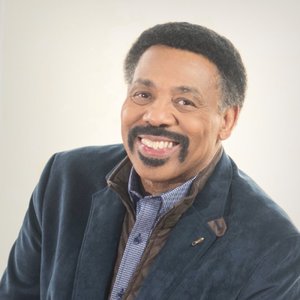
There are very few Christians who have not been tempted at some point to go back. That's why Dr. Tony Evans recommends keeping your focus on the path ahead.
No matter how good it looked back there, no matter how easier it seemed to be back there, don't go back. Why? Because Jesus is better. This is the alternative broadcast featuring the timeless Biblical teachings from the archives of Dr. Tony Evans. When a car breaks down, no amount of polishing the paint is going to get it working again.
The real solution lies in fixing what's under the hood. Our lives are like that too, and today Dr. Evans talks about how Christ's sacrifice cleanses and repairs our brokenness from within. Let's listen as he explains. We're now in chapter 9 of the book of Hebrews. The author of Hebrews, again, wants you to keep going. Don't look back. No matter how good it looked back there, no matter how easier it seemed to be back there, don't go back.
Why? Because Jesus is better. Jesus has provided you and me with a whole new realm to operate in and a whole new relationship to operate in, and don't go back. There are very few Christians who have not been tempted at some point to go back. To go back to the world, to go back to their friends, to go back to what was easier spiritually. To say that if I wasn't trying to be a committed Christian, I wouldn't have these trials, tribulations, struggles.
I'd be able to do this, do that, or the other. And the temptation is to regress and to go back. We all face that. They face that in Jesus's day. Even the disciples who walked with him were tempted to go back. That's why he brings up throughout the book of Hebrews, as we've seen, the word partaker. We saw that that word means God wants you to be a sharer in His glory, some of which you get now, most of it you get later.
But He wants you to be a sharer in His plan. And even as He suffered to fulfill that plan of God, we have that struggle as well. We ended last time with chapter 8. And we saw in chapter 8, at the heart of this verse 13, New Covenant. When He said, a new covenant, He has made the first obsolete. But whatever is becoming obsolete and growing old is ready to disappear.
You can get so used to the old that you don't take advantage of the new. So this leads Him into chapter 9. Now even the first covenant had regulations of divine worship and the earthly sanctuary. The tabernacle was a tent.
Later it became the temple, which was a permanent building. But the tabernacle, they moved with them as they went through the wilderness. So it was a tent.
And the tent had two sections to it. A holy place where the priests did their daily activities of ministry. Then there was a veil that separated the holy place from the holy of holies, or the holiest of all. There was an incense altar there at the veil, sending up smoke to camouflage looking behind the veil.
Why? Because that's where God's concentrated Shekinah glory presence was, in that holiest of all. That's where the priests went once a year to offer sacrifices on the Day of Atonement for the sins of the people. And so He describes this, and He talks about it in verses 4 and 5. Above it, the Ark of the Covenant, the Cherubim of glory overshadowing the mercy seat. But of these things we cannot now speak in detail.
So I'm not going to try to get too deep in this, He says. But the old had a structure to it. Now when these things have been so prepared, the priests were continually entering in the outer tabernacle, performing divine worship. So they would enter into the outer to perform worship. But into the second, verse 7, only the high priest entered once a year, not without taking blood, which he offered for himself and for the sins of the people that the people committed in ignorance. So the high priest once a year would sprinkle the blood on top of the Ark of the Covenant, which was a chest which had a gold plate over it with two angels standing above it, where God's concentrated presence was located.
He would sprinkle the blood on the mercy seat, calling for mercy on behalf of the rest of the nation. It was the principle of spiritual representation. The high priest represented everybody else, the whole nation, in order for God not to judge them according to their sin. Without that, then God's justice would have to prevail. Now this gets into the whole deep theological thing about the character of God. I'll just briefly state it this way. God's nature must address sin. Let me say it another way. He can't help it.
Okay? He's got to respond to it because it is against who he is, and his nature does not allow him to ignore it. Now you may not like it, but that's the way it is, and he does not change. So you can fight it, you can get mad at it, but you can't change it because it's his nature. His nature is holy, and therefore that which is not holy has to be addressed.
It can't be ignored or skipped. So with the temple, annually, this reprieve would be given based on the high priest in the altar. He says, what they did in the Old Testament is a symbol, verse 9, for the present time. Accordingly, both gifts and sacrifices are altered, which cannot make the worshiper perfect in conscience. He says, what they did back then didn't change a person's conscience. It just dealt with the consequences of their sin, but it didn't change who they were. In other words, the external act didn't change them, but it removed the wrath of God from them because of the nature of God. Since they relate only to food and drink and various washings, regulations for the body, verse 10, imposed until the time of reformation.
So they related to external things. They didn't—going through that exercise didn't change who you were. But when Christ appeared, so now he's making the switch. When Christ appeared as a high priest of the good things to come, he entered through the greater and more perfect tabernacle, not made with hands, that is to say, not of this creation. So he says that's another tabernacle, but it's not here. He says there's another place where you enter into the presence of God. Verse 12, and not through the blood of goats or calves, but through his own blood. He entered the holy place once for all, having obtained eternal righteousness.
So what Jesus did in shedding his blood one time is what the high priest in the Old Testament was doing every year. And it was not permanent. It was temporal. It was only good for a year.
Okay? It had a year's warranty on it. And so because it only had a year's warranty on it, it had to be repeated every year because the warranty ran out. And the reason why the warranty ran out is because there was not an eternal sacrifice involved. So there could not be an eternal reprieve. But he says, and then came Jesus. So everything in the Old Testament was set up to be a prefiguring of the coming of the permanent sacrifice, Jesus Christ. For if the blood of goats and bulls and of ashes of a heifer, verse 13, sprinkled those who have been defiled, sanctified for the cleansing of the flesh, how much more will the blood of Christ, who through the eternal Spirit offered himself without blemish to God, cleanse your conscience from dead works to serve the living God? He says what the blood of Jesus Christ does is what the blood of the animals could not do, and that is change your inside. Remember, he's already said the blood in the Old Testament couldn't change your inside. It didn't free your conscience. But he says the blood of Jesus changes who you are.
Not just the external. It changes who you are because it deals with the internal. It cleanses the conscious.
You get to take a bath on the inside. Okay? Now a lot of folk you know smell good, look good on the outside, but who are putrid on the inside.
Okay? You may know a few things about yourself that don't smell too good on the inside. But he says God, the blood of Jesus Christ was to give you an inside bath. Because if you clean on the inside, then that works its way out. But you can be clean on the outside and it not work its way in.
So Jesus Christ is trying to clean up the conscience, and the conscience is where you make your decisions. Right? Wrong? Good? Bad?
It's all decisions. Dr. Evans will have more on cleansing your conscience from dead works when he returns in just a moment. Don't go away. Are you hungry for more of God, more of His truth, more of His power, and more of His wisdom applied in your life? Then you need to connect with a community of passionate believers who are growing in God's Word through the Tony Evans Training Center. With exclusive video and audio teaching from Dr. Tony Evans, this interactive online study experience allows you to explore theology, biblical history, and real-life application of the kingdom agenda anytime, anywhere. Visit TonyEvansTraining.org to get started today.
That's TonyEvansTraining.org. Dr. Evans has written a book that complements the primary theme of Hebrews. It's a work that will give you the assurance and motivation you need to press on through the tough times of life. It's called, Can God Be Trusted in Our Trials?
This book will help you see the purpose of hard times and help you build a foundation for the future. And it's yours as our thank you gift when you make a contribution in support of Tony's ministry. And right now, we're packaging this book along with all 13 full-length messages in Tony's current two-volume teaching series on Hebrews, Don't Ever Give Up. Get all the details and make your request right away at TonyEvans.org. Or call our 24-hour resource request line at 1-800-800-3222.
That's 1-800-800-3222. Right now, though, let's get back to Dr. Evans. He's in the 16th verse of Hebrews chapter 9. So Jesus Christ is trying to clean up the conscience, and the conscience is where you make your decisions. Right, wrong, good, bad, it's all decisions. For where a covenant is, there must of necessity be death of the one who made it.
For a covenant is valid only when men are dead, for it is never enforced while the one who made it lives. All right? Everybody in here has a will, or if you're ahead of household, you should have a will, and if you don't have a will, shame on you. Okay? You should control what happens to what you leave behind, not the government and not anyone else.
Okay? So that means a will. For this reason, He is the mediator of a new covenant, so that since a death has taken place for the redemption of the transgressions that were committed under the first covenant, those who have been called may receive the promise of the eternal inheritance. So you and I, as believers, are written in the will.
You've accepted Christ. You're in this new framework, this new relationship, which changes how you operate. What He says is that with Christ, something changed.
There was the death of the old and the inauguration of the new. So when you go back, you're going back to something that no longer exists as it once did. So the Bible says the law is good. The problem with the law is not the law.
The problem with the law is that people wouldn't keep it, because something was wrong on the inside. So in the new covenant, He says, I will write My law on your heart. We talked about that, that He's going to give you a new, a changed inside, and you become—you are now in the will.
But for the will to occur, for the will to be implemented, you have to die. A death occurs, and therefore, the transfer is made to whatever was bequeathed to you in the will, which He calls your eternal inheritance, at the end of verse 15. Verse 18, therefore, even the first covenant was not inaugurated without blood. So even in the Old Testament, somebody had to die, because it was a covenant, and it was animals. They shed the blood of animals in the first covenant in order for people to get the benefit of the covenant. For when every commandment has been spoken by Moses to all the people according to the law, he took the blood of the calves and the goats and the water and the scarlet wool and the hyssop, sprinkled both the book itself and all the people, saying, This is the blood of the covenant which God commanded you.
You can see this is very important in a moment. And in the same way, he sprinkled both the tabernacle and all the vessels of the ministry with blood. In other words, he was sanctifying or cleaning everything in the holy place. What cleaned it?
Not soap and water. It was the blood, because the blood satisfied the demands of a holy God. And according to the law, one may almost say all things are cleansed by blood, and without the shedding of blood, there is no forgiveness. So the point of blood is to provide forgiveness which grants cleansing. Therefore, it was necessary for the copies of the things in the heavens to be cleansed with these, but the heavenly things themselves with better sacrifices than these. For Christ did not enter a holy place made with hands, a mere copy of the true one, but into heaven itself now to appear in the presence of God for us. So Jesus did in heaven what the animals did on earth. The animals removed God's wrath so they could experience God's presence. Jesus removed God's wrath so we could experience God's presence, but he did it once and for all. So he doesn't have to go back and redo this thing every year, which is going to become a very important statement here shortly. He says, "...nor was it that he would offer himself often as the high priest enters, though, year after year.
Otherwise, he would have needed to suffer often since the foundation of the world. But now, once at the consummation of the ages, he has been manifested to put away sin by the sacrifice of himself. And inasmuch as it is appointed to men to die once and after this comes judgment..." By the way, death is not the end. Remember, he says, "...and after this." So there is an after this.
Okay? So death is a transition. It's not a conclusion. There is an after this. He says, "...after this comes judgment. So Christ also, having been offered once to bear the sins of many, will appear a second time for salvation without reference to sin to those who eagerly wait for him. So he came the first time to deal with it, and then he's coming the next time to grab you. Okay?
Okay? We're in that interim time from his death and his return. Now that leads him to a whole other discussion. For the law, since it is only a shadow, the Old Testament law is a shadow. It's something that was preparing you for this bigger thing of good things to come and not the very form of things can never, by the same sacrifice which they offer continually year by year, make perfect those who draw near. In other words, if you go back there, it won't help you, because it can't help you.
It was preparing you for something greater, and you want to go back to something lesser because it's more convenient, you're more used to it. And you know what? Going back to my illustrations of technology, I am never going to progress as long as I keep going back to my yellow paper. Okay? There are amens again. I don't need all that.
Okay? As long as I keep going back, I'm never going to maximize what has been created. He said, you're going back to something else. Otherwise, they would have ceased to be offered, because the worshipers, having once been cleansed, would no longer have consciousness of sins. But in those sacrifices, there is a reminder of sins year by year, for it is impossible for the bloods of goats and bulls to take sin away. Therefore, he comes into the world, he says, sacrifices and offerings you have not desired, but a body you have prepared for me. So Jesus was uniquely prepared to provide a once and for all sacrifice to please God that the Old Testament sacrifices could never, could never, never offer. So he says in verse 8, after saying above, sacrifices and offerings and whole burnt offerings and sacrifices for sin, you have not desired.
That's not what you're doing now. Nor have you taken pleasure in them, because he's moved to a whole new covenant. So by this will, verse 10, we have been sanctified through the offering of the body of Jesus Christ once and for all. Or as Jesus said on the cross, it is finished. Okay? So you don't have to keep going back and forth, going back and forth.
So watch this. What you do now is not to get God to be happy with you. He's already happy with you, because the blood of Jesus Christ keeps him from being mad at you. Now, in the new covenant, we take communion. What was the point of a covenant? The point of a covenant was to remove or to put you under this covering and remove God's wrath. Well, God's wrath has been already removed once and for all by Jesus Christ.
So why are we taking it now? He says, do this in remembrance of me. You're taking this now in order to remove anything that would block fellowship so that God is free to bring you away all that He wants to come to you. It has nothing to do with salvation, because once you accept Christ, you're in the new covenant.
This has to do with being able to— He calls it the cup of blessing. Remember, a covenant is initiated when a death has occurred. On the cross, the death occurred. Therefore, the covenant was initiated. The covenant brings blessing. Blessings are infused into the covenant. So the way you get the blessing, because you've dealt with the wrath, the way you get the blessing is to remove the sin that would block the blessing, not to stop God from being mad at you.
So it's a different motivation than in the Old Testament because of the sufficiency of Christ's Word. Dr. Tony Evans, wrapping up a message called The Promise of His Blood, part of his 13-part teaching series on the book of Hebrews, Don't Ever Give Up. We've shared about eight of these messages on the alternative broadcast, but due to scheduling constraints, tomorrow will be the final installment we'll be able to present on the air at this time. If you'd like to hear the complete series, I want to let you know that we have all 13 audio lessons from the two-volume Hebrews collection available on CD or digital download. And as a special bonus, we package them together with Tony's easy-to-read guide, Can God Be Trusted in Our Trials? This package is yours with our thanks when you make a contribution in support of the alternative broadcast ministry. To do that, just visit tonyevans.org, where you can make all the arrangements online.
Or call our 24-hour resource center at 1-800-800-3222 and let one of our team members help you. I'll repeat that number for you after this important thought from Dr. Evans. One of the great things all of us need in life is hope. Hope is expectation about the future, that things will be better where I'm going than where I am or where I've come from. And the greatest hope that's given to us by God is the hope of eternal life, that when this life is over, we immediately enter into God's presence and don't have to worry about the scourge called death.
So if you want to bypass death, you can do that, because there's the hope of the gospel, the good news that anyone who comes to Christ for salvation, recognizing their sinfulness and their need for forgiveness, will be given that salvation when they come to Jesus for it. If you want more help in getting your new life with Christ started, visit tonyevans.org and click on the link that says Jesus. Tony has posted a short video that explains it all, and you'll find some free follow-up resources there as well. Again, that's tonyevans.org. And one more time, you can reach our Resource Center at 1-800-800-3222. A steadfast faith, a promise you can count on, and encouragement to persevere. These are the life-changing principles Dr. Evans explores tomorrow as he takes us another step further in our study of the book of Hebrews. Be sure to join us for that.