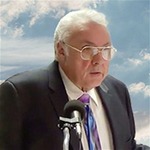
This is the Truth Network. This is the Truth Network. March Madness, the final four, it all happened in 2026. In Indianapolis, Indiana. Huge coverage.
Cinderella teams, great stories. We've talked to some of those players, but I'm talking to. Coach.
Now who is your coach? Who is it in your life? That really pushed you, encouraged you, made you better, poured the Lord into you.
Well, I'm sitting next to the guy that did it for me. Over 30 years ago. And he has been a mentor to all kinds of coaches. He was buddies with John Wooden. He wrote a book endorsed by Coach K and Dean Smith.
And he's that famous coach that some of you may have never heard about, but he's right here in the middle of it. I am in Indiana. Coach Mel Hankinson. Indiana is ground zero for a lot of hoops, isn't it, brother? It sure is.
And Sue, it's so good to be with you. But I'll tell you what, the electric is flying. I don't know if you saw Mike Szyzewski talking about. They want to increase more teams. He said, I'm having too much fun with these teams.
Why would they change it?
Well, I got off the airplane. I landed the day after the national championship game.
So I'm walking through the Indy Airport. Indianapolis, and I'm seeing all this Michigan and all this, you know, Yukon, and all these folks that are heading home. And I'm coming against the traffic because I had to come see the coach. I had to come get the game plan for a man who loves basketball, who's taught basketball for decades, but you also love Jesus. How can both of those same things coexist, Coach Mel Hinkinson?
Well, when you're at the University of Iowa, you're right in the middle of Big Ten conference. And yes, it can exist because God in His providence chose it to happen. That's something.
Now, I've got your rap sheet, and I've got, you know, now, if we went to the Mel Hankinson, you know, Hall of Fame wing of any house or any museum, we would see MVP trophies, we'd see Coach of the Year trophies, we'd see championships, you know, Final Four you got to when you coached at Slippery Rock an unbelievable year before they even put the shot clock in. 59 points when you played at Indiana University of Pennsylvania in one game in 1965. You still have that record, it's still in the record books over there. You know, you coached every level of high school, you coached in college at every level, from Liberty University to the Masters College, then now the Masters University, coaching at Iowa, all these places, big schools, little schools, Slippery Rock, of course. Coach Mel Hankinson, there's a lot of accolades there, and I want to get to that.
But I want to talk to you about You know, your faith in Christ. And in how you met the Lord. and how you met the one true greatest coach of all time. Jesus Christ. Looking back, tell us a little bit about how that happened because you weren't, even in coaching, even in basketball, you weren't always following Jesus.
That's correct. Uh One of the players, Owen Long, who had a full scholarship. to Penn State University, I was recruiting, and his coach, Ken Lowry, was a very strong Christian. He transferred to Slippery Rock University as a professor, and that meant Owen Long, instead of going to Penn State, he was coming to Slippery Rock. Could you imagine the little school Slippery Rock getting a Penn State player, Big Ten player?
Yes, that happened.
Well, Ken wanted to go on recruiting trips with me, and he said, Would you mind if I wrote along and just shared with you some things about. My Lord, And I said, no, that'll be fine. And every time I would get out of the car, And uh and drop him. He would say, Why don't you think about this? And he gave me the Roman road for all of sin to fall short of the glory of God.
I'm saying, What are you talking about? And I invited Ken, I was teaching psychology and philosophy. of coaching and he said, I'd like to come to your class. and talk about the fellowship of Christian athletes. Which was an active organization of many high schools and in many colleges.
These kids were juniors that I had in a state school. I said, Ken, if you come in and talk about Christianity, I said, you watch, you're going to get eaten alive. He said, that's okay, I'll take a chance.
So he came into the class And I was holding my breath. And he started talking about the value of Christ in your life. And I could not believe it. A girl by the name of Karen Krause, how about that? That was a long time ago.
She said, I've been waiting all semester to say this, and stood up and gave her testimony. She said, I know Christ and I love him. And then a guy, one of the football players, said, Well, it's about somebody time somebody said something for Christ in this classroom. And this is a state school, and it's just amazing the enthusiasm that took place. After class, Ken follow me to my office.
And he looked in my eyes and he said, Are you ready to make Jesus Christ your Lord and Savior? And Stu, this is going to shock you. And it shocks me at the time. He was a great friend, and I said, No. No, well, that meant that I, for the first time, realized that I was a sinner and that it did fall short of the glory of God.
And yeah, and so he stayed with me, and then he brought a guy by the name of Dr. Cook, who was another professor on the campus, and they would come to my home and they would just talk about Christ with my wife. who my wife was church, she went to church all her life. But my behavior changed. And by my behavior changing, She saw Christ living and walking with me, And that's how I became a Christian.
So, something about the testimony of these men through athletics that they were. Competing, coaching. At high levels, but they're coming in to you and they're sharing Jesus with you.
Something about that, just that is contagious almost, but something happened that the light, the light came on in your life. It shows the power of the Holy Spirit. And then, Kirk, I wanted everybody to get saved.
So I just went in all the dorms on campus and I would sit at the corner, like Charlie Kirk. I was an early Charlie Kirk. And I would say, hey, let's talk. I'll exchange whatever you want to exchange. And the students, we just talked about if you believe in God, and then the questions would start.
If God's a good God, why does He let bad things happen to good people? And everybody can answer that. For all of sinned and fallen short of the glory of God. And we had 300 kids that were meeting in a short time in the science hall. Two of the science teachers went to our President, Dr.
L. Wattrell. who played uh uh football for Syracuse University. And they uh these science professors said, We want this coach. out of our science hall because we don't go with that Christianity stuff.
Well, we had just been to the Final Four and our coach was a linebacker four series our president was a linebacker four uh the Syracuse and he wanted to win Basketball games. And he said, if you two guys in your science classes would do as good a job as he's doing on the basketball court, wouldn't we have a great school? And so he let me stay, and that group grew. And that's how I became a Christian and had a chance to lead many kids to Christ just through the providence of God. And that's the beginning, really, of a journey that would go on till this day where you have coaches coming in and you're sharing Jesus with them.
And they don't walk out that door. Yeah, you talk X's and O's with them. Yeah, you talk about presses and you talk about half court, full court. You talk about different defenses, matches up, matchups, right? Picks and rolls and angles.
But before they walk out that door, you talk to them about Jesus. That's important to you, isn't it, coach?
Well, it's exciting when you see the power of the Holy Spirit because you follow the Spirit's lead and you can only share with someone how God empowers you to, and empowers them to accept or reject Christ.
So, yes, they do come and go, but many of them leave the very a few days ago, one of the coaches in the tournament, he stopped, and I have a sheet where I work, and he saw the attributes of God. And I said, I only have two of these sheets. He said, it's no problem. He took out his phone and took a picture of the attributes of God. And he said, this is something that I'd like to know more about God.
And so that's kind of exciting, Stu. Coach Mel Hankinson, my dad used to call you a swell Mel, a legendary coach. You know, you wrote this book, The Progressions for Teaching Basketball, endorsed by Dean Smith and Coach K. That's pretty big time. And you spent some time with those guys.
Like you guys had some school sessions, didn't you? You know, it was kind of great. And you look at different highlights of your career, but when Dean Smith called and invited me to his office with Larry Brown and Rory Williams, that's kind of fun, Stu, to think that when you walk in Dean's office and what he did, we had four coaches there, but he always kept his door cracked.
So, any player that came by, he would always stop our session and see what the needs were of that player.
So, that's kind of neat. Yes, that Dean is one of the most creative coaches that ever coached a game. And for him to invite you there to just have skull sessions, yes, was very special in my life.
Now, we're going to talk about your time with another great coach, Coach Wooden, who won more natties than anybody else, national championships with UCLA, that story team, you know, Bill Walton, some great players. I wanna talk to you a little more about how you got into basketball. Like there's a really neat Genesis story there. Mel Hinkinson, I'm Stu Everson, host of Truth Talk, Truth Talk Live. This is gonna be a podcast.
You can listen to it. You can be encouraged. I'm also gonna talk about how do you find the tension? between playing For or from a standpoint of love and acceptance. Versus playing or motivating from a standpoint of fear.
And that's a big thing in basketball today and in sports today.
So every parent's going to want to hear this, every coach is going to hear this, and every player is going to want to hear this because every player, one day, you're going to be a coach. You're going to have your own kids. He's 83 years old, and I dare say he's probably been chasing basketball, involved in basketball, coaching basketball, or looking at basketball for 83 years and nine months because he is Mel Hankinson. And he is an author of, he told me he wrote, he's written as many as 30 books over the course of 30 years. He's made videos.
He's used things that NBA coaches have called him and said, hey, we need your help on this schematic, on this defense, on this offense. He's been offered and he's consulted NBA jobs. But at one point in his career, he passed up a bunch of offers for real high-level stuff. To come coach at a small Christian college, Because Mel Hankaton You heard a man teach the Bible. and it left a mark on you.
You said, you know, I want to be a part of that. This isn't a big name job. No one ever heard of the master's college, but something about a guy named MacArthur, John MacArthur. What is it that caused a guy like you to kind of drop out of the game? A lot of your college, like, what's he thinking?
He's the next guy. One day he'll coach the Trailblazers, or one day he'll coach a big D1, you know, ACC school, or a Big 10, big E school. But you go out to the little master's college in Santa Crita, California. What was it that compelled you, sir? John MacArthur called and he said, Mel, I'd like you to become my basketball coach.
We had bought, I I had been a Christian for years. And we had bought a number of Dr. MacArthur's. He had small books. And then at one time he started a cassette Uh for hospitals.
And so we had gotten every one every week we were trying to get You received a cassette and then you'd send it back, and they would, there was that kind of exchange.
So we built a relationship through cassettes and through his radio program and through his books. And so we really fell in love with John MacArthur's teaching. In fact, Stu, the very first day that we went there, Uh my wife and I, we sat in the back of Grace Church and he had just finished Six years in Matthew, and the congregation gave him a standing ovation. And my wife looked at me and she said, Did he uh were they happy that he finished or did he do a great job?
Well, after getting to know him and the congregation, you you realize that his expositional line by line, verse by verse, Was it because he did a great job? But so that was why. We went to the Masters, and it was truly God just touching your mind and your heart at saying this would be a special time in our Christian growth to go to a place that is that exciting. The Masters University, led by John MacArthur. No, it was at Los Angeles Baptist College before that.
MacArthur took over. The school had some challenges. He came in. Dr. Stead was there, some great leadership.
And MacArthur, really, you know, he's a competitor. Like, he was a major athlete, baseball, football. He's got a remarkable testimony. And you were tasked to come in and turn that thing around. But you had a pretty good first recruitment class, didn't you?
Yes, it was outstanding. And, you know, part of that is because. doctor MacArthur structured with the rest of the people, the faculty, he made a cassette out for each faculty member that this is what he wanted to do. And if anybody disagreed with his cassette and his teaching, then He encouraged them to come and talk with him because this is his goal, and this was where he wanted to direct the college. And it was a challenge because I think they only had a few hundred students.
And in fact, that was a big adjustment because there was an influx. Of students once he became president of the school. And so, yes, it was a Very much a challenge. And he guided the faculty. He said he had one faculty person that left after listening to his tapes.
But he was a great leader, and he was a great loss now to the Christian community.
So, John MacArthur School, the Master's College, they brought you out. I was part of that first recruiting class. What an honor. I was in North Carolina looking at a lot of options, had a lot of other offers. And this Master's College, in fact, to this day, people are like, What are you, a loony, to go out to California?
Isn't that a golf tournament? You know, the masters. And I always have to tell them it's an apostrophe. Yes. And that's important.
And there's some great Christian colleges with great athletics, but that's just kind of where God brought you. And then somehow God brought me out there and some other wonderful folks. And it was really a life changer and a game changer where you could compete at the highest level of athletics, but also hear the word of God. And that's something, coach, that was real in your life. And you really wanted that to be a part of your players, too, I guess, didn't you?
Yes. And still. I will not say this, but he can shoot with anybody in the country. And it was so fortunate to get Stu and then the rest of the people that came with him. And then all of a sudden, the college goes from the bottom of their league to winning their league and went to the national championship two years that Stuart was there.
So it was a great recruiting class. In fact, one of our pastors here in. Indianapolis was in that class. He was a freshman when I was a senior pastor Kirk Welch. He was a series baller.
He had like three or four brothers, and they all went there, and some of them are still out there. No, very good. But Kirk Welch could shoot with about anybody but Stu Epperson. No, no, no. No, no, anybody.
But those two guys in a game of OUT, you would never, it would be like picking a winner this year in the Final Four because they're so close, a close match. But yes, it was just amazing that class and how that class quickly developed into winners. And a lot of those kids, I say kids, they're kids now to me, 83 years old. But Yeah, they still maintain their brotherhood and their contacts with one another. And that really is a joy to me to see that they are bound in Christ for eternity.
Yeah, and you know, we still pray for each other. We're on a group text with you. I'll send a little picture of us to them. And a couple of them have already came. You know, Tom and Jason came to see you last year, and some of the other guys are going to come and hang out and see you.
Some of the coaches have come, Coach Huff and Haron Aka, and some other of the coaches have come and been in touch. And boy, they sure love Coach Hankinson. Coach.
What got you involved in basketball? How early did you start? Was it playing? Was it coaching? What kind of got you going in this God's greatest sport?
No, it's so interesting that you ask. My dad played at the Grand Old Opry in Nashville, Tennessee. And I had an opportunity to go to Bangor, Maine. And we lived in Brewer, which is right across Penobscot. The Police Athletic League was formed at Brewer High School, and so they.
Uh I got caught up in um Playing for the PAL. And isn't it funny? How long ago it was, Butch McDowell was our center, and we won the PAL in Brewer, which got us tickets to the Boston Celtics playing their exhibition games in Bangor. And so I fell in love with the Boston Celtics then. And Just fell in love with basketball.
And that's something that.
So then you went on to play, and you had just a very. Uh wonderful storied Prolific career, and then you went on to coaching. What is it about? What got you going about coaching? Because, you know, making that turn, when you're dropping 59 points in a game back then with no three-point line, coach, you're dropping buckets.
You're popping them. You got your poppers going. You are hitting it. The net is just wearing out. You're on fire.
They had to ice your arm after all those shots. How do you make a shift from being the guy that everyone's writing about, talking about to being a coach where you're coaching a bunch of those guys?
Well, those of you listening, you know. Uh Uh as a parent You want to guide your children in the middle of into their passions. And when I played for Herm Sledzik at Indiana University of Pennsylvania. He said um Would you like to go into college coaching? And he talked with Dr.
Bill Betts, who many of you might know is a very famous author. But anyway, he set up for me to go to Lockhaven University and then Penn State University toward a doctorate. And he said, I think I have a high school job for you. And he had hired a fella from the western Pennsylvania Shannon Valley. And he said, I think we can go ahead and get you that job.
Herm Sledzig played at Penn State, was beaten by Kentucky in the NCAA tournament. And so he did arrange for me to get the head job at Shannock Valley High School in Pennsylvania. But God just touches your heart. He gave me a passion for basketball.
So I knew that that's what I wanted to do. And it's really the prompting of the Holy Spirit.
So you started there at the high school level and you just kind of worked your way up to some of the schools. I mean, there's a long list. We may be here all day, and there's a whole lot of stories with those schools you coached. But then you but you came to faith when you were at Slippery Rock, which was a really epic as a smaller school, but you went to the final four. But something happened spiritually in your life and that that might have changed how you looked at things and even how you kind of looked at where you were going career-wise, huh?
Well, Stuart, we were just talking about Ruth and Boaz and how that whole, all of those events in the Bible, you know, are just not by chance. And I was at Shannock Valley High School, and we won the Division WPIL Championship, which was a pretty big deal back then. But then one night, Slippery Rock was playing in the regionals, and I decided to go watch that game. And after the game, the assistant coach came up to me and grabbed my arm. He said, would you like to get into college coaching?
And I said, yes, I would. He said, well, I'm leaving. Ed McFarland was that man's name. And I'm going to Ohio. He said, and I think that I can recommend you to the head coach and that he will hire you because you did so much damage to us.
I did have some good games against them. But yes, so that is how I got into college ball. I want to follow that.
some more and I also want you to dole out some pretty healthy Tough. But Good. Loving advice to all of our players, coaches and parents out there. When we come back, we'll take another quick break. We'll be back with Mel Hankinson.
Basketball is in the air, and Coach Mel is on the air right now on Truth Talk. I'm Stu Epperson. Mel Hankinson. Coach Hank, so many call him. He's coached at all levels.
He's played just an amazing playing career, but he spent a lot of time coaching and a lot of time writing. Did you ever think that you're just one of your first books, Progressions in Teaching Basketball? Did you ever think that endorsed by Coach K, endorsed by Dean Smith? People if you're in basketball. And you're above ground.
Yeah. Breathing oxygen, you've heard of Mel Henginson or you read that book. Did you ever think that thing would get out there like that, Coach? I think one of the things about writing is uh I did have a compulsion to play and a coach. but when I took the job at Slippery Rock, I was teaching a class to graduates and undergraduates called Psychology and Philosophy of Coaching.
There was not a book out there that was comprehensive enough. uh at all to uh give a person guidance from what do you do the very first day of coaching and and all the aspects of the game and all the psychological where are you where are you functioning from As a player, as a coach. What's your foundation? And I remember wanting to I was searching For Character for building character, and I was really looking at a lot of different aspects. And uh uh of that uh of that area And here, I didn't realize the aspects are right here in the Bible.
And it was kind of neat that the book, Progressions for Teaching Basketball. started uh from day one Of how you organize a practice. And to the very end of, I even wrote a chapter in there called Jump Balls. There were five jump balls that occurred every game. In fact, after I wrote that chapter, the NCAA had such trouble throwing officials the ball up in the air, they did away with jump balls.
We no longer have that. But yeah, my intention was to help young people learn the basics offensively and defensively and total systems of play. And so, if you look at the book, it has offenses and defenses, and it shows you from ground one. where you would start, and it would also let you profile where you're functioning from. As a coach, you know, what am I an authoritarian coach?
Am I an authoritative coach? Am I a neglectful coach? We have coaches out there that really don't care about the player. All they care about is just showing up. And I don't want to mention any names, but then you have permissive coaches that have reached the final four.
And after reaching the Final Four, there's one coach who's been the Final Four four times and lost every time. And he is a very permissive coach. And so the night before the championship James, you can imagine that he had great talent, but they lost. And uh so uh this was help. Young players decide on if they were.
I I often use Dean Smith as an example, an authoritative coach, where he places the player at the center and not an authoritarian coach where it's simply my way or the highway.
So, yeah, so that kind of helps, I think, young people see. Where are they coming from psychologically? Where are they coming from as far as guiding their players? Do they sincerely look on their players as being sons that they're guiding? Or are they simply using them to get to another level?
Or are they simply using them to achieve a certain goal? And that's why I love sharing with the players. Hey, guys, in our first meeting, we have some people in here that are whiners. They complain about everything. Then we have people in here who are shiners that they stand above the crowd no matter what the situation, they're going to go ahead and make the best of the situation.
And God wants you to do that. And then you have recliners that are very lazy. Stuart Epperson, I don't want to embarrass him, he's sitting here, but he was a shiner. He encouraged everybody else on the teams. If you look at the successful teams, you'll hear again and again: we're brothers.
We're helping one another. We have one another's back. The successful teams, you'll see that theme again and again in this Final Four.
Well, and you know, that goes to, and you're very kind to share that, and it's very insightful, Coach Hanginson, the stuff that I've learned from you. Coach, the. A lot of players are kind of confused. You know, is my coach going to drop the F-bomb on me and just absolutely ring me out, or is he going to encourage me?
So, which one is it? Is it, you know. Is a player going to do better from a coach that throws a chair, or is he going to do better from a coach that loves him and says, Man, I'm pulling for you and you're a champion, and yeah, you messed up, but get back up. That was yesterday's news, and go after it. You know, so the highest performing players, are they going to Are they going to do better?
From a Love? Are they motivated more by love or or by fear? Which one is it? There's not any question. I learned that in elementary school when I uh actually punched uh uh a patrolman and I was in third grade in Detroit.
And he was in sixth grade and just doing his job. And at that time was a very bad, um a tough situation as far as the patrolmans were searching your pock pockets and uh and I wouldn't let them search my pocket. And so the guy just punched me in the mouth, and I went home crying. My mother taught me the harder you're hit, the higher you bounce. Be proud of your black and eye.
It isn't the fact you're licked that's counts, it's how did you fight and why? You're beaten to earth, well, well, what's that? Come up with a smiling face. It isn't the fact that you're knocked down flat. It's to lie there.
That's disgrace.
So she answered the question on what I have thematically done is. Encouragement is always gonna have that player. get better.
Now, that's not saying that you're going to that you're not going to discipline. And you know, Proverbs teaches us and teaches every child, you know, that any any any person that does not leave an obedient, disciplined life to the Lord then uh that person is walking out of step. But I think that you're gonna I think it's good to knock down, be knocked down, and then learn to get back up. And I've taught that throughout the years and encouraging players as they're gonna perform better. And stop and think every person living here on this earth.
When they're knocked down, if someone helps you, extends a hand back up, instead of spitting on you and keeping you down. Um uh yeah, swearing at a player uh is um is is you don't want to berate a player, a person, nor berated uh uh and and expect them to get up um encouragement is always going to is a better tool. And Christ taught that.
Well, some coaches struggle with that. Many coaches, I think a lot of it, a lot of players struggle with that. You know, I mean, they struggle with the fact that how does Tony Dungy win Super Bowls? Without dropping one F-bomb, how does Tim Tebow win a Heisman and play at the highest level of college football and even in the NFL? And he's not cussing, he's not carousing, he's not abusing, he's not abusive of his fellow teammates.
How does Coach Wooden win more natties than any other coach that's ever lived, you know, at the highest level at UCLA? And he wasn't coaching, he wasn't berating, he wasn't dropping these, he wasn't cursing and blasphemous. Coach, I mean, how do you explain that? Because you had some pretty good sessions there with Wooden. You guys became pretty good buddies.
Well, I think one of the neatest things that Coach Wooden. He was a very hard-nosed coach, but he was very organized. I'd encourage your listeners to look up his Pyramid of Success, which is online. And on at the Pyramid, you'll see enthusiasm on the left-hand corner. And you you also see faith at the very top of the pyramid.
And so, John Wooden, we would spend a great deal of time together, and I really did respect him. It's very humble man, but people that have in Psychology Day magazine. They went and spent a semester with um uh Bob Knight and then went and spent a semester with Um John Wooden, they were not being critical of either one of them. They just said that John Wooden. His practices were as intense as Bob Knights.
But organization, no have a contingency plan on everything. But Tim Till Timbo is a great example. You know, right now, his heart is continued in the programs now that he is helping people that are down on their down on their luck. But anytime that you start swearing at even your dog, You know, people are going to respond. The positives will always outweigh the negatives.
And some coaches say, well, if I don't swear, if I don't threaten, Then my job is going to be threatened. Frankly, it's just the opposite because a good administrator looks to see how you're organized. To see where you're coming from philosophically. And if your base is that you are out to help the person, then they're going to support you every way they can.
So winning is important, but winning usually takes place. in the long run. of uh by you being encouraged and learn how to get organized, get your practices organized, and uh that will be the better uh cure. Doesn't that answer that balance between you know you want to be intense, you want to be uh you know you want to drive these guys to success, but you also you know want to love them. You know, I don't know that any human being Could ever find that perfect balance.
I played for you. You were intense. We had to hold you back in some of those games. You ripped sports coaches. I mean, no one was more intense than Mel Hankinson on the court.
As a coach, you were a bulldog. You were ferocious. And we had high respect. I mean, you had an amazing presence. But isn't it interesting that in one man Who walked this earth?
There was the perfect balance of that grace and truth, Jesus Christ, and how he, you know, here he's excoriating, driving people out of a temple one day, and he's sitting there with a little child on his lap. And so maybe we connect deeper with Christ. He helps us work that out in our own lives, Coach. What say you about that? There's not any question about that.
In fact, there are great coaches that have followed that philosophy and were very pushed their athletes. And I'll use a swimming coach, Dr. Kounceman, who was a swimming coach at Indiana University. And it had to do with organization. And I think he may have, Dr.
Bonder also at Westchester may have had a heart for Christ. But if you walked into Dr. Kounceman's swimming pool at Indiana University, you'd see a huge triangle that would say hurt, pain, agony.
Now think about that because he uses Mark Schmitz as an example that had won five or six golden medals. But think about how Christ. uh the agony that he went through for us.
So you can draw parallels between the hurt, pain, agony pyramid triangle, but also John Wooden's organization. I'd encourage your listener to look up the Pyramid of Success. But uh you would see inbuilt in that uh in that pyramid is enthusiasm. is industriousness and faith all within this pyramid. What is the legacy of a godly coach?
Say you want to be a coach. Say you are a coach. How do you want to be remembered? Let me ask you that, Mel Hankinson, just straightforward. And I hope folks will listen to this whole conversation about how you got into basketball and how you, you know, I mean, there's so many coaches.
I hope people will Google you because there's more stuff online than we'll ever cover in this brief conversation. But I'm in Indiana, home of the Final Four 2026, big game between UConn, the Michigan Wolverines, won the championship. They had quite a team, but it was quite a storied run. A lot of Cinderella stories, like the High Point University team, knocking out Wisconsin, all kinds of things happening along the way. But I had to come to Indiana, not for those games, but to talk to swell Mel, Coach Mel Hankinson, the legend, the GOAT.
He was my coach years ago at the Masters University. Really, that changed my life. Just being under that great Bible teaching, getting that liberal arts education, and being under the discipline of a coach and your amazing coaching staff, I mean, Swaggerty, Montgomery. Huff, you know, Rocket Rod Foster, you know, Aaronaka. I mean, we had some epic runs, man.
Probably some guys I haven't mentioned, but coach, what is it that. You say, let's say you're speaking to the national coaches, which you've done many times. You're the keynoter. Guys would come from all over the world to hear Mel Hankinson. They've read your books.
Prolific author, prodigious career in coaching and in playing. And so, but what is the legacy? What is the thing that's most significant to you you want to be remembered for? Stuart, that is a great question. And It's it advantage of being 83 years old.
Even when I'm in the store and I see Mm uh Children, the age and mothers carrying kids, I will say to them. Um Please know this. That child is going to grow up so fast. Take every corpus of your mind and body. and pour it into that child.
Because God has given you birth that children And you That child's under your care. And you're gonna mark that child. Yeah. E even uh Dr. Sam Peebles said um your circumstances in life and the people in your life won't make you the way that you are.
They will they will reveal Who you are. Yeah, and you you Life just passes by so fast And you don't want in Dr. Jeremiah's recent book on heaven, he said it's not. that I'm trying to scare you about going to hell. He said, I just don't want you to miss the glory of heaven.
So when you look back on your life and in your heart, is for Those players that maybe you didn't touch. and lead them toward eternity. Because Stuart, that's what it is. It's about eternity. And and I I I would just encourage every parent And it Every player, every coach.
to just think about That person twenty years from now Because You you you just have a short time to impact their life. and and and uh Aristotle many, many years ago. Uh the Greek philosophers said that um You give me a person and by the time they're six years old, I'll give you a positive uh producer in our culture.
Well, the the thing that that sounds very noble, but the thing also is that Aristotle, what are you doing for eternity? And all of that might sound like a contradiction. But that Uh Proverbs 22. shares with you, train up a child in the way you should go. And when he's old, he'll not turn from it.
Well, there's a balance there. That you look back. on on the people that you've worked with in your life. And it's not just your players. It's it's those of you who are listening, it's your wife and and uh You know, 1 Peter teaches you that whole relationship.
to serve your your your your your wife and uh and for the wife to certainly Serve your husband. That relationship. My wife, now we were married 60 years. In May 3rd, she passed. And uh the thing that she did, she grabbed my hand and she said, Thank you.
for being uh my husband. And I think if you think that the person that you're working with, the coach, the player that you're working with, that. On their deathbed, Are they going to say thank you? for the relationship that we had. and all that you poured into me, that you were trying to make me a better person through Christ.
Because grace in its identification is in itself. You know, you can't Put up enough eggs in one basket and say that you're going to. Um Be good. But what you can do is say, as Christ leads me through the Holy Spirit, I'm going to pour my life into this person. and then let the results Uh be what they may.
Almost a challenge: be a coach Hankinton to someone because I want to say thank you, Coach. I don't know if I get through this, but I want to say thank you for how you poured into me. All our guys. All these years, I know a lot of. Assistant coaches who are now head coaches, a lot of players who are now, you know, some played in the NBA, overseas, raising families.
Some in the, you go to the church of a former player who was kind of our, kind of our team chaplain. You know, I think of, you know, Rick Hoppy, you know, who's, who's, who's ministering to so many. I think of all these, so more to, more to even Big Dan Jarms, you know, you know, all these guys, remember going back? You know, you got, you know, Grisham and you got all these guys and the guys that say thank you, Coach Hank, for pouring in. You know, I look behind me, there's this picture of you and your family.
There's your sweet Joan.
Now, some of the players, they appreciated. Joan Hankinson's cooking, some better than Coach Hankinson's coaching, because we would come to your house. Very good. And I mean, the spread of food. Yeah.
Unbelievable. Amen. She could do it. But what a godly woman. Amen.
And you try to encourage, you know, I know you saw what you were doing, Coach. You were saying to the players, marry a godly woman like this, right? That was the Proverbs 31. Amen. Amen.
Amen. Yeah. And so I see Chad in that picture up there, and Josh, your sons, I see their spouses. You know, I see all these grandkids. You know, Chad spoke at Joan's funeral, did a powerful thing.
I didn't hardly make it through that. I listened to the whole thing. I couldn't get up here for it. But it was just a tremendous, you know. Kurt gave a great message.
Did you ever think a former player would preach at a service to celebrate your wife? I mean, that was a whole gamut of emotions, wasn't it? No, amen. And that really you captured it all, Stu. You know, I look back on the Masters and.
That chain now that the players have, and they're communicating with one another online. in uh the genuine love That they have for one another and still involved. I think you mentioned Ted Hawes and just the guys that. Ted's going to prison every day or every week. He's playing ball.
He's dunking. And the rest of us are kind of like, you know, kind of fading in Ted's in there playing ball sharing Jesus in the prisons. And a lot of these players are doing that. They're still active because there's something powerful. Because basketball, it's an amazing sport, but a terrible God.
And when it went from becoming your God to becoming your tool to reach people for Jesus coach, that changed everything, didn't it? No, and George Raveling, from my 80th birthday, he was. They had a special on George. Many people listening might have seen this, but he was an African-American coach. who um You know, he called me and just said, I love you and thank you for all you did for me.
So it's not only the players, it's just all of the people that you come in contact with. And um you know, you you you miss m you miss many of them, uh You know, there's a lot of people passing on, Stuart, and it's kind of neat when they do call. George died. Uh two years after he um After you call me, and that's pretty hard.
So I think in, you know, life is. The joy of life is knowing that God has has you here for a purpose. And no matter what that purpose be, Uh the Tata Ericsson, uh she said um When I get to heaven, the first thing I'll do is take. This uh Capsule that she lives in, and thank God for that. No matter what your circumstances are in life, that's a Depth of Christ is that you're here for a purpose, and sometimes those purposes are, the trials are very, very difficult.
And but the depth of that is Stewart at one time maybe doesn't remember this, but 10 or 15 years ago. He was Store was mentioned you were you were m uh mentoring uh a person that was getting ready to die. And said, and his wife said, I've never been closer to Christ. And that's the depth of of this conversation is there's He is the king and he rules. And it's amazing the examples now that I could give you of people who are dying.
And they are thankful that they're going to heaven. That was Michael Lovick. You know, we had lunch with him at Jason's Delhi in Raleigh on Falls Neuse Road, right across from where our station was at the time in Raleigh. And you really encouraged him. And he came on the show to talk about what God had been doing in his life.
And I'm sitting there thinking, this guy's dying of cancer. And loves Jesus like I've never seen. Coach Hankinson, you said once to me, you said many times to me. I didn't enjoy hearing you say this to me. But you said, nothing comes to you that doesn't first pass through Jesus.
Amen. And his pain and what he felt for us, the only one who can feel your pain. Will you elaborate on that real quick as we get out of here and why that's so important for people that are struggling out there? No, that's why I love the name of this station, Truth Talk. And Stewart's going to do that.
And it's the depth of Jesus Christ in the universe. And Sue, I thank you so much for this time with you and that we could share this with other people. God bless you, man. Your favorite verse as we get out of here, what's a good verse that's kind of, what's one of those, what's a golden nugget verse that you just has really hung in your heart all these years? But there's not any question, for God so loved the world.
You know, they gave his uh his his son, I mean there's just not any question about that. Should the top of the block?