Faith is based on what you do not see.
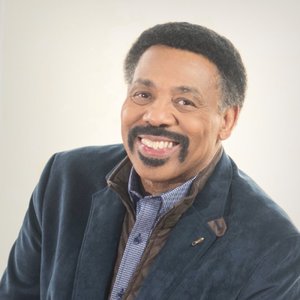
If you gotta see it first, you won't see it. But Dr. Tony Evans says faith is expressed through actions, whether or not your emotions are on board. So you move in faith even when you don't feel it. This is the alternative broadcast featuring the timeless biblical teachings from the archives of Dr. Tony Evans. When we're facing a crisis, big or small, we have two choices.
Listen to our feelings or listen to our faith. In today's message from the archives, Dr. Evans takes us to John chapter 11 as he explains how our choice affects how we pray and how God answers. Lazarus is sick. And we know from the story he's sick unto death because it would only be a few days later he would die.
So he's not just sick, he's seriously sick. And whatever medical help there was, was insufficient to resolve the problem of his medical crisis. So what Martha and Mary did, the sisters of Lazarus, is they went to Jesus. They sent word to Jesus. You and I would call that today, they prayed. They sent word to Jesus. Jesus, our family member, has a crisis. This is a life and death crisis.
And we're crying to you to resolve the crisis. We're told in verse 3 some of their prayer requests. The one whom you love is sick.
We're told in verse 5, now Jesus loved Martha and her sister and Lazarus. So evidently spiritual people get sick. So don't ever let anybody tell you just because you have trouble means God is far away. Or you're not in fellowship with God. They're in fellowship with God, but he got sick. But I got a problem.
My problem is verse 6. When he heard he was sick, he stayed two days longer in the place where he was. Come on, Jesus. I just told you my brother is sick, and you're not going to hurry up. Has God ever delayed on you when you're in a crisis? You need him right now, and he's hanging back for two more days. He's not moving like you need him to move, want him to move, feel that he should move, cry for him to move. He's not moving. After two days, Jesus tells his disciples, let's go to Judea.
Let's go, guys. Then he says something else, a new term for Christians. Verse 11, he said to them, Our friend, because remember Lazarus is close to Jesus, our friend Lazarus has fallen asleep, but I go so that I may awake him out of his sleep. The word sleep is only used of Christians in the Bible. Whether God brings you back in this life or takes you to the next life, you're only transferring consciousness. You're not losing existence, and you're transferring that consciousness in the will of God.
This is new terminology. Jesus says to her, your brother will rise again. She says to Jesus, yeah I know, I learned theology, went to eschatology class, on the last day he gonna rise.
I know, I know about that. Then Jesus hits her with another theology. Can I talk some theology here? Because I want to ground you.
I want to root you. He says, I am the resurrection and the life. He who believes in me will live even if he dies. Jesus changes the conversation. He says, I am, present tense, the resurrection.
The resurrection is not merely an event, it's also a person. On Emmaus Road, in Luke 24, Luke 24, the disciples are on Emmaus Road, Jesus has died, they're depressed, they walk in, it says a stranger came up to them that they did not recognize. So the stranger came up to them and said, why are you all so sad? They said to the stranger, have you not been around here to see what's going on? We thought Jesus was going to deliver us. They don't recognize Jesus.
We thought he was going to deliver us and all that. And it says the stranger opened up the Bible, the Old Testament, and walked them through Moses and the prophets to explain who Jesus was, who Jesus was, and what he was supposed to accomplish, and he walked with them on the Emmaus Road. Then it says, when they got to their house with the stranger, the stranger acted like he would keep going. Said the stranger kept walking. Good, good being with you all on the road.
Enjoyed the Bible study. The stranger kept going. But they told the stranger, no, no, no, no, no, no, we can't stop now.
You come on in. The stranger came in. It says the stranger broke bread. When he broke the bread of the meal, they saw the nail prints in his hand. And finally, they knew it was Jesus giving them the Bible study on the road. It says when they saw Jesus, not the Bible study, it says their hearts burned. They were excited over the Bible study. But it says when they saw Jesus, their eyes were open.
And now they saw things as it really was. If you read the Bible but you don't see Jesus, your eyes stay closed even though your heart burned at the Bible study. So the goal of this church, the goal of your life, is through the written word to come into an experience of the living word. Which the Holy Spirit offers to every believer who seeks to do that.
Okay. It says, I'm the resurrection. He says at the end of verse 26, do you believe this? This is going to be critical.
This is going to be, this will change your life. Do you believe this? She says, yes, I believe you are the Christ, the Son of God, who comes into the world. Now, it's Mary's turn. Mary not coming to Jesus. She's too disappointed.
And let's tell the truth. Sometimes you're so disappointed with Jesus, you don't want to talk to Him. Can anybody raise your hand and tell you don't want to pray no more? Because He's not moving, He came too late, should have been here yesterday, that kind of thing. So she doesn't want to talk to Him. So Jesus calls her. He says, Mary, come on, come on, come talk to me now. He bids us come.
She gets up quickly because He invited her. And then she tells him, verse 32, if you would have been here, my brother would not have died. Now, in verse 33, everybody's crying. We've got a weeping time. Because when you're in pain, you're going to cry if it hurts bad enough. When you have your crisis, it will bring you to tears if it hurts bad enough in your particular situation. But I feel much better in verse 35, the shortest verse in the Bible, when I read Jesus wept. He wasn't too big to cry. He's the Son of God. Jesus cried.
Why? Because Hebrews chapter 4 verses 14 to 16 says that He sympathizes with our infirmities. He hurts with our pain.
I have good news. When tears are coming down your eyes, they're coming down His eyes. Because the Bible says He feels your pain. He feels what you feel when you're in a crisis. So now, Jesus raises the question, where have you laid Him?
Where is He buried? So they come to take Jesus the way He was buried, and He stirred up, verse 38 says, He's deeply moved within. He's moved at the sin and the pain that the world offers that creates sickness in the first place. Without sin, there would be no sickness. Without, not personal sin necessarily, but atmospheric sin.
The germs, the viruses, the bacterias that infiltrate our body, the toxins, all of that is the environmental repercussions of sin. And He was stirred up at the crisis that they were in and the reasons for it. And so He says, stay with me here, verse 39, Martha, remove the stone. She says, let me give you a lesson in mortuary science.
He'd been dead four days. So I know Jesus, you didn't go to college. I know you didn't go to medical school. So let me give you a little help, Jesus. Let me put it this way. Jesus, let me bring you into reality.
He'd been dead four days, and He stinks. Jesus said, move the stone. She says, that's not reality. So Jesus utters words that I want everyone to catch right now, starting with me, because I'm preaching to me as I'm preaching to us. He says to her, did not I say to you? Okay, parents, parents know what that phrase means. You say one thing to your kid, your kid comes back what they think, and you say, didn't you hear what I said? Didn't you hear what I said? I told you, move the stone, and you give me a lecture in mortuary science, you're talking too much.
I didn't ask you all that. I just asked you to move the stone, and you're making this thing more complicated. You're turning an instruction into a conversation.
And one of the reasons why some of our crises aren't addressed is God gives instructions, and we want to have conversations. I told you, move the stone. You're going back to what they taught you in college. You're going back to what they taught you at the university. You're going back to what your friend, but my friend said, but my neighbors say, but I think, but this is what I read in this book. You're going back to what you know. Now, here's the thing, Martha was absolutely correct.
She did not have wrong information. When that happened, you've been dead four days, you begin to stay. That was absolutely correct, but it had nothing to do with divine revelation. You see, don't let what they taught you in school keep you from experiencing the supernatural of God. See, one of the worst things about secular education that's not spiritually based, it will limit you to secular education, and you won't know what the supernatural is because you've been tied to your degree. You've been tied to your human understanding, or what the Bible calls human wisdom, man's approach, man's thought. And if this church, if your life wants to experience the supernatural, it will often mean following God when it contradicts what you thought or what folks taught you, including your mama and your daddy, when it contradicts what Jesus said. He said, remove the stone.
And what did he tell her? He said, did not I say to you, if you believe you would see the glory of God? In other words, here it is, faith must always precede sight. Once you put sight in front of faith, you've negated faith. Faith is based on what you do not see.
If you got to see it first, you won't see it. And how would she demonstrate faith? Not by a feeling, but by removing the stone. Because faith is not a feeling, it's an action. As you've heard me say many times, faith is acting like God is telling the truth.
It is acting like it is so even when it's not so in order that it might be so simply because God said so. So you move in faith even when you don't feel it. Sometimes you're going to feel faithish. You've got faith all over you, you're just feeling it. Sometimes you won't ever feel faithish, but you can know you're operating in faith because you're moving the stone.
So some of us have situations that have not changed because we're still having conversations and have not touched the stone. We'll return to Dr. Evans in a moment as he wraps up this final lesson from his classic series, Igniting Kingdom Prayer. Over the last couple of weeks, we've learned how to pray with the power that can move mountains, solve problems, heal relationships, and even change God's mind. And now is the time to get a copy of this powerful, timeless collection for your own audio library. Right now, you can get both volumes of this 12-message series, as well as a copy of the powerful companion book, Kingdom Prayer, Touching Heaven to Change Earth. They're both yours as our gift when you make a contribution to help support the ministry of the alternative. Just visit tonyevans.org to make your request.
Details of this exclusive deal are right on the home page. Again, that's tonyevans.org, or call our 24-hour resource request line at 1-800-800-3222, and one of our friendly team members will be happy to help with your request. The number again, 1-800-800-3222. We'll get back to today's message right after this. And now let's get back to our message from John chapter 11 on praying through a crisis. Okay, she gets the message.
So they removed the stone. Then Jesus raised his eyes and said, Father, I thank you that you have heard me. Ooh, ooh, ooh, that's theology there.
You're praying through a crisis. You're talking to God, but here's what you want. You want Jesus talking to God for you.
See, you got to talk to him first. But what you want is Jesus to ditto the request. Then, not until it was an act of faith, Jesus says to his Father, I thank you that you have heard me.
Ooh, ooh, ooh, ooh, ooh, ooh, ooh. So you can't miss, Jesus does not waste words. Not only does he not waste words, he does not waste tenses of words. He didn't say, I thank you that you hear me.
I thank you that you heard me. Which means we've already discussed this crisis that Lazarus is in. When they prayed the first time at the beginning of chapter 11, you and our Father had a conversation. Oh, Martha and Mary, they have a sick brother. They want us to do something. Daddy, Martha and Mary just came to me and they had a conversation.
They want us to do something about their brother Lazarus. So let's talk about how we're going to handle this. Well, son, you know what?
We can actually use this crisis as an opportunity for me to have greater glory. So son, so here's what we're going to do. As soon as they demonstrate faith, then we're going to let this thing roll out. Because they have, did you know when you first talked to God a year ago about that problem, he and the son have already discussed that?
They've already discussed that. But the son is not praying for the implementation until faith has been demonstrated. So now Jesus prays. I thank you, you've heard me. I know that you always hear me, but because of the people standing around, I said it so that they might believe that you sent me.
Ah, now we got a clue. Jesus holds off on answering the prayer because he wants to use the crisis to bring a lot of people to salvation. So now there is a spiritual reason for a crisis delay in spite of a prayer being prayed because there's a bigger kingdom purpose at work than just the healing of Lazarus. If you're in a crisis and God has not moved and you're operating by faith, all that means is the delay is tied to a bigger point that God wants to accomplish for his glory, the amplification of the name of his son and the advancement of his kingdom. So you keep praying to a crisis.
If you've not heard no, then you keep praying. So Jesus prays. It's called intercession, Hebrews 7, 24, and 25, where Jesus intercedes as our counselor. He goes before us and he delivers us out of a stinky situation because guess what he says? Verse 43, Lazarus, come forth. Now I'm glad he said Lazarus, come forth.
If he just said come forth, all the dead would have got up. But you see, this is a personal crisis. They get a personal answer about that personal problem.
See, because when you're in a crisis, you need specifics. Yeah, bless everybody. Hey, that don't work now. No, no, no, no. No, bless me.
I need you to call my name. Lazarus, come forth. So Lazarus walks out of the tomb, kinda.
Here's my final point. As he's exiting the tomb, the man who had died came forth, bound hand and foot with wrappings. His face was wrapped around with a cloth. Jesus said to them, Unbind him and let him go.
Wait a minute. Lazarus has life. But what he doesn't have is freedom. Because he's bound. His hands were bound. His feet was bound. He's wrapped like a mummy. You wrap a mummy.
He's wrapped from hand all the way to the toe. So he has life, but no liberty. You may be bound by an addiction, bound by an emotional struggle, bound by a health situation. Something may be holding you hostage even though you have life.
Now watch this. Jesus gave him life, but Jesus did not directly give him liberty. He said he told them to unloose him and let him go.
Let me explain something. Jesus Christ wants to give every sinful person eternal life. He offers life through his blood, but he sets folk free through his people.
He still does it, but he does it through his people. That's why God wants every Christian to be an active part of a local church so that you can be unwrapped if you're trapped, so you can unwrap somebody else if you have been unwrapped yourself. God never meant for you to come once a week to hear somebody preach the Bible alone. He wants you part of a family so you can be in the unwrapping, untying, and deliverance business so that you can be helping somebody else as somebody helps you because you can bet your bottom dollar if you don't need to be unwrapped now, there will be a day when you will need to be unwrapped later, so you better be investing in other folk through a small group, through a ministry, but there ought to be a meaningful connection where we are dealing with the one anothers of Scripture, where you are engaged in the life of the family of God because while Jesus gives life, he uses his people to untie folk from that which is holding them hostage. He wants us unbound from this habit, that habit, this sin, that sin, this circumstance. That's what the church is supposed to be.
It's not a weekly event. It is a family relationship where folk are being loosed and set free. That's why the book of Matthew chapter 10 verse 8 says if you've been freed, free somebody else. Galatians chapter 5 verse 13 says through the liberty that you have, serve somebody else, and if you're not serving others in the family of faith, but you're only coming to serve yourself, that's not called worship service.
That's called worship selfish because you're just in this for what you're going to get out of it, and you will always limit what God does for you if he can't work through you to do it for somebody else. So we are in the untying business of loosing people and letting them go. Dr. Evans will come back in a moment with a final thought about how that power can be accessed. First, don't forget that today's the final day to take advantage of our current double resource offer, the complete 2-volume Igniting Kingdom Prayer series featuring all 12 full-length messages on CD or downloadable MP3s, along with a special bonus, the companion book for this series called Kingdom Prayer, Touching Heaven to Change Earth. Both the book and audio collection are yours with our thanks when you make a donation to help keep this listener-supported program on the air. The place to go for details today is tonyevans.org, or call 1-800-800-3222, where a member of our resource team is ready to help you.
That's 1-800-800-3222, or online at tonyevans.org. And one final reminder that the second season of the popular stories from the storyteller is now here. This family-friendly animated show follows the Evans family as their everyday experiences are turned into opportunities to learn important truths from the Bible.
Catch the new episodes in Season 2 now, or catch up on all of Season 1. Find out more at tonyevanstv.com. That's tonyevanstv.com. Unity Among Believers was one of Jesus' final prayer requests before His death on the cross. Tomorrow, we'll take a look at the power of a unified church and the common goal we should all be aiming for. Right now, though, Dr. Evans is back with his brief closing thought on prayer. I know there are many crises here, but I want you to pray through it, even if it's gotten worse and not better, because I want to let you know right now that God can turn things around for His own purpose. .