Before we begin today's episode of Renewing Your Mind, we invite you to stay with us through the end of the program to hear how you can request today's featured resource from Ligadaire Ministries. Many of us can name prominent characters in the Bible, such as Abraham, Moses, David, the Apostle Paul. God used them in mighty ways to accomplish his purposes. But it's fascinating to see how God also used people that Scripture mentions only in passing.
Sometimes they do just one thing. That's all we know. But it was a very, very important thing that they did. And God can use just one moment in your life. To do something grand for the kingdom of God, or it may be even a very small thing, but it was crucial.
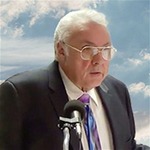
for God's work to be done. Ligner Teaching Fellow Derek Thomas believes there is much we can learn from these lesser-known characters. At Ligoters National Conference, I had the privilege of sitting down with Dr. Thomas to talk about his teaching series, Who Are They? And I began by asking him what led him to focus on these lesser-known people in Scripture.
I've been in ministry for 45 years and more. I'm now retired from full-time ministry. And in almost all of that time, I've engaged in lecture continuo preaching, that is preaching through books of the Bible.
Okay, thank you. You know, chapter 1, verse 1, and heading all the way to the end. And some series have been short, and some have been longer. And I've also been involved in ministry that. included a morning, evening and a Wednesday slot.
At one point I was the solo pastor, so I preached three times a week. But there are occasions like over the summer months. When folk are away a lot, and you can't do a consecutive expository thing because they're only here. you know, they hear someone in chapter one and then all of a sudden they're in chapter five and So, still having a series, still having a theme, but they're sort of one-off. Sermons and I I got intrigued.
by lesser known characters of the Bible. There are Couple of books, I think, none of which I read, but I think they're out there. with similar sort of titles biographical Sketches so I also think from time to time it's just wonderful to tell a story. You know, most of my preaching is theological. And if you're in Paul, for example, there aren't many stories in Paul, there are a few, but there aren't many.
So, telling a story of a character and developing that character and Showing good things and and bad things about their character. To help us understand, you know, what does a biblical character look like? And it doesn't always look like. Abraham or Paul Under the lights. um cameras and and so on and you know, contributing 13 letters of the New Testament, sometimes they do just one thing.
That's all we know about it. They just did this one thing. But it was a very, very important thing that they did. And that God can use just one moment in your life. to do s something grand for the kingdom of God.
or it may be even a very small thing. It may be even something that The world just Don't even see, or perhaps even the church doesn't see, but it was crucial. for God's work to be done. It's a reminder, isn't it, that all scripture is breathed out by God and useful for correction, training, and righteousness? Yes, and you know, my inclination is to go to a letter of the Apostle Paul.
And expound it. That's my comfort zone. Romans chapter 8, impressive. Romans 8, the best chapter in the Bible. But I I really found unpacking little cameo sketches of some of the people that God has used in his Kingdom.
And m most of them are positive, but I I mean we'll Probably talk about one that isn't. Right. The first character that you profile is the maid of Naaman's wife, and she's mentioned in 2 Kings chapter 5. Why is this anonymous girl?
So important in your eyes.
So Naaman, in a period of Old Testament history when the Syrians were fairly dominant. A naaman was the Syrian king and She is more or less a slave, a trophy of battle. whom he gives to his wife uh as her maid. Uh we don't even know her name. You know, the Bible records that the king becomes ill, he has leprosy.
A fairly common illness, you know, in those times. And various kinds of leprosy. Evidently, even though he was a king, it was incurable. But somehow or other, she convinces. Her boss.
Naaman's wife to tell Naaman about the prophet Elisha. and that he would be able to cure him. No. Where did she hear about Elisha? Was she even a Jew?
And probably not. It's a story of Courage and bravery because she She could, but telling a Syrian king that he needs to go to a Jewish prophet. I mean, it it could have costed her life. There was certainly not something to be done. You know, without a great deal of faith.
and courage.
So she's noted for her compassion? You know, she she could have said, I hope he die. You mean so-and-so? You know, you've ruined my life, but No or Evidently she was a person of faith. Saw her circumstances as part of God's providence.
For her? And used her position and and her knowledge to help someone who otherwise was her master and lord and whom she could easily have despised. And and wished his death but but didn't.
Some of the characters you profile do have some degree of familiarity with us. I'm thinking particularly of Jabez in the Old Testament.
Some may remember the book that gained enormous popularity more than twenty five years ago, the the book titled The Prayer of Jabez. The prayer and the book were promoted by some in the prosperity gospel movement as a template for getting what we want from God, if you will. In your message, however, you want us to discover something about the prayer and Jabez's character that we should heed. And it's found in his part of the prayer where he asks. that God's hand might be with him.
Why is that significant?
So Jabez, you know, he appears in First Chronicles chapter four. You know, in Chronicles is written after the exile, looking back at the history of Kings and Samuel and rewriting it to some extent to try and encourage the Jews now who are returning to look at it as a fulfillment of God's covenant promises. generations, three generations at least have died. In Babylon, and now they need to find that courage and conviction. To live as those to whom God had made a covenant and to go back to Jerusalem and rebuild the temple and rebuild the city walls, the story of Ezra and Nehemiah and all that part.
And Jabez, his name. means he causes pain.
Now, you know, what mother calls her child, he causes pain. Right. It's crazy. But it was a prophetic name. I guess, because he He was probably born in a difficult childbirth.
Yeah, which is why sh she names him he causes pain. But he has a wonderful reputation. He's better than his brothers and sisters, the text tells us. His prayer O that you would bless me and enlarge my territory. Let your hand be with me and keep me from evil, that I may not cause pain.
And that's it, that's his prayer. And he's praying for territory that technically was prohibited territory for him. But God answers his prayer.
So as you said You know, 25 years ago, you and I will remember well a book by a man called Wilkinson. The prayer of Jeebus, I think it sold over a million copies. Yeah, I think so. You know, you take the prayer out of its context.
So, God answered this particular prayer.
So we can pray for extension of land and property, and that hunting lodge that you want. You know, in South Carolina. And the beach home that I want on the shores of Florida. And a private jet for all the traveling I do, I want a private jet. Lord, just give me a private jet, because you you answered Jabez's prayer, so why don't you answer mine?
And I think that was the problem. With the book, you know, that it took something completely out of context and then generalized it and said, you know, you can ask whatever you want. And the reason you don't get it. It's your fault.
So it's a catch-22. Not enough faith? Not enough faith. You know, there are churches in Brazil that I didn't go in, but I was driven by somebody in Sao Paulo. It's huge, huge, huge touch.
And there were people in there who were caught in this trap that They had pain and suffering and illness in their lives, and the reason was they didn't give enough.
So then they would give. Everything to the church. And then they were poor.
So now they can't even afford to eat. Right, so it was a kind of catch-22 thing. I I mean the church is fine. Right, this means oodles of money, right? But on the basis of prosperity, gospel, name it and claim it, gab it and grab it.
And it's insidious. Really. This is a beautiful prayer, but it's taken out of context. Particularly that line that you highlight, God's hand might be with him. And you and your message on Jabez, Mentioned the practical application for us as Christians, as followers of Christ, and I'd like for our listeners to hear that portion of your message.
I tell people That what makes you able to sleep at night is a robust doctrine of providence. Everything may be falling apart. You read The headlines of the news, you watch certain news channels, and you think the world is. All out of sorts. We've lived in an era in the last.
decade or so where we've seen the world turned upside down. And things that were right are now wrong, and things that were wrong are now right. And uh You lie in bed and you you toss and turn and and you fret. Um But God is in charge. And if you're a Christian, if you're a believer, the hand of God is upon you.
That powerful hand. God doesn't have hands. It doesn't have a body. It's a euphemism. It's a way to help us understand that He guides us.
When they're in trouble and somebody puts his hand on your shoulder. And it says to you. It's gonna be okay. That's what Jabez is praying here.
Okay. would sense the hand of God guiding him and directing him and providing for him. God's providence. Is that a theme? Dr.
Thomas that runs through all of these lesser-known characters, their stories. Oh, it runs through the entirety of all of our lives in one way or another.
Sometimes it's seen and sometimes it's perceived.
Sometimes it's best seen in the rearview mirror. You know, you meant it for evil, God meant it for good, Joseph to his brothers. He didn't see it when he was accused of rape and sent to jail for 10 years. He didn't see, oh, this is God's good hand upon me. No, it came later when he looked back.
when he saw what God actually did do in giving him the gift to interpret dreams and and then Pharaoh's having nightmares and and Joseph can interpret them. And then all of a sudden he's the second most powerful man in Egypt. making sure there's food in Egypt so that his brothers and his father, when they have seven years of famine, can come and and get food from Egypt. I mean, it's an incredible story. You know, outside of that.
I call it the umbrella. of Romans 8.28, but outside of the umbrella There's rain. There's Chaos, there's uncertainty. But but under that umbrella, there's peace and calm. And you can sleep at night.
Of course, Moses is one of the most important characters in the Old Testament, but you maintain that it's Moses' father-in-law who's a vital part of Moses' life.
So you devote one of your messages in this series to Jethro. Tell us why Jethro. is important. Yeah, Jethro was a Midianite priest. Moses' father-in-law.
He has other names, Ruel and Itro. You know, Moses is fleeing from Egypt and he needs a place to stay. He needs a place to. To put his head down, he needs a place of refuge. And Jethro comes across as as a wise man.
And best known for counseling Moses to delegate judicial responsibilities. Moses. was the control freak. He wanted control of everything and everything and it was huge. You know, this task that was before him.
A a million Plus million and a half Jews who would who would eventually leave Egypt.
So he needed a delegate. You know, those of us who have certain abilities and People tell us that we have certain abilities. It can go to our head. And it can create a sort of mistrust, you know, unless I do it. It's not going to be done right, so I might as well do it myself.
I had to learn that, you know, for 17 years I was a solo pastor. I was the only person on the payroll of the church. And so I did everything and then In the last 30 years or so, I've been in Bigger churches with staff of 50, 60 people. Multiple ministers, five or six ministers. directors of this, that and the other.
And I had to learn to Let the directors direct money. not not to interfere. Only offer my opinion when I was asked to offer my opinion, or chaos was reigning. which was hardly ever the case. But You know, I've had friends of mine who've experienced what they call burnout.
When The responsibility is so much and so great. Perhaps emotionally.
So that they've They've just Burnt out. It's a really good one. And some are burnt out to the extent that they don't actually come back and some Recuperate. and return? But delegation in the work of the Lord is important.
And especially in The church. Especially in larger churches. knowing when to sort of observe and when to step in. You need the wisdom of Solomon f for for that. And that's where Jethro steps into Moses' life here in a very meaningful way, right?
Yeah, and considering that he was the father-in-law, you know, when my father-in-law told me to do something, I did it. I have a wonderful story about my father-in-law. Do I have time to tell it? Sure.
So when I came back from seminary, I had married my wife and then two weeks later we'd gone to Jackson, Mississippi to go to seminary. And I'd already done a year and a half seminar in Britain, so I was only at RTS in Jackson for two years and graduated. And in the process In the final semester, I'd gone from being a Baptist, a Reformed Baptist, to a Peter Baptist.
So when I went home to Britain, The Baptist didn't want me. And the Pedabaptists didn't know who I was.
So there was a hiatus that lasted about 10 months before. The Peter Baptists began to know who I was, and I was available, and the church called me, and so on. But I lived with my in-laws. They were then living in England. And we probably arrived home, let's say, the first of June.
And it was now mid-August.
So ten weeks had gone by. And one Saturday morning I got up and I did what I always did. I went down the road to the news agents, you know, days when they sold n newspapers. And brought it back, and I'm sitting in the kitchen on a chair. with a cup of coffee and I I think I made some toast and I'm about to read the paper and all of a sudden there's a hand that comes down on the paper and he said, Son, It's time for you to get a job.
And that was my father-in-law, and I knew I needed to get a job. Five days later, I had a job. I was teaching. mathematics at a school, but A couple of hours away. But Moses Yeah, Moses listened to the words of his father-in-law.
Not all the lesser-known characters that you profile in your series are considered good guys, if you will. You devote a message to a couple of men that we read about in 2 Timothy. Demas abandoned the Apostle Paul, and you theorize that he may have abandoned the faith. And Paul didn't mince words when he talked about Alexander the coppersmith. Alexander the coppersmith did him great harm, he writes.
What can we learn from Deimas and Alexander? Deimas, if you interpret Deimas And all we have is that Demas has forsaken me. having loved this present evil world.
So that seems to indicate that he has backslidden. at best, and denied the faith at worst. and that it's possible to be somebody who's in close association with the Apostle Paul. And Yet Fall in love with the world, whether it was a we don't know what it was, but he forsook him. And Alexander the coppersmith, Hall is.
Referring to this in 2 Timothy, 2 Timothy is the final letter that Paul writes months before Nero. would take him out and cut his head off. He wasn't crucified like Peter because Paul was a Roman citizen. and therefore had the right to die by the sword, So he's writing to Timothy his prodige, his young son in the faith, with a godly mother and godly grandmother. And Timothy's Young.
And there are some wonderful things in 2 Timothy about preaching. That Timothy needs to hear. But then all of a sudden, he reminds Timothy of Alexander the coppersmith who has done me much harm. and Timothy's to have nothing to do with them. And it's a reminder.
you know, that sometimes the the church Can be ugly. And Alexander Koppersmith was obviously a professing Christian at one point. Certainly had associations with Paul at some point, or maybe. Maybe he was just jealous of Paul. And there are characters in the New Testament that seem to be those who are jealous of his success.
Jealous of the influence that he had as an apostle. And Alexander the coppersmith. One imagines if he's a coppersmith, you know, and he's hammering copper, you know, he's a big bowly man with muscles and that he's mean. As a hornet. And uh You and I are old enough to know that in churches, sometimes there can be hornets.
Neither of these men probably realized their name would live in infamy. That's the thing, you know. It's like pilots. You know, we say his name, or some of us say his name every week. That's right.
When we say the Apostle Freedom crucified under Pontius Pilate. You know, he had no idea. That his name would be there and Alexander Coppersmith right there. Derek, as we look for practical applications for studying these lesser-known characters, I think of the countless pastors. who've labored for years in small churches.
They don't have a worldwide ministry. They've never published a book. Perhaps their names have never gone beyond the walls of their church. Yet they have labored faithfully, allowing their members to experience what we refer to as the ordinary means of grace. I think there's a temptation for these men to wonder if their ministry has any significance.
How can this series be of encouragement to them? That God sees what you do. It may be small. You know, I've been in a small church.
solo pastor and I've been in a large church and I prefer the large church. I think of folk who are getting elderly and infirm and who were once very useful. and now feel as though they've got nothing to contribute. I'll visit folk from time to time, even though I'm retired. I go to the nursing home where some of them are and they'll say I can't even go to church anymore you know, and they watch it on a screen.
And I'll say, but You can pray. While you still have your mind. You can pray. And I need your prayers. And you should have a list of 20, 25 people.
That you pray for? On a regular you can't do anything else.
Somebody might have to lift you in out of bed and put you in a chair. And bathe you and wash you, but you can pray. And prayer can turn the world upside down. It's a small thing. But actually it's a very big thing.
Certainly, I think pastors who are in small churches can get so easily discouraged. Especially when they're around Other pastors who are well known and successful, and so on, in terms of how the world judges success. But those folk who know that they are loved by this pastor. uncared for by this pastor. Is probably a greater work than somebody who just gets in the pulpit every Sunday, but doesn't know half the people who he's preaching to.
You know, if you're preaching to two or three thousand people, you probably know a hundred of them. The others are just faces, and sometimes they're even faces you don't even recognize. You wouldn't recognize them if you saw them in publics.
So Uh God sees the little things. That's the kind of God we have. He sees the little things. that are done sincerely. and with faith and courage to God and uh Bible.
Has a whole host of them and there are others that we didn't talk about or I haven't done a series on I'd love to do another series. and pick up some other characters. That was Derek Thomas, and you're listening to Renewing Your Mind. Thanks for being with us today. You know, it's encouraging to remember that God sees and uses even the smallest acts of faithfulness.
often in ways that we may never fully realize. If you'd like to hear more of this series, it's titled, Who Are They? You can request it when you give a donation at renewingyourmind.org or when you call us at 800-435-4343. In addition to the DVD, we'll give you access to all of the messages as well as the study guide in the free Ligonier app. Your support makes this daily outreach possible, reaching listeners around the world with trusted biblical teaching.
So thank you. Scripture calls us to remember not just God's deliverance, but His judgment. I hope you'll join us Monday as Jason Halopoulos walks us through the sober warnings that we find in the book of Jude. Here on Renewing Your Mind.