Welcome to Hope for the Caregiver.
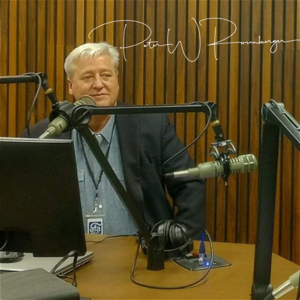
This is Peter Rosenberger. This is the program for you as a family caregiver. Healthy caregivers make better caregivers. Hopeforthecaregiver.com.
Hopeforthecaregiver.com. If you want to learn more about what we're doing, why we're doing it, who we're doing it for, 65 million Americans right now are serving as a family caregiver. Then you multiply that across the world.
You know, our podcast has downloads in more than a hundred countries. And so I'm very grateful for that because caregiving knows no geographical boundaries, race, religion, anything. Caregiving is the human condition. We're going to either be one or need one, you know, depending on how long we live.
So, we all have skin in this game. But what does that look like for us? What does that present itself in our day to day life?
You know, people would used to tell me these things over and over as I struggled for the early years, well, the early decades of my journey as a caregiver. They say, oh, trust God. Jesus knows. Jesus understands. And I'm like, well, what does that look like?
What do you mean by this? And you know, Jesus said, come as a child. Come as children.
Well, okay. Talk to me like you would a child. You know, Groucho Marx used to say, it's so easy. A child of five can understand.
Somebody get me a child of five. You know, I needed to be brought down to my level. First grade ease, you know, maybe third grade ease, but certainly not the way people have been telling me with this vernacular. I needed to have it spelled out. And that's what I try to do on this program is spell it out.
What does this look like? What is the practical implication of today right now in this moment as you struggle as a caregiver? And we've been talking about, last week we introduced this subject of health. We talked about our physical health. I'm proud to say that I'm still maintaining my weight loss.
I actually got out of 40. I've lost 42 pounds since the beginning of March. And if you want to find out more of how I did it, go out to hopeforthecaregiver.com.
Look at the top page there, the top of the page, and you'll see where it says, Peter recommends resources, that kind of thing. And you'll see it, how I've done it. So I've been working on my physical health. I talked about, you know, my posture with even going to a podiatrist, how important it is to have a good foundation because of that hill, how firm a foundation. Well, let's have a good firm foundation as we get older in life.
You know, the more weight I carry on me, the harder it is on my foundation. So I'm working on that. And then I spent some time last week on our spiritual health, and I want to go back to that a little bit. And we're going to get into all kinds of stuff, our financial health, all those kinds of things. But I want to spend some time on our spiritual health, and particularly as it relates to church.
And I want to ask you a question, and we're going to unpack this over the program today, but I want to ask you a question. Why do you go to church? I know why scripture tells us to go to church. I know why pastors tell us to go to church. I know why church tells us to go to church. But I'm asking you as a caregiver, fellow caregiver, one caregiver to another, why do you go to church? What's going on with you that you want to go to church? What's happening there? Why do you not go to church? That may even be a better question.
What's not happening there that causes you to stay away? I've often said caregivers can feel lonely in a crowded room. We can feel isolated on a crowded pew. And I believe that.
I stand by it. I've lived it. What happens at church that either ignores or worsens that loneliness or isolation for us as caregivers? Does it happen? I mean, does something happen that makes it worse? Does something happen that makes it more intense?
Or is something happening at church that speaks to that place where you are in a way you understand that strengthens and equips and fortifies you? Okay? These are questions I'd like for you to really think about. And I'm going to dig into this a little bit more.
I have some theories on these things, and I want to run it by you, see what you think. And if you think I'm off base, and if you're a pastor, you think I'm off base, go to hopeforthecaregiver.com and you can write me and tell me, and I'll read it on the air. And I may even have you on there, and we'll have that conversation. But Dietrich Bonhoeffer said, the church is the church only when it exists for others not dominating but helping and serving. It must tell men of every calling what it means to live for Christ, to exist for others. That's a pretty good quote. I don't know that that's everything, but I appreciate where he was coming from. Spurgeon said this, I believe that one reason why the church of God at this present moment, and this was some years ago now, I believe that one reason why the church of God at this present moment has so little influence over the world is because the world has so much influence over the church. And that was Spurgeon saying that in the 1800s. And so look at the condition of our church now.
Do you think that the world has a lot of influence over the church? And I took a leave from my duties as the minister of music at this little tiny church here. I've been doing it for about five years, and with Gracie's situation it's been a bit challenging.
And so I had to step back away from that responsibility. I've been working in churches and being involved in doing music in churches and so forth since I was a kid. And I was able to, I had somebody here with Gracie and I was able to slip out recently and go to visit a church. A friend of ours goes there, and this is in another county here in Montana. And my father-in-law and I went and he'd been wanting to go.
And so we had somebody sit with Gracie and we were able to go and do it because he'd been hearing about this. Oh, it's good, good, good. And I got to tell you, it was rather, at first I started off a little bit heartbroken. And then on the drive home, it's a goodly drive home because everything in Montana is a long drive.
Montana is a small town with really long avenues. So everything's a long ways away. But the longer I drove in the car and thought about it, the more disappointed I became and to the point of being a little bit put out.
That's what's prompted this conversation. How can we as caregivers endure what we endure without the active work of the church in our lives? And you say, well, Peter, no, there are a lot of caregivers out there that don't go to church. I understand that. I'm four decades into this now and I can tell you that I cannot do this without a strong church structure in my life.
I cannot. And you know, people may have a difference of opinion. That's fine. Do what I've done for four decades and I'll listen to your opinion. You know, write your book and I'll read it.
But this is my journey that I've done and it's been a pretty brutal journey. And I have found that the structure, the organism of the body of Christ is what is essential to me. But now what about the organization of the church?
What about that? You understand the difference? The organism, the vibrant, invisible church of Jesus Christ is alive and well. But the organization, man's institutionalizing of it has some challenges.
Would you agree? And that's what I want to talk about because I think it's absolutely vital for caregivers to be plugged in. Not to just be recipients, to be participants. I don't think that church is a recipient type of environment.
It's a participating. We participate in corporate worship. We participate in individual worship in ministry, corporate ministry and in individual ministry, all of the above. There's this, there's a very engaged participatory involvement in church. Paul lays this out extremely well throughout scripture.
And you'll see the threads of this throughout scripture. We're all given different assignments and roles and gifts and abilities and so forth. We have a function. What about you as a caregiver?
What about me as a caregiver? Do we have a function at church? Are we just recipients or do we have a participatory function?
And is that important to our health? That's something we're going to unpack today. This is Peter Rosenberger. This is Hope for the Caregiver. We'll be right back. Welcome back to Hope for the Caregiver.
This is Peter Rosenberger. Now let's talk about this song that you just heard. We're talking about our spiritual health today. We're talking about church. What church does for us as caregivers? Why do you go to church or why do you not go to church? If you are not going, besides your loved one's challenges, and I get that much, but if you're not going for another reason, this is the time to examine this. And if you are going and you're getting something out of it that is equipping you to be strong and endure and fortify you in this caregiving journey, in your Christian journey, in this journey of life, then it's time to have that conversation of why. What is happening here? And I look at this hymn.
This is Michael W. Smith doing this. This is one of the most fabulous hymns ever written. But look at the text of what it's saying. No guilt in life, no fear in death, this is the power of Christ in me. From life's first cry to final breath, Jesus commands my destiny.
No power of hell, no scheme of man can ever pluck me from his hand till he returns or calls me home here in the power of Christ I stand. Now, what does that mean to us as a caregiver? Because some of us are dealing with death on a regular basis. Some of us are dealing with such sickness, such sorrow, such discouragement. Whether you're watching in a slow goodbye a loved one with Alzheimer's, just step further and further and further away from you.
I'm dealing with this right now with my own father. And I need to hear this from life's first cry to final breath. Jesus commands my destiny. Not doctors, not hospitals, not hospice, not Alzheimer's, not Parkinson's, nothing else thwarts the will of my Savior. That's what I need to hear. Did you hear that in church this week?
If not, why not? And I was sitting in this church that I went to and I had high hopes. I get there and it's a very, very big building and nice building. And they had a lot of musicians, I mean, a lot of instruments on the stage. Drums, keyboards, bass, guitar, two keyboards, a piano and a keyboard. And they had two microphones for soloists. And I thought, well, they got a pretty good music team here. They help lead music. And I like choirs. I like worship teams. I like it all. But I'm looking for skill and I'm looking for conviction and I'm looking for passion in the music when you bring this.
I'm always looking for text. Text is king because if your text is not good, then the rest of it is, you know. But I still want the musicians to play with skill. Psalm 33, 3, I believe it says, play skillfully before the Lord. And they did.
And they got up to do it and they did. They were not unaccomplished musicians. But the songs, I didn't know any of the songs and I'm, you know, well, I don't listen to a lot of contemporary stuff.
I mean, I'll be fair with you. I'm not all that motivated by it because I'm looking for corporate worship songs that I can do. That's why I love hymns so much. I'm not saying anything against contemporary stuff, but I don't need self-reflective.
I need spine stiffening. And then the songs were not very, they were mediocre songs. The text was good, but the music was mediocre. And somebody may say, well, that's your opinion. Well, it's an educated opinion. All right. So let's just be frank and let's just call it what it is.
And it was done very sterile. There was not a lot of passion to it. And I'm not looking for our feelings to drive the service, but I am looking for conviction. And when you hear that, what you just heard with Michael W. Smith and that orchestra and the choir and everything else, you heard conviction in that, didn't you? No power of hell, no scheme of man can ever pluck me from his hand. Do you understand how important that text alone is?
And when you sing a text like that, you need to be driving your stake into the ground on that one. I deal with someone who has been in agonizing pain since Ronald Reagan was in his first term. Eighty-six surgeries, both of her legs amputated. I watch it every day and I take care of her.
I'm her sole caregiver for four decades. I got to hear that. I got to hear that in a corporate body of worshipers who believe that. And I listened to the sermon that got up. And I had high hopes the guy seemed to be knowledgeable and I appreciate it, but it was a topical sermon. It was not expository preaching.
Now you know the difference. Expository preaching is when you take a particular text or passage of scripture and then you unpack it. You open it up and you go through it and you certainly can cross reference with all things going on, but what is the scripture saying here?
This wasn't the case. This was one verse tied with another verse, but it was a topic. He wanted to talk about a topic. I struggled in this topic and I'm fairly steeped in theology and doctrine and I've got a pretty good handle on a lot of these things. And I couldn't hear anything about the redeeming work of God through Christ in this message.
I didn't hear any of that. And I was driving home with my father-in-law and he was feeling the same way I did. And we both felt very, very empty. And the message would have been really good in a Wednesday night group where you had a Q&A and discussion type, quasi apologetics, Sunday school lesson maybe, but it was not a preaching the gospel. And I remember saying that to a pastor some time ago. I said, I'm not convinced everybody in the church knows the gospel. Every sermon I think needs to reflect this.
I see evidence in this in scripture. And the pastor's response to me at one point was, well, I'm pretty comfortable knowing the gospel. And I looked at him, I said, well, I'm not. I got to hear it every day, all day long, multiple times.
I'm not comfortable at all. And I don't know that I'll ever be. I got to hear it all the time. I have gospel amnesia. I have caregiver amnesia. I have to listen to my own show.
I have to read my own book. And I got to be reminded of this. You know, that's why I love that song, Wonderful Words of Life, sing them over and over again, Wonderful Words of Life. I'm going to hear it because when I hear that, and you heard that in the song, when it came in at the beginning of this segment here of this block, your heart just leaps because you hear that and you want to stand up and say, that's absolutely right.
No power of hell, no scheme of man can ever pluck me from his hand. What does that mean to us as a caregiver? That means that whatever we're looking at with our eyes, wherever they are in hospice, hospital, surgery, or even at the funeral home, whatever is going on, no power of hell, no scheme of man can ever pluck me from his hand, that we have a sovereign Lord who sees and knows and equips me to endure with this. And that bolsters me, that gives me that confidence, so that when Gracie is dealing with the things that she deals with, I look at her and I say these things to her, hang on to this Gracie, hang on to this.
And I'll tell you all what I told her, if you do not have that confidence to trust in this Jesus at this point, because you're nervous, you look at the things with your loved one and you're all over the map. And if you don't have that confidence, borrow mine, because I do. I have staked my life on this. You will get it.
You will. I promise you, you keep running to Christ because there is no other place to go. And when I go to church, I've got to hear that. And as I looked at my father-in-law and I said to him after the service, I said, you know, my father's dying.
My wife is crippled. I cannot be the only one in that very large group that is dealing with trauma. And I didn't hear one word that from the pulpit that spoke the hope of the gospel to me. And Thoreau said that all men lead lives of quiet desperation. I am keenly aware that this audience is filled with people in quiet and not so quiet desperation.
So many of you, the reason why you even listen to this program is because somebody is speaking to your trauma, somebody who understands trauma. And so I implore if you're a pastor, if you're a church leader, listen to this, I implore you to recognize that those pews in front of you, those chairs in front of you are filled with bleeding people who desperately need to hear no power of hell, no scheme of man can pluck me from his hand. Here's where I stand in the cross of Christ, in Christ alone, solus Christus, there's no other place to go. And the world would have us distracted with all these things and the world wants the benefits of Christ, but they don't want Christ.
But the church comes together because of Christ. There's a homiletics professor teaching his students in seminary preaching class, and he would sit in the back and as the student would preach, the evaluation question always came at the end of the thing, where was Christ in your sermon? Where was Christ? It's okay to offer commentary on this and this, what's going on in the world, so forth, that's fine, but where's Christ?
And at the church in Nashville I went to, they had a little sign on the pulpit, a simple little plaque from John 12, 21, and I'll read it to you in the King James. They just went with the last five words, sir, we would see Jesus. Sir, we would see Jesus. So to you pastors who listen to this program, sir, we would see Jesus. Every sermon, every hymn, every confession of the church, every prayer, even in the offering, we would see Jesus, because He is hope for the caregiver. This is Peter Rosenberg, we'll be right back. Oh, we know, we know He holds a future, and life is worth living just because He lives. Our lives are worth the living just because He lives, because Jesus lives.
How's that for conviction? That is my wife Gracie with Joni Eareckson Tada. This is Peter Rosenberg, and welcome back to Hope for the Caregiver. I wanted you to hear what these two women are communicating through this powerful song.
Of course the Gaithers did this, I guess back in the 60s, and it's a staple. But does the context of that song have even more significance to you when you know the story of these two women who are singing it? 99 years of disability between the two of them.
99 years. Joni's had quadriplegia, cancer multiple times, Gracie's had 86 surgeries, both her legs are gone, she lives, both of them live with pain. The journey is, until you've been there in any kind of capacity like this, it's hard to even describe it to people. Those of you who are living with something like this know this.
It's very hard to describe the day in and day out of this. Does that song have even more poignancy to you because you hear them singing it? This is church. Church is broken people who are wounded, who are carrying horrific journeys, being fortified to sing praise and worship to God because they understand a greater truth. Around midnight, the book of Acts says, Paul and Silas were in prison and they were singing hymns. And they'd been beaten that day, this wasn't a nice prison, this wasn't American prison, this was ugly prison. And they were singing hymns. Do our churches look like that? Where beaten, broken, wounded people are able to sing hymns of praise to God because they understand a higher truth than just their pain, that there is a greater message. The body they may kill, Martin Luther said, God's truth abideth still.
A mighty fortress is our God. If Johnny and Gracie, if you knew, if you're a church leader, you're a Sunday school teacher, you're a worship leader at your church, you're in the choir or the worship team. And if you knew that Johnny and or Gracie would be on the front row of your church this Sunday, would you change anything?
Would you maybe add a different song, take out a different song? Would there be a specific reading of the scriptures? Would there be a psalm that you would read during the service? Would there be special music or worship music or congregational singing that you would add or take away? Would you preach the same sermon that you have prepared? If you would change anything, if you knew that Johnny and or Gracie would be there, why would you change it? If you knew that I was going to be there on the front row after listening to this today, would you change anything?
A caregiver of four decades? My point is, is that there are already Johnnies and Gracies and Peters and Kins and so many others already there. You may not see it. They may not have the well-known story that we do. But their trauma is still their trauma. Did you know that in your church, statistics say there are multiple people in your church who have been sexually abused? Did you know that there are multiple people in your church who are dealing with addiction or alcoholism? Do you know that there are people that are in your church who are engaged in some type of sexual sin?
Am I making the point here? We've got to hear the gospel and we can't hear the good news until we first hear the bad news. And that's what makes the good news so great.
The bad news is we are wretched sinners and our sin is a bigger problem than we think it is. And the good news is but God. And that's why we can sing these hymns because he lives. That's why we can sing wonderful words of life, a mighty fortress, how firm a foundation my hope is built on nothing less.
Blessed assurance, Jesus is mine. To God be the glory, great things he has done. That's why we sing these things and we sing them full throated because we understand more of what God has done.
As Fanny Crosby said, give him the glory, great things he has done. If we don't understand it, how are we going to rejoice with it? And that's the job of the pulpit.
Sir, we would see Jesus. How are we going to get excited about something? How is it good news if we're yawning? And there are people that cannot get to church because they are taking care of a loved one. Is the church taking the message to them to fortify them, to strengthen them?
Do they get a call at home saying, look, I know you couldn't come today. I wanted to tell you what the message was. I'm so excited about it. I knew that it would strengthen your heart. Here's the scripture that we preach from. Here's the text. Here's the hymn we sing and I just want to read you the verse.
Would that be okay? And then as I said in the first block, we have a participatory role in church as caregivers. Just because we're dealing with trauma, we don't have to wait until our stuff is settled and done before we participate at whatever level we can.
I've had to adjust my schedule on some things and that's okay. I'm not signing up for a six year stint as a Sunday school teacher. Do you think I could teach a Sunday school class? Do you think Gracie could sing from a platform? If Gracie came to your church, would you want her to sing from your platform at your church? Is it accessible? Can somebody get there with a wheelchair?
Do you know how many churches are not? If we're not set up for those with impairments and those who care for them. I've got a friend whose wife has Alzheimer's and he takes her to church and she makes a lot of noises. She groans and grunts and all kinds of things. My brother and sister and I have a daughter.
She's 36, cerebral palsy, kind of like an 18 month old. Same way. The decorum for people with special needs and people with disabilities and people with impairments and sickness and so forth doesn't always fit in a nice quiet place.
Doesn't always work. Are they welcome? Do they feel welcome? Does somebody sit with them?
Let them know that it's okay. If you've got a man sitting with his wife and she has Alzheimer's and she's ahhh, but he wants to be in church. Does he feel welcome? Does he hear the gospel? Does he hear about a savior who understands how difficult this is for him?
I'll step over here to the caregiver keyboard here. So while that man is struggling with his wife who's groaning with Alzheimer's, does he hear this song? I heard about his groaning of his precious blood, atoning that I repented of my sins and won the victory. I can't play this without thinking about the first time I played this at a funeral. And this was for my uncle, my mother's brother who had been sick for a very, very long time.
And my Aunt Diane took care of him and it was very difficult for her. And this was the opening procession as they brought him in, the church in his casket. And I played this hymn.
Now you know why I love these hymns. So do you church musicians? When you play these things, understand that there are people in agony sitting in front of you. They don't care how talented you are. I don't play for applause. I don't need you to tell me I know how to play the piano. I know how to play the piano. And you know I know how to play the piano. And I know that you know I know how to play the piano.
Who cares? But do you know this Jesus? And does my music clearly point you to him? Are you able to understand how the redemptive work of Christ is able to pierce into your heartache today? Are you understanding that there's something greater he saved you from than Alzheimer's, amputation, addiction, caregiving of any kind, paralysis, autism, Down syndrome, cerebral palsy, whatever the affliction, there's something greater that he saved you from.
And I would have you know that he equips you to endure these things. And I would have you be in a church that repeated that message to you over and over and over and over again, because that is hope for the caregiver. This is Peter Rosenberger.
We'll be right back. Welcome back to Hope for the Caregiver. This is Peter Rosenberger.
This is the program for you as a family caregiver. That's another great song. It's an old hymn that I believe Stuart Townsend, maybe somebody else rewrote the music to. And I like to do that myself. I've done that with several hymns, and I'm going to be having them come out over the next year. I'm working with my team right now to do this.
I've been taking piano lessons so I can be a little stronger on some things. And Gracie has a couple of songs too that she's got in the can that's getting ready to come out. So we're excited about that.
We're trying to get her back singing again. And if you want to be a part of that and get a notification when it comes out, you can go out to my website, PeterRosenberger.com. Just go out there or HopeForTheCaregiver.com.
Either way, it'll all go to the same place. And you can sign up for our e-letter. Go out to our Facebook group, by the way, Hope for the Caregiver, the Facebook group. And we put stuff out there. We've got the Facebook page, Hope for the Caregiver.
Everywhere on social media, I'm there, whether it's LinkedIn or YouTube or, you know, whatever, Spotify, it's all there. So be sure to follow along because we're going to be announcing some of these things. By the way, I just signed a new book contract. I have two new books coming out next year and they're done. We're working out the one book. We're working out the stuff with the artist who is helping with the illustrations because this is going to be a children's book. I have two books. One is a children's book and the other one is not a children's book. And I'll tell you more about that as we get a little further down the road here. And my publisher picked up both of them the same day.
Fidelis Publishing, they're the ones that did my current book, A Minute for Caregivers, when every day feels like Monday. And you can go out and see all that at my website. And I was really quite stunned. And I told my agent, I said, well, I've never had two picked up the same day.
It sounds too easy. You know, we're caregivers. We're not used to good news sometimes like that. And my agent said, look, it was easy for this day, but it hasn't been easy for the 40 years you've been preparing for this. So I accepted that.
And I'm very excited about these books, the new music that we got coming out. And I do all of this while serving as a caregiver. And I do all of this because pastors have equipped me to do so. Church is important to me. And if it's not a part of your life, that needs to change.
And I don't know what's available in your area. And I'm asking you to take a leap of faith and to start praying. If you're not involved in a church, ask God to lead you to one that will strengthen and equip you, that will preach the gospel, that will passionately point you to Christ. And for you pastors and church leaders, would you please consider the things that I've said today. I got to tell you, when I visited this church recently and I saw that, I thought, what a missed opportunity. They had all the great lights, the sound system and everything else. Everything looked great.
It was really first class. But I got to tell you, I walked away very disappointed. And I know this is the world I live in and not everybody can, well, Peter, you know, we can't all do that. We can't all have the, yeah, but you could preach the gospel. There is a balm in Gilead to make the wounded whole. There is a balm in Gilead to heal the sin-sick soul. You may not preach like Peter. You may not pray like Paul, but you can share the love of Jesus and say he died for all.
Now you can do that. You can be faithful to preach the word of God every time, because it will never return void. Never.
That's his promise. Heaven and earth shall pass away, but my word endures forever. It's not going away.
It's the only thing that lasts. And in the last little bit of time I have, I want to talk to those of you who may be church musicians. Okay. Let me just, can we just talk for just a minute? Is that all right?
The rest of you get something out of this, but I just want to talk to this group for a while. Maybe you're a church organist. Maybe you're a pianist. Maybe you play a guitar at your church, flute, violin, whatever you do. Number one, practice.
Practice your instrument. If you're a vocalist, really work your voice. You know, Gracie does vocal exercises, all those kinds of things. She's been singing professionally for a very long time. And that's why, because she has worked to take care of her voice and that's with a lot of tubes going down her throat when she has to have all these surgeries.
We have to be very careful with that. But she works at it. I'm working at it. I've been playing the piano since I was five years old. I've majored in music. I can sit down and play pretty much anything I want to play.
I mean, I'm not going to take on rock mononoff, but you know, I don't really want to do that right now. But I can do what I need to do, but I can't do it unless I practice. But practice with the purpose of knowing who your audience is. One of the things that defines a speaker, I've heard this from Speakers Bureau, my Speakers Bureau and so many others have said this, is the, do you know your audience? Do you know who you're talking to?
And they said to me, some years ago, my Speakers Bureau did say, look, you're something different, Peter. I said, what do you mean? Well, you really do know your audience. And we have so many that don't.
They get out and speak, but they really don't know who they're talking to. But you do. I said, well, yeah, I do. I know. I know my people.
I are one of them. I understand this journey and I'm very focused on my audience and when I'm playing in church, I really know who I'm playing for. I used to play the prelude at Covenant Presbyterian Church many years ago in Nashville. I was the pre-prelude really. The pastor asked me to come and play before the prelude started.
I was the not ready for prime time player. And he just wanted to quiet the place down and he asked me to play. And I found out later how many people were coming to listen because they sensed there was something different about the way I played. And I would have one man who was taking care of his wife. He said, would you play this hymn?
Another lady told me later her husband left her for a man and she was just devastated. And somebody said, well, go up there and listen to that guy playing the piano at the beginning of the service. I'm a good player, but they weren't listening to me because I have all this technical skills. They were listening to me because I've been caring for a suffering woman for a lifetime and I've had to learn to engage with the gospel in the midst of that and turn that passion into my music.
And it was touching people's lives. I had one guy who was kind of a crusty old fella, very steeped in church hymns. And I said, well, you know, I'd be glad to play something for you sometime. And he picked out, I kid you not, it was one of the most obscure hymns I've ever encountered in my life. I worked at this one, but I'd already committed.
I said, I'll do it. So I worked up an arrangement and the following Sunday morning I got up there. Nobody in that congregation, I promise you, nobody knew this hymn except me and this guy. And he was on the very back row and I played it with everything I had in me to pour my heart into it because the text was so beautiful. And afterwards I looked at the far back and he's in a wheelchair and this is where the shootings were, this church in Nashville.
And I looked at the very far back and he's in a wheelchair. I'll never forget, he's gone on to be with the Lord now, but he held up both hands with thumbs up. The congregation is full. I mean, there's hundreds and hundreds of people there and we had this moment. I'm at the very front. Nobody knew. I didn't sit there and, you know, fist pump in the air or anything.
I just looked back and he had two thumbs up while he was sitting in his wheelchair because the hymn meant something to him. Know your audience. Know the people. Know their stories. Know what's going on in your church.
If you're a church musician, I believe you have a responsibility to know who you're playing for. And lastly, I will end with this. I have a longstanding belief that the further we're away from suffering, either ours or someone else's, the weaker our doctrine and theology becomes.
I'm gonna say that again. The further we're away from suffering, either ours or someone else's, the weaker our doctrine and theology become in our life. It doesn't mean that we don't believe the right things and we can't say the right things, but there's something about the crucible of suffering that helps us better understand the truth that scripture is laying out in front of us. Jesus said, you're going to have tough times. They're going to hate you.
They hated me. Share in the sufferings of Christ, scripture talks about. Jesus said, take up your cross. And when we stand before him, he's going to say the sick, naked, thirsty, hungry, prison stranger. Did you go and see these afflicted people? If you didn't minister to them, the least of these, you know, and people are going to look at him and say, Lord, when did we see you then?
He's pretty serious about it. Know your audience. Know their suffering. Know their heartache. Know their woundedness. And most importantly of all, know the redeeming love of our savior so that you can clearly, whether through the spoken word, the sung word, if you're playing a violin, play it so that violin communicates the passion of Christ to that wounded soul.
If you're playing the piano, play it with such feeling that that person knows that something's going on in your heart as you worship at the piano or at the organ or on the drums or the guitar, whatever it is, whatever you do, do it to the glory of God and do it for these broken lives who are sitting there in front of you. It'll change everything about the surface. I promise you it will.
And God will get all the glory. Thanks for giving me the time today. Please go out to hopeforthecaregiver.com and see how you can get involved today.
This is Peter Rosenberger. Healthy caregivers, spiritually healthy caregivers make better caregivers. Hopeforthecaregiver.com. We'll see you next time. You've heard me talk about standing with hope over the years. This is the prosthetic limb ministry that Gracie envisioned after losing both of her legs. Part of that outreach is our prosthetic limb recycling program. Did you know that prosthetic limbs can be recycled?
No kidding. There is a correctional facility in Arizona that helps us recycle prosthetic limbs. And this facility is run by a group out of Nashville called CoreCivic. We met them over 11 years ago, and they stepped in to help us with this recycling program of taking prostheses and you disassemble them. You take the knee, the foot, the pylon, the tube clamps, the adapters, the screws, the liners, the prosthetic socks, all these things we can reuse and inmates help us do it. Before CoreCivic came along, I was sitting on the floor at our house or out in the garage when we lived in Nashville, and I had tools everywhere, limbs everywhere, and feet, boxes of them and so forth. And I was doing all this myself and I'd make the kids help me.
And it got to be too much for me. And so I was very grateful that CoreCivic stepped up and said, look, we are always looking for faith-based programs that are interesting and that give inmates a sense of satisfaction. And we'd love to be a part of this.
And that's what they're doing. And you can see more about that at standingwithhope.com slash recycle. So please help us get the word out that we do recycle prosthetic limbs. We do arms as well, but the majority of amputations are lower limb.
And that's where the focus of Standing With Hope is. That's where Gracie's life is with her lower limb prosthesis. And she's used some of her own limbs in this outreach that she's recycled. I mean, she's been an amputee for over 30 years.
So you go through a lot of legs and parts and other types of materials, and you can reuse prosthetic socks and liners if they're in good shape. All of this helps give the gift that keeps on walking. And it goes to this prison in Arizona where it's such an extraordinary ministry.
Think with that. Inmates volunteering for this. They want to do it.
And they've had amazing times with it. And I've had very moving conversation with the inmates that work in this program. And you can see, again, all of that at standingwithhope.com slash recycle. They're putting together a big shipment right now for us to ship over. We do this pretty regularly throughout the year as inventory rises and they need it badly in Ghana. So please go out to standingwithhope.com slash recycle and get the word out and help us do more. If you want to offset some of the shipping, you can always go to the giving page and be a part of what we're doing there.
We're purchasing material in Ghana that they have to use that can't be recycled. We're shipping over stuff that can be. And we're doing all of this to lift others up and to point them to Christ. And that's the whole purpose of everything that we do. And that is why Gracie and I continue to be standing with hope. Standingwithhope.com. Take my hand. Lean on me. We will stand.