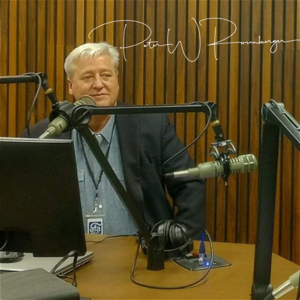
This is Peter Rosenberg and I'm so glad that you're listening to this podcast. If you're finding it meaningful, I want to ask you for two things. Would you mind sharing it with someone?
Would you mind telling somebody you know who is struggling as a caregiver about this program and what it can mean for them? We have over 800 episodes, more than 250,000 downloads. The need is massive. I can't do it on my own.
I'm still a full-time caregiver. But I'm putting it out there as best as I can. And I can use your help in sharing it with others. The other thing is, would you consider helping support what we do? If you like what you're hearing, if you're finding it insightful, if you're finding it encouraging, please help us do it more.
We can't do it alone. We ask that you help us. I'm glad to be with you today.
This is the program for you as a family caregiver. Healthy caregivers make, say it with me, better caregivers. How do you feel today? You feel healthy? Physically? Emotionally?
Fiscally? Professionally? Spiritually? If not, well, you're in the right place because it's very easy to start doing something healthy. It's hard to stick with it sometimes, but it is easy to take the first step. And by tuning into this program today as a caregiver, guess what? That counts as one of your first steps because you're listening to a fellow caregiver, somebody who's got a lot of skin in the game, four decades now.
And I'm drawing on those four decades to offer you a lifetime of experience as a lifeline as a fellow caregiver. I'm not going to solve your problems. I can't solve your problems. Don't have that ability.
Way above my pay grade. I can't fix your situation any more than you can fix mine, but I don't know that that's the goal is to fix our situation. The goal is to become better people through it. We're never going to feel better about it, but we could be better, and we could be at peace.
How do I know this? Well, this is what the Word of God tells us. And if we don't anchor ourselves in the Word of God, what are we anchoring ourselves on?
What do we look to for stability? Our own thoughts and feelings? Our own reality? Our own understanding? What does Scripture say about leaning on your own understanding?
And if you don't look to Scripture, what do you look to? Y'all may not know this, but we're in the midst of a political free-for-all. I don't know if you've been watching the news. You can't get away from it. It's everywhere. Did you enjoy the Democratic National Convention this week?
Did you have a good time watching that? Do you feel like boundaries would probably not be a subject they'd want to hear about? I've been watching this go on in our culture for some time, and I keep coming back to this term. And this is a term that we caregivers understand and deal with quite often, boundaries. We know what it's like to have our boundaries crossed, and we know what it's like for us to not set good, healthy boundaries. Let's talk about that for a moment. Do we need boundaries?
Why are they important? Is there a biblical case for boundaries? The first recorded case, biblically, of boundaries being violated were with Lucifer, saying, I will ascend to the Most High.
I will step into God's throne, into his purview, and God cast them out and put boundaries on them in hell. And then you look in the Garden of Eden. Actually, before the Garden of Eden, you look at, he set natural boundaries, the expanse and separated, and you had earth and you had water and sea.
I mean, you had all those things. He had natural boundaries. And then he set the garden. He said, do anything you want here, eat of anything you want, but not that tree. It's a boundary. You're not allowed to do that. Well, that's the first thing Adam and Eve did.
I mean, they made a beeline for it. So you can unpack it throughout all of human history, and it is the plight of man to struggle with this issue until we step into glory. But even then, we will have godly boundaries because we will know God truly, and we know him truly now, but we will never know him absolutely because we're not him. He is other.
He is different. So you follow where I'm going with this, that there are boundaries, and they're not boundaries that are bad. I mean, they're boundaries for our protection. They're boundaries because of our limited existence. And these are things that we chafe at because of our sinful nature, and we are compelled because of our nature to push against these things. And that's why you're seeing what you're seeing unfold.
Even at the Democratic National Convention, you bring an abortion bust to do abortions outside it. Don't tell us what to do. Don't tell us what we can and cannot do.
We're going to do this. But there's two people. When there's an abortion, there's two people. You're murdering a child, and we're violating the boundaries within the womb and violating nature's boundaries. And then you've got the whole thing of transgender, and you're blurring the boundaries of God's natural law of male and female, and you violate that. And then you violate the boundaries within our relationships of husband and wife, whether through fornication, whether through adultery, and then you're violating even into that with homosexuality. Well, our society doesn't want to hear that.
I mean, do you think that's something they want to talk about on the campaign trail this fall? Hey, God says we shouldn't do this, so y'all listen up. We shouldn't do this.
Well, they're not going to do that. We violate things every day. Well, what do we do about it? And the government just keeps wanting to encroach on these things and put limits on the people. But see, the government's not an entity. The government is controlled by people. And you know the old saying, wherever two or three are gathered, there will be problems.
Because we're messed up people. And the people that framed our Constitution, our founding documents, the founding fathers of this country, by and large, all came from the Reformed background. They went through the Reformation. One of the tenets of the Reformation was that mankind is fallen. And I bet you they were familiar with that verse in Jeremiah.
It says, the heart of man is exceedingly wicked. So what did they do? Well, they structured the government, the documents that struck, the legal documents. It says, Scalia used to say it's not an organic document, it's a legal contract that said we're going to have checks and balances.
Why? Well, because the framers knew that people need to be supervised. Left to our own devices, we will do all types of things. So they didn't want that. They didn't want a government that would encroach. Now, years and years and years later, we had a President, Obama, who said that the Constitution is full of negative liberties. Well, what do you think that is? Negative liberties? Well, I didn't see anything negative about it. I saw that the government was constrained.
Well, that's the whole point. For individuals in this country to have freedom, the government must be restrained. We must not allow the state to encroach. We have to hold up boundaries for our protection from the state. Now we see how important that is.
Well, why am I sharing that on a show for caregivers? Well, the principle applies across the board. There will always be encroachment. Your boundaries are for your protection and the protection of your loved one. And the only person that doesn't like your boundaries are the person who benefits from you not having boundaries.
Should I say that again? The ones who don't like your boundaries are the ones who benefit from you not having boundaries. Think about our southern border. Think about all the folks that are coming across the southern border to take advantage of things here in this country that our tax dollars pay for. If we put up a wall, who's going to be upset about it? The people who benefit from all those people coming over, whether it's the individuals themselves or the political leaders that are promulgating this, that are doing this by design. Well, how would they benefit from it?
Well, you get a permanent underclass that votes based on the freebies they get. See the picture? Again, go back to the only people that don't want the United States to have secure boundaries are the people that benefit from the United States not having secure boundaries. The only people that don't want you as a caregiver to not have secure boundaries are the people that benefit from you as a caregiver not having secure boundaries. Put it in your church. The only people that benefit from your church having boundaries and enforcing those boundaries, like saying don't come to the communion table if you've got this and this going on in your life and if you're not a believer in Jesus Christ.
Well, I can come. I can do anything I want. But if you're living in sin, you're taking judgment on yourself and the church is laying down a boundary and people don't want that boundary. Don't tell me I'm doing something sinful.
Don't tell me I've got sin in my life. The people who don't like boundaries don't like them usually because they benefit when the boundaries aren't there. And boundaries are good for us as caregivers. They make healthy caregivers and healthy caregivers make better caregivers. That is Hope for the Caregiver. We'll be right back. Welcome back to Hope for the Caregiver.
This is Peter Rosenberger. This is the program for you as a family caregiver. Hopeforthecaregiver.com By the way, if you go out to that site, it will forward temporarily to PeterRosenberger.com because we're making some more adjustments on the Hope for the Caregiver site.
It's going to be pretty much all the same thing, but if you'll bear with us on that. But if you go out there, when you get to my site, you'll see a blinking light that says Caregiver 911. Caregiver 911. Just click on that. If you are feeling a bit overwhelmed and you don't really know where to start, you don't know kind of, you're just all of the above. Just go there.
Caregiver 911 is a great feature that I think you're like. I am talking about boundaries today. Not something that we enjoy talking about. It's painful. It's hard.
It's difficult to enforce them, to maintain them. I will tell you this, I've learned a lot about boundaries from cattle. Because we've had the cows out here this summer and that's been kind of my purview this summer. I've worked out a relationship with a local rancher for some summer feeding up here so that they can hay down below. And we've been, because we have to maintain our fences up here and it's a lot of work to maintain fences on property. And so when I partner with the ranchers, that's part of the deal. They come out and help with the fences.
And so that's been a very good way, good stewardship of the land. But I've noticed something about cattle. Calves will get out. They will find a gap. And then what happens is they won't come back in the same gap. So they're hollering for their mama. The mama's hollering for them. And they won't go back to the same hole.
They can't figure that out. So they're all over the place and you've got to go out and get them and shepherd them back in the same hole. Open up another gate or even have to remove some of the fence to get them back in where they belong. So you better make sure your fences are properly strung. You don't have any gaps.
Well guess what? We found a few gaps. That was a bit challenging.
But we're working on it and getting it all tightened up. And so that's been a life lesson for me to see about boundaries and how important they are, particularly with livestock. Well if they're important with livestock, imagine what they are with people. With livestock you have to make barbed wire or electric wire. If you just do regular wire, they'll push on it. If they sense water or grass on the other side of it, they'll push up a regular wire. So it has to be barbed.
It has to be something uncomfortable for them to not push on it. And that's the way it is with people. I mean if it's that way with cows, I mean think about it. It's going to be that way with people because we don't take a hint any faster than a cow does. Not that I've noticed.
Have you noticed any different? So that in mind, I have a quote for you. You can't take care of your boundaries and other people's feelings at the same time. You cannot set boundaries and take care of someone else's feelings at the same time.
Somebody's going to get their feelings hurt. But your healthy boundaries are important to you. And healthy boundaries make healthy individuals. Healthy boundaries make healthy communities. Healthy boundaries make a healthy church. Healthy boundaries make healthy nations. And I don't, I mean do you feel like the country's healthy?
I mean we're $35 trillion in debt. We have an open border on our southern border. And let me tell you this. If you allow your boundaries to be repeatedly violated, whether you're an individual or you're a nation, you are no longer a victim. You're a volunteer at that point.
You tracking with me on that one? If you allow your boundaries to keep being violated, then don't raise your hand and say I'm a victim. Because you're not. You're a volunteer. And the same thing goes with our country. And if we have political leaders who are allowing our boundaries to be violated repeatedly, which they are, then they're volunteering this. We are not victims. They are not victims. I mean they're victimizing the country. But these people who are not doing this, they're volunteering this for whatever agenda they have. And you're going to have to stand up and say something about it. We can't just sit on the sideline. We're not going to have a country. Okay?
This is just the way it is. You vote for the person who will best secure the nation because the President of the United States for the national defense is to secure the nation. It's Commander in Chief. That's the number one job is to protect this place so that we can have a country. My number one job as a caregiver for my wife is to make sure she's safe. That's really the number one job for caregivers. To make sure that you're safe, your loved one's safe, and the people in your loved one's paths are safe.
For example, if you have somebody with dementia in your family. Well, part of that is you've got to keep them safe, but then at the same time are you going to let them have the car keys? Well, why not? Well, see, that's a boundary. And it's a hard decision. It requires being an adult, which is hard.
I understand that. If we don't teach adulting anymore, we have basically moved the age of adult from 18 to about 38. And so these are things that we need to have conversations about, learning to be adults in the room. Do you feel that our political leaders are acting like adults? And let me just talk to you caregivers in the audience because a lot of people tune in this show. They're not involved in the caregiving world and so forth.
But if you're a caregiver, if you're putting yourself between a vulnerable loved one who has a chronic impairment, an even worse disaster, that's about as adulting as it gets because you're laying down your life for someone else. Do you feel like other people are taking this level of responsibility like you are? And if they're not, then why are we voting for them? So look at the candidates in your state, in your community, go all the way down to dog catcher. Every candidate, you need to hold up, would you allow them to house sit for you? Would you allow them to borrow your car? Would you allow them to be around your children?
Would you allow them to be around your wife or your husband? These are things, these are questions that are hard questions, but the one that gets the closest to those answers in the affirmative, then that's who you vote for. And you're not going to be voting for, this is not a valentine, we said that last week, this is not a valentine.
Okay, we're not promising our eternal love to this candidate. We're hiring somebody for a job. You know, I've got some guys that are doing some work here at my house.
In concrete, we're doing some remodeling. And I haven't given one of those guys a litmus test to make sure they understand the tenets of the faith. I looked at what they can do, what the price is going to be, their qualifications to do the job, and I hired them to do the job. And as we do this, I talk with them about the things of God as we're working and so forth, but I'm not going out and trying to find the one who comes closest to me theologically, I'm trying to find the one who can get the job done.
And that's the approach I've taken, and it seems to work for me. But I'm asking you as a nation, as a people, are we putting the level of scrutiny on individuals who are holding high office and have a lot of power? I look at this thing with Tim Walz up in Minnesota. Do you feel like he's somebody you would want as your governor? Do you like what he's done?
Do you like what he did during the riots in the Summer of Love with the George Floyd riots when he let businesses burn and he was putting a snitch line for people to call and snitch on people that were doing things outside the COVID restraint system where the government just shut us down and we all now know that the mask thing and the six feet away and all that stuff was a bunch of bogus stuff? Those of us who paid attention suspected this. I never looked at Dr. Fauci with a lot of trust, but here we turn out that these guys were basically just pulling a power play. They were getting out their clipboard and telling us how to live our lives, and we allowed them to do it. We let our boundaries down. And if you keep letting your boundaries down and let them be violated, you're no longer a victim. You're volunteering at that point. You're volunteering to corrupt your own boundaries. Is this the way you want to live? Is this the way you want our country to be?
Do you want people to just come and take advantage? That's the whole thing with trade. Did you know we had, until Trump came along, we had a $500 billion trade deficit with China every year?
That's how China's economy got to where they are, because we kept allowing them to sell goods cheaper. They weren't buying our stuff, but we were buying all their stuff. It was all one-sided. They violated our trade boundaries, if you will, and nobody enforced it because somebody was getting paid off for it. They didn't care. The people that were making decisions, and Trump came along and says, it's not too good. It's not too good. We got a lot of problems.
They made a lot of money off of us. And somebody's got to lay down the rule. Somebody's got to put a boundary down. I know I'm talking about this from a quasi-political point, but these issues that we're dealing with as a country that are in the news all day long, every day, they are issues that plague us as caregivers. How many boundary issues do you deal with on a daily basis as a caregiver?
Well, if you're having to deal with it and you're seeing positive results for laying a boundary down or negative results for not laying a boundary down, imagine how that gets multiplied out by a nation. How many church problems do we have? Because we don't have healthy boundaries in our churches. We've allowed all kinds of encroachments theologically. There's an author out right now that's talking about, she's got a book out called Shepherds for Sale, where she basically, the whole thesis of this book, I haven't read it yet, I'm going to, but the whole thesis of we've allowed for this woke ideology to come into the church because it helps us with money.
I mean, it helps us get something we think we need to have. And it's created quite a furor. I haven't read it, so I can't offer commentary. I'm just looking at the title and what I've seen on it. But the point is, is that you can look at churches around you. You can see the ones that have allowed boundaries to be compromised. Scripture talks about this over and over and over, be vigilant. There are people that want to come in and decimate the flock.
There are wolves in sheep clothing. And we have a bunch of people who act like sheep in sheep's clothing and allow it to happen. We've got to be cognizant of this.
We've got to be vigilant about this. We've got to maintain boundaries. Otherwise, we're not going to have a family. We're not going to have a church. We're not going to have a community.
We're not going to have a nation. Boundaries are good. They're hard to enforce. And it takes maturity. It takes discipline.
It takes discomfort. You know, but that's the way it is. Go back to the cows. They would much rather just be able to roam free in the old days they used to.
But you can't do that. You can't just allow them to roam free. We're going to have to have barbed wire or some type of electric wire. And that's what boundaries do. They protect. They keep organized. And they maintain good discipline. How is that not a good thing for us as caregivers?
It helps us stay healthy. And healthy caregivers make better caregivers. This is Peter Roseburger. Hope for the caregiver dot com.
We'll be right back. Welcome back to Hope for the caregiver. This is Peter Roseburger. This is the program for you as a family caregiver. Healthy caregivers make better caregivers. And if you go out to my website, Hope for the caregiver dot com, it will forward to Peter Roseburger dot com. I know this sounds kind of confusing, but we're still working on some stuff. So I had to kind of forward everything, but it's still going to be the same site. Take a look.
Go to Hope for the caregiver dot com and you'll see caregiver nine one one at the top. And if you are in a stressful situation today and you don't know where to start, you've just found this radio program from some guy that sounds like Bill Clinton when he talks. No, I'm just kidding. I don't.
Well, actually, I do sound like Bill Clinton when I talk. But if you're struggling with that, go out there, click on that button. I've got a video out there for you and just kind of a starting point of where to go. I've got a special podcast episode that I picked out to listen to a song that will just kind of settle you down a little bit. And I give you some direction and some understanding.
OK, that's that's the purpose of everything that I do here is so that my fellow caregivers will benefit from the lifetime of experience that I have. I didn't have anything like this. Nobody knew what to say to me. And most people actually, quite frankly, don't know what to say to me still. But I know what to say to you. I know how to speak fluent caregiver.
The better news is it's our savior's native tongue. And I want to make sure you understand the gospel. As a caregiver, I speak fluent caregiver again. And so in caregiver ease, I want to make sure you understand the gospel. Now, what you do with it is not my responsibility, but my responsibility is to make sure that I communicate it clearly. I want to offer the same comfort that I have received from the God of all comfort, as Paul says in Corinthians. That's my task, mission and passion here on this program to make sure that you understand this. I'm not responsible for results, but I am responsible to be diligent and to be a faithful steward of the things that I've learned. And my hope and prayer is not only will you take these things and incorporate them into your life and navigate to a better, healthier place as a caregiver, but then you, in turn, will offer your experience, your insights, your journey as a way to encourage fellow caregivers that you're going to run into.
Okay? That's what we do. We bear one another's burdens.
We minister out of our wounds because that's where we met the healer. This is what we do. And I've got that at my website, hopeforthecaregiver.com, to the best of my abilities. So I'm going to be hopefully making it better. And as I go along, I'm constantly working on it. And I'm trying to do the absolute best I can with this information. But I think you find that when you listen to this program, I don't make it very complicated.
I don't even know a lot of big words. So I'm going to make it simple, as simple as I can do it. And I'm going to make it just in time for you as a caregiver. I was asking me the other day, we were planning out a thing to, you know, I was looking for caregivers. It was kind of a, not a curriculum, but kind of a program I wanted to launch. And they said, well, should we start such and such? I said, no.
Just give it to them just in time when it gets closer because there's no need to give a caregiver something in September that you're trying to do for November. I know me. I don't want people lobbing a bunch of information with it. I got a store and somehow make a note of and then, oh, yeah, too much down the road. I got to go figure out where that is and incorporate it.
I want to hear things on a daily basis of things I can do right now to increase my ability to deal with the challenges I have. And today we've been talking about boundaries. Boundaries are a huge part of our journey as caregivers. And if we don't incorporate them and respect them, all we're going to do is invite misery upon ourselves and probably others. And I point to the political climate because it's so easy to see it. But it's everywhere.
It's the human condition. If we build a wall on the southern border and enforced it, how would our economy change as a nation? I'm not saying we don't let immigrants in, which is they just come in the front door. I love people coming to the front door.
I don't particularly like it when they come in through the window. You tell me, would our economy improve? Would we have less crime? Would the health care services in this country and everything else be affected? Would we have less drugs? Would we have less death?
You have to ask yourself, if all of those things are yes, then why aren't we doing it? Because somebody doesn't want the United States to have boundaries. Well, who could that be? And what would be the possible motivation of this?
And then that's going to tell you everything you need to know. Well, if there are people in government that are going to do it, don't you think there are people on your street? Don't you think there are people in your family? Don't you think there are people in your church that will do the same thing? Don't you think you will do the same thing?
Of course we will. We're human beings. It is in our nature to violate boundaries. That is what sin does. That is original sin. We are so corrupted by sin.
We're going to do it. And go back and think about what those cows did. I mean, I got such a life lesson watching those cows, because when they get out, they're not inclined to go back in. I mean, the calves get separated from their mothers, and therefore they start bawling. And the moms are nervous, and they start bawling, but it's not like they're going to say, Well, hey, come down to this part of the fence.
And they're not going to do it. So I had to watch and deal with that kind of nonsense, and I had to go plug up holes. I had to learn how to string barbed wire a little bit better. You've got to make sure your fences are low enough, the top strand, so the deer and the elk won't tear your fence up, so they can jump over it. But you don't want your bottom strand to be too low, because it's okay if the calves get in and out as long as they can get back. But if they get out and they can't get back in, that's when you have problems. The big cows aren't going to push through it if you've got it at the proper height.
They're not going to mess with it. But the little ones, they're little, and they don't know any better. And so they'll punch through it, but we want to make sure they can get back to their mamas. I had one calf that I was searching for. I knew she was missing, because I moved them all to the back side of the property, and I just knew one was missing.
But it's hard to keep track of them when you're moving them. And we had a lot of young ones out here, so I knew something was missing. And I took one more trip up the road to my father-in-law's house. If you go out from our place to his, it's about a half a mile by the road.
It's about, I don't know, three, four, five hundred yards through the pasture if you cut up that way, but it's pretty steep. And sure enough, I saw a little one, and this was getting into be twilight. I worked with that calf trying to get it back in, because the other ones were far away on the other side, and I don't even know if the mama could call out to the baby.
The baby would hear it. I wasn't quite certain at that point, but I knew the mama was getting very anxious. And so I needed to at least get them within earshot, and if they're within earshot, the calf would go to the mom. But it was challenging, and I was thinking about boundaries.
I was thinking about our good shepherd who goes after the one and leaves the ninety-nine. There's all kind of things going through my mind as I was doing that, and a few of them were less sanctified, because I was getting very frustrated at that calf. But I learned a little bit more about boundaries and about making sure the boundaries are secure for the calf's protection. Now, you know, it's not just because that calf is money. Yeah, that calf is money.
I mean, it's not my calf. It belongs to the rancher that we partnered with that put some cattle up here for the summer. But we've got mountain lions out here. We've got a wolf, at least a couple of them, in the deep forest.
We've had grizzly on this property. So there are a lot of predators, and a calf would make a fine meal for those predators. So the boundaries are there to protect, and it's our responsibility to help protect our loved ones, just like it is a rancher's responsibility to help protect the cattle from those predators. David referenced this before he fought Goliath and how the Lord would sustain him when he fought lions and bears and so forth.
And Jesus himself refers to himself as the good shepherd who looks after his sheep. And there are predators out there. We have to have good boundaries. And it's our job as mature Christians to be able to protect those who are not until they can protect themselves. And as caregivers, some of the people we're taking care of may never be able to protect themselves. And that's our job, and we have to enforce those boundaries. So look at what's going on in our culture. Look at what's going on in the political world and see if we can't learn the principle, the life lesson of, okay, if a secure border would benefit this country, then how about a secure border in my life, in my spiritual life, in my physical life, in my financial life? And if somebody is wanting to compromise that secure border in my life, then are their motives altruistic and noble and good? Or is there something wrong with them that I need to keep even more strict boundaries with?
Okay? It's always good to learn those kind of things because we're seeing this model so explicitly with the blurring of boundaries with male and female. I mean, we've got a Supreme Court justice who cannot identify what a woman is because she's not a biologist, according to her. And now they're saying that Tim Walz is a threat to Republican masculinity. Well, six months ago, they didn't even know what masculinity was.
And if they did see it, they called it toxic. Now he's the masculine guy, and they're blurring all kinds of lines. We've got Governor Tim Walz. He wanted to create a sanctuary state in Minnesota so that kids can come and have gender transformation procedures without telling their parents. Do you think that's crossing a boundary?
Let me tell you something, by the way. My wife has been an amputee since 1991. We've raised two sons who really have no memory of their mother not being an amputee. She was a single amputee in 1991, a double amputee in 1995. At no point did our sons ever come to me and say, hey, can we cut off one of our feet so that we could be like mom? If they had, I would have gotten help from them immediately.
And if any doctor had wanted to do that, I would have reported that doctor to the board of medical examiners and probably brought them up on charges. What is the difference? Because that's what we're doing with children. They're crossing boundaries. There's no civil law that says adults can't go out and participate in the freak show if they want to.
That's another conversation. But they're doing it with children, and they're trying to circumvent the parents' boundaries. Boundaries are good, and they're there for our safety because we live in a sin-filled, broken, messed up world that is not going to get better by anything we do. The government shall be upon his shoulder, Isaiah says. Until then, we need to keep good boundaries on the government that is currently in existence.
He will come and establish his kingdom, and oh, what a day that's going to be. But in the meantime, we've got to watch and make sure that these people are not doing things they shouldn't be doing. We've got to make sure we have healthy boundaries, and healthy boundaries make healthy caregivers, and healthy caregivers make better caregivers. I'm Peter Rosenberger. We'll be right back. All this talk about cattle, it just makes me want to play this. I mean, when I get out on a horse out here in Montana, I've got to tell you, I hear this in my head, and so thank you for indulging me.
Isn't that great, though? But it's just, I love it. I just love it. I love soundtrack music. And one of the things I wish I could have done is to go see John Williams conduct one of the Boston Pops, or one of the other symphonies he's done where they do a tribute to some of his scores, you know, to hear them live.
I've seen them on YouTube and other places, and they're just extraordinary. And I don't know if you like that or not. I do. And I love what he does. I could always tell his stuff, by the way, with John Williams.
I could always tell his stuff. I was watching an old Lost in Space, the TV show. You remember that? And I was listening to the end credits, da-da-da-da-da, and I was listening to the trombones and so forth, and the brass. And I thought, boy, that sounds like John Williams. And at the end of it, it says music by Johnny Williams. This was not the other day.
This was some years ago. But it was, you know, he had that sound, you know, with the brass. It was just beautiful. And so anyway, I'm sorry, I digress, but you know, music's such a big part of my life. And I love to play, and I love to study other people's music. Film scoring is really quite awesome. I don't know if I told you this or not, but I've won an award for film score.
My son had a short film that he did, and entered it into an Italian film festival. And I won best original score. And so I was quite moved by that. And then I've written another score for a thing he did, and I enjoy doing it.
I enjoy coming up with the themes, and I had to audition for it for him. That was kind of fun. And I took it to the piano, because he was asking me, he said, I got somebody dead. I said, well, let me take a crack at it, okay? And I did it. And I looked at him and I said, how's that?
Is that good enough? He said, okay, you got the job. So I was grateful that my son gave me the job for it. So you could hear that.
I actually have that out. I think you go out to Amazon Prime and other places and download the themes of stuff I've done on music scores. To me, that's a lot of fun, because you're watching something happen, and you want to capture it. I did one for, it was a western movie that he did. I wrote the short story, and then I did the music for it. Let me step over here to the caregiver keyboard. Music And then the orchestra comes in. I kind of edit that in here for you guys.
This is not the one that I won the award with, but I was always real proud of this one. And this is what I do, by the way, for me, you guys. This is how I do it as a caregiver. I hear music in my head, and sometimes when I can capture it by recording or playing it, it's a very satisfying experience. So I try to push my fellow caregivers to find that thing that does it for them. Some people paint and write and other things, and some people do music, and whatever it is, just find that for you.
I know we've been talking about boundaries today. It's a tough subject, and I love the trumpet there. Music does it for me. It always does something to my brain, and I'm very grateful for it. Martin Luther said, next to the word of God, music elevates the soul like nothing else. It's such a wonderful experience to be able to perform it and play it.
And then the times I'm able to hear back what I heard in my head is, well, to me, that's just such a great thing. Speaking of which, I've got some songs that we're starting on with Gracie. We're going to get her going. I don't know how well she's going to be able to do in the short run, but we've got a plan.
And we've got some new songs that we've been working on, she's worked on before she went into surgery. And we're going to finish up with some production and orchestration and so forth on it. Hope to release one every month, starting in November.
That's my goal. I'm not going to do a whole record. I'm just going to release one every month as I can, as we can do them.
I don't know. People don't go to record stores anymore, and so I thought it'd just be fun to play them for you guys and see what you think. And you'll be able to download the song individually, but I thought you might like it. So we like it. We like doing it, and she needs to get back singing again. And I'm grateful that the surgery went well, and the doctor gave her a good report, so we've got to go through one more at least.
But we seem to have a plan, so we'll work on that and get her feet back on her and get her back on her feet and get her singing some more. We love to create. I've created a couple of things, and you can go out to hopeforthecaregiver.com. We've been working on our website, so if you see different domain names, don't worry about it. It's all the same place.
It's just we're fine-tuning a few things. But scroll down when you get there, and you'll see the Standing With Hope section, and if you go there to learn more, I encourage you to listen to that podcast episode about Standing With Hope, and you'll see the pictures of Gracie and so forth, and you click on the link to know more. And you can go to our page where we have an offer that we're doing. It's a caregiver calendar I made for 2025. I've been taking a lot of pictures out here where we live in Montana, and I turn it into a calendar, and I have a quote for each month except for one month, and I'll let you figure out which one it is. And we give this as just a thank-you gift for people who want to partner with this ministry for 25 bucks a month, and we'll send you the caregiver calendar. And if you do $50 a month, we'll send you the tumbler as well.
I've got a Healthy Caregivers Make Better Caregivers tumbler. And I try to come up with things to say thank you to people who support what we do. Gracie and I have very little fundraising budget for Standing With Hope. This is it right here, this section of the program. We don't have big dinners or golf tournaments or silent auctions.
Those things make me tired just to think about doing. And we have a board of directors. It's a small group. They've been with us for a very long time. And I told them, I said, look, the people that care about what we do, they don't want me out fundraising and having some kind of big program area. They want me on the air, writing books, putting legs on people through our prosthetic limb program and taking care of Gracie.
So we'll just trust that the Lord will bring in what He needs to bring in. But when your heart is moved to give, we want to say thank you in a meaningful way. And so that's why I came up with the caregiver calendar.
I've got the caregiver keyboard, the caregiver calendar, the caregiver coffee book. I try to stay with it an alliteration theme. But I think you'll be very pleased with it. I was really excited about how well it turned out.
And if you like it, I'm grateful. Because Gracie and I are very grateful for you all. I got a note back from the clinic director in Ghana that we work with. And he sent me this short video of a woman who came down from Nigeria. And that's quite a hike from Nigeria to Ghana. And we put a leg on her and she's standing and singing on her new leg.
She is saying, I'm so glad that Jesus loved me, you know, that old horse. And they all joined in with her. And it's really quite moving to see. Ghana is in the middle of sub-Saharan West Africa.
But Nigeria is over to the east more. And it's a good ways away. But we were able to treat her. And we just sent over a bunch of supplies. I'm trying to get over there. I haven't quite figured out how I'm going to do that.
To get over there with Gracie's certain circumstances right now is just a little bit challenging. But we've been sending supplies regularly. We buy things in Ghana that they use at the clinic. Or we ship it if they don't have it there available. Resin.
We just bought a bunch of acrylic resin. We just shipped over a bunch of carbon fiber. And then I've got a big, big shipment of prosthetic socks that are going over by sea. It's too expensive to send this by air. So we send it by sea.
And it'll be there in mid-October-ish. And these are things we just regularly do through our limb recycling program. We have people that donate limbs to us from all over the country.
And they go to a prison in Arizona run by CoreCivic. And inmates volunteer to strip them down for us. And then we take all the usable parts that we can.
The feet, the pylon, the knees, the screws, the ankles, the liners and sleeves. If they are in good shape. If they're not, then we discard those.
But if they can be used at all, then we put that on the shipment and the pallet as well. And it goes over there and we provide prosthetic limbs for these patients. And it is such a treat because we're able to point them to Christ.
This is Gracie's vision. I want to put legs on people and tell them about Jesus. It's a pretty simple mission. And it's the same thing with the caregiver outreach that I started 10 years ago. I want to tell my fellow caregivers about the gospel in a way that they're going to understand in the midst of the challenges they have. So if this is something you find meaningful and you want to be a part of, we'd welcome the help. And you can go out to HopeForTheCaregiver.com, look around and see what we have. And again, the website is still under a little bit of construction so it may redirect for a short while. But to PeterRosenberger.com just simply because we needed to have a holding place. But it all goes into the same place. We're working on a few things.
But I think you'll find it very meaningful. There's a caregiver 911 feature. If you're struggling right now as a caregiver, please take advantage of that. I put a short video out there just to kind of walk you through some things and point you in the right direction. My podcast is free. I have an enormous library of stuff at Substack. Most of it is free. There's a couple of things behind a paywall that you can subscribe for free.
There's plenty of stuff. Every Monday I put out a new caregiver minute from my book, A Minute for Caregivers. So there's all kinds of stuff to help you stay strong and healthy as you take care of someone who is not a healthy caregiver.
Make better caregivers. This is Peter Rosenberger. We'll see you next time. You've heard me talk about standing with hope over the years. This is the prosthetic limb ministry that Gracie envisioned after losing both of her legs. Part of that outreach is our prosthetic limb recycling program. Did you know that prosthetic limbs can be recycled?
No kidding. There is a correctional facility in Arizona that helps us recycle prosthetic limbs. And this facility is run by a group out of Nashville called CoreCivic. We met them over 11 years ago and they stepped in to help us with this recycling program of taking prostheses and you disassemble them. You take the knee, the foot, the pylon, the tube clamps, the adapters, the screws, the liners, the prosthetic socks. All these things we can reuse and inmates help us do it. Before CoreCivic came along, I was sitting on the floor at our house or out in the garage when we lived in Nashville. I had tools everywhere, limbs everywhere, feet, boxes of them and so forth.
I was doing all this myself and I'd make the kids help me and it got to be too much for me. So I was very grateful that CoreCivic stepped up and said, Look, we are always looking for faith-based programs that are interesting and that give inmates a sense of satisfaction. We'd love to be a part of this and that's what they're doing. And you can see more about that at StandingWithHope.com slash recycle. So please help us get the word out that we do recycle prosthetic limbs. We do arms as well, but the majority of amputations are lower limb.
And that's where the focus of Standing With Hope is. That's where Gracie's life is with her lower limb prostheses. And she's used some of her own limbs in this outreach that she's recycled. She's been an amputee for over 30 years, so you go through a lot of legs and parts and other types of materials.
And you can reuse prosthetic socks and liners if they're in good shape. All of this helps give the gift that keeps on walking. And it goes to this prison in Arizona where it's such an extraordinary ministry. Think with that, inmates volunteering for this.
They want to do it and they've had amazing times with it. And I've had very moving conversations with the inmates that work in this program. And you can see, again, all of that at StandingWithHope.com slash recycle. They're putting together a big shipment right now for us to ship over. We do this pretty regularly throughout the year as inventory rises and they need it badly in Ghana. So please go out to StandingWithHope.com slash recycle and get the word out and help us do more. If you want to offset some of the shipping, you can always go to the giving page and be a part of what we're doing there.
We're purchasing material in Ghana that they have to use that can't be recycled. We're shipping over stuff that can be. And we're doing all of this to lift others up and to point them to Christ. And that's the whole purpose of everything that we do. And that is why Gracie and I continue to be standing with hope. StandingWithHope.com Take my hand, lean on me, we will stand.