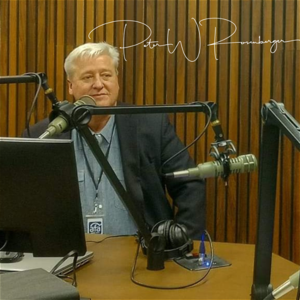
Welcome to Hope for the Caregiver. This is Peter Roseberger. This is the program for you as a family caregiver. For those of you who are putting yourselves voluntarily between somebody with a chronic impairment and even worse disaster, this program is for you. And if you just stumbled into this, well, I'm glad you're here.
If you're a caregiver, this is the place for you. But if you're not a caregiver, this is the place for you because if you love somebody, you're going to be one. You live long enough, you're going to need one. We got a stake in this, and what what does that look like to help somebody who helps somebody? And that's what this program is all about.
I am Peter Rosenberg, bringing you forty years of experience, everything learned the hard way. Just look at me; that'll tell you exactly how I learned it. And don't let this happen to somebody you love. But I want to help my fellow caregivers live calmer, healthier, and Dare I say it even more joyfully as we serve someone who has some type of chronic impairment, whether it's a child with special needs, whether it's somebody dealing with trauma, somebody with mental illness, somebody with addiction, somebody with aging-related disease, all of the above. There is always a caregiver who stands by and wonders.
How do how do I function in this? What do I do? And that's what this program is all about. Hope for the Caregiver dot com, Hope for the Caregiver dot com. I've got a lot of nieces and nephews, and one in particular who's a young go getter, theologian type, and he's very serious about it.
And you know, he's watched my stuff for years. And when I had Jay Leno on the program, he kind of yawned, and yeah, that's okay. When I had Jeff Foxworthy, Larry the Cable Guy, all these other guys. But when I told him I had Keith Foskey coming on my program, well, then I got kudos and I got respect for the first time for this young man. And I said, "So I'm going to have Keith Foskey on," and and he's actually perked up and said, "Well, now you've done something important, Uncle Peter." So Keith is a pastor, a podcaster, humorist.
He's served the congregation of Sovereign Grace Family Church since 2006 down in Jacksonville, Jackson. Area is it in Jacksonville, Keith? Yeah, it's north side of Jacksonville, Florida. Yeah, on the border. Yep, yep.
And he and his wife Jennifer have been married for 27 years. They have six children, and I have been following Keith's stuff on social media and laughing and really quite moved. But there was something he did the other day, and he posted in a rare moment, I think, because I don't think you do this very often. You posted a picture of you hugging one of your children, your daughter, who has autism. And been diagnosed with autism, and the the things that you posted about that, and it was for one moment it was not Keith Foskey, social media, Keith Foskey, the pastor, Keith Foskey, the funny guy.
It was just Keith, the dad, who was hurting for his little girl. And I said, I'd like to have him on my program because you understand that journey. And so, welcome to the program, Keith. I am really grateful to have you here.
Well, thank you, brother, and I appreciate what you do. And this is such an important and needed ministry that many people don't, as you said, don't even realize it until it comes into their life. Just how important that it is. First off, congratulations on the physical journey you've had. You've dropped over a hundred pounds.
I mean that's that's a quite a a journey you've had. I I've dropped thirty. I mean I I had to because I was I'm live out here in Montana and I went out in the forest and the bears were hiding their food, so I knew I had to make some changes. Talk about before we get into this. Talk about this journey of years.
What happened? What prompted this? What happened? Well, I've always had a problem with being overweight. I was an overweight child.
I tell stories in my stand-up act about how difficult it was growing up as a as the fat kid and being made fun of for that. And you know, I can look back at it now and I can be thankful for some of the way it strengthened me and my character, and even gave me some humor that I could work through. But but at the end of the day, I've always dealt with This issue, it's not, it's not, wasn't like a recent thing that I had just gotten heavy. I've been heavy my whole life, and throughout my adulthood, I tried many different things to try to solve the problem. I had done Atkins back in the early two thousands when that was a you know when Doctor Atkins had his thing about low carb, and then keto, and then carnivore, and all these other diets, intermittent fasting, but about I would say maybe a year and a half ago, a friend of mine who is a coach and who is a nutrition coach and fitness coach, he actually began to challenge me on all of the ways I was trying to do, and it was all about elimination.
Well, if I eliminate this, I'll lose weight. Or if I eliminate that, I'll lose weight. And he he helped me to understand it was more about understanding what I ate and in regard to the amounts. That I was eating because you can cut out all the carbs, but if you're still eating four thousand calories a day, you're going to be heavy. You know, if and and people don't realize how much calories are in the foods that we eat, and so I began tracking my food, and for the first time in my life, I realized just how much food I was eating.
As far as you know, because you don't think about something even like a candy bar. You know, is three hundred calories.
Well, that's about all. Almost a quarter of what you need for the whole day. If you only need two thousand calories for the day, that's that's a pretty big portion of just your overall calorie intake for the day. And so I literally, Peter, I just started counting everything I ate, and and people think that's pedantic and hard, but I made it like a game, and I and I and I tell everybody I won the game through math. Like I became I became like a math expert.
Like how do I count? How do I count this? And how do I make it work? And so now I just I eat less than two thousand calories a day, and. I do that, and and I can eat what I want.
I just have to eat within that range, and I try to eat foods that are high satiety, meaning they're they're they make me feel full, so I am not hungry in between meals. I eat three meals a day, and I stay full all the time.
So that's how I do it. What did you learn about yourself through that journey of of doing all these things and and weight loss and and Saying okay, I'm going to make this commitment. What what what was a what was an aha moment or thing something you learned about yourself you didn't know. I learned that it was possible for me because I had convinced myself that it wasn't. I had convinced myself that some people are just fat by nature and they're not going to be able to make it.
No matter what they do, they're just going to be fat. And it was actually, I'll tell you a funny thing. You mentioned, you know, people you've had on your show, Larry the Cable Guy, and other guys, but there was an actor who played in a TV show called My Name Is Earl. And he was a big guy. He was like I know that guy.
I mean, I don't know him, but I know who you're talking about. And you know, I don't think I've ever said this on a show before, but he was a true inspiration for me because he lost a lot of weight. And he was a guy who looked like me, big guy. And he lost weight, and he was, and and I don't know how he did it. I've never looked into his story, but I remember looking at him and I thought, if he can do it.
Why can't I do it? Why? What? What is keeping it? I'm not absolutely predisposed to this.
I'm not predestined to to to have to be this way. I can make a change, and that was just there was just a moment that said I can do this, and with God's help and with the right coaching. It's been it's been amazing, and and I'm not finished. I've still got weight to lose and muscle to build, but I know how to get there now, and I never did before. Talk about the importance of coaching.
Having somebody to be accountable to is really helpful, and I'll tell you, man. I every day I send him my just because with text messaging now so much easier to connect with people, and I send him pictures of my my workout, what I workout because I work out four days a week. And and let me say this: that is not what made me lose the weight. I didn't start working out until relatively recently. The working out is so that I don't lose muscle when I'm losing weight, and because I I have a.
Brother, who went on the he had his stomach staple. What's it called? Like a lap band or something. It's it's that surgery. Yeah, and and I watched him lose a ton of weight really quickly, and but also muscle mass and everything else was lost as well.
Now he's thankfully he's he's working on that now. But but I didn't want that to happen. I didn't want to. I didn't want to be. Skinny and weak.
I wanted to be stronger, so I began to do that. But having a coach help me have accountability, it helped me to answer questions. It helped me to be able to to literally just send him a message and say, "What do you think of this?" And we didn't always agree either. That's the other thing too. He's my coach, but he's not my god, right?
Like there are times where like like he would he would he would say things, and I'm like like like like we we still disagree on whether or not I should eat. I can't believe it's not butter, right? Like, like, because he's sort of against like seed oils and stuff, and and I know that stuff. You know, there's a big debate about that, but I, for me, it was it was it was something that was a little helpful for me was having that. I can't believe it's not butter, light spread.
So, well, it's WWRFKD. You know what would Robert F. Kennedy say? Oh, yes, yeah. Oh man, I've never heard that.
That's funny. Yeah, I just made it up. I just made that up for you in honor of you being here. I just made that up.
Well, thank you.
Well, I've got. I I came to an epiphany myself, particularly my journey as a caregiver, and I I came to this understanding that I'm no good to Gracie if I'm fat, broken, miserable. Wow, and I I had a friend of mine who really intercepted, but we've known she and her husband for many many years. She said, "Look, your future self is going to thank you," and and she's she's right. And I was thinking about that this morning.
I've been able to maintain this, and also I do a lot of physical work out here where we live in Montana to keep that muscle mass up. Because what happens to Gracie if I go down because of my life choices and what I eat? And what and the way I conduct myself physically, and and those things weigh heavy on me as her caregiver, and and so that was that was my impetus, if you will.
Well, you just reminded me of something, and it's funny because this is actually something I talk about in my comedy because I do do I do stand up. I don't know if you know that. I do know this. Yeah, and I'm not stalking you or anything, but I really have paid attention. No, well, I thank you.
I appreciate it. I'm glad to be a blessing. And but the in my stand up act, I talk about the fact that my daughter's autistic, which I know we're going to talk about that some. But she was also there was something she said. And and at the time it was it was tough because one thing about having a daughter with autism, especially a teenage daughter with autism, is she has no black she has no gray area.
Everything's black or white with her, and she's very forthright. She's very matter of fact. And one day, about maybe about a year and a half ago, two years ago, right around the same time as I got real serious, she came to me and she says, "Daddy, what's morbid obesity?" And I said, "Well, honey, morbid obesity is when you are so overweight that it has the potential to adversely affect your health, even bring about an early death." And she said. Like she just, she. I know people who are listening aren't seeing me, but she just looked at me.
She didn't have to say anything, cut me to the core, and I remember, like, I sat with that for a while because she had heard the term morbid obesity. She had connected it to me, and she wanted me to know that, and and that was her way of just saying, "This is going to kill you." And boy, yeah. I mean, I that that was a moment for sure.
Well, I wanted, I do want to pivot now that you brought her up, and I want to pivot to your journey with this. One of the things, and I'm going to jump right into deep into the pool because this is where you live, and and through the work that God has called you to do, and. I've been doing a series for some time now on my program on theology and caregivers. I don't know. I think I have the longest running radio program for caregivers, and I think it's the largest.
But I, I don't talk about caregiving very much on my show because that's not where. I mean, I, I don't need a refresher course on how to give an injection. I don't need a refresher course on how to deal with an insurance company. Those are one and done. But I am convinced that what goes on with us as caregivers is those those late night conversations with the ceiling fan, and you're wondering, okay, how am I going to deal with this?
We live with fear. We live with obligation. We live with guilt. I call it the fog of caregivers.
So I thought, well, what speaks to that better? That studying theology and understand not from an academic point. I'm not trying to turn myself or anybody else into academic, but I I I want to be able to to better understand the the work of God in this, so that at the the hospital at two in the morning when I'm in the parking lot having a meltdown, I know what to do, I know where to go. Back to David knew what to do at Zicklag. When his own men were going to stone him, and and he was all by himself, and he strengthened himself with the Lord.
Talk about that a little bit on equipping ourselves and others with the understanding of God. Why, when caregivers can't even take time to take a shower sometimes, why is it important for us? To go into not just reading a passage for just encouragement—that's great. We can all go back to the twenty-third psalm. I understand that, but let's unpack this more.
Let's go deeper. Let's understand. And for me, it was a moment looking in the ICU glass there at Gracie, and she was brought down so low, and I just said to myself right there in the ICU, there was nobody around. It was quiet for once, and and I looked at her, and and I thought. Christian, what do you believe?
And I asked myself that, and I thought I need to, I need to explore that. How does that resonate with you as a pastor, as a caregiver, and and and as a believer? What do you what what what goes on in your mind when I say those things? It's interesting because just this past week in in my sermon, I am preaching through the Gospel of John. And I'm preaching on the resurrection of Lazarus, and and one of the things that I've been stressing because I haven't got to his resurrection yet, I'm dealing primarily with the grief of Mary and Martha and the family that has now lost their brother, and I kept pointing out the fact to my congregation they don't know how this story ends.
They don't know that he's going to be resurrected. In fact, in their mind, it's not possible. He's four days dead. His body is already starting to rot, and so when Jesus comes, their statement to Jesus can be taken one of two ways. It can be taken as a challenge, Lord, if you would have been here, my brother would not have died.
Right? That could be a challenge, but it could also be a statement of faith. If you had been here. My brother wouldn't have died, and and and I'm not calling into question your goodness, but I am asking why, right? Like like why why why weren't you here?
And I think in our moments when our family is hurting and we're we're at the end of our rope and we're we're we're at that moment of desperation, I do think that the yearning of the heart, the question that that that flows. Is a question of why, and it's not always a question of doubt. It's more just, Lord, help me understand what you are doing. Help me to trust you better in this moment. Help me to to do that.
But here is the here is how this ties into what you are talking about, because one of the things that we learn in this narrative with Martha is Jesus says to her. Um, you know, your brother's going to rise, and she says, "I know he's going to rise on the last day." This shows that she actually understands some theological truth, some actually pretty deep theological truth from an Old Testament perspective. There's not a lot in the Old Testament about the resurrection. This is this is it's in there, but with the Sadducees. They didn't even believe in it.
Yeah, they didn't even believe it. But she said, "I know that He's going to raise on the last day." But she also said this. She said, "Jesus, I know that God will do anything you ask of Him." She still had faith in Christ, and she still had a theological foundation, even in the midst of tremendous grief, and sadness, and and and lack of understanding. And what I said to my congregation, I'll say this to your audience: is it is in the moments of our doubt and and struggle and and and and times of grief that our theological foundations are going to carry us through. Platitudes are not going to carry us through.
Sympathetic statements are not going to carry us through. But what God has said in His Word is the foundation that's going to carry us through. And those truthful foundations are the things that we have to stand on. Not, you know, I, I, I, I was actually. I worked with a funeral home for years and years, and I was like a de facto chaplain.
And I did a hundred and fifty funerals or so for families I never knew. I just they would call me, I'd go meet with the family, and I'd do funerals. And it gave me an opportunity to share the gospel, so I did it every time. With and I was happy to do it. But every time I would do a funeral, I would hear these platitudes, I would hear these sympathies, I would hear these things that you know.
Well, God needed another angel. Things like that, you know, things people say because they just don't know what else to say. And and and and my goal in every time I would go would be to simply go and give the gospel, to give the truth, because this is the foundation that we we need not not just some simple statements of sympathy. We need something substantial to stand on. Our house has to be seated upon the rock, not upon the sand.
And so, if if if somebody says, "Well, why is theology so important?" it's just it's just people arguing over how many angels can dance on the head of a pin. No, it's not. You know, yes, there are sometimes where we can engage in the pedantic, but the reality is theology, solid, rock solid theology, understanding who God is, and the fact that He can be trusted. Is what is going to carry us through our most difficult times.
So I think that's that's why theology is so necessary. I'm going to set up this next question with a couple of things, but I'm going somewhere with this. Don't don't abandon me. But it's I was I was I went to a church one day. It was one of the few times I was during a.
Particularly bad stretch, and I was able to just to get away. A nurse came on Sunday to help me with Gracie, and I was able to go to church that day. I had, and I had visited this church. A friend of mine said, "Let's go there." My father-in-law went with me, and so forth. and And we went over there, and I had high hopes.
I mean, there there about three or four hundred people there, and and they had a worship team up there, and it was okay. They they did the they did they did the communion at the beginning of the service, but. Which was a little different for me, but I thought, okay, went in Rome, you know, kind of thing, and and then the pastor got up and spoke, and he spoke about forty five minutes for his sermon, and it was on the literal six day creation, which I am not here to argue with. That okay, that's fine, but he went through this whole thing, and and that was it. It was a really good academic lesson.
And and he made some some interesting points and good academic lessons, but as I left, my father in law looked at me and he said, "What do you think?" And I said, at the time, my father was dying, and Gracie was so sick that I you know I couldn't get away very much, and she was going through a pretty rough patch. And I looked at him and I said, "Well." How does this all help me take care of my very disabled wife and strengthen me as I am watching my father die? And I remember there was a homiletics professor that sat in the back of the room, and when his students were preaching in class, he would always grill them at the end. Where was Jesus in this sermon? And that's the point I wanted you to address because how many people are preaching this?
I don't even know what to call it other than sometimes toothless, fangless. You fill in the blanks. You're you're good with words on that, but it's but not realizing that there are people on pews in front of them who are literally bleeding out. Talk about that a minute, because you've got to see that. Because when you do funerals like that, and I play for a lot of funerals, and I've played for hundreds and hundreds of funerals, I won't do weddings, but I will play for people's funerals because that's where ministry.
I believe real ministry can happen to people. But you see this all the time. What are your thoughts on that? And and and and looking at it, the because I I tell pastors caregivers can feel isolated in a crowded room. We can feel isolated on a crowded pew.
And when you're not preaching the gospel, what are you preaching? You know, I I want to answer that in kind of maybe a different way than than maybe you expected, but I think this will make sense. Several years ago, something happened in our church that profoundly changed my own heart in a in a very Very real way. We had a we had two different families in our church that suffered tremendous loss within a very, very close proximity of time. We had one family that lost their son in a car accident.
He was their youngest of ten children, and he was driving home from work one night, and he, and he wrecked his car, and he he was in a coma for a few days. I was in the hospital with him every day, and and he passed, and that was tremendously difficult. And then we have an elder who lost two sons in a period of less than two years. They were both young adult men. Both of them died tragically, and both of them, like I said, when the first one died, it was tragic.
But when the second one died, I was actually out of town when it happened. I get the call. I was at a conference in Mississippi, and I drove back through the night to be with him in the hospital. And I remember, I remember just. I couldn't believe it because he had already gone through this once, and now he's going through it again.
Less than two years later, and and honestly, now you know he's he's one of my dearest friends in the world. We talk almost every day. He and I love each other very good, very well. Was bad English, but we love each other very well. But he.
His his grief that I walk through him with, and the other family as well, and of course there's been others, but those two tremendous griefs have have tremendously changed how I think about the application of my messages, because I often think about their scenario and the the grief and pain that they have gone through, and I'm not saying everything I do I I run through the filter of them, but They're on my mind and on my heart, and and that has helped me to realize that this isn't just high academia. This isn't just how many angels can dance on the head of a pin. This is how can you help? How can the word of God speak to a person who has watched their child die, and and and and or has has had to be there to see. This grief of day.
We have a lady in our church. Her husband has Alzheimer's. She's been. He was a very. He is a.
He is a very dear friend of mine. But when he was. Before the Alzheimer's really kicked in, he and I were close, and he would come to Bible studies. And now, when I see him, he barely remembers who I am. And I see her going through this time of caring for him, and and it's a daily grief for her.
And when I see her, and I see her face, and I see the the toil and the the pain that that this has brought into her life, and and yet she's faithful. You know she's she's there and she's there to hear the word. I think about that when I'm preaching. I think she's got she's got to go home and deal with this reality. That's right.
That's right. She's she she might be interested in you know how how deep this textual variant goes back into the Textus Receptus versus the critical text. That might be of interest to her, but that's probably not going to be what she brings home with her when she's caring for her husband and. And and so it's it's just this is I think where twenty years of ministry Keith is different than two years of ministry Keith. I wish I could go back.
You know, this is my twentieth year at Sovereign Grace, and I wish I could go back to my my first couple of years and talk to myself and the things that I were the things that I could learn from myself.
Now, I think would be tremendous, and one of them is just. Loving your people well and knowing your people and knowing what God is doing through the Word in their life, at least thinking through that when you're when you're preaching to them. And I hope that made sense as as related. No, it makes it makes a lot of sense. I had a pastor when we we lived in Nashville for many years, and a couple pastors came to me.
It was a large church there, and and they said, "Are we are we pastoring you well? Are we serving you well?" And they knew intimately our story and so forth, which I thought was incredibly humbling for them to—I mean, humble for them to do, because these are these are very serious pastors, big church and so forth. And I simply said to them, "You know what I carry, and I'm sitting there every day listening to your sermons. Does this equip me to better carry what I carry? And if it doesn't, then why are you preaching it?" To their credit, I mean, it really did.
Every sermon showed the application thereof, and I think that's something that we there's a real opportunity in our modern church world to really drill down. Why are we telling you this? What does this mean when you're looking at a situation that does not get better? In fact, it probably is going to get worse. What is that?
How do I understand? How do I grab hold of that and apply that in that situation? What you just said is so important for for pastors, myself included, because all of us have areas where we need to grow. But there there's been a a genuine, I think, movement, especially in certain academic minded. Preaching circles to sort of move away from application and to stay in the headiness of theology, but yet if you look back at like the Puritans, they were strong on application.
They they wanted to show how the text becomes life and and I think that I've heard I heard somebody say one time, well, it's not my job to apply the text. The Holy Spirit applies the text. I just preach the text, and I say, I say yes, but the Holy Spirit is using preaching. It's through the foolishness of preaching, right? Like, like, like, it's God has chosen this medium, this this very, this very interesting way of making His word known.
And and and my favorite book on preaching is by Stephen Kryloff. It's a very short book. I'm not even sure it's still in print. But Steve is a good friend of mine, and he wrote a book called Expository Preaching. And and he said preaching is three things: you read the text, you explain the text, and you apply the text.
And he said if you haven't done those three things, you haven't. Preached, and and that's that's been very helpful for me. We're talking with Keith Foskey. This is Peter Rosenberg. This is Hope for the Caregiver.
We'll be right back. It's hard to count how many times I brought Gracie home from the hospital.
Sometimes she still needed a level of care that would overwhelm plenty of people, but the medical staff believed I could take care of her. Once I brought her home with oxygen, three drains, a catheter, and yes, two prosthetic legs. That's a tall order for anybody. Trained professionals do this every day, but what about family members who suddenly find themselves responsible for all of it? How did I get here?
How am I supposed to do this? Who's going to help me?
Well, if you listen to this program or read my books, you know what I've learned, often the hard way. But how many caregivers haven't heard? How many are struggling alone? Will you help us reach them? Standing with Hope has two program areas: a prosthetic limb outreach for Gracie's fellow amputees, and a family caregiver outreach for my fellow caregivers.
It's for the wounded and those who care for them. We don't have a fundraising budget. We want every dollar possible going to the work.
So I'm asking you directly: if you find value in this program, please help us put it within reach of another caregiver. Give today at standingwithhope. dot com slash giving. Standingwithhope. dot com slash giving.
Welcome back to Hope for the Caregiver. This is Peter Roselberger. We're talking with Keith Fosk. I've been wanting to have him on for a long time. I'm grateful he's here with us.
Keith, what have you learned? As you've been a caregiving dad now, and you've watched your daughter struggle with autism, and it's it affects the whole family. What has surprised you about this journey, about yourself, about Scripture, about the character of God, as you've gone through this journey?
Well, one of the things that I've changed. Because when I was two years old, or when my when my daughter was two years old, was when we really had determined in our heart that there was that there was something that was not. Connecting with her socially, she didn't answer to her name. We knew that in the first year, she she didn't she didn't make the connection of her name is Hope, and we would say Hope, and she wouldn't look at us. We thought she had a hearing problem, like like we had her hearing tested.
Her hearing was fine, but there was something socially that wasn't connecting, and I was scared to death, Peter. I was scared of her getting the label of autism. I was scared of that because I didn't want that to to harm her. I didn't want the I didn't want the diagnosis to to make her life somehow worse. And so there was a fear in me that that that when my wife and I would talk about getting her evaluated and going to the therapies and stuff, I was scared to death.
And and I'm and I'm being somewhat vulnerable right now because. As an as an autistic father on this side of everything, I'm thankful we did, but I can imagine there are people who have small children and they're they're noticing some things in their life that are difficult for them, and maybe recognizing some patterns of behavior that that are autistic patterns, and they're afraid too, and that fear is is something I would I'd want to speak to and simply say, if you If you understand just how much this. It's there's going to be some freedom here when you finally do recognize and and and are evaluated and get get the help that you need, because the longer you say, oh, it's not, it's not, it's just, you know, they're just, they just, they'll grow out of it. Yeah, yeah. Oh, yes.
Oh, and and and God bless my father. I love my father more than anyone outside of my wife and children. My father is my favorite person, and and he struggles. He's eighty one years old, eighty two now, I think, and and he. He really, for years, you know.
Well, isn't there medicine she could take, or isn't there a therapy she could get? Like, like you know, basically, like autism was going to go away as long as we did one thing or another. And and I had to help him understand this is who she is, this is how her mind works, and her whole life's going to be adjusting to a world that she feels somewhat disconnected from because her mind doesn't work the same as everyone else's. And my goal as her dad. To try to help help her understand the world better, and and not not shield her from the pain of the world because she has to learn to be strong and how to how to how to live this life because we all do right like we all have different things, but I also want to be the the one that she knows is here that knows she can come to, and you know to be her to be her.
Sounding board to be the place where she feels the most safe, and and I will tell you this, and I don't want to cry, but like she she comes and she hugs me. She's fourteen. She's taller than my wife now. She's this lean, tall girl, but she just comes and she lays on me. She puts her head on me, and I know a lot of autistic parents don't get that, and so I am so thankful to God for that grace because.
We've been around the autistic community now for twelve years. Ever since we started going in for for evaluation, we're part of CARD, which is the Center for Autism and Autism Related Disorders here in Jacksonville. And they're great people; they do a great work. And we've been around families that the kids don't can't speak, they they don't communicate, they don't they don't have the desire for touch, and even if you touch them, they they can't. Experience that in a way that's positive.
So the fact that I have all these things, I just have so much to thank God for, and and yet I see families that that don't, and I know there's so much pain there, and I and my heart hurts for them, and and so I've just learned so much about the the how how the different autism, how how autism presents itself differently in different people, and that's that's been an eye opening.
So. Years ago, I went into the bank there in Nashville. I saw a little placard that says this is an autism-friendly establishment. Yeah, and I thought, well, that's kind of interesting, and and so I asked. The bank manager.
I said, "Tell me about that." And they said, "Well, we we get a and and then I ended up having an interview with the marketing people of the the bank chain. It's a pretty big bank, and I said, 'What prompted this?' They said, 'Well, we get a lot of customers that come in, particularly you know, single not single moms, but special needs moms. They're coming in during the day, and they got their child with them that that has autism, and they get overwhelmed." In in that in the bank, there's a lot going on, and so we have a training, and we have a room, and we have toys that they can hold on to and kind of decompress a bit if if sensory overload is too much. And I had a a lady that heads up a big autism organization in Tennessee on the program. She has two children with autism.
And I talked about that a little bit more, and I thought first off, I thought, why is it that banks see that first than churches? Number one, that was my first question: is why why are places of commerce seeing the need for that more than our churches? And and then I asked a question. I said, if you could say anything to pastors about this, what would it be? And she said.
Dim the lights and turn the music down. Does that resonate with you? Oh yeah, we had a. We went to the fair this year. Went to it was our county fair, you know.
And and and my daughter, like I said, she normally enjoys that. But they actually had a trailer. There was a thing. It was it was a it was an autistic related or an autism group that had a sensory trailer that she could go into and she could sit in there and be comfortable. And it had the It was soft lighting and soft music and and soft a soft environment for her, which was very comfortable and very helpful.
Yeah, I want to go to that as a caregiver. I'd like to go to one of those trailers. I need that. I need that trailer. Yeah, yeah, yeah.
I went in with her because I they they um you know there was a chair in there, so I went and sat, and she she laid on this thing. It looked like a giant banana, but it was a it was like a beanbag chair shaped like a banana, and she laid on it. And she goes, "I want one of these at home." I said, "Well, I have to find out where they bought it." It's almost Christmas. A deer said. Yeah, it's well.
I um, I want to throw out a couple more things in a little bit of time we have left, and I'm taking up a lot more of your time probably than you had allotted, and I'll be careful with that. Just go and hang up when you're ready to go. Just, just walk out. I'm enjoying the talk. I appreciate it.
You wouldn't be the first to walk out.
So, I have a couple of theories. One of them is that our theology and our doctrine, our beliefs. And again, I don't do this so I can sound like a seminarian. I do this because I'm in the ICU a lot, and I'm dealing with very, very painful things every day, and I've done it for 40 years. And so I need to.
You can only ask why God for so long, and then you got to get up and and cook breakfast and clean up and clean the bathroom kind of thing. I mean, you know, at some point you just you realize, okay, here we are, and then I start asking, who is God? But I am also convinced of something I've observed, and I want to run it by you and see what you think. As Christians, the further we are away from suffering, chronic suffering, not episodic, chronic—I mean, things that just don't get better, things that are very, very painful, heartbreaking, physically painful—but the further we're away from that, either our own or someone else's, it creates an adverse effect. On our, on a lot of our belief systems, because there's not an impetus.
As one pastor said, it's hard to cry out to a savior you don't think you need, and and there's something about confronting, being confronted with, seeing it daily. Not that we have to go out and look for it, but that we don't ensconce ourselves away from it. But that we are to be elbows deep into the heartache. Of what we're seeing around us, and ready at a moment's notice to engage with that heartache, not to say, Rush Limbaugh used to call the media "drive by" the media because they just roll down the window and pronounce something and drive off and let the carnage.
Well, we have a lot of drive by theologians and drive by ministry related people. They said, "Oh, yeah, everything works together for good" to those who you know that kind of thing. And and I've been doing a series on that kind of thing as well of of the implications of what people say. Because they don't know what to say, but we're called to turn into this and go into that, like you at the funerals, and and go into this and sit there with people and mourn with those who mourn, rejoice with those rejoice. But but but not to not to somehow insulate ourselves from that.
Does does that am I am I fishing around the right hole here? I think so. I actually said this recently. I said, you know, we have we have stopped even like attending funerals and stuff. A lot of people don't go to funerals because they don't want to be reminded of death.
They don't want to be reminded of suffering. They just don't want to be around it. They they won't go visit people in the hospital. They won't go. They won't go to funerals because they just want this.
This mindset of it's just off in the distance somewhere, you know. Think about like during the Middle Ages. Our ancestors were surrounded by death all the time. I mean, I'm not just the Black Death, which of course took out you know more people than we could ever imagine. But I mean, even even just in normal periods of history, the Renaissance and and you know the early American years, I mean, death was a normal part of life.
I mean, it was people dealt with it and people dealt with sickness, real sickness, real real pain, and we have so anesthetized ourselves. Against that, like we can't. We don't want to. We don't even want to think about the reality of it, and we don't want to think about what it's that it's real. And when somebody else is going through it, we sort of divorce ourselves from them and get away from them because we don't want we don't want that constant negativity.
And I think this is this is again, it's it's a soft prosperity theology is what it is. And and and I'm not saying everybody who does this is is a you know a prosperity theologian, but this soft prosperity idea is that if God loves me, I'm not going to be in a lot of pain. If God Loves me, I'm not going to be hurting. If God loves me, I'm not going to be suffering. Therefore, if I am somehow, you know, I have no reason to trust God, or my trust, God is not.
I'm not in favor with God because of this suffering, and that's just not so. Just because we're suffering doesn't mean God loves us any less. God's God loves us any less. God's love is not measured by our circumstance. And that's what people think is my circumstances that how I determine whether or not God loves me, and I think what happens is we become somewhat functional atheists.
Now this is going to sound weird, but stay with me for a minute. Listen, my audience is used to weird. They've been they've been tuning into weird for a long time. I I remember years ago there was a movie and I don't even I don't even know if it was a like a I don't remember the movie I know Andrew McCarthy was in it and I remember because he was the actor and he was sitting in a hospital room and he was he was playing the part of an atheist and he was in a hospital room with somebody who was sick and I remember him somebody said something about trusting God and he said. People can't deal with real life, so they invent God.
That was his answer. That that's what he said. He said God is an invention that we came up with because we just can't handle the hard parts of life.
Now, obviously, I disagree with that. Obviously, the the McCarthy character, the atheist character, I disagree with. But here's what I mean by functional atheism: a lot of people. When things get hard, when they're struggling, when they're dealing with hard, they, they, they, they, there, there's, there is a sense in which God becomes very real. But they, when, when they're, when they're not dealing with that hard part of life, they're not struggling, they're not suffering.
God's not as necessary. God's not as important because hey, things are going pretty good right now. This is why when I when I do evangelism, I always tell people don't go up and tell people, hey, Jesus is going to make your life better. That's a worse way to evangelize because somebody's going to say, well, my life's pretty good right now. Why do I need Jesus?
Right? Like like like like some people have that attitude. Hey, I got a great life. I got a lot of money. Got a beautiful wife.
I got beautiful children. Everybody's healthy, and that's the attitude. Right? Everything's. Until until I need God, the problem is, in the in the in the final analysis, as R.C.
Sproul used to say, is. At at any moment, our life could go a different direction. At any moment, we could be facing suffering, and we we as much as we as much as we try to insulate ourselves from it, it's a reality that could happen at any time. And there are people who are right now in our lives that are suffering, that need us. They need us to love them, and they need us to bring the gospel, and they need us to bring the love of God.
Not bring platitudes, and not bring inappropriate scriptures either. I said this Sunday. I said not everybody needs to hear all things work together for the good of those who love God. The moment when their child just died, right? Like that might be the worst thing to say to a person in that moment, even though it's a true scripture.
And I, you, you had just mentioned that the Romans eight twenty eight thing. Oh, listen, people wield it like it's a sledgehammer, and they've done it to us for over the years. And then another one is, and I just did this on my program last week: God still in control?
Well, yeah, He is in control, but have you considered the implications of saying that to somebody watching? His wife going to surgery now. For she's almost had one hundred surgeries.
Well, yeah, he is in control. I subscribe to that wholeheartedly, and that strengthens me. But let me give you the context of that. You can't, you can't, you can't shout that from the cheap seats in the stands. You've got to get out.
You've got to get out and get into this. In fact, Jesus said very clearly: "Sick, naked, thirsty, hungry, prison, stranger," and he's pretty serious about it. And if we are actively, we don't have to actively every day. I got to go find somebody who's sick and naked and thirsty. That's not what I don't think that's the the meaning of this.
But if we are actively removing ourselves from that. Then I think that we're we're we're doing a couple of things that would go against what the intent of that scripture, what that command is from Jesus, but because we need to be prepared at a moment's notice, and in order to do that, we got to know what we believe and why we believe it. And and and I I think those are the things that you learn sitting next to someone who is suffering, or hugging your daughter who is struggling. Like you, you posted that one picture you did, and and it was such a beautiful picture. You talk about hospital, but I remember a pastor.
Used to tell, I mean, at this large church, and he he didn't like to do hospital busy. He loved to preach, loved to teach Sunday school, but he didn't like to do hospital busy. Made him uncomfortable. I said, well, it doesn't do much for us either, you know. We're there, you know.
We just spent five months in there last year, and you get to know a lot of people. And then, um, and then you have some of. I had a hospital chaplain that came through one time while we were in the hospital and prayed for Gracie and me, and and bless her heart, and she she was struggling for the. Words to say, we didn't know her, never saw her again after this. But she was praying for God to bless Gracie from the tip of her head to the tip of her toes.
Well, Gracie didn't have toes, and I and I was sitting there listening to this prayer, and I kind of raised an eyebrow. I thought, well, okay, bless her heart, you know, kind of thing. But you know, you got to know. Who you're praying for, and why you're praying, and who, more importantly, who you're praying to, and and she never came back, so it was okay. But then I remember, I don't know if you know a friend of mine named Dominic Aquila.
Do you know Dominic? You know, yes, sir. He does. Dominic is a wonderful pastor theologian. Has the Aquila reports?
Wonderful. Oh, oh, okay, yes, I do. I'm sorry, Aquila report. Yes, yes. But he he told the story when he was a young seminarian and he was going to go on a hospital visit and the the guy that was mentoring him.
And I don't think Dominic will mind me telling this if he does. But then I'll get a strongly worded letter that I probably wouldn't be able to understand because he's a lot smarter than me. But he um no, he's a great guy and he said that. He was preparing him for what he's getting ready to see because this guy was dealing with a pretty serious sickness, and there was a smell to suffering. and And Franklin Graham has often said that there's a smell to the afflictions of people, and you can't run Samaritan's purse from behind a desk.
And he had him pull over so he could throw up before he even got to the hospital.
Sometimes, sometimes we do that.
Sometimes we just have to throw up. And still push it, wipe our mouth off, and get a cool drink of water, and then go back into suffering, and and you because we're going to see things that we may not see any other way, and it is painful. And I I maintain this that when God operates, He doesn't use anesthesia. He he gives you. His his word and said this is going to hurt.
Bite down on this, and that's that's how we've learned to live, because we we've seen too many things like this where there's nothing. There is no other place to go. There is no other place to go. But it's not not a construct that Gracie and I invented. I invented plenty of constructs, and every one of them failed.
You know. But His Word does it in those things, and these are things that I've learned. And as a pastor, I want to ask you one last question.
Well, two questions, if you don't mind. One of them is, I have a theory too.
Now, you can correct me if I am wrong on this. You would be one in a long line of people who've corrected me. There is a scripture where Paul talks about sharing in Christ's sufferings, and I've thought about that a lot. Very few of us are actually going to be taken out to a hill and crucified literally.
So, what does it mean to share in His sufferings? As I've thought about this, I've looked at this. I thought, would it be appropriate to say that the longer we walk with Christ, the more we're going to see the ravages of sin in this world, closer to the way He sees it. And the brokenness—he's a man acquainted with sorrows and grief. Why is that?
Because he sees it laid out of just how broken all this is because of the ravages of sin. Is that a fair unpacking of that scripture? I think so. I think yeah, and. Again, it's so funny how closely tied this is to what I just preached.
Because I'm listening to all your sermons and stealing your stuff, you know that, right? No, I'm just, I'm just kidding.
Well, hey, but but just honestly, you know, it says that when Christ came to the tomb of Lazarus and he saw the pain and suffering, it uses a word, and the word can be translated different ways. It says deeply troubled in in the ESV. But it also it comes from the word, which means when a horse snorts like that that sort of that that sort of frustrated snort of a horse that you know when a horse doesn't get what it wants or whatever. And and I said you know I don't believe Jesus is angry at our grief, but I do believe that Jesus becomes indignant when he looks at his good creation and sees what sin has done to it. When he sees what sin has done to to damage his his creation, it hurts his people.
It hurts us, and how much it has you know death and disease and destruction. This is all the results of the fall, and and and. And with that, you is what you were talking about sharing in the sufferings of Christ. I think the closer we get to Jesus Christ, the more we will hate what sin does to us and what it does to others, and what it does to the world that He created, the good world. And you mentioned earlier about pastors that don't go to the hospital.
I just have to say a little something about that. I've I've lived by this principle for years, and that is shepherds should smell like sheep. And if shepherds don't smell like sheep, they're Probably not good shepherds, and a pastor who doesn't go to his people when they're hurting probably is a pastor who doesn't smell like sheep. Concur. I had a wonderful pastor friend of mine back in Nashville who's passed away now, but he's he's he was old school, and he said the the the pastor should be on a first name basis with the undertaker.
And and I always they don't call them undertakers anymore, but but but but his point was not lost. And you mentioned about you know I'm going to go back to yourself when you started out in ministry. One of the reasons I do everything I do is because I keep in mind. The 22-year-old version of myself that married a woman with a broken body and dumb as a box of hammers, and what I would want to say to that young man, and there are, there are others out there like that, and so I would like for you to close this time, if you don't mind. We didn't get into a lot of your comedy, which is hilarious, and you.
Just, I mean, the stuff you do and the way you weave in theology, church history, and cultural dysfunction is is quite astonishing. And and I would really want I want people to go out there and and look at your stuff and and and find it and get to know you, but. You can't say that to your younger self, but there are a lot of young pastors out there right now. My pastor right here is wonderful guy. He's thirty one years old.
It's been a long time since I've taken notes listening to a pastor, and and he's he was just preaching through the Book of Ecclesiastes, and every message was just equipping me. I mean, I'm I'm I'm. I don't know. Thirty years is senior, and I'm I'm sitting there just just drinking it in. And he has such an understanding.
This, what would you say to a lot of? I'm I'm very grateful that I have this young man. What would you say to a lot of pastors out there, as many pastors as you can, who are graduating Bible college, finishing up seminary, standing in the pulpit, going to their first hospital visit where they're seeing something that's just Going to make them throw up on the way to the hospital, coming into mine and Gracie's room. What would you say to that young pastor? One of the things that I.
Do remind, and I'm thankful. God has given me a tremendous blessing in the last few years since my show began to expand and reach more people. One of the most common things I get is messages from new pastors who have who have a lot of questions, who who who are who are who are starting out where I was, and and I just thank God that He's given me the opportunity to talk to a lot of young men. And I try to remind them that while seminary prepared you for many things, seminary really doesn't prepare you to be a pastor. It prepares you to know how to be a student of the Word.
It prepares you to know how to manage and administrate and lead and and govern in certain areas of your life, and and it teaches you discipline. But you learn to pastor by. By loving your people well and and developing relationships of trust, and the currency of ministry is trust. That's that. It's not how intelligent you are, how how good of a speaker you are.
The currency of ministry. Is trust, and trust is built when you're when the when the again the shepherd smells like sheep. When your people know you and you're with them, especially in their times of distress and their times where they know that they can call upon you. My my family has watched me have to walk away from dinners and walk away from. Birthday parties and things, because we've had people who needed me in that moment.
And my family's—I am grateful that my family knows that that's my job and that's what God's called me to do. And I am thankful that my people know that that's my job. And that's you know, if I am in Mississippi, I am going to drive through the night to get home because I love you and I love your family because that's what. That's what I am supposed to do as as as the as the as the pastor, and and loving your people well will will give you that currency of ministry. For when you do inevitably make a few mistakes, or you say something that's maybe not you know the accurate, and you have to correct yourself, people will be more willing to recognize that the love that you shared with them in those moments is worth.
The the one or two mistakes you've made in a sermon or something like that. We we spend so much time being fastidious over making sure our sermons are a hundred percent correct, but we're leaving the sheep unattended and we're not caring for them. And so, just love your people well, and and and love your wife well. If you're a pastor, don't don't sacrifice your family on the altar of ministry. Make sure your wife knows.
That you love her and that you do care for her, and and while you may have to walk away from a birthday party or or a softball game or something at at certain points, don't neglect your family because that will also show itself in your in your ministry as well.
So, those are those are just a few thoughts I would give to the young man, and just know that everything that seminary did prepare you for, it didn't really prepare you to be a pastor. You're going to learn that by sitting next to the bedside of a of a dying person, holding the hand of a dying person, which I've done several times as they passed away, and I'm thankful to God for those moments, as hard as they were, because I felt like God was using that. One using me to minister to them, but also using that moment to grow me as a as a shepherd in their life. Those are sacred moments, aren't they? Amen, absolutely.
And and I, well, Keith, I have really enjoyed this time, and I want to be sensitive because you have things stacked and packed today. If people want to find out more about you and and what's going on, not only at Sovereign Grace, but through your comedy, through follow you or whatever, tell tell them where to go. KeithFoskey dot com is the easiest way, but if you just want to see videos, you can go to YouTube and just put my name in Keith Foskey. And I do a thing called comedy is therapy, and this for people who are hurting. I do want to end with this because this I think would help maybe for folks in your audience.
I believe that one of the ways God uses comedy and uses humor is to heal our broken hearts. When my friend was going through the loss of his sons, I would go over to his house every day, and I did for for for a couple. Weeks, and I would just sit and talk with him, and and a lot of times it would end up in times of storytelling and laughter. This is one of the ways that God uses. You know, merry heart doeth good like a medicine, but a broken spirit dries the bones.
There is actually value in humor. There is value in in these things, and and so I don't just do it because it gets a laugh. I do it because I think it can help our hearts be merry.
So, so. Go and watch that if you're if you're hurting or or working with people who are hurting, go watch Comedy is Therapy. I think would and you may you may also learn something because you weave in some some amazing things in your contrast of different types of Christians and so forth, and it's just hilarious. It's clever. Actually, the video is called Created to Laugh.
That's what it's called. Created to Laugh. Created to Laugh. All right. Yeah.
Keith Keith Foskey F O S K E Y. And you can follow him along on all social media platforms. Also, pray for Keith and his family and the church down there. Look at what's happening. Look at what he's doing.
Look at what God is doing through him. And it gives me great hope and encouragement. My mother said this years ago. She said that the organization of the church is on life support, but the organism of the body of Christ is doing just fine. And that's a that's a pretty good way to end.
So Keith, thank you. I hope I could have you back on, and I do appreciate you spending the time with us today. Yes, sir, and thank you, Peter, so much for for having me on. I appreciate it. This is Peter Rosenberg.
This is Hope for the Caregiver. Hope for the Caregiver dot com. We'll see you next time.